This Labrador Retriever breed guide starts with the numbers: males weigh 65–80 pounds, females 55–70, and most Labs live 11–13 years. The Labrador Retriever is a medium-to-large sporting dog from Newfoundland. Labs are friendly, food-driven, and easy to train.
They come in black, yellow, and chocolate, shed year-round, and need at least an hour of real exercise daily. The Lab was America’s most popular breed for 31 straight years and now ranks No. 2 behind the French Bulldog. Below, we cover what the breed is, where it came from, and what living with one really takes.
Size, Build and the AKC Breed Standard
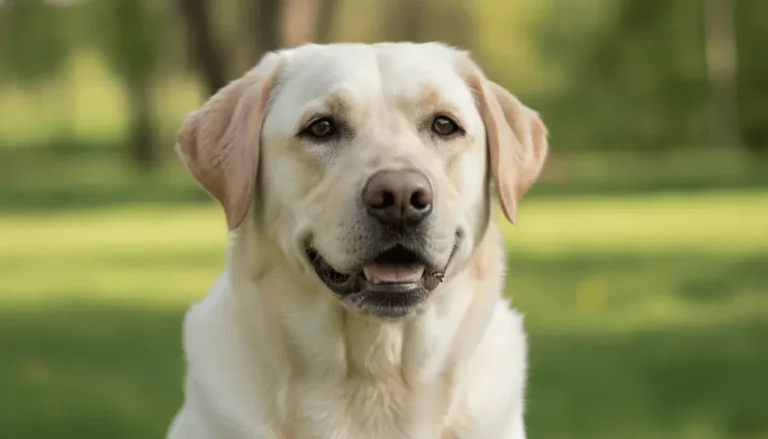
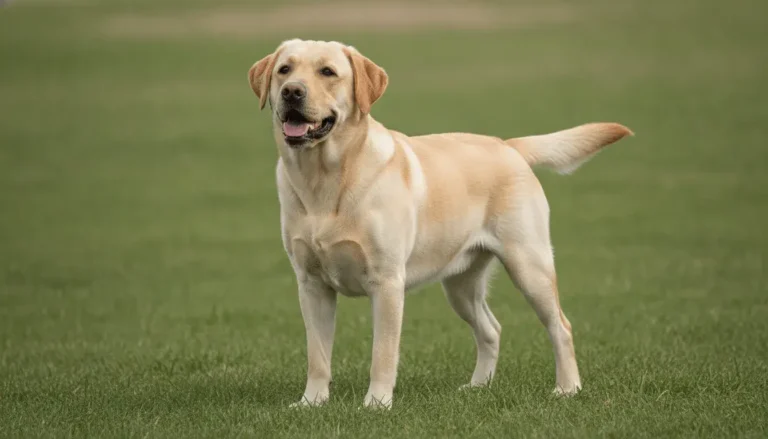
The AKC standard sets males at 22.5–24.5 inches at the shoulder and 65–80 pounds. Females stand 21.5–23.5 inches and weigh 55–70 pounds. That puts the Lab in the medium-to-large range, built for work rather than show.
The standard describes a strongly built dog with a broad skull, a powerful jaw, and a short, dense coat. You can read the full description on the AKC’s Labrador Retriever breed page.
Two Labrador Retriever characteristics stand out. The otter tail is thick at the base and tapers to the tip, and it works like a rudder in water. Webbed feet push the dog through cold water.
Both are working tools, and both still show up in show and field Labs today.
The coat matters as much as the frame. A soft, dense undercoat sits under a harder, water-resistant outer coat. That design came from the cold North Atlantic, and it explains why Labs shed so much.
Male vs Female Labs
Males are bigger by design. The standard gives males about 10 pounds more at each end of the range and an extra inch of height.
The largest vet-records study of the breed backs this up. McGreevy and colleagues found a mean adult weight of 35.2 kg (about 78 pounds) for males and 30.4 kg (about 67 pounds) for females. The same study found no real lifespan difference between the sexes.
Temperament differences between males and females are small next to the differences between individual dogs. We’d choose the puppy and its parents first, then the sex.
Is There a Miniature Labrador?
No. The AKC recognizes one Labrador Retriever, with one size standard. Ads for the miniature Lab label describe small purebreds, dwarfism carriers, or mixes, not a second variety.
Color works the same way. A pale, near-white yellow Lab is still registered as yellow, not as a separate color.
History: From Newfoundland Fishing Dog to America’s No. 2 Breed
The name is a geographic mix-up. Labs descend from the St. John’s water dog of Newfoundland, not from Labrador.
Fishermen on the island used these dogs in the 1700s and early 1800s. The dogs hauled nets and lines and retrieved fish from icy water.
English nobles imported the dogs to Britain in the early 1800s. The Earl of Malmesbury and the Duke of Buccleuch developed them into a shooting dog that retrieved game birds. The AKC recognized the breed in 1917.
Popularity came later and lasted a long time. The Lab topped AKC registrations for 31 consecutive years, from 1991 through 2021.
Since 2022 it has ranked second behind the French Bulldog, according to the AKC’s yearly popularity rankings. The 2025 list still has the Lab in second place, ahead of the Golden Retriever.
That history explains most of what owners see at home. The soft mouth, the urge to carry things, the love of water, and the strong focus on people were all selected for. A Lab that brings you a shoe is doing its job, just with the wrong object.
Temperament and Personality
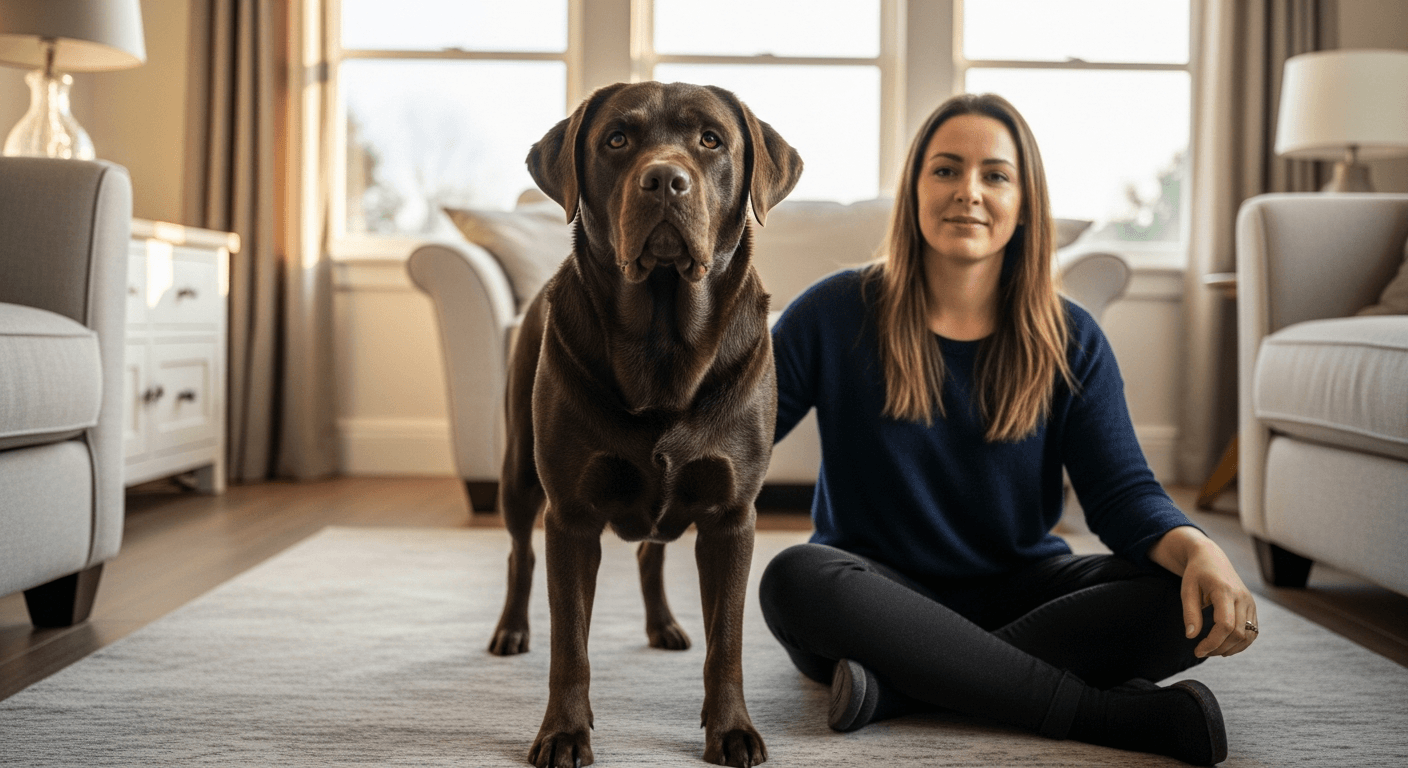
Labs are social, eager, and people-focused. The AKC describes the breed as friendly, outgoing, and active. These traits show up across the breed, not just in lucky individuals.
Stanley Coren’s The Intelligence of Dogs (1994) ranks Labs 7th for working and obedience intelligence. In practice, that means they learn new cues quickly and keep working for a reward.
Labs are also mouthy. Most carry something in their mouth when they greet you, and puppies chew whatever they can reach. That retriever habit is easier to redirect than to stop.
The part new owners underestimate is how long the puppy energy lasts. No formal study pins down an exact age. Most Labs settle between 2 and 3 years, and some take until 3 or 4.
Until then, expect leash pulling, counter-surfing, and recall that works at home and fails at the park. The calm family dog Labs are known for is real. It usually arrives in the third year, not the first.
Are Labs Protective?
Labs notice strangers and bark to announce them, but they aren’t guard dogs. The breed standard calls for a gentle dog with no aggression, and most Labs greet visitors as friends.
That makes a Lab a decent alarm system and a poor bodyguard. We cover the difference in detail in our look at how protective Labs really are.
What Labs Were Bred For and Still Do: Gun Dog, Guide Dog, Detection
The AKC standard calls the Lab a working gun dog. It should have the substance to hunt waterfowl or upland game for long hours. That job still shapes the breed.
Hunters use Labs to retrieve ducks and geese from cold water and to find birds in heavy cover. The soft mouth lets the dog carry game without damage. Steady attention to the handler lets it take direction at a distance.
The same traits made the Lab one of the main guide and assistance breeds. The AKC lists search-and-rescue, drug and bomb detection, and service work among the jobs Labs do. A good nose, a calm attitude in crowds, and a love of food rewards fit those roles well.
Food drive plays a bigger part than most people think. A 2016 study by Raffan and colleagues looked at an appetite-linked gene in Labs. The variant was more common in Labs chosen for assistance work than in pet Labs.
Labs also compete in field trials, hunt tests, obedience, agility, tracking, and dock diving. For a pet Lab, those instincts show up as retrieving, swimming, and sniffing everything on a walk.
Give those instincts a daily outlet, and the dog is easier to live with. A few retrieves, a swim, or a short scent game does more than a long, dull walk.
Coat Colors: Black, Yellow, Chocolate and the Dilute Debate
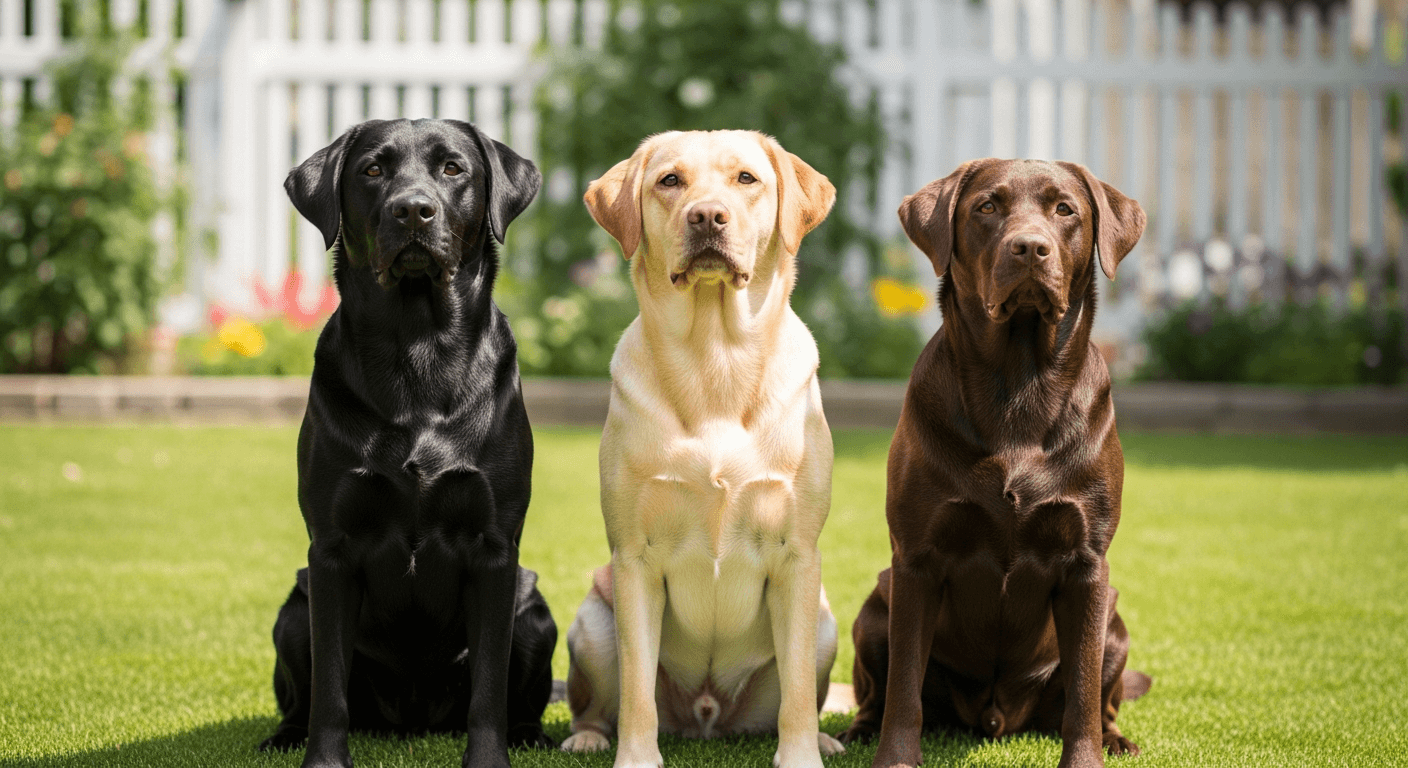
The AKC recognizes three colors: black Labs, yellow Labs, and chocolate Labs. Two genes decide which one a puppy gets. Our overview of every Lab coat color covers the genetics in full.
The B gene sets the pigment. A dog with at least one dominant B is black, and a bb dog is chocolate. The E gene works on top of that: an ee dog can’t show black or brown in the coat, so it comes out yellow.
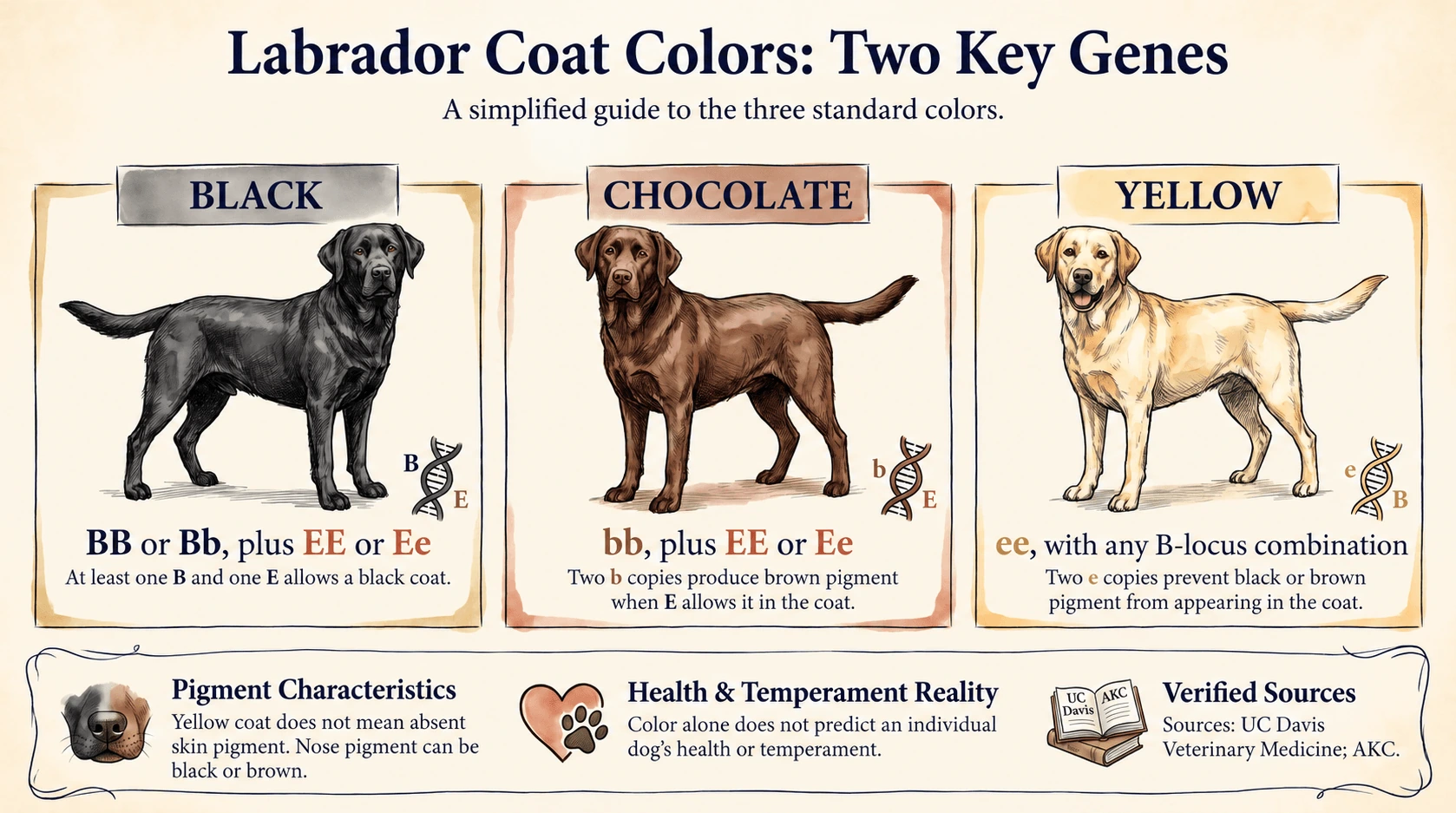
Yellow covers a wide range, from pale cream to the deep fox red shade. Fox red is a dark yellow, not a separate AKC color.
Color doesn’t set temperament. The idea that chocolates are wilder or yellows calmer has no support in the evidence. Color does carry one health note: chocolate Labs had a shorter median lifespan in the McGreevy study, covered in the health section below.
The dilute debate is about three newer shades. Silver Labs, charcoal Labs, and champagne Labs carry a dilution gene (dd) that lightens chocolate, black, or yellow.
The AKC registers dilute dogs under the base color. The Labrador Retriever Club does not accept them as correct Lab colors.
English vs American Labs: Two Types of One Breed
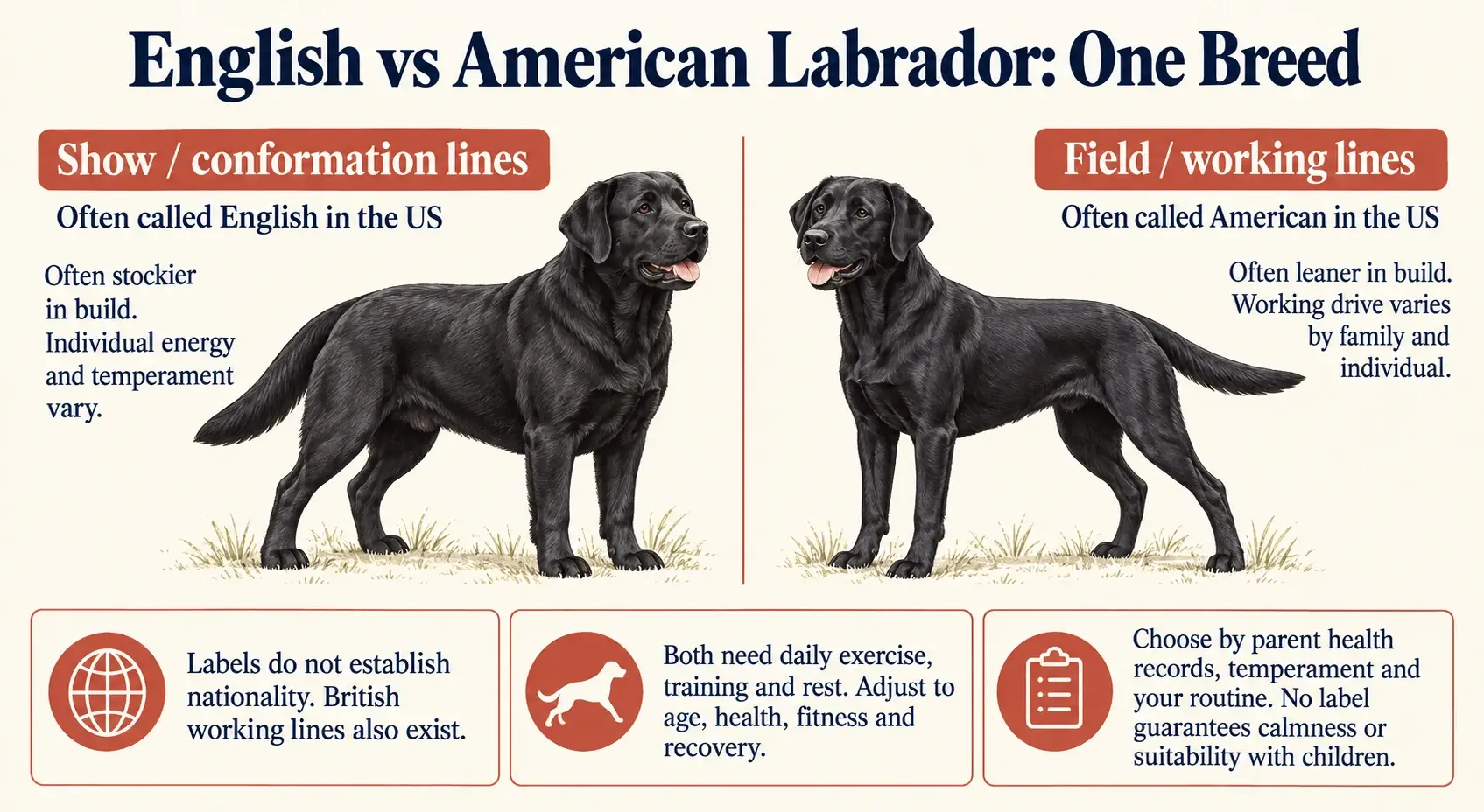
The AKC recognizes one Labrador Retriever breed. English and American are informal labels often used for show-line and field-line dogs; they are not separate national breeds or guarantees about an individual dog.
The same breed standard applies to both labels. Compare the actual dog’s build and condition rather than using separate English and American weight ranges. Our show-line and field-line comparison explains the labels and what to ask a breeder.
Ask about the parents’ work, behavior, and activity needs, and assess an adult dog’s behavior directly. Neither label establishes a fixed age for settling down or makes one dog automatically the easier family pet.
Health and Lifespan: What Labs Are Prone To
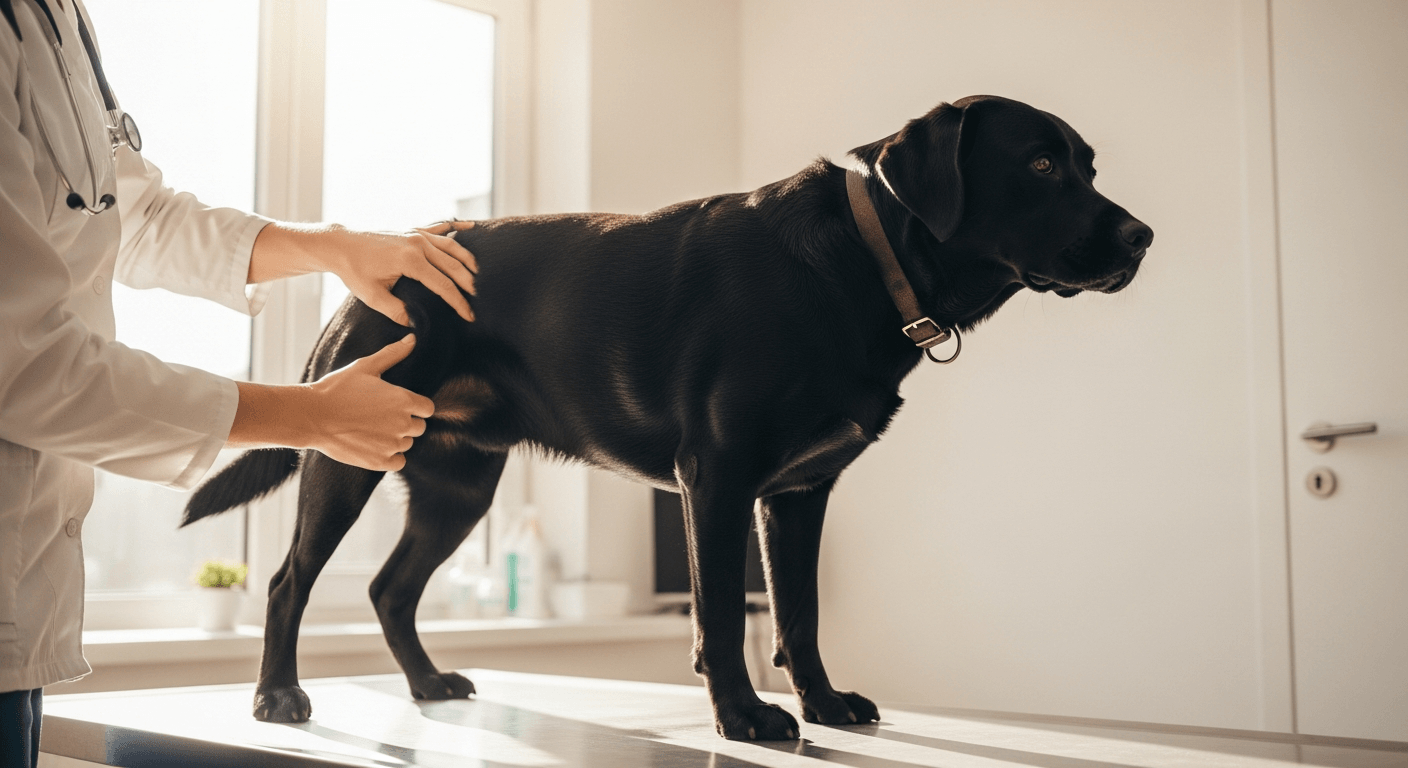
Labs are a sturdy breed with a known set of risks. The big inherited ones are hip and elbow dysplasia, two eye conditions, and exercise-induced collapse (EIC). The eye conditions are hereditary cataracts and progressive retinal atrophy.
EIC is a genetic disorder. An affected dog can wobble and collapse during or after intense, exciting exercise, such as nonstop fetch.
The AKC also lists bloat, hereditary myopathy, and heart disorders as concerns. In everyday vet visits, though, the common problems are more ordinary. The McGreevy study found overweight or obesity, ear infections, and joint disease were the three most common disorders recorded in vet notes.
Most of these respond well to early action. Watch for stiffness after rest, a bunny-hopping gait, head shaking, or a sour smell from the ears. Each is a reason to book a vet visit sooner rather than later.
Keep your Lab lean, dry the ears after swims, and get limping checked early. Our full rundown of Lab health problems covers symptoms, treatment, and when to call a vet.
How Long Do Labradors Live?
The AKC gives a life expectancy of 11–13 years. The best data comes from McGreevy et al. 2018, a VetCompass study of 33,320 UK Labs. It found a median lifespan of about 12 years.
Color made a difference. Chocolate Labs lived a median of 10.7 years, compared with 12.1 for black and yellow Labs. Chocolates also had more ear and skin disease.
The most common causes of death were joint and muscle disorders and cancer. Most vets treat a Lab as a senior from about age 7.
Weight is the factor owners control most, as the feeding section shows. We break down the rest in what shapes a Lab’s life expectancy.
What Health Tests a Breeder Should Show
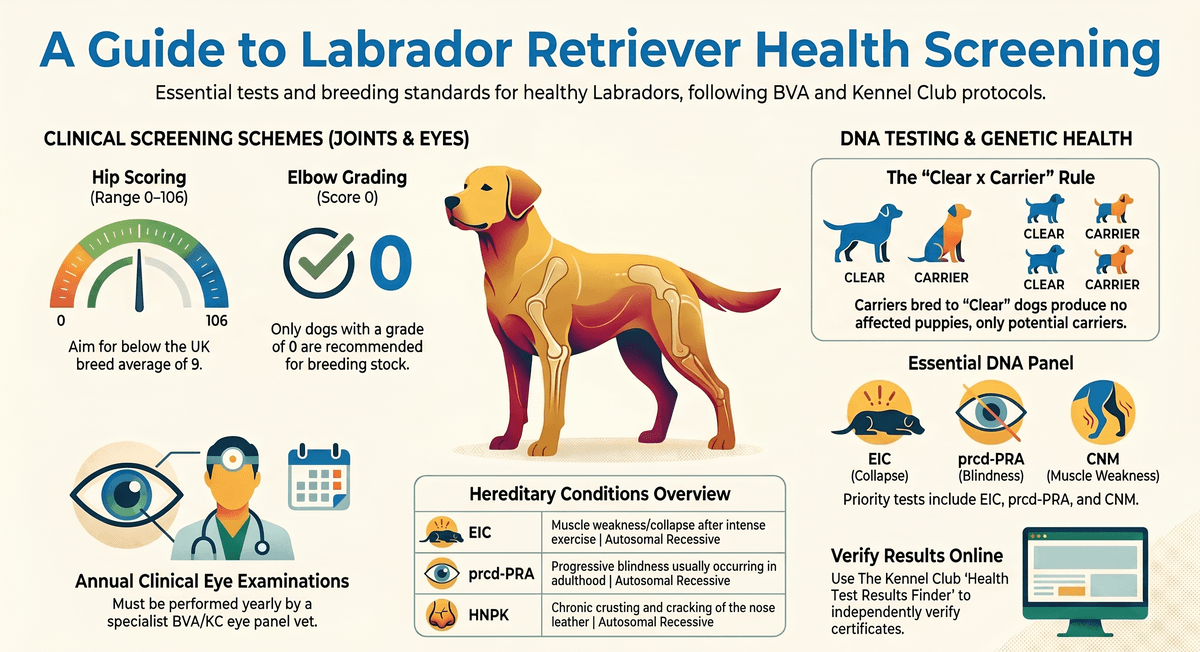
A responsible breeder shows results for both parents, not promises. This is the minimum list:
- Hips: OFA or PennHIP evaluation
- Elbows: OFA evaluation
- Eyes: a current CAER or OFA eye exam
- DNA: prcd-PRA, HC4 hereditary cataracts, and EIC
You can look up hip, elbow, and eye results yourself in the OFA’s public database. Search by the parents’ registered names.
If a breeder can’t show these results, you don’t have what you need to buy. Walk away, even if the puppy is perfect.
Feeding and Weight: The Lab’s Appetite Problem
Labs are famous for eating anything, and part of that is genetic. In 2016, Raffan and colleagues published a study in Cell Metabolism on a POMC gene deletion in Labs.
About a quarter of Labs carry it. The deletion is linked to stronger hunger, higher body weight, and more food motivation.
A carrier isn’t being naughty when it begs or raids the trash. Its body is telling it to eat. The fix is management: measured meals, no free-feeding, and food kept out of reach.
Weight is the health factor owners control most. In Purina’s lifetime study of 48 Lab littermates over 14 years, dogs fed 25% less lived a median 1.8 years longer. They also developed arthritis later.
Life stage changes the plan. Puppies eat a large-breed puppy food, which supports steady growth rather than fast growth. Most Labs switch to adult food at 12–15 months.
We don’t give cup amounts here, because they depend on the food, the dog’s size, and its activity. Start from the feeding guide on the bag, then adjust to body condition.
You should feel the ribs under a thin layer of fat and see a waist from above. If you can’t, cut the portion a little and recheck in a few weeks.
Count treats as part of the day’s food. Training treats add up quickly with a breed that works this hard for them.
How Much Exercise a Lab Needs
Plan on at least an hour of real activity a day, and closer to two for a young Lab. In the largest owner study of Labs (Dogslife, 4,307 dogs), the typical dog got about 2 hours a day.
Real activity means work the dog can feel: swimming, fetch, hiking, off-leash play in a fenced area, or a brisk walk with sniffing time. A slow lap around the block doesn’t count as the whole day.
Under-exercised Labs tend to chew, bark, dig, and gain weight. Most of the problems owners blame on the breed start with too little to do.
Mix the activities rather than repeating one. Swimming is easy on the joints, and most Labs love it. Long sessions of nonstop ball throwing are the riskiest choice for a dog affected by EIC, so build in breaks.
Heat matters too. A dense double coat and a big appetite for work make overheating easy, so move hard exercise to cooler hours in summer.
Mental work counts as well. Short training sessions, puzzle feeders, and scent games tire a Lab out faster than another lap of the park. Our guide to exercise needs by age has sample weekly routines.
What Is the 5-Minute Rule for Lab Puppies?
The 5-minute rule is a breeder rule of thumb: about 5 minutes of structured exercise per month of age, up to twice a day. A 4-month-old puppy gets about 20 minutes per session.
No formal study backs the exact number. The idea behind it is sound, though. Lab growth plates stay open until about 12–18 months, so long, repetitive, high-impact exercise is a risk before then.
Free play, sniffing, and gentle exploring don’t need a timer. Treat the rule as a ceiling for forced exercise, like long leash walks or running, not for play.
Training: What the Breed Responds To
Labs are one of the easier breeds to train. Food drive and a strong focus on people make reward-based training work fast.
Basic cues like sit, down, stay, come, and heel can start at 8 weeks. With short daily sessions of 5–10 minutes, most Labs have them solid by about 6 months.
Two cues matter more for Labs than for most breeds. “Leave it” protects a dog that will try to eat anything. A reliable recall keeps a dog that loves water and people from running off to greet both.
Then adolescence arrives. Between about 6 months and 2 years, many Labs seem to forget trained cues, especially recall. That’s normal development, not defiance.
The answer is more practice, not punishment. Keep sessions short and frequent, and raise the value of rewards when distractions grow. Harsh methods cost a Lab the confident, food-driven attitude that makes it easy to train.
Our step-by-step Lab training plan walks through each stage, from the first week home to adult obedience.
Grooming and Shedding
Labs shed year-round and blow their undercoat twice a year, usually in spring and fall. Each blow lasts about 2–4 weeks, and daily brushing helps during that stretch.
Between blows, brush once to three times a week, depending on the coat. Dense show-line coats need more work than lighter field-line coats.
No routine stops the shedding; it only controls where the hair lands. Here’s how much Labs really shed through the year.
Bathe about every 6–8 weeks, more often for swimmers and mud lovers. The outer coat sheds dirt but holds odor.
Ears need the most attention. Floppy ears trap moisture, and ear infections were the second most common problem in the McGreevy study. Dry and check the ears after every bath and swim.
Add nail trims and tooth brushing, and you have the full weekly grooming routine.
Living With a Lab: Space, Time Alone, Kids and Other Pets
A Lab can live almost anywhere if its exercise needs are met. Square footage matters less than daily output. A well-exercised Lab sleeps 12–14 hours a day, and the home becomes a resting space.
Labs in apartments can thrive. The catch is that, without a yard, every outing depends on you. Stairs, elevators, and bad weather don’t change the daily hour of real activity.
Time alone is the harder limit. Labs are social dogs, and a Lab left 10 or more hours a day without a midday plan will struggle. A dog walker, a midday visit, or doggy daycare covers the gap.
Build alone time slowly from puppyhood. A Lab that learns to nap in a crate or a gated room with a chew toy copes far better with a workday.
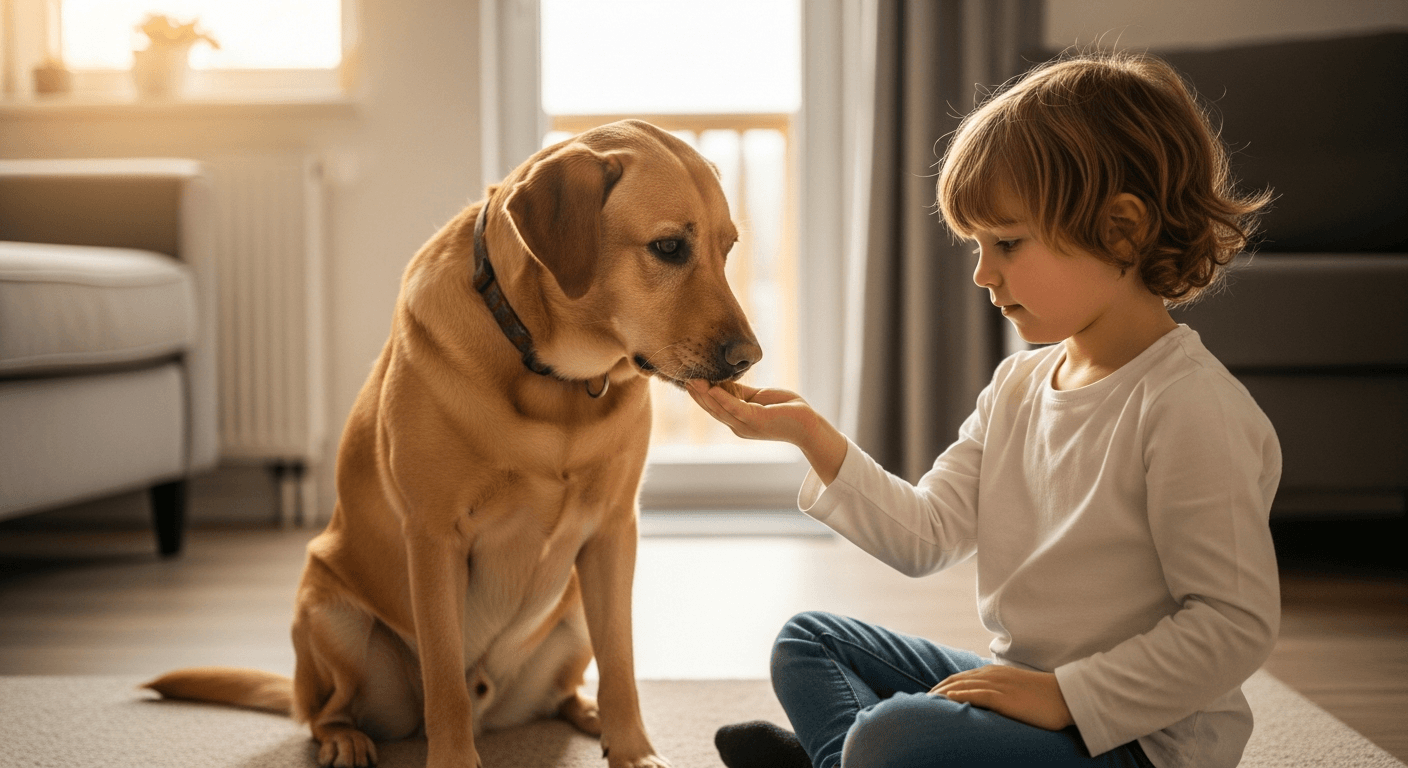
Any dog can bite, and a large Labrador can also knock over a child. Active adult supervision, gentle handling, and separation when needed help reduce risk. Our guide to Labs and children explains how to manage introductions and give the dog a place to retreat.
For families with kids under 5, a calm adult Lab assessed around young children is often the lower-risk choice. Teach kids not to approach a dog that’s eating or sleeping. Give the dog an exit space, like a crate or raised bed, where kids don’t follow.
Other pets are usually the easy part. The AKC notes that Labs socialize well with other dogs and people. Still, supervise first meetings, and keep other pets’ food out of a Lab’s reach.
Labrador Mixes: What the Other Parent Changes
Labs are crossed with more breeds than almost any other dog in the US. The Lab brings trainability and a social nature, and the other parent decides most of what’s different. Our Lab mix hub profiles each cross.
The Goldador combines Labrador and Golden Retriever parentage. Shared retriever ancestry does not establish a predictable temperament for every puppy; assess the individual dog and the available history of both parents.
Herding parents add drive and sharp focus. A Border Collie and Lab cross or a Lab and Blue Heeler cross often needs more mental work than a purebred Lab. Some try to herd kids.
Guardian parents add wariness of strangers. The Lab and German Shepherd cross, the Lab and Rottweiler cross, and the Lab and Boxer cross can be more protective than a Lab.
A Lab and Husky cross adds cold-weather toughness and independence, which can make recall harder. The Lab and Pit Bull cross is a muscular, people-loving dog that needs early socialization with other dogs.
The cur crosses lean toward hunting and work. A Lab and Mountain Cur cross or a Lab and Black Mouth Cur cross often has strong prey drive and plenty of stamina.
In a first-generation (F1) cross, nobody can predict which parent each puppy will take after. The Lab half still follows this Labrador Retriever breed guide, so ask for health clearances on both parents, not just the Lab.
Getting a Lab: Price, Breeders and the First Year
A Lab puppy from a responsible US breeder usually costs $800–$2,500. That range is our estimate, since nobody tracks sale prices nationally. Adoption fees run about $50–$800.
The first year costs about $2,800–$6,500 with the puppy included. After that, plan on $1,600–$3,800 a year. Our full cost breakdown shows each line, from food to vet care.
Price alone does not verify health testing or breeding practices. Ask for the parents’ documented results and check the records rather than treating a high or low price as proof.
Ask for the clearances listed in the health section above, and meet at least the mother. A good breeder also asks you questions and keeps puppies with the litter until about 8 weeks. Most will take a dog back if things don’t work out.
Adoption is a good route too, especially for families who want a calm adult. Many shelter fees already include spay or neuter, vaccines, and a microchip.
Introduce the puppy to people, places, sounds, and surfaces through safe, positive experiences that respect its comfort. Ask your veterinarian how to manage exposure before the vaccination course is complete, and continue socialization as the dog grows. Early exposure supports development but does not guarantee a confident adult.
After that comes teething, then adolescence from about 6 months. Most Labs settle between 2 and 3 years, and some take until 3 or 4. Our month-by-month puppy guide covers each stage of year one.
Is a Labrador Right for You?
A Lab suits active people and families who enjoy time outdoors. It suits owners who want a trainable, social dog and can commit to daily exercise and steady training. Labs also fit homes that want a dog for sport, hunting, or therapy work.
Think twice if you work 10 or more hours a day with no midday plan. Think twice if you need a calm dog in the first two years, or a low-shedding one. No Lab is low-shedding or hypoallergenic.
The daily basics don’t change: at least an hour of real activity, measured meals for life, regular ear care, and training through adolescence. If that sounds manageable, everything in this Labrador Retriever breed guide points to a good match.
For the day-to-day ownership decisions, read our Lab pros and cons guide.
Labrador vs Golden Retriever: The Short Version
Most buyers compare the Lab with the Golden. The two are close in size: males run 65–80 pounds for Labs and 65–75 for Goldens, and females 55–70 for both.
Grooming is the clearest difference. A Lab needs weekly brushing outside coat blows and no professional grooming. A Golden needs brushing 3–5 times a week plus a groomer every 6–8 weeks.
Goldens are more sensitive to harsh handling, so a Lab forgives a first-time trainer’s mistakes more easily. Both shed heavily, and neither is hypoallergenic.
Our side-by-side Lab and Golden comparison covers temperament, health, and cost in detail.
Frequently Asked Questions
What is the Labrador Retriever known for?
The Labrador Retriever is known for a friendly temperament, easy training, and a big appetite. It was bred as a gun dog that retrieves birds from water.
Labs also work as guide, assistance, detection, and search-and-rescue dogs. The breed was America’s most popular for 31 years and has ranked second with the AKC since 2022.
Is a Labrador a safe dog?
Labradors can be family companions, but a breed standard does not predict whether an individual dog will bite. Consider the dog’s history, health, behavior, and comfort around children.
A large Lab can knock over a child, and any dog can bite. Supervise interactions actively, teach gentle handling, and separate the dog and child when supervision is not possible. These steps reduce risk; they do not eliminate it.
Are Labradors good family dogs?
Yes, with honest expectations. Labs are social, patient, and usually great with school-age kids. They also shed heavily and need at least an hour of real activity a day.
Most Labs settle between 2 and 3 years, and some take until 3 or 4. A trained, well-exercised Lab is an excellent family dog.
Are Labradors smart?
Yes. Stanley Coren’s 1994 ranking puts Labs 7th for working and obedience intelligence. They learn new cues quickly and stay motivated by food and praise.
That makes them easy to train. It also means a bored Lab finds its own projects, like opening cabinets or raiding the trash.
Is a Labrador high maintenance?
Moderately. The coat is easy to groom but sheds year-round, with two heavy blows a year.
The bigger demands are exercise and weight. Plan on at least an hour of real activity a day, and closer to two for a young Lab. Meals need measuring for life, because many Labs never stop asking for food.
Do Labradors shed a lot?
Yes. The double coat sheds year-round and blows heavily twice a year, usually in spring and fall, for about 2–4 weeks each time.
Brushing once to three times a week, and daily during blows, controls the volume. It won’t stop the shedding, and no Lab is hypoallergenic.