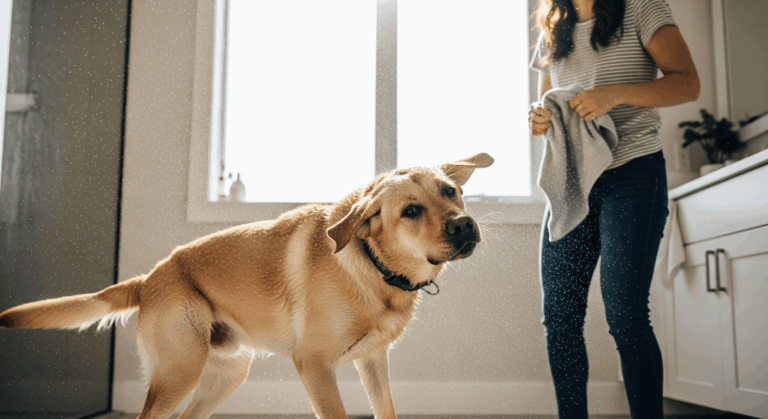
Can Labradors live in apartments? Yes — but the answer has nothing to do with square footage. Labs don’t pace the apartment calculating room dimensions — a properly exercised Lab sleeps 12–14 hours a day, and during those hours the floor plan is irrelevant. The real question is whether you can provide 1.5–2 hours of structured exercise and consistent mental stimulation every day, in a city environment, with no yard to fall back on. Owners who can do that have Labs that thrive in apartments. Owners who can’t have dogs that bark, chew, and develop anxiety regardless of how large their apartment is. For baseline expectations, see how much Labradors actually bark — most of it is trainable.
Do Labradors Need a Large Home?
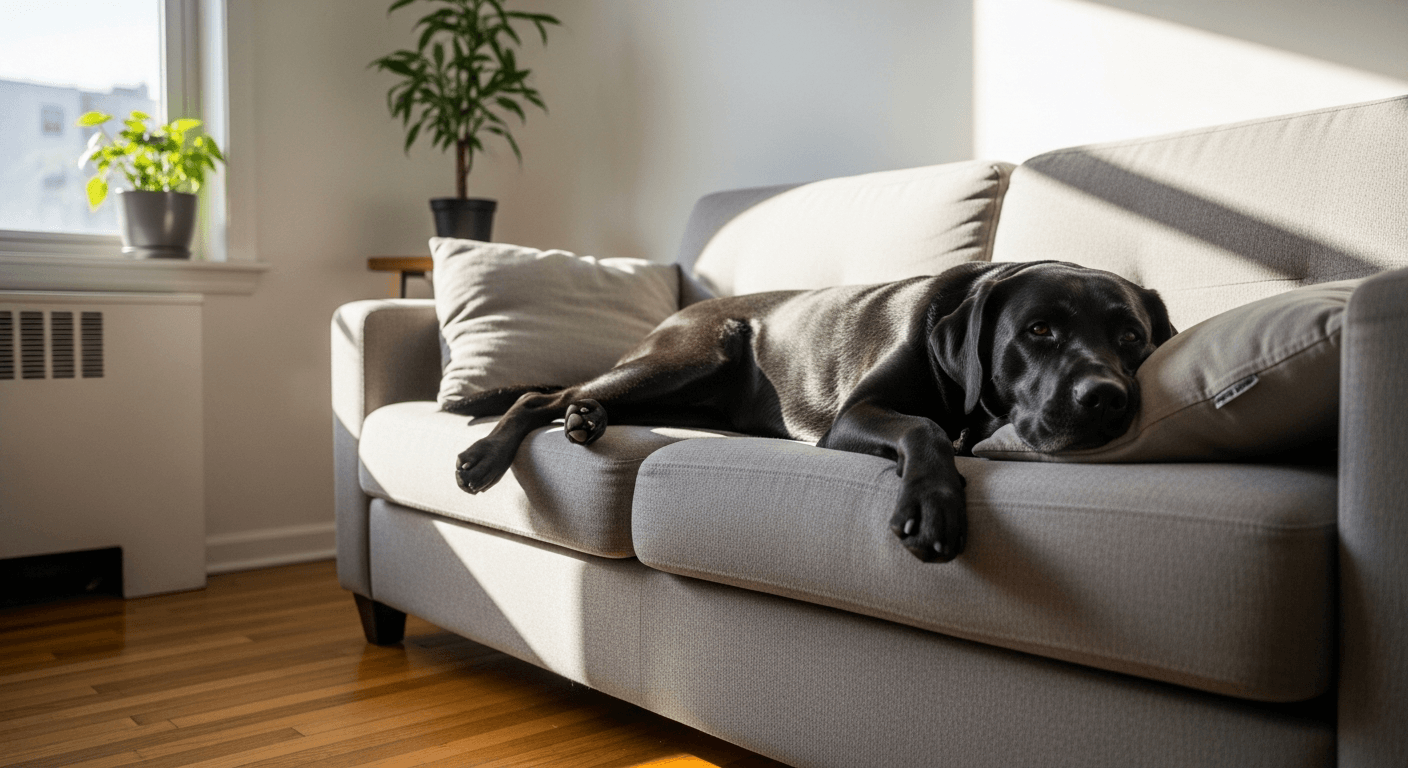
The assumption that Labs need a large house and a yard is understandable — they’re big, energetic dogs. In practice, the assumption misidentifies where the challenge is.
A Lab that receives adequate daily exercise will spend the majority of its time inside an apartment resting. The apartment functions primarily as a sleeping space, not an activity space. Floor plan size doesn’t affect how much a dog sleeps. The constraint is that the apartment has no yard for a quick morning run when your schedule is tight — every exercise session requires owner initiative and time. There is no fallback.
What the apartment setting actually affects: access to outdoor space within a walkable distance matters more than the apartment itself. A park or quiet street within a 5–10 minute walk is a practical requirement. Stairs versus elevator matters for large dogs — manageable, but worth knowing. And building policy must explicitly permit dogs at your Lab’s adult weight. According to the AKC breed standard, Labradors reach 55–80 lbs at adult weight, and many apartment buildings cap pets at 25 kg (55 lbs). Check the specific weight limit for the specific property before committing, and get confirmation in writing. A general “pet-friendly” label from a landlord is not sufficient — it often comes with weight caps that exclude an adult Lab.
The practical conclusion: apartment living is a constraint on owner commitment, not on the dog’s capacity for contentment. Labs that are appropriately exercised are calm, settled animals. The apartment is entirely adequate as their base.
Exercise for Apartment Labs: Meeting the Daily Requirement
Adult Labs need 1.5–2 hours of structured exercise per day. For apartment owners, that means two meaningful outings as a minimum — a morning walk of 40–50 minutes and an evening session of similar length. A five-minute toilet trip to the nearest grass doesn’t count toward the total.
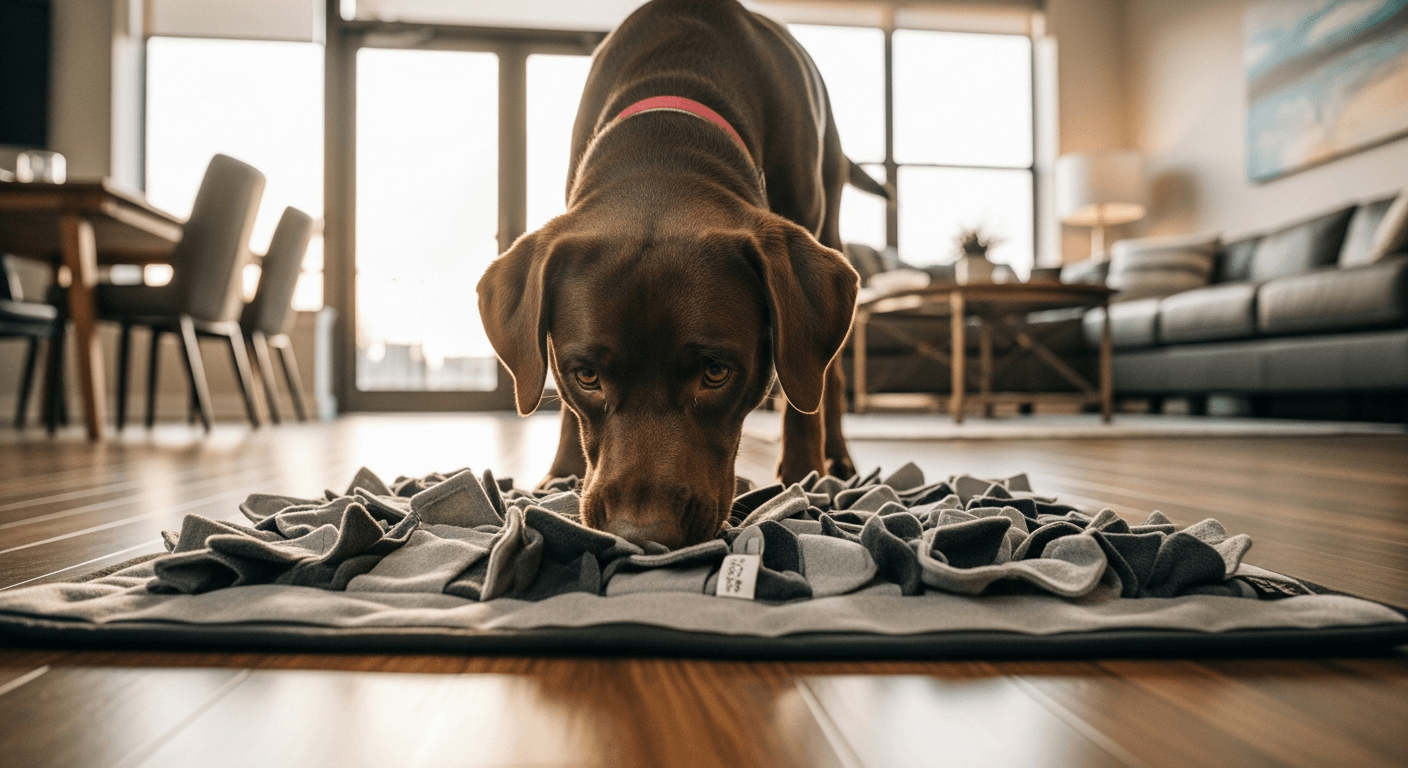
Mental exercise supplements physical exercise. A 20-minute nose work session or a meal delivered through a puzzle feeder can substitute for 30–40 minutes of walking in terms of energy depletion. Mental stimulation tires a dog more efficiently than physical activity alone because it requires sustained cognitive effort. On bad weather days, a 15-minute training session plus a puzzle feeder meal meaningfully closes the exercise deficit. It doesn’t fully replace a walk, but it prevents the worst outcomes on days when a full session isn’t possible.
Off-leash park time is the highest-value exercise for apartment Labs because it allows real running — something apartment hallways can’t provide. For Labs that aren’t yet reliably off-lead, a 15-foot training leash gives freedom of movement in the park while maintaining control. Urban dog sports — agility, scent work, swimming — are high-value supplements for owners who want structured variety in the routine.
Working owners need a realistic midday plan. A Lab puppy under 18 months cannot be left alone for a full workday. The bladder isn’t there yet, and the energy needs an outlet. A dog walker at midday is a minimum requirement for a puppy in an apartment, not an optional upgrade. An adult Lab can hold for 6–8 hours reasonably. Leaving a high-energy adult alone for 9–10 hours consistently is the setup for a barking and destruction pattern. Dog daycare 2–3 days per week is a legitimate, widely used tool for full-time working Lab owners — and considerably cheaper than replacing furniture.
For the full breakdown of exercise requirements by age, see How Much Exercise Does a Labrador Need?.
Managing Shedding in a Small Space
Shedding is one of the honest challenges of apartment Lab ownership. A small space concentrates the hair — there’s less floor area to dilute it, and it accumulates on surfaces faster than it would in a larger home. This is a real management burden. It isn’t a dealbreaker, but new Lab owners who haven’t lived with the breed should know what they’re walking into.
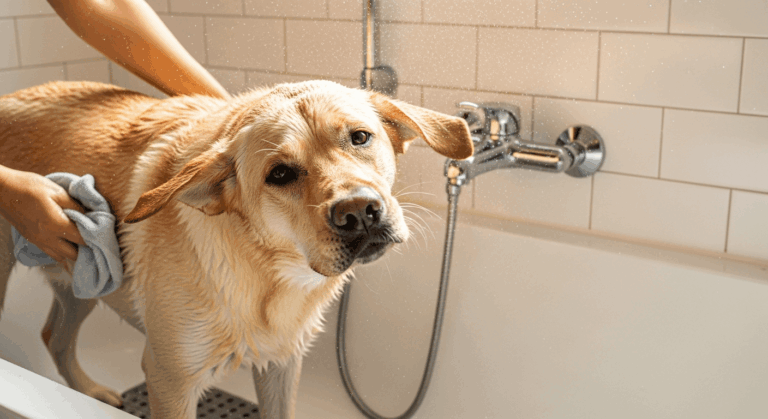
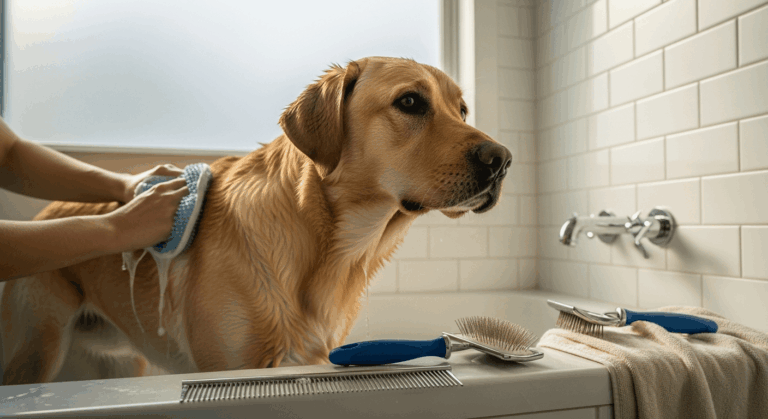
The most effective shedding habit for apartment owners: brush the dog outside the apartment, not inside. A 10-minute brush session on the balcony, in the building’s yard, or at the park removes loose hair before it lands on furniture and flooring. Brushing inside distributes the hair before it can be collected. Outside, it goes somewhere that doesn’t require vacuuming. For brushing tools and technique, see Do Labradors Shed? and How to Groom a Labrador.
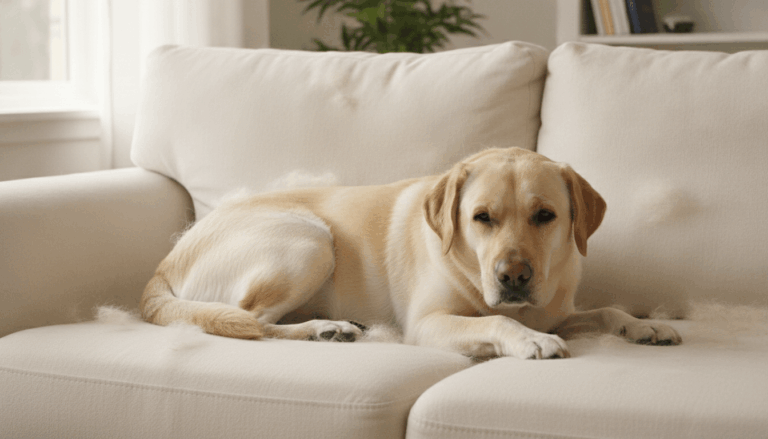
Lab hair embeds in upholstered furniture. A washable cover on the sofa or the dog’s usual resting spot reduces cleaning effort significantly. A HEPA-filter vacuum with a pet attachment is a necessary investment — standard vacuums cannot manage Lab coat volume without constant filter cleaning. Hard floors are considerably easier than carpet in a small space: hair is visible and sweepable rather than embedded at fibre level. If your apartment is fully carpeted, plan for more frequent vacuuming during the spring and fall blow coat seasons.
Noise, Neighbors & the Barking Reality
Labs are not typical problem barkers. They’re alert dogs — a knock at the door or an unfamiliar sound will prompt a bark or two — but they don’t sustain the reactive barking that terrier and herding breeds can. The breed’s noise profile in an apartment is generally low enough that shared walls aren’t the problem most new owners fear.
The genuine apartment noise risk is separation anxiety, not general reactivity. A Lab with separation anxiety will bark, whine, and howl during absences — and in a shared building, that becomes a neighbor complaint within days and a lease issue within weeks.
Prevention is far easier than treatment. A Lab conditioned to alone time gradually from early puppyhood — starting with 5-minute absences and increasing slowly — doesn’t develop the panic response that drives sustained vocalisation. The crate, introduced positively as a resting space rather than a punishment, gives most Labs a secure base that they learn to settle in calmly during owner absences.
At departure, leave the dog with a frozen Kong or puzzle feeder. The 15–20 minutes of engagement covers the highest-anxiety window immediately after the owner leaves. A dog actively working on a food activity at departure builds a positive association with that moment rather than a distress response.
For the full separation anxiety protocol — including the filming diagnostic test and graduated departure training — see Labrador Separation Anxiety.
When Apartment Living Does Not Work for a Labrador
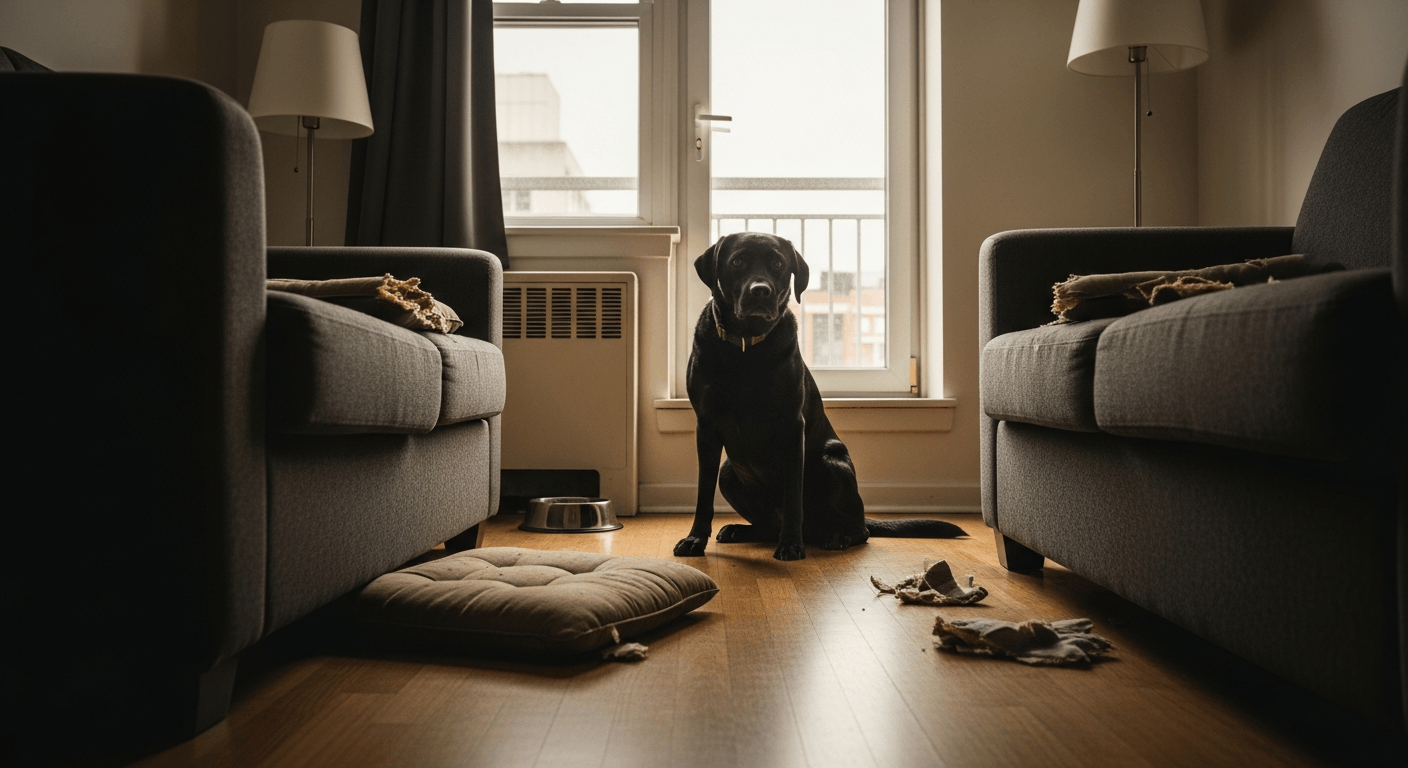
Apartment living with a Lab has genuine failure conditions. Stating them clearly is more useful than soft reassurance. Comparing breeds for small-space living? Our Labrador vs Golden Retriever guide covers how the two stack up in apartments.
The building doesn’t permit dogs, or the weight limit excludes an adult Lab. This is a hard stop. An adult Labrador weighs 55–80 lbs. Many buildings cap pets at 25 kg (55 lbs). There is no training solution for a landlord weight policy. Confirm the specific limit in writing before moving forward.
The owner works 9–10 hours per day with no midday care arrangement. A Lab left alone for this duration without an outlet will bark, destroy, and develop anxiety — every day. This is not a temperament failure. It’s a lifestyle mismatch that training cannot resolve without addressing the root cause.
The owner won’t walk in poor weather. Apartment Labs have no yard fallback. If you skip walks during rain, cold, or heat, the dog is sedentary that day. For a Lab, sedentary days that accumulate into a pattern produce behavioral problems that escalate over weeks. The commitment to outdoor exercise in all weather is non-negotiable for this breed in this setting.
A very young puppy in a high-rise with stairs only. Young puppy growth plates — particularly before 16 weeks — shouldn’t repeatedly climb multiple flights of stairs during early skeletal development. Manageable temporarily (carry the puppy for stairs, use the elevator where available), but worth knowing before move-in day.
The honest summary: a properly exercised, crate-trained Lab in an apartment is a calm, adaptable companion. An underexercised, under-stimulated, poorly managed Lab in an apartment is miserable — and loud. The difference is entirely about the owner’s consistency, not the dog’s breed suitability.
Frequently Asked Questions: Labradors in Apartments
Can a Labrador be happy in an apartment?
Yes — a properly exercised Lab in an apartment is calm, settled, and well-adjusted. Labs sleep 12–14 hours per day when their exercise needs are met. The apartment serves as a resting space, not an activity space. The breed’s wellbeing depends on daily exercise and consistent human companionship — neither requires a large house.
How much exercise does an apartment Labrador need?
Adult Labs need 1.5–2 hours of structured exercise per day, not including toilet trips. Two meaningful walks of 40–50 minutes each is the realistic minimum. Off-leash park time for running and fetch is the highest-value exercise option for apartment Labs who can’t self-exercise in a yard. Puzzle feeders and training sessions supplement on difficult weather days.
Will a Labrador bark and disturb neighbors in an apartment?
Not typically. Labs aren’t excessive barkers by temperament — they alert-bark at the door and unusual sounds but don’t sustain the reactive barking of terrier or herding breeds. The real apartment noise risk is separation anxiety, which produces prolonged howling and whining during owner absences. Preventing it with crate training and gradual alone-time conditioning is far easier than treating it.
What size apartment is too small for a Labrador?
There’s no minimum square footage threshold. A small apartment with 2 hours of daily outdoor exercise is more suitable than a large apartment with inadequate exercise. Floor plan matters far less than daily exercise commitment, nearby outdoor access, and a building that permits dogs at the Lab’s adult weight range.
Should I get a Labrador if I live in an apartment and work full-time?
It depends on your midday arrangement. A Lab puppy under 18 months cannot be left alone all day — a dog walker or daycare is required. An adult Lab can manage 6–8 hours. If you work full-time with no midday care option and can’t arrange one, the timing isn’t right for a Lab regardless of apartment size.
Labradors can live in apartments — consistently, successfully, for thousands of urban Lab owners. The floor plan isn’t the variable. Two hours of exercise per day, a crate-trained dog that handles absences calmly, and a regular brushing habit outside the apartment are the variables. Get those right and the apartment is a non-issue. For a full picture of daily Lab ownership, see our Complete Guide to Living with a Labrador.