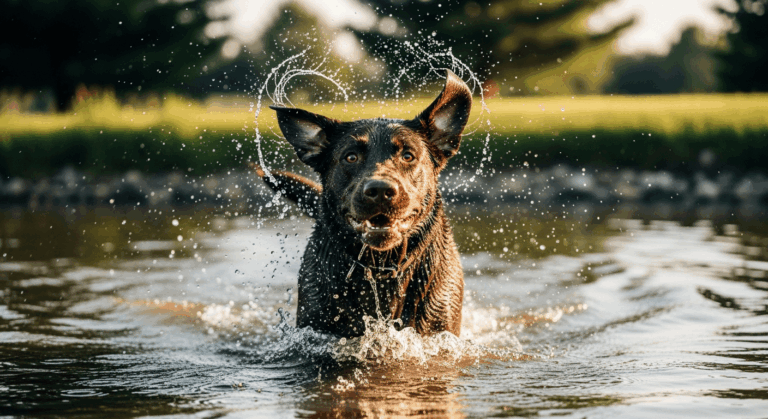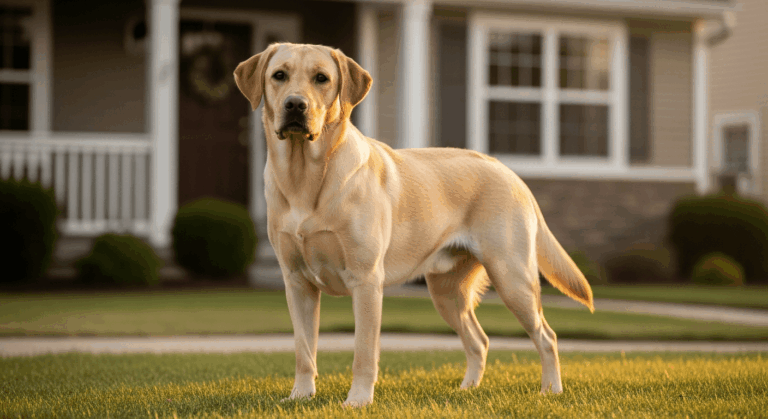
Bathe your Labrador every 6–8 weeks under normal conditions. Labs who swim regularly, work outdoors, or routinely roll in mud may need a bath every 3–4 weeks. Labs with skin conditions should follow a vet-directed schedule. The mistake most new Lab owners make goes the other way — bathing more than once every four weeks strips the natural oils that keep a Labrador’s coat water-resistant and healthy.
How Often Should You Bathe a Labrador?
For a healthy adult Lab with a typical lifestyle, 6–8 weeks between baths is the right baseline. At that frequency, the coat stays clean without losing the natural sebaceous oils that give it its water-resistance, insulation, and shine.
The real-world range is wider. A Lab who swims in a lake three times a week needs attention more often than one who walks on pavement. A Lab that rolled in something dead needs a bath today. Use the 6–8 week guideline as a starting point — let the coat and smell tell you when a bath is actually due.
Labrador puppies under 8 weeks should not be bathed at all. Their temperature regulation isn’t developed enough. From 8 weeks onward, a bath every 4–6 weeks using a gentle puppy shampoo is appropriate. Keep puppy baths warm, brief, and followed by thorough drying.
Why Bathing Too Often Damages a Labrador’s Coat
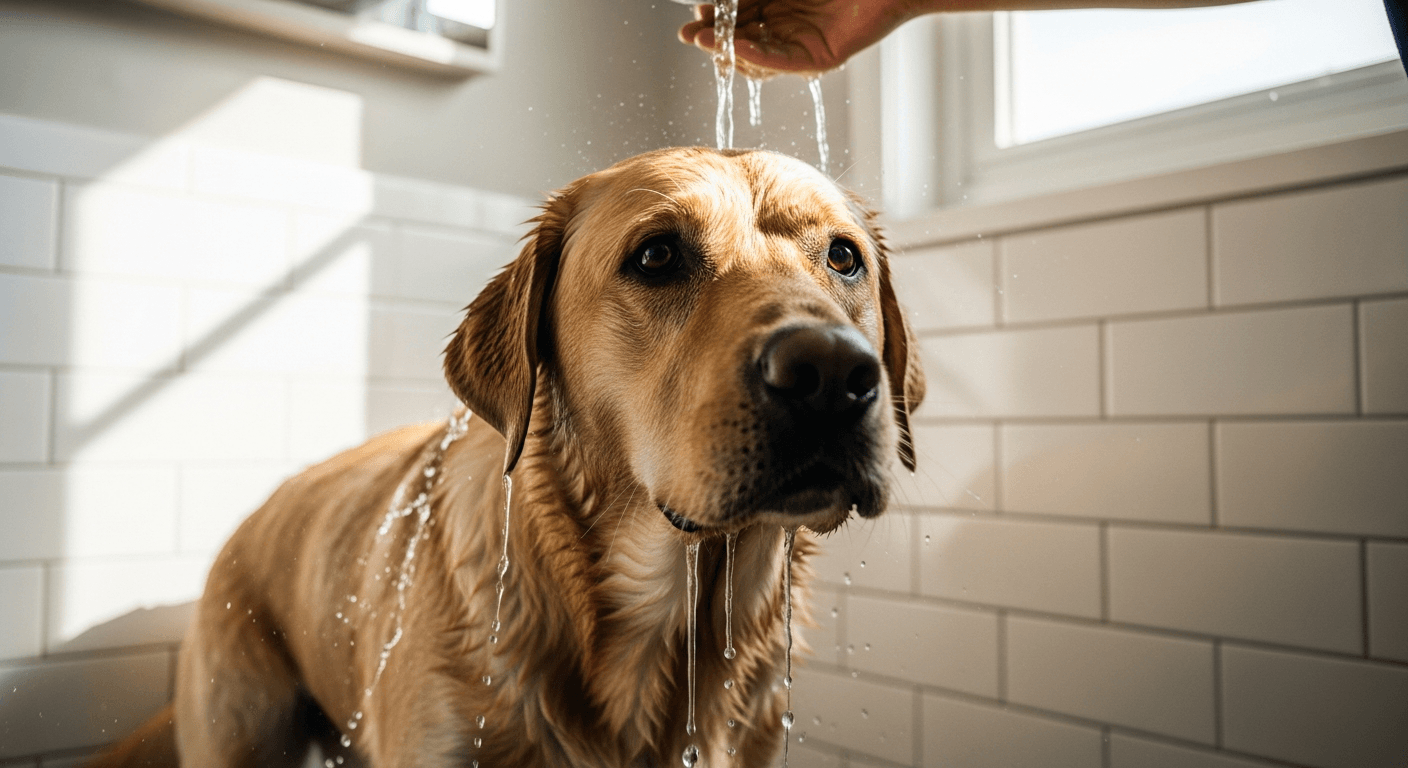
A Labrador’s double coat is designed for outdoor work in demanding conditions. The outer layer of flat guard hairs repels water and mud. The dense undercoat insulates against cold and heat.
Both layers depend on oils produced by the skin’s sebaceous glands — oils that bathing removes. Over-bathing depletes those oils faster than the skin can replace them. The result: a dull, brittle outer coat that no longer repels water effectively, and dry skin that leads to scratching and flaking.
Some Labs then smell worse between baths. Veterinary dermatologists describe this as a compensatory rebound cycle in sebaceous gland activity — the glands overproduce to offset what bathing stripped, which accelerates odor buildup rather than preventing it.
According to the AKC’s Labrador Retriever breed page, Labs should be bathed only when needed, with their natural coat oils treated as essential to coat function — not a grooming nuisance to wash away. A Lab that smells “doggy” after three weeks doesn’t need a bath. It needs a thorough brush.
The Right Shampoo for a Labrador
A Labrador’s guard coat was bred to function in cold water — its weather-repelling properties depend entirely on maintained sebaceous oils. When those oils are disrupted by the wrong shampoo, the coat’s water-resistance degrades faster than it would in a breed whose coat serves a purely aesthetic function. Use a dog-specific shampoo with a pH between 6.5 and 7.5 to match canine skin pH.
Human shampoos run more acidic at pH 4.5–5.5 and disrupt the skin barrier on every use. This includes baby shampoo.
For healthy Labs with no skin issues, an oatmeal-based or moisturizing dog shampoo works well. Regular grooming supports Lab health — it is one of the easiest ways to catch skin and coat problems early. Look for formulas without artificial fragrances, parabens, or sulfates. Products formulated for double-coated breeds typically include conditioning agents that coat the guard hairs without blocking follicles, helping preserve that water-repelling function.
For a deshedding boost during spring and fall coat blows, a deShedding shampoo formulated for double-coated breeds helps loosen the undercoat during the bath so more comes out in the tub and less ends up on your furniture.
For Labs with known skin conditions — seborrhea, recurring yeast infections, or bacterial skin issues — the shampoo choice should come from your vet. Medicated shampoos require the correct active ingredient at the correct concentration. A store pick chosen by scent is not a substitute.
What to avoid: human shampoo, dish soap, whitening shampoos not formulated for dogs, and any product with artificial fragrance as a primary ingredient. Dish soap is particularly damaging for Labradors — it strips the guard-hair layer of the oils that give it its water-repelling function, and it does so more aggressively than even a poorly-chosen dog shampoo. The others either alter skin pH or leave irritant residue trapped in the undercoat.
How to Bathe a Labrador: Step by Step
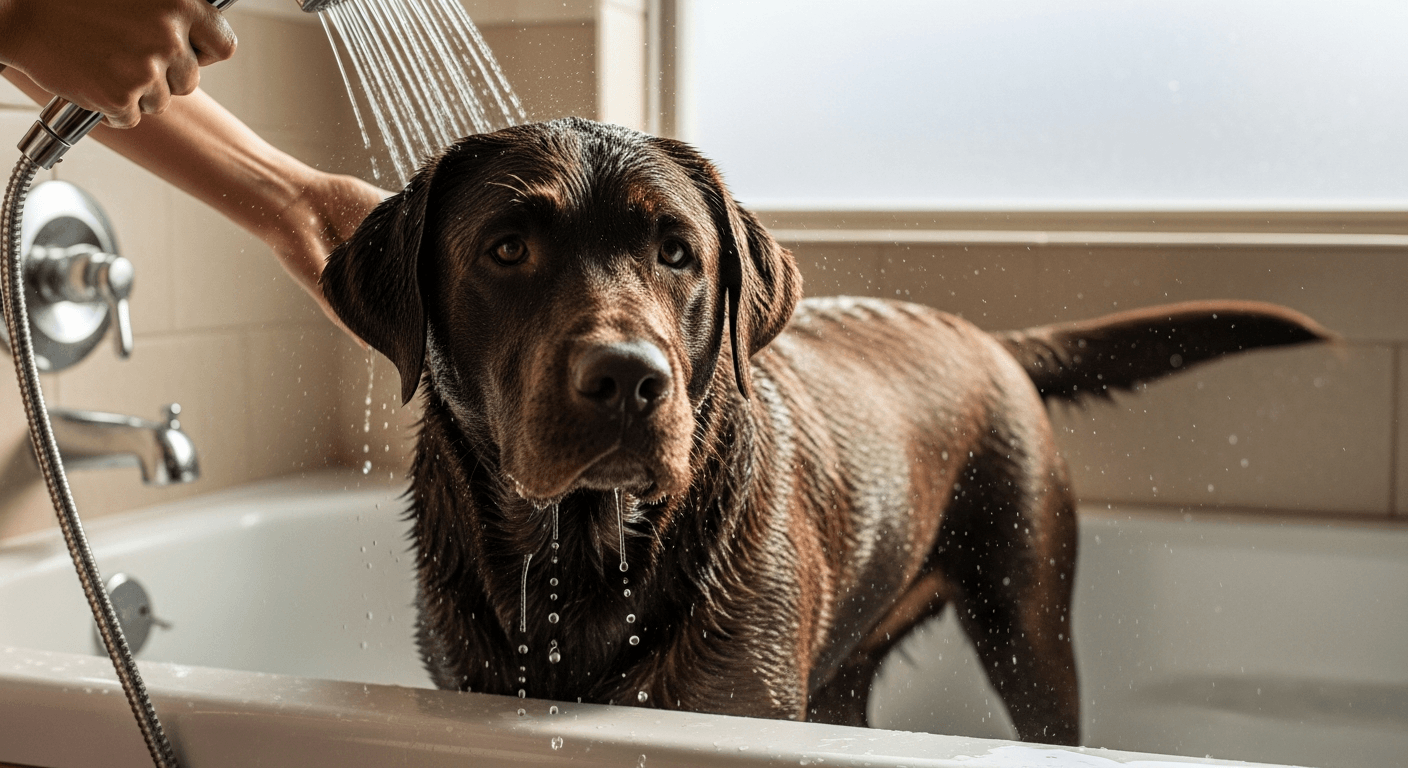
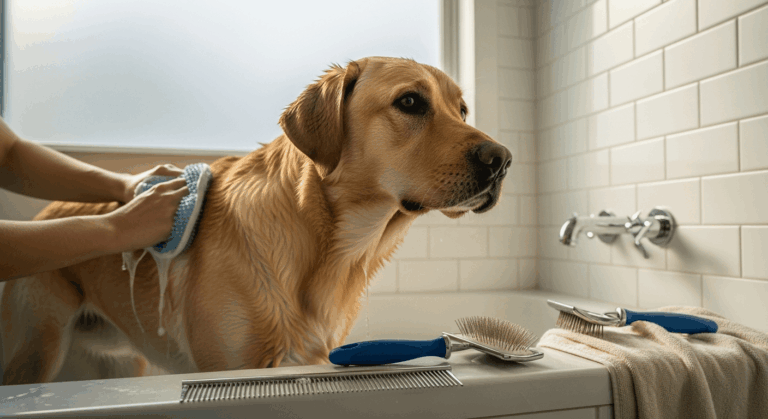
Before the bath: Brush the coat thoroughly to remove loose fur and debris. Bathing a coat that hasn’t been brushed traps dead hair and makes rinsing harder. A 5-minute pre-bath brush saves 10 minutes of work.
Water temperature: Lukewarm — around 100°F (38°C). Hot water irritates and can cause skin redness; cold water is uncomfortable and makes Labs reluctant. Test the temperature on your wrist before starting.
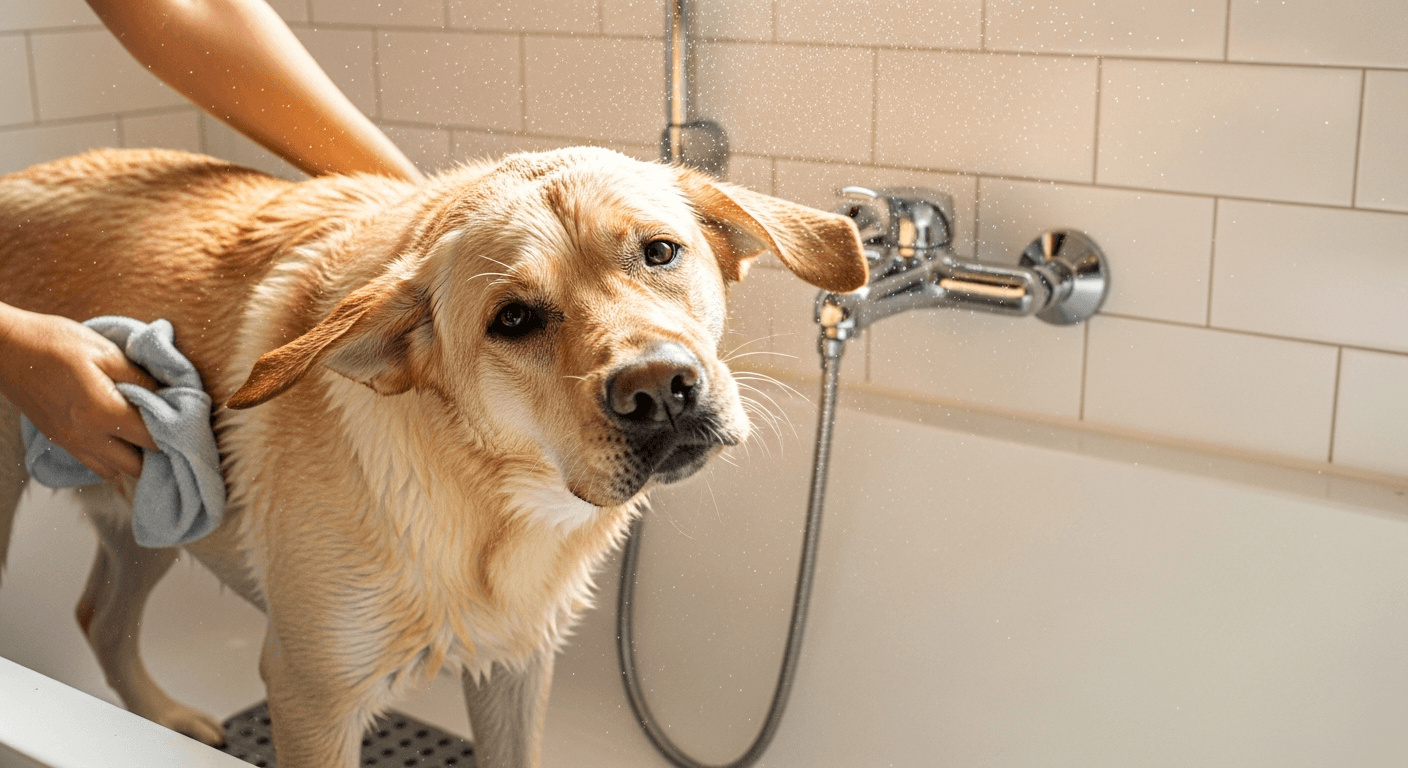
Wetting: Start at the neck and work toward the tail. A Labrador’s double coat is dense — use a detachable shower head or a hose with good pressure to get water through to the skin. A quick surface spray doesn’t wet a Lab coat.
Shampoo: Work into a lather from neck to tail, covering the legs, paws, tail, and underbelly. Clean the face separately with a damp cloth — avoid getting shampoo near the eyes and water into the ear canals.
Rinsing: Rinse until the water runs completely clear and no lather remains anywhere on the coat. The underbelly and the area behind the legs are most often under-rinsed. Shampoo residue left on the skin is the most common cause of post-bath itching and irritation — not the shampoo itself.
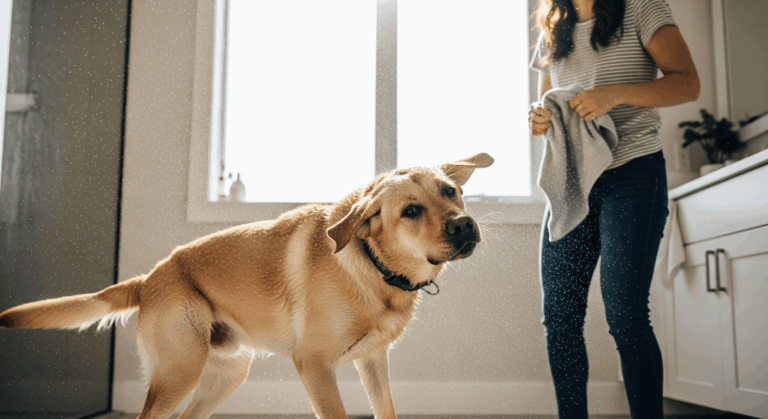
Drying: Pat dry firmly with absorbent towels — don’t rub. Follow with a low-heat dog dryer or a household dryer on the cool setting, kept moving to avoid heat concentration. A fully wet Lab double coat can take 2–4 hours to air dry. Don’t leave a damp Lab in a cold environment — trapped moisture in the undercoat can cause hot spots in warm weather.
What to Do Between Baths
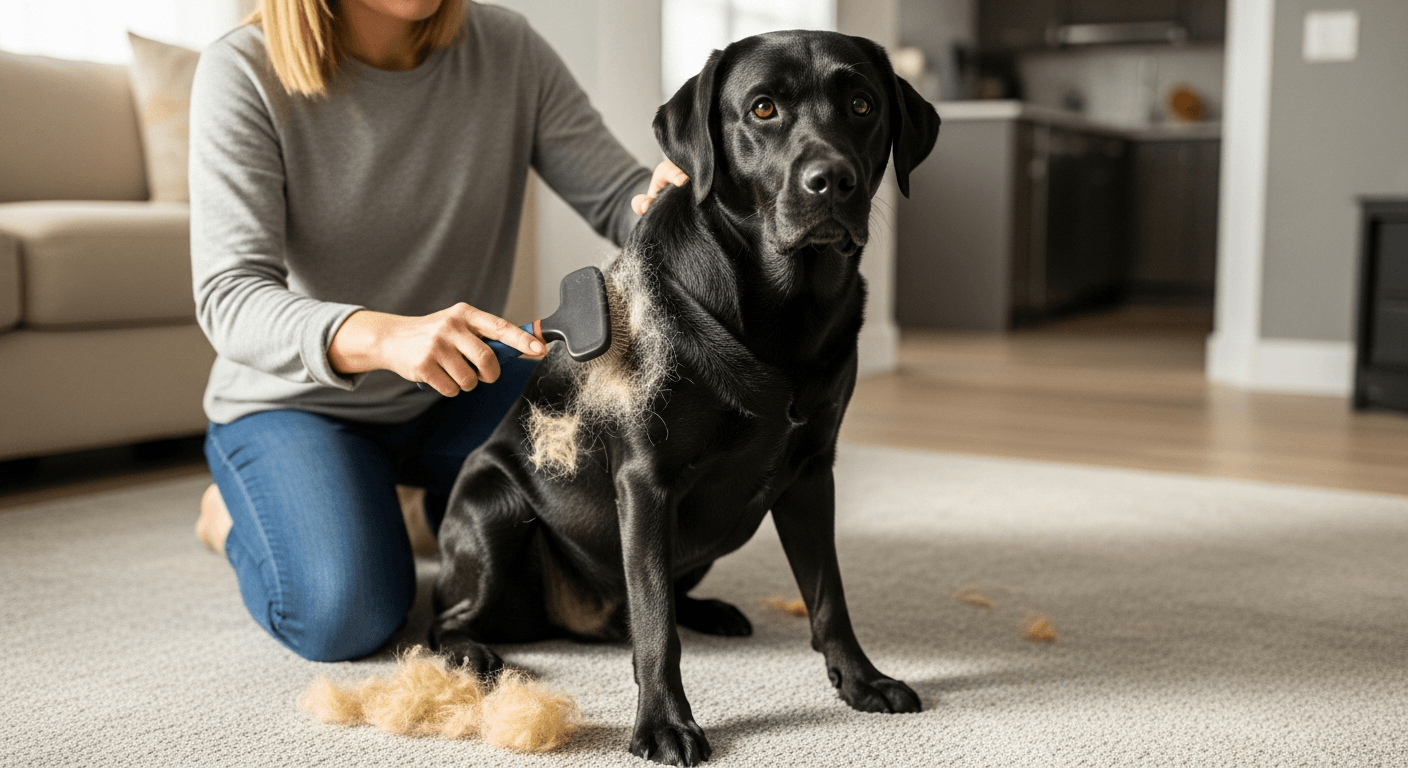
Brushing is what keeps a Lab’s coat in good condition between baths — not bathing more often. A 10-minute brush 2–3 times per week removes loose undercoat, distributes skin oils through the outer layer, and cuts shedding on furniture and floors significantly.
During spring and fall blow coat seasons, Labs shed their entire undercoat over 2–3 weeks. Daily brushing during that period accomplishes more than a bath would and avoids stripping oils at the time the coat is already under the most stress.
For day-to-day maintenance, a slicker brush handles the outer coat. An undercoat rake or deshedding tool is the right call during blow coat. A rubber grooming glove is useful for Labs that are brush-averse — most tolerate it better than a stiff-bristle brush.
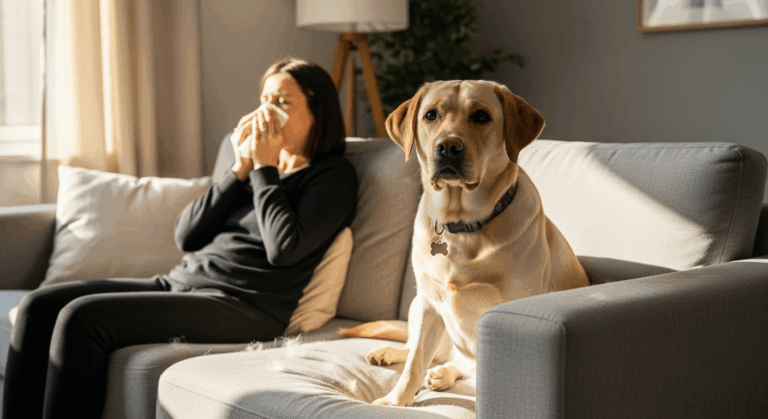
One practical rule for apartment and small-space owners: brush outside the apartment whenever possible. Brushing indoors distributes loose hair across furniture before it can be collected. Outdoors, it goes somewhere that doesn’t need vacuuming.
For the full brushing and grooming routine — tools, technique, and seasonal schedule — see How to Groom a Labrador.
If the volume of shedding is a concern, Do Labradors Shed? covers the blow coat cycle and what’s normal.
Ear Care After Every Bath
Water in a Labrador’s ear canal is the leading cause of ear infections in the breed. Labs already have floppy ears that limit airflow and trap heat — adding trapped bath water makes infection almost inevitable if the ears aren’t dried properly.
After every bath, fold back each ear flap and use a dry cotton ball or soft cloth to absorb visible moisture from the outer ear. Do not insert anything into the ear canal. If your Lab shakes its head repeatedly or scratches at an ear in the days following a bath, check for redness, discharge, or odor — these are early signs of otitis externa (outer ear infection) and warrant a vet visit.
VCA Animal Hospitals recommends using a veterinarian-approved ear-drying solution after water exposure for dogs prone to ear infections. For Labs that swim regularly, this is worth raising with your vet at the next visit.
Frequently Asked Questions: Bathing Your Labrador
Can I bathe my Labrador once a week?
No. Weekly bathing strips the natural oils from the coat and skin faster than they can be replaced. The coat loses water-resistance, skin becomes dry and itchy, and the dog often smells worse between baths as the skin overproduces oil to compensate. Every 6–8 weeks is the right baseline for a healthy Lab.
What shampoo is best for a Labrador?
An oatmeal-based or moisturizing dog shampoo with a dog-appropriate pH (6.5–7.5) and no artificial fragrances. Formulas designed for double-coated breeds are a practical starting point. For Labs with diagnosed skin conditions, the shampoo choice should come from your vet. Never use human shampoo, dish soap, or whitening formulas not designed for dogs.
Should I bathe my Labrador before or after grooming?
Brush first, then bathe. A pre-bath brush removes loose fur and any tangles that would make rinsing difficult. After the bath, brush again once the coat is fully dry to redistribute skin oils and clear out any remaining loose undercoat.
How do I prevent ear infections after bathing?
Dry the ears immediately after the bath. Fold back the ear flap and absorb visible moisture with a cotton ball or soft cloth — don’t insert anything into the canal. For Labs that swim regularly, ask your vet about an ear-drying solution designed for floppy-eared breeds.
How often should I bathe a Labrador puppy?
From 8 weeks onward, every 4–6 weeks using a gentle puppy shampoo. Puppies under 8 weeks should not be bathed — their temperature regulation isn’t ready for it. Keep puppy baths warm and brief, and dry thoroughly before putting them back in their crate or sleeping area.
Every 6–8 weeks, a proper brushing routine between baths, and a dog-specific shampoo — that’s the full bathing program for a healthy Lab. Bathing more often creates problems; bathing correctly prevents them. For the full care routine beyond bathing, see our Complete Guide to Living with a Labrador.