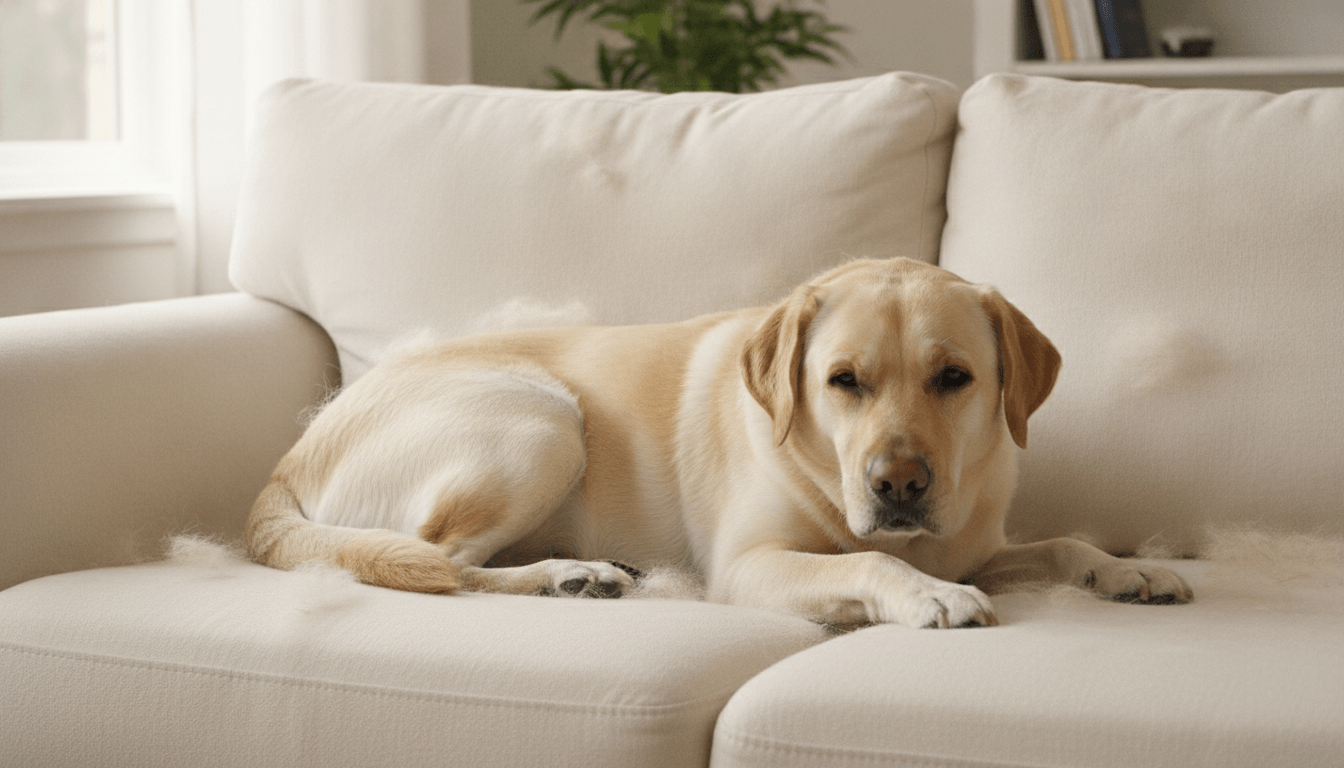
Yes, Labradors shed — heavily, and year-round. Most new Lab owners describe it as the single biggest surprise of owning the breed. They expected some hair. They didn’t expect hair on the sofa, in their coffee, and embedded in their car upholstery within the first two weeks. This post covers exactly what the shedding looks like, when it peaks, and which tools and habits actually keep it manageable.
How Much Do Labradors Shed?
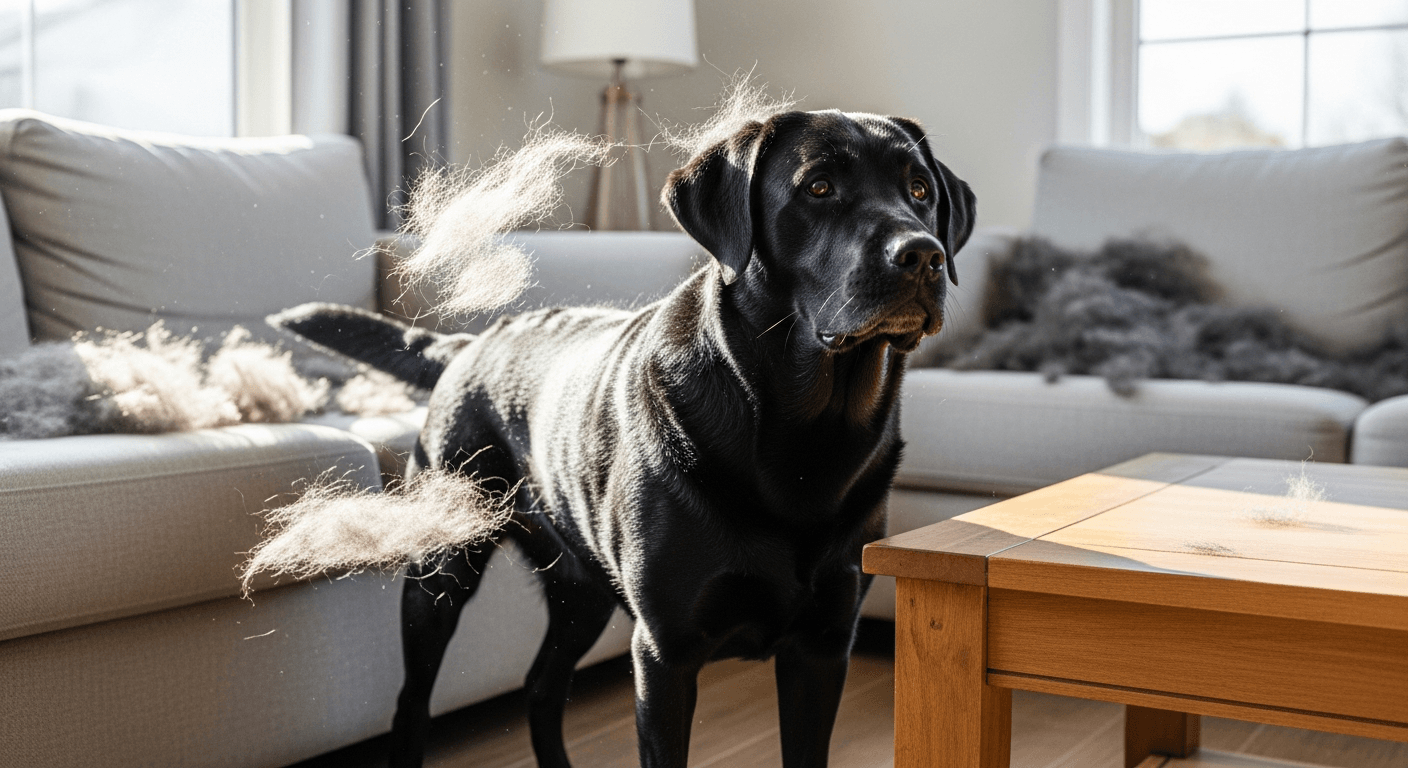
More than most people expect before bringing one home. Both layers of the Lab’s coat — the short, dense outer coat and the thick, insulating undercoat — release hair continuously. This isn’t occasional. It’s a daily reality that runs 365 days a year.
To put it in context: Labs shed more than a German Shepherd, considerably more than a Golden Retriever, and roughly half as much as a Husky at peak season. If you’ve previously owned a Poodle or a Doodle, the difference when you get your first Lab will be visible in week one.
A single brushing session on a healthy adult Lab produces enough loose hair to fill a large zip-lock bag. During the two seasonal peaks, that output roughly triples. Black Labs show on light floors and pale clothing. Yellow and chocolate Labs show on dark upholstery, car seats, and dark trousers. Every color sheds the same amount — only the surfaces where it’s most visible differ.
The one honest bit of reassurance: Labrador shedding is predictable. Unlike some breeds with irregular or stress-triggered coat drops, Labs follow a consistent pattern that you can plan around.
Labrador Shedding Seasons: When It Gets Worse
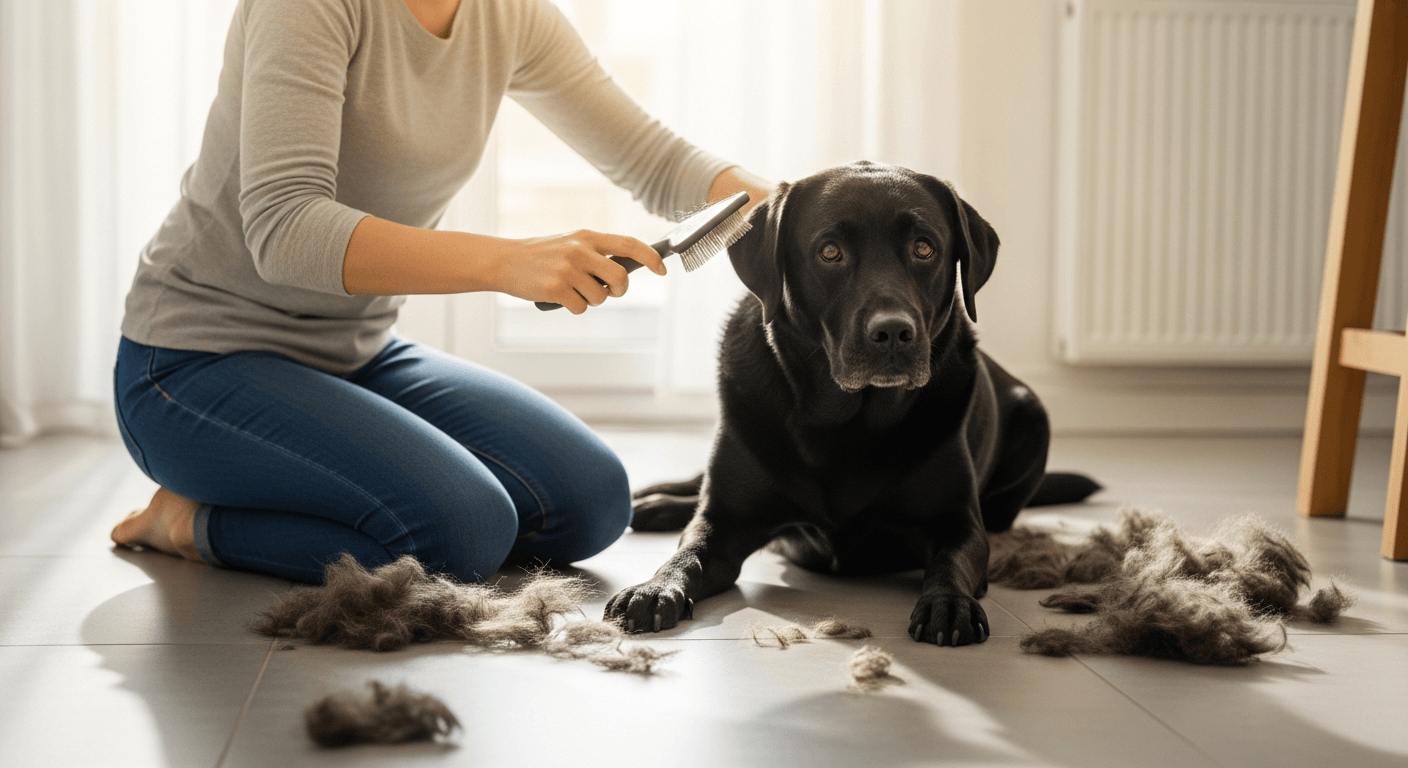
Labrador shedding is constant, but twice a year the volume escalates significantly during what breeders call a “blow coat.” This is when the dog sheds an entire seasonal undercoat to make room for the next one.
The spring blow coat typically runs March through April and is the heavier of the two. Your Lab is releasing the thick winter undercoat it built up over the colder months. The fall blow coat runs September through October, when the lighter summer coat releases and denser winter growth begins. Each period lasts 2–4 weeks.
The trigger isn’t the calendar date — it’s changes in daylight and temperature. Labs that live primarily indoors with central heating and stable temperatures often shed more evenly year-round, with less dramatic seasonal peaks. When environmental cues are muted, so is the blow coat cycle.
Spayed and neutered Labs frequently shed differently from intact dogs. Hormonal disruption often produces heavier year-round shedding with less predictable seasonal spikes. This is normal — just something to factor into your routine.
A reliable signal that your Lab is entering a blow coat: your regular brushing session suddenly produces three times the hair it did the week before. That’s the undercoat coming loose, not a health problem.
Why Labradors Shed So Much: The Double Coat Explained
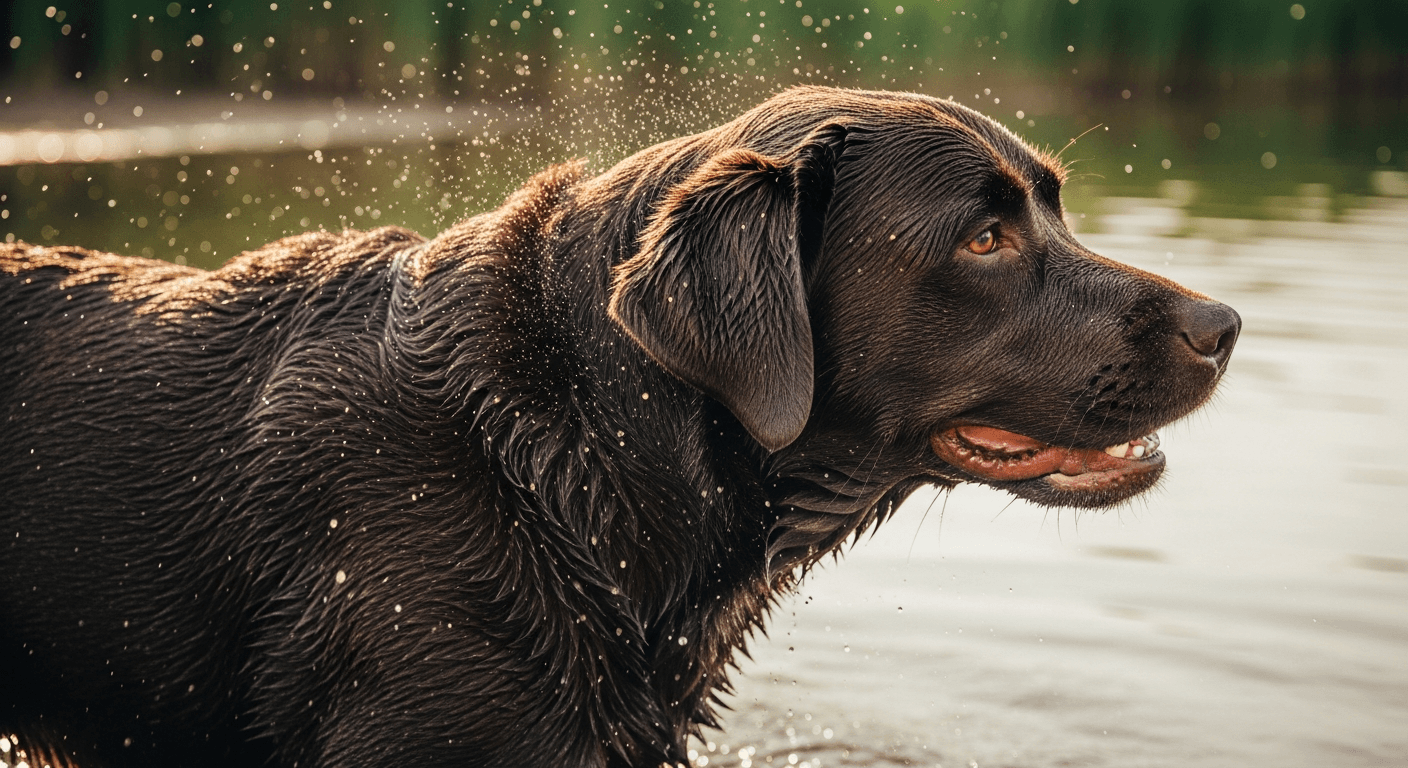
Labradors were bred to retrieve in cold water and harsh weather. Their coat was designed for those conditions — and shedding is an unavoidable feature of how it works.
The outer coat is made up of short, dense guard hairs. They repel water, protect the skin from mud and debris, and regulate temperature. The undercoat sits beneath them — a softer, thicker layer that insulates against both cold and heat. Both layers shed continuously, but it’s the undercoat that produces the large seasonal releases.
One of the most common responses new Lab owners have is to consider shaving the coat to reduce shedding. The AKC advises against shaving any double-coated breed, and for good reason. Shaving removes the outer guard hairs and exposes the undercoat, which disrupts the coat’s ability to regulate temperature in both directions — the undercoat insulates against heat as well as cold. The coat frequently grows back with a different, often coarser texture. And the shedding doesn’t stop — it often worsens.
Labrador shedding is genetic. It cannot be trained away or eliminated. The goal is management, not eradication.
Tools and Techniques That Actually Work
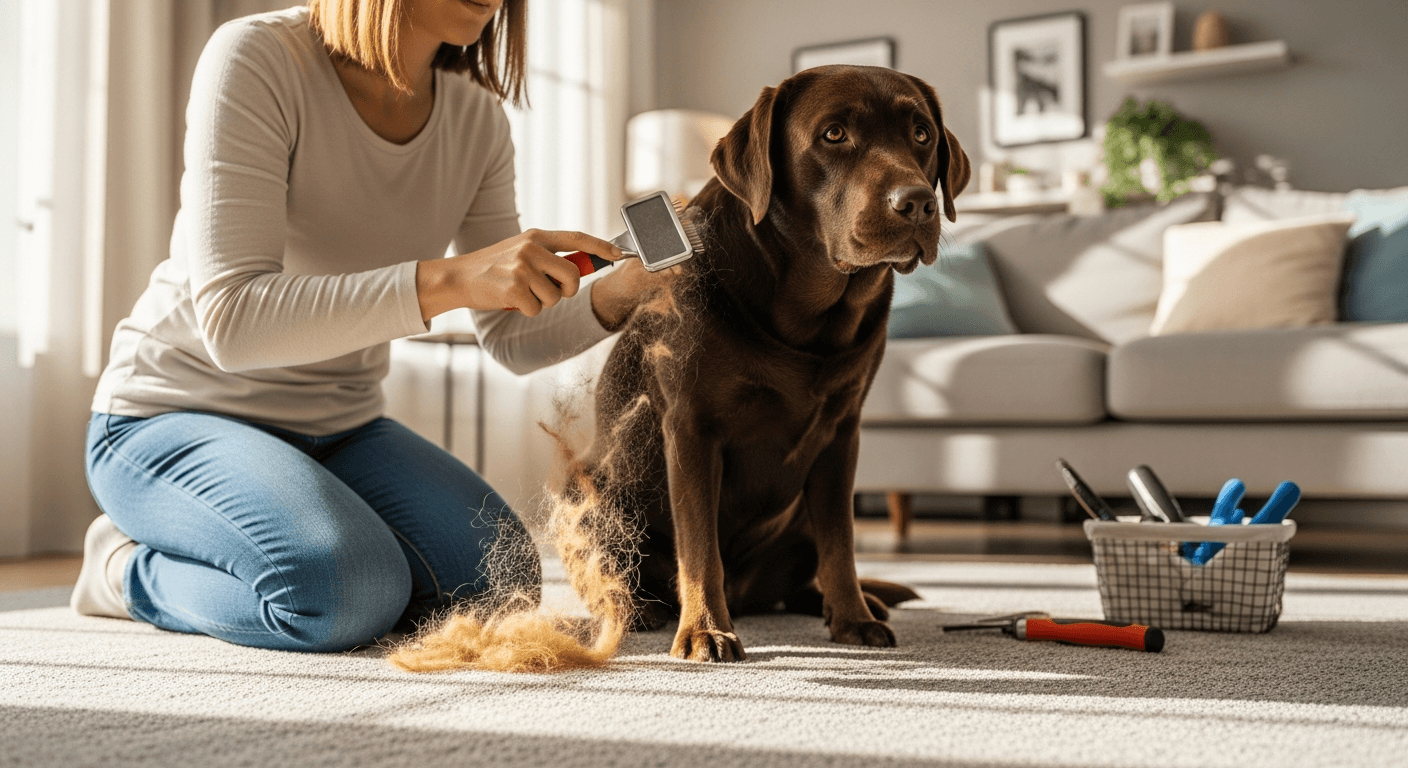
Brushing is the highest-leverage action you can take. Hair removed during a brushing session is hair that doesn’t land on your sofa. Done consistently, a proper brushing routine cuts visible household hair by around half.
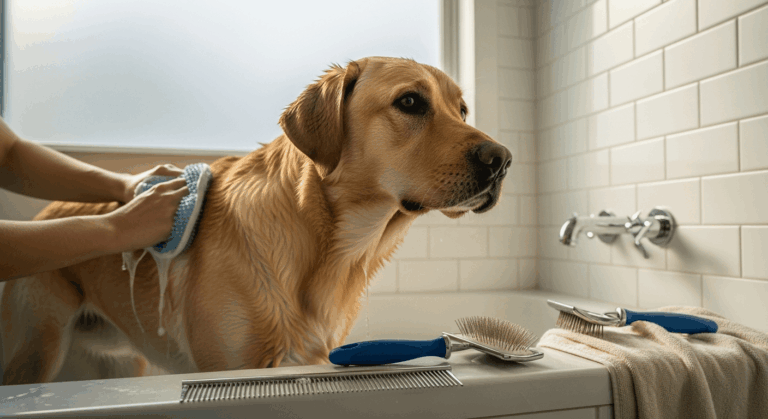
Slicker brush — Use 2–3 times per week as standard maintenance. It handles the outer coat well and picks up loose surface hair without being aggressive enough to pull. Gentle enough for daily use and appropriate for Labs that are sensitive about grooming.
Undercoat rake (deshedding rake) — The most important tool you’ll own. The long, widely-spaced tines reach through the outer coat and pull loose undercoat out before it releases naturally. During the 2–4 week blow coat season, use this daily. It will pull out far more hair in a 10-minute session than any vacuum recovers from your floors all week.
Deshedding blade (FURminator or equivalent) — Effective at bulk undercoat removal during peak shedding, but use with restraint. Limit it to 1–2 times per week maximum. Overuse strips too much coat and can irritate the skin. It’s a targeted seasonal tool, not a daily brush replacement.
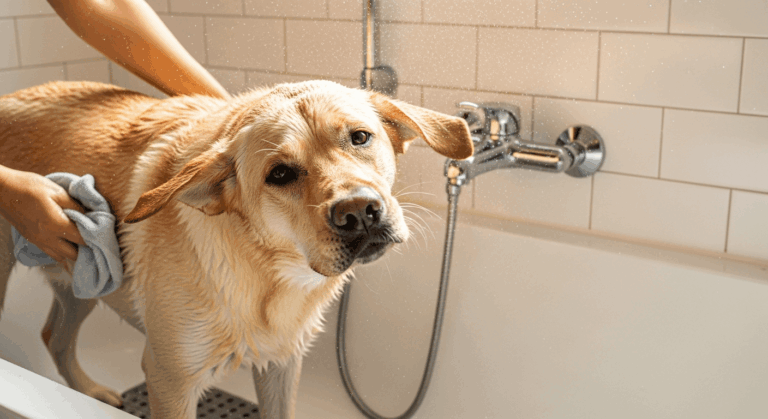
One technique worth knowing: bathing your Lab in warm water before a brushing session significantly accelerates the blow coat release. Warm water loosens the undercoat, drying it pulls it to the surface, and then the undercoat rake removes it efficiently. Many owners who add a mid-blow-coat bath to the routine shorten the worst shedding period by 3–5 days.
Professional groomers who offer a high-velocity deshedding blow-dry can remove a substantial volume of undercoat in a single session. Booking this twice a year — once at the start of each blow coat — is a legitimate shortcut if your budget allows it.
For the complete grooming routine including bathing frequency and nail care, see How to Groom a Labrador.
Vacuums, Home Solutions & Daily Management
The right household tools reduce the workload considerably.
Cordless stick vacuum with a motorized pet brush head — Lab hair clogs non-pet vacuums quickly and usually requires emptying after a single room. A pet-specific vacuum with a washable filter and a brush roll designed for long, dense hair handles the volume without constant maintenance. Running it daily through the rooms your Lab uses most takes under 5 minutes and prevents buildup.
Rubber lint roller (reusable) — The rubber-coated reusable rollers outperform disposable tape versions on upholstery and car seats. One pass picks up what three tape strips would miss, and they rinse clean under the tap.
Washable furniture covers — Place one on your Lab’s regular spot on the sofa or their dog bed. Weekly washing of that cover controls the main concentration point for hair and dander. It also protects upholstery during the blow coat months when volume spikes.
HEPA air purifier — A HEPA-filter purifier captures airborne hair particles and dander at a level a standard filter can’t match. Worthwhile for any household member with sensitivities, and useful during blow coat weeks even in otherwise healthy homes.
Hard floors beat carpet — Hair on hard floors is visible and easily swept or vacuumed. Hair in carpet embeds at fibre level and requires significantly more effort to extract. If you have a choice when setting up a Lab-friendly space, hardwood or tile is considerably easier to maintain.
Diet, Supplements & Coat Health
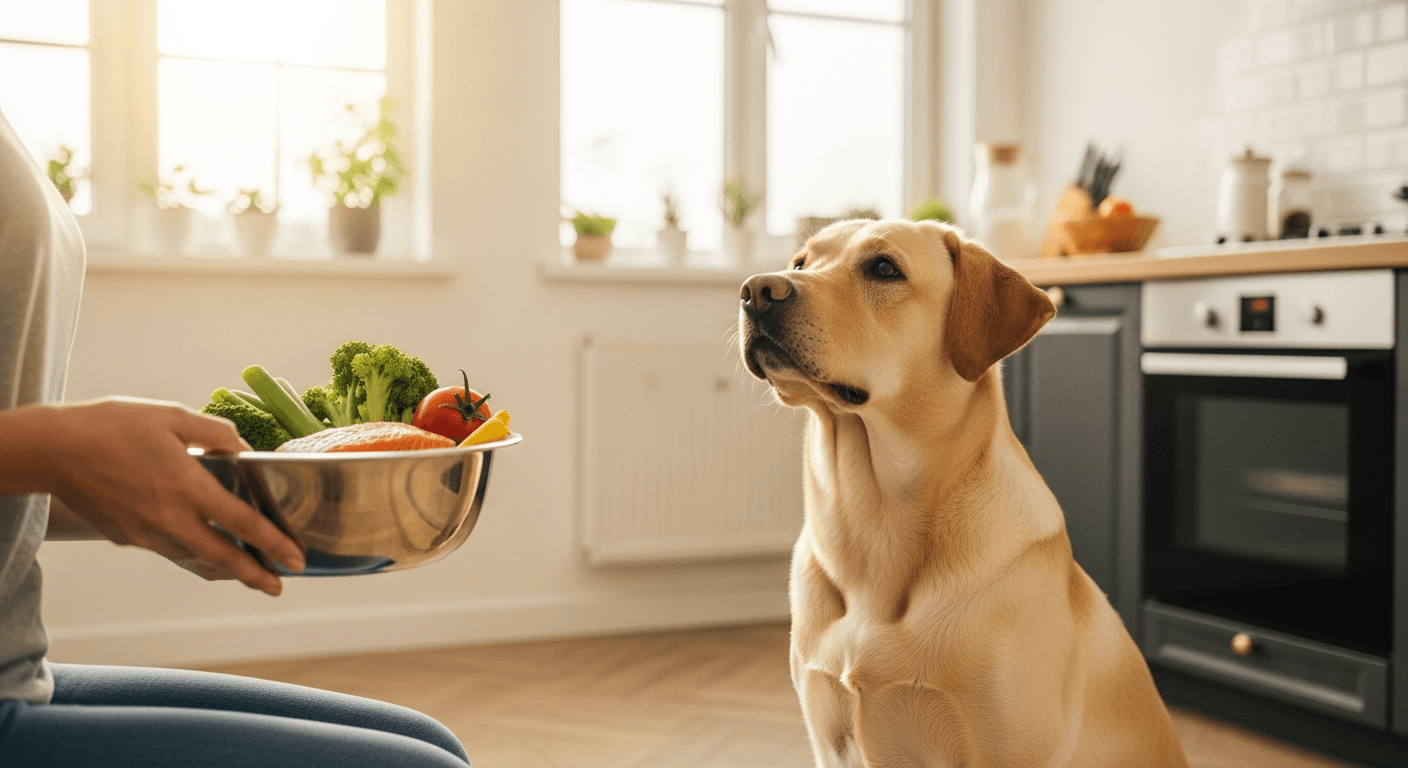
Nutrition has a real but limited effect on shedding. The right diet won’t stop a Lab from shedding — the breed’s shedding is genetic. But a poor diet can make shedding significantly worse than baseline, and a good diet visibly improves coat condition. For more, see our Labrador Skin Problems: Causes, Diagnosis & Relief.
Omega-3 fatty acids are the most evidence-supported dietary addition for coat health. Fish oil — specifically the EPA and DHA forms — reduces skin inflammation and improves coat quality. According to VCA Animal Hospitals, omega-3 supplementation can reduce excess shedding linked to dry skin and coat stress. Most veterinary guidance suggests approximately 20 mg of combined EPA and DHA per pound of body weight daily for dogs. For a 65-pound adult Lab, that’s roughly 1,300 mg per day — available as fish oil capsules or in liquid form added to food.
Signs that shedding has a dietary component: brittle hair, visible dandruff alongside heavy shedding, and a dull coat that lacks the typical Lab gloss. These suggest the dog’s diet isn’t meeting its nutritional needs.
Protein quality matters. Labs fed low-quality kibble with high grain filler content often shed more than Labs on a high-protein, nutrient-dense food. You don’t need the most expensive option on the market, but ingredient quality has a visible effect on coat condition over 2–3 months.
One honest note: biotin supplements are frequently marketed for dogs with coat and shedding issues. The evidence for biotin benefit in otherwise healthy Labs is weak. Focus on omega-3s and food quality before spending anything on biotin.
Frequently Asked Questions: Labrador Shedding
Do Labradors shed a lot?
Yes — heavily, and year-round. Both layers of the Labrador’s double coat release hair continuously, with two major peaks each spring and fall when the undercoat sheds rapidly. A single brushing session on an adult Lab can fill a large zip-lock bag with loose hair. Of the surprises first-time Lab owners consistently report, heavy shedding is the most common.
When do Labradors shed the most?
The heaviest shedding occurs during the spring blow coat (March–April) and the fall blow coat (September–October). Each lasts 2–4 weeks. Outside of these peaks, Labs shed moderately every day of the year. There is no genuinely low-shedding period.
How do I reduce my Labrador’s shedding?
You can’t eliminate it, but consistent management makes it livable. Brush 2–3 times per week with a slicker brush outside of blow coat season. Switch to daily undercoat rake sessions during the 2–4 week blow coat periods. Add fish oil (omega-3 EPA and DHA) to the diet — it reduces excess shedding linked to dry skin and improves coat condition over time. A warm bath before a blow coat brushing session accelerates the loose undercoat release.
Are Labradors hypoallergenic?
No. Labradors are not hypoallergenic. They shed heavily and produce significant dander, which is the primary allergen for most people with pet sensitivities. If managing pet allergies is a priority, a Poodle or Poodle-cross would be a more suitable fit.
What is the best brush for a Labrador?
An undercoat rake for year-round use — it reaches the dense undercoat where the bulk of the hair comes from. A slicker brush for daily surface maintenance. A FURminator-style deshedding blade for peak shedding periods, used no more than 1–2 times per week. All three serve different purposes; using each at the right time is more effective than relying on one alone.
Does diet affect Labrador shedding?
Yes, partially. A diet low in quality protein or omega-3 fatty acids can cause excess shedding beyond the breed’s natural baseline. Fish oil supplementation has a genuine evidence base for improving coat condition and reducing shedding tied to dry skin. No diet eliminates the genetic shedding pattern — nutrition affects coat health, not the underlying biology.
Managing Labrador Shedding: What Actually Works
Labrador shedding is manageable — not stoppable. A consistent brushing routine, the right tools, and a quality diet with fish oil keep household hair at a level that most owners find workable after the first few months. The first blow coat is usually the biggest adjustment. After that, the routine becomes second nature. For the complete grooming calendar — including bathing, nails, ears, and seasonal planning — see How to Groom a Labrador.