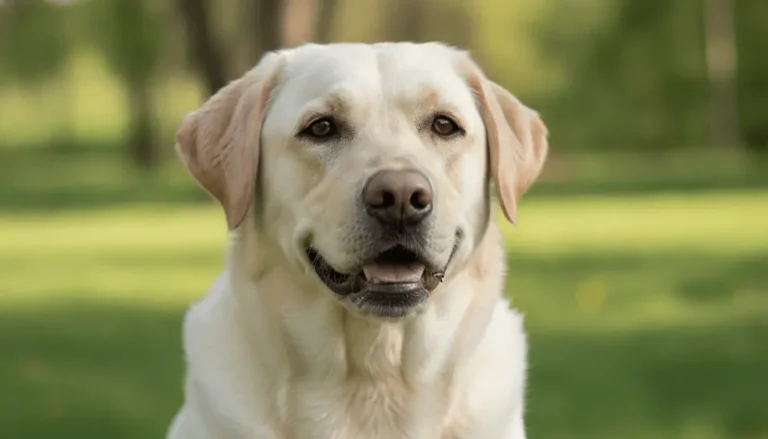
If you’ve come across a Mountain Cur Lab mix — or you’re considering bringing one home — you’re looking at one of the most capable working-dog hybrids in the mixed-breed world. Its Labrador parent is recognized by the AKC. This dog pairs Labrador Retriever friendliness and trainability with Mountain Cur drive and athleticism. The result is loyal, energetic, and genuinely impressive when properly exercised and trained. It is not, however, a dog for everyone.
This guide covers everything a first-time owner of this labrador retriever mountain cur mix needs to know: size, coat, temperament, training requirements, exercise needs, grooming, health, and whether this is realistically the right dog for your household.
What Is a Mountain Cur Lab Mix?
The Mountain Cur Lab mix is a cross between the Labrador Retriever and the Mountain Cur — two working breeds with very different histories.
The Labrador Retriever originated in Newfoundland and was bred to retrieve game from cold water. Labs are people-oriented, eager to please, adaptable to family life, and widely considered one of the easiest large breeds to train. They were listed as the most popular dog breed in the United States for over 30 consecutive years by the American Kennel Club, and that popularity is entirely deserved.
The Mountain Cur is a different animal — literally and temperamentally. Developed in the American South as a treeing and hunting dog, the Cur is purpose-built for work. These dogs are territorial, high-drive, alert, and capable of working independently without handler direction. They were used to hunt squirrel, raccoon, and boar. They’re not unfriendly, but they’re wired for a job, and they don’t do well without one.
When you cross these two, you get the lab mountain cur mix: a dog with the Lab’s social warmth layered over the Cur’s working instincts. That combination can produce an outstanding dog in the right hands. It can also produce a frustrating, difficult dog if the owner isn’t prepared for the Cur side.
The breed is recognized by the American Canine Hybrid Club under the name “Mountain Lab,” though most people searching for this dog use mountain cur lab mix, mountain cur and lab mix, or mountain cur labrador mix interchangeably.
Size and Physical Appearance
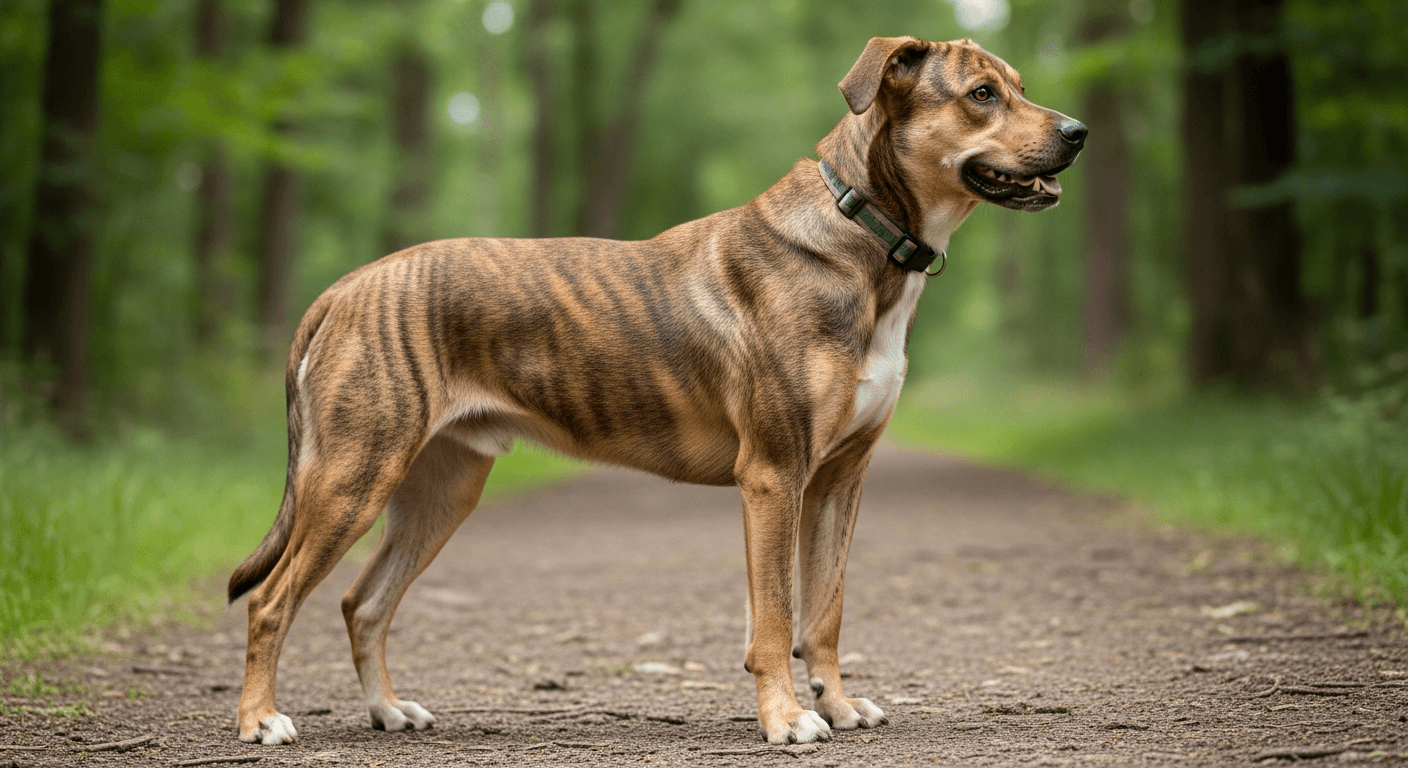
The mountain cur lab mix full grown is a medium to large dog. Size varies depending on which parent’s genetics dominate, but most adults land in this range:
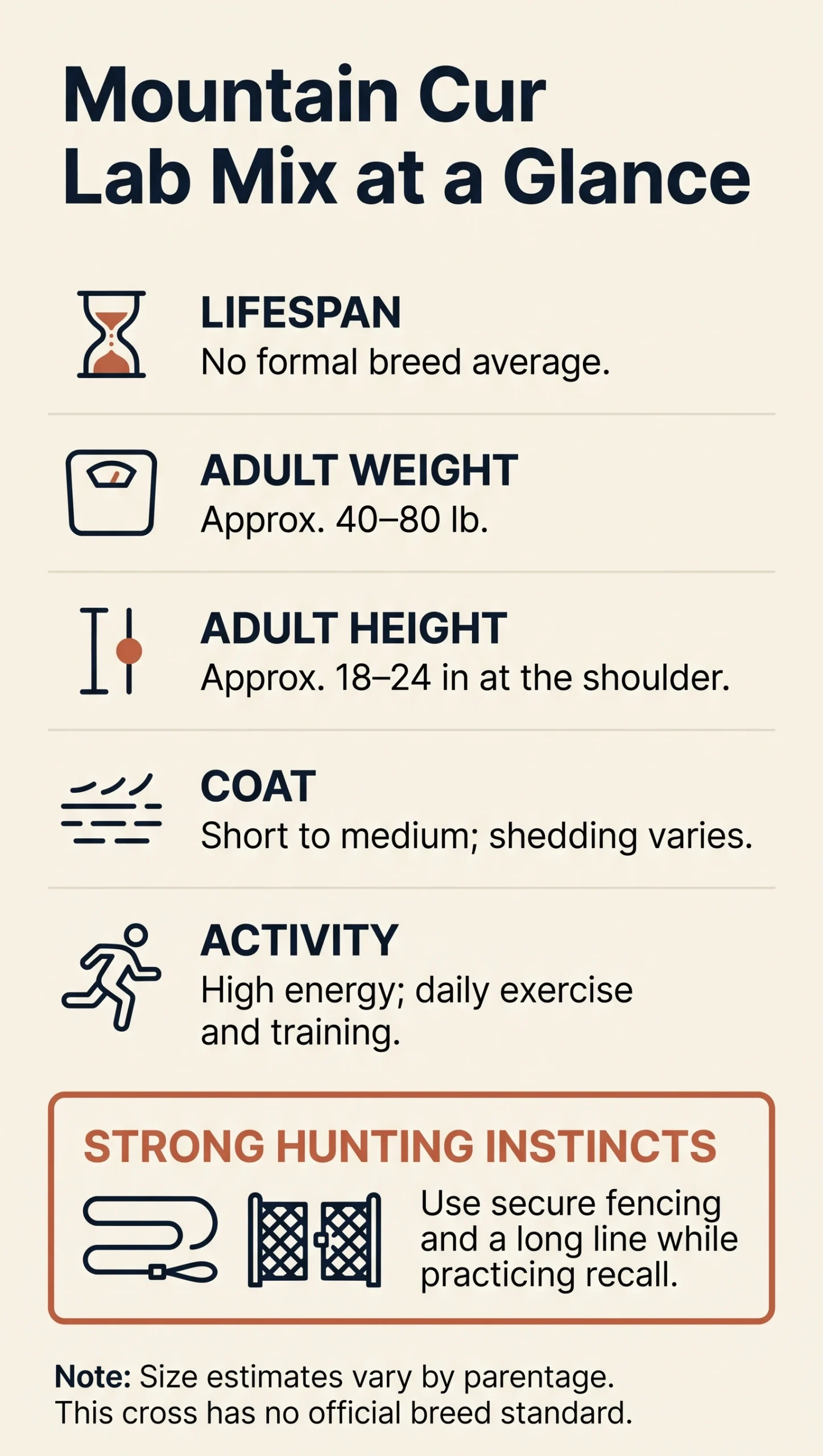
- Weight: 40–80 lbs (most commonly 50–70 lbs)
- Height: 18–24 inches at the shoulder
- Build: Athletic, lean to medium-set, with strong hindquarters inherited from the Cur side
The coat is typically short to medium length and dense. It sheds moderately year-round — more on that in the grooming section. Coat color varies widely. A black lab mountain cur mix is the most common color variant, but yellow, tan, and brindle are all possible. The mountain cur lab mix brindle pattern — dark stripes on a lighter base — is particularly striking and appears regularly in this cross, inherited from the Mountain Cur’s range of coat colors. A mountain cur yellow lab mix will often carry the Lab’s yellow pigment with a slightly leaner, more angular build than a purebred yellow Lab.
Eyes are typically brown to amber. Ears are floppy to semi-erect, often somewhere between the Lab’s full drop and the Cur’s more upright set. The tail is medium length and carried with energy when the dog is engaged.
If you’re wondering what a full grown mountain cur lab mix looks like in person: picture a Labrador that’s been built for endurance rather than stockiness. Less barrel-chested, more aerodynamic. It’s a visually impressive dog.
Temperament and Personality
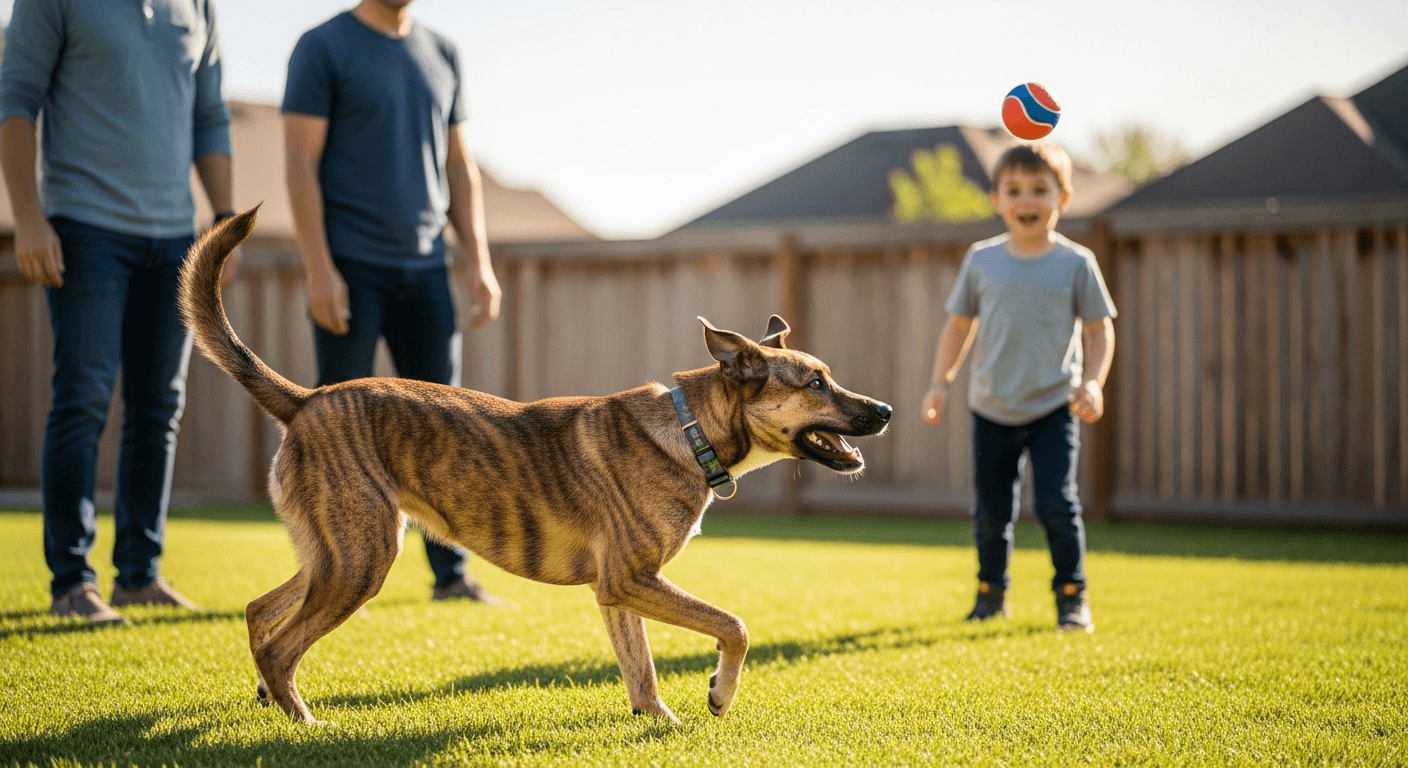
The temperament of this mix is where most people are either pleasantly surprised or caught off-guard.
From the Lab side: Friendly, social, and deeply bonded to their family. These dogs want to be where you are. They’re not aggressive toward strangers by default and they enjoy interaction with children, other dogs, and new people — provided they’ve been properly socialized.
From the Mountain Cur side: Alert, territorial, and prey-driven. The Cur is not an unfriendly dog, but it was bred to be watchful and to act on instinct when wildlife or an unfamiliar animal enters its territory. This means the mountain cur lab mix may bark at perceived intrusions, may chase small animals, and may be cautious or standoffish with strangers until they’ve been formally introduced.
Put them together and you get a dog that is loyal to the point of protectiveness, highly energetic, and intelligent enough to develop its own solutions to problems — which isn’t always what you want. This mix will not be content lying on the couch while you watch television. It needs outlets for both its physical energy and its mental drive.
The honest answer to “is this a good family dog?” is: yes, for the right family. Active households with children who understand how to interact with dogs will find this mix rewarding. Sedentary households, or families with very young children or small pets, may struggle. The prey drive is real and should be taken seriously.
Training a Mountain Cur Lab Mix
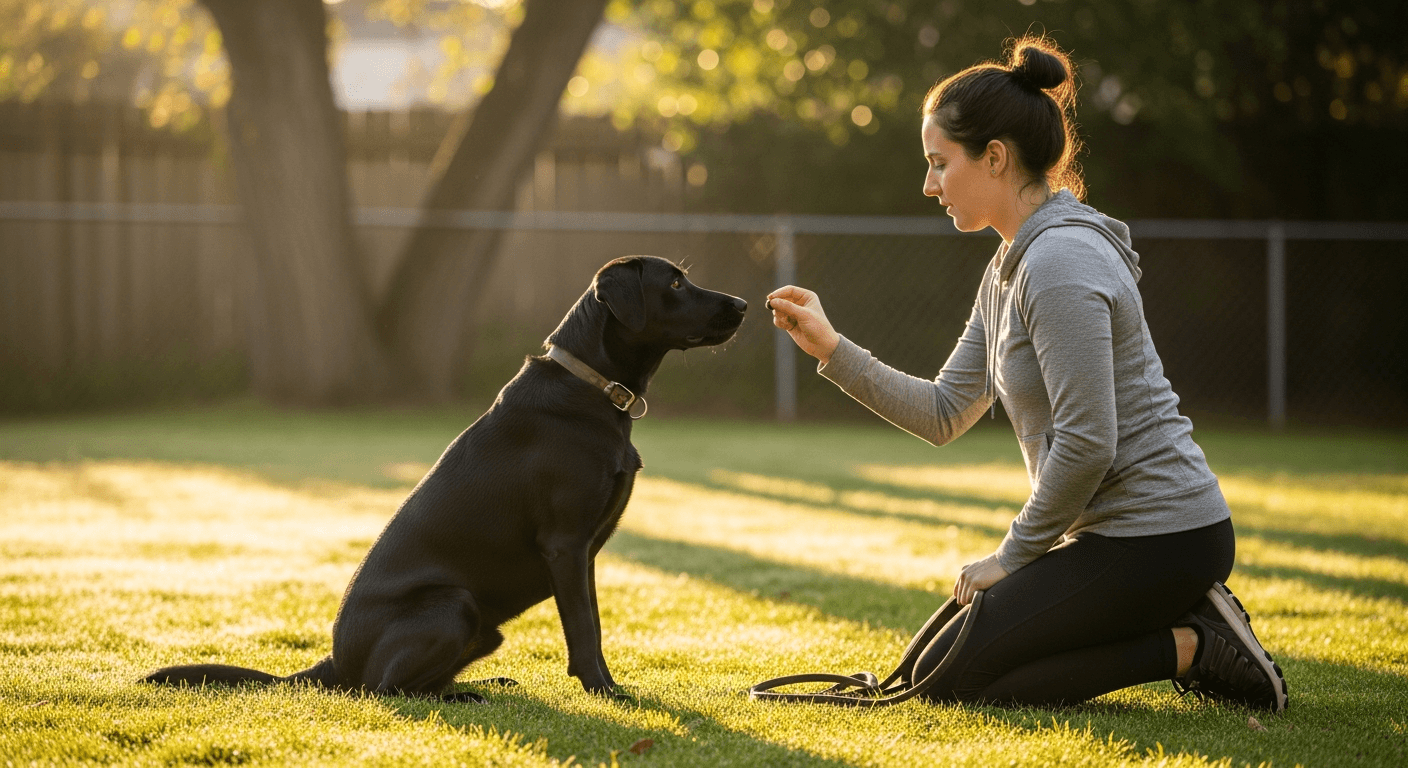
The mountain cur lab mix is highly trainable, but it requires consistency and a clear understanding of what you’re working with.
The Lab’s eagerness to please gives you a significant advantage. These dogs respond well to positive reinforcement and actively enjoy training sessions when they’re structured correctly. Start early — ideally during the puppy stage — and maintain short, frequent training sessions (10–15 minutes) rather than long occasional ones.
The Mountain Cur influence can introduce stubbornness. The Cur was bred to make independent decisions in the field, and that independence doesn’t disappear in a mixed-breed dog. When this mix decides to follow a scent or pursue prey, recall can fail — even in dogs that are otherwise reliable. This is not defiance; it’s genetics. Work around it with management (fenced areas, long-line practice) and consistent recall training from day one.
Positive reinforcement is non-negotiable. Harsh corrections or punishment-based training can trigger the Cur’s defensive instincts and damage the trust that makes this mix so enjoyable to train when things are going right. Keep high-value training treats on hand — small, soft treats that the dog can consume quickly without breaking rhythm. We recommend Zuke’s Mini Naturals on Chewy for this mix due to their small size and strong scent.
For recall specifically, a 30-foot training lead is an essential tool in early training. It gives your dog the sensation of freedom while keeping you in control during the critical recall-building phase. A long recall lead on Chewy (we like this biothane option) gives you safe off-leash practice in open fields before your dog has earned full off-leash privileges.
Early socialization is just as important as obedience training. Expose your mountain cur lab mix puppy to a wide range of people, dogs, sounds, and environments between 8 and 16 weeks. This is the window that shapes how the Cur side expresses itself — a well-socialized Cur cross is confident and manageable; a poorly socialized one can be reactive and difficult.
Crate training is strongly recommended. It provides the dog with a safe space, supports house training, and prevents destructive behavior during the hours you can’t supervise directly.
For a full positive-reinforcement framework, see our complete Lab training guide — the principles apply directly to this mix.
Exercise and Energy Needs
This is a high-energy dog. Minimum daily exercise is 60–90 minutes, and more is better. A brisk walk around the block is not sufficient. This mix needs real work: hiking, swimming, fetch, agility, or structured trail running.
A few important management points:
- Off-leash only in fenced areas. The prey drive in this mix is strong enough that a squirrel or rabbit can override recall training, even in well-trained dogs. Never trust this mix off-leash in an unfenced public area until you have hundreds of hours of proven recall reliability.
- Not suited for apartments. This dog needs space and outdoor access. A house with a yard is the baseline requirement; rural or semi-rural settings are ideal.
- Mental exercise matters as much as physical. Without mental engagement — puzzle feeders, nose work, training challenges — this mix will find its own entertainment, usually destructively.
The best activities for this dog are those that engage both its body and its working instincts: fetch at high repetition, water retrieval (the Lab side will love this), and hiking on varied terrain. For more on exercise requirements, see our post on how much exercise a Lab mix needs.
Grooming and Shedding
The mountain cur lab mix has a short to medium, dense coat that sheds moderately year-round with two seasonal peaks — typically spring and fall. It is not a heavy-shedding breed by Lab standards, but it is not low-maintenance either.
A weekly brushing session is sufficient for most of the year. During seasonal coat blows, increase to two or three times per week to keep loose hair under control. A weekly brush keeps shedding manageable and reduces the volume of hair that ends up on your furniture. We recommend the Hertzko Self-Cleaning Slicker Brush on Chewy — it works well on short dense coats and the self-cleaning button saves time.
Bathing every 6–8 weeks is sufficient unless the dog has been in mud or water. Use a mild dog-specific shampoo. Check ears weekly for redness or odor, which can indicate an early infection — the drop-ear Labs in this cross are slightly more prone to ear issues than fully erect-eared dogs. Trim nails every 4–6 weeks or when you can hear them clicking on hard floors.
Health and Lifespan
The mountain cur lab mix typically lives 10–14 years. Mixed-breed dogs often benefit from hybrid vigor — the genetic diversity that comes from crossing two distinct breeds — which can reduce the incidence of conditions that cluster in purebreds.
That said, both parent breeds carry health risks that can pass to the mix:
- Hip dysplasia — common in Labradors; ask breeders for OFA hip scores on parents
- Elbow dysplasia — also a Lab concern, less common in Mountain Curs
- Eye conditions — both breeds carry some risk; annual eye checks are advisable
- Obesity — the Lab side makes this mix food-motivated and prone to weight gain; monitor caloric intake carefully, especially after age five
According to veterinary guidelines, an annual wellness exam and weight check is the single most effective preventive measure for any large mixed-breed dog. Regular vet visits allow early detection of joint problems and keep weight — the biggest long-term health variable — in check.
Is a Mountain Cur Lab Mix Right for You?
Pros:
– Highly loyal and bonded to family
– Intelligent and trainable with consistent positive reinforcement
– Athletic and versatile — excellent for active owners
– Striking appearance with interesting coat variation
– Generally healthy, with good lifespan
– Combines Lab friendliness with Cur alertness
Cons:
– High daily exercise requirement — minimum 60–90 min
– Strong prey drive; off-leash trust must be earned over months
– Stubbornness can appear in training if Cur genetics are dominant
– Not a dog for sedentary owners or apartment living
– Needs early socialization — skipping it has real behavioral consequences
– Can be vocal and alert; not ideal if you need a quiet dog
The honest summary: this is an excellent dog for active, experienced owners who have space, time, and the patience to work through the Cur’s independent streak. It is a challenging first dog for someone who hasn’t owned a working-breed dog before. If you’re a first-time owner with a high activity level and a commitment to training, it’s doable — but go in informed.
Finding a Mountain Cur Lab Mix
This is a mixed breed, not a recognized breed with a breed club or registry. That means finding one requires more due diligence than buying a purebred.
Rescue: The best place to start. Mixed-breed dogs frequently end up in shelters when owners underestimate their exercise needs. Search Petfinder.com for “Mountain Cur mix” or “Lab mix” in your area. Rescue dogs often come with known temperament assessments.
Breeders: Intentional Mountain Cur Lab crosses do exist. If working with a breeder, ask for health clearances on both parents — OFA hip scores at minimum — and ask to meet the adult dogs. A responsible breeder will welcome these questions. Walk away from any breeder who can’t provide parent health testing.
Avoid purchasing from pet stores or online ads without being able to visit the facility and meet the parents in person.
Mountain Cur Lab Mix vs Black Mouth Cur Lab Mix: Not the Same Dog
These two crosses get confused constantly, and it matters when you’re researching your own dog. The Mountain Cur and the Black Mouth Cur are separate breeds: the Mountain Cur is a treeing and squirrel-hunting dog developed in the Appalachians, while the Black Mouth Cur is a Southern farm and hunting breed named for its dark muzzle.
Crossed with a Lab, the differences carry through. A Black Mouth Cur Lab mix usually shows the signature dark mask on a yellow or fawn coat and leans harder toward watchful, guarding instincts. A Mountain Cur Lab mix comes in a wider color range — including brindle — and skews toward treeing and scent-driven behavior. If your mix has a distinctly black muzzle on a light coat, the Black Mouth Cur is the more likely parent.
Frequently Asked Questions
How big is a full grown Mountain Cur Lab mix?
Most full grown Mountain Cur Lab mixes weigh 40 to 80 lbs and stand 18 to 24 inches at the shoulder, with 50 to 70 lbs the most common range. Expect a leaner, more athletic build than a purebred Lab — endurance muscle rather than bulk, with strong hindquarters from the Cur side.
Are brindle Mountain Cur Lab mixes rare?
Not especially. Brindle is one of the Mountain Cur’s standard coat patterns, so dark striping over a tan or fawn base appears regularly in this cross. Black remains the most common color for the mix, but brindle puppies show up in many litters and are highly sought after for their looks.
Is a Mountain Cur Lab mix the same as a Black Mouth Cur Lab mix?
No. The Mountain Cur and Black Mouth Cur are two different breeds, so their Lab crosses are different dogs. Black Mouth Cur Lab mixes typically show a dark muzzle on a lighter coat and stronger guarding instincts; Mountain Cur Lab mixes offer more coat variety, including brindle, and more treeing drive.
What colors do Mountain Cur Lab mixes come in?
Black is the most common, inherited from the Lab side. Yellow and tan mixes are frequent, and the brindle pattern — dark stripes over a lighter base — comes from the Mountain Cur parent. Coats are short to medium, dense, and shed moderately year-round regardless of color.
Do Mountain Cur Lab mixes make good family dogs?
Yes, for active families. The Lab side brings people-focused warmth and the Cur side brings loyalty and watchfulness, so a well-socialized mix is affectionate with its household and naturally alert to strangers. The non-negotiable is exercise: an under-worked Mountain Cur Lab mix will invent its own jobs, and you won’t like them.
Conclusion
The Mountain Cur Lab mix is an athletic, loyal, and highly capable dog that rewards owners who meet its considerable needs. It is at its best with an active family, consistent training, and a job to do. Understanding both parent breeds — the Lab’s people-first warmth and the Cur’s working independence — gives you a realistic picture of what to expect. This dog will test you in the early months. It will also become one of the most impressive companions you’ve ever owned.
For more on the Lab side of this mix, see our Labrador Retriever breed guide and our guide on English vs American Labrador differences — understanding which Lab type your mix leans toward helps you predict its build and energy level.