
Getting a Labrador puppy takes about 10 minutes on Google. Finding one from a breeder who health-tested both parents takes more time — and it’s worth it. Labs bred without proper health testing carry a significantly higher risk of hip and elbow dysplasia, progressive retinal atrophy, and exercise-induced collapse.
These conditions are expensive: surgical correction for hip dysplasia alone can run $3,500–$7,000 per hip. This guide covers how to identify a responsible breeder, spot the red flags of a bad one, and budget for the first year. It also covers how to choose the right puppy at the litter visit.
For the full first-year roadmap after your puppy comes home, see our Labrador puppy first-year guide.
What to Look for When Getting a Labrador Puppy From a Reputable Breeder
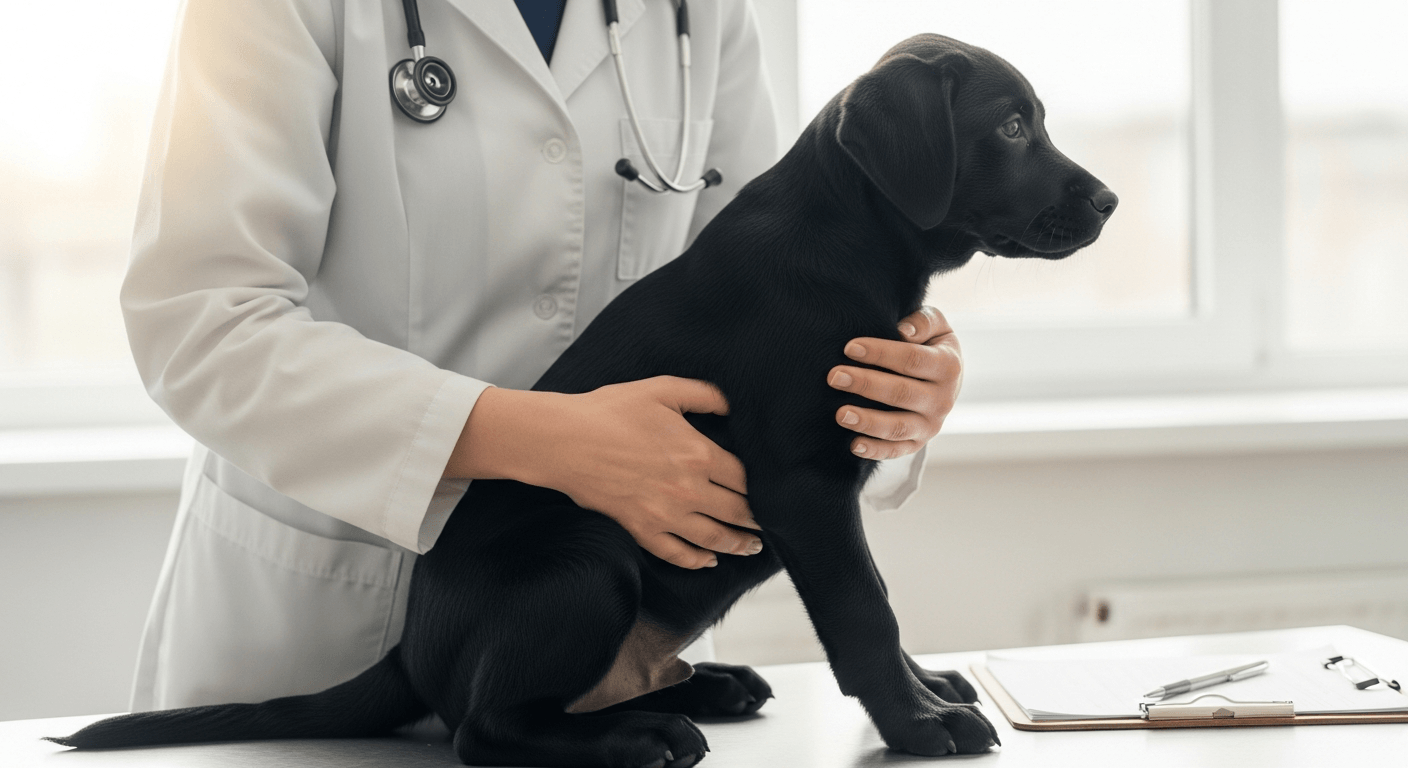
The difference between a reputable breeder and a backyard operation often isn’t visible in the photos or the price. It’s in the health documentation. Before you visit any breeder, these are the minimum tests both parents should have on record:
OFA hip and elbow clearances. The Orthopedic Foundation for Animals evaluates X-rays of the hips and elbows and grades them as Excellent, Good, or Fair. Both parents should have at least a “Fair” rating. Verify any OFA result yourself using the dog’s registered name or registration number. If a breeder can’t give you that number, that’s your answer.
CAER eye clearance. An annual exam by a board-certified veterinary ophthalmologist screens for hereditary eye conditions, including progressive retinal atrophy. This condition causes blindness in Labs and has no treatment. Both parents should have current CAER clearances.
EIC genetic testing. Exercise-Induced Collapse is a genetic condition in Labs that causes muscle weakness and collapse during intense exercise. A simple DNA test identifies carriers and affected dogs. Both parents should be tested; two carriers should not be bred together.
CHIC number. The AKC’s Canine Health Information Center assigns a CHIC number to dogs that have completed the breed’s minimum health testing protocol. Owners consent to public results, so you can verify them yourself. Many reputable breeders provide this number directly.
Beyond the paperwork, a responsible breeder asks you questions. They want to know about your living situation, your lifestyle, and your experience with dogs. If a breeder’s only question is “which color do you want,” that’s a problem.
Most reputable breeders also keep a waitlist. “Puppies available now” occasionally happens with well-regarded programs, but “we always have puppies available” does not.
According to the American Kennel Club, Breeder of Merit status and Labrador Retriever Club membership are positive signals. The health tests remain the only verifiable standard.
Red Flags: How to Spot a Puppy Mill or Backyard Breeder

Puppy mills and backyard breeders are legal in most US states. This isn’t about legality — it’s about health testing, socialization, and the early care that shapes adult behavior. Getting a Labrador puppy from either source raises your odds of unexpected vet bills later.
Here’s what to walk away from:
Multiple breeds available from the same seller. A seller offering Labs, Goldens, Poodles, and Dachshunds at once is running a volume operation, not a breed specialty. The Labrador Retriever Club’s breeder code explicitly calls for breed specialization — a sign the breeder studies Lab-specific health and temperament rather than treating dogs as interchangeable inventory.
No OFA or CAER testing — or “our vet checks all the puppies.” Annual wellness exams are not the same as the breed-specific protocol Labs need: OFA hip and elbow clearances, CAER eye certification, and EIC genetic testing. A breeder who conflates a vet checkup with this protocol either doesn’t understand the distinction or hopes you won’t notice.
Puppies available every weekend, or from multiple litters at once. The Labrador Retriever Club‘s breeder code calls for limiting a dam to one or two litters per year with adequate rest between them. Volume production signals commercial priorities over health.
Meeting in a parking lot, or refusing to show you the property. You should always be able to visit where the puppies were raised and meet the mother. A breeder who can’t accommodate this is hiding something.
Price far below the regional average. In most US regions, a health-tested black, yellow, or chocolate Lab puppy from a reputable breeder costs about $1,000–$2,000. A puppy listed at $300–$600 has almost certainly not had the parents tested. Low price is a signal of skipped costs, not a deal.
Pressure to deposit before you’ve met the puppy or parents. Urgency tactics like “we have a lot of interest in this litter” are red flags. A reputable breeder wants you to visit and be sure.
No health guarantee or puppy contract. Every responsible breeder provides a written health guarantee with clear terms. No guarantee means no accountability.
Adoption vs. Buying a Labrador Puppy From a Breeder: Pros and Cons
Labs and Lab mixes are among the most frequently surrendered breeds in US shelters. Rescue organizations, including regional Lab-specific groups affiliated with the Labrador Retriever Club, maintain regular listings of adult Labs and occasionally puppies.
Labrador puppy adoption typically costs $50–$800, set by each shelter, and often includes spay/neuter, vaccinations, and an initial health screening. The trade-off is less predictability: health history is often incomplete, temperament may be unknown, and true puppies are rare. Most rescue Labs are 6 months to 2 years old.
Buying from a reputable breeder costs more and requires more lead time. In exchange, you get known parentage, documented health test results, and the chance to raise the dog from 8 weeks. For first-time owners who want to shape training and habits from day one, a reputable breeder is the more predictable path.
For experienced owners open to an adult dog, rescue is a fully legitimate choice. It isn’t a compromise — it simply comes with different expectations than getting a Labrador puppy from a breeder.
Budgeting for Your Puppy’s First Year

The puppy is the smallest part of the bill. Plan on about $2,800–$6,500 for the first year with the puppy included, then $1,600–$3,800 a year after that. Our guide to how much a Labrador costs breaks down every line, from vet visits and food to insurance.
If you want pet insurance, enroll within the first 8 weeks, before any condition becomes pre-existing. Labs are specifically prone to joint problems, ear infections, and obesity, and all three carry real treatment costs. Getting a quote from a provider like Lemonade or Trupanion before your puppy’s first vet visit means pre-existing exclusions won’t apply later.
Vaccine timing and what to expect at each early vet visit are worth planning for once your puppy is home. The schedule affects both your budget and your puppy’s health.
Questions to Ask a Labrador Breeder Before You Commit
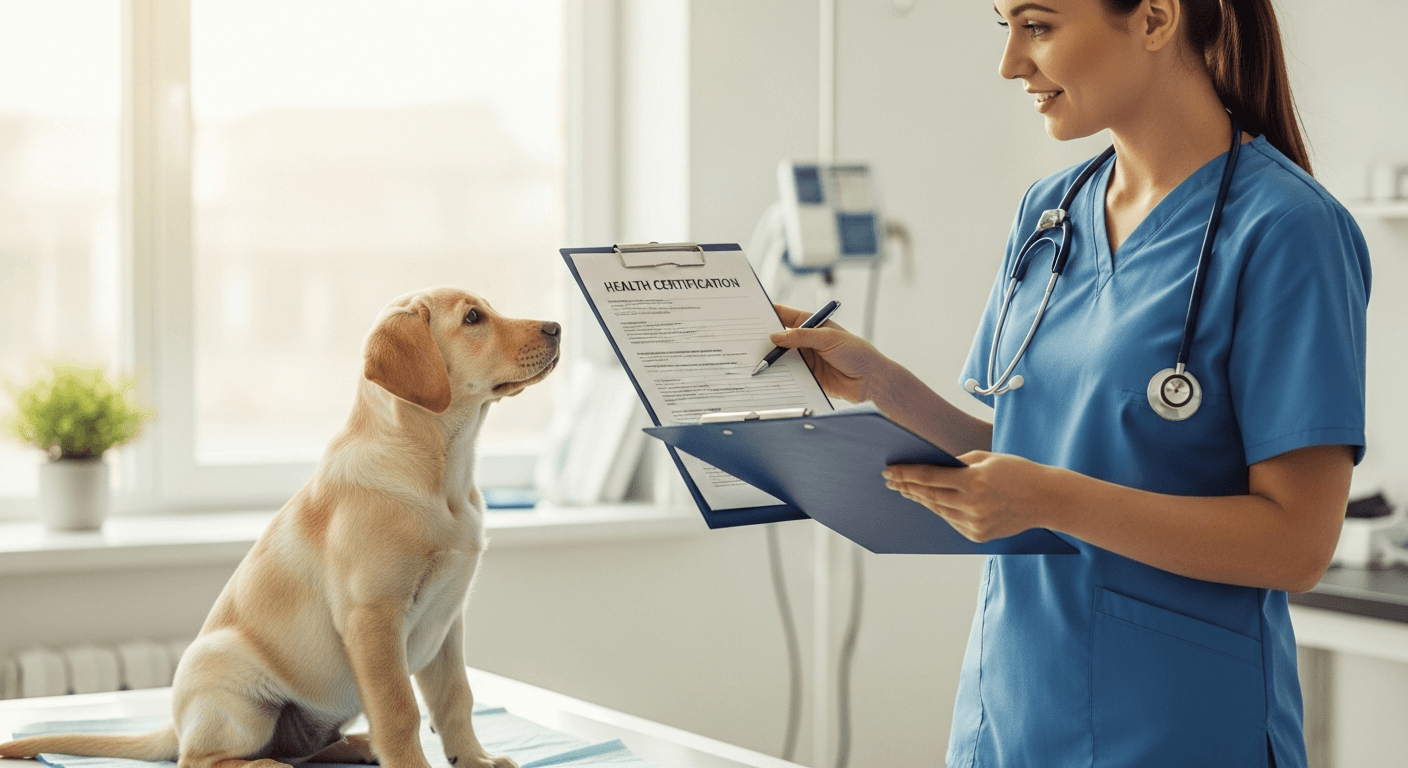
When you’ve found a breeder worth talking to, these eight questions separate a responsible program from one cutting corners. Anyone serious about getting a Labrador puppy should use this list verbatim on a call or at the visit:
“Can I see OFA hip and elbow clearance certificates for both parents?” Ask if you can verify the numbers yourself. A good breeder gives you the registration numbers without hesitation; if they redirect, move on.
“Has the dam been genetically tested for EIC?” The correct answer is yes, with a document. “She’s never collapsed during exercise” is not a genetic test result.
“Do both parents have current CAER eye clearances from a board-certified veterinary ophthalmologist?” Annual is the standard. A three-year-old clearance is not current.
“How many litters does the dam have per year?” More than two is a red flag. Quality breeders rest their dams between litters and limit lifetime litters.
“At what age will the puppies be ready?” The answer should be 8 weeks. Earlier is harmful to socialization and illegal in many US states.
“What does your health guarantee cover, and what happens if a genetic condition is diagnosed?” Know what you’re signing before you pay.
“Can I visit to meet the mother and see where the puppies are raised?” The answer should always be yes. If it isn’t, end the conversation.
“If I can no longer keep the puppy for any reason, do you take them back?” Reputable breeders almost universally say yes.
Choosing Your Labrador Puppy at the Litter Visit
The final step in getting a Labrador puppy is the litter visit itself. Before you pick a puppy by color or by which one runs to you first, spend 10–15 minutes watching the litter interact. The puppy that investigates you confidently — nose forward, tail relaxed, willing to be handled — is a good behavioral baseline for a first-time owner.
Avoid both extremes. The most dominant puppy tends to be harder for first-timers to manage through adolescence. The most withdrawn puppy can develop anxiety even with attentive owners.
Check these physical health signs before you commit:
– Bright, clear eyes with no discharge
– Clean ears with no dark wax or odor
– A rounded belly, not distended, since distension can indicate parasites
– A clean coat with no visible skin irritation
– All four limbs used evenly
Ask the breeder directly which puppy they think would suit your lifestyle. Reputable breeders spend weeks observing each puppy and often match better than first-time buyers selecting on appearance alone.
Color does not predict temperament. The belief that chocolate Labs are more excitable or black Labs are more trainable has no genetic basis. Choose based on behavior and the breeder’s assessment, not coat color.
If you have young children or other pets, ask whether the puppy has been exposed to children or animals in the whelping environment. Early exposure between 3 and 7 weeks tends to improve socialization once the puppy comes home.
Frequently Asked Questions: Getting a Labrador Puppy
How much does a Labrador puppy cost from a reputable breeder?
In most US regions in 2026, a health-tested black, yellow, or chocolate Lab puppy costs about $1,000–$2,000. Puppies listed below $600 have almost certainly not had parents tested. Beyond the purchase price, budget roughly $2,000–$4,000 for the rest of year one, including vet care, food, setup, and training.
How do I find a reputable Labrador breeder?
Start with the AKC Marketplace and the Labrador Retriever Club’s breeder directory. Verify that both parents have OFA hip and elbow clearances, current CAER eye clearances, and EIC genetic testing. A reputable breeder asks you questions, keeps a waitlist, and offers a health contract.
What age should a Labrador puppy be when I bring them home?
Eight weeks, not before. Critical socialization with littermates and the mother happens during weeks 3 to 8. Puppies removed before 7 weeks often show increased anxiety and bite inhibition problems. Many US states legally require puppies to be at least 8 weeks before sale.
What health tests should a Labrador breeder have done on the parents?
At minimum: OFA hip clearance, OFA elbow clearance, current CAER eye clearance, and EIC genetic testing. Both parents must have all four. Ask for documentation and verify the results yourself rather than accepting a verbal assurance.
Is it better to adopt or buy when getting a Labrador puppy?
Both are legitimate choices with different trade-offs. Adoption costs $50–$800 and often includes spay/neuter and initial health care, but health history is often incomplete. Buying from a reputable breeder costs more and takes longer but offers known parentage and the ability to shape the dog’s habits from 8 weeks.
The First Days Matter More Than You Think
Getting a Labrador puppy home is the beginning, not the finish line. For the day-to-day of week one, see our 8 week old labrador puppy guide. The first days set patterns that take months to undo, so start the crate introduction and potty schedule on day one, and book the first vet visit within 72 hours — our Labrador puppy health guide covers the full first-year schedule. For the full month-by-month roadmap of what comes next, revisit our Labrador puppy first-year guide.