
The black Labrador is the original Lab color and still the most common. Most guide dogs, search-and-rescue Labs, and field trial champions are black — not by coincidence, but because the most rigorous selective breeding for performance and temperament has historically occurred in black Lab lines. That legacy makes the black Labrador one of the most health-tested breed populations in OFA’s registry — Labradors consistently rank as the top-tested breed for hip and elbow evaluations. Here is what the data, the breed standard, and documented owner reports say about the black Labrador.
Are black Labs good family dogs? Yes. Black Labradors are friendly, patient with children, highly trainable, and adaptable to both active and quieter households. As the most common Lab color, black Labs also have the deepest health-testing history — making it easier to find a black Lab puppy from well-screened breeding stock. Comparing coats? See our labrador colors hub, plus the yellow Labrador and chocolate Labrador guides.
Black Labrador Traits: Size, Build and Coat
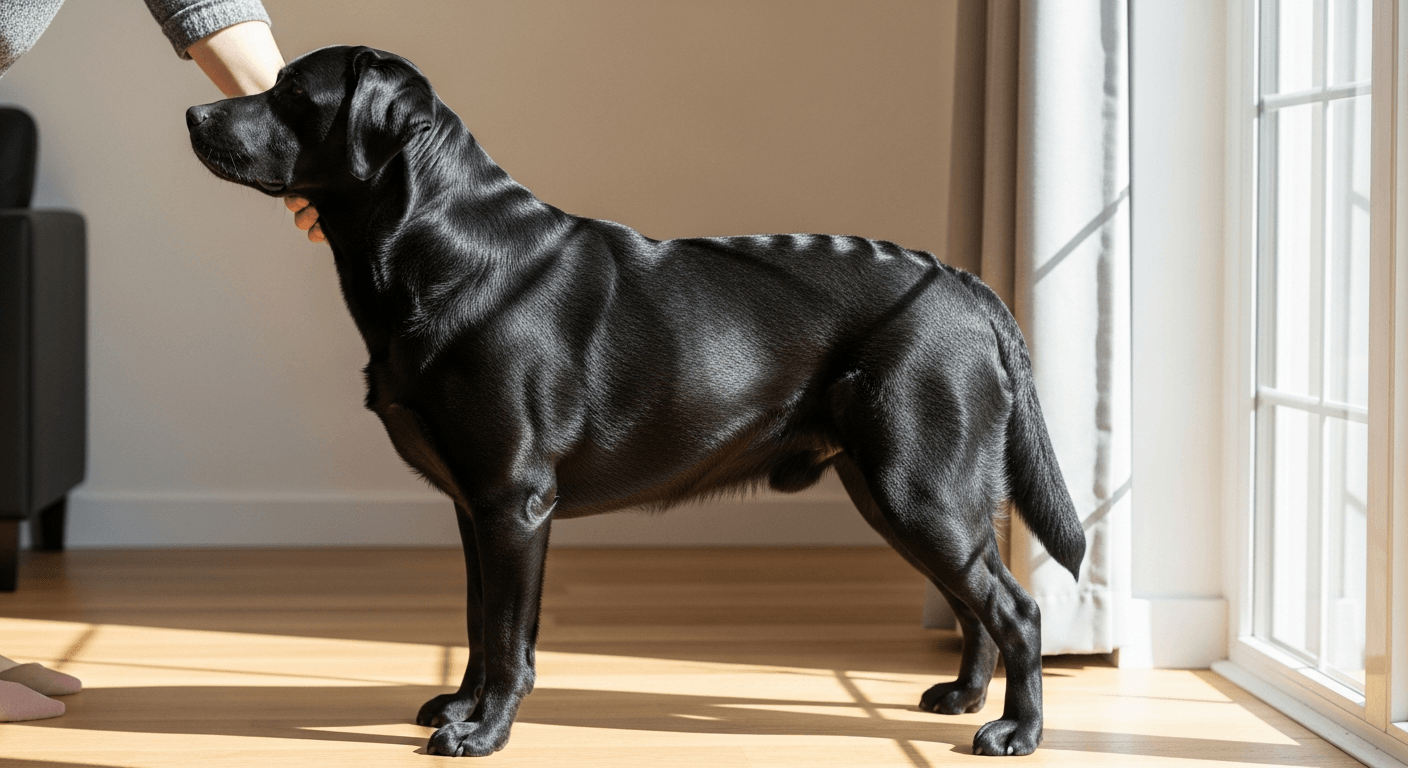
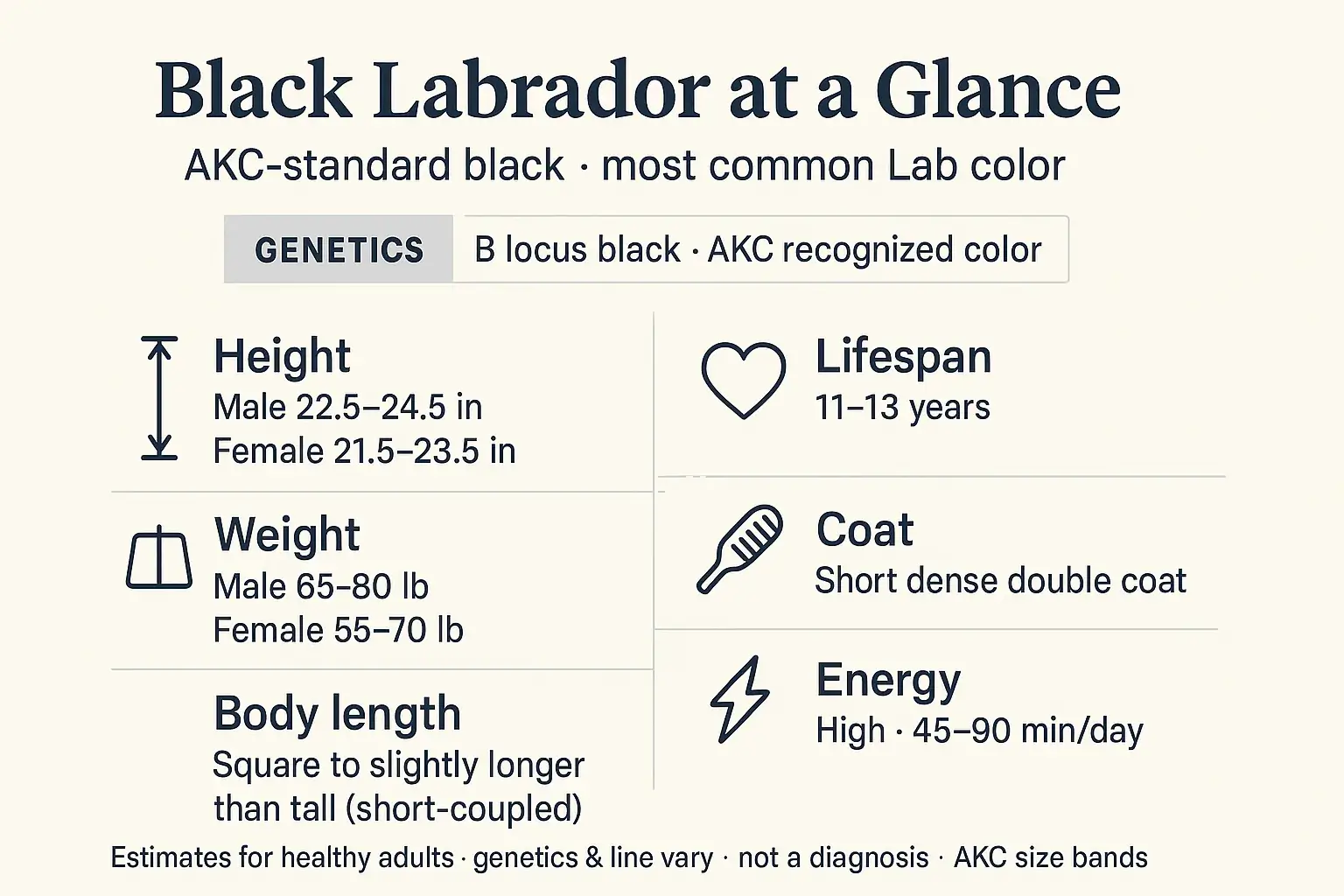
The black Labrador follows the AKC Labrador Retriever breed standard across all colors. Males weigh 65–80 lbs and stand 22.5–24.5 inches at the withers. Females weigh 55–70 lbs at 21.5–23.5 inches. The coat is dense, short, and double-layered — a water-resistant outer coat over an insulating undercoat originally developed for cold-water waterfowl retrieval in Newfoundland. The solid black coat should carry no white markings, though a small white chest spot is within the breed standard and common in pet-line dogs.
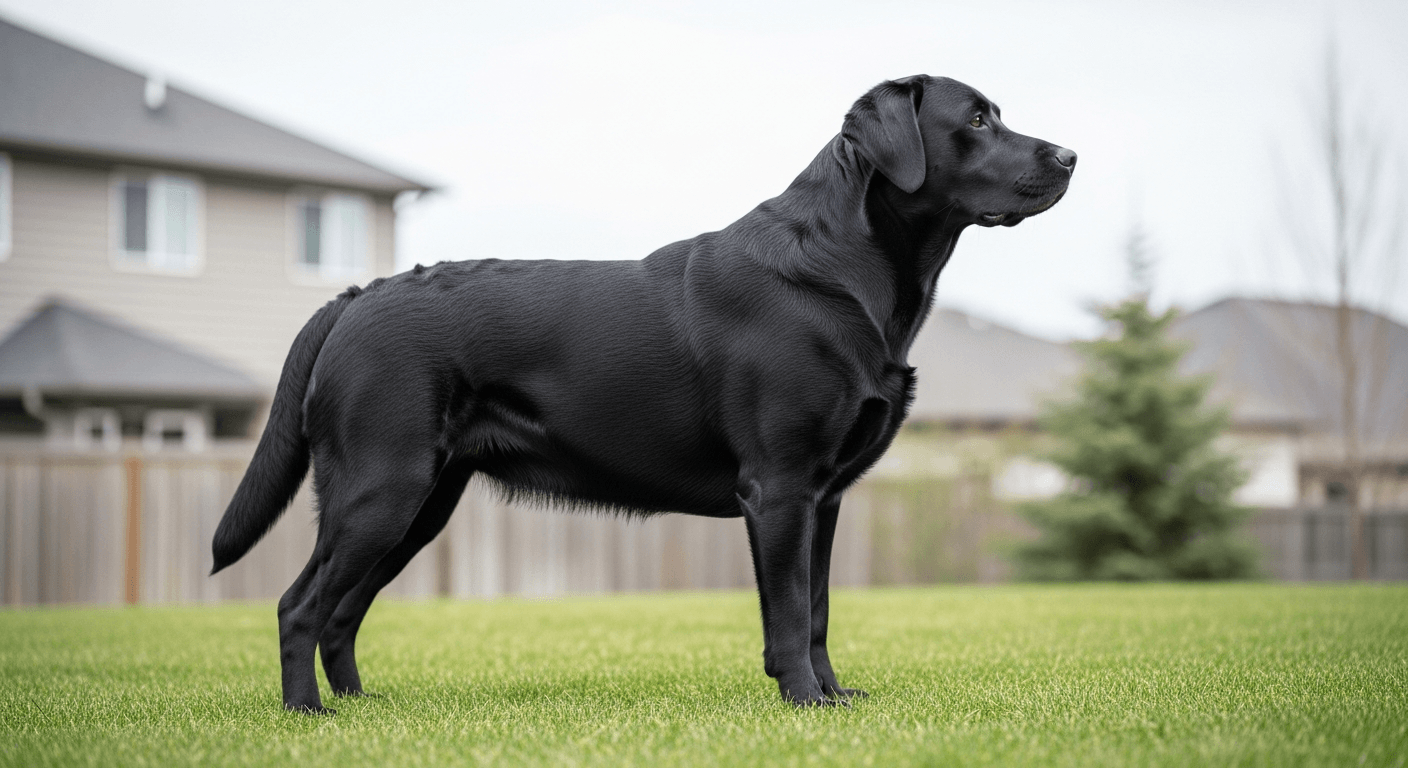
Show-line black Labs carry the broader, blockier head and stockier build associated with English-type breeding. Field-line black Labs are leaner, longer-legged, and more athletically built. Both fall under the same breed standard — the difference reflects what breeders prioritized over generations. Many of the most recognizable working Labs in guide dog and service dog programs are black, drawn predominantly from field-influenced lines.
Black is genetically dominant in Labradors. A black Lab can carry recessive alleles for yellow or chocolate without expressing them visually. Two black Lab parents can produce yellow or chocolate puppies if both carry those recessive genes. This is standard Labrador color genetics — a breeder who provides genetic color testing results for both parents can predict litter composition reliably.
The black coat absorbs solar heat more readily than lighter coats. Combined with the Labrador’s high drive to keep working despite heat stress, this makes summer exercise timing particularly important for black Labs. More on this in the care section below.
Black Lab Temperament: What Owners Report vs What Research Shows
The Labrador breed standard describes a single temperament across all colors: outgoing, friendly, active, and gentle. The AKC does not distinguish temperament by color, and no controlled research has identified reliable personality differences between black, yellow, and chocolate Labs when breeding line is held constant.
The common perception that black Labs are calmer or better workers has a real explanation — but the explanation is not the color. Black Labs have been more prevalent in working and field lines, where breeders selected aggressively for focus, trainability, and handler responsiveness over many generations. Dogs from those programs tended to be black because black is the dominant color in those breeding populations. The working temperament came from selection pressure. The color was coincidental.
Energy level in a black Labrador varies with lineage exactly as it does in other colors. A field-line black Lab is a high-drive dog that typically requires 90–120 minutes of vigorous daily exercise and regular mental stimulation. A show-line black Lab typically settles into adult behavior by 18–24 months and is satisfied with 45–60 minutes of daily exercise. The lineage tells you more about what to expect than the color does.
With families, black Labs are as gentle and patient as any well-bred Labrador. The breed’s high bite threshold and social orientation apply uniformly. According to VCA Animal Hospitals, the Labrador’s defining personality traits — sociability, trainability, and tolerance — are consistent regardless of coat color. For a full comparison of show and field line differences, see our guide to the English vs American Labrador.
Black Lab vs Yellow Lab vs Chocolate Lab: The Real Differences
Temperament differences by color are not supported by controlled research. The differences that exist between Lab colors are primarily health-related and practical.
The 2018 UK study of over 33,000 Labradors (Adams et al., Canine Genetics and Epidemiology) found that black and yellow Labs share a median lifespan of 12.1 years. Chocolate Labs showed a shorter median of 10.7 years. This 1.4-year gap is the most evidence-based distinguishing factor between the three colors. For the full chocolate Lab health profile and the genetics behind this difference, see our chocolate Labrador guide.
All three colors shed equivalently. The practical difference is visibility: black fur shows most on light-colored clothing, furniture, and car interiors. Yellow fur shows on dark surfaces. Chocolate is intermediate. This is a housekeeping consideration, not a health one.
The black coat absorbs significantly more solar radiation than yellow or chocolate coats. In hot climates or summer months, exercise timing and shade access are more important for black Labs than for lighter-colored dogs. Schedule walks before 9am or after 6pm during heat waves.
Black Lab Health: Lifespan, Common Conditions and Screening
Black Labradors have the most favorable health data of the three Labrador colors. The 12.1-year median lifespan reflects decades of rigorous health testing across black Lab breeding lines — particularly in guide dog and service programs that maintain strict certification requirements.
The genetic health risks shared by all Labradors apply equally to the black Labrador: hip dysplasia (approximately 12% of tested Labs per OFA data), elbow dysplasia, progressive retinal atrophy (PRA), and exercise-induced collapse (EIC). These are breed-wide conditions. For any black Lab puppy, request OFA or PennHIP hip clearance, OFA elbow certification, CAER/OFA eye clearance, and EIC DNA results for both parents. For the full hip dysplasia guide, see our Labrador hip dysplasia guide.
One additional screening is relevant for working-line black Labs: centronuclear myopathy (CNM) is a hereditary muscle condition found in some Labrador field lines. CNM causes progressive muscle weakness and exercise intolerance. A DNA test identifies carriers. Most reputable working-line breeders already screen for CNM — ask specifically if purchasing from a field or hunting line.
Obesity is the most common preventable health problem in all Labs. A dark coat can make weight gain less visually obvious — a black Lab that looks “filled out” may actually be overweight. Use body condition scoring rather than visual appraisal: ribs should be palpable under light pressure. A joint supplement formulated for large breeds (available on Chewy) supports long-term joint health, and an orthopedic bed reduces strain on aging joints.
Caring for a Black Labrador: Exercise, Coat and Heat Management

Adult black Labs need 1.5–2 hours of structured daily exercise. Field-line dogs typically require the upper end of that range. Show-line dogs can be satisfied with less. Standard Lab exercise principles — two walks, off-leash time where possible, mental stimulation through training sessions and food puzzles — apply without modification.
Summer heat management is the one care consideration most specific to the black Labrador. The black coat absorbs substantially more solar heat than lighter colors. In hot weather, exercise before 9am or after 6pm. During peak summer, avoid extended activity between 10am and 5pm. Always carry water on walks. Watch for early overheating signals: excessive panting that does not ease after resting, actively seeking shade, or slowing without apparent cause. A cooling mat (available on Chewy) is a practical investment for post-walk recovery.
Coat care follows the standard Labrador protocol. Brush 2–3 times weekly during seasonal shedding in spring and fall, weekly the rest of the year. A slicker brush or rubber curry comb handles the short double coat effectively. Monthly bathing maintains coat gloss. A deshedding tool like the FURminator removes loose undercoat during seasonal blows before it reaches the furniture. For the full grooming guide, see our Labrador grooming guide.
Black fur is maximally visible on light-colored furniture, clothing, and car interiors. A good lint roller and a vacuum with a pet hair attachment are necessities. For the full breed overview covering all Lab colors and types, see our Labrador Retriever breed guide.
Frequently Asked Questions: Black Labrador
Are black Labradors good family dogs?
Yes. Black Labs are gentle, patient with children, and highly trainable. Their temperament matches the Labrador breed standard across all colors: outgoing, friendly, and non-aggressive. As the most commonly bred Lab color, black Labradors are also the easiest to find from well-health-tested breeding stock.
Are black Labs calmer than yellow or chocolate Labs?
Not because of their color. The perception reflects the prevalence of black in working field lines, which were selected for focus and drive. A show-line black Labrador is typically calm and settled. A field-line black Lab is high-energy and driven. Lineage determines temperament, not coat color.
How long do black Labradors live?
The median lifespan for a black Labrador is approximately 12.1 years, based on a 2018 UK study of 33,320 Labradors. This matches yellow Labs and exceeds the 10.7-year median for chocolate Labs. Individual lifespan depends on genetics, health testing, diet, and weight management.
Do black Labs overheat more easily than other colors?
The black coat absorbs more solar radiation than lighter coats, which increases heat load during outdoor exercise. This does not mean black Labs are heat-intolerant — it means summer exercise timing matters. Walk before 9am or after 6pm in hot weather and always provide shade and water.
What health tests should black Lab parents have?
Both parents should have OFA or PennHIP hip clearance, OFA elbow certification, CAER/OFA eye clearance, and EIC DNA testing. For working or field-line black Labradors, also request CNM (centronuclear myopathy) DNA testing. These are minimum requirements.
Black Labs are the breed at its most proven — the deepest health-testing history, the broadest breeding population, and the same outstanding temperament that makes Labradors the most popular breed in the US. Choose by lineage and health clearances, not color. The next step is reviewing breeder credentials: start with our Labrador Retriever breed guide for what to ask.