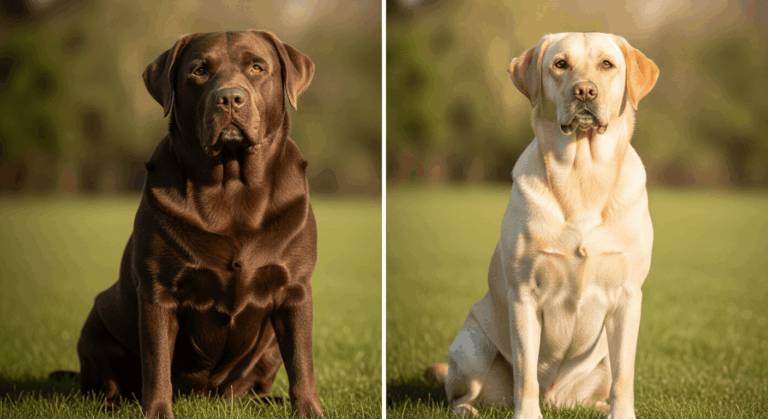
Yellow Labradors cover more ground than any other Lab color — and according to AKC registration trends, yellow has been the most popular Lab color for decades. From nearly white “English Cream” dogs to deep copper shades bordering on red, every yellow Labrador falls under one AKC classification: yellow. The naming confusion — golden, cream, honey, ivory — is breeder marketing and owner shorthand, not breed categories. This guide covers what the shades actually mean, why the “calmer yellow Lab” reputation exists, and how caring for a yellow Lab differs from other colors.
“Yellow” and “golden” describe the same AKC-recognized color. There is no separate “golden” Labrador. Yellow Labradors range from very pale cream to deep fox red, all classified as yellow — see the full labrador colors map. (The grey-toned silver Labrador is a different story — a dilute of chocolate, not a shade of yellow.) Golden Retrievers are a different breed entirely. “English Cream Labrador” is a marketing term for pale yellow Labs from English show lines, not a separate breed variety.
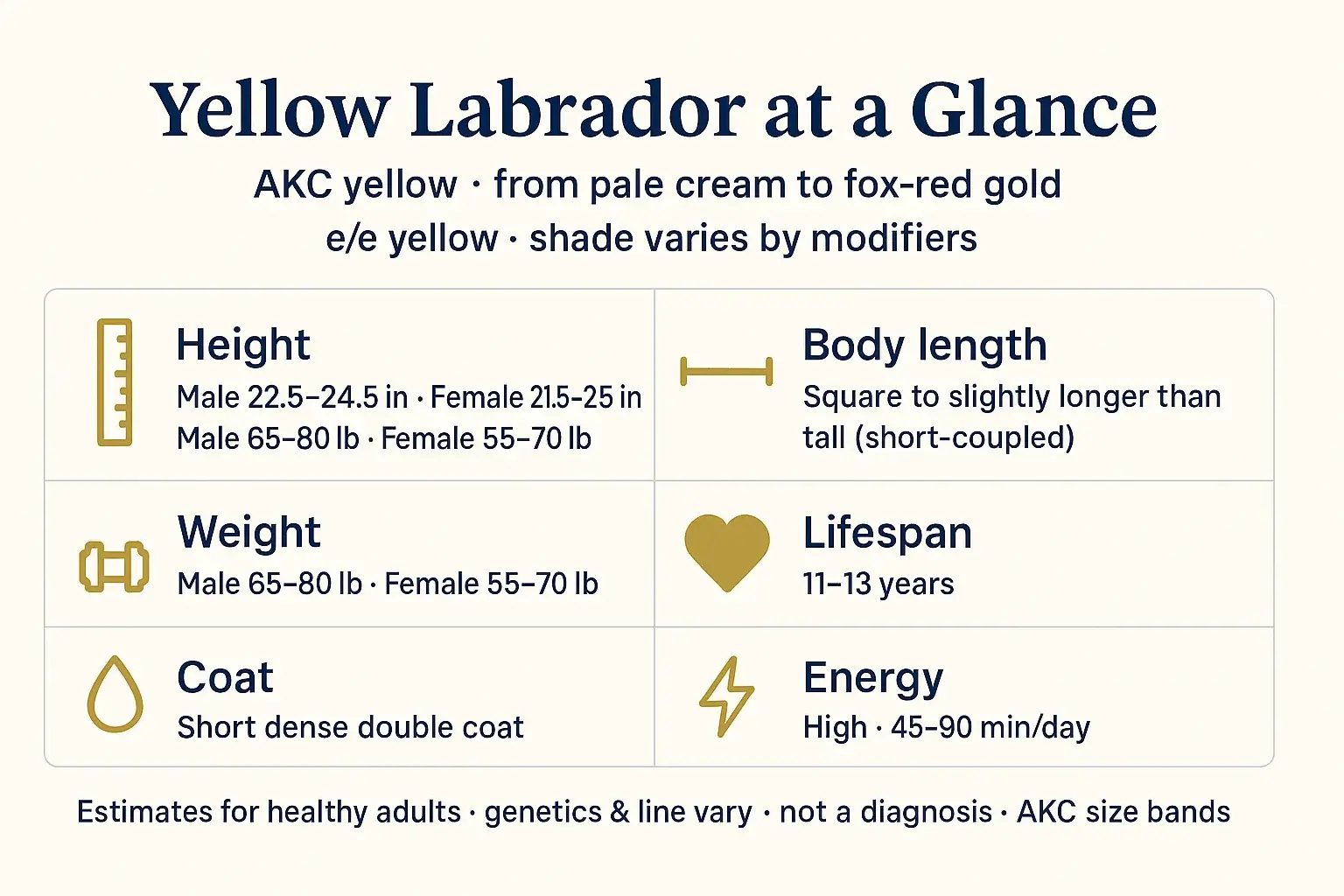
Yellow Lab Shades Explained: Cream, Gold, Fox Red & the Naming Confusion

The AKC breed standard recognizes one yellow classification, ranging from “light cream” to “fox red.” Every yellow Labrador — regardless of shade — carries the same color classification. The variation within a single litter can span from nearly white to deep gold. The palest end shades into white or cream Labs, still the same yellow color.
“English Cream Labrador” is the term breeders use most when marketing very pale yellow Labs. The “English” part is often accurate — many pale yellow Labradors originate from British show lines that tend toward cream and light gold. The “Cream” is a shade description. These dogs typically cost $1,500 to $3,000 or more — versus $800 to $1,200 for field-line yellows. That premium reflects marketing, not rarity or health advantages. An English Cream Lab is a pale yellow Lab from show lines.
Fox Red Labrador sits at the opposite end of the yellow spectrum — a rich copper or mahogany shade. Fox red has developed its own search audience and buyer community. It is the darkest expression of yellow coloring and carries no different health or temperament profile from any other yellow Labrador.
The “Dudley” Labrador is a yellow Lab with unpigmented pink nose, eye rims, and paw pads. This occurs when the dog lacks eumelanin expression at those points. A Dudley is a fault in the show ring but is an entirely normal, healthy dog. Dudleys occur in both pale and mid-toned yellow lines.
Shade is not reliably predictable, even by experienced breeders. Multiple modifier genes control how deeply phaeomelanin expresses in the coat. Two yellow Lab parents can produce puppies across the full yellow range in the same litter. Do not pay a significant premium for a specific shade — the variation is not controllable, and shade does not predict temperament or health.
Yellow Lab Personality & Temperament: The Line Matters, Not the Color
No controlled research has found personality differences between yellow, black, and chocolate Labradors when lineage is held constant. Yellow Labradors do not have a distinct temperament because of their color.
The “yellow Labs are calmer” perception is persistent and has a real explanation — but the explanation is line-based, not color-based. Many pale yellow “English Cream” Labs are genuinely calm and settled. This is because they frequently come from English show lines, which have been selected for composure over generations. In Labradors specifically, the show-line vs field-line split is one of the most pronounced of any sporting breed, producing dogs with measurably different energy profiles. A disproportionate share of English show-line Labs present as pale yellow or cream, based on decades of breed show records. The correlation is with line, not color.
Yellow Labradors appear prominently in guide dog and assistance dog programs — Guide Dogs for the Blind, for example, uses a high proportion of yellow Labs in their breeding stock. This reflects selection practices by individual organizations and the practical advantage of a pale coat being easier for handlers to see in low light. It does not reflect a temperament advantage tied to color.
A pale cream yellow Labrador from a calm show-line dam is a very different prospect from a mid-gold Lab from high-drive field lines. The shade tells you nothing useful about temperament. The line tells you almost everything. Ask about lineage and meet the dam. For the full show-line vs field-line comparison, see our guide on English vs American Labrador differences.
Yellow Lab vs Golden Retriever: Two Different Breeds

The comparison comes up constantly for yellow Labrador searches. A yellow Lab and a Golden Retriever look similar enough that the confusion is understandable. They are different breeds.
Yellow Labradors have a short, dense double coat. Golden Retrievers have a longer, flowing coat that requires considerably more grooming — regular brushing to prevent matting, plus more dramatic shedding due to coat length and texture. Labs are slightly more compact and square-bodied. Goldens are slightly longer in the body.
Temperament is broadly similar, though Goldens are typically described as somewhat more emotionally sensitive. They respond less well to inconsistent or harsh handling than Labs. Labs are slightly more robust across varied handling styles, which makes them marginally more forgiving for first-time owners. Both are non-aggressive, highly trainable, and excellent family dogs.
One health distinction matters: Golden Retrievers have a high cancer rate — approximately 61% develop cancer in their lifetime, according to Golden Retriever Club of America research. Yellow Labradors have joint and obesity concerns but a substantially different cancer profile.
Yellow Lab Health: Lifespan, Risks & What to Test
Yellow Labradors have a median lifespan of 12.1 years — equivalent to black Labs and better than the 10.7-year median for chocolate Labs, based on a 2018 UK study of over 33,000 Labradors published in Canine Genetics and Epidemiology. Yellow and black Labs share the most favorable health data of the three standard colors.
The shared genetic health risks for all Labs apply equally to every yellow Labrador: hip dysplasia, elbow dysplasia, progressive retinal atrophy (PRA), exercise-induced collapse (EIC), and obesity. There are no yellow-specific health conditions. OFA or PennHIP hip clearance, OFA elbow certification, CAER/OFA eye clearance, and EIC DNA testing on both parents are the minimum health documentation to request before purchasing a puppy. For the full hip dysplasia guide, see our Labrador hip dysplasia resource.
One cosmetic note for very pale yellow Labradors: nose pigmentation can lighten seasonally (“snow nose”) or fade over time. This is cosmetic and medically insignificant. It is not an indicator of any health condition.
Caring for a Yellow Lab: Coat, Staining & Grooming

Yellow Labradors shed the same volume as any Lab — heavily twice yearly during the seasonal coat blow and moderately year-round. The practical difference from owning a black Lab is visibility: yellow fur shows on dark clothing, dark upholstery, and dark car interiors. A rubber curry comb or slicker brush used 2–3 times weekly during shedding season handles the coat efficiently.
Very pale cream and light yellow Labradors are susceptible to porphyrin staining — a reddish-brown discoloration around the muzzle, paws, and eyes caused by saliva and tear fluid. This is common in pale-coated dogs of many breeds and is not a sign of infection. Regular cleaning of the muzzle and paw pads with a damp cloth after meals reduces staining buildup. Dog-safe stain remover sprays address existing stains without damaging the coat.
Yellow coats show dirt and mud immediately. Owners in rural or wet climates should plan for more frequent rinsing after muddy walks. Monthly bathing is appropriate for most yellow Labs. For very pale dogs, a brightening shampoo formulated for dogs maintains coat brightness without stripping natural oils. For the full grooming guide, see our Labrador grooming guide.
Frequently Asked Questions About Yellow Labradors
Are yellow Labs calmer than black or chocolate Labs?
Not because of color. Many pale “English Cream” yellow Labradors come from show lines, which are calmer than field lines. That temperament comes from breeding selection, not shade. A yellow Lab from high-drive field lines is as energetic as any field-line Lab.
What is an English Cream Labrador?
An English Cream Labrador is a pale yellow Lab typically from English show-line breeding. It is not a separate breed, variety, or AKC classification. They are often priced higher due to market positioning — this premium reflects demand, not health advantages or rarity.
What is the difference between a yellow Lab and a Golden Retriever?
Different breeds. Yellow Labradors have short, dense coats. Goldens have long, flowing coats requiring more grooming. Labs are slightly more compact. Goldens are somewhat more emotionally sensitive. Both are friendly and highly trainable. Goldens have a significantly higher cancer rate (around 61%).
Do yellow Labs have health problems?
Yellow Labradors share the same health risks as all Labs: hip dysplasia, elbow dysplasia, PRA, EIC, and obesity. Their median lifespan (12.1 years) equals black Labs. There are no yellow-specific health conditions. Health testing of both parents is the reliable indicator of a well-bred puppy.
What is a Dudley Labrador?
A Dudley is a yellow Labrador with pink nose, eye rims, and paw pads instead of the standard black pigmentation. Dudleys are a fault in the show ring but are entirely healthy dogs. They occur in both pale and mid-toned yellow Lab lines.
Yellow Labradors — whatever the shade — are Labs in every sense. The color variation is cosmetic. The temperament, health profile, and care needs are the same breed. When choosing a yellow Lab, focus on line and health testing rather than shade. For an overview of where yellow Labs fit within the breed, see our Labrador Retriever breed guide.