
A fox red Labrador is the deepest, darkest shade of yellow the breed comes in. The coat is a rich copper or rust, not pale cream or gold.
Fox red Labs are not a separate variety, and they are not as rare as some breeders claim. But they are genuinely distinctive. Here’s what the color means, how common it really is, and what matters when choosing one.
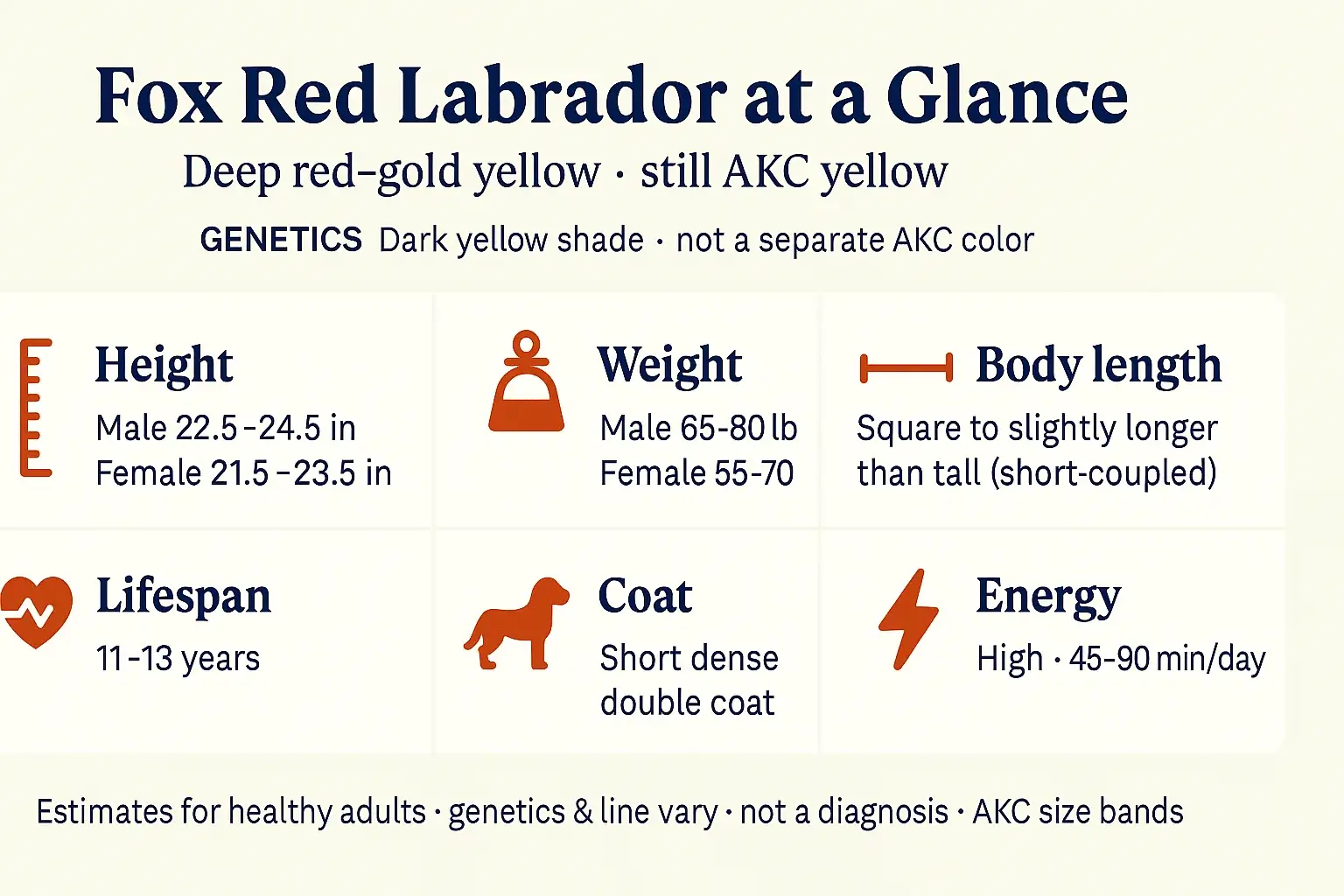
A fox red Labrador is a deep copper or rust-colored Labrador Retriever. It is not a separate breed — the AKC classifies fox red as the darkest shade within the yellow color category. The color comes from high phaeomelanin intensity and is less common than standard yellow, though not as rare as breeders sometimes claim.
For the full picture of Labrador colors, coat types, and breed traits, see our Labrador Retriever breed guide.
What Is a Fox Red Labrador? Color Genetics & Classification

Fox red is a shade — not a separate color, breed, or variety. The AKC breed standard describes the yellow color range as “light cream to fox red.” Both ends of that spectrum fall under one classification.
A fox red Lab and a pale cream Lab are the same AKC color: yellow.
The deep copper tone comes from elevated phaeomelanin expression — the reddish-yellow pigment that sets the intensity of a yellow coat. Intensity modifier genes at multiple loci control this, separate from the basic yellow genetics at the E locus.
Fox red is not a dilution of a different color. It is an amplified expression of yellow pigment, and the mechanism differs entirely from the dilution gene behind silver, charcoal, or champagne Labs.
Nose pigmentation stays black in a fox red Labrador — the same black nose, eye rims, and paw pads as any black or standard yellow Lab. That’s a quick visual check confirming you’re looking at a yellow-line dog, not a chocolate or dilute variant. Eyes are typically dark brown.
One thing to expect: a fox red puppy’s coat doesn’t always stay that dark into adulthood. No published proportion exists, but coat lightening over the first 12–18 months is widely reported by fox red breeders, who build it into how they set adult-coat expectations. Affected puppies typically settle at a darker gold instead of the deep copper they showed as puppies.
A breeder who can show you adult dogs from earlier litters gives you a far better prediction than puppy photos alone. For the complete yellow Lab profile, including cream and standard gold shades, see our Yellow Labrador guide.
Fox Red Lab Personality & Temperament
A fox red Lab’s personality has nothing to do with its coat shade. Color within the yellow category has no documented effect on temperament, drive, or trainability.
Here’s the practical nuance: field-trial breeders commonly report that fox red shows up more often in field, or working, lines than in show lines — an anecdotal pattern, not a formally studied one. Intense phaeomelanin expression has historically shown up more often in those breeding populations.
A fox red Lab with field-line parents is likely higher-energy than a cream Lab from show lines. That difference comes from lineage, not coat color.
When you’re evaluating a fox red puppy, ask the same Lab-specific questions that matter for any Labrador. Has the dam cleared OFA or PennHIP hip and elbow screening? Has she been tested for EIC (exercise-induced collapse) — a test that matters more here, since EIC prevalence is higher in the field-line dogs fox red disproportionately comes from? What line is she from, and what is her retrieving drive and temperament like in person?
Coat shade is the least useful data point in that whole assessment.
In general, expect a standard Labrador temperament from a fox red Lab. The AKC breed standard describes the Labrador temperament as kindly, outgoing, and eager to please — traits that hold regardless of coat shade: energetic, food-motivated, easy to train, and affectionate with the family. The color tells you nothing beyond what’s on the outside. For the full show-line versus field-line temperament comparison, see our English vs American Labrador guide.
How Rare Are Fox Red Labs? The Honest Answer

Fox red is genuinely less common than black or standard yellow. No formal AKC registry breakdown by shade exists, but breed clubs and long-time breeders consistently describe it as a minority outcome of yellow-to-yellow breeding — the specific modifier gene combination needed for deep copper intensity isn’t the default, and not every yellow breeding produces it reliably. On that basis, calling fox red rarer than standard yellow is accurate.
Rarer than standard yellow is not the same as scarce or hard to find. Dedicated fox red Lab breeders operate across the US, and multiple well-established breeding programs produce fox red puppies consistently.
The color isn’t approaching rarity in any meaningful sense. It has actually become more available over the past decade as demand pushed more breeders to prioritize the shade.
Some breeders market fox red as a one-in-a-litter rarity to justify $2,500–$4,000+ price tags. In practice, dedicated field-line-to-field-line breeding programs produce fox red puppies far more consistently than that framing suggests — the modest rarity is real, but the size of the premium usually isn’t justified by it.
A fox red puppy’s value rests on the same factors as any puppy’s: health testing, program quality, the dam’s temperament, and genetic diversity. Color intensity alone doesn’t justify the price gap.
A well-health-tested black Lab puppy from a strong program at $1,500 is a better purchase than an untested fox red puppy at $3,500.
Buying a Fox Red Labrador: What to Look for in a Breeder
Fox red Lab breeders often lead with color first. That makes buyer diligence more important here than in more established parts of the Lab market.
Price expectation: $1,500–$3,000 is a realistic range for a fox red puppy from a reputable, health-testing breeder. Prices above that should raise questions — ask exactly what the premium covers.
Health testing is non-negotiable regardless of color. Require OFA or PennHIP hip screening on both parents, OFA elbow clearance, EIC DNA testing, and CAER or OFA eye certification. If the breeding is from field lines, ask about CNM (centronuclear myopathy) testing too.
A breeder who tests thoroughly and happens to produce fox red puppies is different from one who treats health testing as an afterthought.
Watch for red flags specific to fox red lab sellers. Marketing that leads with “rare color” before mentioning health testing is one. Claims that fox red is its own breed or variety are another.
So are breeders who won’t let you meet the adult dam, or waiting lists that seem suspiciously short for a supposedly rare color. A responsible breeder typically has a 6–18 month wait and walks you through health clearances before you ever discuss price.
Caring for a Fox Red Labrador: Coat & Grooming

A fox red Lab needs the same care as any yellow Lab. There are no color-specific requirements beyond being aware of sun fading.
Brushing 2–3 times weekly during the seasonal coat blow, and weekly the rest of the year, handles shedding. A deshedding tool during the spring and fall blow keeps loose fur under control. Fox red fur shows up clearly on light-colored flooring and furniture, so a vacuum with a pet-hair attachment earns its keep.
Sun fading affects fox red coats over time. Prolonged UV exposure bleaches the phaeomelanin, shifting the coat from deep copper toward a lighter golden shade. This is cosmetic only — it carries no health implications.
To help maintain coat depth, limit extended midday sun exposure in summer. Add an omega-3 supplement, such as a fish oil product from Chewy, to support coat luster and pigment richness.
A moisturizing dog shampoo also helps preserve the coat’s natural oils. For a full grooming routine covering bathing, nails, and ear care, see our Labrador grooming guide.
Frequently Asked Questions: Fox Red Labradors
Is a fox red Lab a different breed from a yellow Lab?
No. Fox red is the darkest shade within the AKC’s yellow color classification. The breed standard states yellow Labs range from “light cream to fox red.”
A fox red Lab is a yellow Labrador Retriever, with the same breed standard and health profile. The color is a shade variation — not a breed distinction.
Are fox red Labs rare?
They are less common than black or standard yellow Labs, but not scarce. Dedicated breeding programs across the US produce fox red puppies consistently, and the color has grown in popularity and availability over the past decade. The rarity is real but modest — not enough to justify the steep premiums some breeders charge on color alone.
Do fox red Labs have a different temperament?
Not because of their color. Many fox red Labs trace back to field lines, which tend to run higher-energy than show lines. That’s a lineage trait, not a color effect.
A fox red Lab from calm show-line parents will be as settled as any show-line Lab. Always ask about the dam’s line and temperament.
How much does a fox red Lab cost?
$1,500–$3,000 from a reputable, health-testing breeder is a realistic range. Question any pricing above that level — color intensity alone doesn’t justify a multiple-times markup over a health-tested standard Lab. A puppy’s value comes from health documentation, quality parents, and a responsible breeding program, not coat depth.
Do fox red Labs stay red as adults?
Not always. Some fox red puppies lighten over their first 12–18 months, settling at a deeper gold rather than the copper red they had as puppies. Whether the adult coat holds the fox red shade depends on the specific modifier genes the dog carries.
Ask to see adult dogs from earlier litters by the same parents — it’s the most reliable predictor you’ll get.
Fox red Labs are Labradors. The color is the most distinctive thing about them — everything else is standard Lab: the temperament, the health risks, the care needs, the training requirements.
Choose on lineage and health testing, not on shade intensity. Start with a breeder who treats color as the last detail, not the first.