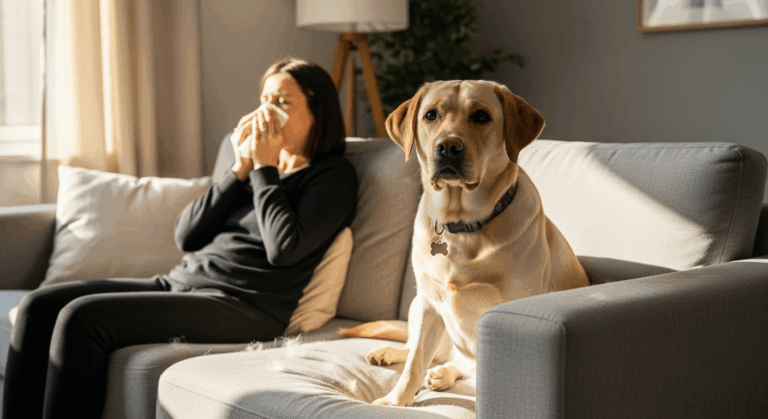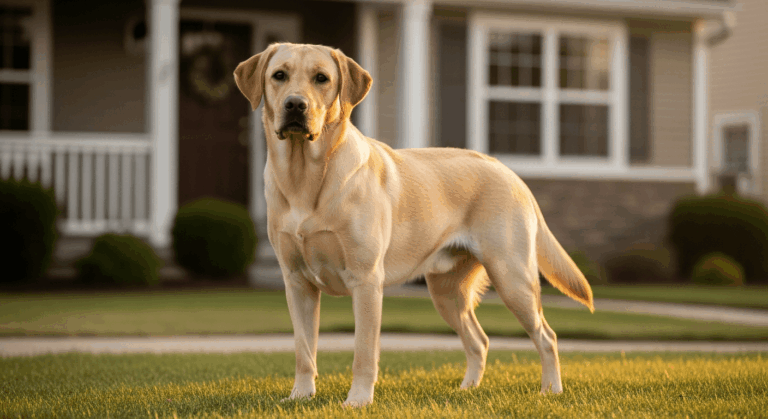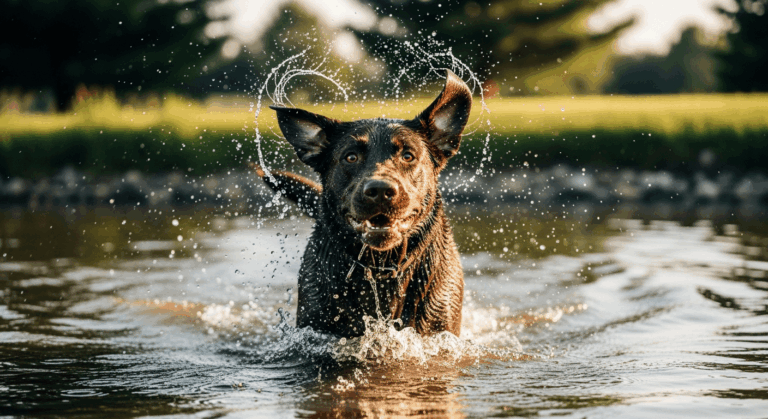
How to groom a Labrador is simpler than most new owners expect. There are no breed-specific haircuts, no professional styling requirements, and no elaborate equipment. What the Lab’s coat does require is a consistent routine built around one reality: it’s a dense, double-layered coat that sheds year-round and heavily twice a year — and, allergy sufferers take note, is not remotely hypoallergenic. The tools and schedule below cover everything you need, with nothing you don’t.
Quick reference schedule:
– Brushing: 2–3 times weekly (daily during seasonal blow coat)
– Bathing: once monthly
– Nail trimming: every 4–6 weeks
– Ear cleaning: monthly and after every swim
– Teeth brushing: daily
Understanding the Labrador Double Coat
The Lab’s coat has two distinct layers, and every grooming decision should follow from understanding what each one does.
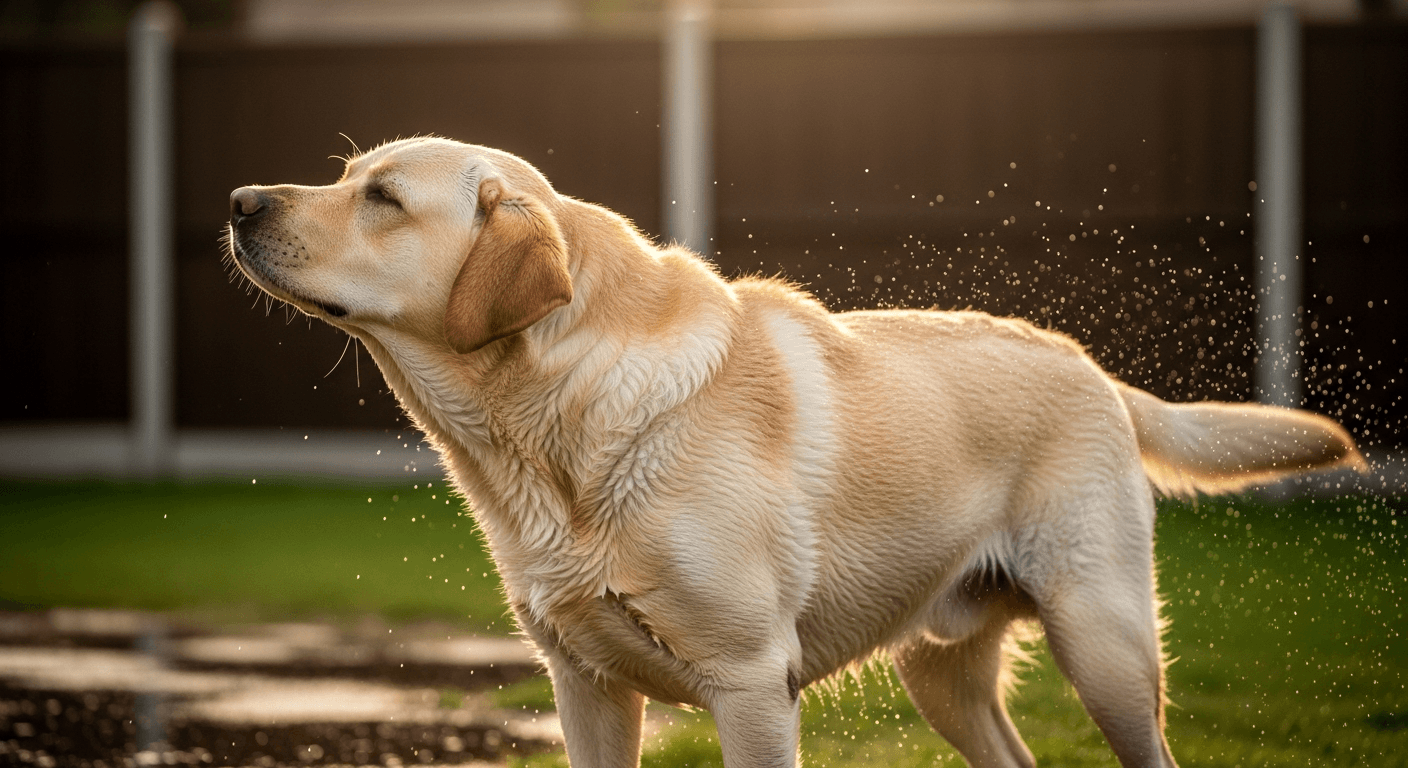
The outer coat is composed of guard hairs — coarser, slightly oily, and water-resistant. This is what repels mud after a walk and sheds rain in wet weather. Beneath it sits the undercoat: a dense, soft layer that insulates the dog in cold and provides a thermal buffer in summer heat. The undercoat is where the majority of the shed hair comes from.
Twice a year, Labs “blow” their coat — typically in spring as the heavy winter undercoat releases, and again in fall as the summer coat clears and winter growth begins. During these 2–4 week periods, the hair volume is significant. Between blow seasons, moderate shedding continues daily.
The most important point in this section: never shave a Labrador. It’s a widespread misconception that removing the coat reduces shedding or keeps the dog cooler in summer. Neither is true. The double coat’s insulating system works in both directions — the undercoat that keeps cold out also keeps heat out. Shaved Labs overheat more easily, not less. The coat also frequently grows back with altered texture after shaving. Shaving is not a grooming shortcut; it’s damage. The AKC advises against shaving any double-coated breed for exactly these reasons. For the full breakdown of the shedding cycle, see Do Labradors Shed?.
The Best Grooming Tools for Labradors
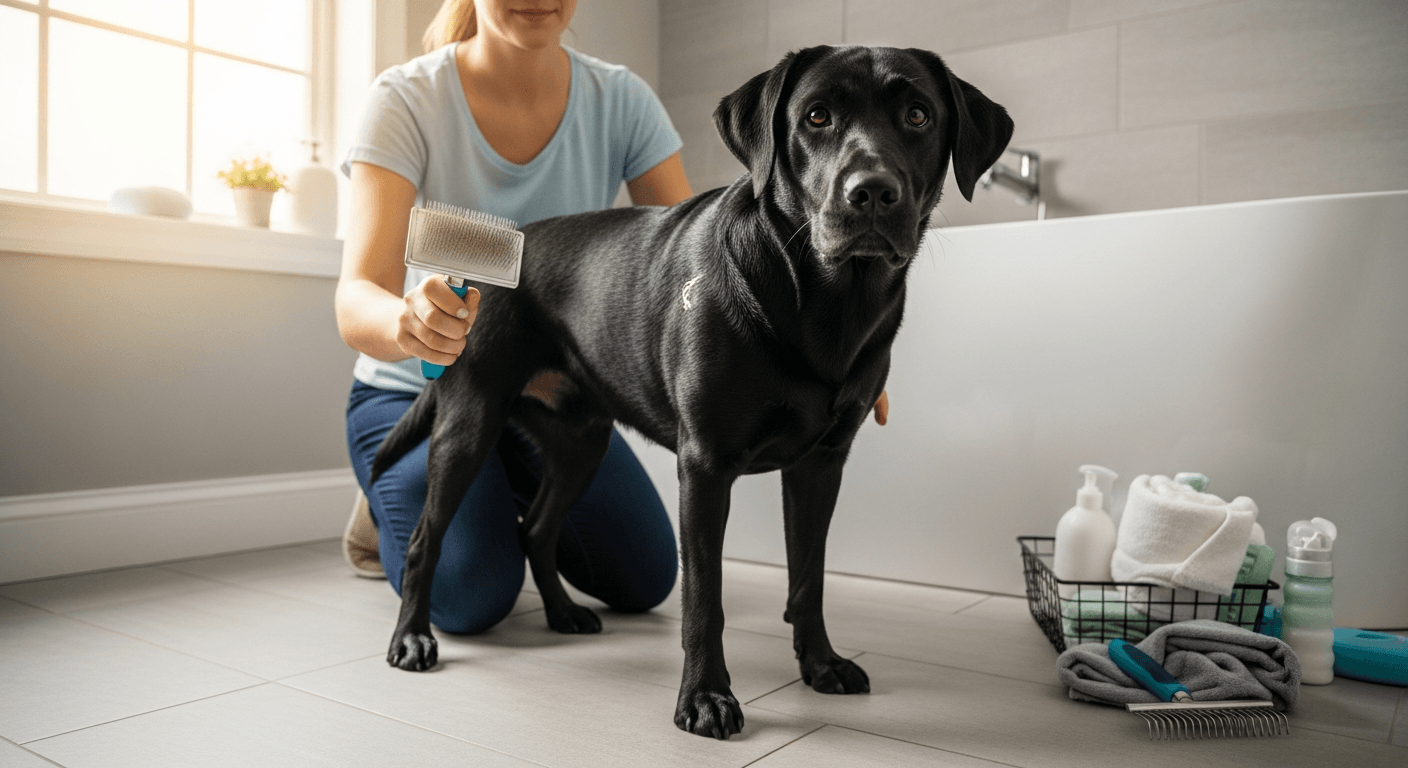
A Lab’s coat requires different tools for different tasks. One brush doesn’t do everything, and using the wrong one for a job wastes time and misses the hair you’re trying to remove. The core toolkit is four items.
Slicker brush — fine wire pins set in a flexible rubber base. This is your general maintenance brush for the outer coat. It removes loose surface hair, prevents minor tangles, and leaves the coat tidy after a muddy walk. Gentle enough for daily or weekly use. It doesn’t reach the dense undercoat — that’s a job for the next tool.
Undercoat rake — the single most important tool for year-round Lab grooming. Long, widely-spaced tines that penetrate the outer coat and reach the undercoat beneath. This is where the bulk of the shed hair sits between baths and blow seasons. An undercoat rake used twice weekly removes far more than a slicker brush. During the seasonal blow coat, this is your first-pass tool before bringing in the deshedding blade.
Deshedding tool (FURminator or equivalent) — more aggressive than an undercoat rake. The stainless steel edge catches and removes loose undercoat efficiently. Use 2–3 times per week during the seasonal coat blow. Don’t use it year-round as a daily brush — removing too much coat compromises the undercoat’s function. This is a targeted seasonal tool.
Rubber curry comb — a soft, rubber tool for use during bathing or as light daily maintenance. It massages the skin, loosens dead surface hair, and stimulates circulation. Most Labs respond to it enthusiastically — it reads as a massage, not a grooming tool. Available on Chewy and the least expensive item in the toolkit.
Avoid slicker brushes with hard-tipped metal pins — these scratch the skin beneath the coat, especially during blow coat season when the skin can be more sensitive. Boar bristle brushes don’t have enough density to work through a Lab’s coat.
How to Bathe a Labrador: Frequency, Technique & Products
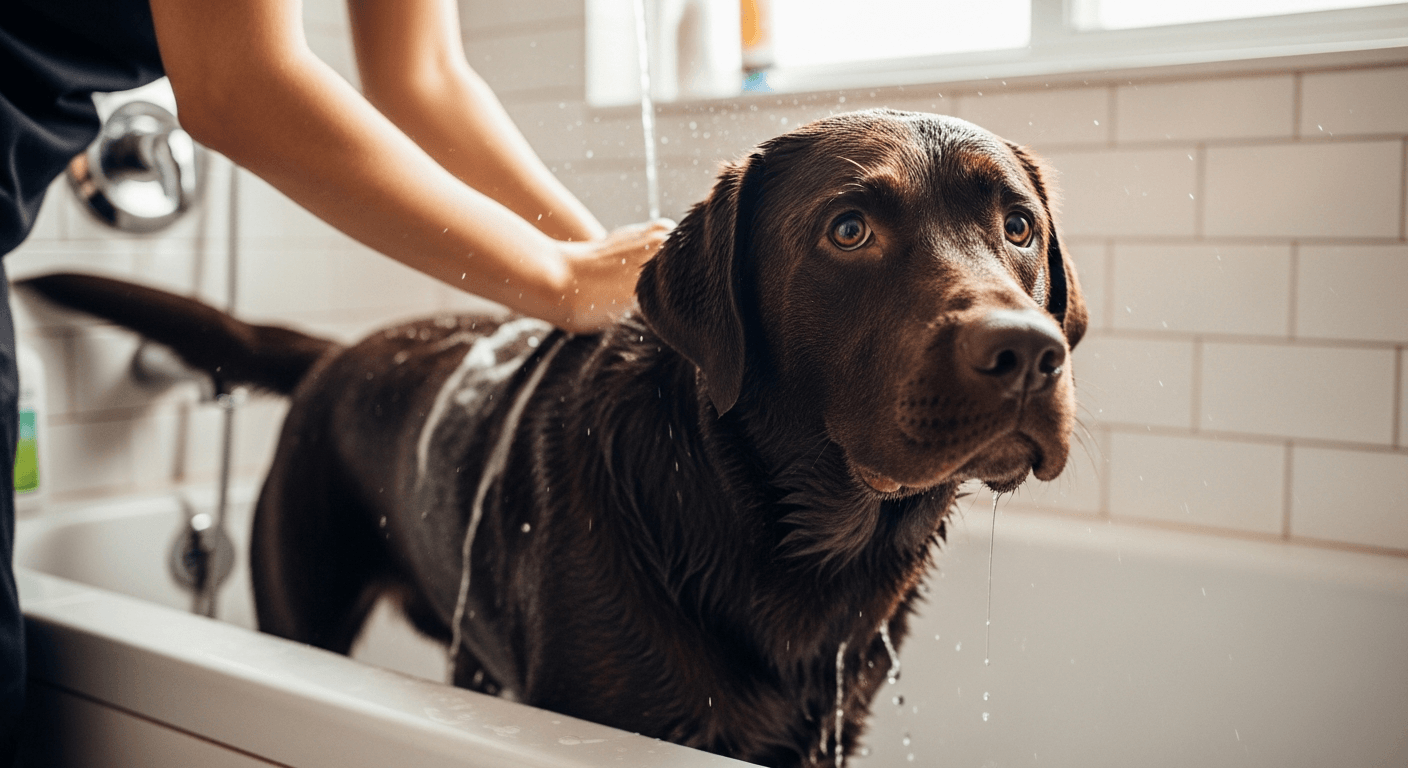
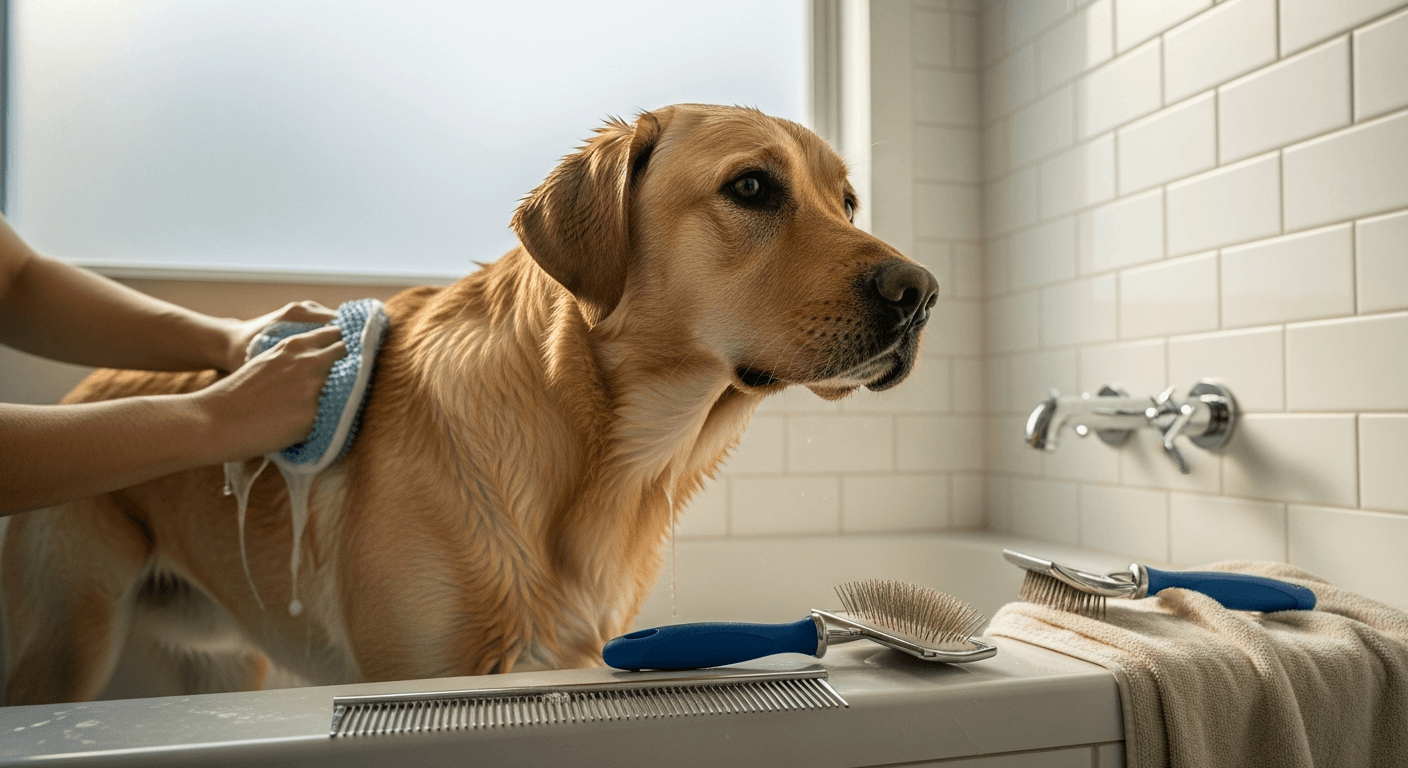
Most Labs need bathing once a month. More frequent bathing strips the natural oils from the coat and skin — those oils give the outer coat its water-resistance and the skin its protective barrier. Labs that swim regularly need rinsing after water sessions to remove chlorine or salt, but a full shampoo bath once monthly is right for the majority.
Pre-bath brushing is not optional. Always brush the coat thoroughly before any water contacts it. A Lab’s dense undercoat, when wet without prior brushing, can mat and felt — creating a knotted mass that is extremely difficult and uncomfortable to work out after drying. Five minutes of brushing before the bath prevents 30 minutes of painful detangling afterward.
Wet the coat with lukewarm water. A Lab’s coat is denser than it looks — what appears wet at the surface is often dry at the undercoat level. Run water through for longer than seems necessary, until you can feel the coat wet through to the skin. Apply a pH-balanced, dog-specific shampoo. Human shampoo is formulated for human skin pH (around 5.5) — dog skin sits at a higher pH of approximately 7.0. Using human shampoo regularly disrupts the skin’s natural barrier and increases the risk of dryness, flaking, and irritation. For most Labs, an oatmeal-based or moisturizing formula is appropriate. For Labs with a diagnosed skin condition, use whatever your vet recommends.
Rinse until the water runs completely clear. Shampoo residue left in the dense undercoat causes dullness, skin irritation, and can contribute to hotspot development. This is the step most owners rush through. After rinsing, towel-dry thoroughly and allow the dog to air dry in a warm room. A low-heat dog-safe dryer speeds this up. Never leave a wet Lab in a cold space — the dense wet undercoat holds cold for a surprisingly long time.
Nail Care for Labradors: Trimming & Grinding
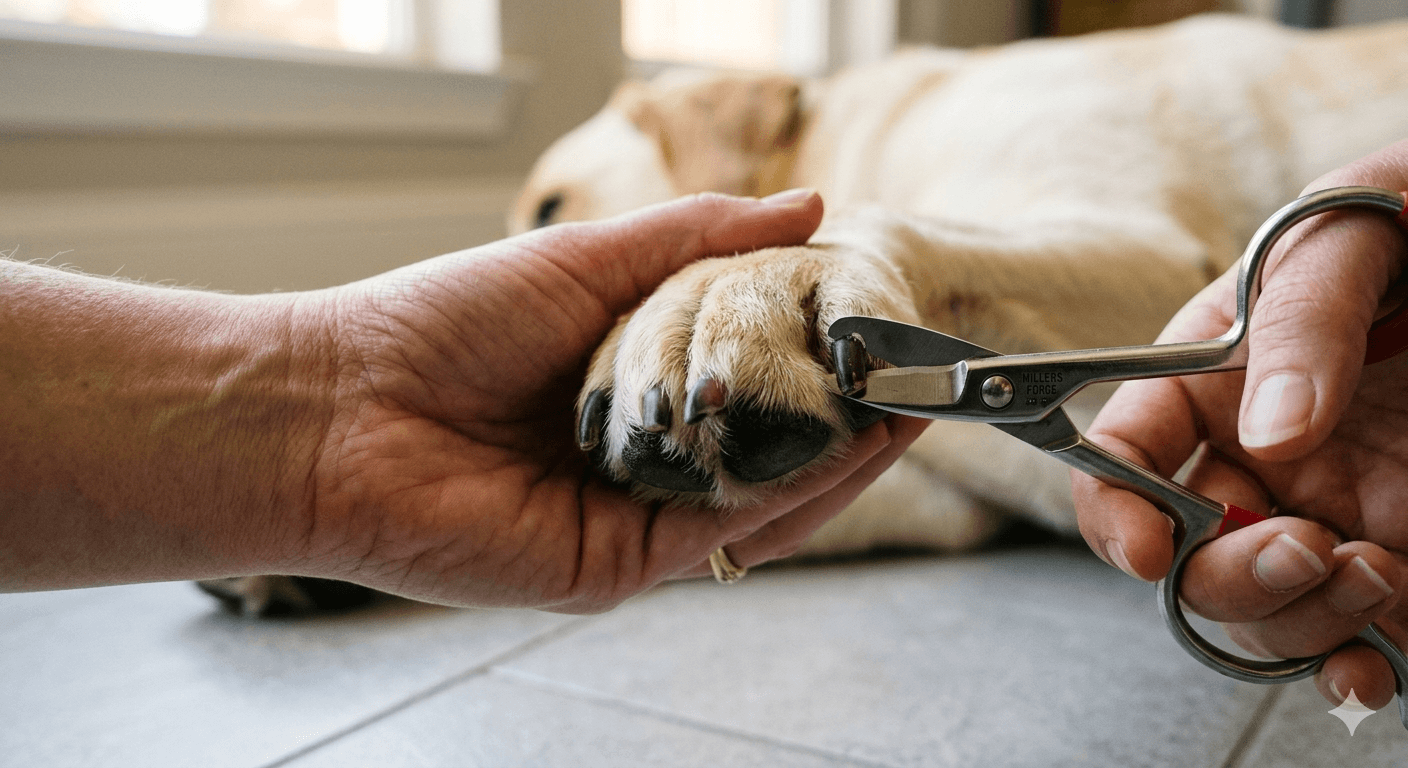
Most Labs need nails trimmed every 4–6 weeks. The simple test: if you can hear the nails clicking on hard floors when the dog walks, they’re already too long. Overgrown nails affect how a dog distributes weight — Labs compensate by shifting their posture, which creates cumulative joint stress over months and years.
Two tools do the job. Scissor-type clippers, make clean cuts and are comfortable for most owners to use. Nail grinders (Dremel-style dog grinders) file the nail rather than cutting — slower, but quieter, and considerably less likely to crack the nail. For Labs with black nails — where the quick is invisible — the grinder is the more forgiving choice.
The quick is the blood vessel that runs through the nail. Cutting it causes immediate pain and bleeding. In pale or cream-colored nails, you can see the quick as a pink shadow through the nail wall. In black nails, it is completely invisible. The technique for dark nails: trim or grind a very small amount at a time, then examine the cut surface. When a small dark circle appears at the center of the cut surface, you’re approaching the quick — stop there. Keep styptic powder within reach before you start. Applied with light pressure, it stops bleeding within 1–2 minutes and causes no lasting harm.
Start desensitizing puppies to paw handling from 8 weeks. Hold and examine each toe during calm moments. Touch the paw during rest. Introduce the sound of clippers without cutting. Labs that grow up accepting paw contact require no restraint for nail trims as adults.
Ear Cleaning & Dental Care
Both tasks belong in the regular grooming routine. Done consistently, they take under five minutes and prevent the most common non-emergency vet visits for Labs.
Ear cleaning: clean monthly and after every swim or bath. Moisture trapped in the ear canal is the primary driver of Labrador ear infections — Labs are anatomically prone to them because their floppy ear flaps reduce air circulation and create a warm, moist environment. Use a dog-specific ear cleaner (Zymox Otic or a veterinarian-recommended formula). Do not insert cotton buds into the ear canal — they compact debris rather than removing it and can damage the canal wall.
Correct technique: fill the ear canal gently with cleaning solution, then massage the base of the ear firmly for 20–30 seconds. You’ll hear a squelching sound as the solution moves through the canal. Let the dog shake its head — this brings loosened debris toward the visible opening. Wipe only the visible canal with a cotton pad.
See a vet rather than cleaning yourself if you notice: redness, dark or unusual discharge, strong odor, or the dog repeatedly scratching at or rubbing the ear. Those are infection signs, not routine cleaning scenarios. For the full guide to recognizing and treating Lab ear infections, see Labrador Ear Infections.
Dental care: periodontal disease affects the majority of dogs by age three without consistent dental hygiene. Daily brushing is the most effective intervention. Use enzymatic toothpaste (Virbac CET is widely recommended and available on Chewy) on a finger brush or soft dog toothbrush. Let the puppy lick the toothpaste for several sessions before introducing the brush, then work up to a full session over 2–3 weeks. On non-brushing days, VOHC-approved dental chews (Greenies, Whimzees) provide supplementary benefit and most Labs accept them enthusiastically.
Frequently Asked Questions: Labrador Grooming
How often should you groom a Labrador?
Brush 2–3 times weekly during the spring and fall coat blow, and once weekly the rest of the year. Bathe monthly. Trim nails every 4–6 weeks. Clean ears monthly and after every swim. Brush teeth daily. The full routine takes 10–15 minutes per week outside of bath days, which run 30–45 minutes including dry time. For a complete overview, see our Complete Guide to Living with a Labrador.
Do Labradors need professional grooming?
No — the vast majority of Lab owners groom at home without professional help. Labs don’t require breed-specific haircuts or styling. Professional grooming is occasionally useful during the seasonal coat blow if you want a high-velocity deshedding session, but it isn’t a regular requirement for the breed.
What is the best brush for a Labrador?
An undercoat rake is the most useful tool year-round — it reaches the dense undercoat where most shed hair originates. A FURminator-style deshedding tool is the best choice specifically during the blow coat season. A slicker brush handles daily surface maintenance. Most experienced Lab owners use all three at different points in the routine.
Can you shave a Labrador to reduce shedding?
No — and it actively backfires. Shaving removes the insulation system that regulates body temperature in both hot and cold weather. The coat often grows back with a different texture. Consistent brushing with an undercoat rake and deshedding tool during the seasonal blow is the correct approach. For the few exceptions, like vet clipping or cutting out mats, see when clipping a Lab is actually OK.
How do I stop my Labrador’s nails from bleeding if I cut too deep?
Apply styptic powder directly to the nail tip with firm pressure. It stops bleeding within 1–2 minutes in most cases. The quick being nicked is painful in the moment but not dangerous. Keep styptic powder in your grooming kit and have it ready before any nail trim session.
How do I clean my Labrador’s ears correctly?
Fill the ear canal with dog-specific ear cleaner, massage the base for 20–30 seconds, let the dog shake, then wipe the visible canal with a cotton pad. Never insert cotton buds into the canal. Clean monthly and after every swim or bath. See a vet if you notice redness, dark discharge, or strong odor.
The Labrador Grooming Routine in Practice
Knowing how to groom a Labrador at home is straightforward once the routine is established. A consistent 10–15 minute weekly routine — quick brush, paw check, ear wipe, teeth brush — prevents the accumulation of problems that turn into vet visits. Add a monthly bath and six-weekly nail trim and your Lab’s grooming needs are covered. The time investment is modest; the payoff in coat health and reduced household shedding is real. For managing the hair that does fall despite brushing, Do Labradors Shed? covers vacuum selection, home management, and dietary support for coat health.