Labrador ear infections happen more often than in most breeds, and it’s not bad luck. Their floppy ears hang over the ear canal and block airflow, while their love of water means moisture sits in a warm, enclosed space. That combination is exactly what bacteria and yeast need to grow. This post explains the signs to watch for, how to tell bacterial from yeast, what you can treat at home and what needs a vet, and how to build a routine that prevents most infections from happening in the first place.
This post is informational and does not replace a veterinary diagnosis. If your Lab is in pain, has lost balance, or has thick discharge, see a vet today.
Why Labradors Are Prone to Ear Infections
The short answer is anatomy and lifestyle. Labs have pendulous (floppy) ears that fold down over the ear opening. Unlike German Shepherds or Huskies, whose upright ears allow airflow in and out of the canal, a Lab’s ear creates a closed, warm pocket with almost no ventilation. Moisture that gets in — from a swim, a bath, or even heavy rain — has nowhere to go.
According to VCA Animal Hospitals, otitis externa (infection of the outer ear canal) is one of the most common reasons dogs see a vet, and floppy-eared, water-loving breeds like Labs are diagnosed with it more often than most.
The L-shaped canal common to dogs makes this worse for Labs specifically: their pendant ears trap the moisture that the bent canal can’t drain on its own. VCA Animal Hospitals notes this canal anatomy makes dogs like Labs prone to recurring ear infections. Wax and debris can’t work their way out either. Without regular cleaning, the buildup becomes a growth medium for bacteria and yeast.
Water exposure is the most common trigger. A Lab that swims regularly and whose ears aren’t dried afterward is dealing with this risk every week. Labs were bred to retrieve from water, which makes this kind of “swimmer’s ear” closer to a breed-occupational hazard than a rare event.
Allergies are the other major driver. Labs are prone to both food and environmental allergies, and one of the most common early signs is recurrent ear inflammation. Allergic inflammation changes the environment inside the ear canal and makes infection far more likely. If your Lab’s ears clear up with treatment and then return within 4–8 weeks, a vet should evaluate for an underlying allergy — our Labrador health guide covers how allergies show up and how to manage them.
Recognizing Ear Infection Symptoms Early
The earlier you catch an ear infection, the easier and cheaper it is to treat — an early-stage infection often clears with a one-week topical course, while an advanced one can mean 3–6 weeks of treatment and $200–$500 or more in vet costs. Most infections start with behavioral signs before they become obviously visible.
Early behavioral signals include head shaking (particularly if it’s new or persistent), scratching at one or both ears, and rubbing the head or ear along furniture, the floor, or carpet. If your Lab is doing any of these things repeatedly, check the ear the same day.
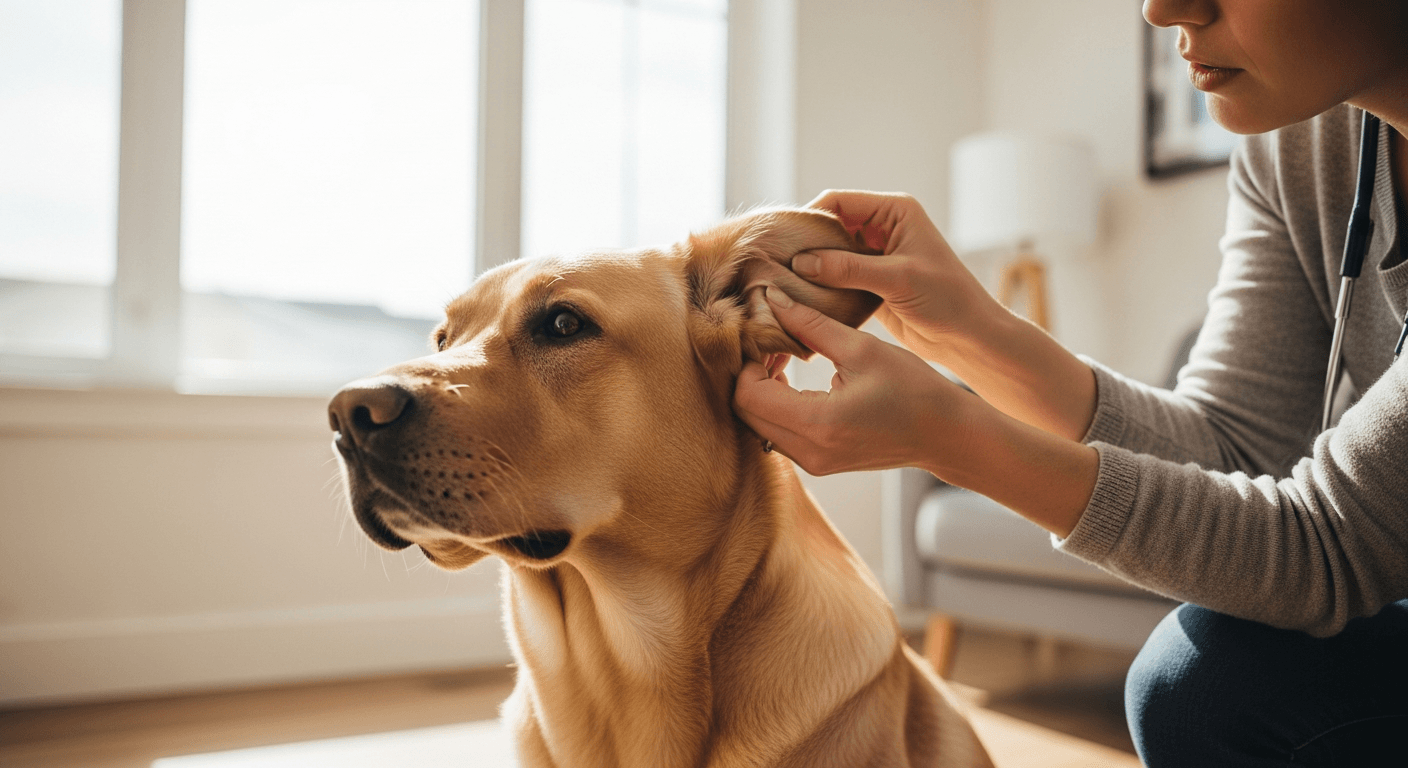
When you lift the ear flap, look for: redness along the inner flap or at the canal opening, dark brown or black waxy discharge (different from normal light brown wax), swelling at the canal entrance, or visible irritation. A healthy ear smells faintly neutral or slightly waxy. An infected ear has a clear, distinct odor — yeasty, sour, or sharp. If you can smell it from across the room, this is a vet visit today.
Signs of a more serious infection that require immediate attention:
- Extreme pain when the ear is touched
- Head tilt that isn’t going away
- Loss of balance or unsteady walking
- Thick, bloody, or greenish discharge
- Swelling of the entire ear flap (this may be an aural hematoma — a separate condition requiring treatment)
One important note: ear infections often start in one ear only. Check both, but don’t assume if one looks clear that the other is also fine.
Types of Ear Infections: Bacterial, Yeast & Ear Mites
The type of infection determines the correct treatment. An antifungal will not clear a bacterial infection, and the wrong product can let the real problem worsen while you wait to see results that were never going to come.
| Type | What you’ll see | Smell | Treatment |
|---|---|---|---|
| Bacterial | Yellow or greenish discharge | Sharp, foul odor | Prescription antibiotic ear drops |
| Yeast (Malassezia) | Dark brown, waxy, thick discharge | Musty or bread-like odor | Antifungal treatment |
| Ear Mites | Dark, crumbly debris — like coffee grounds | Minimal smell | Antiparasitic treatment |
Bacterial infections are common after swimming or bathing — water introduces and feeds bacterial growth in the canal. Yeast infections are the most common in Labs overall, often triggered by or related to allergies. The dark, waxy discharge and distinctive musty smell are the giveaway. Ear mites are less common in Labs than in cats but do occur, especially in multi-pet households. The debris they produce is distinctive — small, dark, dry, and crumbly.
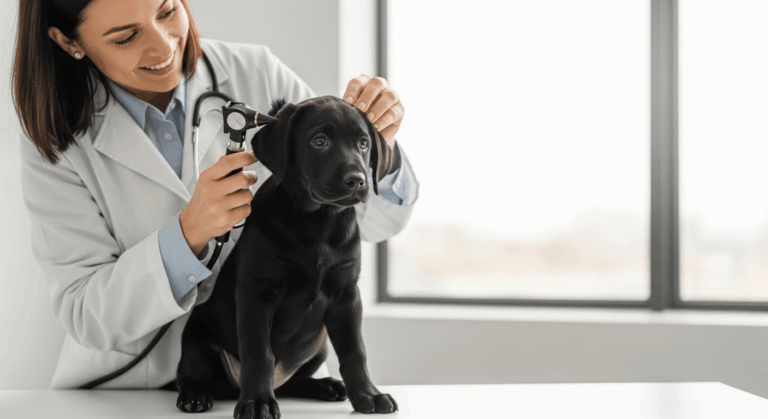
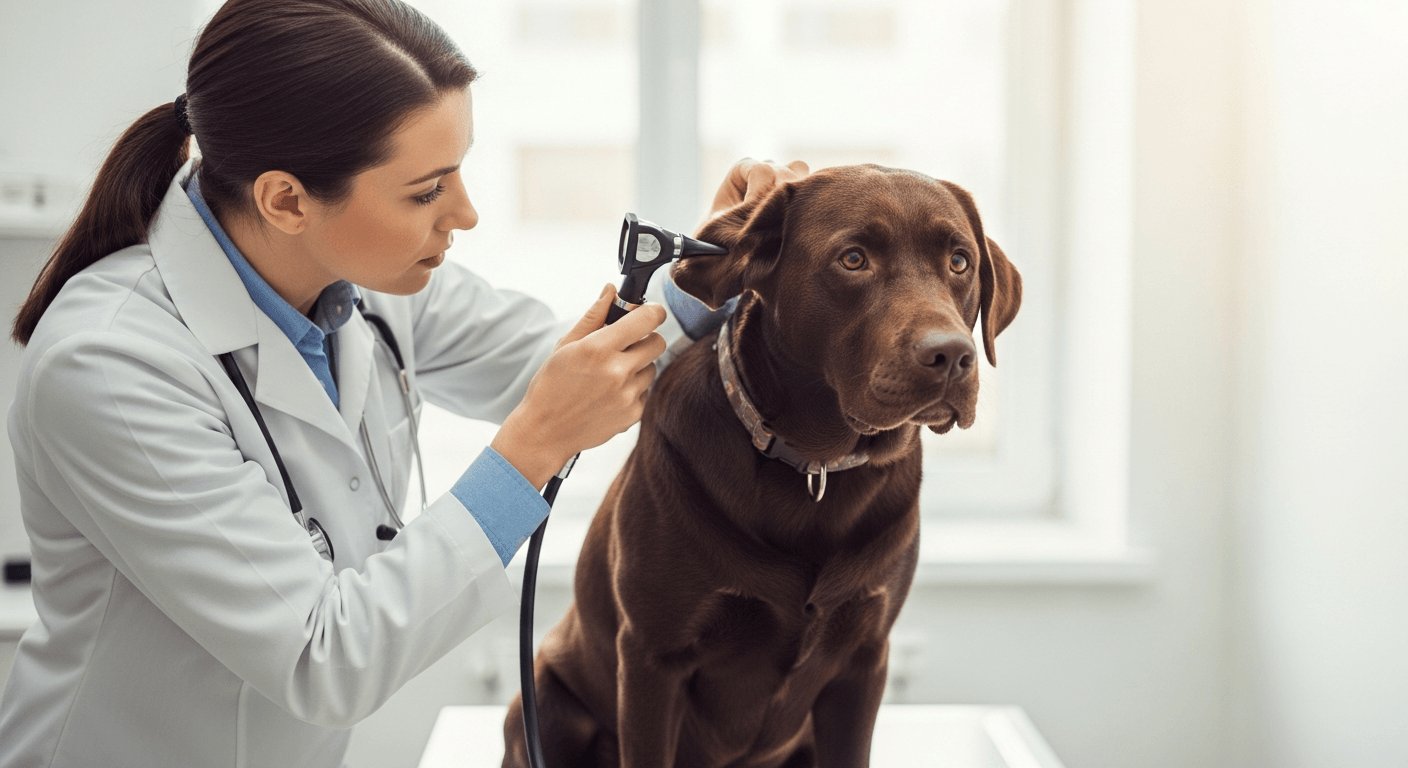
Mixed infections — bacterial and yeast together — are frequently seen in Labs with chronic or recurring problems. These are one of the main reasons home remedies fail for repeat cases. Each component needs different treatment, and only a vet can confirm both are present through an ear cytology — a quick swab test that takes minutes at the clinic.
The key message here: don’t guess at the type. Treating a yeast infection with an antibacterial product does nothing. A cytology removes the guesswork in one visit.
Treating Labrador Ear Infections: Vet Care vs. Home Remedies
The most common question owners have is whether to treat this at home or go to the vet. The answer depends on the severity and history of the infection.
When a vet visit is non-negotiable:
– It’s the first ear infection your Lab has ever had — get a proper diagnosis before establishing a treatment pattern
– Any of the red flags listed above (pain, balance loss, bloody discharge)
– No improvement after 3–4 days of appropriate cleaning
– Three or more infections in the past year
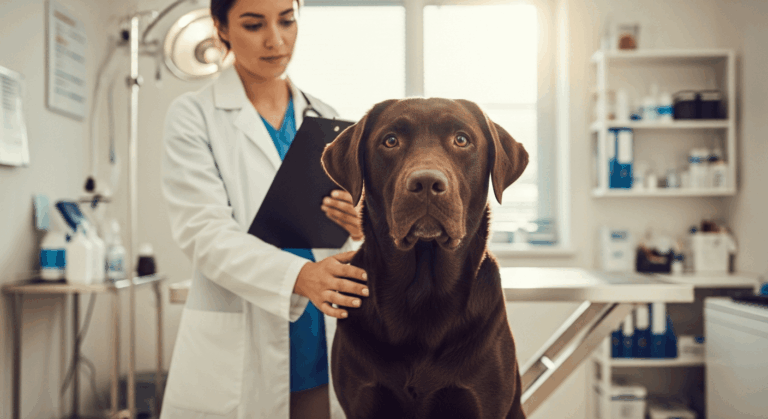
At the vet, the standard approach is a cytology to identify the infection type, followed by prescription ear drops appropriate to what’s found. The most commonly prescribed products are combination drops like Otomax (bacterial + anti-inflammatory) or Tresaderm (bacterial + antifungal + steroid). A typical course runs 7–14 days. Finishing the full course is important — stopping early because the ear looks better is the most common reason infections return.
Home remedies — what’s safe and what isn’t:
Apple cider vinegar and hydrogen peroxide are frequently recommended online for dog ear infections. Both are inappropriate. ACV changes the ear canal’s pH and causes significant irritation in an already inflamed ear. Hydrogen peroxide should never be used in an ear where the eardrum may be compromised — it can cause serious damage. These are not safe home treatments, and we won’t recommend them.
What IS reasonable for mild, early-stage cases: a veterinary-grade enzymatic ear solution. Zymox Enzymatic Ear Solution with hydrocortisone is the most widely referenced OTC option for early-stage yeast or mild bacterial irritation. It’s available on Chewy and is appropriate for mild cases — not for active, established infections. If symptoms are not clearly improving within 3–4 days, move to a vet visit.
One hard rule: Never put anything into the ear canal if you suspect the eardrum may be ruptured. Signs include sudden, extreme pain when touching the ear, sudden balance problems, and a new head tilt. This is an emergency.
Preventing Ear Infections: Cleaning, Drying & Routine Care
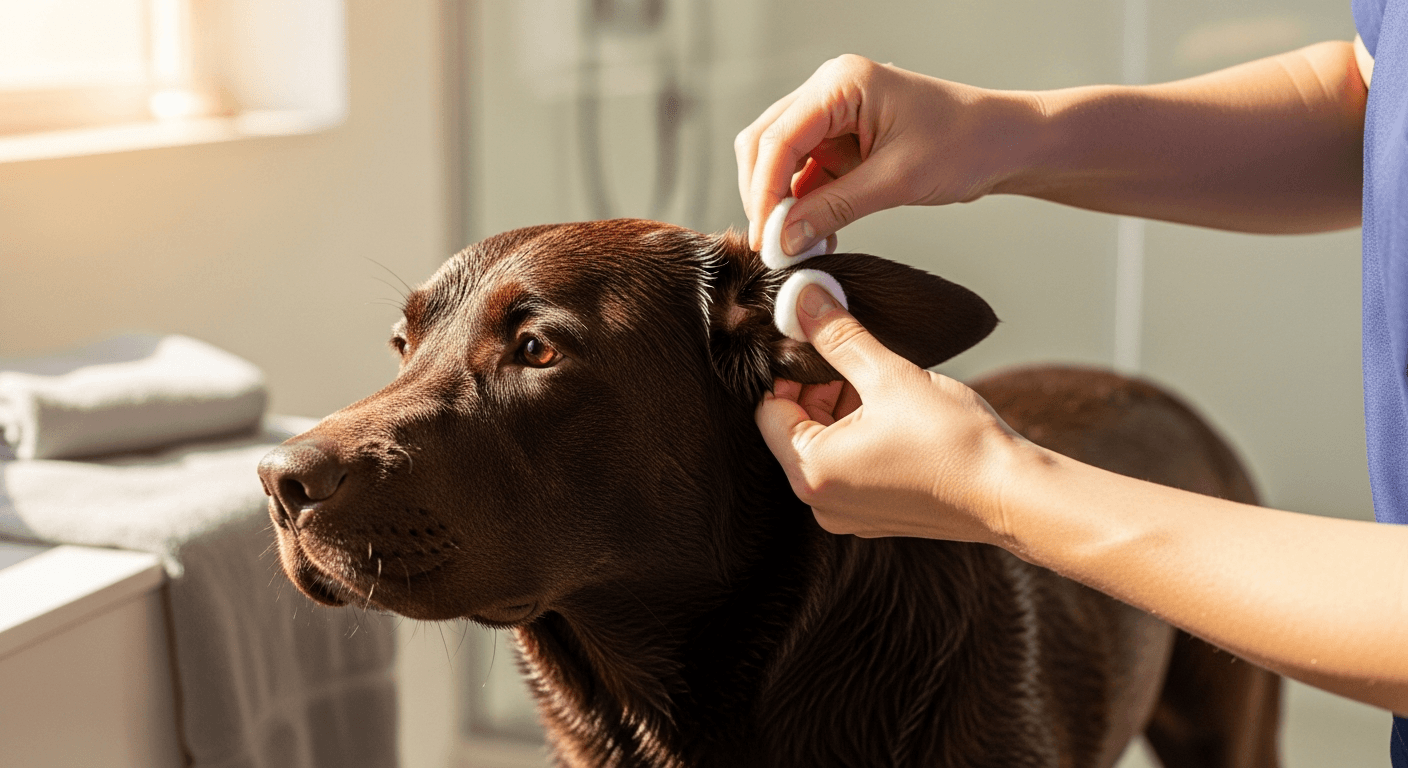
Prevention is straightforward, consistent, and takes under two minutes per session. Most Labs who see the vet repeatedly for ear infections are not being dried or cleaned on a reliable schedule.
Drying after every swim or bath is the single highest-impact step. Use a cotton ball — not a cotton swab — to absorb visible moisture at the ear opening after any water exposure. Never push anything into the canal. One cotton ball per ear, a gentle wipe at the opening, and you’ve removed the moisture that starts most infections.
For regular cleaning, here’s the routine:
- Tilt your Lab’s head so the affected ear faces up
- Apply a veterinary-formulated ear cleaning solution — fill the canal (your vet or the product instructions will specify how much)
- Fold the ear flap down and massage the base of the ear firmly for 20–30 seconds — you should hear a squishing sound
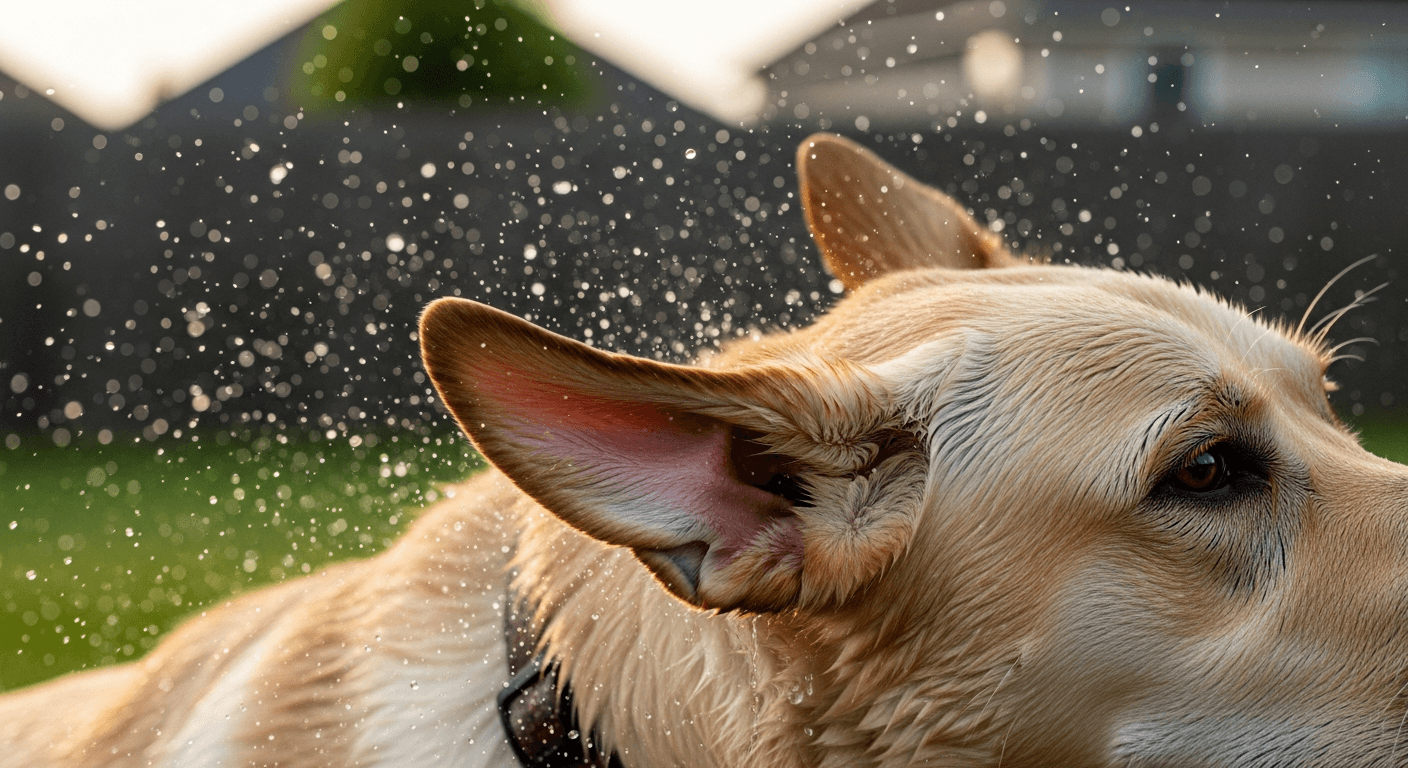
- Stand back and let your Lab shake — the shaking brings debris and solution to the surface
- Wipe the outer canal and inner ear flap with a clean cotton pad — remove what comes out, don’t push it back in
Cleaning frequency: Once a week for most Labs. Twice a week for Labs who swim regularly or have an allergy history. Do not clean more than twice a week without vet direction — overcleaning disrupts the ear’s natural bacterial balance and can cause its own problems.
Product selection: Use only veterinary-formulated ear cleaners. Virbac Epi-Otic Advanced and Zymox Ear Cleanser are both widely recommended and appropriate for routine maintenance — both available on Chewy. Never use rubbing alcohol or plain water.
Excess hair inside the ear flap can trap moisture. Light trimming around the ear opening improves airflow. Ask your groomer to include this as part of a regular groom — our complete guide to grooming a Labrador covers the full routine, ear care included.
If ear infections keep returning despite a consistent cleaning routine, the problem is likely allergy-driven. Identifying and managing food or environmental allergy triggers is the most effective long-term approach for chronic cases — and usually starts with a conversation with your vet about a food elimination trial.
Chronic Ear Infections in Labradors: Long-term Management
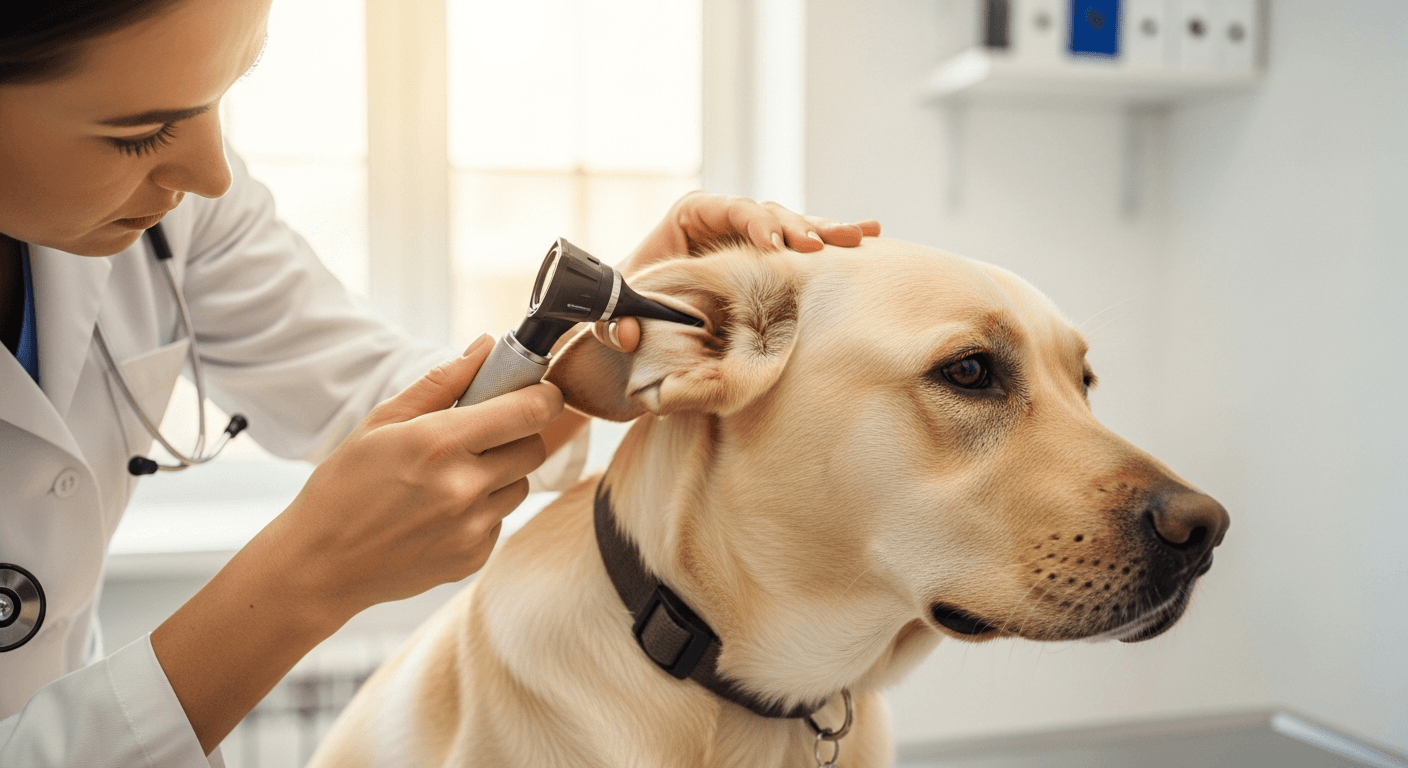
Chronic means three or more infections per year, or infections that clear with treatment but return within weeks. If that describes your Lab, treating each episode individually is not working — you need to find what’s driving the recurrence.
The most common underlying causes are:
Allergies — food or environmental — are the #1 driver of chronic ear infections in Labs. Allergic inflammation changes the ear canal environment and makes it a reliable breeding ground for bacteria and yeast. Many owners spend years treating infections without realizing the ears are just the symptom. A food elimination trial, run with your vet’s guidance, is typically the first diagnostic step toward finding the real cause.
Anatomically narrow ear canals occur in some Labs and make it harder to clean effectively or for medication to reach the infection site. Your vet can assess this during a standard exam.
Hypothyroidism is less common but causes increased wax production that contributes to chronic infections. A thyroid panel at your next vet visit will rule this in or out.
Treatment compliance is also a real factor. Stopping prescription ear drops early because the ear looks better — before the full course is complete — leaves residual infection that returns within weeks.
If your Lab keeps getting infections, ask your vet specifically for: a culture and sensitivity test (to identify whether resistant bacteria are involved — this happens with repeated antibiotic use), a full allergy workup, and a thyroid panel. Treating the same infection repeatedly with the same drops, without investigating the cause, gets expensive and doesn’t solve the problem.
In severe cases of long-term canal damage, TECA (Total Ear Canal Ablation) surgery exists as a last resort. Your vet will raise this if it becomes relevant — it is not a first or second step.
Frequently Asked Questions: Labrador Ear Infections
How do I know if my Labrador has an ear infection?
The earliest signs are behavioral: head shaking, scratching at one or both ears, or rubbing the head along the floor or furniture. When you lift the ear flap, look for redness, dark brown or black waxy discharge, swelling, or a distinct smell — yeasty, sour, or sharp. A healthy ear smells faintly neutral. If you can smell an infection from across the room, see a vet the same day.
How often should I clean my Labrador’s ears?
Once a week for most Labs. Twice a week for Labs that swim regularly or have a history of ear infections or allergies. Do not clean more than twice a week without veterinary direction — overcleaning disrupts the ear canal’s natural bacterial balance and can cause its own problems. Always use a veterinary-formulated ear cleaner, not water or alcohol.
Can I treat my Labrador’s ear infection at home?
Mild, very early-stage cases may respond to an OTC enzymatic ear solution such as Zymox with hydrocortisone. However, if it is your Lab’s first ear infection, if symptoms are not clearly improving within 3–4 days, or if there is significant discharge or pain — see a vet. The infection type (bacterial vs. yeast) determines the correct treatment, and using the wrong product does nothing.
Why does my Labrador keep getting ear infections?
Chronic or recurring ear infections almost always have an underlying cause that is not being treated. The most common driver in Labs is allergies — food or environmental — which creates inflammation in the ear canal that makes infection inevitable. Other causes include anatomically narrow ear canals and hypothyroidism. Treating each infection individually without investigating the root cause is why recurrence happens.
What is the best ear cleaner for Labradors?
Virbac Epi-Otic Advanced and Zymox Ear Cleanser are two of the most widely recommended veterinary-grade ear cleaners for routine maintenance in Labs. Both are available on Chewy. Do not use rubbing alcohol, hydrogen peroxide, or apple cider vinegar — all three cause irritation in the ear canal and can damage tissue if the eardrum is compromised.
Building the Habit That Prevents Most Infections
Thirty seconds after every swim or bath — a cotton ball at the ear opening — prevents the majority of Lab ear infections. Add a weekly cleaning with a veterinary ear solution, and you’ve built the routine that most Labs with chronic problems never had. If infections keep coming back despite that, the root cause is systemic, not topical — talk to your vet about an allergy workup as the next step.