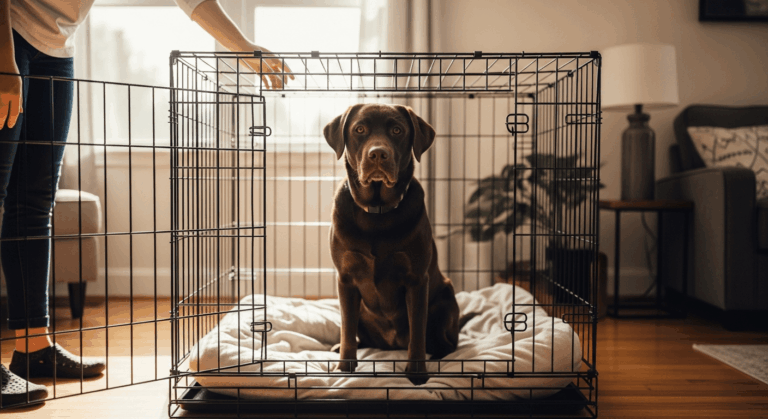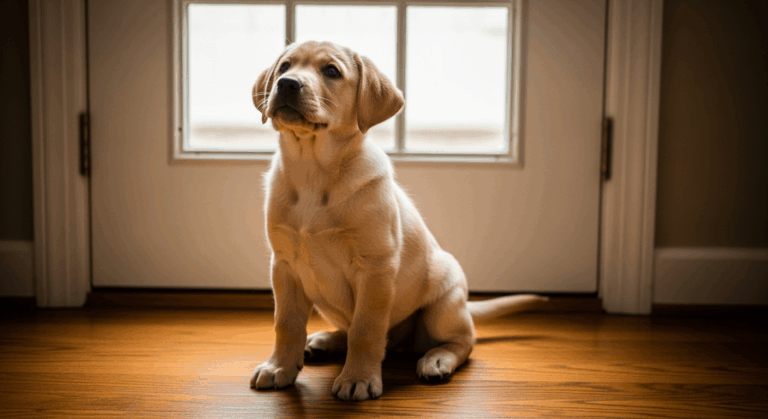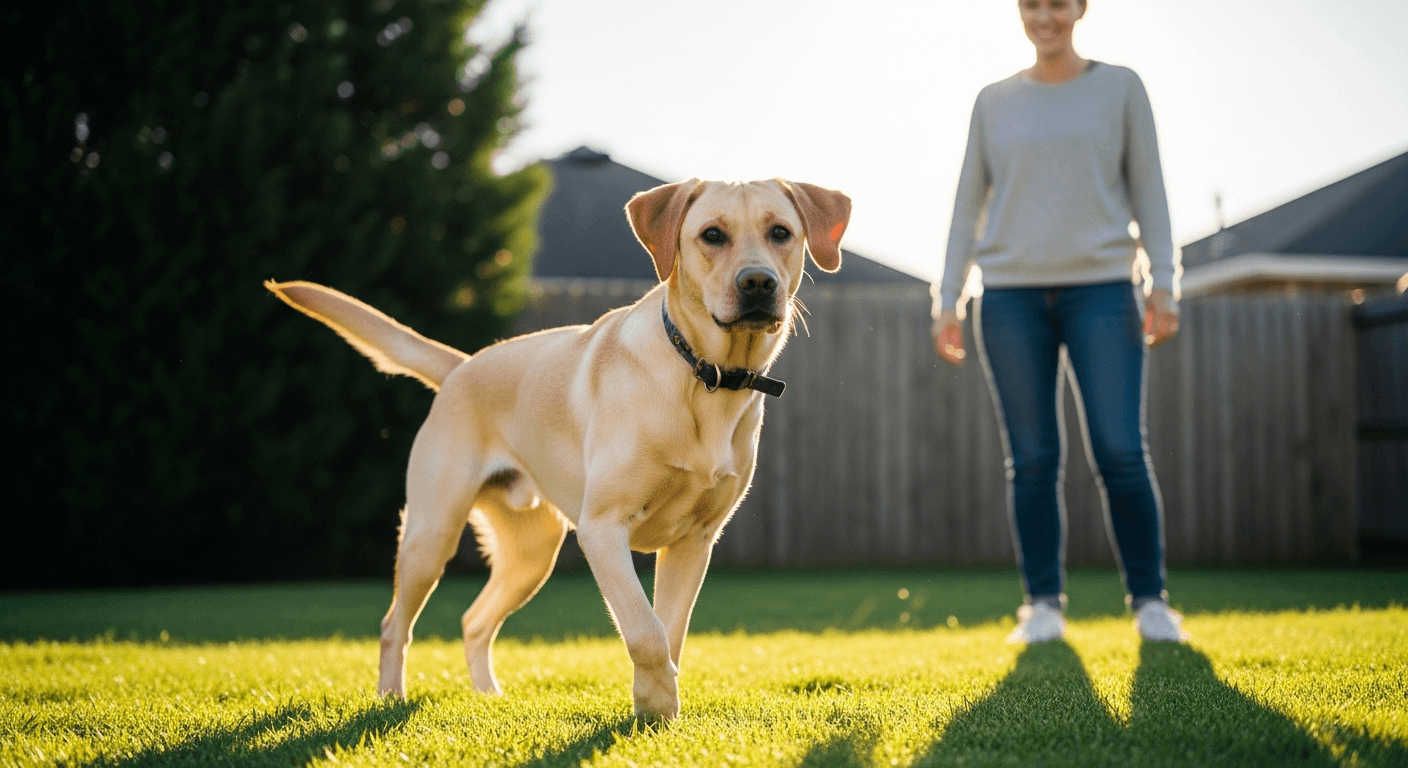
Six months is the age at which most Lab owners contact a trainer. The puppy that sat reliably at 12 weeks now ignores commands. The recall that worked in the garden fails at the park. This is adolescence — a biological phase, not a training failure. Understanding what is happening developmentally is the first step to navigating it.
At 6 months, a Labrador typically weighs 40–60 lbs (18–27 kg). Males are usually 45–60 lbs; females 40–55 lbs. A 6-month Lab has reached roughly 65–70% of its adult weight. Growth continues until 12–18 months, though the rate slows significantly after 6 months. Compare month-by-month ranges on our weight by age chart.
6-Month-Old Labrador Size and Weight
At 24 weeks, most Labs weigh between 40 and 60 lbs (18–27 kg). Males typically land between 45 and 60 lbs; females between 40 and 55 lbs. The dog has reached approximately 65–70% of adult height, but the chest has not yet deepened to adult proportions — the leggy, adolescent build continues until 12–18 months.
Adult teeth are fully through by 6–7 months. Owners can now see the complete adult dental structure. If any baby teeth are still present at 6 months, mention it at the next vet visit — retained baby teeth can cause adult tooth misalignment and may require extraction.
Body condition at this age requires active monitoring. The POMC gene mutation in most Labs removes the satiety signal that tells most dogs they are full — a 6-month Lab will request food regardless of how much it has eaten. Do not increase portions in response to apparent hunger. Assess body condition by feel: ribs clearly palpable under light pressure, a visible waist taper from above. An overweight 6-month Lab is not well-fed — it is an overweight 6-month Lab. For feeding amounts at this weight, see our guide to how much to feed a Labrador.
6-Month-Old Lab Behavior: Adolescence Has Arrived
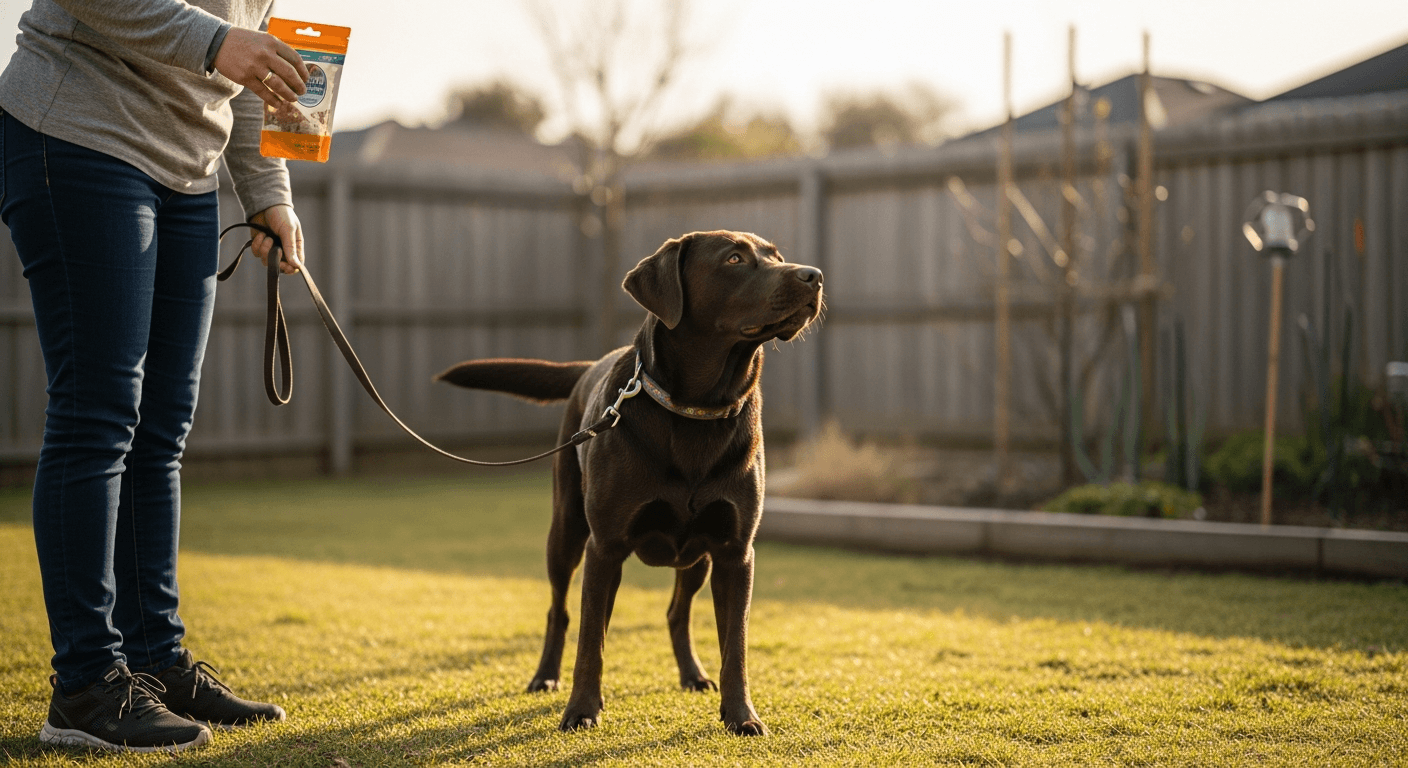
Adolescence in Labs is a biological phase driven by hormonal changes and significant neurological rewiring. The dog’s brain is reorganizing for adult independent function — attention to the environment, other dogs, and interesting scents increases; attention to the handler temporarily decreases. This is not the owner’s failure. It is a predictable developmental stage shared by virtually all Labs regardless of how much training preceded it.
What adolescence looks like in practice: the sit that was reliable at 3 months may now require multiple repetitions before it registers. Recall that worked in the garden fails near other dogs. Counter-surfing begins as the dog’s reach extends to counter height. Lead pulling increases as adolescent strength develops. Jumping on guests escalates at greetings. These behaviors are not new learning — they are existing impulses that the puppy had less physical and psychological capacity to act on before.
The dog has not forgotten its training. The neural pathways built during the 8–16 week foundation period are still there. They are being competed with by stronger environmental motivators. The solution is not repeating the same commands at the same frequency with the same rewards — it is increasing the value of compliance. Higher-value food rewards, shorter sessions with higher success rates, and environmental management to prevent rehearsal of bad behaviors are the correct tools.
Lab adolescence runs approximately from 6 to 12 months, with the most challenging period typically between 7 and 10 months. It resolves. By 18–24 months, the majority of Labs settle into reliable adult behavior. For the full developmental training arc through adolescence, see our guide to the Labrador puppy training schedule.
Training a 6-Month-Old Lab: Managing Adolescence
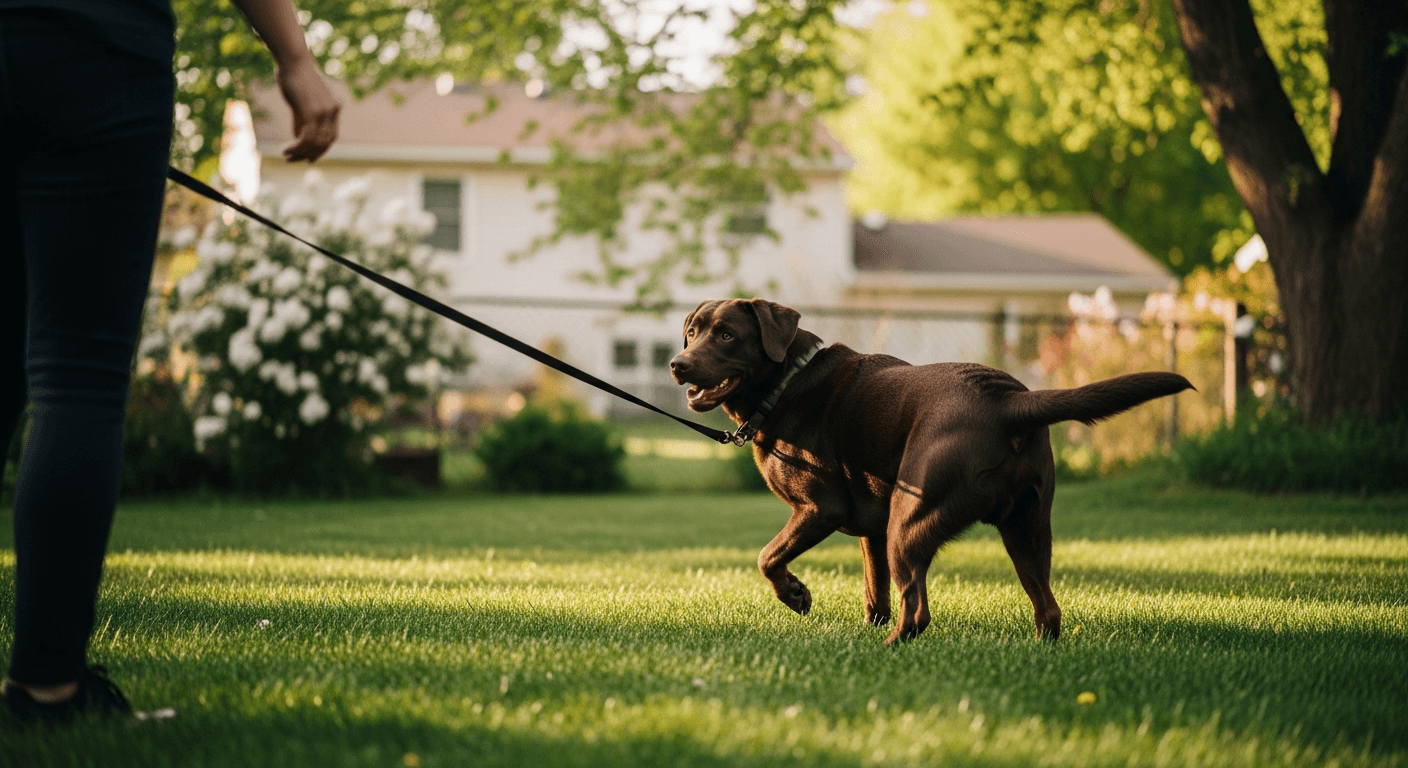
Upgrade the reward value before anything else. The treats that motivated a 12-week Lab do not reliably compete with the adolescent’s environmental world. Save kibble for calm home training. Use high-value rewards — real chicken pieces, cheese, hot dog slices, freeze-dried meat — in environments where the dog has significant competing stimuli. Match the reward to the difficulty of the request.
Recall requires a long line at 6 months if it is not yet reliable. Do not practice recall in uncontrolled open spaces where the dog can choose to ignore the call — each ignored recall deepens the pattern. A 5-metre long line allows freedom of movement while maintaining the ability to enforce and reward the cue. Keep recall sessions short, always successful, and always rewarded emphatically.
Environmental management is not a shortcut — it is a training tool. A dog that cannot reach the counter does not practice counter-surfing. A dog on a leash in the house cannot bolt through open doors. Baby gates, crates, and leashes during the adolescent period prevent the rehearsal of bad behaviors that makes them harder to extinguish. Prevention is faster than remediation.
Do not stop training because it feels harder. Dogs that receive no training during adolescence often require remedial work at 12–18 months to undo the habits they developed unchecked. Consistent positive training during adolescence — even if the results seem slower — maintains the neural pathways and the owner-dog relationship. For the full training guide, see our full guide to training your Labrador puppy.
Exercise and Feeding at 6 Months
Structured exercise at 6 months: 30 minutes of lead walking per session, twice daily, follows the five-minutes-per-month rule. In practice, most healthy 6-month Labs tolerate and benefit from two 30-minute walks per day. Free play on soft ground (grass, dirt) at the dog’s own pace is not restricted.
Running with the owner is a common question at 6 months. Growth plates in Lab puppies typically close at 12–18 months, according to AKC guidance on large-breed puppy exercise. Sustained running at owner pace on hard surfaces — pavement, concrete — before this point risks growth plate stress injury. Short bursts of off-lead running on grass are fine. Owner-paced jogging on pavement should wait until at least 12 months, and preferably 14–16 months for a large-framed male Lab.
Feeding transitions to two meals per day from 6 months onward. Large-breed puppy formula continues — do not switch to adult food until 12–15 months. Daily intake is approximately 3–3.5 cups divided across two meals, but this varies by food brand and individual body weight. Check the specific guide and adjust by body condition. Measure portions — estimating by eye consistently underestimates or overestimates, particularly with a dog that shows constant apparent hunger. For detailed feeding amounts, see our guide to how much to feed a Labrador.
Frequently Asked Questions: 6-Month-Old Labrador
How much should a 6-month-old Labrador weigh?
Typically 40–60 lbs (18–27 kg). Males usually 45–60 lbs; females 40–55 lbs. Labs have reached approximately 65–70% of adult weight at 6 months. Assess body condition by rib palpability and waist taper — not by the dog’s apparent appetite, which is unreliable due to the POMC satiety gene mutation.
Why has my previously well-trained 6-month Lab stopped listening?
Adolescence — a biological phase, not a training failure. The dog has not forgotten its training; environmental motivators have increased in strength relative to owner cues. Upgrade reward value, use a long line for recall work, manage the environment to prevent rehearsal of bad behaviors, and continue training consistently.
When will my Lab puppy calm down?
Lab adolescence typically runs from 6 to 12 months, peaking at 7–10 months. Most Labs begin settling into reliable adult behavior at 18–24 months. The adolescent behavior is temporary. Continued training and management during this phase significantly reduces the duration of the challenging behaviors.
Can I run with my 6-month Lab?
No — not sustained pavement running at owner pace. Growth plates in Labs close at 12–18 months. Repetitive high-impact exercise before closure risks permanent injury. Short bursts of off-lead running on grass are fine. Owner-paced jogging should wait until 12+ months minimum.
How many meals should a 6-month Lab eat?
Two meals per day from 6 months is appropriate. Feed large-breed puppy formula until 12–15 months — do not switch to adult food yet. Total daily intake approximately 3–3.5 cups divided across two meals, adjusted by the specific food’s guide and the dog’s body condition.
Why is my 6-month-old Labrador shedding so much?
The puppy coat is giving way to the adult double coat, and 6 months is right in the middle of that transition. Expect a few weeks of heavy hair loss and brush daily until it settles. This is also your preview of adult life — our guide to Labrador shedding covers the tools that keep it manageable. A deshedding rake used outdoors, once the blow starts, keeps most of the loose hair off your floors. Expect the heaviest fallout to last two to three weeks. Diet shows up in the coat as well — a Lab on good large-breed food sheds a duller, sparser undercoat than one on bargain kibble, so if the new adult coat comes in dry or flaky, look at the bowl before the brush. Daily brushing through the transition also doubles as handling practice your vet and groomer will thank you for.
Six months is the hardest month for most Lab owners. The puppy was compliant; the adolescent is not. The difference is biology, not failure. Stay consistent, upgrade your rewards, manage the environment, and don’t abandon training because it is harder. This phase passes. The adult Lab that emerges is worth the investment. See what the 7-month-old Labrador peak looks like next. For the complete month-by-month roadmap through the first year, see our Labrador puppy’s first year guide.