A 7 month old Labrador is usually at the absolute peak of adolescence. The dog looks nearly adult, runs at maximum energy output, and pays you the least attention it ever will. None of this is permanent, and none of it means your training failed. Here is where your Lab stands physically, why this month is the hardest, and the specific techniques that work right now. The whole first-year arc is mapped in our Labrador puppy first-year guide.
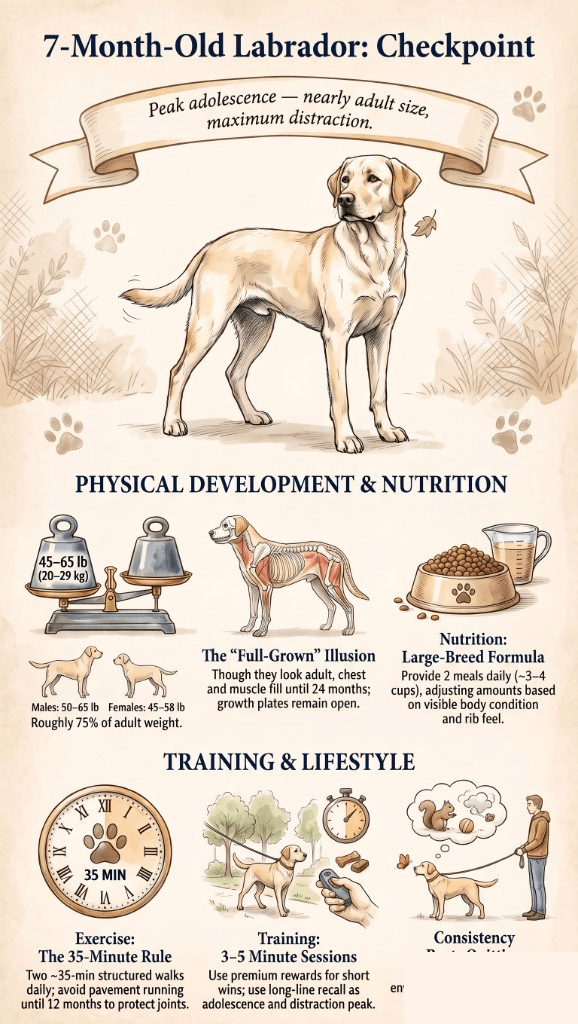
At 7 months, a Labrador typically weighs 45 to 65 lbs — males usually 50 to 65 lbs, females 45 to 58 lbs — which is about 75% of adult weight. The dog looks close to full-grown but keeps filling out in chest depth and muscle until 18 to 24 months.
7-Month-Old Labrador Size & Physical Development
The numbers: males typically weigh 50 to 65 lbs at 7 months, females 45 to 58 lbs, tracking the curve in the AKC’s puppy growth chart. Strangers will call your dog full-grown. It isn’t — the skull hasn’t broadened, the chest hasn’t reached adult depth, and the hindquarter muscle is still arriving. That process runs to 18 or 24 months.
Under the adult-looking surface, the skeleton is unfinished. Veterinarians caution that growth plates stay open in most Labs until 12 to 18 months, which is why sustained jogging, repetitive jumping, and long hard-surface fetch sessions still belong on the not-yet list. The dog will happily overdo it; the joints will bill you later.
Two housekeeping items close out the physical picture. All 42 adult teeth should be in place — any retained baby teeth should already have been flagged at the 6-month check — and daily dental care with brushing or dental chews should become routine now. Portion questions at this new size are covered in our guide to how much to feed a Labrador.
7-Month-Old Lab Behavior Problems: Why This Month Is Hardest
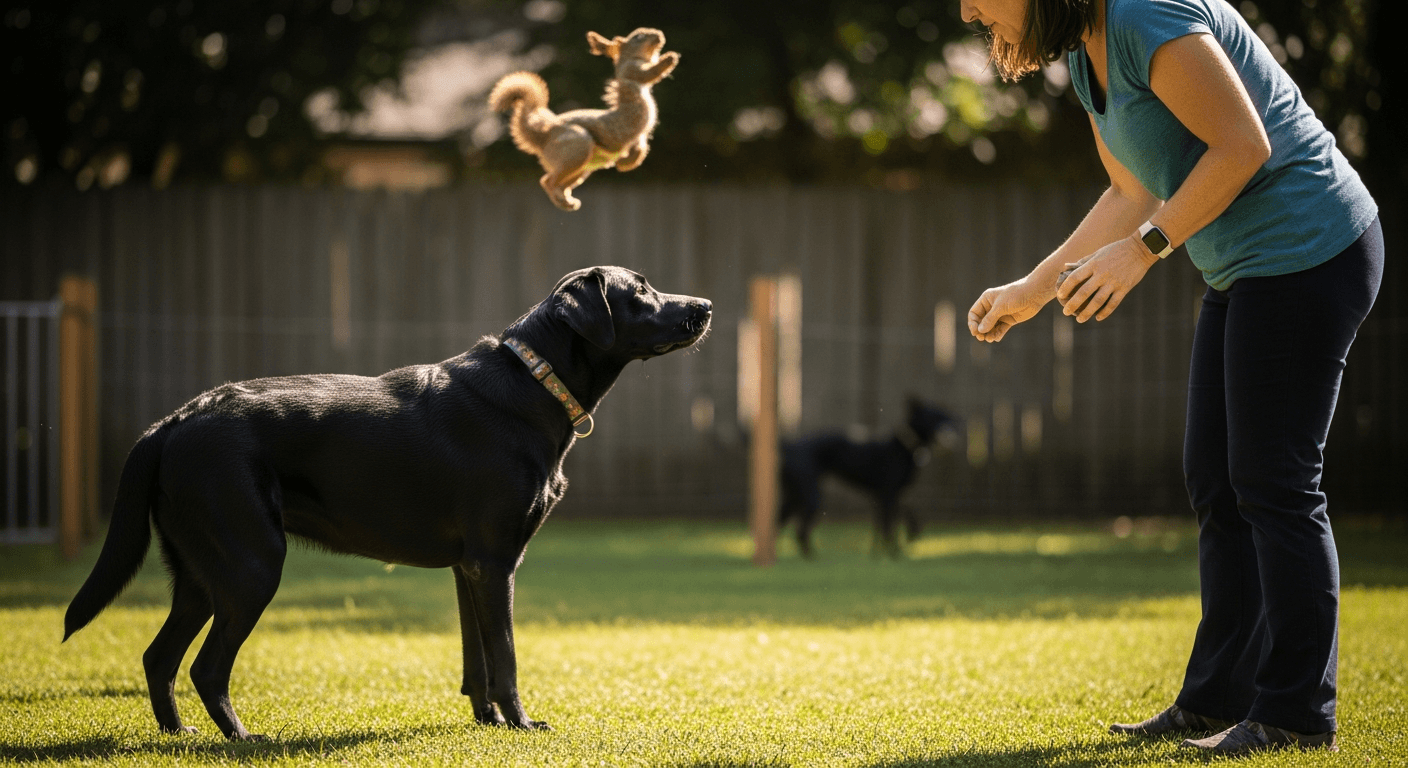
Lab adolescence runs roughly 6 to 10 months, and for most dogs the 7-to-9-month stretch is the most intense. Hormones are at their peak in intact dogs, and even neutered Labs go through the same adolescent brain rewiring during this window.
The signature symptom is the “ignoring everything” phase. At peak adolescence, the brain prioritizes environmental information over handler cues — the neurological equivalent of a teenager who suddenly finds friends more interesting than parents. It is not defiance, and it resolves: most Labs start emerging between 9 and 12 months. The stage-by-stage picture is in our Labrador puppy training schedule.
Four specific behaviors peak right now. Counter-surfing, because the dog is finally tall enough and bold enough. Leash pulling, because strength is near adult level while impulse control is not. Jumping on guests, because excitement outruns inhibition. And forceful mouthing of hands — less frequent than puppy mouthing, but harder.
One more curveball: some Labs hit a secondary fear period between 8 and 14 months, suddenly spooking at things they handled confidently before. It’s temporary. Don’t force contact — let the dog approach at its own pace and pay the bravery with treats.
Counter-Surfing: The 7-Month Specialty
If food is disappearing off counters, you have a normal seven-month-old Lab. Height, confidence, and food drive all peak together this month, and a single successful theft pays for weeks of trying. Management comes first: clear the counters completely for a few weeks so the behavior stops paying, and never chase — being chased turns theft into the best game in the house.
Then teach an incompatible habit: reward the dog generously for settling on a mat while you cook. A Lab that earns chicken for lying on its bed has less reason to gamble on the counter. Keep sessions short — five minutes of mat work per meal prep builds the habit within a week or two. And count anything successfully stolen against the day’s ration; the appetite never takes a month off.
Training a 7-Month-Old Lab: What Actually Works During Adolescence
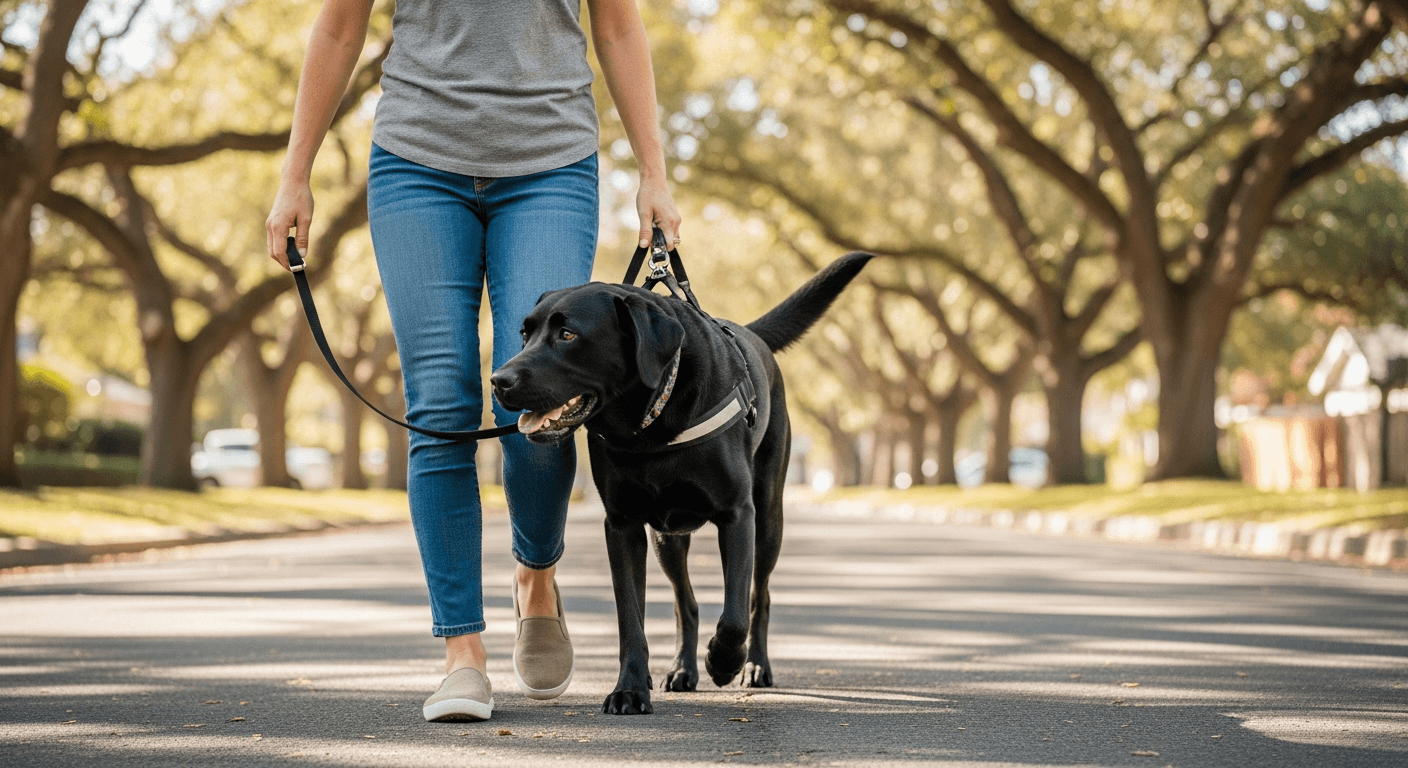
Shrink the sessions, raise the pay. A distracted adolescent learns more in 3 to 5 focused minutes with real chicken or cheese than in 15 minutes of kibble-grade work. The dog can still learn everything — the price of its attention just went up.
For pulling, change the mechanics instead of arm-wrestling a 60-lb dog. Use stop-and-wait: the instant the leash tightens, stop dead; walk again only when it slacks. Add a front-clip harness to cut the dog’s pulling leverage, and feed rewards generously at your knee for every stretch of good position. Expect weeks of repetition, not days.
For recall, protect the habit rather than test it. Practice on a 15-to-30-foot long line, several recalls per session, jackpot rewards for every return — and don’t call the dog in situations where losing is likely. Every failed recall trains ignoring; every paid one banks the habit for the calmer brain that arrives around 9 to 12 months.
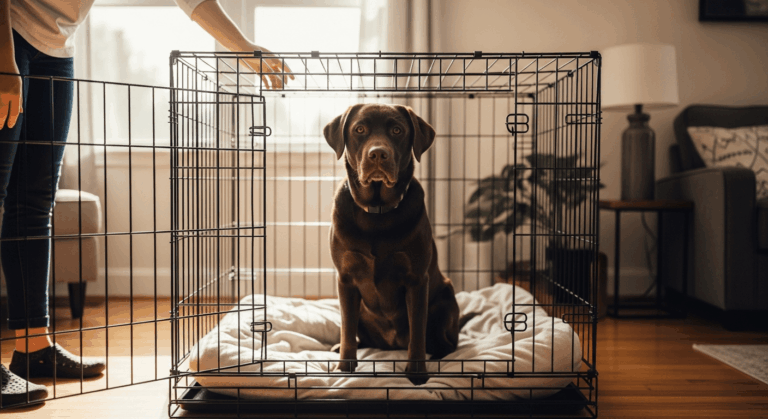
And manage what you can’t yet train. Gates, leashes, crates, and clear counters prevent counter-surfing, jumping, and door-bolting from getting rehearsed. Management isn’t giving up — it protects good habits while the brain catches up. The full toolbox is in our complete Labrador training guide.
Exercise & Feeding for a 7-Month-Old Labrador
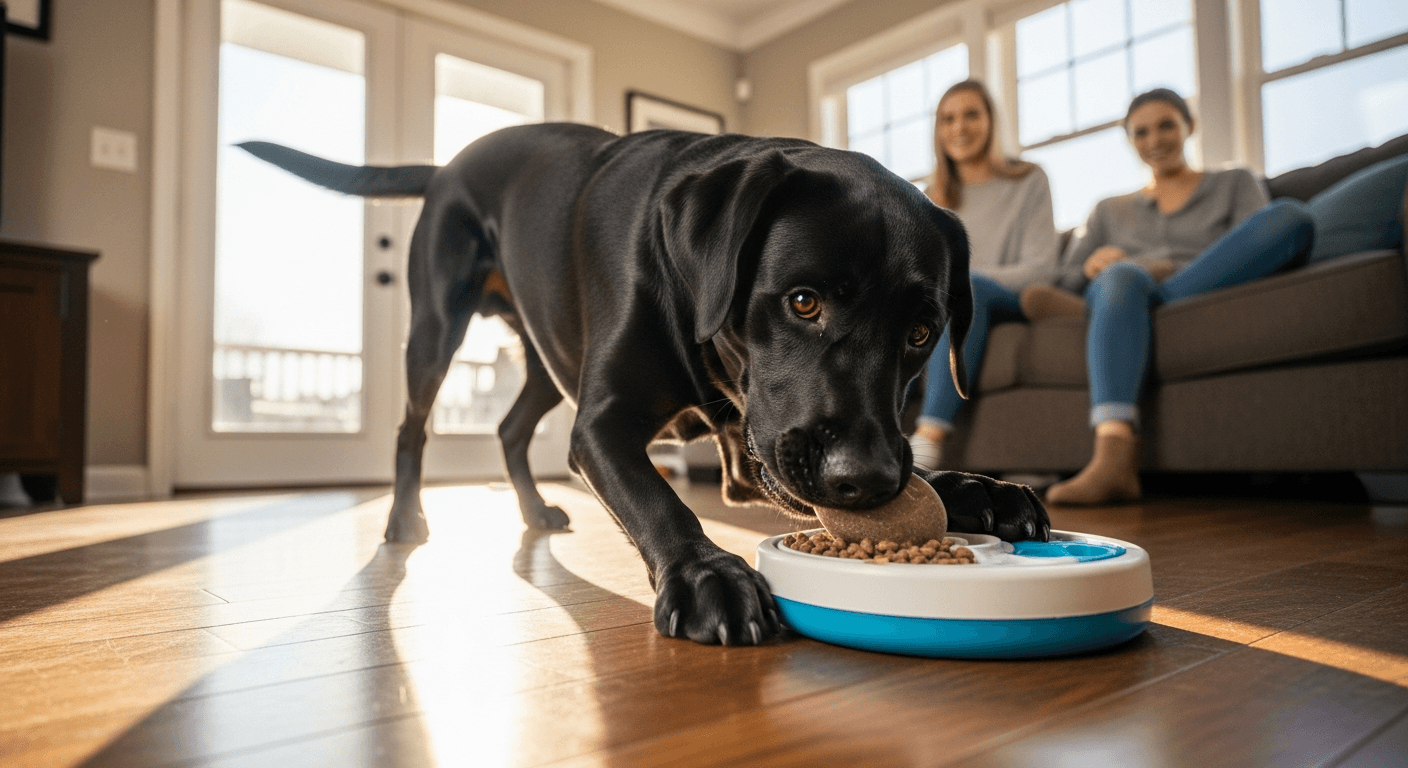
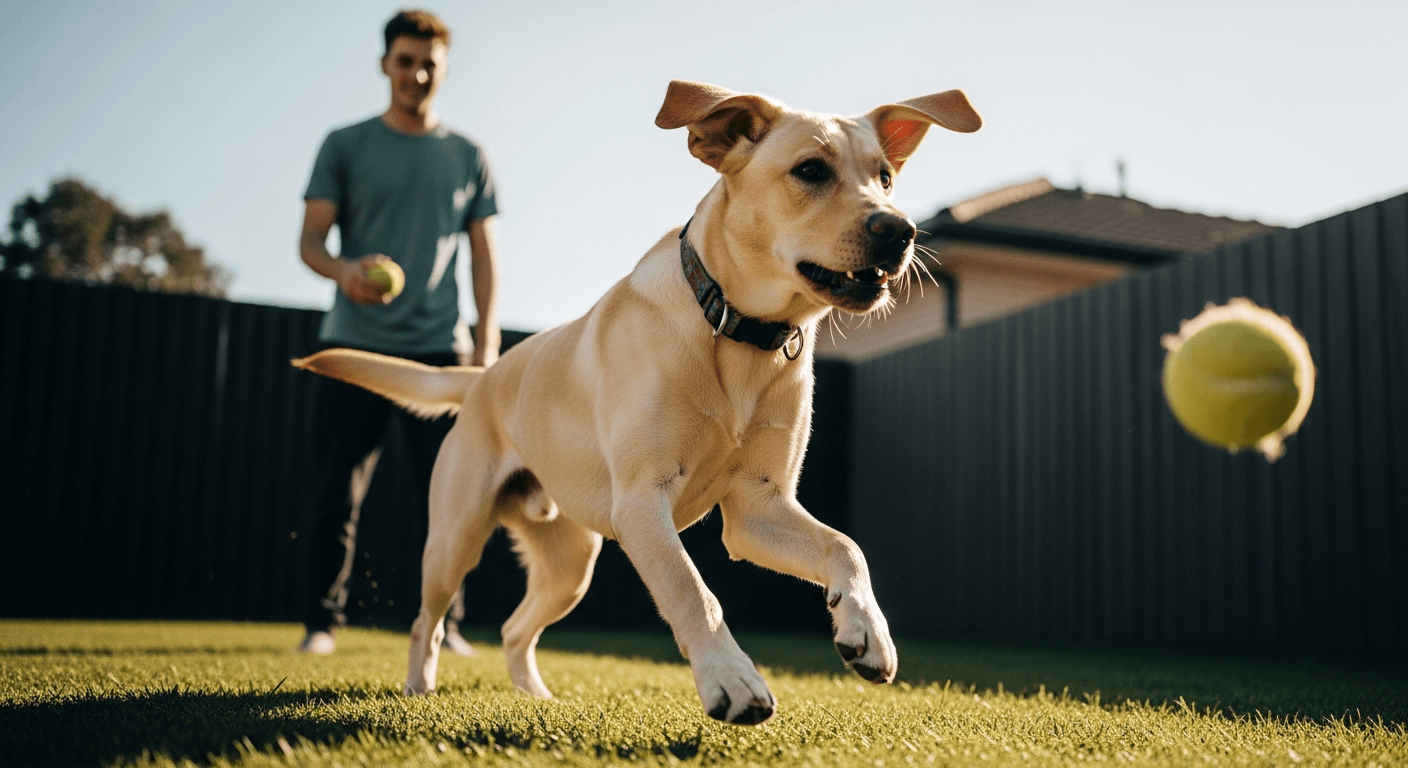
Structured exercise caps at about 35 minutes per session, twice a day, under the 5-minutes-per-month rule. Most 7-month-olds handle two of those walks plus off-leash play in a secure area comfortably. Hold off on sustained pavement jogging until after 12 months — growth plates first, running partner later. And work the brain as hard as the legs: nose games, puzzle feeders, and training sessions calm an adolescent Lab more reliably than an extra mile ever does.
Feeding drops to 2 meals a day for most dogs by now, still on a large-breed puppy formula, at roughly 3 to 4 cups daily depending on the brand and the dog. Score body condition with your hands — ribs easy to feel, waist visible from above — because a 7 month old Labrador that carries extra weight now carries a measurably higher joint-problem risk into middle age.
Frequently Asked Questions
Why is my 7-month-old Labrador suddenly ignoring commands?
Peak adolescence. The adolescent brain ranks environmental input above handler cues, so known commands seem to vanish around 6 to 10 months. It is biology, not defiance or failed training. Keep sessions short, pay with premium rewards, manage with a long line, and expect steady improvement from 9 to 12 months.
How much should a 7 month old Labrador weigh?
Between 45 and 65 lbs for most dogs — males typically 50 to 65 lbs, females 45 to 58 lbs, roughly 75% of adult weight. The lean, leggy look is normal; chest and muscle keep filling in until 18 to 24 months. Judge by rib check and steady gains, not by the biggest dog at the park.
How do I stop my 7-month-old Labrador from pulling on the leash?
Stop moving the moment the leash tightens, and walk on only when it slacks — pulling must never pay. Add a front-clip harness to reduce leverage and reward heavily for walking at your side. Consistency over several weeks wins; yanking back against a near-adult-strength Lab doesn’t.
When will my Labrador calm down?
The steep improvement usually starts between 9 and 12 months as peak adolescence ends, with real, noticeable calm arriving between 18 months and 2 years. Training shortens the rough patch but doesn’t skip it. Mental exercise — puzzle feeders, nose work, short training bursts — buys the most day-to-day calm right now.
Why is my 7-month-old Labrador destructive when left alone?
Usually boredom plus adolescent energy, not spite. A seven-month Lab left under-exercised turns furniture into an outlet. Run the energy out before departures and leave a frozen stuffed toy. If destruction only happens when alone and comes with howling, drooling, or scratching at exits, rule out separation anxiety — it needs a different approach than boredom does.
How much sleep does a 7-month-old Labrador need?
Fourteen to sixteen hours across the day, and adolescents often fight it. An overtired Lab looks exactly like a badly behaved one — more mouthing, less listening, no settle. If evenings are chaos, enforce an afternoon nap in the crate; behavior usually improves within days. Treat rest as part of the training plan, not a break from it — a rested adolescent learns in minutes what a tired one fights for an hour.
Can I go jogging with my 7 month old Labrador?
Not yet. Growth plates typically stay open until 12 to 18 months, and repetitive pavement impact before closure raises long-term joint risk in a breed already prone to hip and elbow dysplasia. Stick to capped leash walks and free play now; build the running habit gradually after the first birthday.
Seven months is the peak — by definition, it improves from here. The recall comes back, the pulling fades, the counters eventually go unsurfed. The timeline is months, so play the long game: short sessions, high pay, managed environment. The adult Lab is worth every week of the adolescent one. For the next checkpoint, see our 8-month-old Labrador guide, then what changes in a 9-month-old Labrador.