Are labrador retrievers easy to train? Yes. Labs are eager, food-motivated, and quick to learn, which is why so many trainers call them one of the easiest breeds to teach.
The limit is age, and it is the part of are labrador retrievers easy to train that quick answers leave out. A Lab puppy learns “sit” in a day, then spends its teenage months pulling on the leash, jumping on guests, and acting as if it never heard the word. Easy to teach is not the same as easy to live with, and this page explains the gap.
Why Trainers Call Them Easy

Three traits make Labs quick students.
The first is food. Most Labs will work hard for a small treat, and many will work for a piece of their regular kibble. A dog that cares about the reward learns faster, because you can pay it for every right choice.
The second is attention to people. Labs were bred to work closely with a hunter, watching for signals and bringing birds back to hand. That history shows up as a dog that looks at you, reads your body language, and wants to take part.
The third is a working job history. The American Kennel Club notes the Lab is one of the prime breeds chosen as guide and rescue dogs, and many work in detection and as service dogs. Those programs pick Labs because they can be trained to a high standard.
That does not mean your pet Lab will learn to guide a person or find explosives. Working dogs are selected from specific lines and trained by professionals for months. It means the breed has the raw material.
So when people ask are labrador retrievers easy to train, the fair answer is yes, for the basics. A Lab usually picks up sit, down, come, and a hand target faster than many breeds. Getting those cues to work around distractions is where the real effort goes.
The AKC also stresses early socialization and puppy classes for Labs. It calls them vital because of the breed’s strength and energy. A 70-pound dog that learned manners at 10 weeks is much easier than one that learns them at 10 months.
What Easy Does Not Cover
Here is the catch in “are labrador retrievers easy to train.” A dog can learn a cue fast and still have habits that drive you crazy. Labs have a few classic ones.
Mouthing. Labs are retrievers. Carrying things in their mouth is the job, and puppies test it on hands, sleeves, and shoelaces. Most outgrow the worst of it, but it takes months of redirecting to toys.
Jumping. A friendly Lab greets everyone with its whole body. Guests love it at 12 pounds and hate it at 70. Teaching four paws on the floor takes consistent practice from every person in the house.
Pulling. Labs are strong, curious, and often in a hurry. Loose-leash walking is one of the hardest skills for the breed, and it can take many months.
Chewing. Young Labs chew shoes, table legs, remote controls, and drywall. It peaks during teething and again in adolescence. Plenty of safe chew toys and supervision, or a crate when you cannot watch, prevent most damage.
Counter-surfing. The same food drive that makes training easy also makes the kitchen a target. A Lab that finds one sandwich on a counter will check that counter for years.
Food drive sits at the center of any honest answer to are labrador retrievers easy to train, and it cuts both ways. It makes rewards powerful, and it makes mistakes rewarding too. Portion control matters as well, since training treats add up. Our guide on how much to feed a Labrador helps you subtract treats from meals.
None of this means Labs are hard dogs. It means “are labrador retrievers easy to train” and “will my Lab be calm at 8 months” are two different questions.
The Teenage Stretch
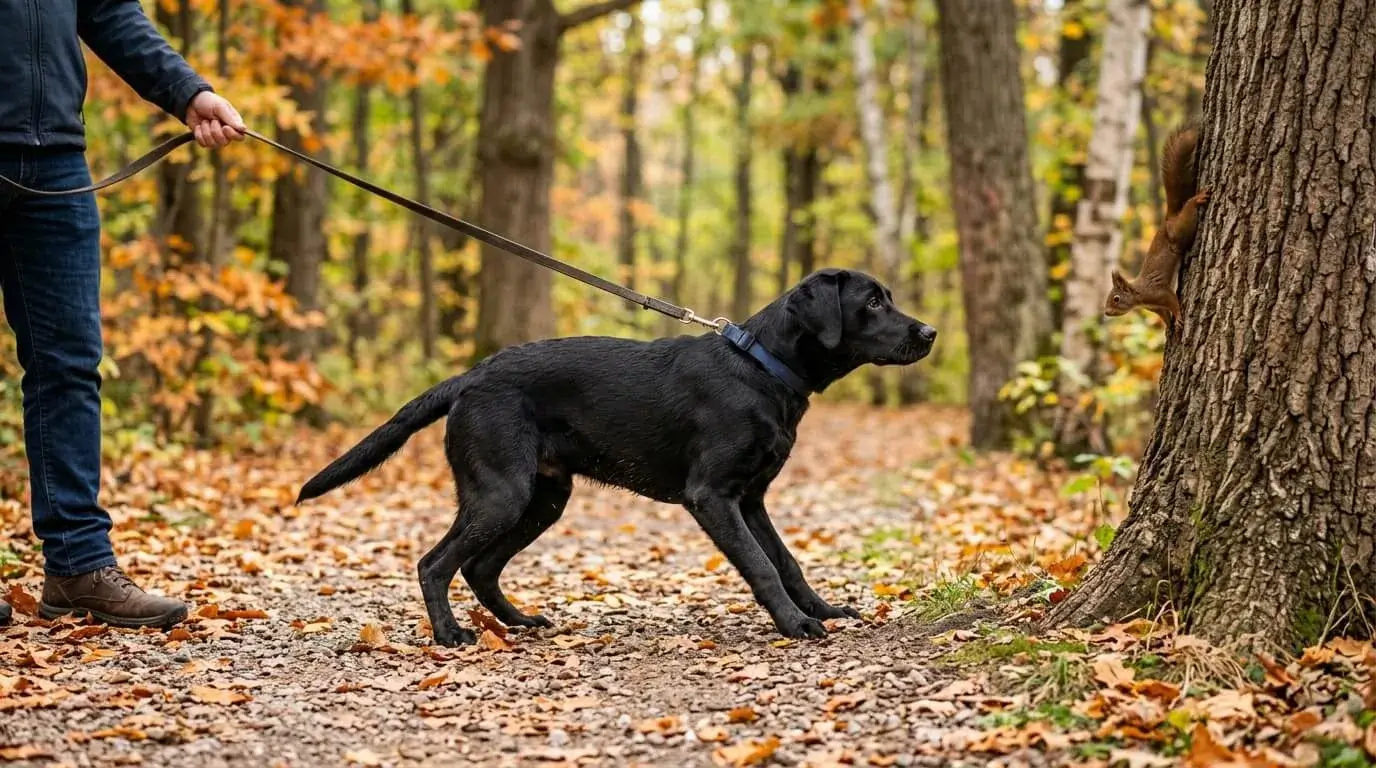
Adolescence is the part most answers to are labrador retrievers easy to train skip. For many Labs, it runs from about 6 months to 18 months or later.
During this stretch, a puppy that seemed perfect can start to:
- Ignore cues it knew well.
- Pull harder on the leash.
- Jump, mouth, and bark more.
- Test boundaries and wander off.
Many owners think training has failed. It usually has not. The dog is growing, hormones are shifting, and the world has become more interesting than you.
Owners who asked are labrador retrievers easy to train at 10 weeks often ask it again at 9 months, with a very different tone. That is normal.
What helps during the teenage months:
- Go back to basics. Practice cues in easy places before hard ones.
- Raise the value of rewards outdoors, where distractions are strongest.
- Use a long line for recall practice instead of trusting it off-leash.
- Keep daily exercise high, since a tired teenager listens better.
- Stay consistent. Every family member uses the same cues and rules.
Some trainers use a simple rule: the dog asks politely, with a sit, before it gets anything it wants. Dinner, the door opening, the leash going on, a ball thrown. It turns everyday life into practice without extra sessions.
Most Labs start to settle as they mature. Many owners notice a calmer dog somewhere between 2 and 3 years old, though some stay bouncy longer. Training through the teenage stretch is what shapes the adult you end up with.
Short Sessions and a Reward a Lab Will Work For
Labs learn best in short bursts, and that habit shapes how are labrador retrievers easy to train plays out at home. Five to ten minutes, two or three times a day, beats a single hour on the weekend.
Keep each session focused. Pick one skill, practice it a few times, and stop while the dog is still keen. Ending on success keeps your Lab eager for the next round.
Choose rewards your dog actually wants:
- Small, soft treats for new or hard skills.
- Kibble from the daily meal for easy repeats.
- A toss of a ball or a game of tug for toy-motivated Labs.
- Praise and petting as a bonus, not the only pay.
What does that look like in practice? In the first month home, a typical Lab puppy learns its name, sit, down, a hand target, and the start of a recall. It also learns where to potty and that the crate is a safe spot. That pace is why trainers who hear are labrador retrievers easy to train usually say yes.
Reward timing matters. Mark the right behavior the moment it happens with a word like “yes” or a clicker, then deliver the reward. A Lab connects the reward with what it was doing at that second.
Exercise is part of the answer to are labrador retrievers easy to train. A Lab that has had a good walk and a game of fetch focuses far better than one that spent the day in a crate. Our guide to how much exercise a Lab needs gives a daily target by age.
Skip harsh corrections. Labs are sensitive to tone, and punishment can make a dog anxious or wary of training. Reward-based methods are the standard approach for this breed for a reason.
This is where are labrador retrievers easy to train becomes a question about you, too. A Lab repeats what pays. If jumping gets attention and sitting gets ignored, the dog learns to jump. Pay the behavior you want, and your Lab will offer it more.
Crate training is a good early win. It gives the puppy a safe place to settle, helps with house training, and prevents chewing when you cannot watch. Our guide to crate training a Lab puppy walks through the steps.
When to Get a Trainer

Even when the answer to are labrador retrievers easy to train is yes, some dogs need outside help. Bring in a certified trainer or a veterinary behaviorist if:
- Your Lab growls, snaps, or bites, or guards food or toys.
- It shows fear, such as hiding, shaking, or panic at noises or people.
- Pulling or jumping is dangerous for someone in your home.
- You do not have time to train daily and need a structured plan.
- Nothing you try is working after several weeks.
Group puppy classes are useful for almost every Lab. They teach basics and give the puppy safe practice around other dogs and people. The AKC calls puppy training classes part of the socialization process.
A good class is small, uses food and toys, and keeps puppies in short, calm bursts of play. The instructor should show you what to do, then watch you do it. Look for a trainer who uses reward-based methods and explains why each step works. Avoid anyone who promises quick fixes with shock, prong, or choke collars.
A trainer is not a sign that your Lab is hard. It is often the fastest way through a rough patch, and many owners wish they had called one sooner.
Where the Actual Steps Live
This page answers the yes-or-no question: are labrador retrievers easy to train. The step-by-step training plans live in our training guides.
For a full plan from puppyhood to adult, start with our complete Labrador training guide. It covers commands, house manners, and problem behaviors by age.
For the first months at home, read how to train a Labrador puppy. It focuses on house training, bite inhibition, and early cues.
For a week-by-week puppy schedule, see our Labrador puppy training guide.
If you only remember one thing, remember this answer to are labrador retrievers easy to train: easy to start, yes. Easy to finish takes steady work through the first two years.
FAQ
Are labrador retrievers easy to train for first-time owners?
Yes, they are one of the better choices for a first dog. Their food drive and eagerness make early training rewarding. Plan for a demanding teenage stretch, and sign up for a puppy class.
At what age do Labs calm down?
Many owners notice a calmer dog between 2 and 3 years old. Some settle sooner and some later. Daily exercise and consistent training help more than waiting.
Are male or female Labs easier?
There is no reliable evidence that one sex is easier to train. Individual temperament, energy, and early training matter far more than sex. For either one, are labrador retrievers easy to train comes down to the individual dog and the time you put in.
Why is my Lab ignoring commands he knows?
Usually because of distractions, adolescence, or a reward that is not worth it in that moment. Practice in easier places, raise the reward outdoors, and rebuild the cue step by step. A dog that knows a cue at home but not at the park is normal, and it does not change the answer to are labrador retrievers easy to train.
So, are labrador retrievers easy to train for most owners? Yes, as long as “easy” includes patience through the teenage months. Keep sessions short, rewards generous, and rules consistent, and a Lab will usually meet you more than halfway.