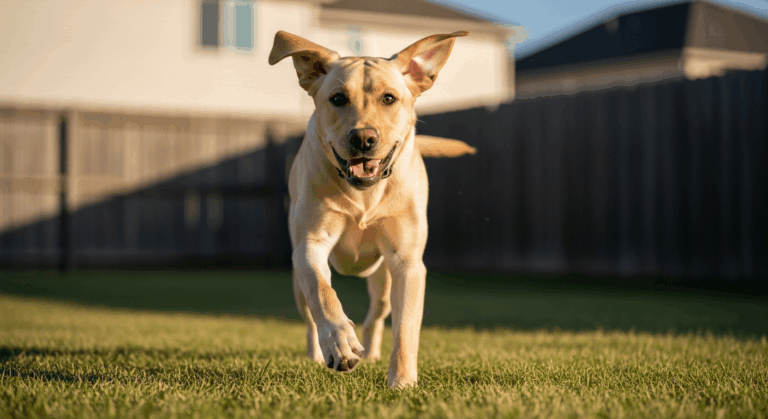
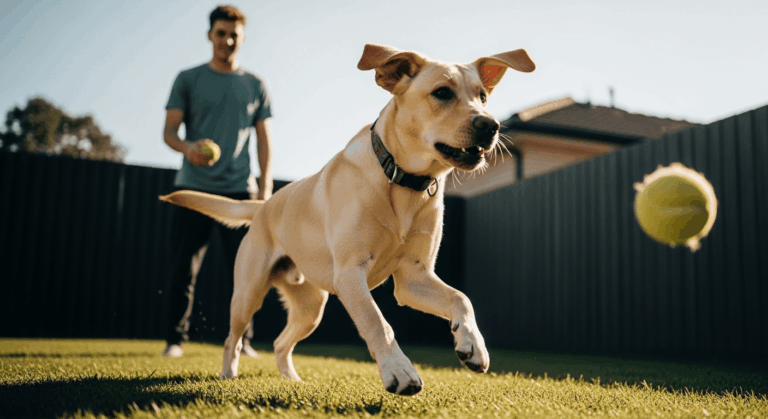
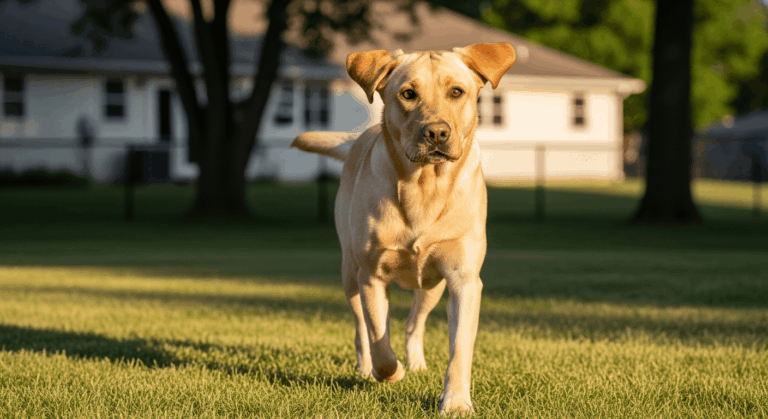
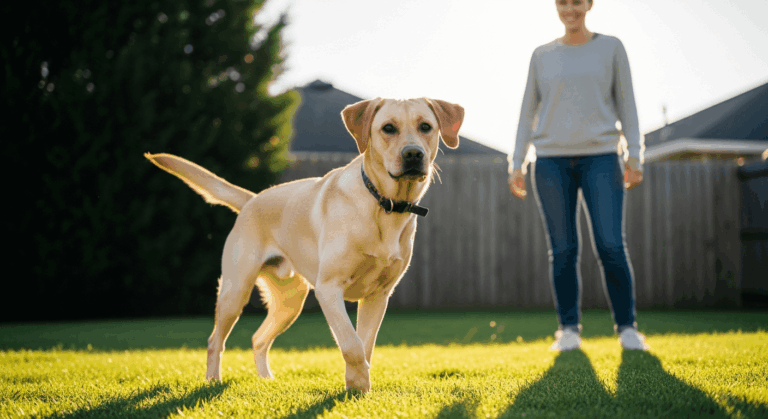
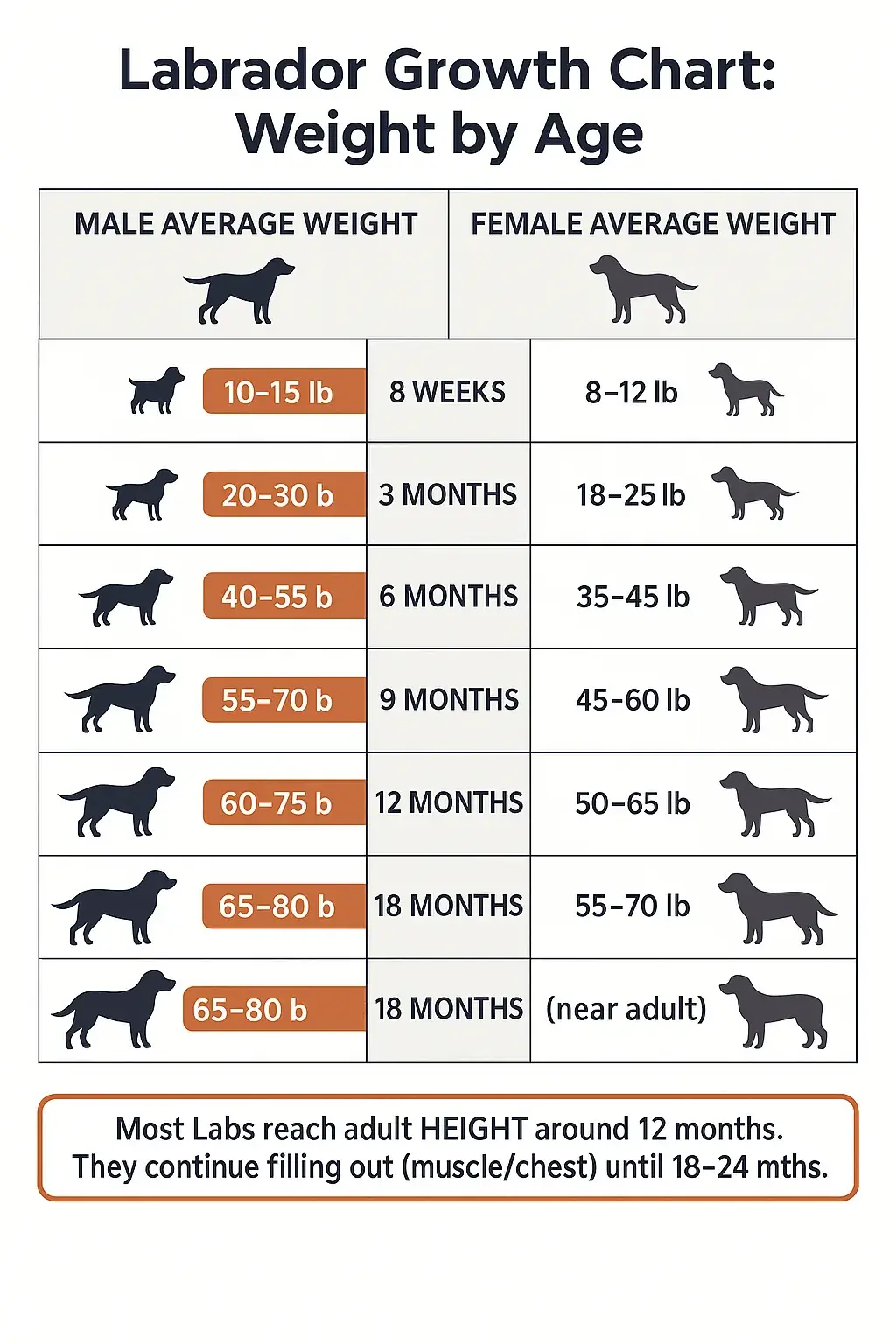
A labrador growth chart helps you sanity-check your puppy’s weight against typical Lab ranges by age — males and females side by side. It is a guide, not a report card. Healthy Labs of the same age can sit well above or below the middle of any chart.
This labrador growth chart hub covers estimated weight by age, when Labs stop growing, adult AKC size, English vs American build, and how to judge body condition. It sits inside our Labrador puppy’s first year map. For day-to-day care at a specific age, use the month guides we link below — we do not rewrite those posts here.
Quick answer: A labrador growth chart tracks typical male and female Labrador weight from puppyhood to about 12 months. Most Labs are near adult height by roughly nine to twelve months, then fill out into the second year. Judge your dog by ribs and waist first; use the scale second.
Owners also search “lab growth chart” and “labrador retriever growth chart.” Same intent: Am I on track, and how big will this puppy get?
Labrador Growth Chart: Weight by Age (Male & Female)
Use this labrador growth chart as a typical estimate range, not an official American Kennel Club puppy standard. AKC publishes adult height and weight goals for the breed. It does not publish an official Labrador puppy weight-by-age table.
The numbers below are one published range, not an official standard. Other public tables disagree, and we show that gap further down. Your pup can be healthy outside them. Genetics, English vs American lines, and litter size all matter. An adult sold as a miniature Labrador is a size claim, not a growth-chart stage.
| Age | Male (lb) | Female (lb) |
|---|---|---|
| 1 month | 3–5 | 2–6 |
| 2 months | 10–15 | 5–10 |
| 3 months | 20–30 | 20–25 |
| 4 months | 30–40 | 25–35 |
| 5 months | 35–45 | 30–40 |
| 6 months | 40–55 | 35–45 |
| 7 months | 50–60 | 40–50 |
| 8 months | 50–65 | 40–55 |
| 9 months | 55–70 | 45–60 |
| 10 months | 55–70 | 50–60 |
| 11 months | 60–75 | 55–65 |
| 12 months | 65–80 | 55–70 |
A simple labrador puppy weight chart rule of thumb used by many Lab owners: some “average” pups gain roughly about 2 lb per week of age early on — so around 25 lb near 3 months and near 50 lb near 6 months. That is a rough line only. Forum and owner data show healthy six-month Labs from about 30 lb to 60 lb.
Print or screenshot this labrador growth chart, then write your puppy’s weekly weight next to the matching row. Watching the slope beats obsessing over one cell.
Weigh weekly on the same scale, at the same time of day, and plot a curve. A flat line for weeks, or a sudden spike with a disappearing waist, matters more than one “off chart” weigh-in.
How to Predict How Big Your Lab Will Get
A labrador growth chart shows averages. Three practical checks narrow your dog’s future size:
- Age and curve. If your Lab is under a year and still climbing the chart with a visible waist, expect more size. After twelve months, big jumps on the scale are more often fat than frame — unless your vet agrees they are still filling out muscle.
- Parents. Dam and sire adult weights beat any calculator. Littermates can still differ by a lot.
- Paws and proportions. Oversized puppy feet relative to the legs often mean more upward growth left. It is a clue, not a guarantee.
Do not use human “double the four-month weight” parlor tricks as gospel for Labs. Breed-specific charts plus body condition are safer.
When Do Labs Stop Growing?
Searchers often ask “when do labs stop growing” right after they open a labrador growth chart. Separate height from filling out.
Most Labs are quite close to adult height around nine months. After that, a lot of change is chest, muscle, and overall substance — not getting taller. Many Labs look “done” near their first birthday. Bigger-boned or slower-maturing Labs may keep filling out until about 18 months, and some owners notice subtle changes into year two.
Weight-gain speed peaks early. A 2007 study of Labrador puppies in Norway found the fastest weight gain around 89 days in females and 95 days in males — roughly the 12–14 week window. Many Labs reach about half their adult weight by 18–19 weeks. After six months, weekly gains usually slow. A petite six-month female rarely becomes a giant adult overnight.
Mental maturity lags physical size. Your Lab can look adult on a labrador size chart and still act like a teenager. Plan training and alone-time expectations for the brain, not just the withers height.
Adult Labrador Size (AKC)
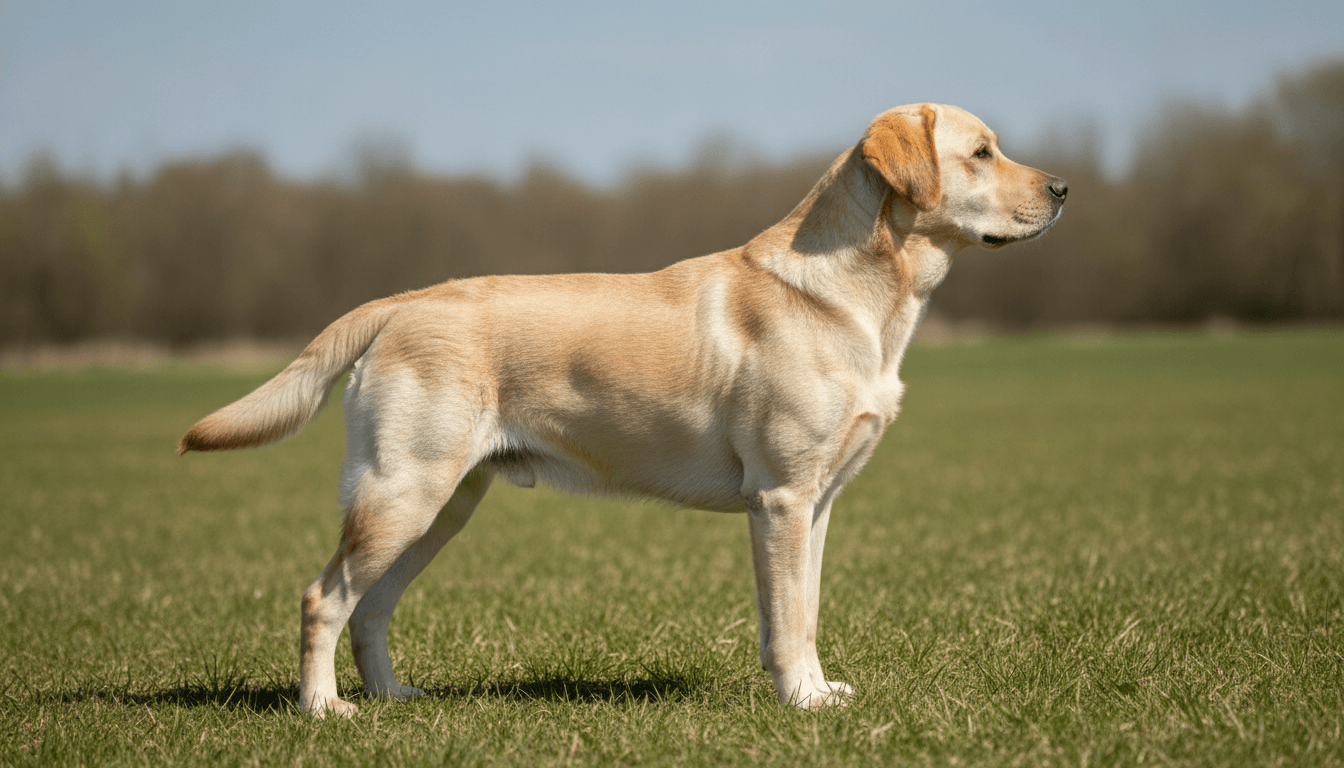
When you read past the puppy columns of any labrador growth chart, you should land on the breed’s adult targets.
Per the AKC Labrador Retriever standard:
- Males: 22.5–24.5 inches at the withers; desirable weight 65–80 lb
- Females: 21.5–23.5 inches at the withers; desirable weight 55–70 lb
Those ranges describe a strongly built sporting dog — not a stuffed sofa dog. For temperament, coat, and breed history around that standard, see our Labrador Retriever breed guide.
Coat color does not set the growth curve. Black, yellow, and chocolate Labs follow the same labrador growth chart pattern; color is not a size switch.
English vs American Labs on the Chart
Two Labs can sit on different parts of the same labrador growth chart and both be “correct” for their type.
English (show) vs American (field) Labs often differ in bone and outline. Show-bred English Labs tend to look heavier and blockier. Field-bred American Labs often look taller and more racy at the same weight. Parent size is still the best crystal ball — ask the breeder for dam and sire adult weights when you can.
If your puppy’s paws look huge for the legs, they may still have upward growth left. That matches what many owners notice while tracking a labrador growth chart through months four to nine.
Is My Lab Puppy Under or Overweight?
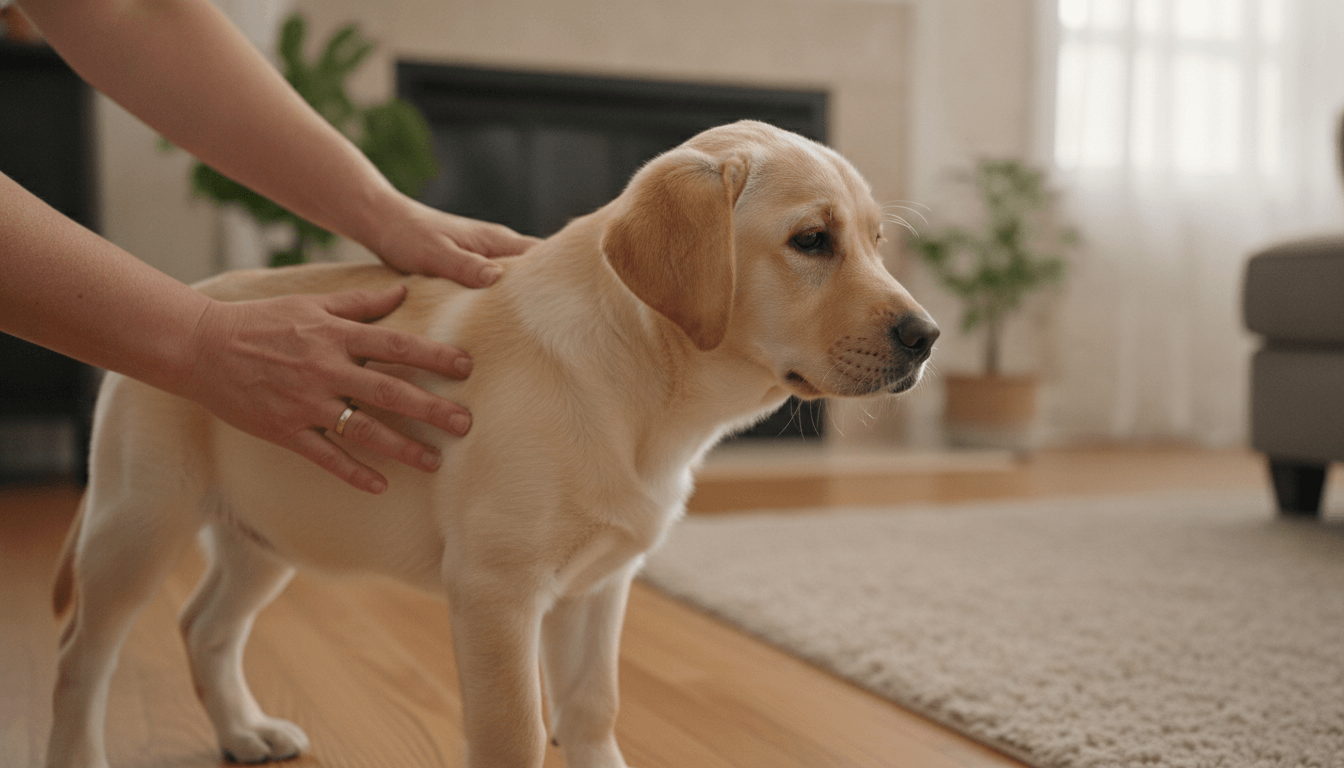
Do not treat a labrador growth chart as the only verdict. Body condition beats a single number.
According to VCA Animal Hospitals’ body condition guidance, you want ribs you can feel under a thin fat layer, a visible waist from above, and a tummy tuck from the side. A useful hand check: ideal ribs feel like the knuckles on the back of your hand when it rests flat; underweight ribs feel like a closed fist’s knuckles; overweight ribs feel padded like the palm side.
If you cannot feel ribs without pressing hard, your Lab may be carrying too much. Overfeeding does not just add fat — it can push bones to grow too fast and raise long-term joint risk. Labs are prone to hip dysplasia; keeping growth steady and lean is part of prevention, not vanity.
While growth plates are still open, skip forced long-distance jogging and repetitive jumping off furniture. Short play, leash walks that match age, and swimming (when safe and supervised) are kinder on developing joints than “tire them out” marathon sessions.
For large-breed puppy feeding amounts and growth-rate control, use our Labrador puppy food guide — steady growth beats a stuffed belly.
Month Checkpoints Linked to This Chart
Use the labrador growth chart for the big picture. Use age posts for behavior, training, and week-to-week expectations:
- Bring-home size: 8 week old Labrador puppy
- Peak growth-rate window: 3-month-old Labrador
- Gains slow; still filling out: 6-month-old Labrador
Other months (4, 5, 7, 8, 9, 10) are covered inside the puppy’s first year timeline. We keep outbound links tight here so this hub stays focused and does not dilute link equity across every month URL.
Why Published Charts Disagree
Published Labrador weight charts do not share one table. On September 29, 2026, we lined up the public ones.
At 6 months, the low end for males runs from 22.7 lb to 45 lb. That gap is more than 20 lb at the same age.
Puppy Weight Calculator puts 6-month males at 22.7–38.3 lb. FurCalc puts them at 45–55 lb. This page uses 40–55 lb for males and 35–45 lb for females.
Pawlicy Advisor uses that same 40–55 lb male row. Its text then says a 6-month female weighs 30–35 lb. Its table says 35–45 lb.
Hepper and Labrador Training HQ share a table with two broken cells. The female row at 8 months reads 45–0 lb. The male row at 10 months is 55–58 lb, under the 9-month row of 57–68 lb.
These pages did not weigh a group of Labrador puppies. The AKC publishes adult weight only: 65–80 lb for males and 55–70 lb for females. It does not publish a puppy chart. Use a month row as a range. Judge ribs and waist first.
Labrador Growth Chart FAQ
What does a labrador growth chart actually measure?
Typical male and female weight ranges by age so you can spot stalled or runaway growth. It does not diagnose disease. Sudden lethargy, refusal to eat, or pain needs a vet — not another chart.
Is there an official AKC labrador puppy weight chart?
No. AKC sets adult height and weight ranges for Labrador Retrievers. Puppy columns on any labrador growth chart — including ours — are estimates from owner and veterinary experience.
When is a Lab full grown?
Often near adult height by about nine to twelve months, with filling out into 12–18 months (sometimes longer). “When is a lab full grown” usually means height first, then substance.
My Lab is off the labrador weight chart — is that bad?
Not by itself. Healthy six-month Labs can vary by tens of pounds. Check body condition, energy, and your vet’s growth curve. Parent size explains many “outliers.”
How often should I weigh my Lab puppy?
Weekly is enough for most homes. Log the number next to a quick rib check. Share the curve at vaccine visits.
Why do labrador growth charts disagree?
They are estimates, not one measured group of puppies. At 6 months, published low ends for males run from 22.7 lb to 45 lb. Check body condition before you trust a single cell.
Keep Your Lab Growing the Smart Way
A labrador growth chart is a map, not a finish line. Aim for a lean, athletic puppy that tracks roughly with age — then protect joints with smart feeding and controlled exercise while bones are still open.
Next steps: walk the first-year Labrador guide for phase-by-phase care, keep meals aligned with puppy food guidance, and treat scale anxiety with weekly weigh-ins plus rib checks. If something on this labrador growth chart worries you, bring the numbers to your vet — that is what the chart is for.