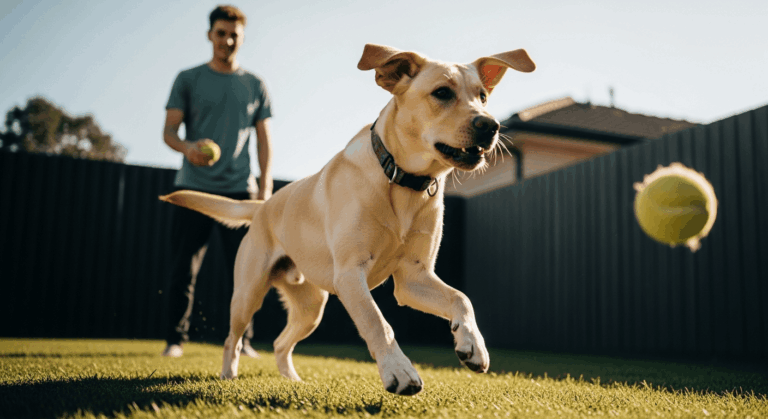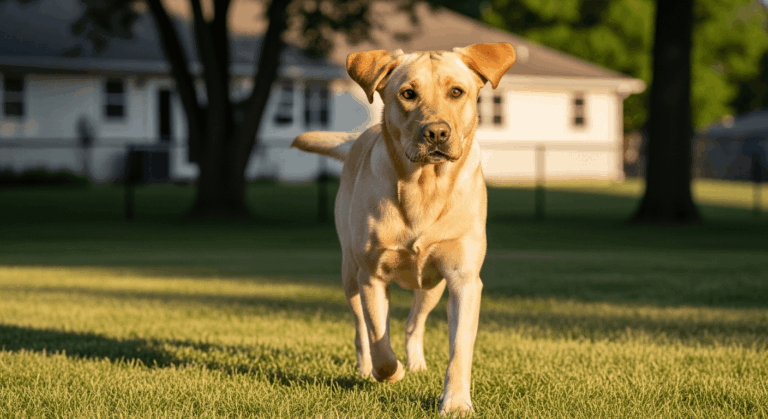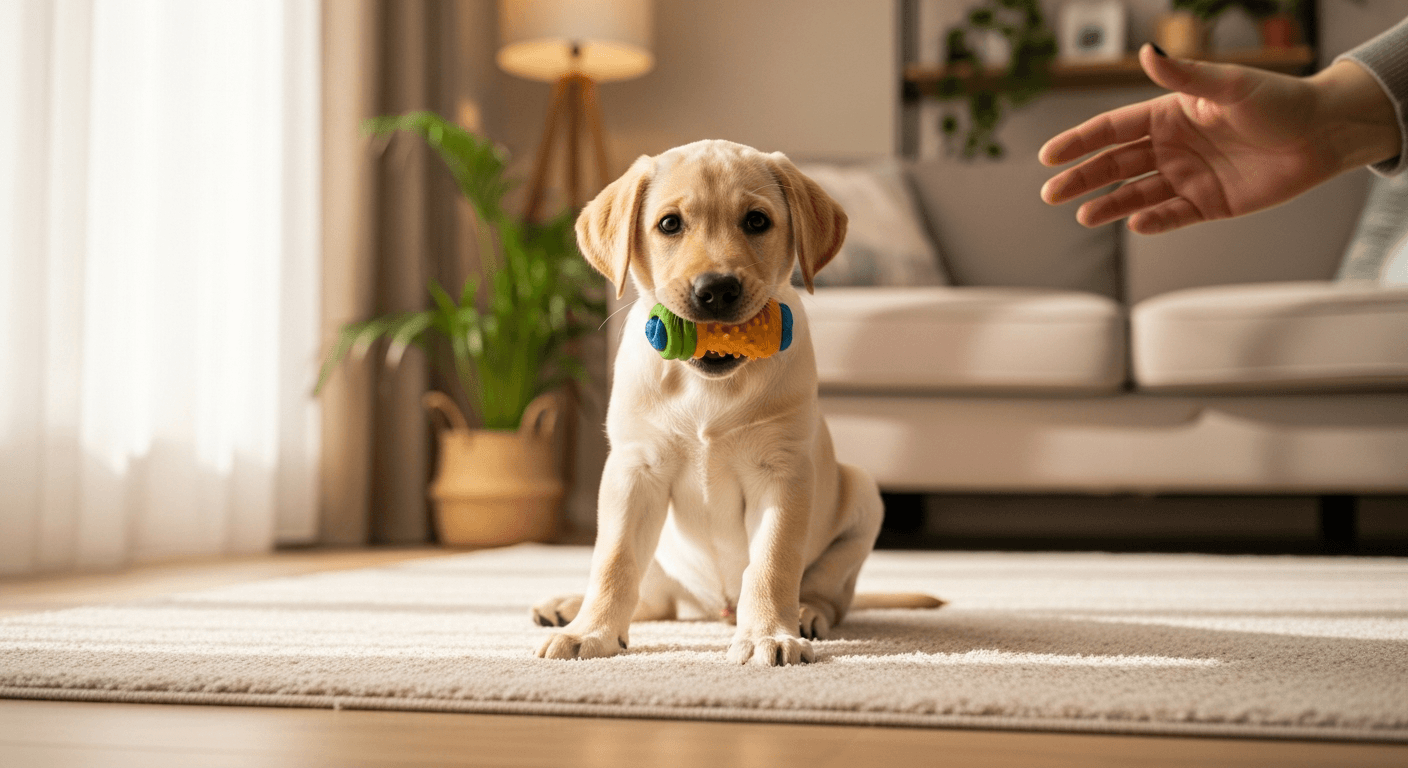
A 3 month old Labrador is growing, learning and often becoming more interested in using its mouth. The first three months are particularly important for social experiences, but learning continues afterward; there is no birthday at which all useful opportunities disappear. Our first-year puppy guide puts this stage in the wider care plan.
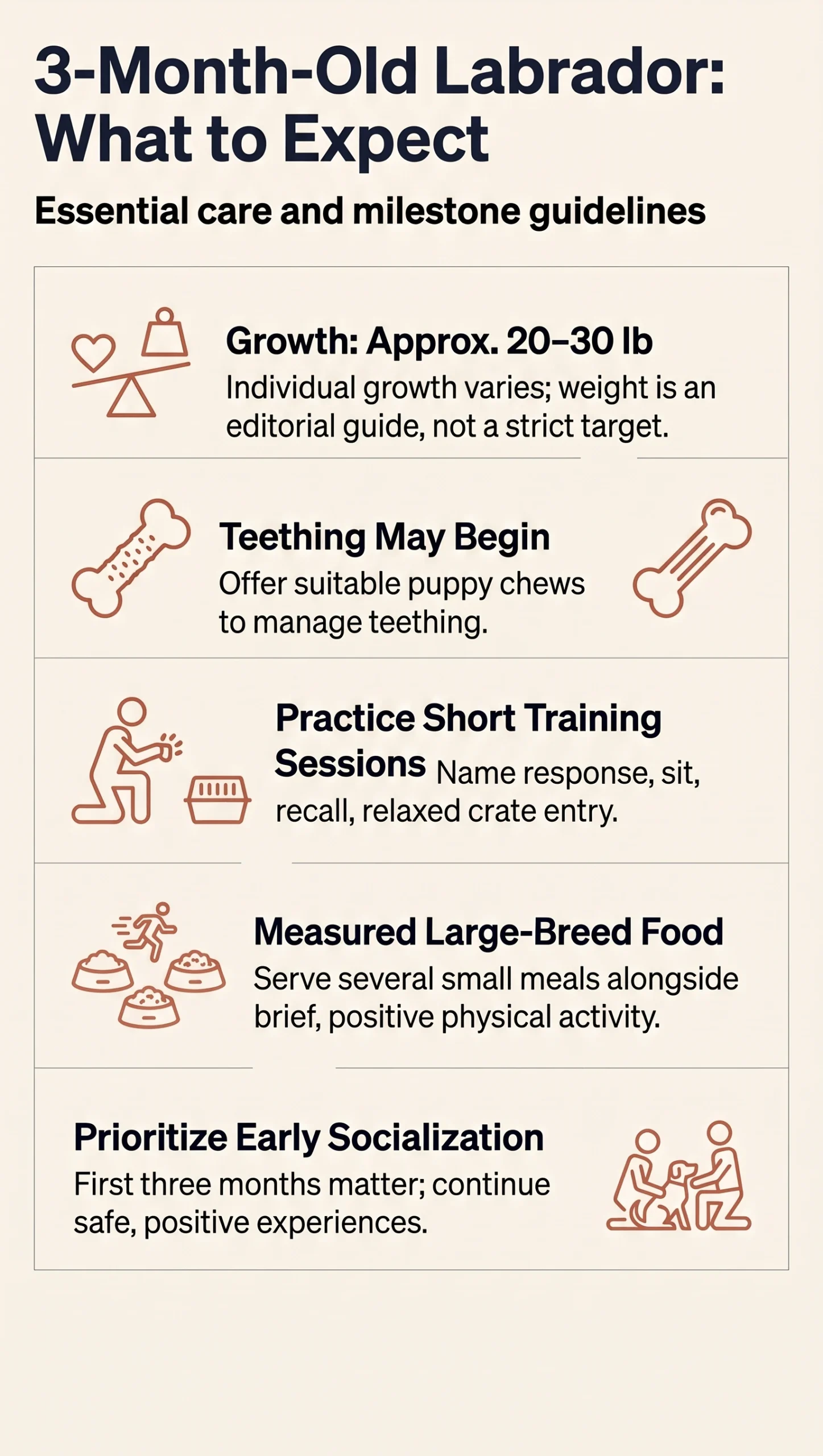
Around 20–30 pounds is a rough illustration sometimes used for this age, not a breed standard or a test of health. A puppy outside that range is not automatically overweight or underweight. Parent size, ancestry, growth history and body condition matter more than meeting one number on a particular day.
3-Month-Old Labrador Size & Weight: Is Your Puppy on Track?
At this age, sex alone cannot provide a precise normal-weight band. Record your puppy’s measurements over time and ask the vet to assess its frame and condition. Avoid increasing food just to reach a chart number or restricting a healthy puppy solely because it is heavier than an online example.
Growth is not a fixed weekly gain. Use repeated measurements to notice a change in the puppy’s own pattern, then discuss concerns at the clinic. Our Labrador growth chart offers context, but it cannot diagnose a problem or predict the exact adult weight of an individual puppy.
The rib check beats any chart. Run your fingers along the ribcage: you should feel ribs easily without pressing, but not see them sharply. Can’t feel ribs at all? The puppy is overweight — see our guide to how much to feed a Labrador and trim portions. Ribs visible from across the room, weight loss, or a missing appetite are the signals that justify a vet call.
3-Month-Old Lab Puppy Behavior: What’s Normal Right Now

Mouthing can increase during play, excitement or tiredness and may overlap with changing teeth. Calmly pause the interaction, offer a suitable toy and provide rest when needed. Avoid punishment or repeatedly provoking the puppy to test bite inhibition. Improvement varies; it is not guaranteed to be complete at five or six months.
Teething adds fuel to the mouthing fire. Baby teeth start loosening at 12 to 16 weeks, bringing extra drool, chewing drive, and gum discomfort. A frozen Kong Puppy or similar puppy-rated chew gives that urge a legal outlet — the full timeline is in our Labrador teething guide.
Zoomies are the other signature move: sudden frantic sprints, usually in the evening. They’re a normal energy release in a healthy puppy, not misbehavior. Step back and let them burn out.
A 3 month old Labrador needs plenty of sleep and quiet opportunities to rest, with individual variation in the pattern. Do not deliberately keep a tired puppy awake to match a schedule. Unusual lethargy, difficulty waking, poor appetite, vomiting or other illness signs call for prompt veterinary advice rather than an assumption that the puppy is simply sleeping more.
Training a 3-Month-Old Lab: What to Focus On This Month
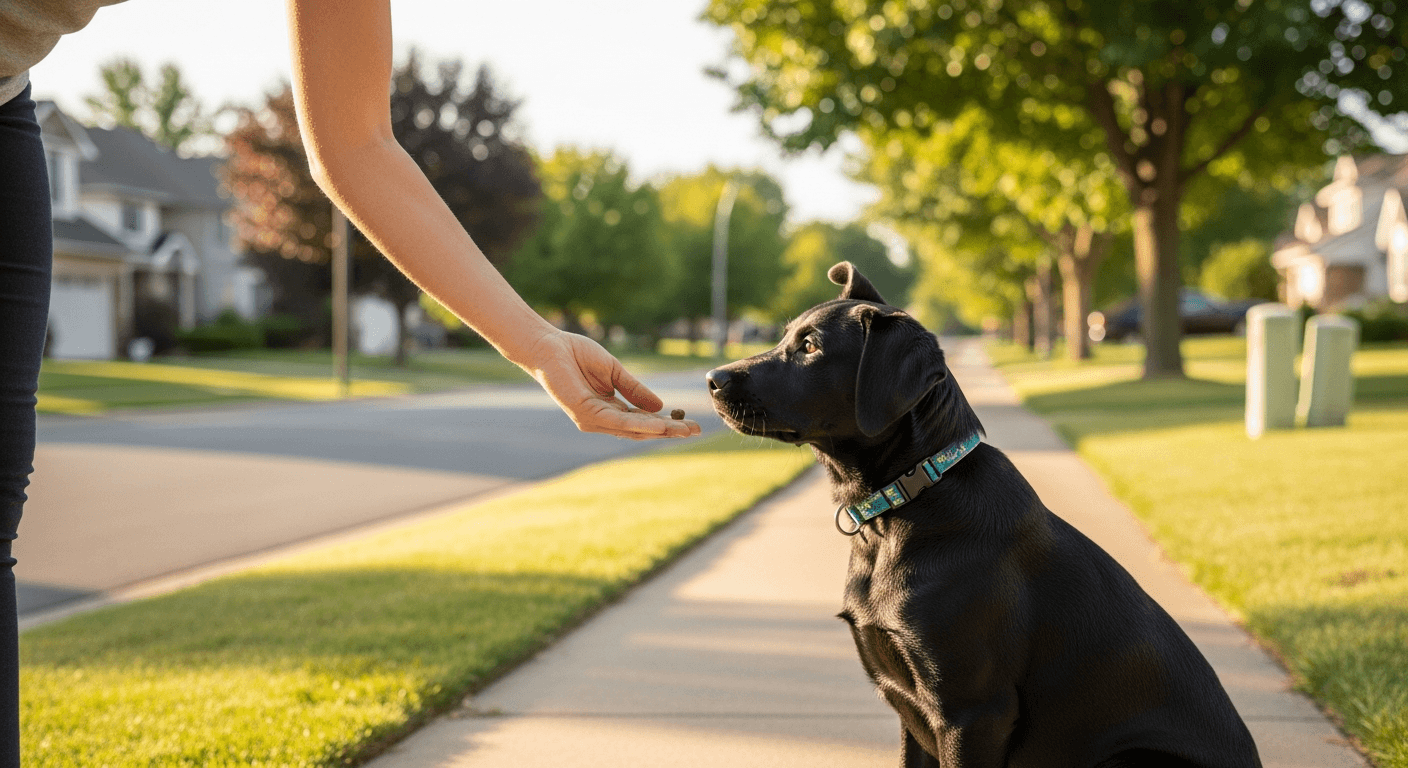
The AVSAB position statement identifies the first three months as especially important for socialization and recommends continuing positive experiences afterward. The aim is comfortable, safe exposure, not forcing a puppy into every possible situation before an arbitrary deadline. Give distance, choice and rewards, and stop when the puppy is overwhelmed.
Keep learning sessions short enough for the puppy to remain interested and comfortable. Practice one easy response in a quiet setting, reward it, then finish before frustration grows. If a new place is too distracting, increase distance or return to an easier exercise. A successful sit in the kitchen is useful practice, but it does not establish readiness beside traffic or unfamiliar dogs. Note where the puppy succeeded so the next session starts at a realistic level.
Build crate comfort with easy, rewarding experiences and release the puppy before distress escalates. Overnight sleep and bladder needs vary. Take it out for a quiet potty opportunity when needed and review pain, fear or discomfort if settling is difficult. Being three months old does not guarantee a particular overnight stretch or a fixed confinement allowance.
Ask your vet about suitable puppy classes and local disease risk. AVSAB supports appropriately managed classes before the entire vaccination series is finished, with initial vaccination, deworming and timing requirements. Check the class’s hygiene and participation rules. Our puppy training overview helps you choose short, rewarding exercises alongside those social experiences.
Feeding & Exercise for a 3-Month-Old Labrador
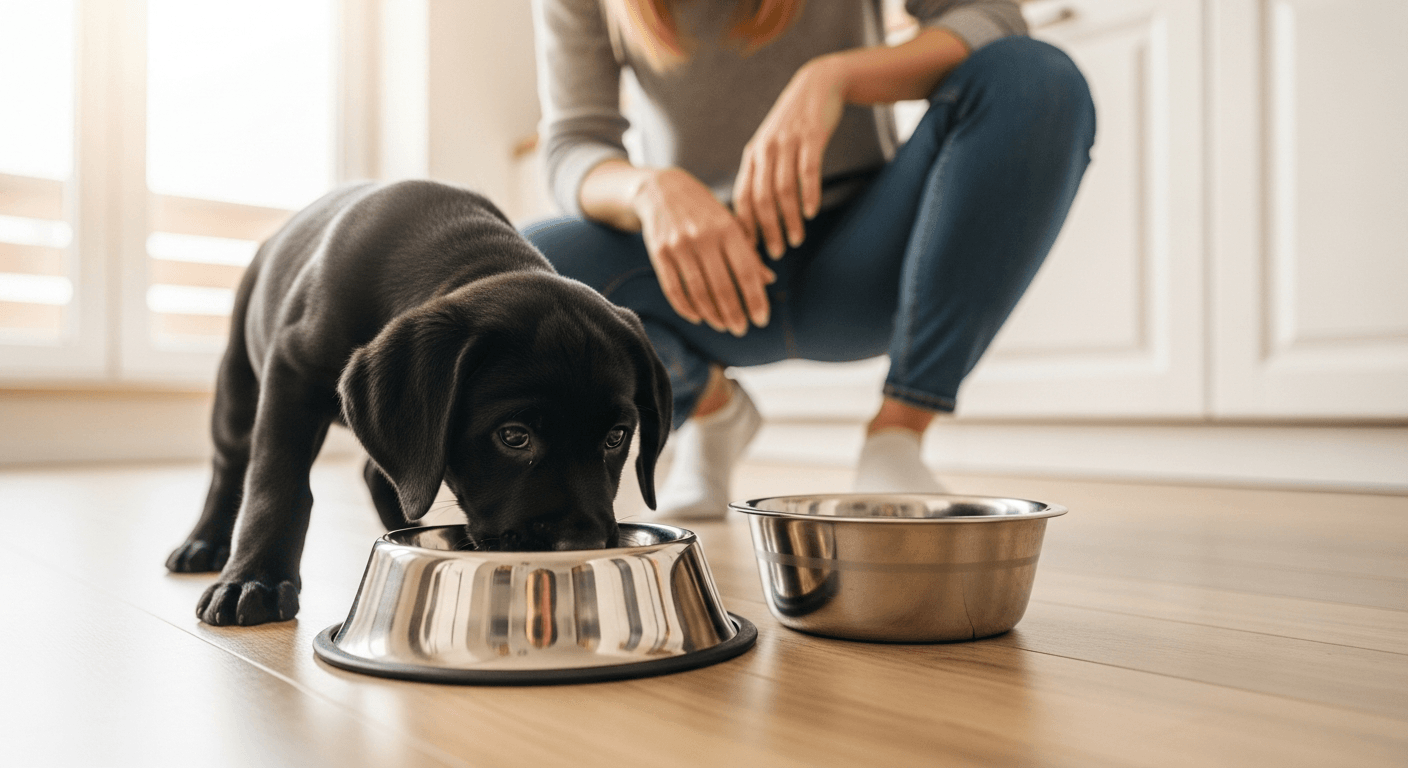
There is no universal 1.5–2 cup ration for a 3 month old Labrador. Foods differ in calories per cup, and puppies differ in growth and body condition. Use a measured daily allowance agreed from the actual label and veterinary review, divide it into suitable meals, and include training food and treats in the total. Write the daily allowance down before dividing it into meals. If several people train the puppy, set aside part of that allowance in a shared container so rewards are not added repeatedly without anyone noticing. Take the label and a few days of records to the next appointment. Ask how to review the ration as growth changes rather than switching foods or adding supplements whenever the puppy begs.
Some Labradors carry a POMC variant associated with greater hunger; Cambridge reports roughly a quarter in the studied pet population, rather than most Labs. Begging alone cannot establish calorie need. Review growth and body condition, and ask the vet about a sudden or persistent change in appetite.
The five-minutes-per-month exercise rule is a rough heuristic, not a proven maximum that fits every puppy. Offer short, gentle, puppy-paced walks, exploration and play with frequent rest. Avoid forced endurance work or repeatedly pushing through fatigue. Your veterinarian can advise on an individual plan that accounts for health, terrain, weather and recovery.
3-Month-Old Labrador Health: Vaccinations & Vet Schedule
Vaccination timing depends on the age at the first dose, the products used, previous records and your veterinarian’s plan. Do not assume that every puppy has the same three-shot schedule. Bring the records inherited at eight weeks and ask what remains and use the puppy health guide to prepare questions, including advice for safe outings now.
Ask the clinic about parasite prevention appropriate to your location, travel and puppy’s age and weight. Product choice and timing should follow that plan and the label. Keep records of doses already given, and check before combining products or repeating a treatment whose name or date is uncertain.
Safe social experiences and infection control need to be planned together. Ask your vet which places and contacts are suitable locally while vaccinations are ongoing. Avoid unknown contamination and contact with unwell animals, but do not treat isolation until the final injection as the only possible approach. Carrying the puppy or meeting known healthy dogs in controlled settings may be options to discuss. Before an outing, choose the location, an easy way to leave and the distance at which your puppy can observe comfortably. One calm experience is more useful than completing a long list while the puppy is overwhelmed. Keep a short note of what went well and discuss persistent fear with a qualified professional.
Frequently Asked Questions
How much should a 3 month old Labrador weigh?
Use 20–30 pounds only as rough context, not a requirement for a healthy puppy. Individuals can fall outside it. Track the puppy’s own growth and have body condition assessed; a single scale reading cannot determine the right food amount or establish the final adult size.
How far can I walk a 3-month-old Labrador?
Provide short, gentle activities with rest and stop when the puppy is tired or uncomfortable. Five minutes per month of age is a heuristic, not a universal safety limit. Free play also needs supervision and breaks; it is not unlimited simply because the puppy chooses to continue.
What commands should a 3-month-old Labrador know?
Sit, name recognition, and the beginnings of recall are realistic by 12 weeks, along with calm crate entry and early leash manners. Keep sessions to 3 to 5 minutes with food rewards. Anything requiring sustained focus — long stays, heel work, complex chains — waits for an older brain.
Why is my 3-month-old Labrador biting so much?
Mouthing can be common during play, tiredness and changing teeth. Redirect calmly to a suitable toy, pause interactions when needed and allow rest. Do not punish the puppy or assume the behavior will disappear on a particular birthday. Seek qualified help if biting is causing injury or seems associated with fear or pain.
How much sleep does a 3-month-old Labrador need?
Allow plenty of sleep and a quiet place to rest, with a routine adapted to the puppy rather than one exact daily hour count. Difficulty waking, unusual lethargy or poor appetite needs prompt veterinary advice. Normal rest should not be used to explain away a puppy that seems unwell.
Keep building comfortable routines through this month and beyond. Note what helps the puppy rest, eat, play and recover from new experiences, then adjust the difficulty gradually. Our four-month guide and six-month guide cover the next practical questions without treating one month as the last chance to learn.