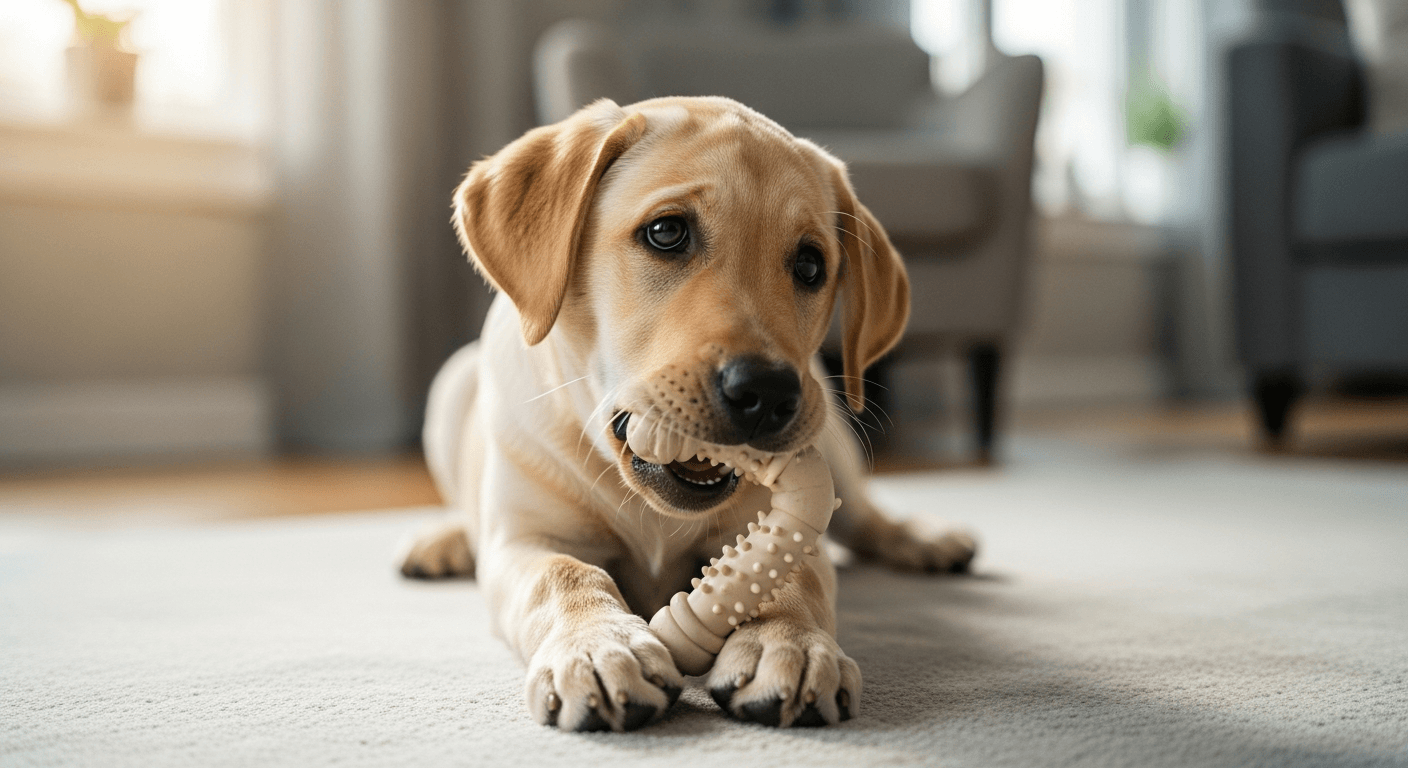
Labrador teething begins around 3 months old and doesn’t fully resolve until about 7 months — and those four months are the most destructive phase most Lab owners will experience. Your puppy is chewing everything because it physically hurts not to. The good news: it follows a predictable schedule, and there are reliable ways to help.
Labrador puppies begin losing their baby teeth at around 3–4 months and typically have a full set of 42 adult teeth by 6–7 months. The most intense chewing occurs between 3.5 and 5 months, when multiple adult teeth push through simultaneously. By 7 months, most Labs are past the worst of the discomfort.
Labrador Puppy Teething Timeline: What Happens When
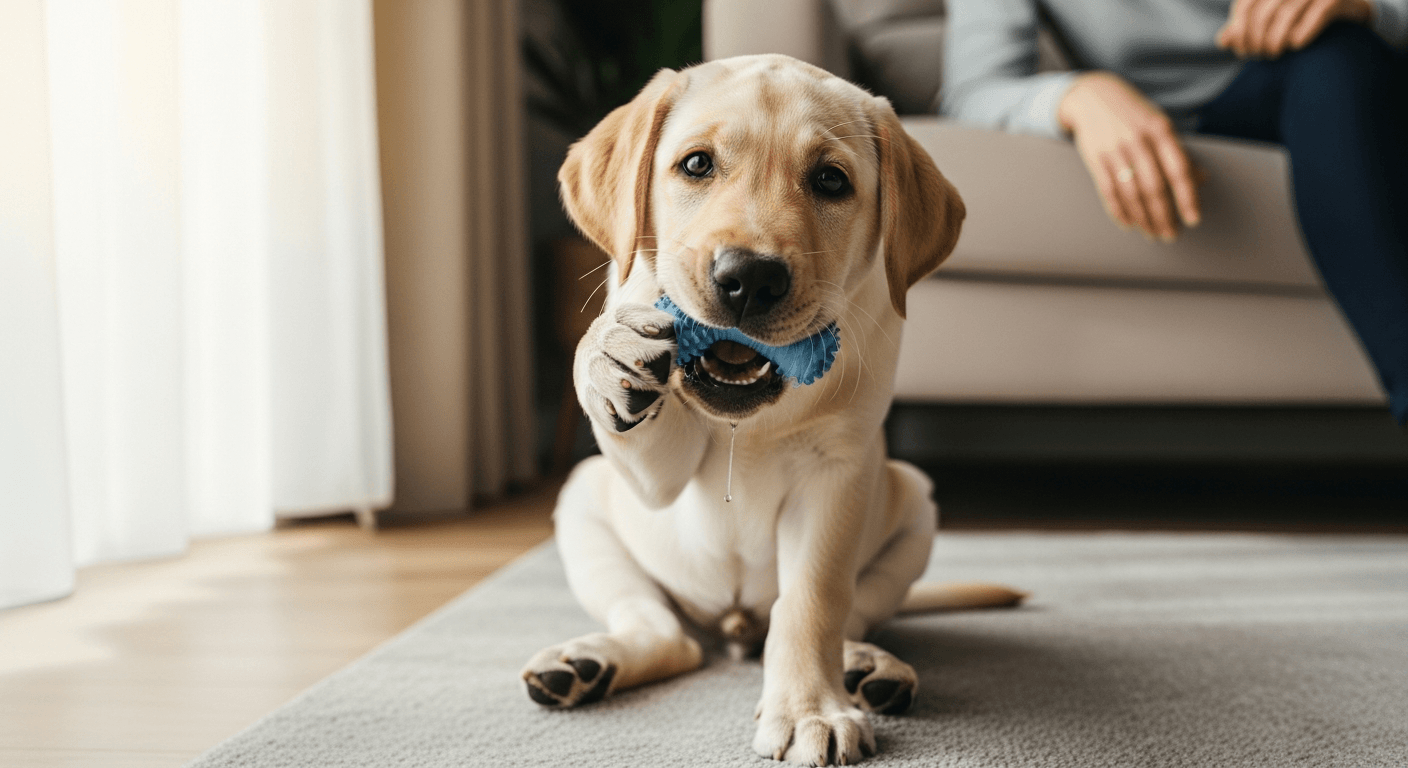
Labs are born toothless. Their 28 baby teeth (deciduous teeth) erupt between 3 and 8 weeks old — before most puppies ever leave the breeder.
The labrador teething timeline begins in earnest around 12–16 weeks (3–4 months), when the incisors start falling out. Canines and premolars follow over the next several weeks. Most owners never find fallen teeth — puppies swallow them, which is harmless.
Between 3 and 7 months, 42 adult teeth push through to replace every baby tooth. Molars come last. The peak discomfort window sits between 3.5 and 5 months, when multiple teeth are erupting at once and gum pressure is highest. Chewing escalates sharply during this window — Labs in particular, bred for retrieval and strong oral drive, often chew more intensely than owners expect compared to smaller or lower-drive breeds.
By 6–7 months, the full adult set is in place and destructive chewing drops significantly.
One thing to check at 6 months: retained baby teeth. A retained tooth is a baby tooth that hasn’t fallen out despite the adult tooth erupting beside it. According to VCA Animal Hospitals, retained teeth can push adult teeth out of alignment and should be evaluated by a vet. If you see two teeth occupying the same space, mention it at your next appointment.
| Age | Event |
|---|---|
| 3–8 weeks | Baby teeth erupt (28 total) |
| 12–16 weeks | Incisors begin falling out |
| 3–7 months | Adult teeth push through (42 total) |
| 3.5–5 months | Peak discomfort — heaviest chewing |
| 6–7 months | Full adult set in place |
Signs Your Lab Is Teething: What to Watch For
The clearest labrador teething symptom is a sudden surge in chewing. A puppy that previously mouthed occasionally now has its mouth on everything. This is physiological — biting provides counter-pressure that relieves gum pain. It is not disobedience.
Expect some gum redness and mild swelling where adult teeth are pushing through. Light bleeding from the gums is normal during peak teething. Heavy bleeding or a puppy in obvious distress warrants a vet call.
Drooling increases during the 3.5–5 month peak. The mouth produces more saliva in response to gum inflammation. Some puppies also go briefly off food for a day or two — normal if short-term. Any puppy that refuses food for more than 48 hours should be seen by a vet. For Labs specifically — a breed known for eating eagerly at every meal — even a single skipped meal is a reliable signal of real discomfort worth noting.
Mouthiness often worsens even in puppies making solid bite-inhibition progress. Labs rank among the most mouthy of retriever breeds by design — their oral drive is higher than average — so the regression during teething can feel especially pronounced for first-time Lab owners compared to owners of lower-drive breeds. This is one of the most frustrating teething symptoms for owners who feel their training is slipping. The regression is physical, not behavioural. Consistent redirection works better than correction during this phase.
Teething Toys & Chews: What Actually Helps
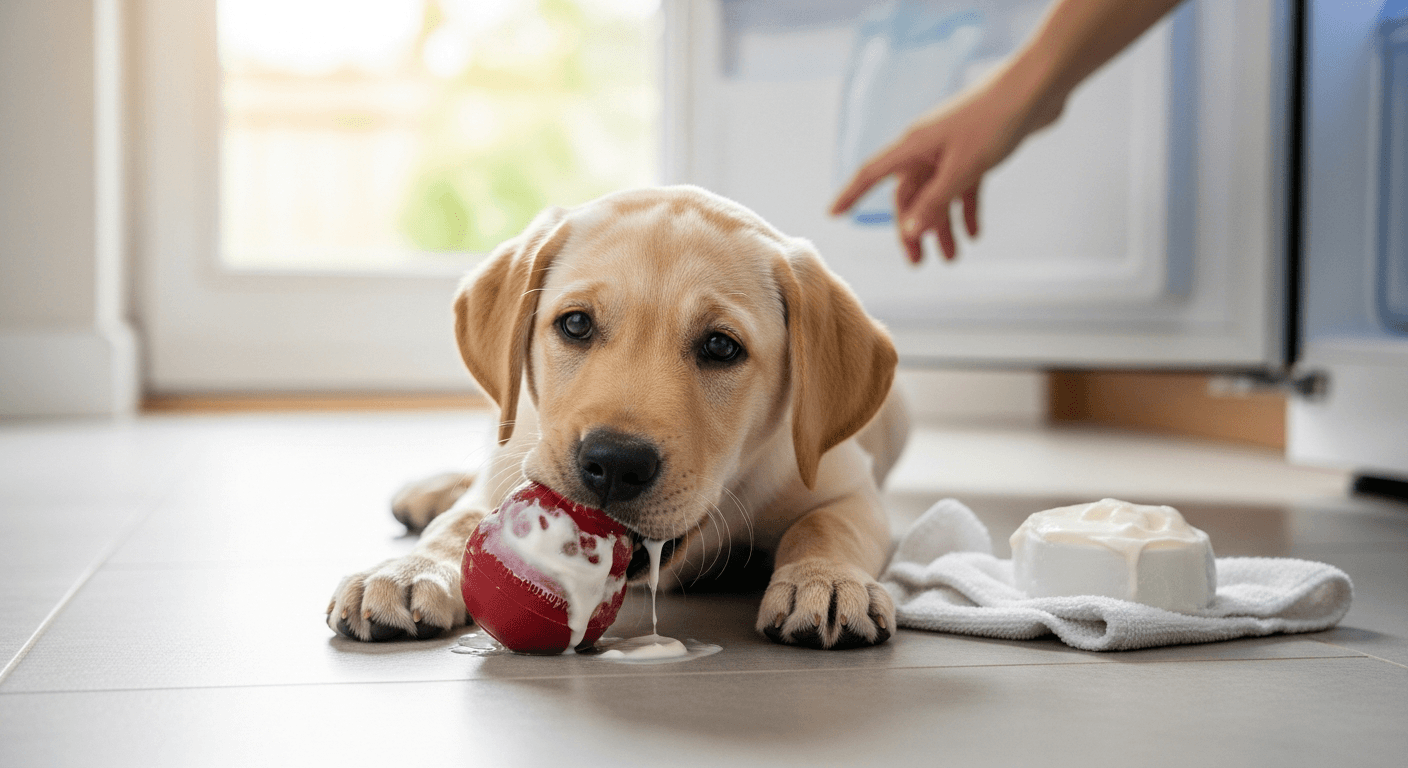
Cold is the most effective labrador teething relief. For Labs specifically, toy durability matters more than in smaller breeds — even puppy Labs have strong jaw pressure. Choose a medium or large Kong Puppy (not the standard adult version) rated for large breeds to avoid compression fractures under a Lab puppy’s bite. Frozen toys numb inflamed gum tissue and reduce swelling simultaneously — that combination is what separates a frozen Kong from a room-temperature one.
The practical approach: fill a Kong Puppy with plain yogurt or a small amount of xylitol-free peanut butter and freeze it overnight. The Kong Puppy uses a softer rubber formula than the adult version — it flexes under puppy teeth rather than risking fracture. A damp washcloth frozen flat is a free alternative that works just as well.
A useful rule for any chew toy: press your thumbnail firmly against it. If the material doesn’t indent under that pressure, it is too hard for a teething puppy and risks cracking a tooth. The Merck Veterinary Manual notes that fractured teeth in puppies can require veterinary extraction. Rawhide is a poor choice regardless — the processing chemicals and intestinal blockage risk make it unsuitable for puppies. Cooked bones are always off the table.
Bully sticks are a solid natural option during teething. They’re pliable, long-lasting, and appropriate for puppy teeth. Limit sessions to 15–20 minutes to prevent overconsumption. Rope toys are fine for supervised play but not for unmonitored chewing — ingested rope fibres can cause intestinal blockages.
Protecting Your Home During the Teething Phase
The most effective home-protection strategy during labrador puppy teething is management, not training alone. A puppy driven by physical gum pain has limited capacity to respond to “leave it” when the urge to chew is at its peak. Restricting access is more reliable than relying on command compliance.
Electrical cords are the most dangerous chew target in most homes — this is a safety issue, not just a furniture-protection issue. Cord management sleeves or tucking all cables out of reach eliminates the risk before it becomes an emergency.
Baby gates and crate rotation let you limit your puppy’s unsupervised access to rooms with soft furnishings and shoes. A puppy confined to a puppy-proofed area with frozen chews available is a puppy not destroying a sofa.
Bitter apple spray deters many puppies from furniture edges and wood trim. Test it on an inconspicuous spot first — some formulations stain. Reapply every 24 hours. If your Lab ignores it, switch to physical management. Not every dog responds.
When you catch your puppy chewing something it shouldn’t, redirect immediately to a legal chew. Correction after the fact is ineffective — puppies don’t connect delayed punishment with the chewing behaviour.
After Teething: Dental Care for Your Lab
Once the adult teeth are in by 7 months, start a dental care routine. The American Veterinary Medical Association (AVMA) notes that dental disease is the most common chronic health condition in adult dogs, and Labs are particularly susceptible to tartar build-up.
Daily brushing with a dog-specific enzymatic toothpaste — Virbac C.E.T. is widely recommended by veterinarians — is the most effective prevention. Never use human toothpaste: the fluoride is toxic to dogs. Starting the routine while your Lab is still young and tolerant of mouth handling makes the habit far easier to maintain long-term.
Dental chews (Greenies, Whimzees) reduce tartar accumulation when used daily and can be a useful supplement to brushing — but they don’t replace it. Your vet will recommend professional cleaning under anaesthesia when tartar build-up warrants it. Consistent home care reduces how often that becomes necessary.
Frequently Asked Questions About Labrador Teething
When do Labrador puppies stop teething?
Most Labrador puppies finish labrador teething by 6–7 months, when all 42 adult teeth are in place. The heaviest chewing typically ends by 5 months. After 7 months, destructive chewing drops significantly, though some Labs remain enthusiastic chewers into adolescence — that’s habit, not teething.
Is it normal for my Lab puppy to lose teeth?
Yes. Labrador puppies lose all 28 baby teeth between 3 and 7 months. Most fallen teeth are swallowed — this is harmless. You may find a few on the floor or in toys. If a baby tooth is still present alongside an erupting adult tooth at 6 months, flag it with your vet.
Why is my Labrador puppy chewing everything?
Chewing provides counter-pressure that relieves gum pain during the teething phase. The behaviour is physiological, not disobedience. It reduces naturally once the adult teeth are fully in — typically by 7 months. Providing frozen chew toys redirects the behaviour and gives genuine pain relief.
What can I give my Lab puppy for teething pain?
Frozen rubber toys are the most effective option. A Kong Puppy filled with plain yogurt and frozen overnight numbs inflamed gum tissue and keeps the puppy occupied. Bully sticks are a good natural chew. Avoid rawhide, cooked bones, and any chew that doesn’t flex under thumbnail pressure — these risk tooth fracture.
Can teething cause my Lab puppy to refuse food?
Yes, briefly. Some puppies reduce food intake for 1–2 days during peak teething between 3.5 and 5 months. This is normal if short-term. A puppy refusing food for more than 48 hours should be seen by a vet to rule out other causes.
The teething phase ends. By 7 months, the worst of it is behind you — and a Lab with a full adult set and a consistent redirect habit is a very different dog from the 4-month-old destroying your shoes. A frozen Kong is your most reliable tool between now and then. For training strategies that work alongside the teething phase, see our guide to training your Labrador puppy. For an overview of all health conditions in the breed, see our complete Labrador health guide.