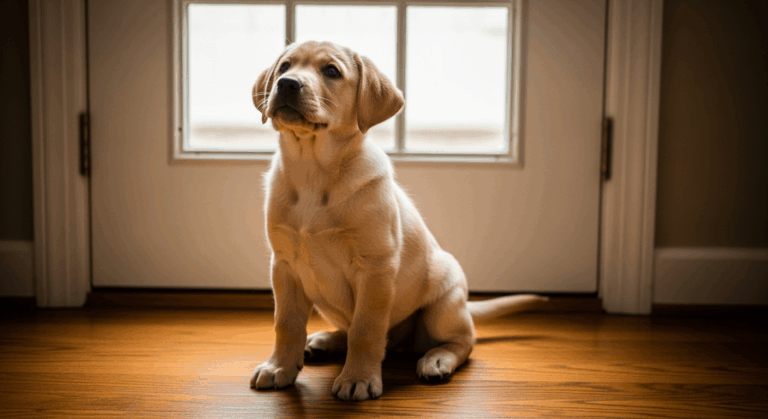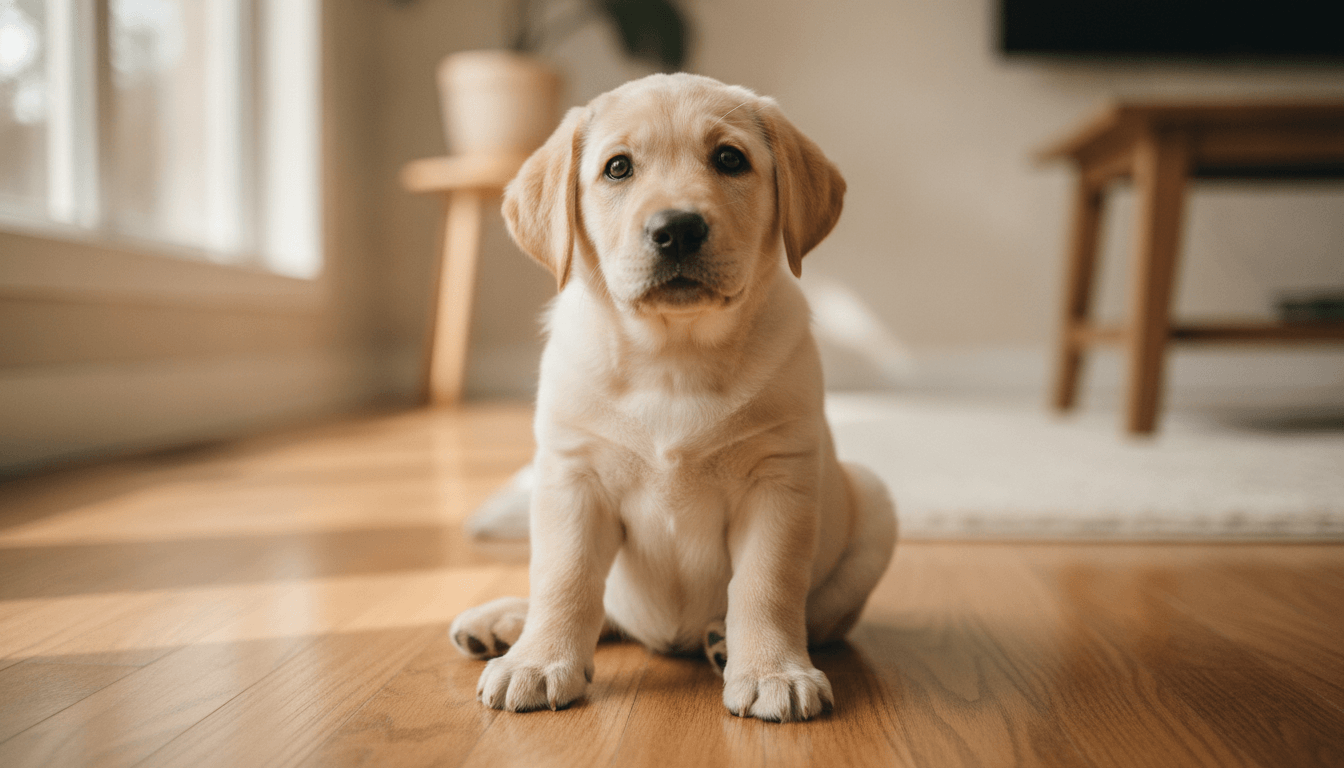
An 8 week old labrador puppy is usually leaving the litter for the first time — curious, mouthy, sleepy in short bursts, and not house-trained yet. Most Labs go home around this age, and the first week sets the tone for potty habits, sleep, and early manners.
This guide covers what an 8 week old labrador puppy is actually like day to day: size, first night, feeding, crate and alone time, potty reality, bitey play, safe socialization, and the first vet visit. It is the bring-home chapter of our Labrador puppy’s first year — not a rewrite of food, potty, or training deep-dives. Those live in their own posts; we link them where you need more depth.
What an 8 Week Old Labrador Puppy Is Actually Like
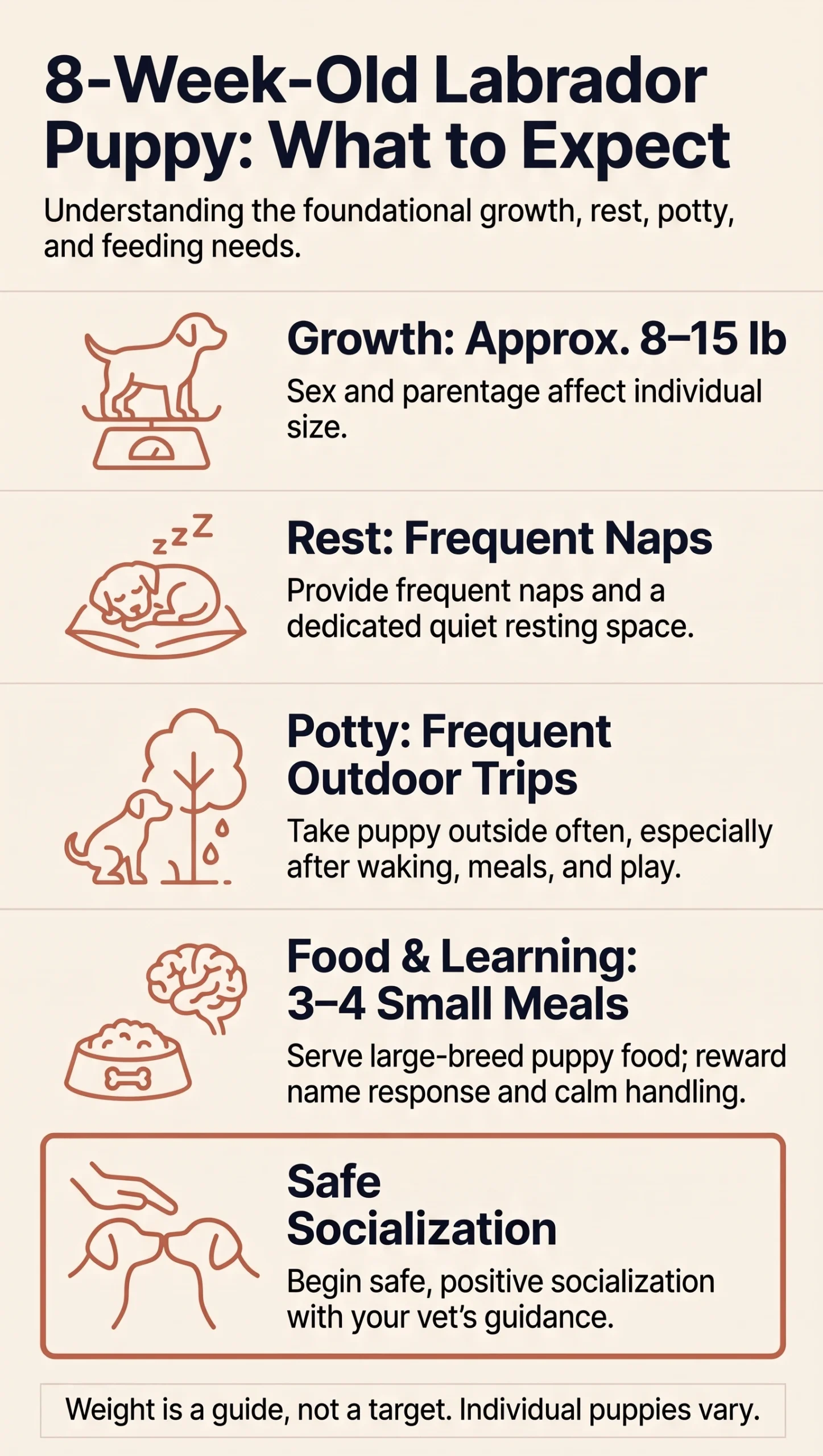
An 8 week old labrador puppy is a baby athlete in a soft body. Expect short play bursts, sudden crashes into deep sleep, and a mouth that explores everything. Labs this age follow people closely — that follow instinct fades later, so use it now for name recognition and simple recalls indoors.
Searchers also type “8 week old lab puppy” and “labrador puppy at 8 weeks.” Same dog, same week. What varies is your schedule: meals, potty trips, and sleep windows have to run on puppy time, not adult-dog time.
According to the American Kennel Club, puppies usually sleep about 18 to 20 hours a day. Naps of 30 minutes to two hours between play sessions are normal. If your 8 week old labrador puppy is bright and eating well when awake, long sleep stretches are not laziness — they are growth.
Size of an 8 Week Old Labrador Puppy
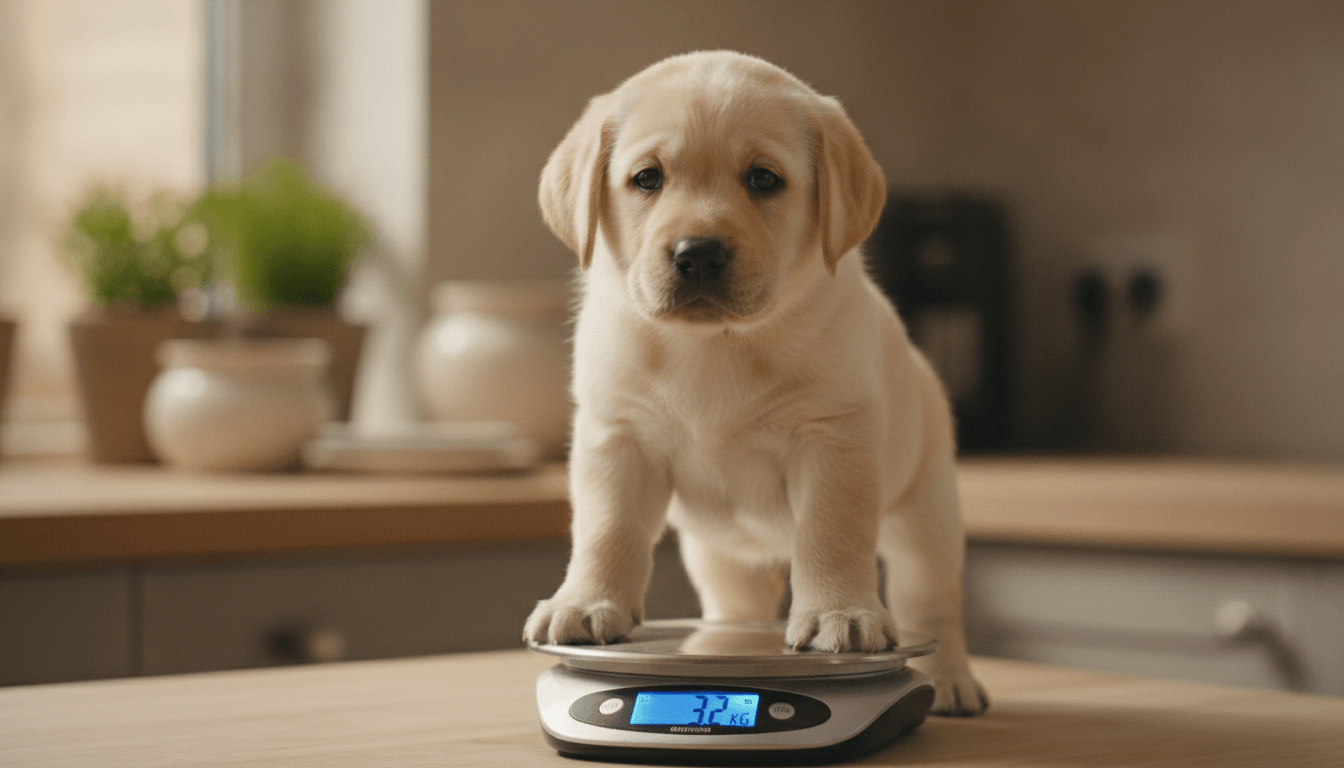
How big is an 8 week old labrador puppy? There is no single official AKC weight for this age. Individual Labs vary a lot. Many Lab litters land roughly in the 10–15 lb ballpark at eight weeks, but lighter and heavier pups are common depending on sex, line (English vs American), and litter.
Coat color does not set size. An 8 week old black lab puppy and a chocolate or yellow littermate can weigh nearly the same. Focus on body condition — you should feel ribs under a light cover of fat, not a round barrel.
For month-by-month checkpoints after the first weeks, use our 3-month-old Labrador guide. Use our labrador growth chart for weight by age; weigh weekly and ask your vet if the curve stalls or spikes.
First Night With an 8 Week Old Labrador Puppy
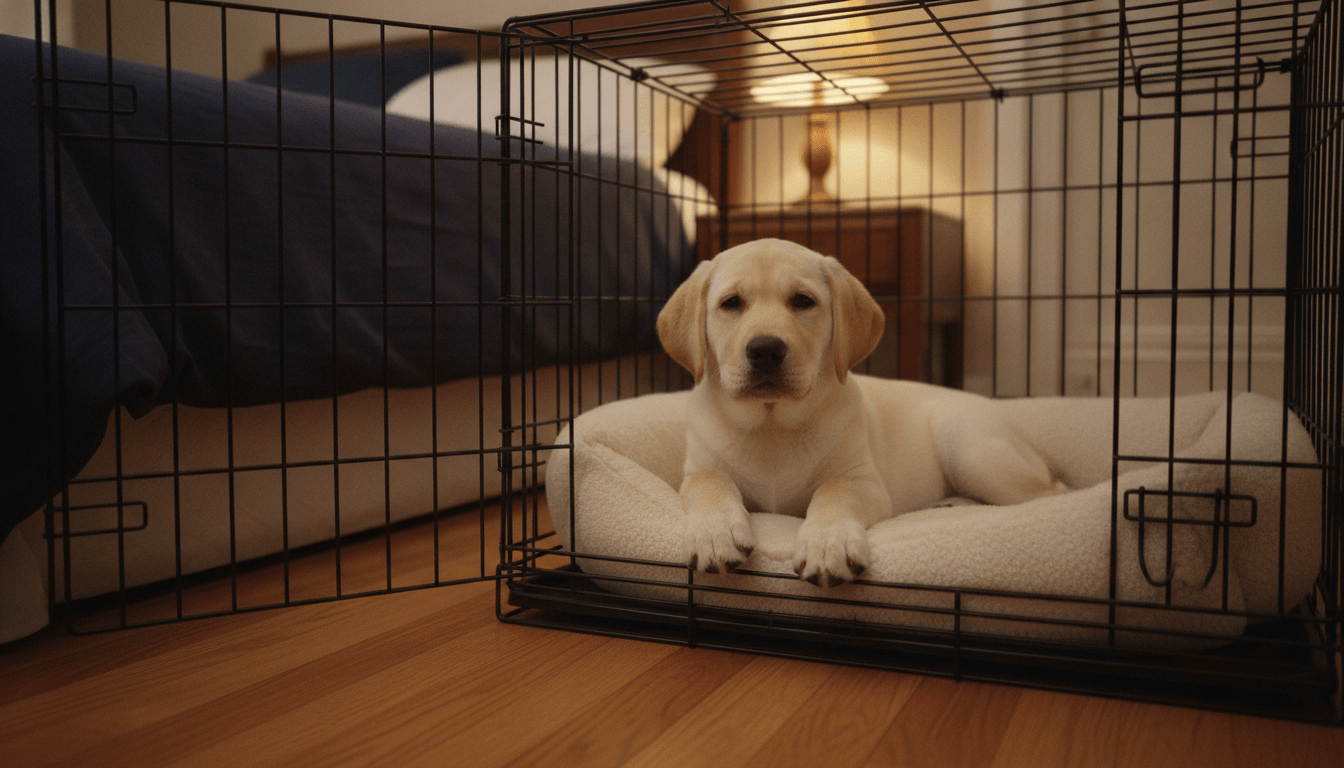
The first night is when many new owners panic. An 8 week old labrador puppy has rarely slept alone. Crying is common if you shut them in a distant room on night one.
Three setups work for most homes:
- A puppy-proof room or playpen with pads — less night waking, more morning cleanup.
- A crate in a quiet spot — cleaner if you set an alarm for a middle-of-the-night potty trip.
- A sturdy box or crate beside your bed — you hear early whimpers and can take them out before a full meltdown.
Whatever you choose, take the 8 week old labrador puppy out last thing before lights-out and again if they stir. Night potty breaks are normal at this age and improve with time (AKC).
Puppy-proof before arrival: hide cables, socks, and toxic plants. Chewing is a constant Lab concern for the first year — stock chew toys and put valuables away (AKC Lab milestone guidance).
Feeding an 8 Week Old Labrador Puppy
Feed a large-breed puppy formula, not adult kibble. Growing puppies typically eat three to four meals a day at this stage (AKC). Split the daily amount across those meals so you do not overload a tiny stomach.
Exact cups depend on the food label and your pup’s weight — there is no one Labrador cup-count that fits every brand. For amounts, schedules, and brand picks, use our Labrador puppy food guide. Keep water available, and treat a big drink like a meal: potty soon after.
Avoid free-feeding. Labs are food-motivated early. Measured meals keep weight and house-training predictable. Skip food within about two hours of bedtime when you can — it reduces overnight accidents.
Sleep, Crate Time, and Alone Time
An 8 week old labrador puppy should not spend a full workday alone in a crate. Use short, positive crate sessions so the crate means rest, not exile. Build duration slowly.
When they are awake and active, plan potty trips far more often than the crate maximum. The AKC’s month-plus-one guideline for comfortable crate hold time puts a 2-month-old (8-week) puppy at about three hours maximum between breaks — and many need shorter gaps while learning (AKC potty timeline).
For step-by-step crate work, see crate training a Labrador puppy. For longer absences as they mature, read Labrador separation anxiety so you do not accidentally train panic.
Potty Training an 8 Week Old Labrador Puppy
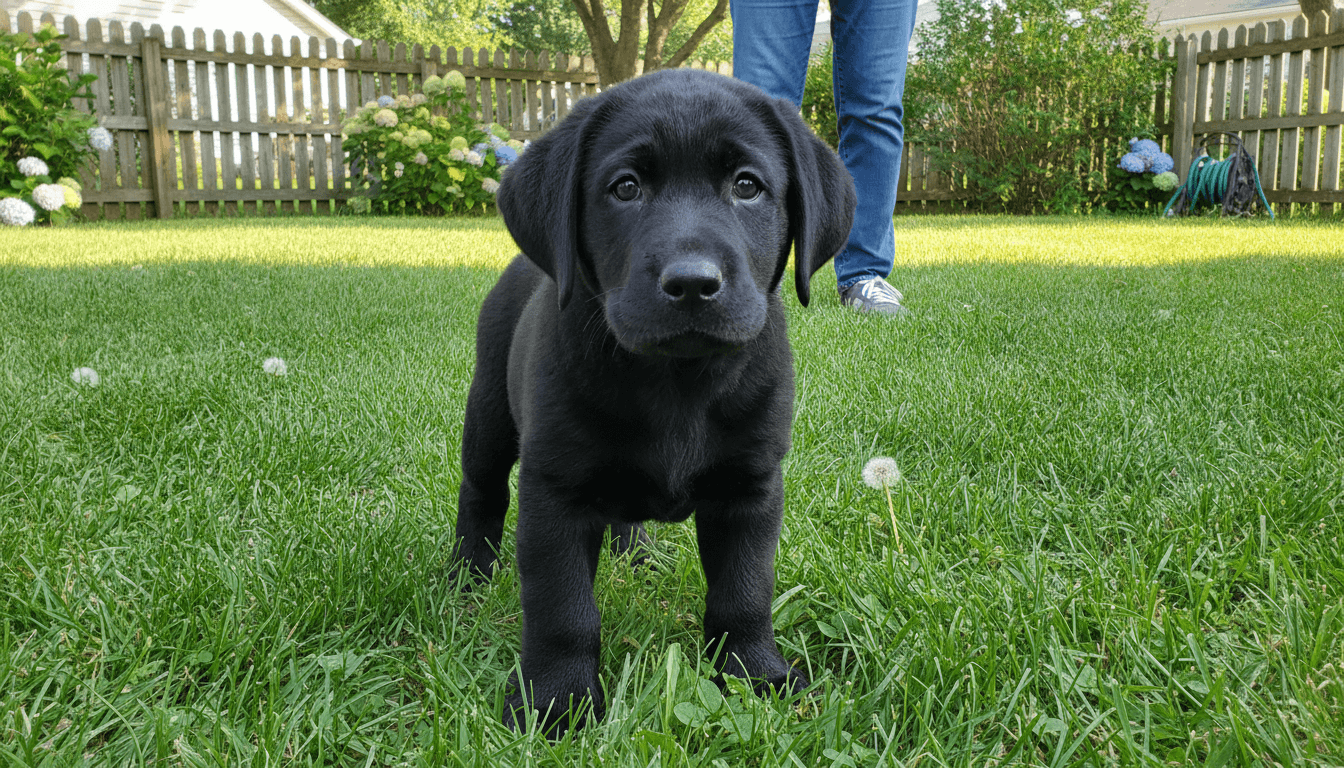
Start potty training the day your 8 week old labrador puppy comes home. Expect accidents. Bladders are small.
Practical rules that match authority guidance:
- Outside first thing after waking.
- When active, aim for frequent trips — Lab breeders interviewed by the AKC often suggest about every half hour while awake, plus after play (AKC Lab timeline).
- After meals, go out within 5–30 minutes (younger = sooner) (AKC potty timeline).
- Reward outdoor pees immediately.
Do not punish indoor accidents. Interrupt gently, move outside, and clean with an enzymatic cleaner. For the full house-training system, use our Labrador potty training guide — this section is only the 8-week reality check.
Biting, Chewing, and Early Manners
Mouthing hurts. Most new owners are shocked by how hard an 8 week old labrador puppy can clamp during play. Labs explore with their mouths; chewing stays a theme through the first year.
Redirect to toys, end play when teeth hit skin, and keep sessions short. For what is normal versus concerning, see Labrador puppy behavior and Labrador teething.
Basic manners can start immediately: name response, sit for meals, settle on a mat. Keep sessions tiny and upbeat. For the full how-to, use how to train a Labrador puppy and our complete Labrador training guide. Skip jogging and hard drills — AKC Lab mentors advise light play and short leash walks only at this stage (about five minutes of activity per month of age, so roughly ten minutes for a 2-month-old, split across the day).
Socializing an 8 Week Old Labrador Puppy Safely
Socialization is priority one for Labs — they are people dogs (AKC). An 8 week old labrador puppy should meet new sounds, floors, gentle people, and carefully introduced household dogs under supervision.
Skip dog parks until your vet clears vaccines. Private yard time and short, controlled walks are the safer default. Carry your pup through busy areas if needed. Invite vaccinated, calm adult dogs for one-on-one greetings instead of chaotic group play.
Details and a critical-window plan live in our Labrador puppy socialization guide. Pair that with early manners from the training posts above so confidence and impulse control grow together.
First Vet Visit and When to Worry
Book a vet visit in the first week home so your 8 week old labrador puppy gets a full exam, parasite check, and a vaccine plan. Core series boosters are typically spaced every few weeks through mid-puppyhood; rabies timing follows your local rules and is often around 12 weeks or later — confirm with your clinic. For schedules and red flags, see Labrador puppy health and our Labrador health complete guide.
Call the vet sooner for: repeated vomiting or diarrhea, extreme lethargy, refusal to eat, pale gums, or labored breathing. Mild tiredness after a big day is normal. Collapse is not.
First-Week Checklist for Your Lab Puppy
Use this as a daily backbone for an 8 week old labrador puppy:
| Priority | Do this |
|---|---|
| Sleep | Protect 18–20 hours of rest; quiet crate/pen between play |
| Meals | 3–4 measured puppy-food meals; no free-feeding |
| Potty | Out on wake, after meals, ~every 30 min when active |
| Crate | Short positive sessions; respect ~3-hour max hold guideline |
| Chew outlets | Rotate safe toys; puppy-proof cords and shoes |
| People time | Calm handling, nail/ear intros, name games |
| Socialization | New surfaces and gentle visitors — not dog parks |
| Vet | Exam + vaccine/parasite plan within the first week |
| Training | Tiny sessions only; link to deeper guides as needed |
If you are still choosing a breeder or litter, back up to getting a Labrador puppy before the chaos of week one.
FAQ: Labrador Puppy at 8 Weeks
How much should an 8 week old labrador puppy sleep?
About 18–20 hours per day, including short naps between play. That range comes from AKC puppy-sleep guidance.
How often does a lab puppy 8 weeks old need to pee?
When active, plan very frequent trips (many owners use ~30-minute intervals). In a crate, the month-plus-one guideline caps a 2-month-old around three hours — many pups need less while learning.
How much does an 8 week old labrador puppy weigh?
No official single number. Many Labs are roughly 10–15 lb at eight weeks, with wide variation. Track weekly weigh-ins with your vet.
Can an 8 week old labrador puppy go outside?
Yes for private yard potty breaks and short, controlled exposure. Avoid dog parks and high-traffic dog areas until your vet says the vaccine series is far enough along.
Should I start training an 8 week old lab puppy immediately?
Yes — name, sit, potty routine, and crate comfort. Keep it light. Save endurance work for later months.
What’s Next After Week Eight
The hardest part of living with an 8 week old labrador puppy is matching expectations to a real baby Lab: tiny bladder, huge need for sleep, and a mouth that tests every edge. Get the first-week rhythm right, and the rest of the first year gets easier.
For the full arc — socialization phases, adolescence, and month checkpoints — return to the Labrador puppy’s first year complete guide. When your pup hits the next major milestone, open the 3-month-old Labrador guide and keep building on the habits you start this week.