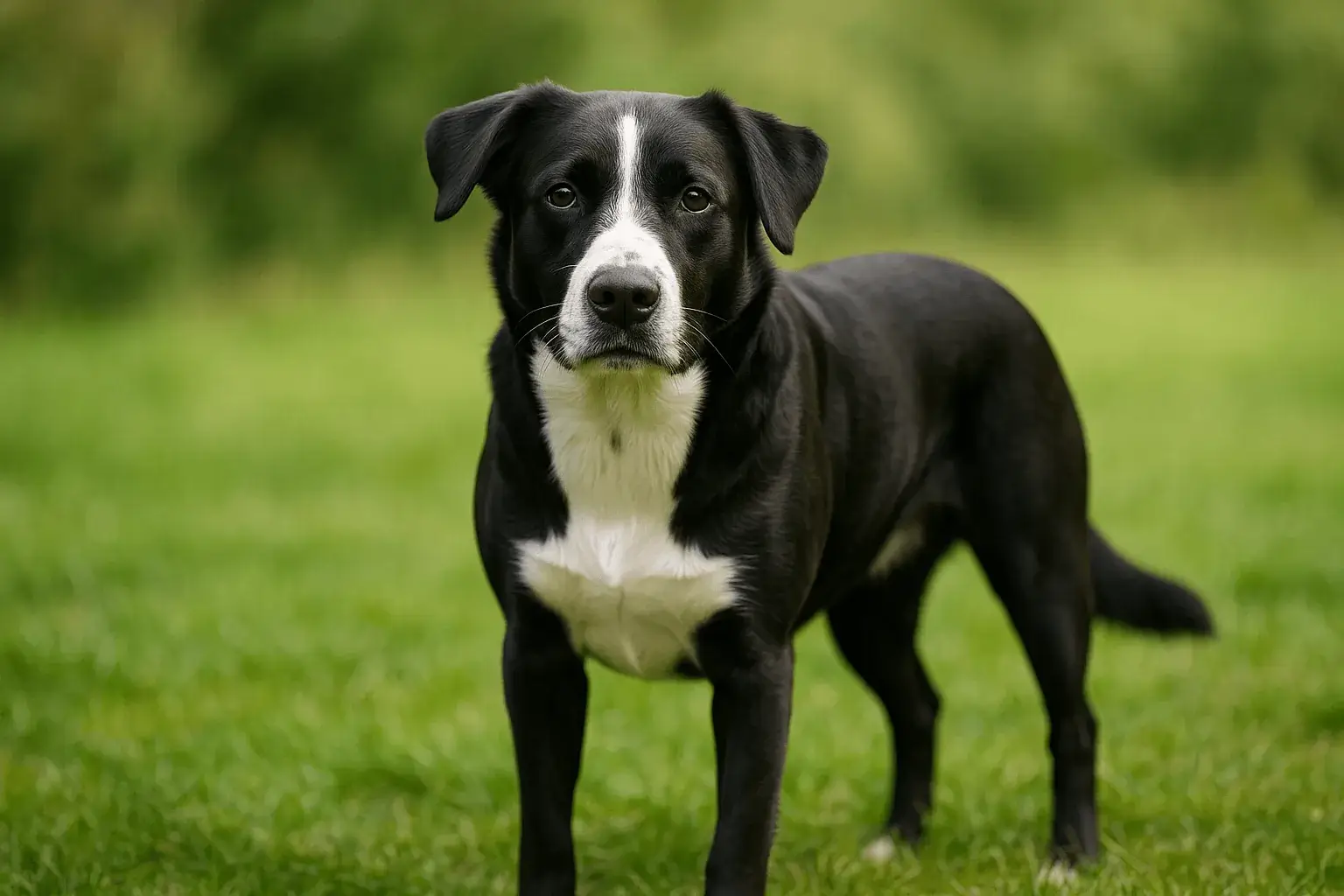
A borador is a Labrador Retriever crossed with a Border Collie — also called a Border Collie Lab mix or Border Lab. You usually get a medium, athletic dog with a Lab’s people-focus and a Collie’s work drive. That drive is the part Lab owners underestimate.
Adult size and temperament vary with the parents and the individual dog. Both parent breeds are active working dogs, so ask about daily activity, training, and the ability to settle at home. The size figures below are approximate; they are not a standard for every Borador.
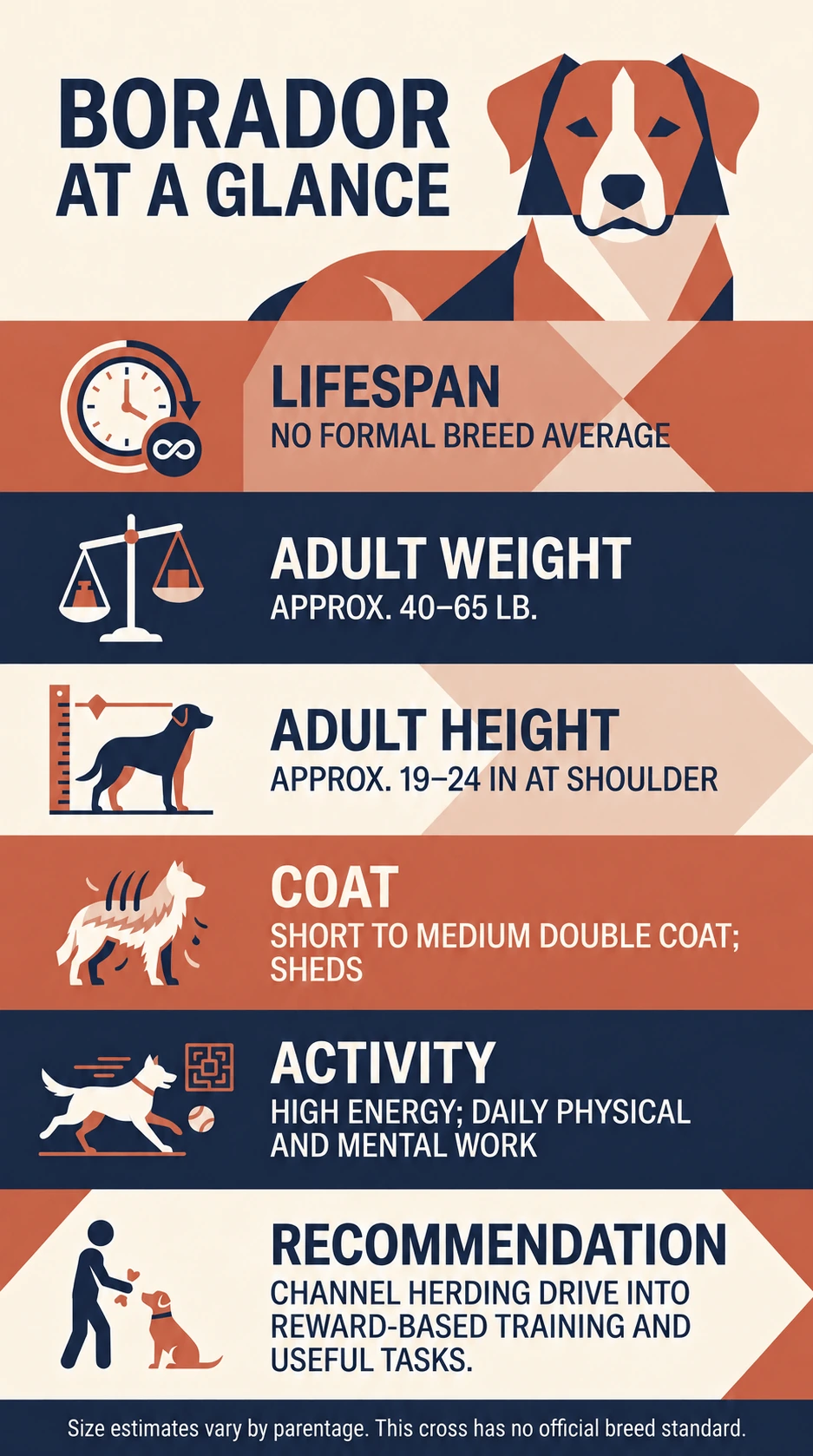
Borador at a Glance
This mix is not registerable as a purebred with the American Kennel Club. Treat every dog as an individual. First-generation (F1) litters already split hard toward Lab, Collie, or a true blend.
What Is a Borador?
This cross combines two working sporting/herding lines: the Labrador Retriever and the Border Collie. Searchers also type Border Collie Lab mix and Lab Collie mix. Same cross.
The mix is not new in barns and shelters. The designer name showed up in North America in the last couple of decades. Breeders wanted Lab kindness plus Collie brains. They also got Collie stamina and Lab appetite.
Looks and behavior swing with the parents. An English vs American Labrador parent can push a stockier or lankier frame. A working Collie parent can push “the eye,” circling, and a need to control motion — kids, bikes, cats.
Coat lottery: solid black, yellow, or chocolate from the Lab; white blazes, collars, and socks from the Collie. Merle is uncommon unless a merle Collie was used — ask, because merle-to-merle breeding is a health problem, not a color upgrade.
Compared with a Goldador or a blue heeler lab mix, this cross is usually sharper and less of a couch dog. For where this sits among other crosses, see our Labrador mixes hub.
A catahoula labrador mix is another working cross that needs a daily job. It tends to be more independent than a Collie cross.
Borador Size and Full-Grown Weight
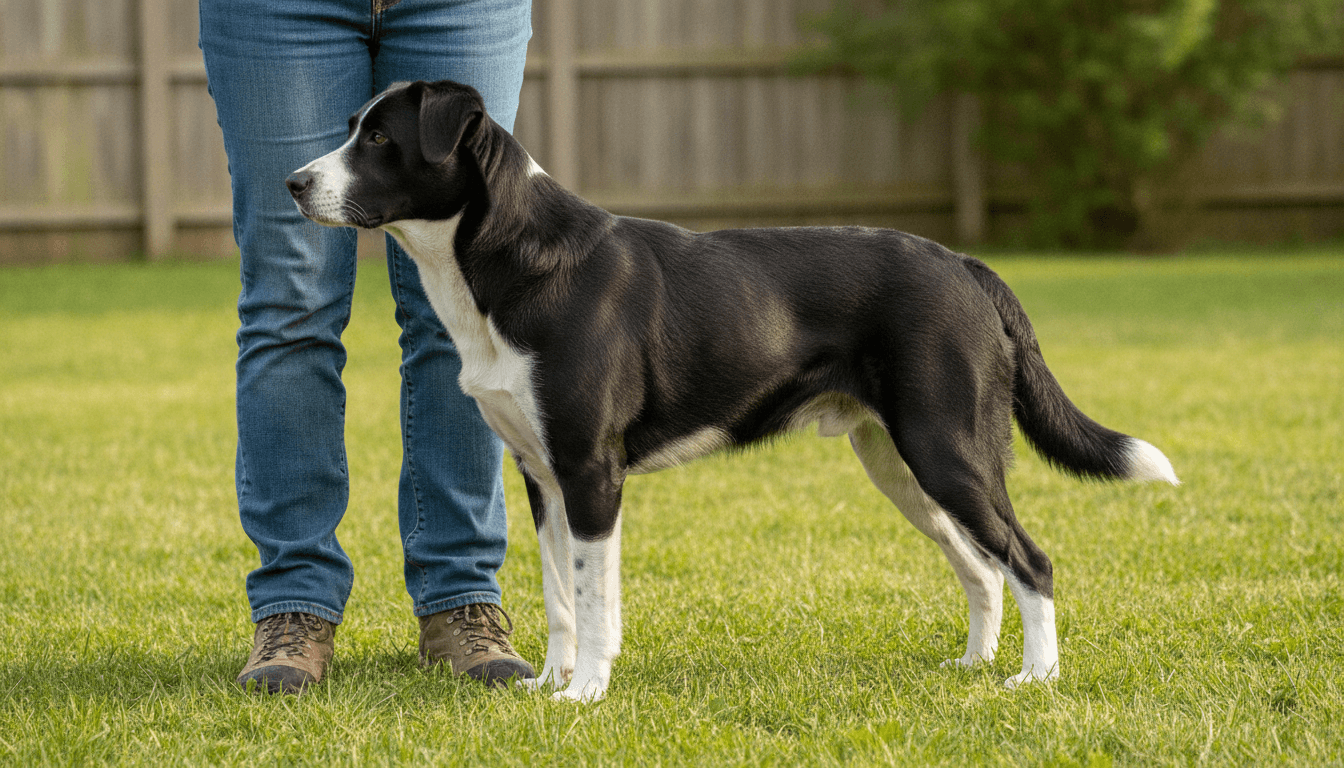
How big do boradors get? Most adults sit in the 40–65 lb band and 19–24 inches at the shoulder. Females often land lighter. Males that take after a big Lab can push past 65 lb. Shelter dogs labeled “borador” are sometimes heavier still — the tag is a guess.
For scale: AKC Labs are a medium-large retriever (males typically 22.5–24.5 inches and 65–80 lb; females 21.5–23.5 inches and 55–70 lb). AKC Border Collies are leaner working dogs: males typically 19–22 inches, females 18–21 inches, about 30–55 lb. The mix usually falls between those silhouettes: more substance than a farm Collie, less bulk than a show Lab.
Height is often close to adult by 12 months. Chest and muscle fill out through 18–24 months, same pattern as other large-breed Labs. Color does not set size. A black puppy is not a different breed.
Use body condition, not the scale obsession. Ribs should be easy to feel. The Labrador side will eat past that point if you free-feed.
Borador Temperament
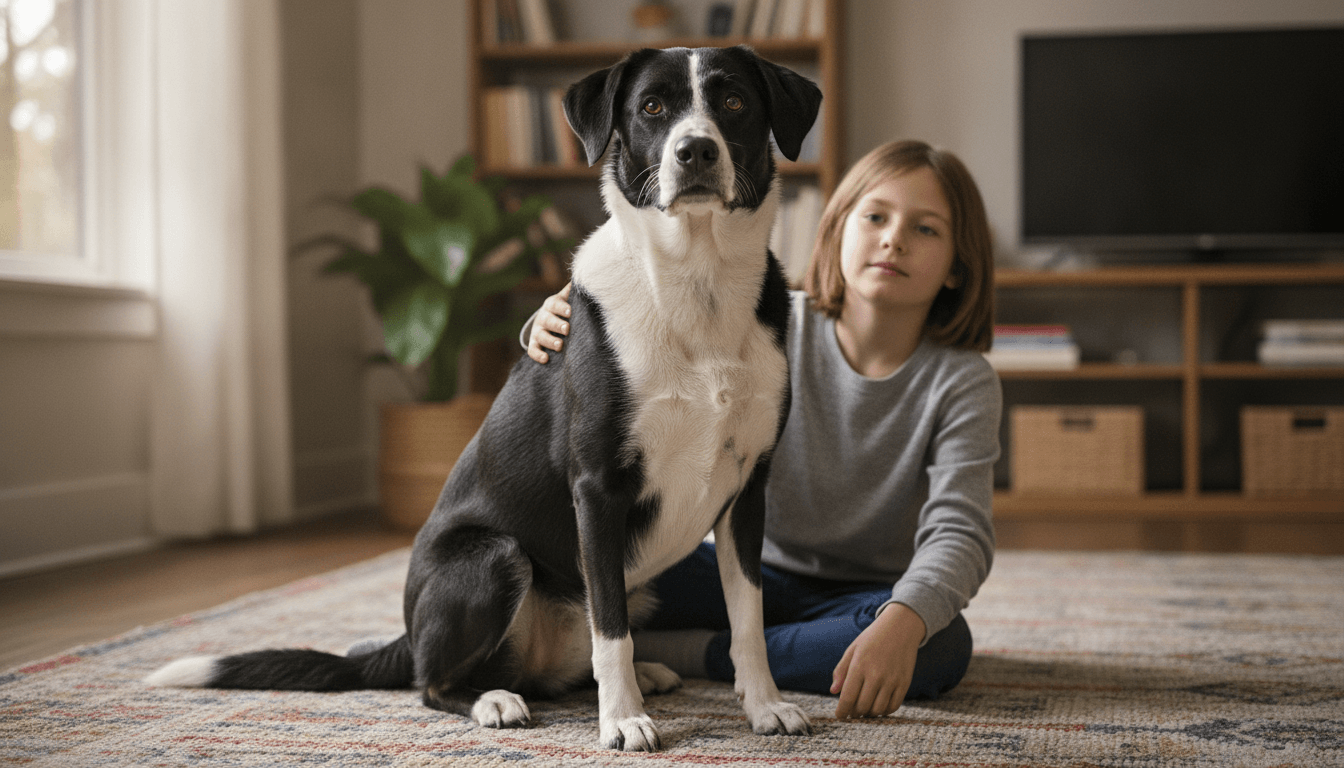
Their temperament is “bright, busy, and glued to you” more often than “chill Lab.” Many dogs greet strangers with a wag. That is a poor watchdog, not a flaw.
Expect some mix of:
- Retrieve and fetch from the Lab side — balls until they wobble.
- Herding from the Collie side — staring, circling, heel-nips at running kids or other pets.
- Velcro attachment — they follow room to room. Separation panic shows up if you skip crate and alone-time training.
They are usually good with families when exercise and rules are real. Small toddlers can get bowled or herded. Supervised kids plus a job for the dog is the combo that works. For Lab-specific kid rules, see are Labradors good with kids.
Barking is moderate. A bored dog invents a job: fence-running, alarm barking, shredding baseboards. That is unmet drive, not a “bad mix.”
Exercise Needs
AKC does not publish a minute count for this mix. Plan daily physical activity and mental work, adjusting the amount to the dog’s age, health, fitness, and recovery. A healthy adult might enjoy an active outing followed later by a search game or short training session. That is an example of variety, not a fixed duration for every dog.
Useful outlets include fetch in a fenced area, swimming where safe, hiking, and short training games. Introduce demanding activities gradually, and ask your veterinarian before adding sustained running or repeated jumps for a growing dog. Our guide to how much exercise a Labrador needs explains the individual factors to consider.
City living is possible only if you can leave the apartment for real work. A fenced yard helps. It is not a substitute for you.
Training a Borador
This cross learns fast — including the wrong lesson. Reward-based training from week one, short sessions, and a house rule that every adult enforces.
Priority skills: settle on a mat, crate, loose leash, and a recall you would bet a road on. Herding the kids gets redirected onto toys and “find it” games, not punished into sneaking.
A dog that is “easy to train” is not automatically easy to live with. Give the brain a job or it will write its own.
Grooming and Shedding
Do they shed? Yes. Both parents wear a double coat. You get year-round hair and heavier blowouts in spring and fall.
Coat length follows the lottery: Lab-short, Collie-medium, or in between. Brush weekly at minimum; daily during coat blow. Watch mats behind ears and inside thighs on longer coats. They are not hypoallergenic.
Baths when dirty, not on a calendar.
Borador Health Issues and Lifespan
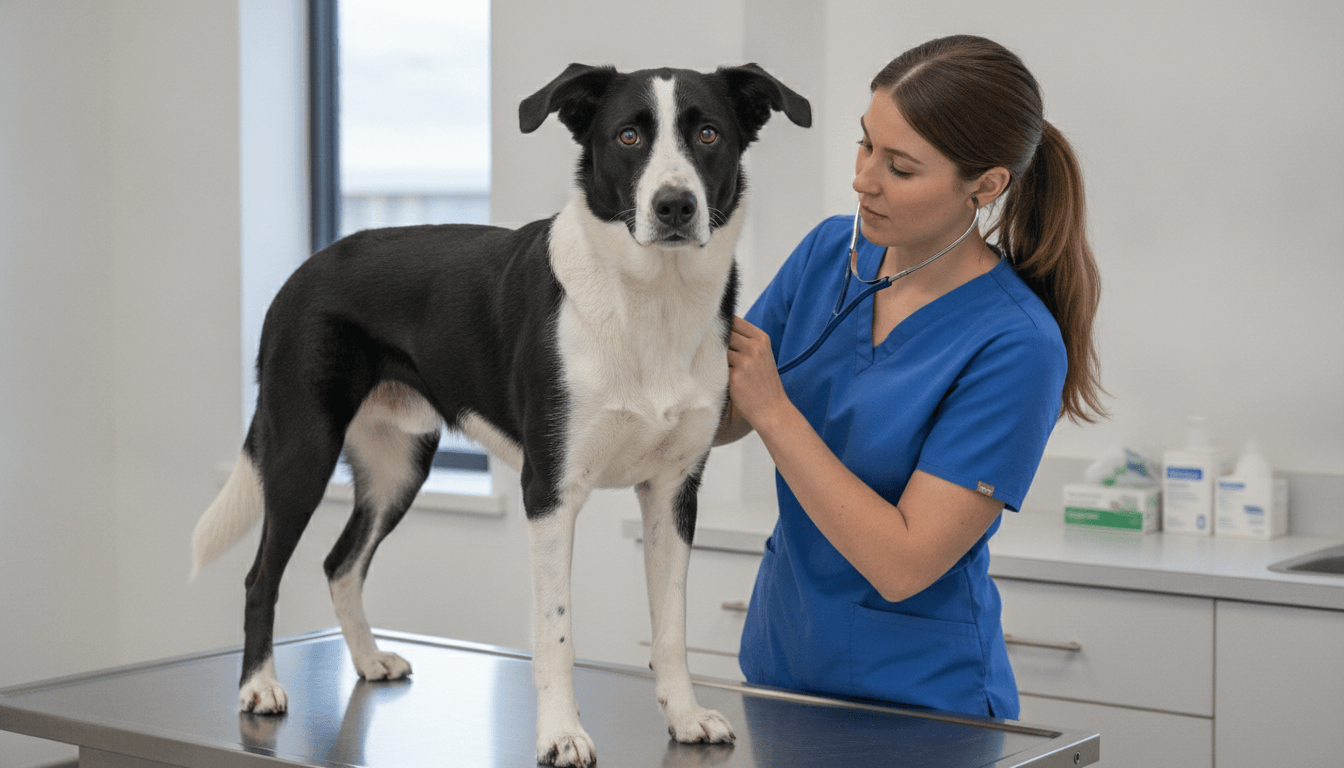
How long do boradors live? AKC lists Labrador Retrievers at 11–13 years and Border Collies at 12–15 years. Those figures describe the parents; they do not establish a Borador average. Mixed breeding does not erase parent-breed disease.
Ask for health paperwork, not vibes:
- Hips and elbows — OFA or equivalent scores on both parents. Labs are a poster breed for hip dysplasia. According to VCA Animal Hospitals, hip dysplasia is a deformity of the hip that occurs during growth and leads to arthritis. Keep large-breed pups at a normal lean weight — VCA notes overweight puppies are about twice as likely to develop it.
- Eyes — CAER/OFA eye exams. Collie lines can carry Collie Eye Anomaly (CEA). Both sides can carry progressive retinal atrophy (PRA).
- EIC — exercise-induced collapse is a Labrador DNA test. A dog that folds after hard play needs a vet and a genetic history, not “more running.”
Skip any “borador breeders” listing that cannot show parent tests, will not let you meet the dam, or markets the litter as a low-energy family pet. Rescue and shelters often have the same mix under a generic “Lab mix” label. Adult dogs let you see drive before you commit.
Feed a large-breed puppy formula if the pup will be Lab-sized. Split meals. The Labrador half will overeat.
A puppy of this cross is not a miniature adult. The first year is all mouth, zoomies, and “I found a job” (your ankles, the cat, the vacuum). Crate, chew inventory, and a 10-minute training block twice a day beat a weekend of marathon fetch. Growth plates on the Lab-sized dogs still need boring rest days. Skip forced jogging and repetitive jump work until a vet says the skeleton can take it.
Who a Borador Fits
This cross fits active people who like training, hiking, or dog sports and can give the dog a daily job. It is a poor first dog if you wanted a low-maintenance Labrador. Compare the softer Goldador if you need Lab friendliness with less Collie voltage.
If you already love Labs and want more brains and less sofa, this cross can be excellent. Buy running shoes first.
Ask an adult dog’s foster or rescue what happens after a walk: can the dog settle, how does it react to running children, and what has been observed when it is left alone? For a puppy, ask about the parents’ everyday behavior and plan to teach those skills. A short meeting can help you ask better questions, but it cannot guarantee how a dog will behave after moving home.
Frequently Asked Questions
What is a borador?
A borador is a Border Collie Lab mix — Labrador Retriever plus Border Collie. It is a designer-name cross, not an AKC breed.
How big do boradors get?
Most adults are about 40–65 lb and 19–24 inches at the shoulder. Individual dogs follow the larger or smaller parent.
Do boradors shed?
Yes. Expect year-round shedding and heavier seasonal coats. They are not hypoallergenic.
How long do boradors live?
We do not have a reliable population estimate for Borador lifespan. The published lifespans of Labradors and Border Collies are context for those parent breeds, not a measured average for their cross. Ask about the individual dog’s health and family history rather than relying on a promised age range.
Are boradors good with kids?
Often, if the kids are supervised and the dog is exercised. Herding nips and body-checks happen when children run.
Can a borador live in an apartment?
Only with a serious daily exercise plan. Most do better with a secure yard plus outings, not instead of them.
Do boradors bark a lot?
Usually a moderate alarm bark. Constant barking is more often boredom or isolation than “the breed.”
This mix rewards owners who treat it like a working mix, not a stuffed Lab. Give it work, keep it lean, and screen the parents — or adopt an adult whose personality you can already see.