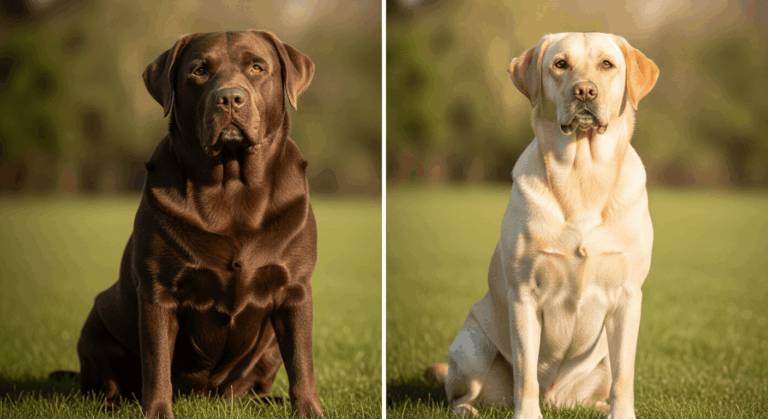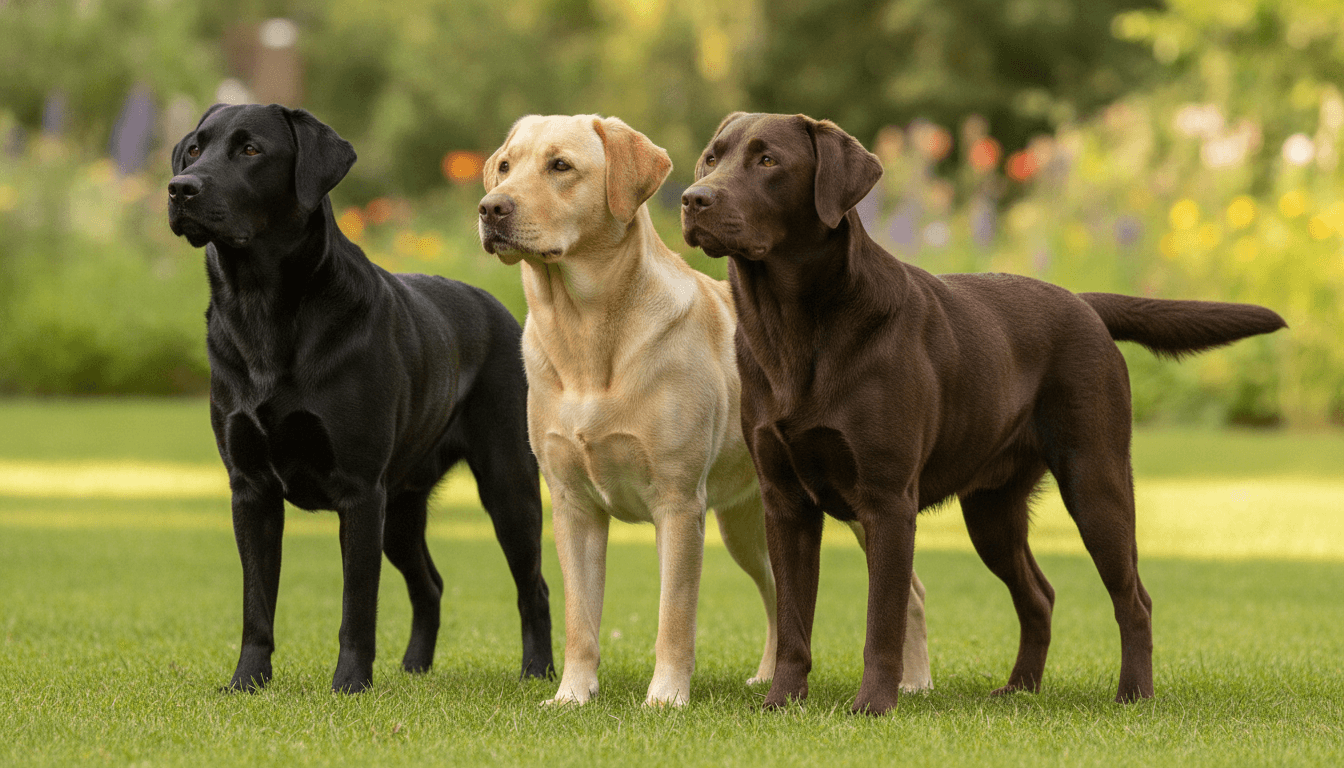
Labrador colors come down to three breed-standard coats: black, yellow, and chocolate. That is what the American Kennel Club lists and what the Labrador Retriever Club writes into the standard. Fox red and pale cream sit inside yellow. Silver, charcoal, and champagne are dilute versions of those three — show disqualifications, not extra official colors.
This hub explains the genetics in plain English, what “rare” actually means, and which of our color guides to open next. It does not replace the deep pages for black, yellow, chocolate, silver, or fox red Labs.
Labrador Colors at a Glance
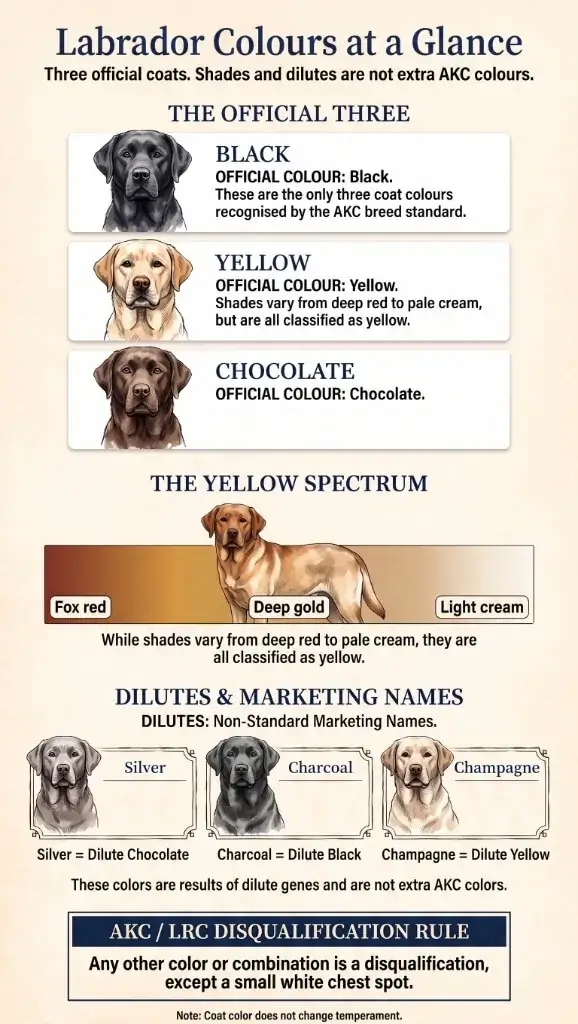
The LRC standard is blunt: black, yellow, and chocolate. Any other color or a combination of colors is a disqualification. A small white chest spot is allowed but not desired. Brindle or tan points on black or chocolate are also a disqualification.
The Three Standard Labrador Colors
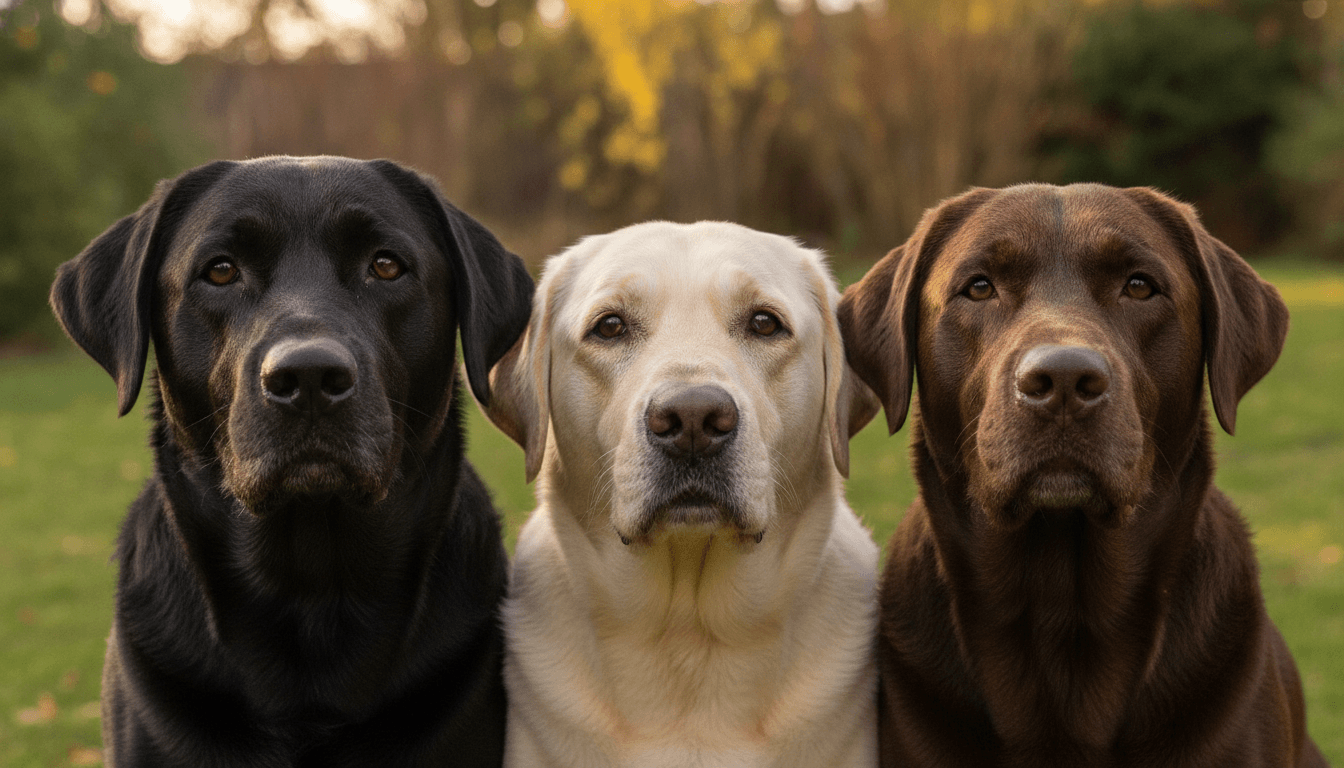
People search labrador colors as if there were nine separate breeds. There are three registrable coats. Shade marketing does the rest. For a picture of the trio, stay on this page. For living with one coat, jump to the color post linked below.
Black is solid black. It was the original working color. A little white on the chest does not make a mix.
Yellow is a spectrum, not one crayon. The standard says yellows may run from fox-red to light cream, with extra shading on ears, back, and underparts. A near-white Lab with a black nose is still yellow. For the palest end of the range, see our white Labrador guide.
Chocolate (older texts say liver) runs light to dark brown, with a brown nose and often lighter eyes. Chocolate is recessive: both parents must pass the brown gene for the coat to show.
Coat shade does not pick temperament. The LRC standard describes one Labrador temperament for the breed. Anyone selling “calmer yellows” or “smarter blacks” is selling a story. For the adult breed outline, see the Labrador Retriever breed guide.
How Labrador Color Genetics Work
You only need three switches.
B locus (TYRP1): black vs brown pigment. At least one working B → black pigment. Two copies of b → chocolate.
E locus (MC1R): the yellow switch. Two copies of e block pigment in the hair, so the coat is yellow no matter what B says. Nose and eye rims still show the underlying black or brown. A yellow Lab with brown/pink rims is often called a Dudley (bbee). The LRC treats a thoroughly pink, unpigmented nose as a disqualification; Dudleys can still be registered.
D locus (MLPH, dilute): two copies of d fade the coat. Diluted chocolate is marketed as silver. Diluted black is charcoal. Diluted yellow is champagne. Wikipedia and the parent club treat these as conformation disqualifications. Dilute coats are also tied to color dilution alopecia — patchy hair loss and skin trouble in some dogs, not all.
A DNA color panel reads B, E, and D. That is how you confirm a “rare” label instead of paying for a pale chocolate.
Yellow Shades, Fox Red, and Cream

Fox red is yellow. Cream is yellow. “White Lab” with a black nose is yellow. The pigment is pheomelanin; modifiers change how dark it looks.
If you want the deep mahogany end, read fox red Labrador. If you want the pale end, stay on yellow Labrador — do not buy a “polar white” premium unless the health testing matches a normal yellow litter.
Yellow puppies often start paler. Ear tips hint at adult depth. Black is the most stable. Chocolate can shift a shade as the adult coat comes in. Sun can rust a black or chocolate coat until the next shed. That is cosmetic.
Silver, Charcoal, Champagne, and Health

Silver is the marketing name for dilute chocolate. AKC can register the dog as chocolate, not as “silver.” Charcoal registers as black. Champagne registers as yellow. The parent club does not treat them as extra Labrador colors.
For the pedigree argument, CDA risk, and what to ask a breeder, use our silver Labrador guide. Do not start a second silver URL here.
Chocolate as a standard color has a separate health pattern: a UK study of Labradors found chocolate Labs had a shorter average lifespan and more ear and skin disease than black or yellow Labs. Researchers point at a smaller breeding pool used to lock in a recessive color, not brown pigment as a toxin. Details live on chocolate Labrador.
Keep large-breed pups lean either way. Color does not cancel hips.
Predicting Puppy Colors (Without a Spreadsheet)
Two chocolates cannot produce a black coat. They have no B to pass. They can produce yellow if both carry e.
Two yellows (ee) produce yellow coats. Shade still varies. You will not get a black or chocolate coat from two yellows.
Two blacks can throw yellow, chocolate, or both if they hide e and b. That is why a black pair sometimes surprises people.
Yellow × chocolate can, depending on hidden genes, produce yellow, chocolate, or even all-black pups. That last one shocks new owners and is still normal genetics.
Ask for parent color DNA if you are buying for a specific coat. Guessing from grandparents is a hobby, not a plan.
Mismarks, Dudley Noses, and “Is My Lab Pure?”
Tan points, brindle patches, and extra white (beyond a small chest spot) are show faults. They are not automatic proof of a mix. A mismarked Lab from health-tested parents is still a Lab.
Snow nose — seasonal fading on the leather — is common and not a Dudley. A Dudley is missing pigment on the nose and rims in a yellow dog.
True albino (no pigment, pink skin, associated eye and hearing risk) is not a “white Labrador color.” Do not confuse it with cream yellow.
Nose, Eye, and Rim Color by Coat
Coat is only part of how labrador colors are judged. The standard also sets the pigment on the nose and around the eyes, and that pigment tells you what the coat alone cannot.
Black Labs have a black nose and black eye rims. Yellow Labs should also have a black nose and rims, though the nose can fade in winter. Chocolate Labs have a brown nose and brown eye rims. The standard asks for brown eyes in black and yellow dogs, and brown or hazel eyes in chocolates.
Pigment is also how you read the hidden genes. A yellow Lab with a brown nose and rims carries two copies of b under the yellow coat. A pale dog with black points is a light yellow, not a new color. Check the pigment, not the shade name, when you compare labrador colors in one litter.
Puppies are born with pink noses that darken over the first weeks. A nose that stays pink past puppyhood is a fair question for the breeder and your vet.
Grooming Is the Same Coat, Different Furniture
All standard Labs wear the same short double coat. Shedding does not care which crayon you picked. Black hair shows on pale sofas. Yellow hair shows on navy pants. Dilute dogs need extra skin-watching if the coat thins.
Do not shave a Labrador for summer. The undercoat is weather gear.
Rare Labrador Colors vs Official Ones
“Rare labrador colors” in ads usually means dilute or a named yellow shade. Official labrador colors do not include silver as its own registration box. A health-tested yellow from a careful breeder beats a color-premium pup from a seller who will not show OFA.
If you only remember one line: labrador colors on the standard are three. Everything else is a shade, a dilute, or a mismark.
Pick the breeder’s health testing first: hips, elbows, eyes, EIC, PRA. Then pick a shade you will still like on a wet dog.
Working homes often like black or fox red for visibility in cover. Families who were sold a “rare silver” should read the dilute page before they pay a premium. English vs American build is a separate question from color.
Frequently Asked Questions
What are the official labrador colors?
Black, yellow, and chocolate. That is the AKC list and the LRC standard. Other names are shades or dilutes.
How many labrador colors are there?
Three for the show ring. Yellow includes fox red and cream. Dilutes add silver, charcoal, and champagne as marketing names, not extra standard colors.
What is the rarest of the labrador colors?
True albino is the rarest and is a health problem, not a designer shade. Among marketed coats, the dilutes are less common. Chocolate is the least common of the three standard coats because it is recessive — it is still ordinary.
Do labrador colors change personality?
No source in the breed standard ties coat to temperament. Train the dog in front of you.
Is a fox red Lab a different color?
No. It is yellow at the dark end of the standard. See fox red Labrador.
Why do people say no to silver Labs?
The dilution gene is outside the historic standard coat set, AKC records silvers as chocolate, and some dilute dogs develop color dilution alopecia. Read silver Labrador before you buy on color.
What is a labrador color chart useful for?
A simple chart of labrador colors (the official three, the yellow spectrum, and the three dilutes) is a map. Parents and DNA tell you more than a Pinterest grid.
Labrador colors are a short official list and a long marketing list. Stay on the official three unless you understand dilute risk — and spend the extra money on OFA and DNA, not on a name for a shade.