
A Corgi Labrador mix, often called a Corgidor, has no standard adult weight. Some puppies grow into low, long-bodied adults, while others stand taller. If you know the parents, ask whether the Corgi was a Pembroke Welsh Corgi or a Cardigan Welsh Corgi, and what each parent actually weighs.
For an adult rescue, a recent weight and a foster family’s account of walks, stairs, and time at home will help you picture daily life together.
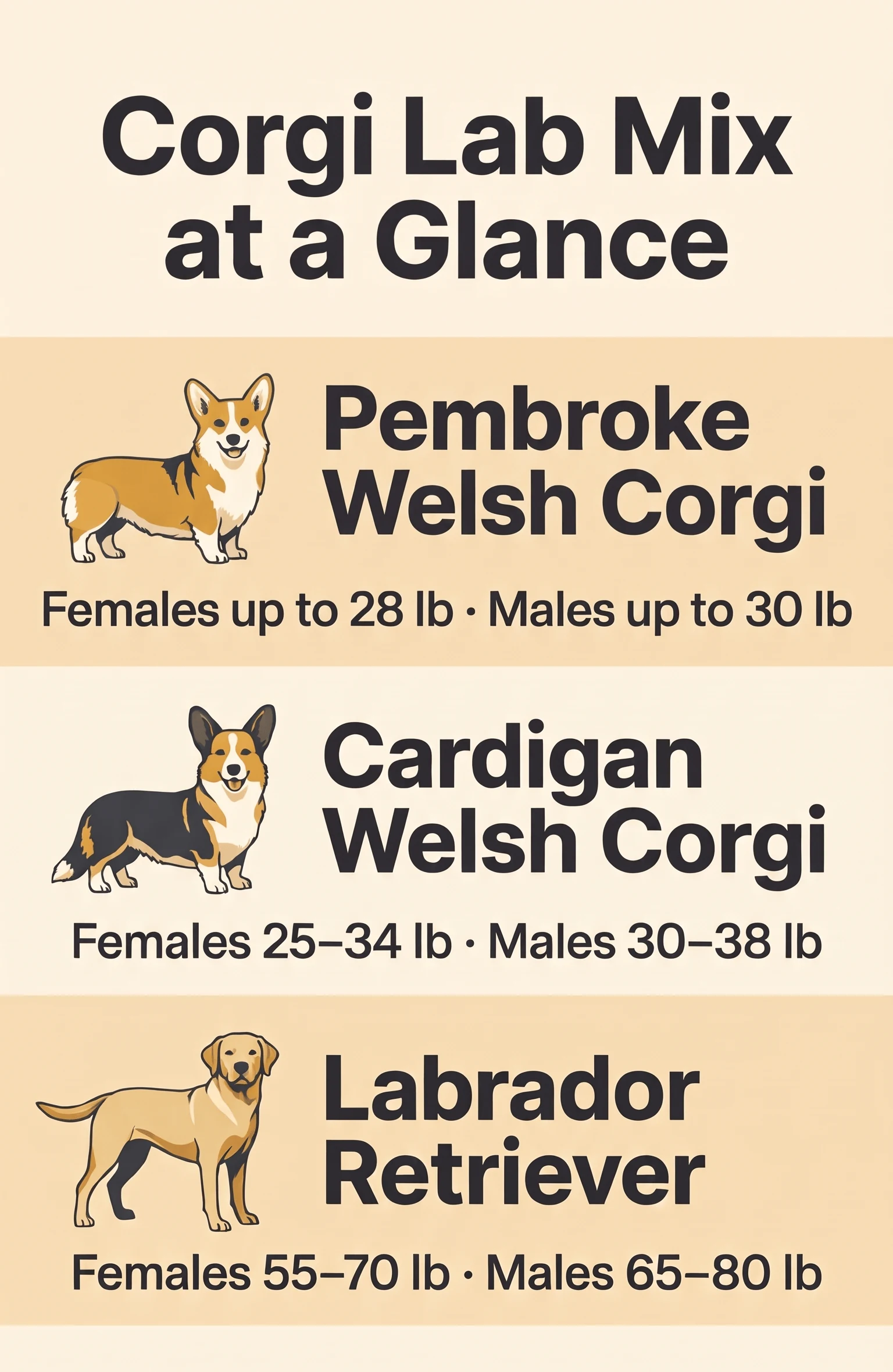
How Big Does a Corgi Labrador Mix Get?

The Pembroke Welsh Corgi standard sets upper weights of 28 pounds for females and 30 for males. The Cardigan Welsh Corgi is generally heavier, at 25–34 pounds for females and 30–38 for males. Adult Labrador Retrievers typically weigh 55–70 pounds for females and 65–80 for males.
Puppies from the same litter can differ in leg length, body shape, and adult weight. Averaging the parents’ weights gives a single number that can miss either end of that variation.
If you are adopting a puppy, take its dated weigh-ins to the first veterinary visit. Your vet can plot growth over time and check body condition. If a shelter has estimated the mix from appearance, ask which details of the puppy’s background are known.
Some Labrador crosses, including the Labrador Dachshund mix, can also have short legs. A photo can show proportions, but it cannot confirm ancestry or predict adult size.
A Chihuahua Lab mix has an even wider difference between parent sizes. For either cross, ask about the actual parents and what the breeder or rescue can document.
Backs, Stairs, and Jumping
Intervertebral disc disease (IVDD) can cause back or neck pain, weakness, or difficulty walking. Some dogs inherit a form of short-legged growth associated with early disc degeneration. Body shape alone cannot tell you whether an individual dog will develop IVDD. See Cornell’s explanation of the inherited risk.
A healthy dog that walks comfortably may manage household stairs. Watch how your dog handles the steps and whether its feet slip on the way down. If it hesitates, has a history of back problems, or is recovering from an injury, ask your vet about stair use and lifting.
Small changes can make movement around the house easier:
- Add nonslip runners or stair treads where your dog loses traction.
- A stable ramp can help a dog that struggles to reach a favorite spot. Introduce it gradually and supervise the first few tries.
- If your vet recommends lifting, ask for a demonstration that suits your dog’s size and condition.
- After a back injury, follow the activity limits and return-to-walking plan from the treating veterinarian.
New back pain, crying when lifted, wobbling, or dragging a paw warrants prompt veterinary attention. Sudden inability to stand or walk is an emergency. Keep the dog quiet, call an emergency veterinary clinic, and ask how to transport it safely. The American College of Veterinary Surgeons describes signs of spinal cord compression.
Nipping Heels and Barking
Corgis were bred to move livestock. Some dogs chase moving feet or nip during exciting play. A running child may be frightened or hurt even when the puppy is playing. Interrupt the game calmly and give the dog space to settle.
Match the individual dog to your children and the supervision you can provide. A low dog can be stepped on, while a heavier puppy can knock a small child over. Use gates and a quiet resting area when an adult cannot actively supervise.
Ask how the dog responds to a doorbell, footsteps outside, or a neighbor’s dog. For an apartment, it helps to know how often the dog barks and how readily it settles once the sound stops.
If food rewards help with training, take small treats from the day’s allowance. Secure the trash and keep food away from the edge of counters.
Before adopting, ask how the dog behaves when children run, visitors arrive, or another pet approaches a food bowl. Arrange a supervised meeting. A foster family that has observed the dog in these situations can describe what happened.
Coat and the Year-Round Shed

Labradors and both Welsh Corgi breeds have double coats and shed. The amount of loose hair and the timing of seasonal shedding vary between dogs. Expect to brush regularly and to find some hair around the house.
Start with a few short brushing sessions each week. During a heavy shed, check daily for loose undercoat, especially around the ruff. If someone in the household has a dog allergy, discuss it with their clinician before bringing a dog home.
Coat color can vary even among littermates. It tells you little about how a dog will move, shed, or behave.
What to Ask About the Parents and Litter
Ask which dog carried the litter and whether a veterinarian cared for the mother and puppies. Difficult delivery can involve the size and position of a puppy, the mother’s anatomy, and how labor progresses. A breed name alone cannot establish how a birth went. The Merck Veterinary Manual explains these causes of difficult birth.
Ask for the Labrador parent’s hip and elbow screening results. On the Corgi side, ask which breed the parent is and whether close relatives have had disc problems. Take the records to your vet to discuss what they mean for your dog.
For a breeder litter, request records identifying both parents and the puppy’s own veterinary visits. A rescue may know little about the birth. In that case, ask what the foster home has observed and start with the dog’s examination and available medical history.
How Much Exercise Does a Corgidor Need?
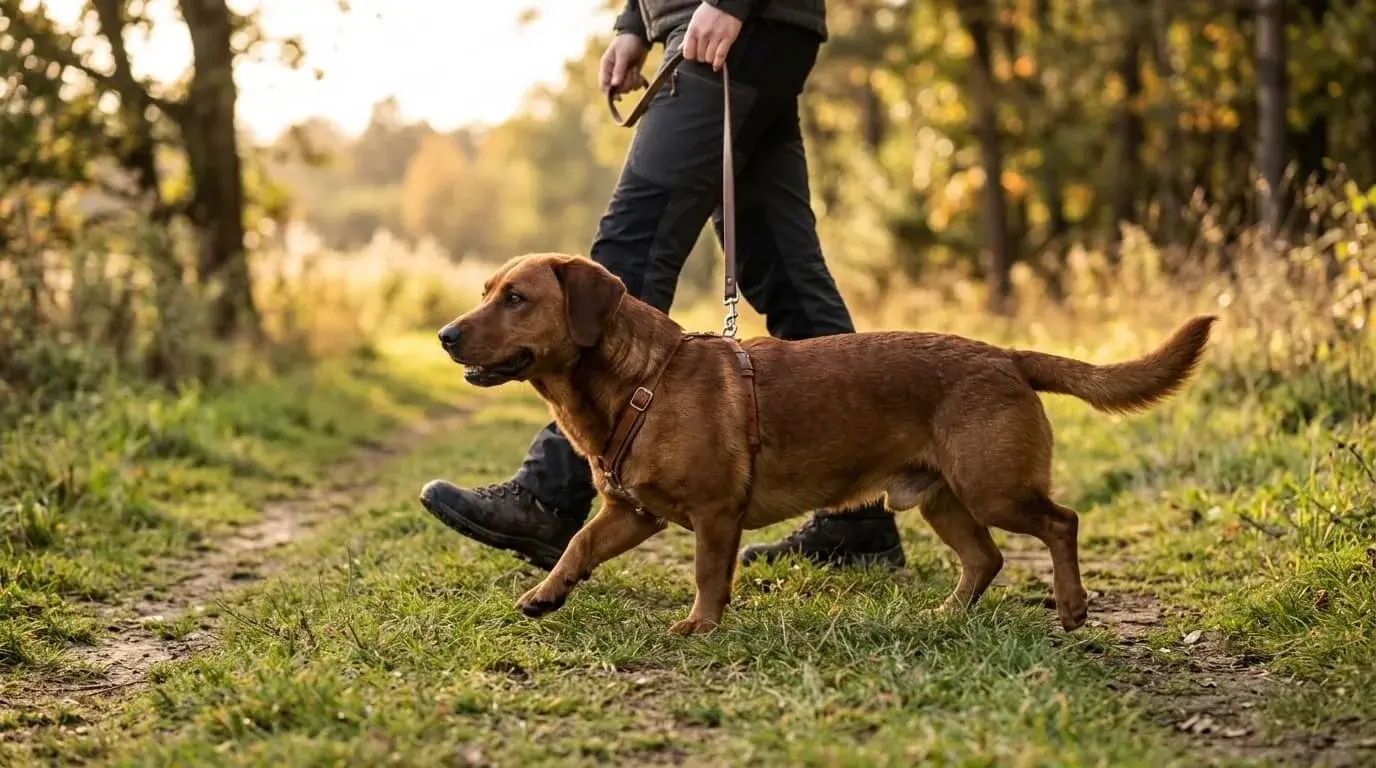
Start with the activity your dog already handles comfortably. A foster family may know whether a short walk leaves the dog ready for more or looking for a place to rest. Age, conditioning, health, and recovery after exercise all matter.
Try a relaxed sniff walk on secure footing. Adjust the next outing to how your dog moves both during the walk and afterward. If you notice limping, stiffness, or reluctance to move, stop the activity and ask your vet for advice.
For a puppy, offer short opportunities to explore and play, with room to stop and rest. Ask your vet when your growing dog is ready for longer outings or sustained running.
On a rainy day, scatter part of a meal for a supervised sniffing game or practice settling on a mat. A dog that likes retrieving can follow a gently rolled toy on a nonslip floor.
FAQ
Are Corgi Labrador mixes recognized?
Corgidor is an informal name for a Labrador Retriever crossed with a Welsh Corgi. The American Kennel Club recognizes the parent breeds individually. The cross has no separate AKC breed standard.
Do they shed?
Yes. Both parent breeds shed, so expect loose hair and potentially heavier seasonal shedding. How often to brush depends on the coat your dog inherits and how much undercoat is coming out.
How long do they live?
There is no established lifespan for the Corgidor. For an individual dog, your veterinarian can use its age, examination, and medical history to discuss what care it may need as it gets older.
Are they good apartment dogs?
Some settle well in apartments. Ask about barking and time alone, observe the dog at rest, and check whether the route outside is comfortable for it. A foster family’s experience can help you assess an adult dog.
What is a Corgidor?
A Corgidor is a Corgi Labrador mix. The Corgi parent may be a Pembroke or a Cardigan. The nickname does not tell you the adult size, which dog carried the litter, or how a puppy will behave.
When you meet an adult dog, watch it walk and settle, and ask the person who knows it best about a typical day. For a puppy, the parents’ health records and a series of weigh-ins are a better starting point than a photo. Our Labrador Retriever breed guide covers the retriever side of the family.