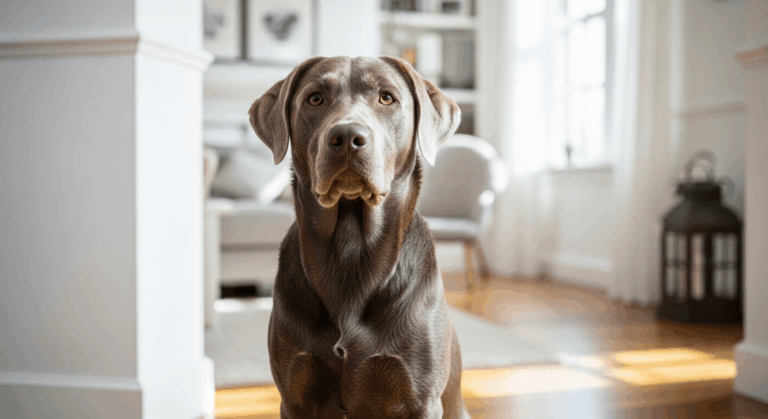
There is no AKC miniature Labrador. People also search mini Labrador, hoping for the same retriever in a tiny body. That product is not a recognized breed.
The American Kennel Club lists one Labrador Retriever. Adult males typically stand 22.5–24.5 inches and weigh 65–80 pounds. Females typically stand 21.5–23.5 inches and weigh 55–70 pounds. Ads for a mini Labrador, teacup Labrador, or toy Labrador sell a size story. This guide covers what those ads actually mean, what dwarfism is, and when a smaller Lab is still just a Lab.
There is no AKC miniature Labrador. Mini, teacup, and toy labels are marketing. Real small Labs come from undersized parents, a mild dwarfism called SD2, slow growth, or a mix — not a second official variety.
Miniature Labrador at a Glance
| Trait | Honest answer |
|---|---|
| AKC / LRC status | One Labrador Retriever breed — no miniature variety |
| Male height / weight | 22.5–24.5 in · 65–80 lb |
| Female height / weight | 21.5–23.5 in · 55–70 lb |
| Height DQ | More than ½ inch outside those ranges (adults) |
| Mini / teacup / toy | Advertising, not a breed standard |
| SD2 | Mild short-legged dwarfism (COL11A2) — a disorder, not a size option |
The parent club is blunt. The Labrador Retriever Club, Inc. says there is only one Labrador Retriever breed: the one that meets the official standard.
What Is a Miniature Labrador?
A miniature Labrador, in search ads, is supposed to be a scaled-down retriever. Same head, same otter tail, same water-dog brain — just apartment-sized. Kennel clubs do not register that as a variety.
AKC and LRC pages do not list a miniature variety, mini Labrador, teacup Labrador, or toy Labrador. LRC is the source that names the ads. Under “Minature Labradors,” the club writes that puppies advertised as Miniature Labradors are probably bred from undersized parents. There is no guarantee those pups will grow to the standard. The club then says the ethics of a breeder that purposefully breeds for incorrect size must be questioned.
Searchers also type miniature Labrador Retriever and mini Labrador Retriever. Same intent. Color tags such as miniature chocolate Lab are still a size claim plus a chocolate Labrador coat — not a second breed.
For the real dog behind the myth, start with our Labrador Retriever breed guide.
How Small Can a Labrador Be?
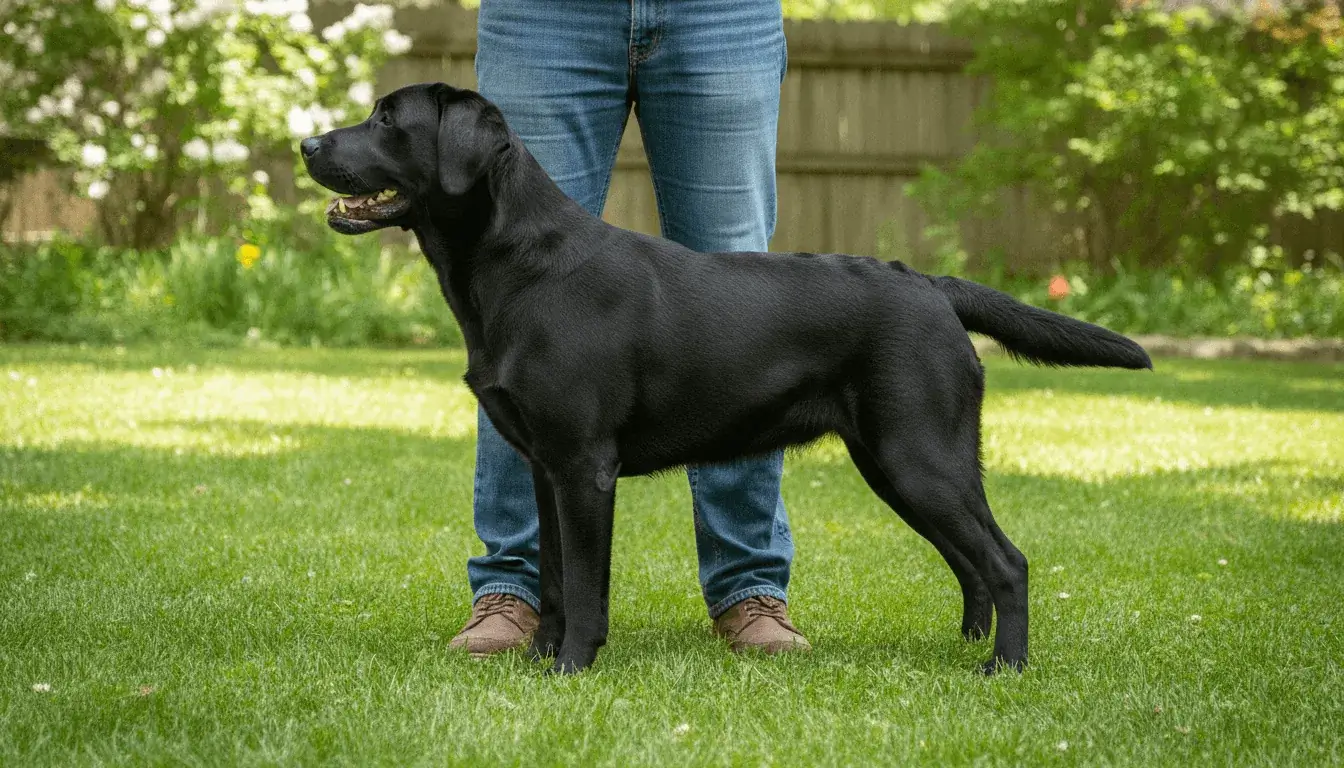
The LRC standard matches AKC on adult size. Height at the withers: 22½–24½ inches for males, 21½–23½ inches for females. Approximate working weight: 65–80 pounds for males, 55–70 pounds for females. Any variance greater than ½ inch above or below those heights is a disqualification. The minimum height does not apply to dogs under twelve months.
That ½-inch rule is why a marketed miniature Labrador is not “a little under standard.” It is outside the breed as written.
A sound adult can sit on the lighter, shorter end and still be a Labrador. Elbow-to-ground should be about half the height at the withers. Short-legged, heavy-boned outlines are not typical. A dog that looks low and long is not a designer mini. It is off-type — or it needs a vet and a genetic history.
Do not use a bathroom scale as a breed test. Keep the dog lean. According to VCA Animal Hospitals, hip dysplasia is a deformity of the hip that occurs during growth. Large-breed puppies should be kept at a normal lean weight, not pushed to grow big.
Is a Stocky Show Lab a Miniature Labrador?
Stocky show-line Labs look shorter and thicker. That is not a miniature Labrador. It is still a Labrador built for the ring. Lean field Labs can look lighter on the leg. That is still a Labrador built for work.
The AKC does not split those lines into two breeds. Informal show-versus-field labels live on our English vs American Labrador page. Use that URL for type. Stay here for the mini myth.
Here is the part ads get backwards. The mild dwarfism discussed below is reported more often in working lines, not in blocky show dogs. A compact English-type Lab is not “free dwarfism.” If a seller says the pup is miniature because the parents look “English,” walk away. Ask for DNA and height records instead.
Dwarfism and Short-Legged Labs
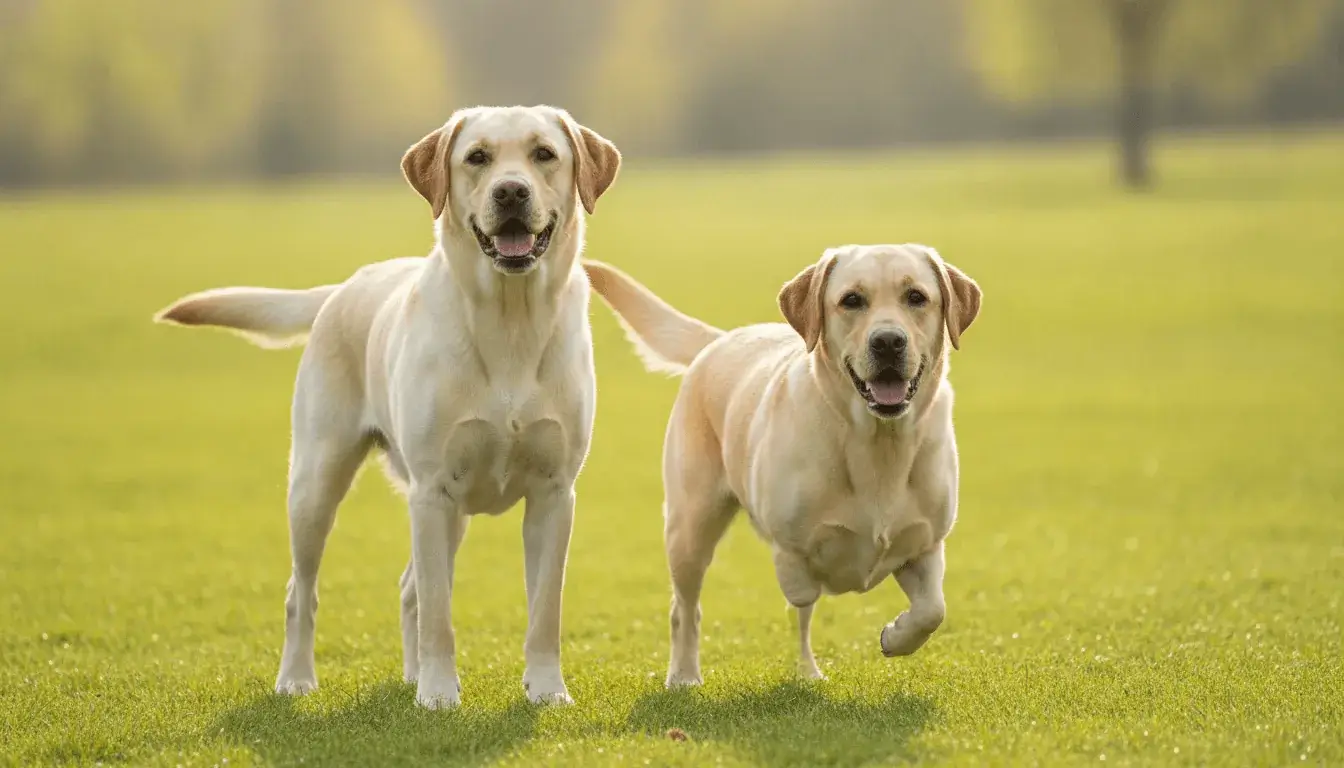
Some Labs are genuinely short-legged. That is skeletal dysplasia 2, or SD2 — a mild disproportionate dwarfism, not a teacup program.
Per UC Davis VGL, SD2 means short legs with normal body length and width. Leg bones are shorter, thicker, and slightly curved. Front legs are usually a bit more affected. Height overlaps small normal Labs and taller affected Labs. The mutation is COL11A2 (c.143G>C). Inheritance is autosomal recessive with incomplete penetrance: two copies are required, and not every SD2/SD2 dog looks obviously short. VGL reports the disease allele is rare, under 1% in a random Labrador screen. VGL also states no ocular, auditory, or secondary joint symptoms are associated with SD2.
A 2013 paper (Frischknecht et al., PLOS ONE / PMC3603880) measured affected dogs in centimeters. Affected males mostly stood under 55 cm at the shoulder. Affected females mostly stood under 50 cm. Dogs with two copies of the variant averaged 5.8 cm shorter (males) and 6.5 cm shorter (females) than dogs without two copies. In one sibling pair, the ulna and radius were 2.7 cm and 1.9 cm shorter in the affected dog. A round “2.5 inch smaller” marketing line is not in those sources. Quote the paper’s centimeters.
OSD (inherited osteochondrodysplasia) is a different, more severe problem with secondary joint disease. The same paper says SD2 does not explain OSD, and COL11A2 was already ruled out for that phenotype. Joint risk in everyday Labs still belongs on Labrador hip dysplasia. Do not treat every short Lab as “cute SD2.” Get a vet exam and an SD2 DNA test.
Responsible breeders can test COL11A2 / SD2 and report results to OFA when the lab allows it. Two carriers should not be paired if the goal is avoiding affected pups. Incomplete penetrance is why looks are not enough. A dog can carry two copies and still look nearly normal. That is a genetics problem, not a marketing feature.
Field-line popularity of SD2 does not mean every working Lab is short. It means you ask for the test in performance pedigrees, not only in “mini” ads.
Teacup, Toy, and Pocket Labrador Ads
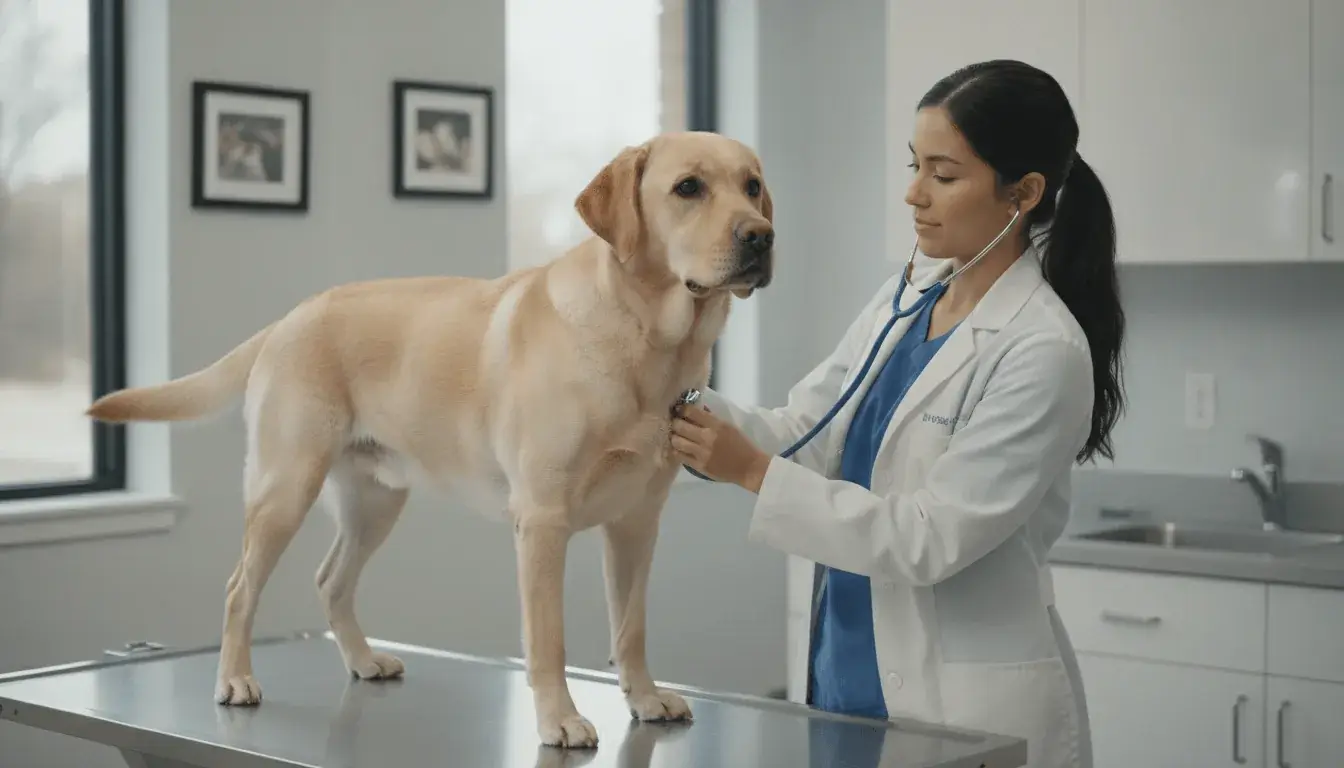
Buzzwords to treat as a warning, not a size chart: teacup Labrador, toy Labrador, pocket Labrador, micro Lab, miniature Labrador puppies for sale.
A full-grown “mini” from those ads often lands on a normal Labrador. Or it is a mix. Or it is a dog that should not have been bred for height. LRC’s line still applies: undersized parents, no size guarantee, ethics in question.
Skip any listing that will not show the dam, will not show parental heights, or will not run SD2 plus hips, elbows, and eyes. Our getting a Labrador puppy checklist is the buyer filter. Rescue and shelters sometimes have small Labs under a generic tag. Meet the adult when you can. A runt you love is not the same as a mill inventing a miniature Labrador listing.
A mini Labradoodle is a Poodle cross, not a tiny Labrador. Do not shop that SERP by accident.
Why Is My Labrador Small?
If your own dog is under the charts, do not diagnose “mini breed” from Instagram. Common explanations:
Growth still in progress — height is often close by 12 months, but Labs fill out later. Use our Labrador growth chart for age context. Do not copy a weight-by-age table onto this page.
Sex, lines, and body condition. A lean female field Lab can look “small” next to a heavy male show Lab and still be on type.
A mix in the pedigree. Shelter labels guess.
Illness, poor nutrition, or a skeletal disorder. That is a vet visit, not a new hashtag.
AKC and LRC do not publish a mini-size growth standard. There isn’t one.
Who a Small Lab Fits
A Labrador on the light end of the standard is still a sporting dog. Energy, shedding, and appetite do not shrink with a couple of centimeters. Apartment life is about daily work, not a designer size — see can Labradors live in apartments.
A true SD2-affected dog can be a fine companion. Be honest about structure. Do not pay a premium for “rare mini.” Breeding two undersized dogs on purpose to force a tiny outline is the practice LRC tells you to question.
If you already own a small-end Lab that is sound, lean, and happy, you do not need a new label. You need a food bowl you measure and a vet who knows the breed. If you are still shopping, decide whether you want a Labrador at all. A 45-pound adult that is not short-legged may be a mix, a female field Lab, or a dog that was underfed. Sort that out before you repeat the ad language.
If you want a small breed, pick a small breed. If you want a Labrador, budget for a 55–80 pound athlete and enjoy the ones who land a bit lighter.
Frequently Asked Questions
Is there a miniature Labrador?
No. AKC and the Labrador Retriever Club recognize one Labrador Retriever. A miniature Labrador is a marketing label, not a registered variety.
Are there miniature Labrador Retrievers?
Not as an official type. You will see undersized Labs, slow growers, mixes, and rare SD2 short-legged dogs. None of that creates a miniature Labrador Retriever breed.
What is a teacup Labrador?
A sales phrase. Sources we checked do not list teacup Labrador as an AKC or LRC variety. Treat it like other mini buzzwords: ask for health tests and walk away from guaranteed tiny adults.
Do miniature chocolate Labs exist?
Chocolate is a Labrador coat color. “Miniature chocolate Lab” is color plus a size claim. Coat care and color facts live on our chocolate Labrador page. Size rules stay the same as every other Lab.
Is dwarfism the same as a miniature Labrador?
No. SD2 is a documented short-legged disorder (COL11A2), usually mild, with height overlap against small normal Labs. A miniature Labrador ad is trying to sell a designer size. Test for SD2. Do not shop for dwarfism on purpose.
If you wanted a pocket retriever, buy honesty instead. Skip miniature Labrador ads, screen the parents, and keep whatever Lab you get lean. That is how you get a sound dog — not a slogan.