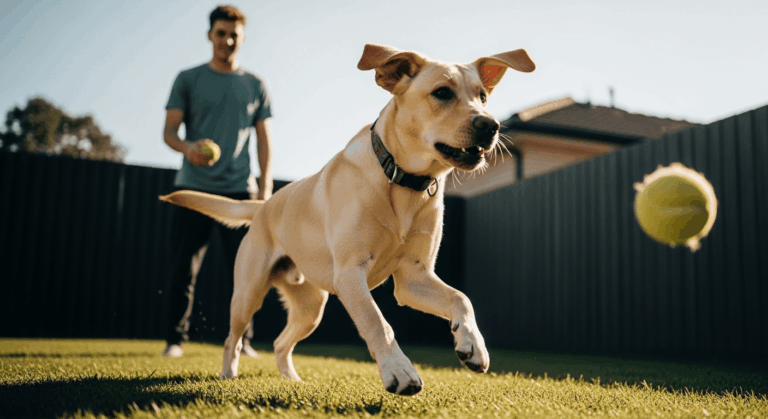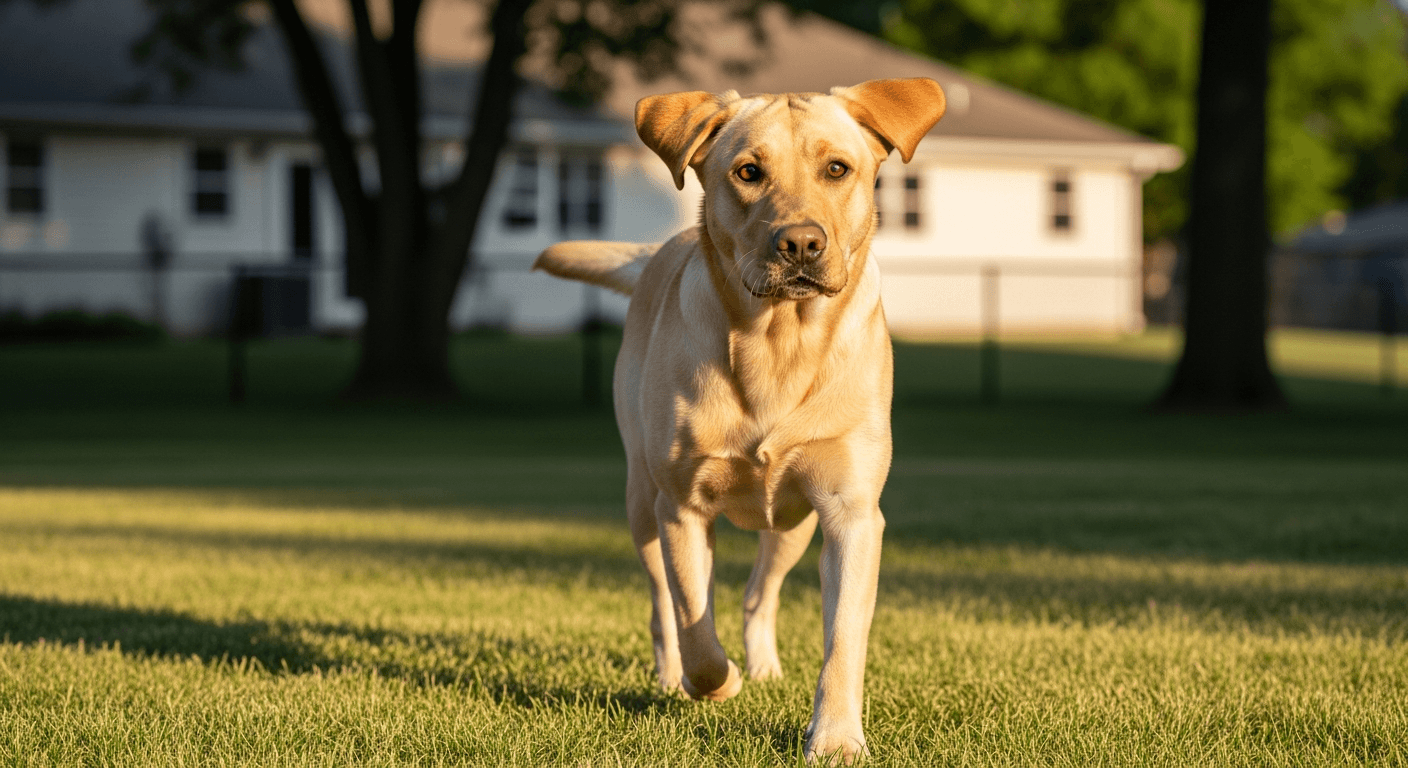
An 8 month old Labrador is in the middle of the adolescent tunnel, and most owners at this stage are asking one question: when does this end? The answer is specific — the most intense phase peaks at 7 to 9 months and eases by 10 to 12 — and the trajectory from here is upward. This guide covers the size benchmarks, the secondary fear period that surprises many owners, and what to keep doing. The full arc is in our Labrador puppy first-year guide.
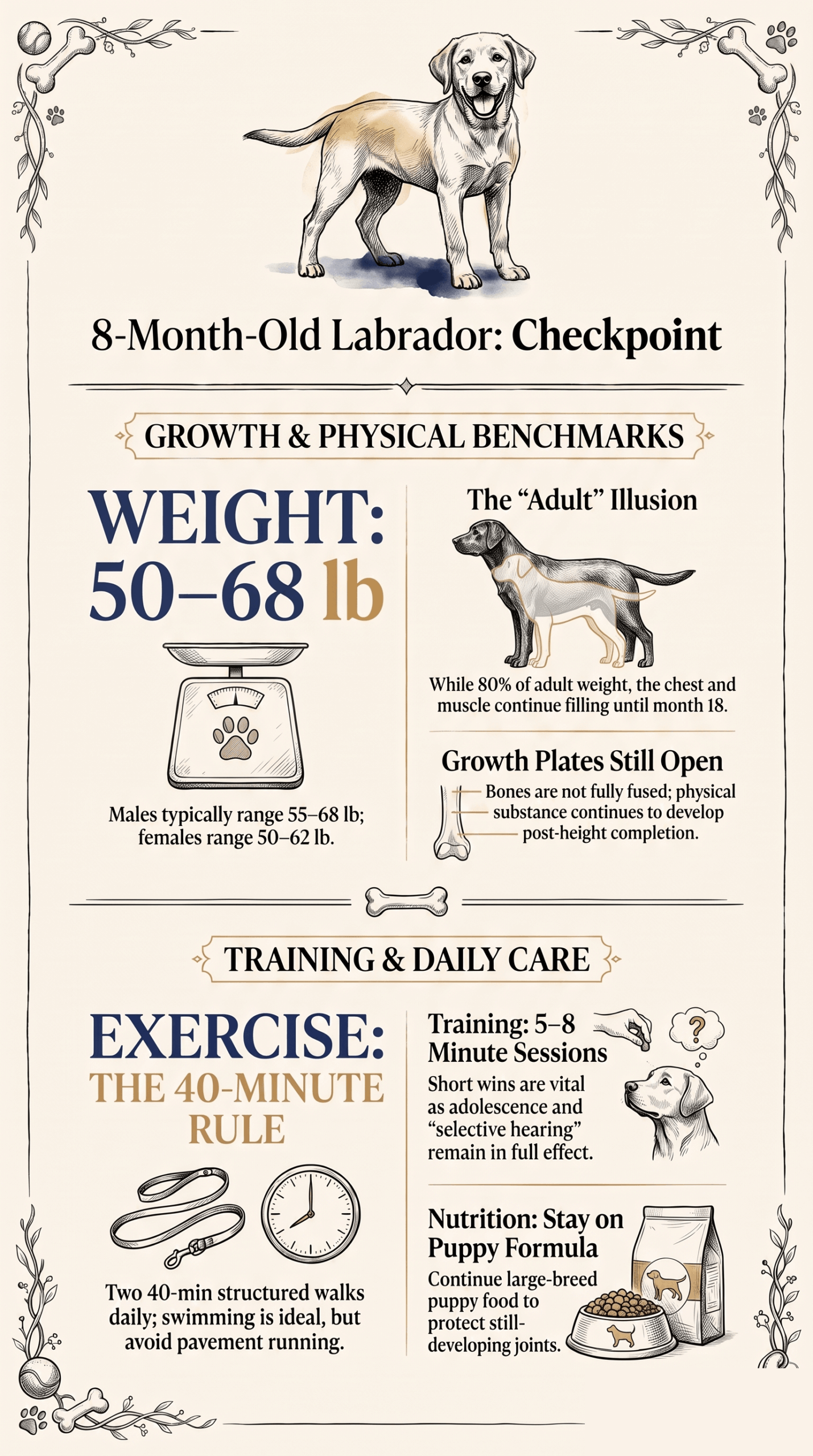
At 8 months, a Labrador typically weighs 50 to 68 lbs — males usually 55 to 68 lbs, females 50 to 62 lbs — about 80% of adult weight. The dog looks adult-sized, but chest depth and hindquarter muscle keep developing until 18 to 24 months.
8-Month-Old Labrador Size & Growth
Males at 8 months typically weigh 55 to 68 lbs and females 50 to 62 lbs, in line with the AKC’s growth chart guidance. Height is essentially done; substance is not. The chest fills out between 12 and 24 months, and the head broadens noticeably after the first birthday — especially in blockier English-line dogs.
The part you can’t see matters most: growth plates are still open, and in Labs they don’t close until 12 to 18 months. Owners counting the days until their Lab becomes a running partner should keep counting. Sustained road running before closure risks damage to exactly the joint surfaces this breed already struggles with.
The appetite, meanwhile, remains theater. Most Labs carry the POMC gene variant that mutes fullness, so an 8 month old Labrador demands food with award-winning commitment regardless of need. Owners who raise rations on demand typically own an overweight dog by 12 months. Hold portions to body condition — ribs easy to feel, waist visible — and calibrate with our guide to how much to feed a Labrador.
8-Month-Old Lab Behavior: Mid-Adolescence and the Secondary Fear Period
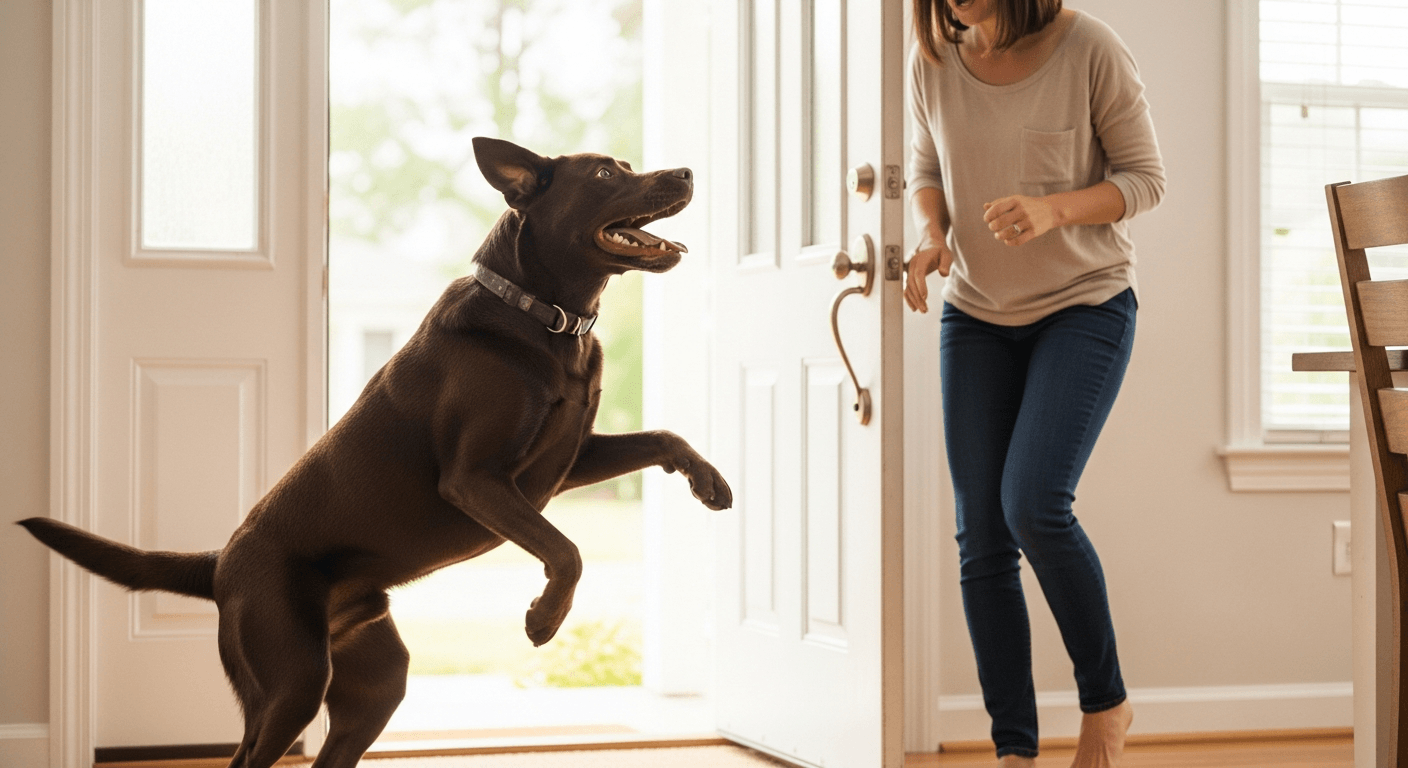
First, the honest baseline: at 8 months most Labs are still fully adolescent. Recall wobbles in high-distraction places, the leash still tightens, guests still get airborne greetings. Improvement driven by maturity is 2 to 4 months out — what you’re doing now is banking habits for that arrival. Our Labrador puppy training schedule maps the regression phase in detail.
The genuine surprise at this age is the secondary fear period. Between 8 and 14 months, many dogs pass through a second window of fear sensitivity where previously neutral things — the garbage truck, a statue, a flapping tarp — suddenly become alarming.
A Lab that ignored the recycling bins at 12 weeks may spook at them at 8 months. Veterinary behaviorists document this as a normal developmental stage, not regression and not a failure of your socialization work. It tends to blindside Lab owners in particular — the breed’s bold, food-first baseline makes sudden wariness feel alarming. It isn’t.
Handle it with distance and food, never force. Move far enough away that the dog can think, pair the scary thing with treats, and close the gap over sessions. Repeated full-strength exposure to “get him used to it” is flooding, and it makes fear worse when the dog can’t cope at that intensity.
One pattern deserves faster action: leash reactivity. If your 8-month-old has started lunging and barking at other dogs on leash, intervene now with structured training rather than just avoiding other dogs — at this age a Lab already weighs 50 to 68 lbs, so lunging is a physical control problem, not just a manners one. Reactivity addressed at 8 months, before the pattern is deeply rehearsed, typically responds to structured counter-conditioning within weeks. The same pattern left until 3 years is dramatically harder to unwind.
Training an 8-Month-Old Lab: Staying the Course
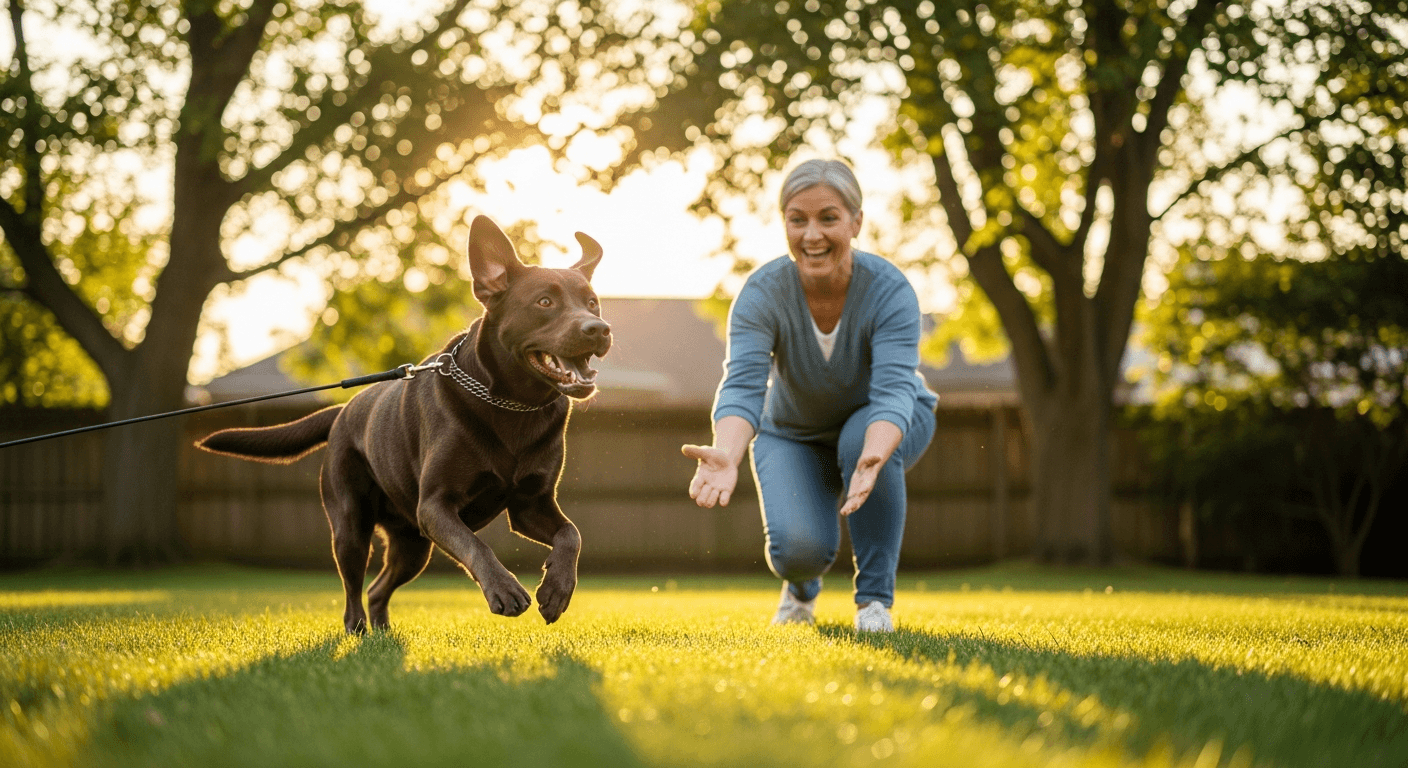
The single biggest training mistake at 8 months is quitting. Owners who stop because “nothing works” arrive at 12 months with a dog at full adult strength and no established habits. Consistency through this phase beats any specific technique. Labs trained daily through the 8-to-12-month window typically show clear recall and impulse-control gains by 12 to 14 months as the hormonal peak subsides — the reps you log now are the adult dog’s operating system.
Keep the focus narrow. Recall stays the highest-value investment: long-line sessions, several recalls each, jackpot pay for every return. Loose-leash walking via stop-and-wait keeps working if you apply it every single walk — the timeline is weeks, and it resets every time pulling succeeds. Add a solid down-stay to the list; a dog that can lie down and stay put is manageable in restaurants, at curbsides, and around guests.
Keep sessions at 5 to 8 minutes with rewards worth working for. The attention span is genuinely improving, but it still competes with adolescent hormones — short wins beat long battles. Full protocols live in our complete Labrador training guide.
Neutering, Feeding & Exercise for an 8-Month-Old Labrador
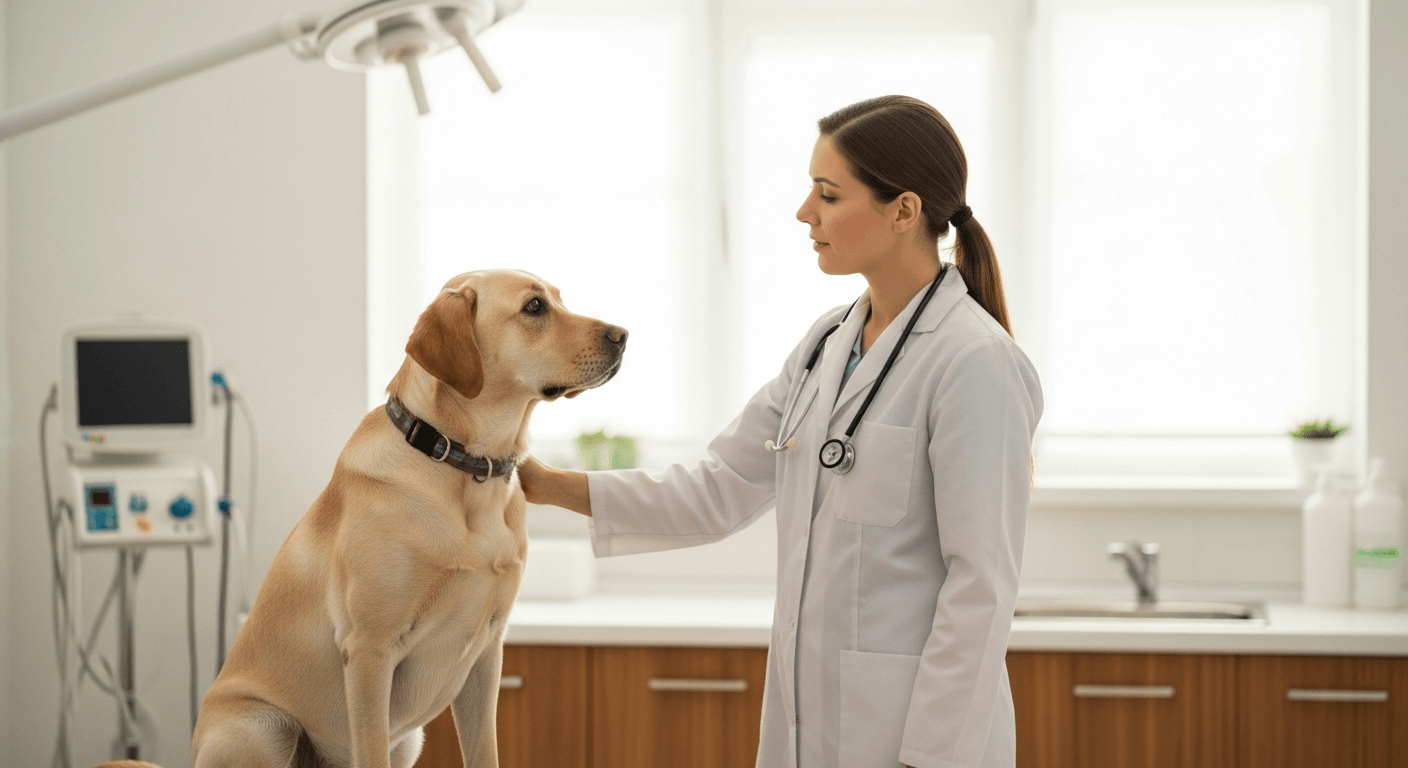
Eight months is when many vets raise neutering, and for Labs the evidence says wait. The 2020 UC Davis study by Hart and colleagues found significantly higher joint disorder rates — including hip dysplasia, a condition this breed is already predisposed to — in Labs neutered before 12 months. Our Labrador hip dysplasia guide explains what’s at stake. The AVMA’s spay/neuter guidance supports individualized timing, so have the conversation with a vet who knows the large-breed data — 12+ months is the evidence-based target for this breed.
Exercise caps at about 40 minutes of structured walking per session, twice daily, with free play in secure areas unrestricted. Pavement running still waits for closed growth plates. Swimming, on the other hand, is the perfect 8-month outlet: full cardio, zero joint impact, and it’s the thing your Lab was literally built for.
Feeding stays at 2 meals a day on large-breed puppy formula until the switch at 12 to 15 months. Watch the scale between 8 and 12 months — appetite keeps rising while exercise often plateaus, and this is the window where many Labs quietly get fat.
Frequently Asked Questions
Why is my 8-month-old Labrador suddenly scared of things?
It’s likely the secondary fear period — a developmental sensitivity window between 8 and 14 months when familiar objects can suddenly seem threatening. It is temporary and normal. Add distance, pair the trigger with treats, and let the dog approach at its own pace. Forcing exposure makes it worse.
Should I neuter my Labrador at 8 months?
The current research says wait. A 2020 UC Davis study found Labs neutered before 12 months had significantly higher rates of joint disorders, including hip and elbow dysplasia. Most evidence-aware vets now recommend 12+ months for the breed. Discuss your dog’s specific situation at the next visit.
How much should an 8 month old Labrador weigh?
Between 50 and 68 lbs for most dogs — males typically 55 to 68 lbs, females 50 to 62 lbs, roughly 80% of adult weight. The frame looks adult while the chest and muscle keep filling in. Steady condition — ribs easy to feel, visible waist — matters more than the exact number.
When will my 8-month-old Labrador start to calm down?
Soon, genuinely. Peak adolescence runs 7 to 9 months, eases noticeably by 10 to 12 months, and settles into recognizable adult behavior between 18 months and 2 years. Dogs whose owners kept training through the rough patch emerge faster and better — the consistency is the shortcut.
How long can an 8-month-old Labrador be left alone?
Four to six hours with preparation — exercise beforehand, a safe space, and a frozen food toy. A full workday with no midday break is still too long at this age; arrange a walker or a lunchtime visit. If alone time triggers howling, drooling, or destruction focused on doors and windows, read our guide to managing alone time and separation anxiety before assuming it’s boredom.
Why does my 8-month-old Labrador still mouth hands during play?
Because arousal control is the last skill adolescents master. Teething ended months ago — this is over-excitement, not pain. End the game the instant teeth touch skin, wait ten seconds, then resume. Consistency matters more than technique: one family member who allows mouthing keeps the habit alive for everyone.
How much exercise does an 8-month-old Labrador need?
Sixty to ninety minutes a day, split into at least two sessions, plus genuine mental work. Growth plates remain open, so keep skipping forced running and repetitive jumping — swimming and sniff-heavy walks deliver the tiredness without the joint load. The flat pavement jog can wait four more months.
Should my 8-month-old Labrador still eat puppy food?
Yes — a large-breed puppy formula until 12 to 15 months. Large-breed formulas control calcium and calories to protect still-developing joints, and switching to adult food early removes that protection during the final growth phase. Two meals a day, portioned by body condition rather than appetite.
Eight months isn’t the end of adolescence, but it is the turning point — the peak is now, which means every week from here trends easier. Keep the sessions short, the rewards high, and the long line on, because the consistency you hold through this month is the temperament your adult Lab reflects back. For the next milestone, see what changes in a 9-month-old Labrador.