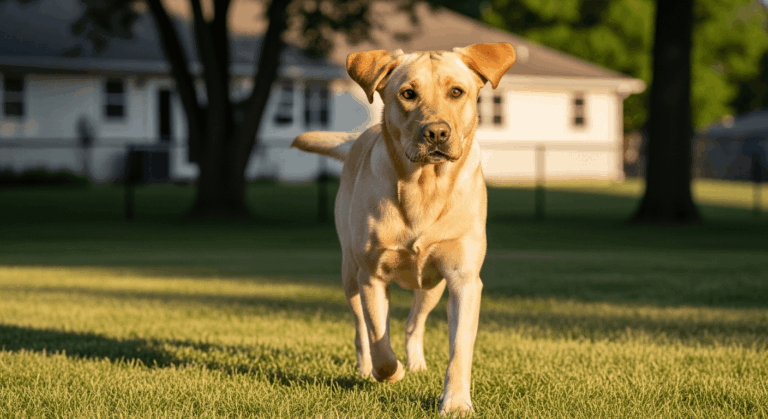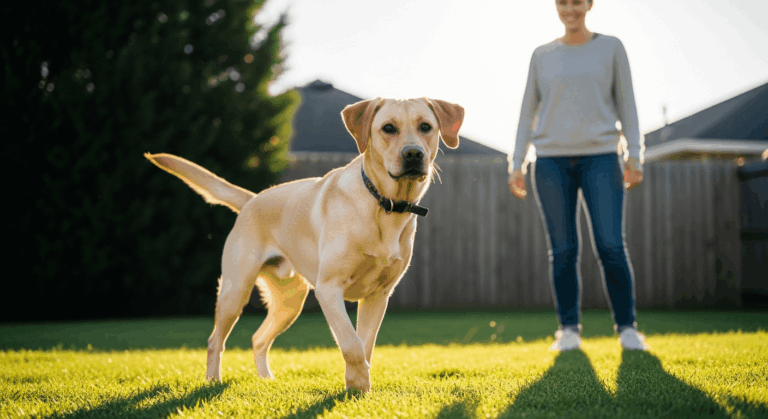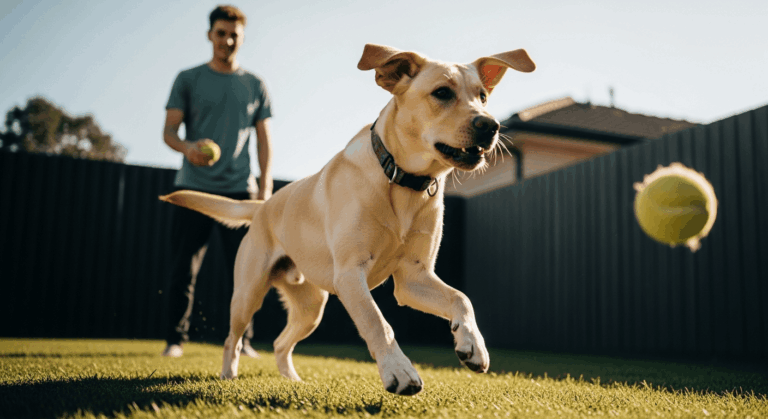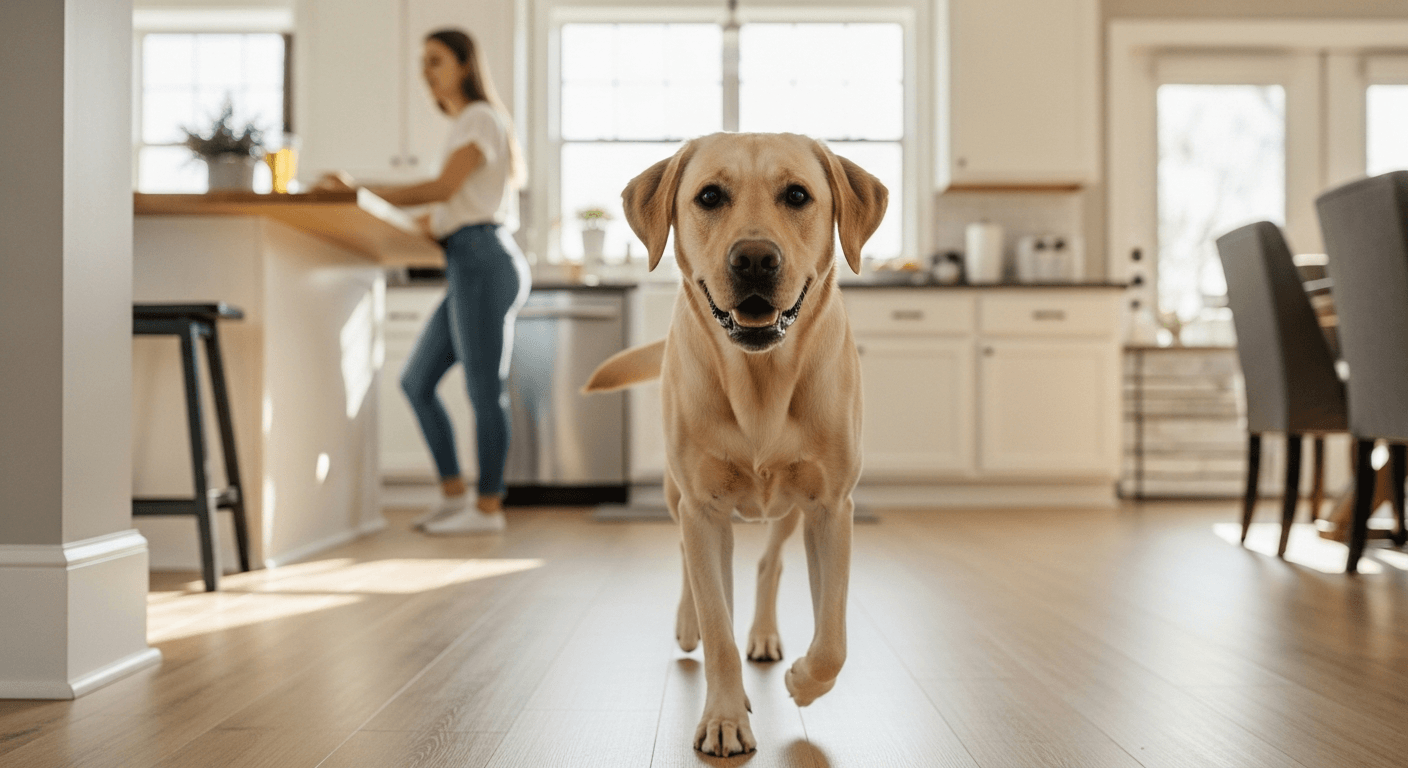
A 10-month-old Labrador may look nearly grown and still need puppy food, walks at its own pace, and a long line around distractions. As the first birthday approaches, use a veterinary checkup to review growth, food, and the activities you want to share. The right time for an adult diet or regular jogging depends on your dog. If you’re coming from our 9-month-old Labrador guide, this is the next stage in the Labrador puppy first-year guide.
What changes over the next two months? Growth may slow, familiar routines may come more easily, and your puppy may start to settle while you cook or answer the door. Keep track of changes you actually see. A run of dated weights, a note about your dog’s appetite, and examples of how it moves are worth bringing to the first-birthday appointment.
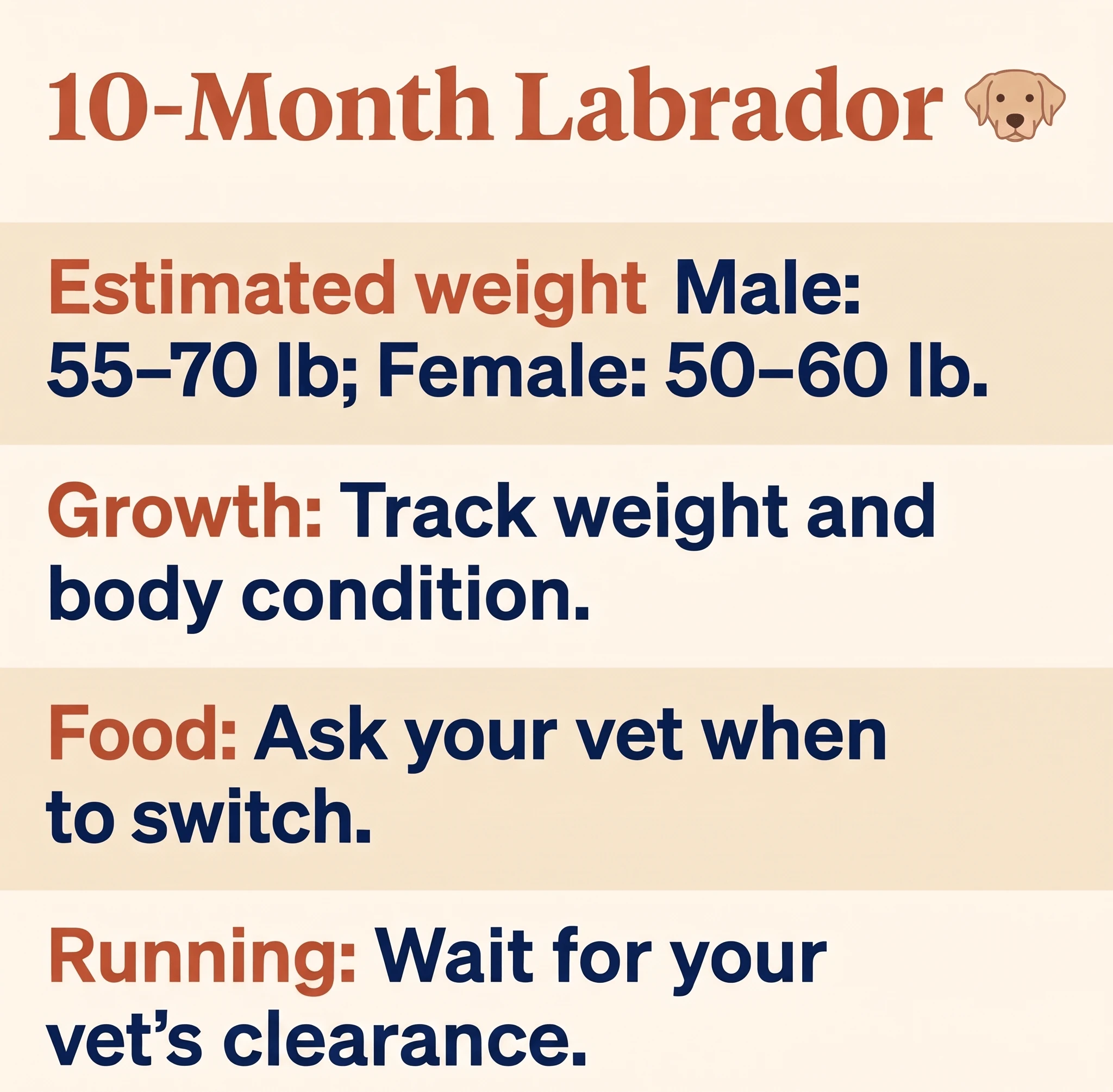
10 to 12-Month Labrador Size: What to Expect
In veterinarian Kate Boatright’s Labrador weight chart, the ten-month estimates are 55–70 lb for males and 50–60 lb for females. Healthy individuals can fall outside these ranges. Waltham’s puppy growth charts account for sex and expected adult size. Your vet can select the appropriate chart and plot earlier weights to see how your Lab is growing.
Is a Lab done growing at 12 months? Some Labs are near adult height by their first birthday and still gain muscle afterward. Others are growing on a different timetable. A deeper chest or broader head does not have to appear by a particular date. There is also no fixed percentage of weight your puppy needs to gain after turning one.
Check body condition as growth slows. Run your hands over the rib cage, then look down at your standing dog from above. You should be able to feel the ribs easily and see a waist. If the waist is getting harder to see, take your vet a record of meals, treats, and weight before changing portions. Our guide to how much to feed a Labrador explains how to measure a daily ration.
Labrador Behavior at 10 to 12 Months: What Improves and What Stays
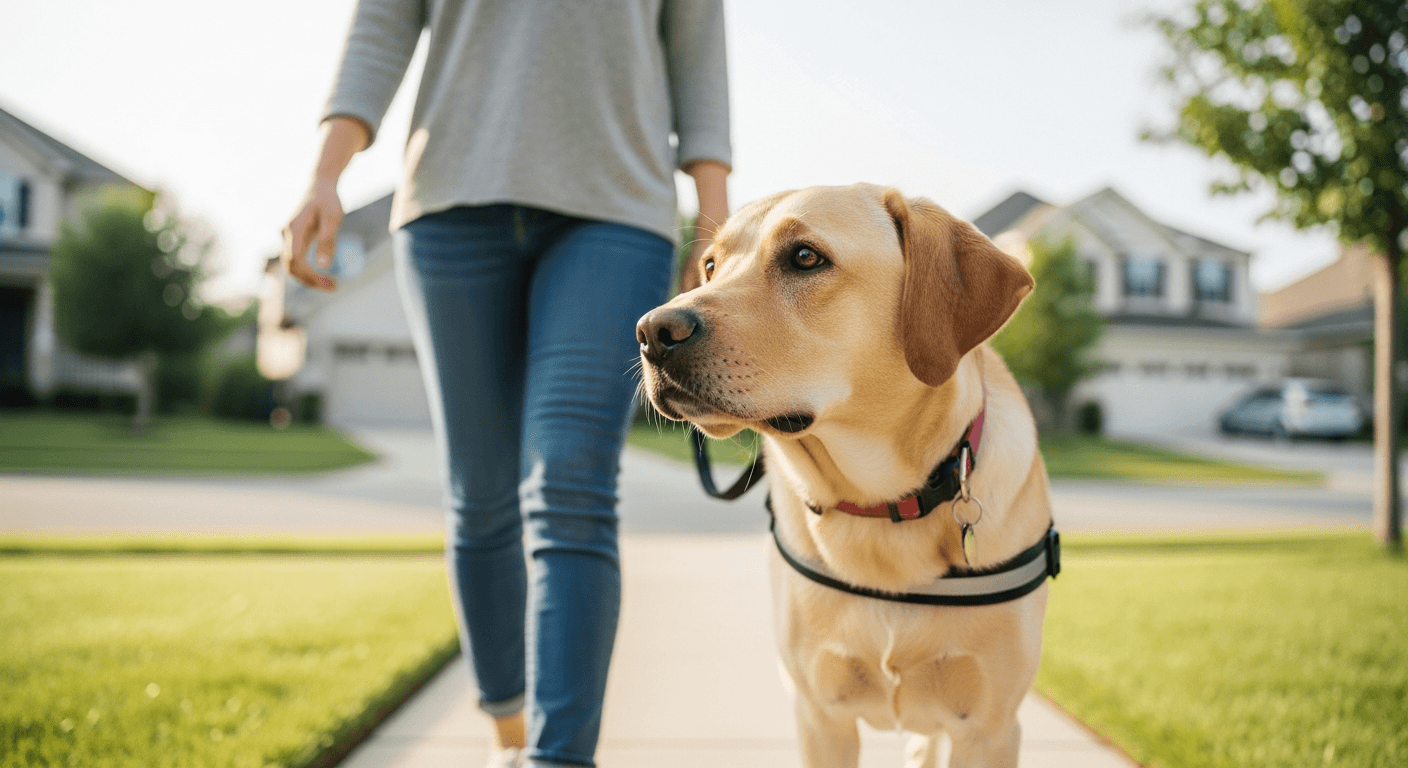
You may notice your Lab checks in more often on a familiar route. Try that same cue at a quiet time on a different street before relying on it near people or dogs. The long line is still useful when a new distraction could take your puppy out of reach. Our eight-month guide to adolescence and Labrador puppy training schedule show how to adjust the difficulty.
Counter-surfing can persist if a puppy still finds food within reach. Put bread and leftovers away before you start cooking, then reward your dog for settling on a mat outside the busiest part of the kitchen. If a visitor leaves a plate on a low table, moving the plate is easier than testing whether your puppy can resist it.
A one-year-old Lab can handle a familiar routine and still behave like a puppy when the situation changes. An ordinary dinner at home and a house full of guests are different exercises. Bring out the gate or leash for the harder one and give your dog a quiet place to rest before it becomes overwhelmed.
Compare what your own Lab does now with what it did a few weeks ago. If it used to greet a guest by jumping and now manages a pause with four feet on the floor, reward that moment. For the next visit, ask the guest to wait outside long enough for you to get the leash and treats ready.
When to Switch Your Lab to Adult Food
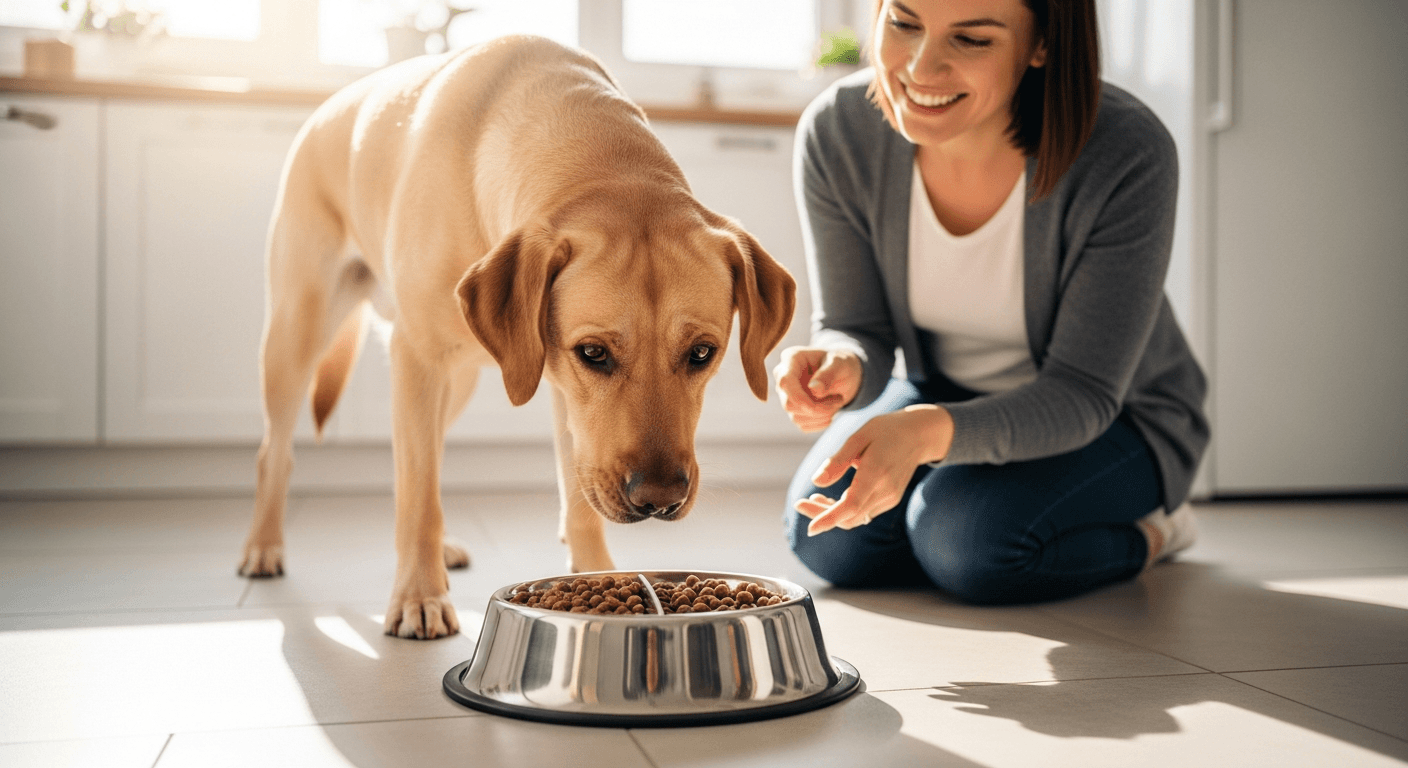
At ten months, many Labs still need food formulated for the growth of large-breed puppies. Ask at the next appointment whether your dog is nearing the point to switch to adult maintenance food. The decision depends on its growth and body condition as well as the diet you are feeding. Bring the label and the amount your dog actually eats in a day.
Once your vet recommends a switch, mix a little of the new food into the familiar food and gradually increase its share over about a week, or at the pace your vet recommends. Keep an eye on appetite and stools. If your dog develops persistent diarrhea, vomits, or seems unwell, contact your veterinarian instead of pushing ahead with the change.
Compare the nutritional adequacy statements and calories per cup or can on the two labels. An adult maintenance food and a large-breed puppy food serve different life stages. If you use a scoop, check how much it holds, or weigh a typical portion on a kitchen scale. This makes it easier to reproduce the portions you discuss at the appointment.
A cup of the new food may deliver a different number of calories than a cup of the old one. Write down the new daily amount and agree on a time to recheck weight and body condition. For a worked transition example, see when to switch your Labrador to adult food.
Exercise, Neutering & Training for a 12-Month-Old Labrador
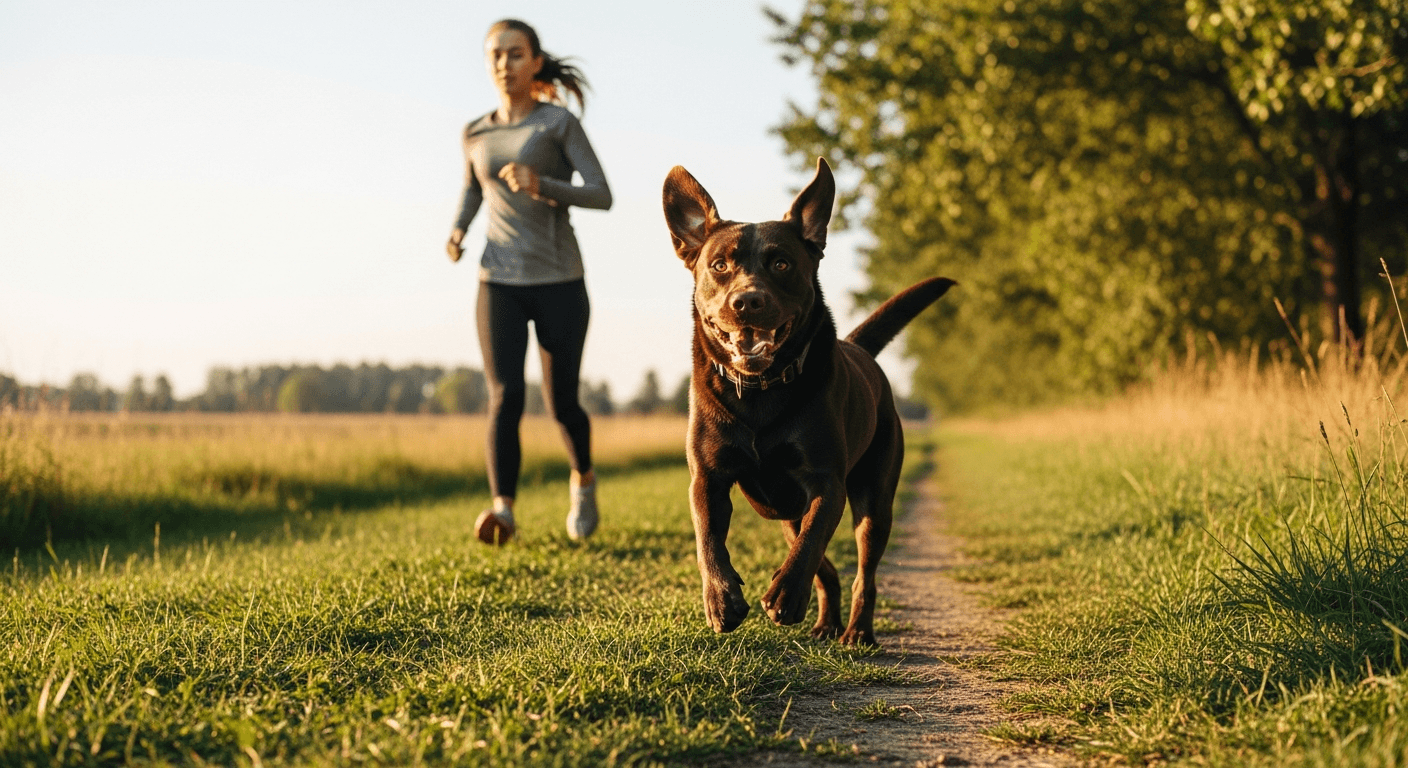
Wait for your veterinarian to assess whether your Lab is mature enough and comfortable enough for sustained running. Turning one does not clear a dog to jog beside you. In the meantime, use comfortable walks, sniffing time, and self-paced play. A Labrador growth chart can help you record changes in size, but it cannot tell whether the skeleton is ready for repetitive impact.
If your Lab is still intact, bring up spay or neuter timing while discussing growth. Sex, health, reproductive risks, and your ability to prevent an unplanned litter can all affect the decision. The AVMA’s spay and neuter guidance recommends discussing the timing with your veterinarian. Our guide to spay and neuter timing for Labs explains the Labrador-specific research and questions to bring.
For training, take an easy exercise somewhere slightly different. Practice a short stay in the yard before trying it across a busy park. If your Lab cannot look away from another dog, put more space between you before offering the cue again. Our complete Labrador training guide has exercises you can adapt to your puppy’s current skill level.
The 12-Month Vet Visit: What to Book
Bring your dog’s vaccine record, food label, and a few dated weights. Describe the activity you have in mind. A regular three-mile road run and a walk with time to sniff are different requests. Ask the vet whether your dog’s growth, gait, body condition, and exercise history support starting a running program. Your vet can decide whether your dog needs further assessment.
A video from an ordinary walk can help if your dog sometimes favors one leg at home but moves normally in the exam room. Mention recurring ear trouble, changes in appetite, and questions about vaccines or neutering. The Labrador puppy health guide can help you organize the details before you go.
Frequently Asked Questions
Is a 1-year-old Labrador still a puppy?
A first-birthday Lab is a young dog that may still be developing physically and behaviorally. Some are close to adult height and still filling out. You might see good manners at home and puppy-like excitement in new places. Keep using the supports that work for your dog, especially around traffic and unfamiliar dogs.
How much should a 10 month old Labrador weigh?
The chart estimates 55–70 lb for male Labs and 50–60 lb for females at ten months. Being outside that range does not by itself mean your dog needs more or less food. Put dated weights beside a body-condition assessment and ask your vet to evaluate the pattern, especially if your dog loses weight or gains rapidly.
When should I switch my Labrador to adult food?
Keep feeding a complete large-breed puppy food while your Lab needs growth nutrition. Ask your veterinarian when its growth and body condition suggest moving to adult maintenance. When you have a suitable adult food and a daily amount, introduce it gradually and monitor appetite and stools.
When can I start running with my Labrador?
Begin planned running once your veterinarian considers your individual dog mature enough and healthy enough for it. When you have the go-ahead, introduce brief easy stretches within familiar walks and allow recovery between outings. Adjust to your dog’s response. Skip further runs and contact the vet if you notice pain, limping, or stiffness.
Do Labradors calm down after being neutered?
Neutering can influence some hormone-related behaviors, but it is an unreliable way to change how a dog greets people, responds to cues, or settles in the house. Explain the particular behavior you want help with when discussing surgery. Pulling toward another dog on a walk, for example, still needs practice and management.
What should a Labrador know by its first birthday?
Everyday skills matter most. Practice walking on a loose leash, coming when called in a secure space, settling on a mat, and resting while you step away. If a skill works in the kitchen but disappears in the yard, practice outside at a shorter distance. There is no first-birthday test your dog needs to pass.
When is a Labrador fully grown?
Some Labs approach adult height around a year and keep filling out afterward. Growth rate, body condition, and exercise history matter when deciding whether to start a new activity or change foods. An adult-looking body and a calm afternoon at home cannot establish skeletal maturity. Your veterinarian can help you interpret your dog’s progress.
Before the first-birthday checkup, write down your dog’s current food, a recent weight, and one activity you’d like to try together. In the meantime, keep walks comfortable and practice on a long line when you need it. If your vet clears your dog to run, the AKC’s guide to running with your dog explains how to begin with walk-and-jog intervals.