Knowing when to switch labrador to adult food is one of the most important timing decisions in your Lab’s first year — and the answer for most Labs is between 12 and 15 months. Labs are a large breed and continue developing bone and muscle well past the 12-month mark — switching to adult food too early can interfere with that process. Here’s how to know when your Lab is ready, and how to make the change without digestive issues.
When Are Labradors Fully Grown? Understanding the Transition Window
Most Labs reach their adult height by 9–11 months but continue to fill out — building muscle mass and bone density — until 12–18 months. Growth plates in large breeds typically close between 12 and 15 months, sometimes later in stockier, heavier-framed dogs.
This is why the labrador transition to adult food timing matters. Large-breed puppy formulas are specifically designed with controlled calcium and phosphorus ratios to support healthy bone development without pushing growth too fast. Switching to adult food before the growth phase ends removes that nutritional protection.
The general guideline: 12 months is the minimum; 15 months is a safer target for Labs with a larger frame. English (show-line) Labs tend to be stockier than American field-line Labs and often benefit from staying on puppy formula until 15 months. According to the American Kennel Club, large and giant breeds should transition to adult food later than small breeds to protect skeletal development.
If you’re uncertain, ask your vet to assess development at the 12-month check-up. It’s not routine, but it gives you a clear green light. For what the months just before the switch look like, see our 10-month-old Labrador guide.
Signs Your Lab Is Ready for Adult Food

Age is the primary indicator, but a few physical signs confirm readiness for the labrador adult food switch.
The “gangly” puppy look has settled. The dog’s body appears proportionate — chest deepened, ribs no longer prominent, legs no longer looking too long for the body. When you place your hands on both sides of your Lab’s rib cage, the dog should feel solid and even, not narrow or thin.
Weight has been stable for 4–6 weeks. Rapid week-on-week gains have stopped. If your Lab is still visibly growing, wait.
Switching slightly late — at 15 months — is safer than switching early. Puppy food is not harmful to a 14-month-old Lab. It is simply higher in calories and calcium than needed once growth is complete, which slightly raises the risk of weight gain if portions are not adjusted.
The 7-Day Transition Method
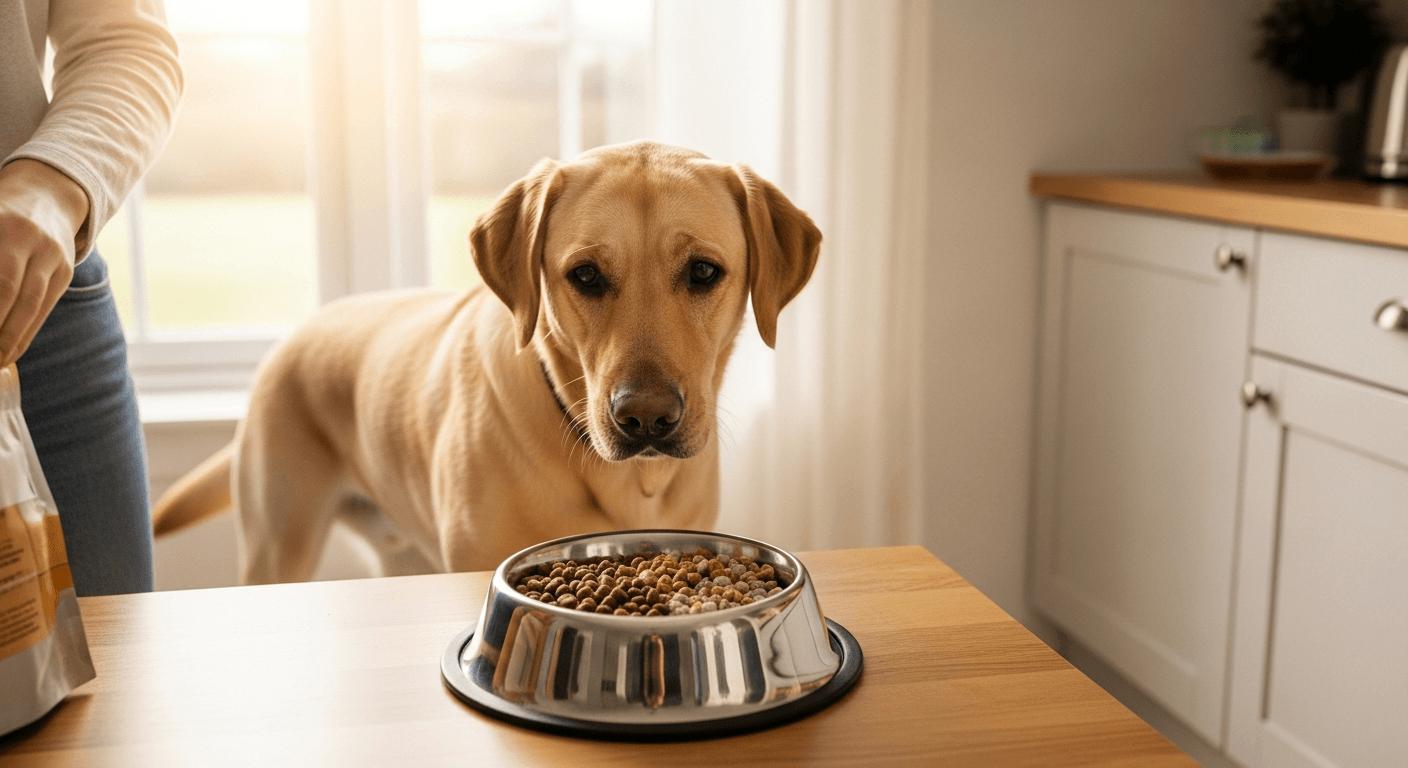
Switching food abruptly causes digestive upset in most dogs — loose stools, gas, and occasionally vomiting. The gut microbiome is adapted to the current food, and a sudden change overwhelms it. A 7-day mix schedule prevents this.
| Days | Puppy Food | Adult Food |
|---|---|---|
| 1–2 | 75% | 25% |
| 3–4 | 50% | 50% |
| 5–6 | 25% | 75% |
| 7+ | 0% | 100% |
If your Lab shows loose stools at any stage, slow down. Spend two extra days at the current ratio before moving forward. If the dog refuses the new food, check palatability — some dogs are texture-sensitive, and switching from soft to hard kibble (or vice versa) may need a longer adjustment window.
There is no need to stretch the transition beyond two weeks under normal circumstances. Seven days is enough for most Labs.
Best Adult Foods to Switch To
Choosing the right formula matters as much as knowing when to switch labrador to adult food.
Purina Pro Plan Adult Large Breed Chicken & Rice is backed by AAFCO-compliant feeding trials and consistently appears on lists of recommended foods from veterinary nutritionists. It has solid protein content with manageable caloric density for Labs prone to weight gain.
Royal Canin Labrador Retriever Adult is a breed-specific formula designed for the Lab’s jaw structure, tendency toward obesity, and joint health requirements. It costs more but is purpose-built for this breed.
Hill’s Science Diet Adult Large Breed is a reliable all-rounder with slightly lower caloric density than Pro Plan — a good choice for Labs that gain weight easily.
One important caution: avoid grain-free adult diets for Labs without a diagnosed grain allergy. The FDA’s investigation into dilated cardiomyopathy (DCM) flagged grain-free diets specifically, and Labradors were among the breeds most represented in the affected population. We do not recommend grain-free without a vet-diagnosed reason. All three brands above are grain-inclusive.
For ongoing portion guidance at every life stage, see our Labrador feeding guide.
Large-Breed Considerations After the Switch
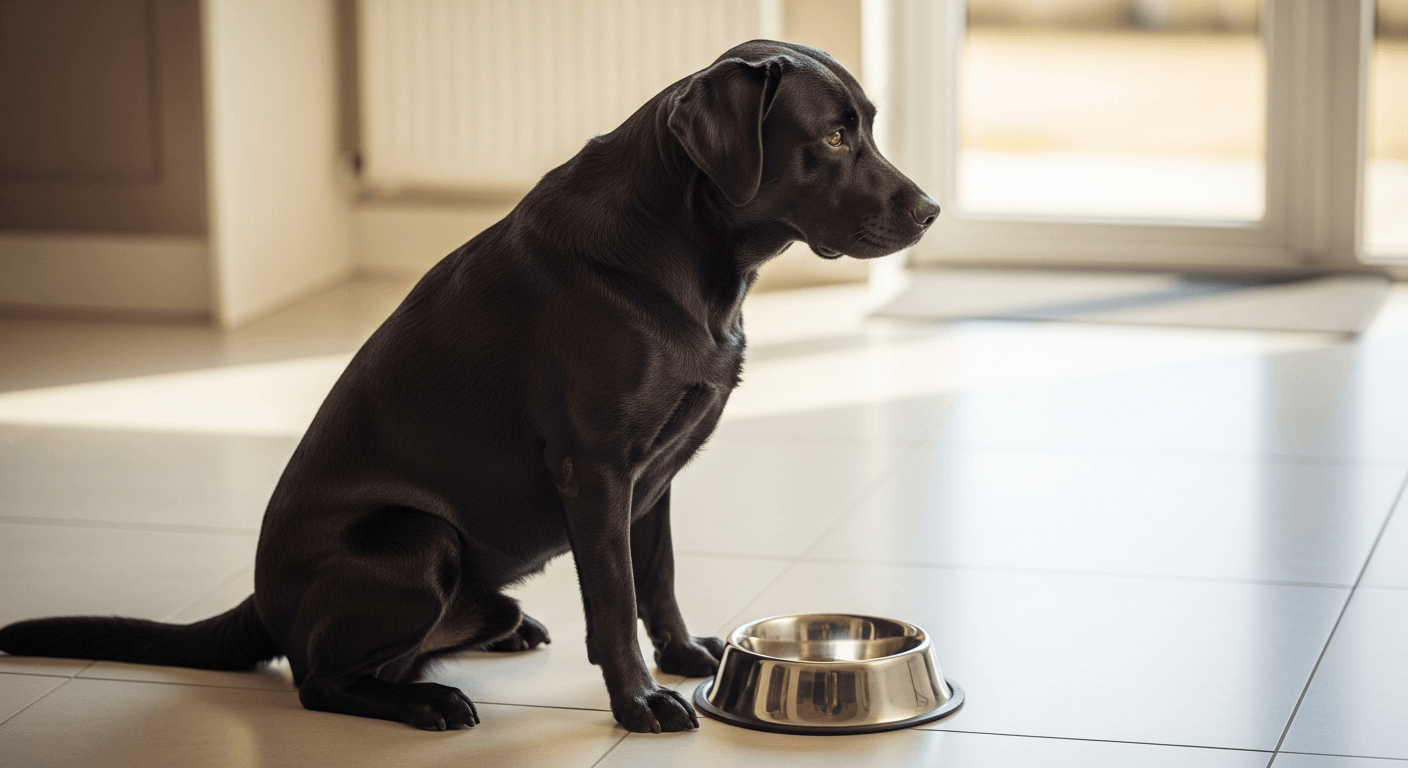
Not all adult dog foods suit Labs equally. A large-breed adult formula — not a standard adult or small-breed formula — is the right choice after the transition.
Labs are prone to joint stress from weight gain throughout adulthood. A large-breed adult formula with controlled caloric density and added glucosamine and chondroitin supports joint health over time. Standard adult formulas are calorie-dense and not designed for a breed predisposed to obesity.
After neutering or spaying, caloric needs drop by roughly 15–25%. A weight-management or lower-calorie adult formula may be more appropriate post-surgery. Discuss this with your vet at the time of the procedure.
For joint health information relevant to adult Labs, see our guide to Labrador hip dysplasia.
The First 8 Weeks on Adult Food: What to Watch
The switch isn’t finished when the last puppy kibble disappears. The first 6 to 8 weeks on adult food are the monitoring window — this is when feeding problems show up, and when they’re easiest to correct.
Check body condition every 2 weeks. Many Labs gain weight right after the switch — the food changed, but the portions and the 12-to-15-month drop in activity didn’t get accounted for. Ribs should stay easy to feel under light pressure. If they’re disappearing, cut portions by 10 percent.
Watch the stool, the coat, and the ears. Loose stool beyond the first week suggests the transition moved too fast — step back to a 75/25 old-to-new mix for a few days and hold it until stools firm up. One or two soft days at the start are normal; a week of them is a signal. A coat that turns dull or itchy over several weeks, or recurring ear infections, can point to a food sensitivity worth raising with your vet before trying a different protein.
If all three look good at the 8-week mark, you’re set — this food carries your Lab to roughly age 7, when senior feeding adjustments become the next change worth planning for.
The switch is also the moment to re-baseline the extras. Training treats and food-stuffed toys sized for a hungry adolescent are oversized next to an adult ration — keep extras under 10 percent of daily calories from day one on the new food. Between measured meals and capped treats, the post-switch weight-gain window mostly takes care of itself.
Frequently Asked Questions About Switching Labrador to Adult Food
When should I switch my Labrador to adult food?
Switch your Labrador to adult food between 12 and 15 months. Twelve months is the minimum for large breeds; 15 months is safer for stockier or heavier-framed Labs. Switching before growth plates close can disrupt bone development. Ask your vet at the 12-month check-up if you’re unsure.
What happens if I switch my Lab to adult food too early?
Switching to adult food before growth plates close removes the controlled calcium-phosphorus balance in large-breed puppy formulas. This can allow too-fast bone growth, which increases the risk of developmental orthopedic problems. Staying on puppy food until 12–15 months protects skeletal development.
How do I transition my Labrador to adult food without stomach upset?
Use a 7-day gradual mix: start at 75% puppy food / 25% adult food and increase the adult ratio every two days until you reach 100% adult on day 7. If loose stools appear, slow down and hold the current ratio for two extra days. An abrupt switch is the most common cause of digestive upset.
Can I keep my Labrador on puppy food past 15 months?
Puppy food will not harm a 15-month-old Lab, but it is higher in calories and calcium than an adult dog needs. Keeping a Lab on puppy food past 15 months increases the risk of weight gain. Switch to a large-breed adult formula by 15 months at the latest.
Is grain-free food safe for Labradors?
We do not recommend grain-free diets for Labs without a diagnosed grain allergy. The FDA’s investigation into dilated cardiomyopathy flagged grain-free diets, with Labradors among the most represented breeds. Choose grain-inclusive large-breed adult formulas unless your vet advises otherwise.
For a broader look at how all of this fits together, see our Labrador health guide.
Twelve to fifteen months, graduated over 7 days, large-breed adult formula — that covers the switch. The most common mistakes are switching too early or doing it abruptly. Both are easy to avoid. For ongoing portion sizes at every life stage, including how much to feed an adult Lab by weight, see our Labrador feeding guide.