
Senior Labrador care should follow the individual dog’s health, mobility and changing needs rather than a calculation that a particular birthday has used up a fixed share of life. Our lifespan guide explains why population figures cannot predict one dog’s remaining years. Start discussing an aging-care plan before problems become difficult to manage.
The gray muzzle appears. The stairs take longer. The morning stiffness that used to clear in five minutes now lingers. This guide covers what is changing physiologically after 7, how to adjust nutrition and exercise, and what the evidence actually shows for supplements.

When Does Senior Labrador Care Begin? Age & Physiology
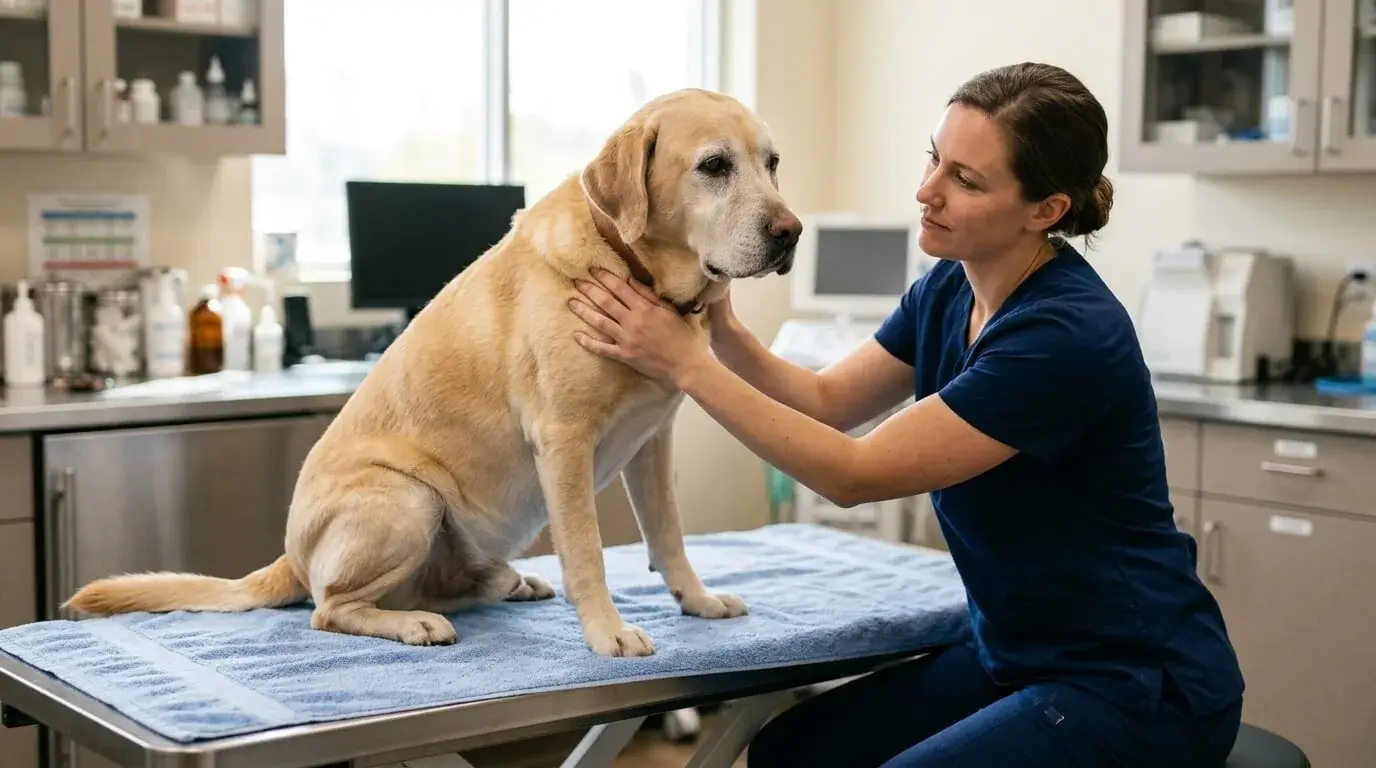
Senior Labrador care adjustments should begin at around 7 years. “Senior” is a management category, not a health verdict — a well-maintained 8-year Lab can have the energy and mobility of a younger dog. The label matters because it signals when to start adjusting veterinary monitoring, nutrition, and exercise before problems compound.
Three physiological changes are especially significant for Labradors specifically:
- Weight and appetite changes. Track the individual dog rather than assuming every Labrador carries a POMC variant or needs fewer calories at a particular age.
- Sarcopenia (muscle loss). Labs carry a naturally higher muscle mass baseline from their working heritage — which means early decline can be subtle and easy to miss visually. Maintained protein intake and continued exercise are the primary tools for slowing it.
- Joint wear and cognitive changes. Cartilage degeneration accumulates across a lifetime of activity. Cognitive function may begin to shift in some dogs after age 10.
Individual variation is significant. Annual wellness checks from age 7 — ideally twice-yearly from age 8–9 — are the best tool for catching these changes before they become management problems.
Senior Labrador Health Issues: What to Watch For
Osteoarthritis is the most common condition in senior Labs. Signs include stiffness after rest, reluctance to jump or climb stairs, weight-shifting between legs, and licking at joints. Arthritis is manageable but not reversible — veterinary guidance consistently supports early intervention as the most effective way to slow progression and preserve mobility.
Hypothyroidism is common in middle-aged and senior Labs — Labrador Retrievers are among the breeds with documented higher predisposition. The thyroid underproduces hormone, and the signs are easy to miss: gradual weight gain despite no dietary change, low energy, a dry or dull coat, and intolerance to cold. A blood panel confirms the diagnosis. Daily levothyroxine is inexpensive and typically effective.
Cognitive or sleep changes can include disorientation, altered interactions, night waking or new house-training problems. These signs can also reflect pain, sensory changes or other illness, so ask your vet for assessment. An appropriate routine, enrichment, diet or medication may be discussed after that review; do not diagnose cognitive dysfunction or start a supplement dose from an online checklist.
New lumps or other possible cancer signs need veterinary assessment. A mast cell tumor’s grade, stage, location and surgical margins are different pieces of information, and a generic grade I/II description cannot establish a greater-than-ninety-percent cure rate. Ask the clinician what diagnosis is confirmed, whether sampling or staging is needed and what the options mean for this individual dog.
From age 7–8, request a senior blood panel at annual vet visits. This covers thyroid function, kidney values, liver enzymes, and a full blood count. Many conditions — including hypothyroidism and early kidney disease — are detectable on bloodwork long before clinical signs appear. For joint issues specifically, see our Labrador Hip Dysplasia guide.
Best Food for a Senior Labrador: Nutrition That Supports Aging
The AAHA senior nutrition guidance emphasizes an individual assessment. Track body condition, muscle condition, weight and appetite; do not automatically cut calories by twenty to twenty-five percent because the dog is older. Some dogs need less energy, while weight loss or illness may require a different approach. Bring the actual food and treat amounts to the appointment.
Protein and energy needs should be assessed within the dog’s complete diet and medical history. Age alone is not a reason to restrict protein, but disease can affect the appropriate formulation. Ask your vet to review muscle condition and any prescription diet rather than assuming every senior needs either less protein or the same increase.
For senior Labrador care, a senior label is not a single nutritional standard or proof that a product fits this dog. Ask about calorie content, nutritional adequacy, manufacturer expertise and any medical restrictions. Discuss whether the current food remains suitable before changing it simply because the bag names a particular age.
- Assess the current food. Bring its label, daily amount and treat record to the appointment.
- Review body and muscle condition. Ask whether weight change reflects fat, muscle, illness or another cause.
- Choose any new diet for a reason. Discuss adequacy, calories and medical needs rather than ranking unverified age-labelled products.
Weight management is non-negotiable. Obesity accelerates joint deterioration, strains cardiovascular function, and reduces lifespan. Adjust portions to maintain a body condition score where ribs are palpable with light pressure but not visible. For full portion guidance by life stage, see our Labrador feeding guide.
Supplements for Senior Labradors: What the Evidence Supports
Joint supplements: do not assume glucosamine or chondroitin prevents degeneration or provides reliable pain relief. Discuss the evidence for the proposed product, interactions, cost and how to judge benefit. A supplement should not delay assessment of stiffness or replace prescribed pain management and an appropriate activity plan.
Omega-3 products: your vet may discuss a suitable diet or supplement for a specific goal. The relevant amount is not simply the total milligrams of fish oil printed on the bottle, and suitability depends on the dog and other treatments. Avoid copying a universal dose; record the exact product and ask how it should be monitored.
Cognitive and liver-support products: some diets or supplements may have a role in selected patients, but they are not automatic additions for every older dog. Denamarin is not routinely required merely because a dog takes an NSAID. Ask the prescribing veterinarian about the monitoring plan, any abnormal results and the specific reason for a proposed supplement.
Avoid high-dose vitamin supplements without veterinary direction and treat generic “senior multi” products with skepticism unless the formulation is backed by published evidence. More is not better with fat-soluble vitamins.
Exercise for Senior Labradors: Keeping Active Without Causing Pain
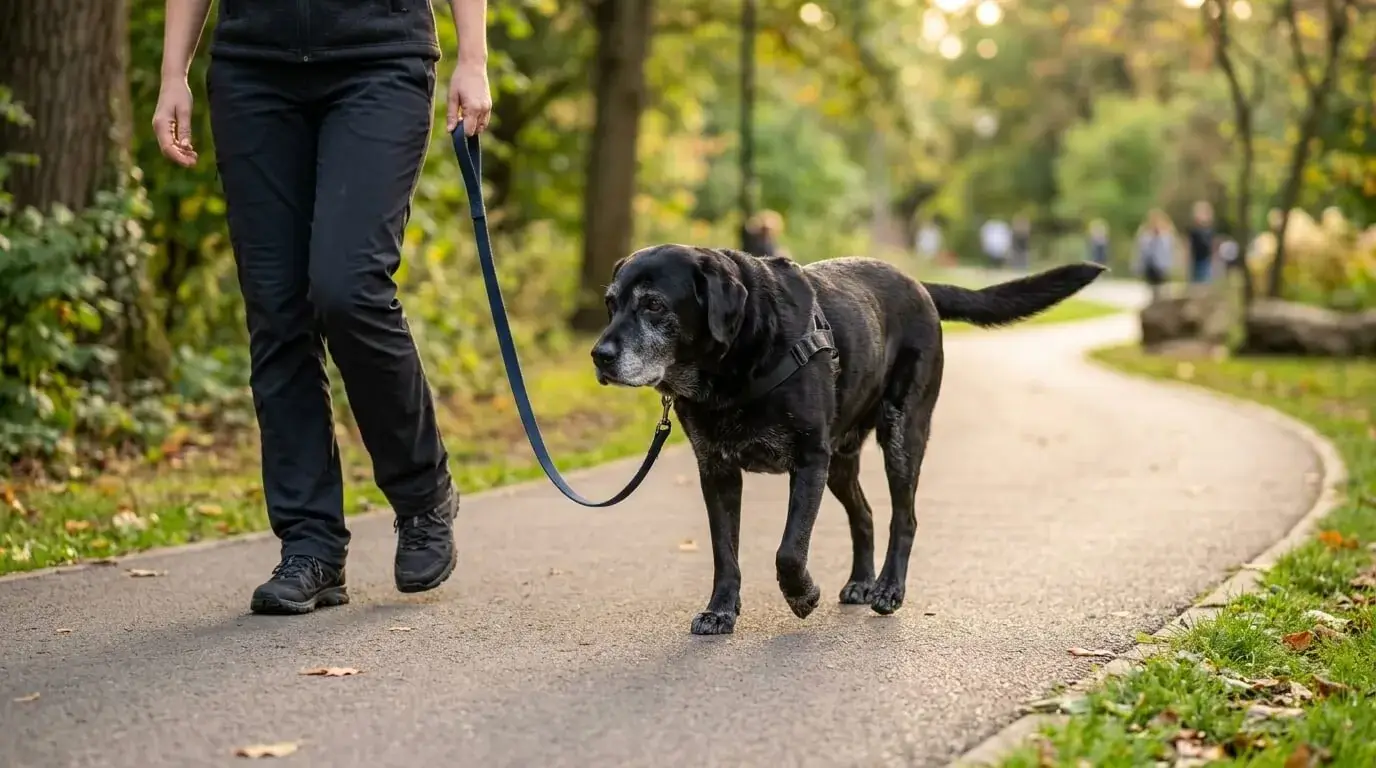
Continued movement is essential in senior Labrador care. A sedentary lifestyle accelerates muscle loss, worsens joint stiffness, and contributes to weight gain — all of which compound each other. The goal is not less exercise but adjusted exercise: lower impact, appropriate duration, and better recovery monitoring.
Reduce or eliminate high-impact activities: ball throwing, jumping, fetch on hard surfaces, and repetitive stair use all place significant stress on joints that already have reduced cartilage.
Choose comfortable, lower-impact activity with your vet or rehabilitation professional. Walking, gentle sniffing and adapted training can be useful; swimming is not automatically the best option for every arthritic or medically affected dog. Check safe access, supervision and recovery. The dog’s enthusiasm alone is not proof that an activity is appropriate.
For senior Labrador care, use a mobility diary rather than a fixed twenty-minute morning-stiffness test. Record ease of rising, walking, stairs, appetite and recovery after outings. Longer stiffness may reflect pain or disease as well as an activity mismatch. Ask the vet how to adjust the plan and which changes need a prompt review.
An orthopedic dog bed, a car ramp, and a cooling mat for post-exercise rest reduce daily joint stress — all available through Chewy in sizes appropriate for Labs.
Quality of Life & End-of-Life Considerations
Assessing quality of life requires a consistent framework. The core questions: Is the Lab having more good days than bad? Is eating, drinking, and maintaining weight continuing normally? Does the Lab show interest in social interaction and familiar activities? Is pain being adequately controlled?
Pain may show as altered movement, sleep, interactions or interest in familiar activities, even without crying or obvious limping. Do not assume a Labrador’s willingness to play excludes discomfort. Ask the vet to review the whole plan when function worsens; adding a particular medicine, acupuncture or another treatment requires an individual discussion of likely benefit and risk.
Palliative care centers on maximizing comfort: soft orthopedic bedding, water and food accessible without navigating stairs, and consistent human social contact. Maintained routine supports stable function; isolation and inactivity compound decline.
The question of euthanasia is the hardest in dog ownership. The appropriate time to discuss it with a veterinarian is when a Lab is consistently having more bad days than good, when pain cannot be adequately managed, or when interest in previously meaningful activities — food, walks, human contact — has largely disappeared. Initiating that conversation early, while a Lab is still comfortable, allows a planned and peaceful process rather than a crisis decision.
Senior Labrador care works best as a regularly reviewed plan: accessible rest areas, an appropriate diet, manageable activity and attention to changes. Our health guide provides wider context. Bring your diary and a full list of medicines and supplements to appointments so that recommendations fit the dog’s ordinary day.
Frequently Asked Questions
When does senior Labrador care become necessary?
Discuss aging-related monitoring as your dog gets older, often around the later adult years, and adapt it to health and function. Seven is not a universal disease boundary or a requirement to change every diet. Ask your vet about examination frequency, screening and the signs that should prompt an earlier visit.
What should I feed a senior Labrador?
Choose a complete diet suited to the dog’s body and muscle condition, medical needs and calorie requirement. A senior label alone does not establish suitability. Do not automatically cut calories or protein because of age; review the actual ration, treats and any weight change with your veterinarian.
What supplements help senior Labradors?
Supplements should be chosen for a specific goal with veterinary advice, with their evidence and limitations explained. Joint or cognitive products do not replace diagnosis or pain management. Denamarin is not automatically required for long-term NSAID treatment; ask the prescribing vet about monitoring and any individual reason to use it.
How much exercise does a senior Labrador need?
Use regular, comfortable activity adapted to health, mobility and recovery, with rest and safe footing. There is no universal number of walks or twenty-minute stiffness test. Record changes in function and discuss an individualized activity or rehabilitation plan with your vet.
How do I know when my senior Lab is in pain?
Labs are stoic and often do not limp or vocalize pain. Watch instead for behavioral changes: reluctance to rise, reduced interest in walks, stiffness after rest, weight-shifting between legs, or licking at joints. Undertreated chronic pain is common in senior Labs — discuss a comprehensive pain management plan with a vet if any of these signs appear consistently.