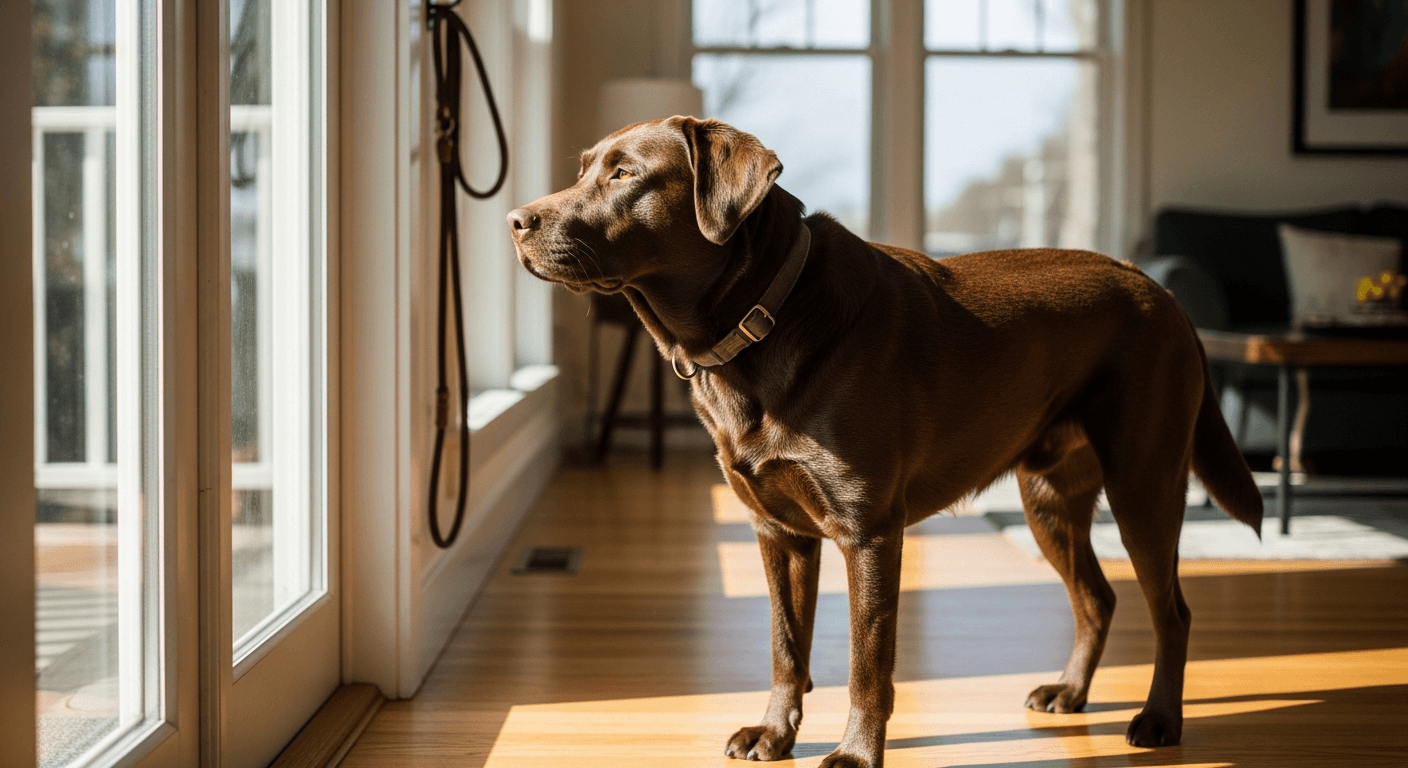
Labrador separation anxiety looks like bad behavior — shredded cushions, scratched door frames, excessive barking and howling through the neighbor’s wall — but it is a panic response, not defiance. Labs were bred to work in constant partnership with humans, which makes isolation genuinely difficult for many individuals. Understanding whether a Lab has true separation anxiety versus normal adjustment distress is where effective treatment starts, and this post gives owners the tools to tell the difference.
Labrador separation anxiety describes distress associated with separation from an attachment figure. Damage, barking or accidents can have other causes, so the pattern needs assessment rather than a diagnosis from the mess alone. Record what happens before and during an absence, discuss it with your veterinarian and build a plan around the individual dog’s comfort. There is no reliable four-to-eight-week recovery promise.
Why Labradors Are Prone to Separation Anxiety
Labradors were selectively bred as retriever gun dogs from the early 19th century — originating in Newfoundland and later refined in England to retrieve game from water and field in close proximity to hunters. This history created dogs that actively seek human contact and stay highly attuned to human cues. According to the AKC, this bond with people is the breed’s most defining characteristic — and the same quality that makes isolation genuinely difficult for many individuals.
A food-motivation gene finding does not establish a cause of labrador separation anxiety. Attachment and distress cannot be diagnosed from an assumed POMC status. Focus on the individual dog’s history, behavior during absences and health, rather than attributing the problem to one breed gene.
Changes in household routine, rehoming or a difficult history may be relevant to a Labrador separation anxiety assessment, but none establishes the diagnosis alone. Comfortable alone-time practice can be part of early care. Our socialization guide explains positive experiences without promising that they prevent every later anxiety problem.
Do not compare the dog against stereotypes of more independent breeds. A Labrador that struggles with absence needs an individual plan, while another may rest comfortably. Record the conditions under which the dog can settle, including who is present, the room used and whether confinement itself is upsetting.
Tell your veterinarian about fear in other settings, handling sensitivity, pain, sleep changes and any previous treatment. A fixed number of minutes of puppy crying cannot predict an adult diagnosis. Video and a careful history help distinguish discomfort, ordinary needs and clinically significant distress.
Punishment does not address the cause of Labrador separation anxiety and may add fear. Do not return to damage and punish the dog afterward. Arrange a safe setup, seek help for distress and plan manageable practice rather than treating panic as a test of obedience.
Signs of Labrador Separation Anxiety in Dogs
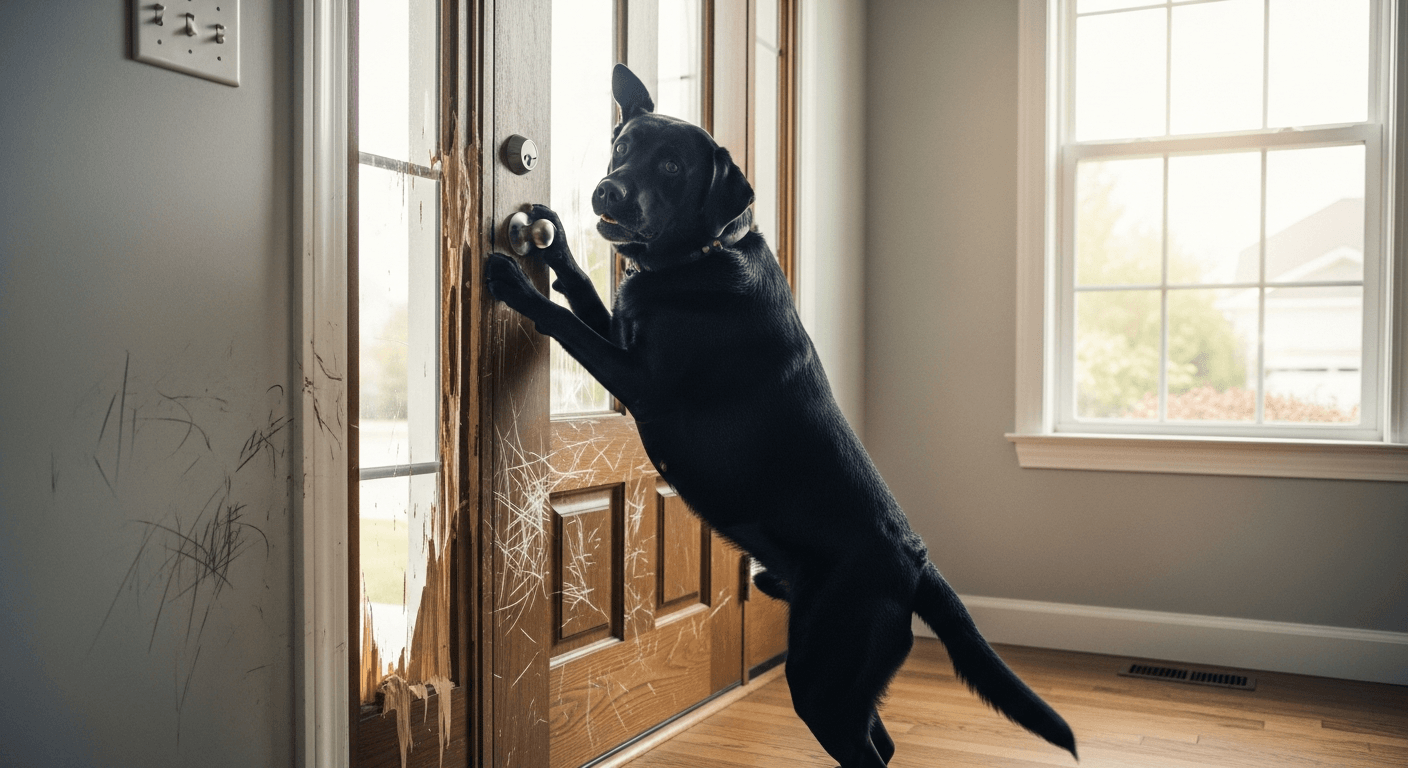
The critical distinction is the trigger: does the behavior happen only when the dog is alone?
Signs to record: note pacing, vocalization, escape attempts, elimination and changes in eating or resting during an absence. These observations are useful to a clinician, but no single sign is specific enough to establish separation anxiety. Record the context and timing rather than assuming Labrador damage must be more intense than another breed’s.
- Destructive behavior, including damage near exits; record where and when it occurs without assuming a breed-specific cause.
- Vocalization (barking, howling, whining) that begins within minutes of departure and sustains
- Pacing or circling, inability to settle
- Indoor elimination despite the dog being reliably house-trained
- Changes in eating or drinking during absence; report these alongside the rest of the behavior and medical history.
- Self-directed licking or chewing; seek assessment for injury, skin disease, pain or distress.
Compare situations: note whether the behavior occurs with you present, only when one particular person leaves, or during any confinement. Chewing at home is not automatically boredom, and absence-related damage is not automatically separation anxiety. Health, learning, the environment and ordinary care needs all belong in the assessment; harder exercise is not a diagnostic test.
Use a camera for Labrador separation anxiety: film from before departure where practical and note the earliest signs of discomfort as well as whether the dog settles. Do not deliberately leave a distressed dog for twenty or thirty minutes to meet a test threshold. Share representative clips with your vet; camera footage supports an assessment rather than replacing it.
Timing varies. Some dogs become distressed before departure cues are complete, while others struggle later or with particular situations. Note changes from quiet resting to scanning, pacing, vocalizing or escape attempts. The earliest subtle signs help your professional choose an easier starting point for practice.
A newly arrived puppy or adult may need support immediately. Do not wait three weeks to classify distress as real. Arrange potty opportunities, companionship and a safe resting space while you learn the dog’s needs. Pain, repeated panic, self-injury or inability to settle warrants prompt veterinary advice.
Mild vs Severe Labrador Separation Anxiety: Knowing Where Your Lab Falls
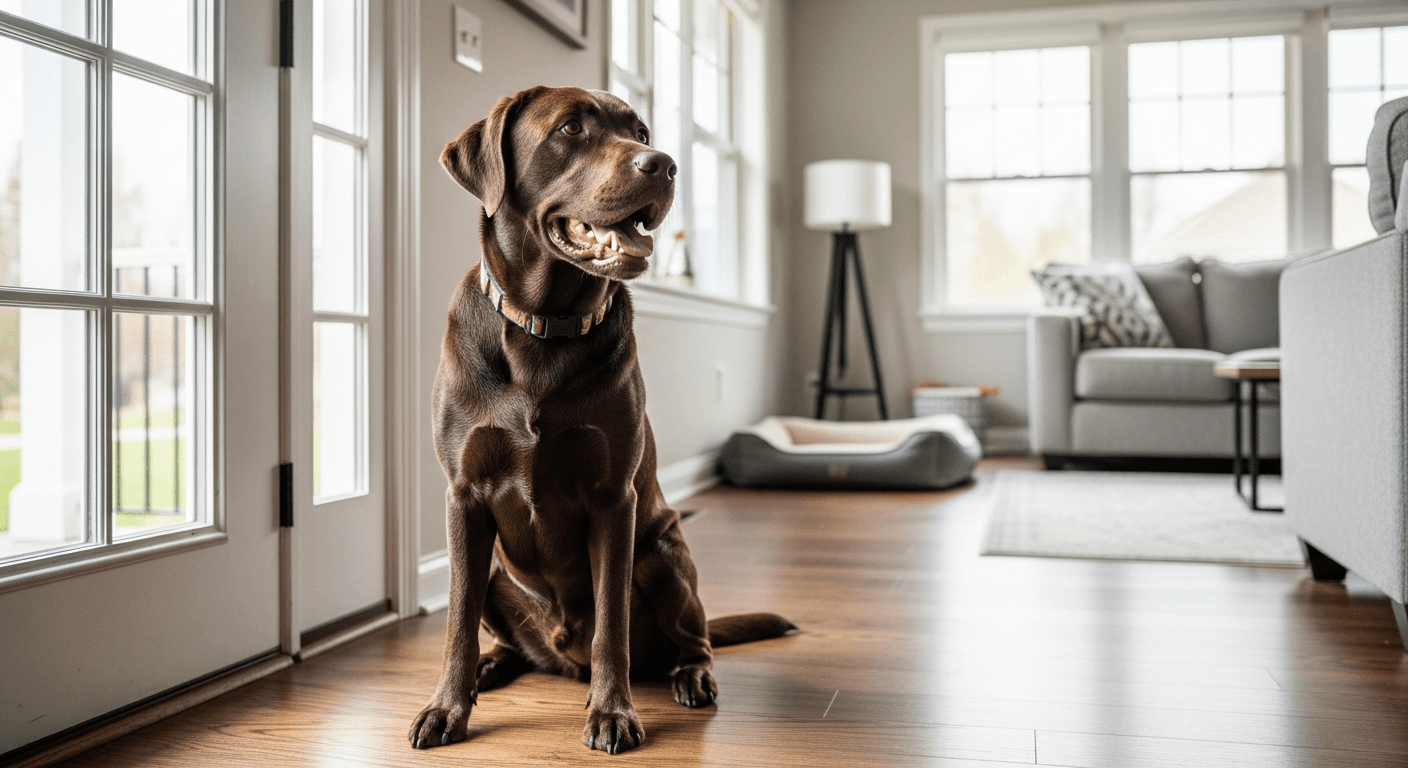
Assess the effect on the individual dog, rather than assuming most Labrador separation anxiety cases are mild. Veterinary input is useful when distress interferes with resting, eating, safe confinement or daily care. The support required can change as you learn more from video and the medical history.
Brief or less intense signs: a dog that settles after a departure may still need a more comfortable starting point. Panting, pacing or vocalizing should be interpreted in context, including temperature and health. Do not use a ten-to-twenty-minute cutoff as proof that the dog is coping comfortably or that training alone will be enough.
Persistent distress: repeated pacing, vocalizing, escape attempts or inability to rest calls for professional assessment. A dog that will not engage with food may not be comfortable enough for a food-toy exercise. Supplements cannot be promised to speed recovery; discuss any proposed product with your veterinarian alongside the behavior plan.
Self-injury or escape risk: contact a veterinarian promptly and arrange a safer, supported setup. Do not force a panicking dog into a crate. Our apartment guide covers practical space planning, but a small room alone does not treat distress. Medication may be appropriate as part of a clinician-led behavior plan, without being either compulsory or a substitute for management.
Severity is judged from welfare, safety and function, not a breed-wide assumption about how common mild or severe cases are. Tell your professional what you can realistically manage during work, travel and emergencies so that the plan includes care arrangements as well as practice sessions.
How to Treat Labrador Separation Anxiety: Desensitization & Graduated Departure Training
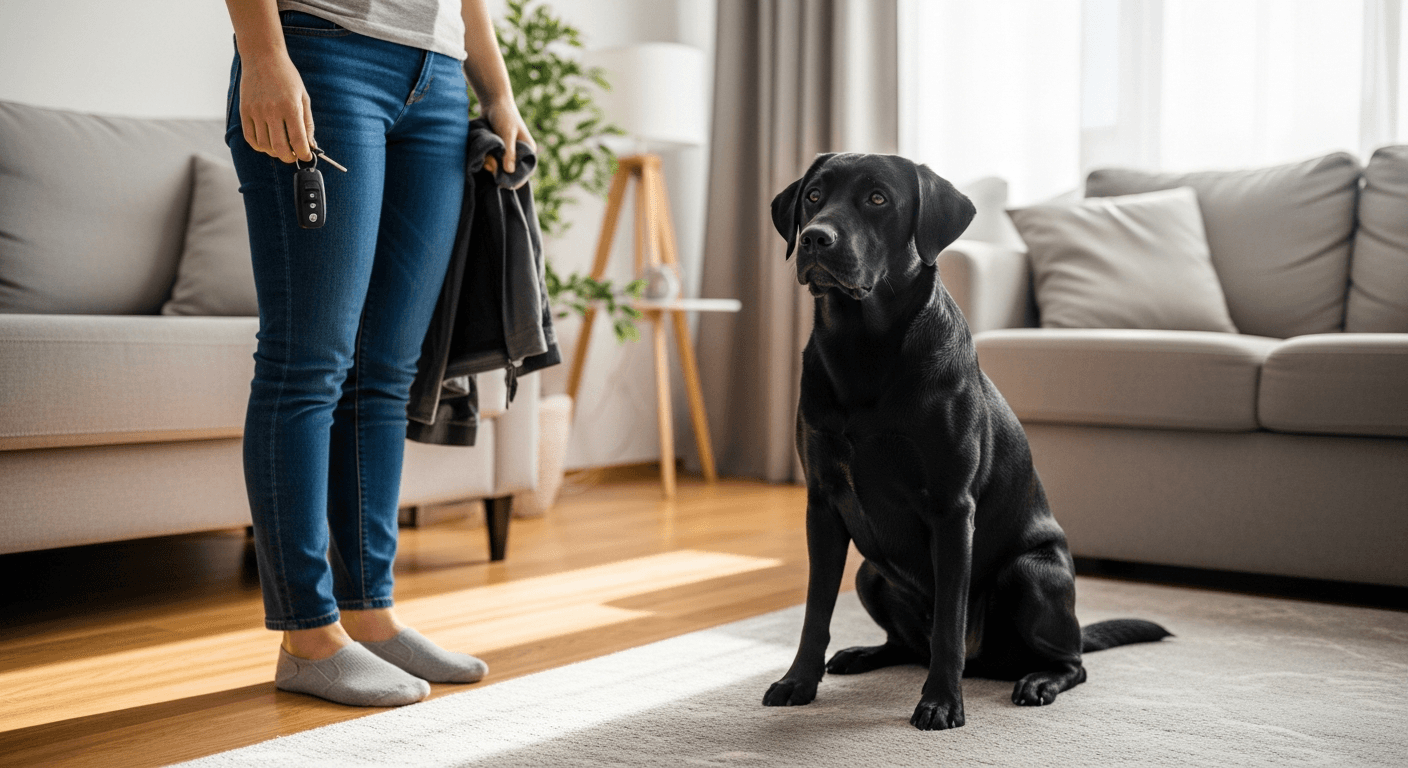
For labrador separation anxiety, graduated practice should begin at a level the dog can manage comfortably. Work with a qualified professional to identify early stress signs and choose the starting step. That might involve a departure cue or an absence shorter than a few seconds. Avoid using a preset five-minute threshold for a dog whose discomfort begins sooner.
Pre-departure desensitization: Many Labs with separation anxiety begin to panic before the owner even leaves the house — because they have learned the pre-departure cues. Picking up keys, putting on shoes, picking up a bag each triggers the anticipatory anxiety spiral. Break these associations by practicing the cues without departing:
- Pick up keys, set them down, sit back on the sofa.
- Put on coat, take it off, make a cup of tea.
- Pick up bag, walk to door, turn around and sit down.
During Labrador separation anxiety work, practice departure cues only at an intensity the dog can manage, without repeatedly provoking distress. Video can show whether the exercise is becoming easier. If the dog becomes more worried as keys or shoes appear, simplify the task and review the plan with the professional rather than increasing repetitions to force habituation.
The graduated departure protocol:
- Walk to the front door and return to the room — no departure. Repeat until the dog stays calm.
- Choose the first departure step with professional guidance; it may be shorter or simpler than stepping outside for five seconds.
- Increase difficulty only while the dog remains comfortable; fixed fifteen- or thirty-second increments do not fit every dog.
- If the dog shows anxiety at any duration — panting, whining, pawing at the door — return to the previous successful duration and hold there for several more sessions before extending again.
- Build over days and weeks toward the target departure length.
A suitably sized food toy discussed for Labrador separation anxiety may be useful for a dog that can eat and relax safely, but it is not a guaranteed departure anchor or treatment for panic. Supervise initial use and count food in the ration. If the dog abandons food as you leave, discuss that observation rather than assuming a more exciting filling will solve the problem.
Keep departures and returns calm, and do not punish anxious behavior. If the dog is distressed, do not stay away solely to avoid supposedly reinforcing crying. Return, restore safety and make the next exercise easier with professional guidance. Arrange support for necessary real-life absences instead of repeatedly practicing a level the dog cannot manage.
Calming Products That Help With Labrador Separation Anxiety
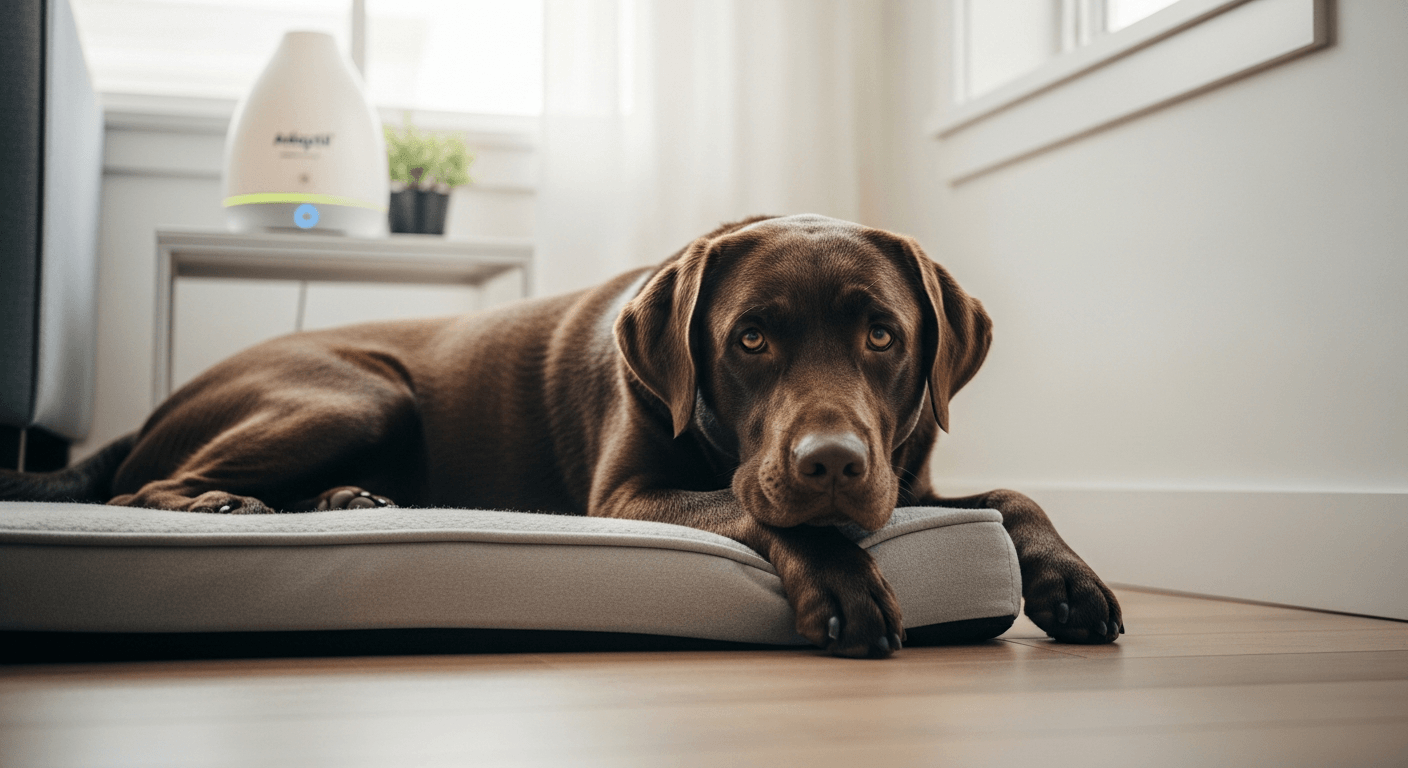
Calming products have different evidence, indications and limitations. A product that helps one dog cannot be promised to shorten treatment for every case of labrador separation anxiety. Discuss the goal, monitoring period, possible adverse effects and cost with your vet before adding several products at once.
Pheromone products: a diffuser or collar for Labrador separation anxiety may be discussed as an adjunct, but it should not replace assessment or comfortable practice. Follow product instructions and monitor the actual dog. Do not interpret the absence of visible destruction as proof that a dog is resting comfortably; video remains useful.
Alpha-casozepine products: ask your veterinarian whether there is a reasonable role for the individual dog. Being sold without a prescription does not establish effectiveness for this diagnosis or suitability alongside other treatments. Record what changes and avoid a promised seven-to-ten-day response.
L-theanine or combination chews: formulations and proposed uses differ. Review ingredients, existing medicines and medical conditions with your vet. Do not assume that a nonprescription product is free of risk or that combining several calming products produces a better outcome.
Pressure garments: some dogs tolerate them and others dislike handling or restriction. Introduce any garment gently and supervise the response. Stop if the dog seems uncomfortable. It is an optional management discussion, not a treatment with no possible adverse effects or a substitute for help with panic.
Prescription medication: clomipramine and the fluoxetine product Reconcile have FDA-approved uses for canine separation anxiety alongside behavior modification. The Merck veterinary drug table distinguishes approved indications from other veterinary prescribing. A veterinarian chooses and monitors treatment; do not give human prescriptions or alter doses yourself. The intended role is to support welfare and learning within a broader plan.
When to Consult a Vet for Labrador Separation Anxiety
Some labrador separation anxiety cases are self-manageable with the protocol above. Others require professional help — and knowing which applies to your situation saves months of ineffective self-management.
Contact your vet about Labrador separation anxiety promptly for self-injury, escape attempts, pain, major appetite changes or distress that you cannot safely manage. You do not need to wait six weeks of unsuccessful practice. Bring videos and a history of absences, care arrangements and products already tried so that the next step is based on the individual dog.
See a veterinary behaviorist (DACVB) when: the labrador separation anxiety is severe and has not responded to initial veterinary medication, the dog has shown anxiety-related aggression, or previous treatment attempts have failed. A DACVB is a veterinarian with specialist behavior qualifications — not a dog trainer. They can assess, prescribe, and manage complex cases that general practice vets refer out.
A veterinary assessment considers medical contributions as well as the behavior history. The VCA separation-anxiety guidance explains why the pattern and the dog’s ability to cope matter. Ask about appropriate professional behavior support, monitoring and what to do if the first plan is not helping. Do not wait for the condition to reach a particular duration before seeking care.
For Labrador separation anxiety cover, check insurance wording directly with the provider. Signs or symptoms that began before enrollment or during a waiting period may count as pre-existing even without a formal diagnosis. Buying a policy before the next appointment does not guarantee cover for a problem already showing signs. Do not delay care or omit the history to try to secure coverage.
For a broader look at Labrador behavior problems beyond separation anxiety, see our full guide on Labrador behavior problems. For the complete training foundation your Lab needs, see the Complete Training Guide for Labrador Retrievers.
Frequently Asked Questions: Labrador Separation Anxiety
Do Labradors get separation anxiety more than other breeds?
Labradors can develop separation anxiety, but a comparative breed ranking cannot be established from attachment stereotypes or POMC research. Assess the individual dog’s behavior and health. Distress during absence deserves help regardless of whether a breed is described as independent or people-oriented.
How do I know if my Labrador has separation anxiety or is just bored?
Use video and a detailed history to discuss the pattern with your veterinarian. Note whether the dog can settle, what triggers the change and whether similar behavior occurs with people present. There is no twenty-minute test that reliably separates boredom from anxiety, and damage alone does not establish the diagnosis.
How long does it take to treat labrador separation anxiety?
There is no dependable recovery timetable for labrador separation anxiety. Progress depends on the individual dog, health, the starting level of distress and the care arrangements available. Monitor comfort and adjust the plan with your professional rather than increasing absence lengths to meet a weekly deadline.
Should I crate my Labrador with separation anxiety?
It depends on severity. For mild cases in a dog that has been positively crate trained, a crate can provide a secure den during short absences. For moderate or severe separation anxiety, a crate can become a panic amplifier — a dog self-harming to escape a crate is worse off than one in a dog-proofed room. Film to assess: if the dog is calmer in the crate than in the open room, use it. If more distressed, switch to a dog-proofed space.
Can I leave a Labrador with separation anxiety alone all day?
Arrange care around the dog’s current ability to cope rather than testing an all-day absence. A walker’s short visit may not cover distress during the remaining hours. A suitable sitter, familiar companion or other individually appropriate arrangement can support treatment; daycare is not comfortable for every dog.
When monitoring Labrador separation anxiety, use video to judge whether your dog is becoming more comfortable, not merely quieter. Keep practice manageable and review the plan when progress stalls or welfare worsens. Professional help can be needed early; waiting for a fixed six- or eight-week milestone is not a requirement for seeking veterinary support.