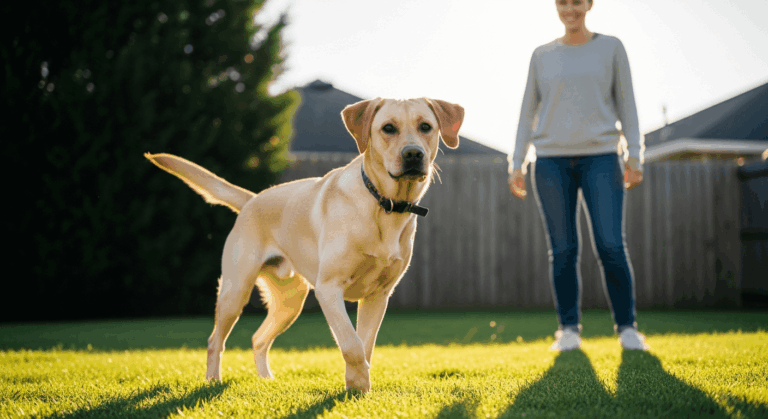
Labrador obedience training is more straightforward than most owners expect. Labs are food-motivated, people-focused, and built to work alongside a handler. The challenge is not getting them to learn — it is building each command in the right sequence, with the right timing, so the behavior holds up outside your living room.
These four commands form the practical foundation of a well-managed Lab. Sit builds impulse control before meals, at the door, and before crossing a road. Down builds the ability to settle in real situations. Stay gives you distance and duration control. Come is the most important safety command you will ever teach.
Here is how to build each one properly — with the most common mistakes that stall progress at each stage.
Quick reference: how to teach the four core commands
- Sit — Hold a treat at the dog’s nose, slide it slowly back over the head. The rear drops naturally. Mark the instant the bottom hits the floor and reward within 3 seconds.
- Down — From a sit, move the treat straight down between the front paws. Mark when both elbows and chest contact the floor.
- Stay — Say “stay” once. Build duration in 1-second increments before adding distance or distraction. Release with a word, not a recall.
- Come — Use one dedicated word, run backward, reward every single time. Never scold a recall response.
Teaching Sit: The First Labrador Obedience Command

Sit is where labrador obedience training starts for most owners — and the command most often taught incorrectly. The lure method is the most effective approach for puppies and adults.
Step by step:
- Hold a pea-sized, soft treat at the dog’s nose — close enough to smell, not to take.
- Slowly move the treat back over the top of the dog’s head. The nose follows upward, the center of gravity shifts backward, and the rear lowers naturally.
- The moment the dog’s bottom contacts the floor — mark immediately with “yes” and deliver the treat. A reward given 3 seconds after the sit teaches the dog to associate the reward with whatever happened 3 seconds after sitting, not the sit itself.
- Repeat 5–10 times per session. Once the dog is moving reliably into the sit on the lure, say “sit” once, calmly, as they begin to lower. Do not add the word before — it means nothing until the motion is already consistent.
Common mistakes:
- Saying “sit, sit, sit” multiple times. This teaches the dog to wait for the third repetition.
- Pushing the dog’s rear down. Physical pressure creates resistance and does not teach the behavior.
- Luring with a high-value treat and delivering a low-value one. Break the lure contract once and the dog stops following it.
Proofing: A sit trained in your living room is not a trained sit in the park. Proof in the yard first, then on the sidewalk, then around mild distractions. A command is not reliable until it holds consistently in at least three different environments.
Teaching Labrador Down: The Best Impulse Control Command
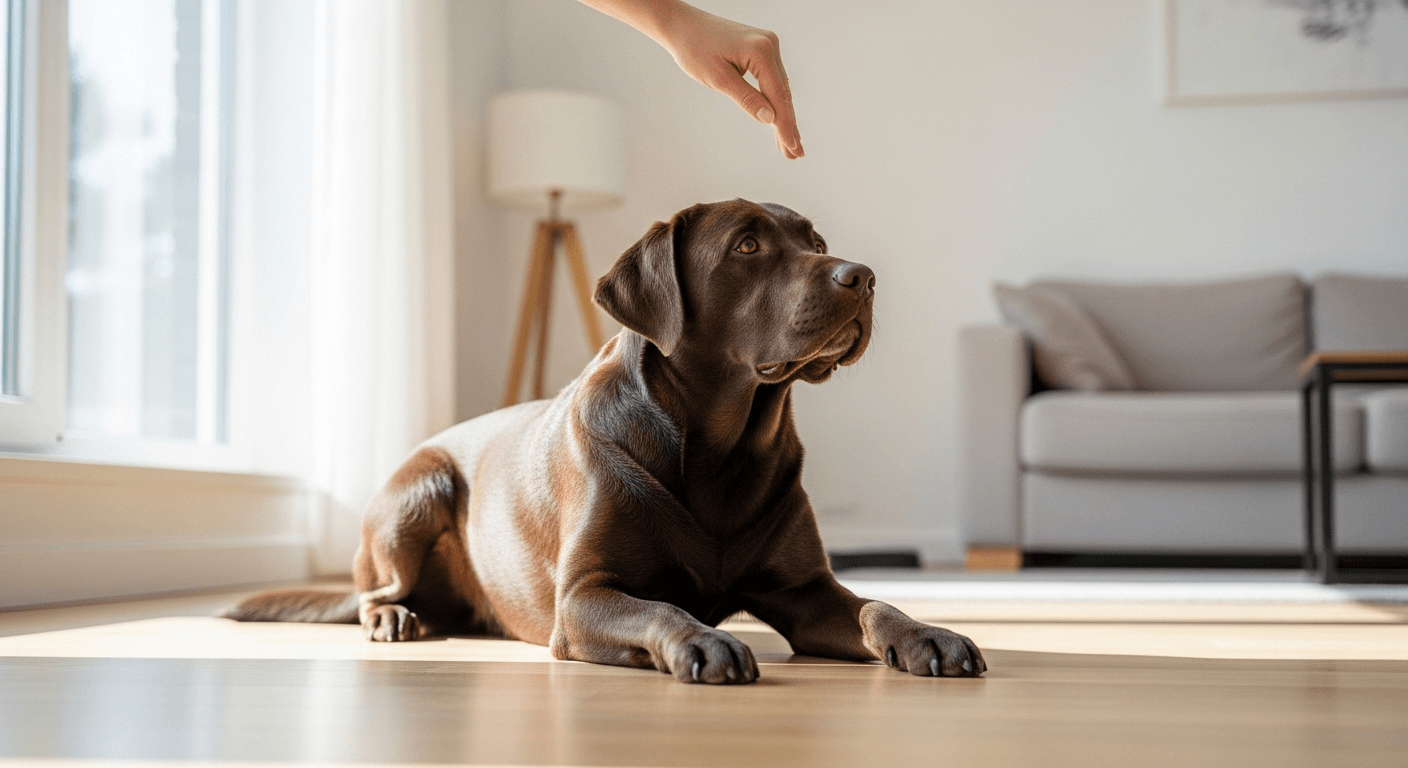
Down is harder than sit for most Labs. It requires a more vulnerable posture — chest to the floor — that some dogs resist. It is worth the extra work. A dog in a reliable down cannot jump up, charge forward, or perform most unwanted behaviors. A solid down-stay is the most useful real-world impulse control behavior you will build.
The lure method from a sit:
- With the dog in a sit, hold the treat at the nose.
- Move the treat straight down toward the floor between the dog’s front paws — not forward. Moving forward causes the dog to stand rather than lie down.
- As the nose follows the treat to the floor, the elbows follow. Mark the moment both elbows and the chest contact the floor.
- Deliver the treat on the floor between the paws, not held up — this reinforces lying flat rather than lifting up to take it.
For resistant Labs — the under-the-leg method:
Sit in a chair. Create a low tunnel with your raised knee. Hold a treat in your closed fist on the other side. The dog ducks under your leg to reach it — elbows go down naturally. Mark and reward. This removes the physical resistance that some Labs show to the standard lure.
Common mistakes:
- Moving the treat forward instead of straight down — causes the dog to stand, not lie down.
- Rewarding a “bow” position (front elbows down, rear still up). The full down requires all four contact points on the floor.
- Adding the verbal cue before the motion is consistent. Add the word only after the dog is performing the full behavior reliably on the lure.
Once down is solid, combine it with stay to build a reliable settle on cue — the most useful position for guests arriving, mealtimes, and any situation where you need your Lab to be calm and still.
Teaching Labrador Stay: Duration, Distance & Distraction
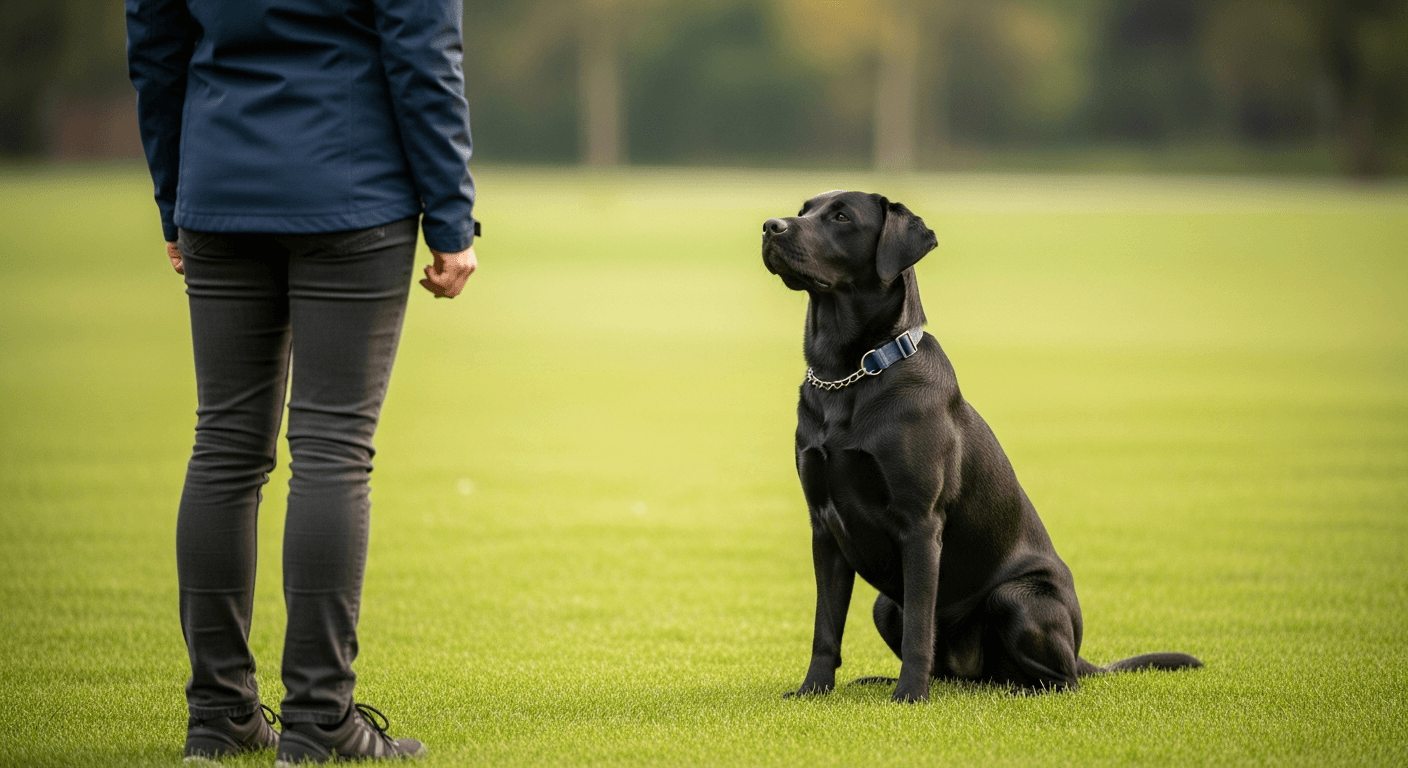
Stay has three dimensions: Duration (how long), Distance (how far the handler moves), and Distraction (what else is happening in the environment). The rule for this stage of labrador obedience training: build all three separately. Never increase duration and distance at the same time. Never introduce distraction until both are solid. Most stay failures happen because all three are attempted together before any one of them is reliable.
The 3 D’s — in order:
Duration first. Ask for a sit or down — a down-stay is more stable and preferred for real-world use. Say “stay” once. Mark and reward after 1 second. Next repetition: 3 seconds. Build gradually to 30 seconds over multiple sessions. Return to the dog to deliver the reward — do not call the dog to you from a stay during this phase.
Distance second. Once 30-second stays are reliable, take one step back. Return. Reward. Build to two steps, then five, then across the room. Keep duration short when adding distance — the two variables compound difficulty together.
Distraction last. Once distance and duration are reliable indoors, introduce mild distractions: another person walking through, a ball rolling past. Always drop back to a lower difficulty level when the environment changes.
The release word. Stay ends when you say a release word — “free” or “okay.” The dog should not self-release when they have decided they have waited long enough. If the dog breaks, say nothing — reset calmly and repeat at a shorter duration.
Common mistakes:
- Repeating “stay, stay, stay” as a verbal crutch. Say it once. The dog holds until you release.
- Increasing distance before duration is solid. This produces a dog that breaks at 10 feet but holds at 2 feet.
- Calling the dog from a stay in early training. This teaches the dog that stay ends with a recall, which undermines both behaviors simultaneously.
Labrador Recall Training: Teaching Come
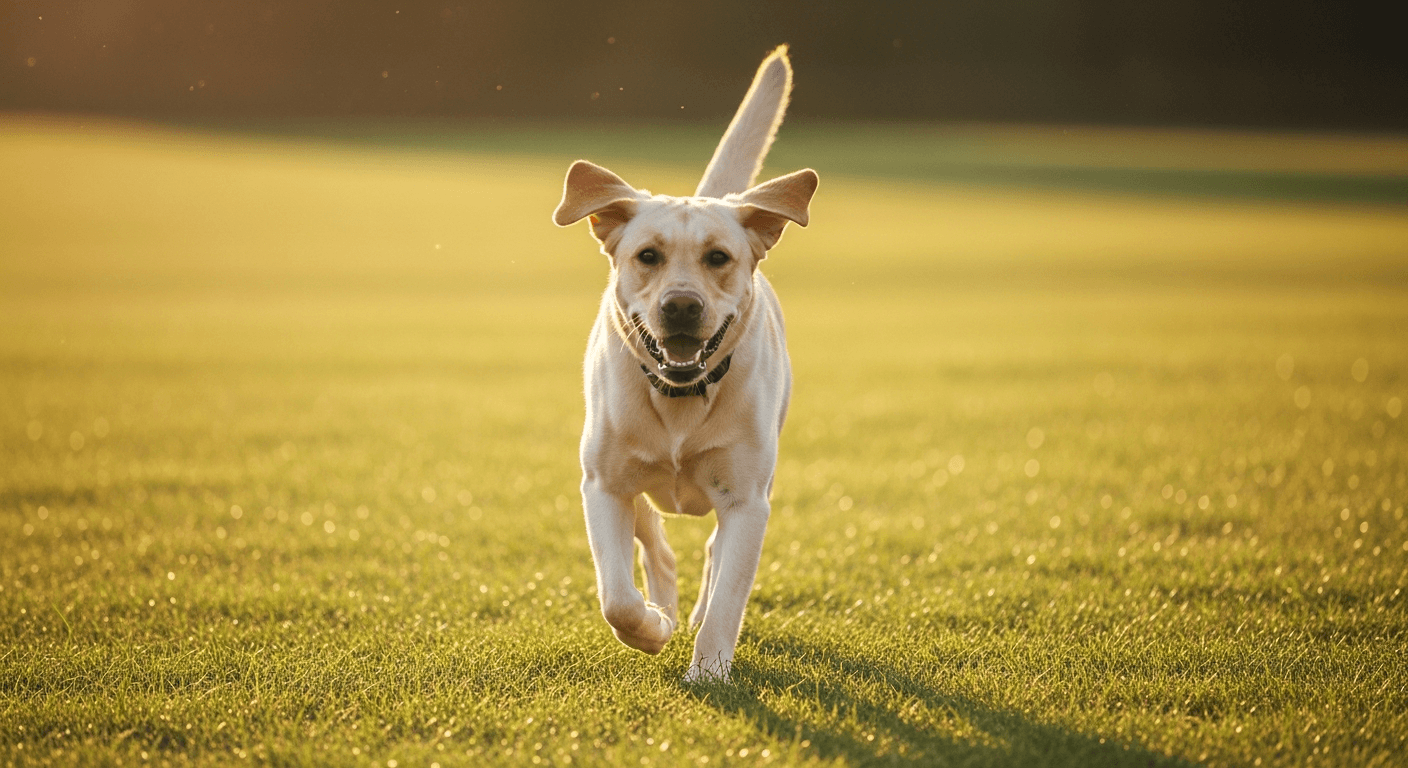
Recall is a safety command. A Lab that comes every time it is called is safe off-lead, safe around traffic, and safe in encounters with other dogs. Labrador recall training deserves more time and consistency than any other command on this list — because a failed recall has real consequences.
Why recall fails in most Labs:
The “come” cue gets poisoned gradually. It gets used to end fun — calling the dog to leave the park or come inside. It gets followed by something unpleasant — a bath, a nail trim. Or the dog came slowly and was scolded for the delay. Each of these events teaches the dog that responding to “come” produces negative outcomes. The dog begins to avoid it.
The foundational rule: Coming to you must be the best thing that happens to the dog — every single time. The AKC’s guidance on recall training is clear: punishing a slow recall response is one of the fastest ways to permanently damage reliability. If your dog took 10 minutes to come and you express frustration when it arrives, the next recall will take longer. The dog does not know it was slow — it only knows that arriving resulted in negativity.
Building reliable recall:
Use a dedicated recall word — separate from “come” if that word has already been associated with negative outcomes. “Here,” a whistle pattern, or the dog’s name followed by “here” all work. The word must mean exactly one thing: run to me and something excellent will happen.
When calling, run backward. A moving handler triggers the chase instinct and is more compelling than a stationary one. Crouch down for puppies — dropping low makes you less imposing and more inviting.
Reward on arrival, then ask for a sit, then reward again. The two-reward system — one for arriving, one for sitting calmly — makes the full recall behavior more reliable than rewarding the arrival and immediately releasing the dog.
Long-line practice: For adolescent Labs testing recall outdoors, a 30-foot training leash allows recall practice with consequence — the dog cannot simply run away. Do not use a flexi-lead for recall training. Flexi-leads teach the dog to push outward against tension, which is the opposite of what a recall requires.
Never call from a stay in early training. Go to the dog instead. Calling from a stay teaches the dog to break stays whenever it expects a recall, which undermines both behaviors at once.
Labrador Obedience Troubleshooting: Why Your Lab Is Not Responding

Inconsistent responses to trained commands almost always have a specific cause. Here are the five most common:
Training in one environment only. A sit trained only in the kitchen is not a sit in the park. Dogs do not generalize automatically. Each new location requires restarting at a lower difficulty level — easier request, higher-value treat, shorter duration.
Treat value is too low for the distraction level. A piece of dry kibble in a park full of squirrels is not a competitive reward. The higher the distraction, the higher the reward value required. Reserve your best treats — cooked chicken, small pieces of cheese — for the most challenging environments.
Inconsistency across household members. If one person enforces commands and another gives in after two repetitions, the dog learns that commands are optional with certain people. Every person in the household must hold the same standard consistently.
The adolescent phase (6–14 months). Labs go through a temporary period of reduced compliance as hormonal changes affect focus and impulse control. This is normal and not a training failure. Increase reward value, reduce difficulty temporarily, and keep training consistently. For a full breakdown of what to expect at each stage of your Lab’s development,Labrador Puppy Training Timeline.
Sessions are too long. Mental fatigue from over-long training sessions produces what looks like stubbornness but is actually disengagement. Keep sessions under 10 minutes for puppies and under 15 minutes for adult Labs. End every session on a successful repetition before the dog checks out.
Frequently Asked Questions: Labrador Obedience Training
How long does labrador obedience training take?
With consistent 5–10 minute daily sessions, most Labs learn sit and down within 1–2 weeks and respond reliably within 3–4 weeks. Stay across distance and distraction typically takes 4–8 weeks of systematic work. Recall is a lifelong maintenance behavior — it should be reinforced consistently throughout your Lab’s life, not just during the puppy phase.
At what age should I start labrador obedience training?
From 8 weeks — the day the puppy arrives home. Labs at 8 weeks can learn sit in a single session. Starting early uses the brain’s highest learning window and prevents bad habits from forming. The adolescent period (6–14 months) is when regressions are most common — early starters have a stronger foundation to return to.
Why won’t my Labrador come when called?
In most cases, the recall cue has been poisoned — used to end fun or followed by something unpleasant, or the dog was scolded for a slow response. Rebuild with a new cue word, large rewards every single time, and a firm rule that returning to you always produces the best possible outcome. Never punish or show frustration at a recall response, regardless of how long it took.
How do I teach my Labrador to stay while I leave the room?
Build duration in small steps: 1 second, then 5, then 30. Once 30-second stays are reliable indoors, take one step toward the door and return. Build gradually — never jump to “leave the room” before individual increments of distance are solid. Stay training is slow when rushed and fast when systematic.
My Labrador knows commands at home but ignores them outside. Why?
A command trained in the living room is only reliable in the living room until it is specifically trained elsewhere. Proof each command in at least three different environments, starting low-distraction with high-value treats. Each new location is a new training session at a lower difficulty level — expect a temporary drop in performance and rebuild from there.
These four commands, trained correctly and proofed across environments, give you a Lab you can take anywhere safely. Recall is the most important and the most neglected — invest the most time there. For everything from house training to managing the adolescent phase and beyond, see our complete Labrador training guide.