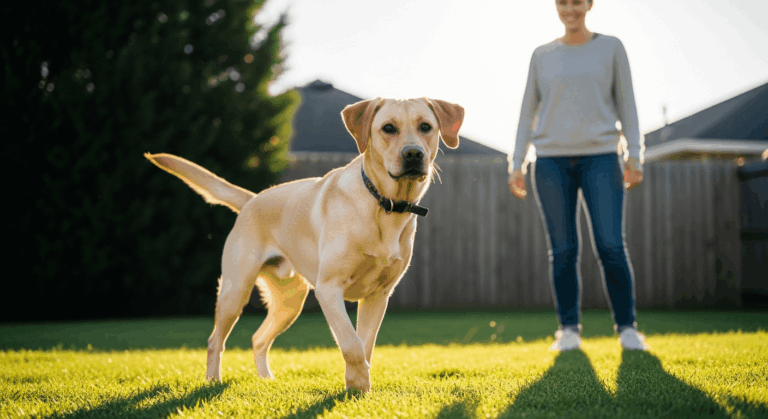
Are Labradors aggressive? No, not as a breed. The breed standard calls for a kindly, outgoing nature that is non-aggressive toward people and animals, and most Labs live up to it. Any individual Lab can still growl or bite when it’s afraid, in pain, or guarding food, so sudden aggression needs a vet check first.
That answer matters to two kinds of readers. Some people are choosing a breed and want to know what they’re getting. Others already have a Lab that just growled at someone and want to know whether to worry.
This guide answers are labradors aggressive with the breed standard and genetics research. Then it shows how normal Lab play differs from real warning signs, why an individual dog may turn aggressive, and how to raise one that stays friendly.
What the Breed Standard and the Research Say
The Labrador Retriever Club standard is unusually direct about temperament. It says the ideal disposition is “one of a kindly, outgoing, tractable nature; eager to please and non-aggressive towards man or animal.” It adds that aggressiveness toward humans or other animals, or any evidence of shyness in an adult, should be severely penalized.
So by design, the answer to are labradors aggressive is no. Show dogs are judged against that standard, and the AKC describes Labs as friendly, outgoing, and high-spirited companions.
Breed still isn’t destiny. A 2022 study in Science by Morrill and colleagues surveyed the owners of 18,385 dogs and genotyped 2,155 of them. It found that breed explains just 9% of behavioral variation in individuals.
In plain words, the individual dog matters far more than the label. That cuts both ways: a Lab isn’t guaranteed to be gentle, and asking are labradors aggressive tells you less than watching the dog in front of you.
It also explains why bite lists by breed can mislead. Raw counts don’t account for how many dogs of each breed live in an area, and Labs are one of the most popular breeds in the country. Breed labels in bite reports are also often a guess, especially for mixed-breed dogs.
So the real question behind are labradors aggressive isn’t about the breed at all. It’s whether your Lab is showing normal behavior or a warning, and the next two sections help you tell the difference.
Mouthing, Play Growls, and Other Normal Lab Behavior
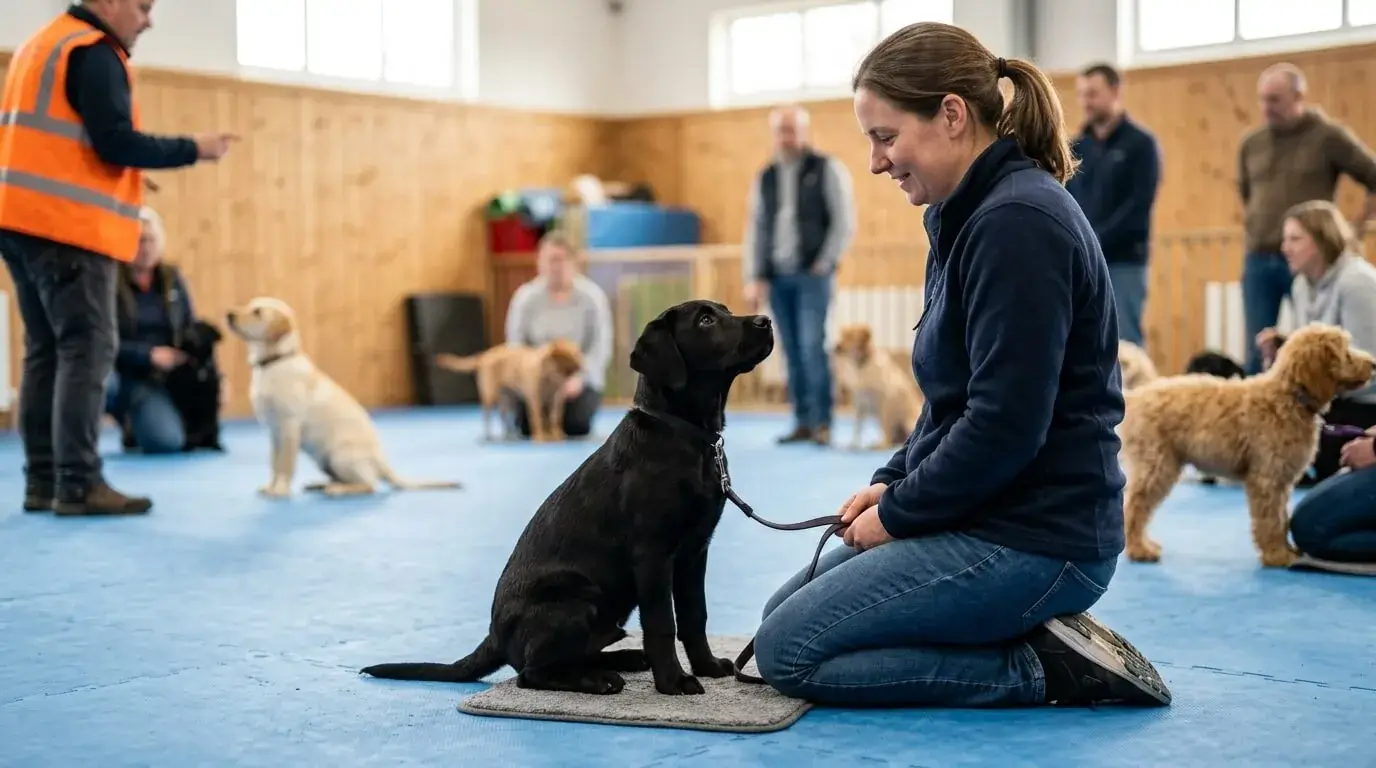
A lot of what worries new owners is simply Lab behavior. Retrievers were bred to carry things in their mouths, and many Labs mouth hands, sleeves, and leashes, especially as puppies. When a family asks are labradors aggressive, this mouthy phase is usually what prompted the question.
Puppy mouthing is normal, but it still needs teaching. Pups learn to soften their bite through play and consistent feedback, and our guide to teaching bite inhibition to a Lab puppy covers the steps.
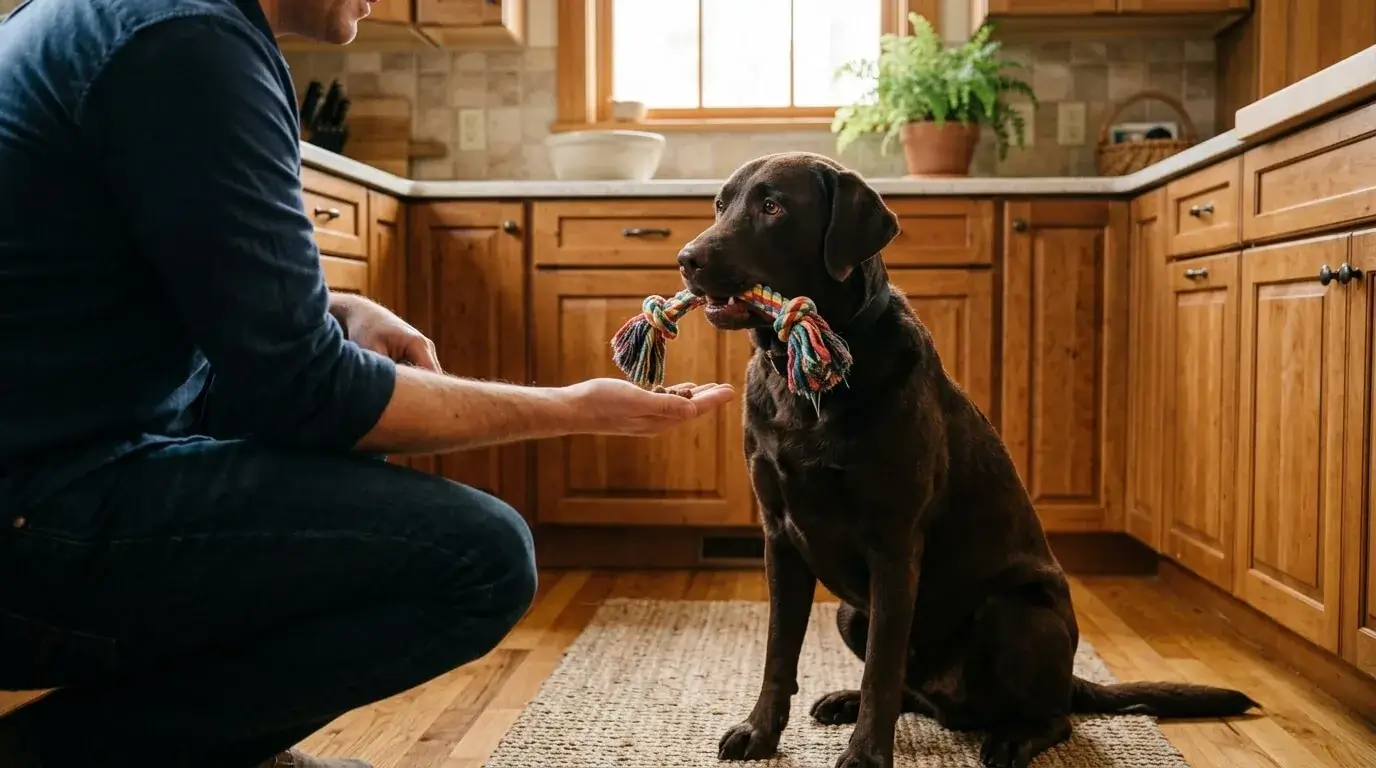
Watch a game of tug and you might wonder, “are Labradors aggressive after all?” A Lab tugging a rope toy or wrestling with another dog may growl loudly while its body stays loose and bouncy, with play bows and turn-taking. Jumping on visitors is bad manners, not aggression.
Barking at the doorbell is another one. Many Labs bark to announce a visitor, then greet that person like an old friend. That’s alert barking, and it’s covered in how Labs act as watchdogs.
The table below is the quickest way to answer are labradors aggressive in the moment: is this play, or a warning?
| Normal play | Warning sign |
|---|---|
| Loose, wiggly body | Stiff or frozen body |
| Play bows and bouncing | Hard, fixed stare |
| Soft mouth, relaxed face | Lips pulled back or lifted |
| Growls during tug that stop when the game stops | A growl that ends the game |
| Takes turns chasing and being chased | A snap or air bite |
| Comes back for more | Guards an object or moves away |
If you see the right-hand column, stop the game and give the dog space. One warning doesn’t make a Lab dangerous, but it does tell you the dog is uncomfortable.
Warning Signs That Aren’t Play
Real aggression usually builds in steps. VCA’s veterinary behaviorists describe aggression ranging from a warning growl, snarl, or snap to severe, repeated bites. Most dogs give the early signals first, if anyone is watching.
Those early signals are easy to miss: a Lab that goes still, stares hard, lifts its lip, or growls and stops wagging. Knowing them is more useful than any general answer to are labradors aggressive, because they show you exactly when your dog has had enough.
Never punish a growl. VCA warns that pets threatened or punished for aggressive displays may become even more aggressive in similar situations, because they link the punishment to whatever upset them. Punishing the growl removes the warning, not the feeling behind it.
A sudden change in an adult Lab is a different case. VCA notes that aggression linked to medical problems can appear at any age and can start suddenly. Painful conditions such as dental disease or arthritis can make a dog more irritable.
The Merck Veterinary Manual advises seeing a veterinarian as soon as any signs of aggression appear, because of the risk of injury and of the aggression getting worse. If an easygoing Lab has started snapping, the honest answer to are labradors aggressive starts with a vet exam, not a training plan.
Why a Lab Might Turn Aggressive
When a Lab does become aggressive, the cause is usually one of a handful of things. Merck lists fear, possessive aggression, redirected behavior, and conflict as the most common reasons for aggression toward family members.
Fear. A Lab that missed out on meeting people, dogs, and new places as a puppy may react to them with fear later. VCA explains that if a dog growls and the scary person or animal backs off, the growling is reinforced. This is one reason the answer to are labradors aggressive can differ so much from one dog to the next.
Pain or illness. A sore hip, an ear infection, or a bad tooth can make even a gentle Lab snap when touched. Merck describes pain aggression as a defensive reaction, which is why vets rule out medical causes first.
Resource guarding. Labs love food, and some guard their bowl, a stolen sock, or a favorite toy. VCA lists growling, lip lifting, snapping, lunging, and biting as signs of possessive aggression. Questions like are labradors aggressive around food bowls usually come down to this one trigger.
Leash frustration. Some Labs want so badly to greet every dog they see that being held back on a leash turns into lunging and barking. It can look alarming, but it’s often frustration rather than hostility.
Each of these has a proper fix, from gradual desensitization to the trade-up game for guarding. For the full protocols, see our step-by-step fixes for Lab aggression.
Raising a Lab That Stays Friendly
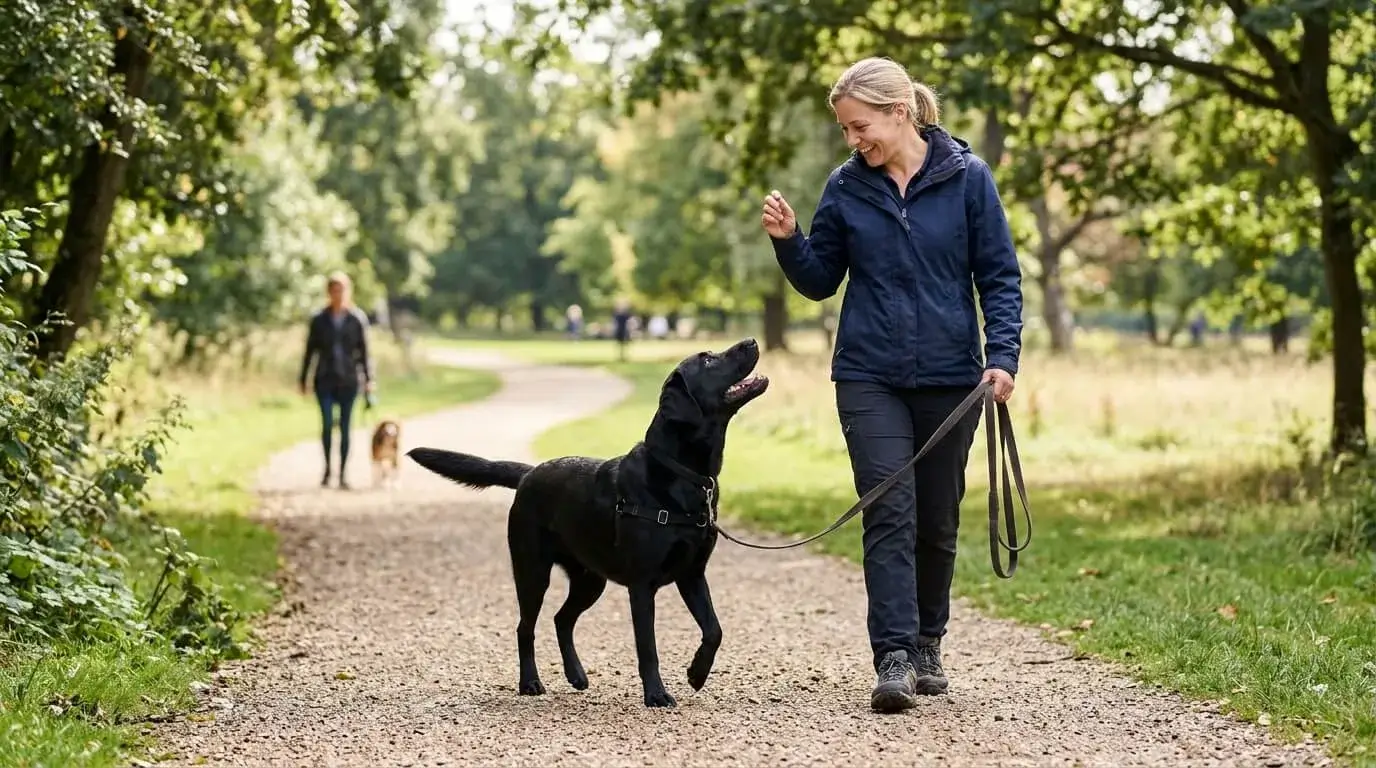
Prevention is far easier than repair. Most of what decides the answer to are labradors aggressive for your own dog happens in the first months at home.
Start with socialization. Puppies have a sensitive period for accepting new people, dogs, sounds, and places, and the puppy socialization window explains how to use it without overwhelming your pup. A well-run puppy class adds safe play with other puppies.
Train with rewards. The American Veterinary Society of Animal Behavior’s 2021 position statement says aversive methods, which rely on force, pain, or discomfort, should not be used in dog training, and that reward-based training works. Our reward-based Lab training plan follows the same approach, and a food-loving Lab makes it easy.
AVSAB also notes that surveys link aversive methods with later aggression toward people and other dogs. If you’ve wondered are labradors aggressive after a rough start with harsh training, that link is worth knowing.
Handle your puppy’s paws, ears, and mouth during calm moments, and drop a treat into the bowl as you walk past while it eats. A pup that learns hands near its food mean good things is less likely to guard it later.
Supervise every interaction between dogs and young children, even with a gentle Lab. Teach kids not to hug the dog, grab its toys, or bother it while it eats or sleeps. Parents asking are labradors aggressive with children should know that a calm, supervised routine protects both the kid and the dog.
Know when to call for help. If your Lab growls, snaps, or bites, or guards food or toys, start with your vet, then work with a certified trainer or a veterinary behaviorist. Our guide lists the signs it’s time to call a trainer.
Labs earned their reputation as gentle family dogs, and most deserve it. If you’re still asking are labradors aggressive, the best answer is to watch your own dog, act early on warning signs, and get a vet check for any sudden change.
Frequently Asked Questions
Are Labs more aggressive than pit bulls?
Breed comparisons don’t predict much about one dog. The 2022 Science study found breed explains about 9% of behavioral variation in individuals, so judge the dog in front of you, not the label.
Are black Labs more aggressive than yellow Labs?
There’s no reliable evidence that coat color predicts aggression in Labs. When people ask are labradors aggressive by color, the honest answer is that temperament depends on the individual dog, its training, and its health.
Why is my Lab suddenly aggressive?
Start with a vet check. Pain and illness can make a dog irritable, and VCA notes that medically linked aggression can start suddenly at any age. If the vet finds nothing, fear or guarding are the next things to look at.
Is my Lab puppy aggressive or just mouthy?
Most puppy owners asking are labradors aggressive are seeing normal mouthing, which comes with a loose body and play. Worry about stiffness, hard stares, lip lifts, or snaps, and ask a trainer if you’re unsure.