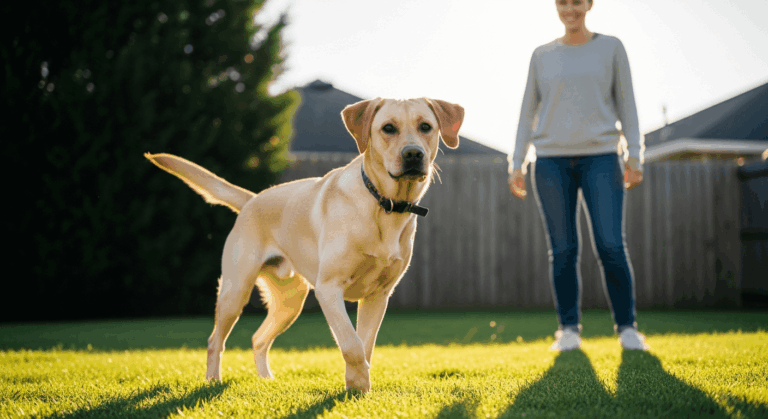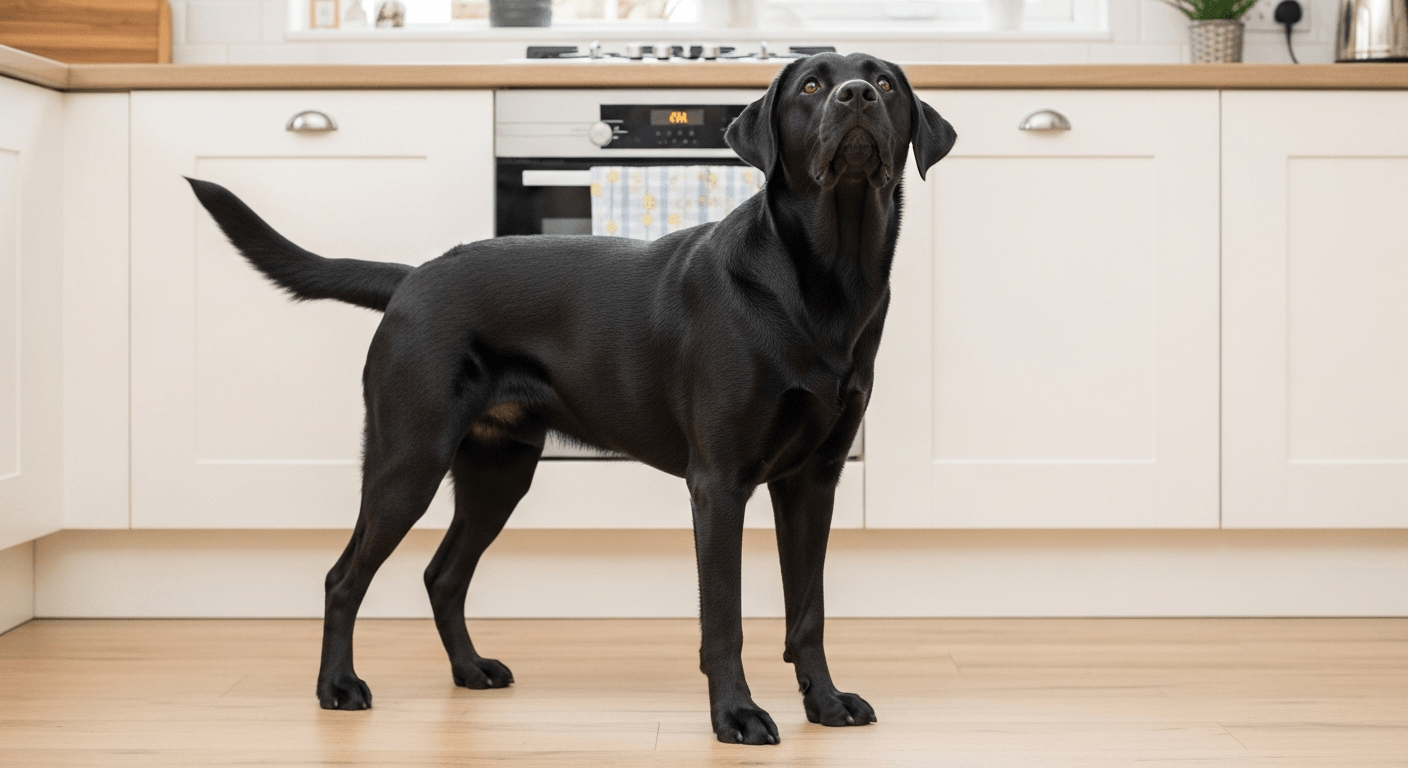
A 9 month old Labrador typically weighs 55–72 lbs (25–33 kg) and is just starting to show the first consistent improvements in behavior. The selective hearing that started at 6 months begins to ease. Recall becomes slightly more reliable, and pulling on the lead reduces a little with consistent handling. None of this happens all at once — but the trajectory has changed direction.
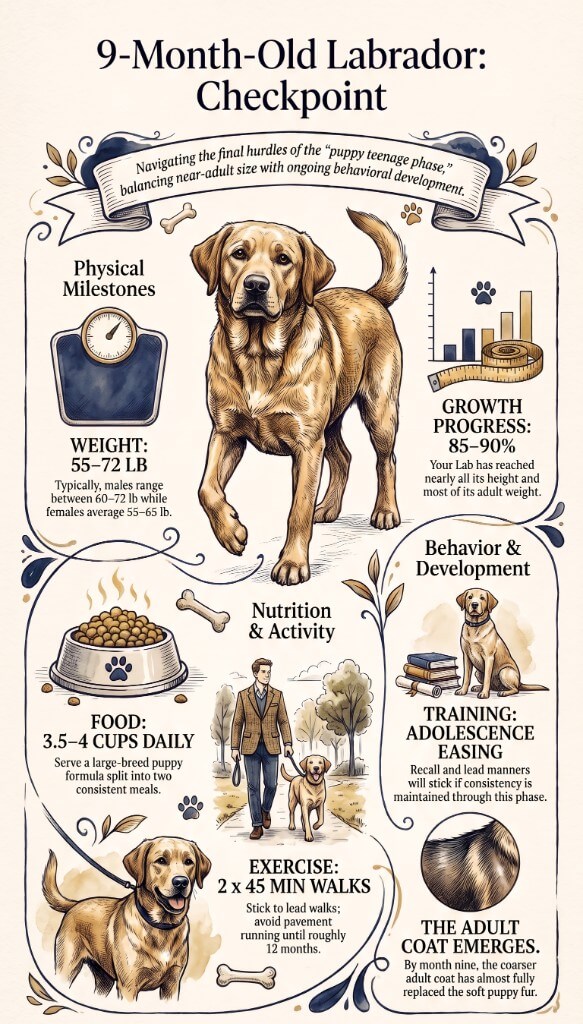
Males are usually 60–72 lbs; females 55–65 lbs. A 9 month old Labrador has reached approximately 85–90% of its adult weight. Height is nearly at adult level, though chest depth and musculature continue developing until 18–24 months. If you’re catching up, the 8-month-old Labrador guide covers the month you just left. Here’s what to expect this month.
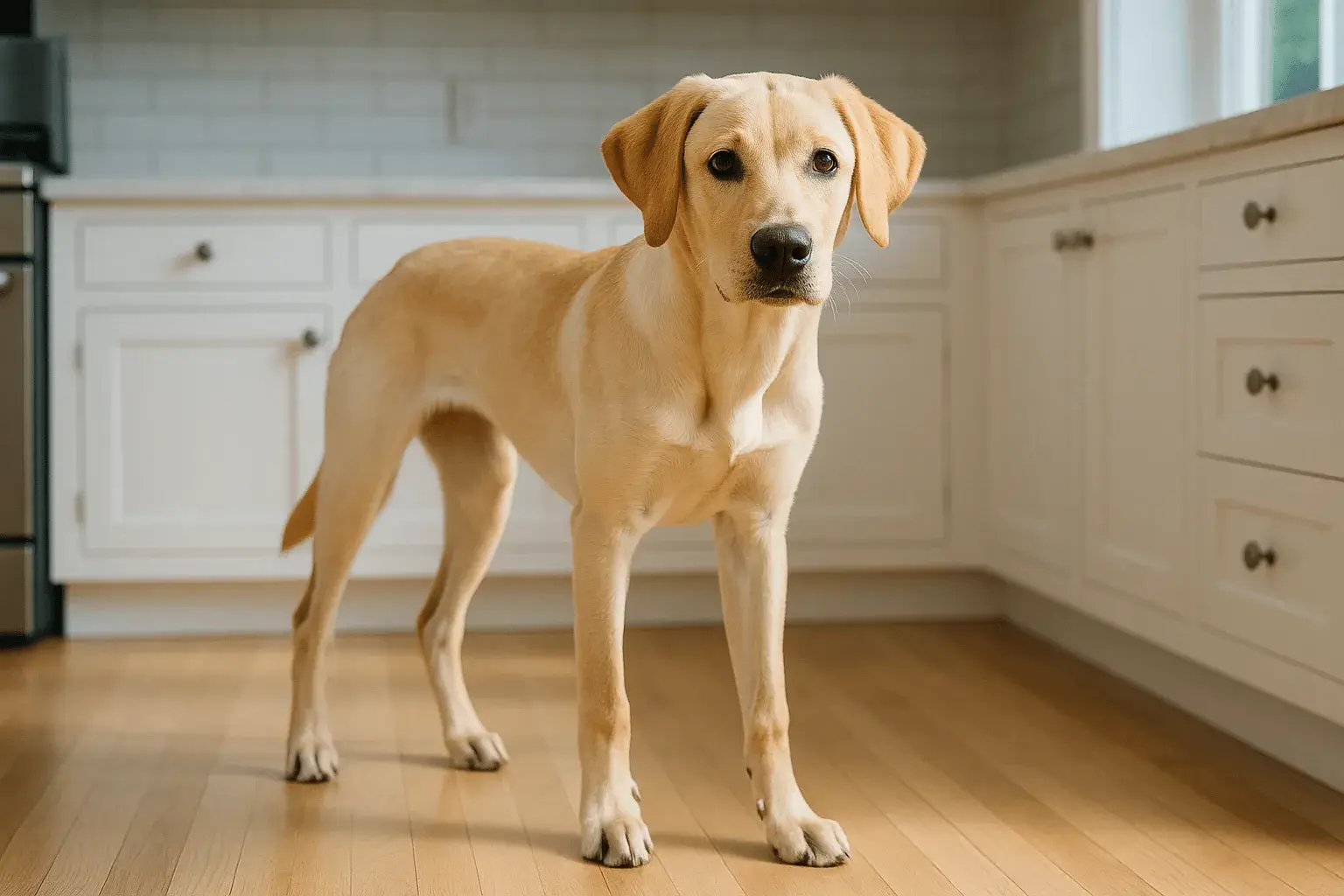
9 Month Old Labrador Size and Physical Development
At 36 weeks, most Labs weigh between 55 and 72 lbs (25–33 kg). Males typically land at 60–72 lbs; females at 55–65 lbs. The rapid weekly gains of the 3–6 month period have slowed significantly. A Lab at 9 months may gain only 1–3 lbs per month as the growth phase transitions from height and weight to structural filling and musculature development.
What is still developing at 9 months: the chest continues filling in depth; the head broadens — this is particularly visible in English/show-line males; hindquarter musculature is still building. A 9 month Labrador and an 18 month Labrador standing side by side are clearly different dogs in body substance, even if their height and weight are close.
Growth plate closure begins at approximately 12 months but some plates do not close until 18 months. The guideline of no sustained pavement running until 12 months remains appropriate at 9 months. Some plates in large-framed male Labs close later — introduce running gradually from 12 months rather than starting immediately. For portion sizes at this weight, see our guide to how much to feed a Labrador.
9 Month Old Lab Behavior: Signs of Improvement
Most Labs begin showing the first consistent behavioral improvements between 9 and 12 months. The change is not sudden — good days alternate with adolescent days for several more months. But the ratio begins shifting. A dog that recalled reliably 30% of the time at 7 months may now respond 50–60% of the time in moderate-distraction environments. That is real progress, even if it does not yet feel like the dog the owner was expecting at 3 months.
The most common question from Lab owners at 9 months is “when will my Lab calm down?” The honest answer: most Labs reach behavioral maturity at 18–24 months, with a significant improvement inflection point at 12 months. A Lab that is well-exercised, consistently trained, and appropriately managed through adolescence will show meaningful improvement from 9 months onward. A Lab that has been under-exercised and under-trained will take longer to settle. Exercise and training consistency are the variables the owner controls.
What still requires active management at 9 months: counter-surfing continues in most Labs through 12 months — the impulse drive does not reduce until inhibition develops with maturity. Jumping on guests is still a work-in-progress. Off-lead reliability is improving but not yet safe in high-distraction settings. The improvements are real; the work is not finished. For the full month-by-month timeline from 8 weeks through adolescence, see our Labrador puppy’s first year guide.
Training at 9 Months: Building on What’s Working
Nine months is when training begins to consolidate more visibly. The neural pathways reinforced during adolescence are firming up. Owners who maintained consistent training through the difficult months at 6–8 months are beginning to see the return on that investment — commands are sticking more reliably, attention spans are slightly longer, and the dog is checking in more frequently during walks.
Recall: Labs trained consistently on a long line since 6 months often begin passing the moderate-distraction recall test at 9 months — responding when called in a park with other dogs visible at a distance. This is meaningful progress. Extend the long-line length gradually as reliability increases and begin testing in lower-distraction off-lead settings. Do not remove the long line in high-risk environments yet — the recall that works in the park may still fail near wildlife or running children.
Lead manners: consistent application of the stop-and-wait technique throughout the adolescent months typically produces noticeable improvement at 9–10 months. Owners who have been consistent will observe the dog offering a loose lead more frequently without being prompted. If pulling is unchanged and as strong as it was at 7 months, the technique has not been applied consistently in every walk. A front-clip harness combined with consistent stop-and-wait, applied in every walk without exception, is the combination that works — one-session trainer guidance is worth considering if the pattern is entrenched. For the full method, see our Labrador puppy training guide.
Feeding and Exercise at 9 Months: Preparing for the 12-Month Transition
Continue large-breed puppy formula until 12–15 months. Daily intake at 9 months is approximately 3.5–4 cups across two meals, but this varies by brand and individual body weight. Adjust by body condition — ribs clearly palpable under moderate pressure, visible waist taper from above. Labs fed to apparent appetite during this phase are frequently overweight by 12 months, which creates joint load during the final growth phase.
Exercise at 9 months: 45 minutes of structured lead walking per session, twice daily, follows the five-minutes-per-month guideline. The AKC Labrador Retriever breed standard describes the adult size and activity these months build toward. Most healthy Labs at this age comfortably manage 2 x 45-minute walks plus off-lead play in secure areas. Running on pavement remains inappropriate until 12 months when growth plates begin closing — introduce it gradually at that point, not immediately.
Begin planning the 12-month transition now. At 12 months: when to switch your Lab to adult food — puppy food transitions to adult large-breed food through a gradual 7–10 day changeover; formal running routines become appropriate starting with short distances on soft surfaces; and training priorities shift from adolescence management to advanced skill consolidation. The Labrador health guide covers the full nutrition and care picture for this transition period.
Frequently Asked Questions: 9 Month Old Labrador
How much should a 9 month old Labrador weigh?
Typically 55–72 lbs (25–33 kg). Males usually 60–72 lbs; females 55–65 lbs. Labs have reached approximately 85–90% of adult weight at 9 months. What is still developing: chest depth, head breadth (especially in English-line males), and hindquarter musculature — all continuing until 18–24 months.
When will my 9 month Lab calm down?
The meaningful behavioral inflection point for most Labs is at 12 months, with full behavioral maturity at 18–24 months. Labs that are consistently exercised (75 to 90 minutes daily) and trained through adolescence reach this point faster than those that are not. The 9 month period typically shows the first consistent improvements if training has been maintained.
Is my 9 month Lab ready to go off-lead?
Partially — it depends on the environment and the recall training history. A dog with a consistently reinforced recall that is responding 80%+ of the time in moderate distraction may be safe off-lead in quiet, enclosed parks. It is not yet safe near wildlife, livestock, or unfamiliar small animals regardless of home recall reliability. Extend off-lead environments gradually.
Should my Lab still be on puppy food at 9 months?
Yes — large-breed puppy formula should continue until 12–15 months. The calcium-to-phosphorus ratio in large-breed puppy food is calibrated for the final stages of skeletal development. Switching to adult food too early can disrupt this. Plan the transition for the 12-month mark using a 7–10 day gradual changeover.
My 9 month Lab is still pulling heavily on lead — is this normal?
Pulling that persists unchanged at 9 months typically indicates inconsistent application of the training technique rather than a dog that cannot learn. The stop-and-wait method produces results with consistent application across every walk — not every other walk. A front-clip harness plus consistent technique, applied by every person who walks the dog, is the combination that works.
How much exercise does a 9 month-old Labrador need?
About 75 to 90 minutes daily, split into two or three sessions — more than the 5-minutes-per-month rule of early puppyhood, but still short of adult workloads. Growth plates typically stay open until 12 to 18 months, so keep skipping forced running and repetitive jumping. Swimming remains the best high-output, low-impact option for this age. Sniff-heavy walks and training games count toward the total, too — mental work tires a 9 month adolescent faster than distance does.
Should I neuter my Labrador at 9 months?
The large-breed evidence favors waiting. A 2020 UC Davis study found Labs neutered before 12 months had significantly higher rates of joint disorders. Most evidence-aware vets now recommend 12+ months for the breed — raise the timing question at your next visit rather than defaulting to the first available appointment. If you do wait, manage the logistics: an intact nine-month male will find escape routes you did not know the yard had when a local female is in season, and females typically have a first heat between nine and twelve months — plan secure fencing and supervised outings around it. Neither is a reason to rush the decision; both are reasons to plan.
Nine months is not the finish line — but the trajectory has changed. Every month from here, the adult Lab becomes more visible through the adolescent surface. The recall gets more reliable. The lead gets lighter. The counter-surfing gets less inventive. Stay the course — our 10-month-old Labrador guide covers the final stretch. Month 12 marks a meaningful shift.