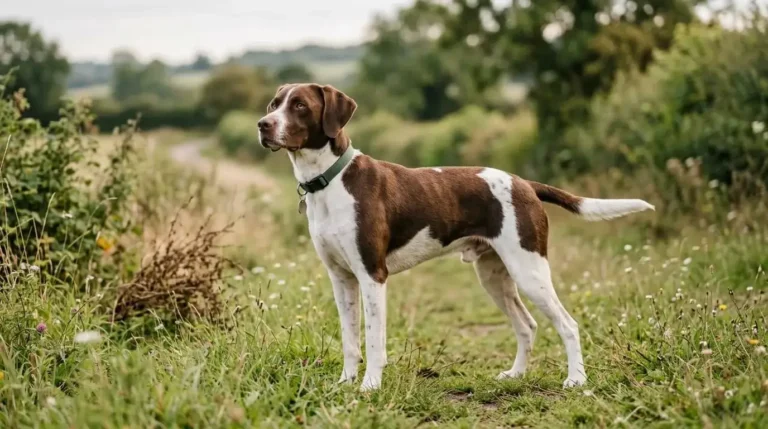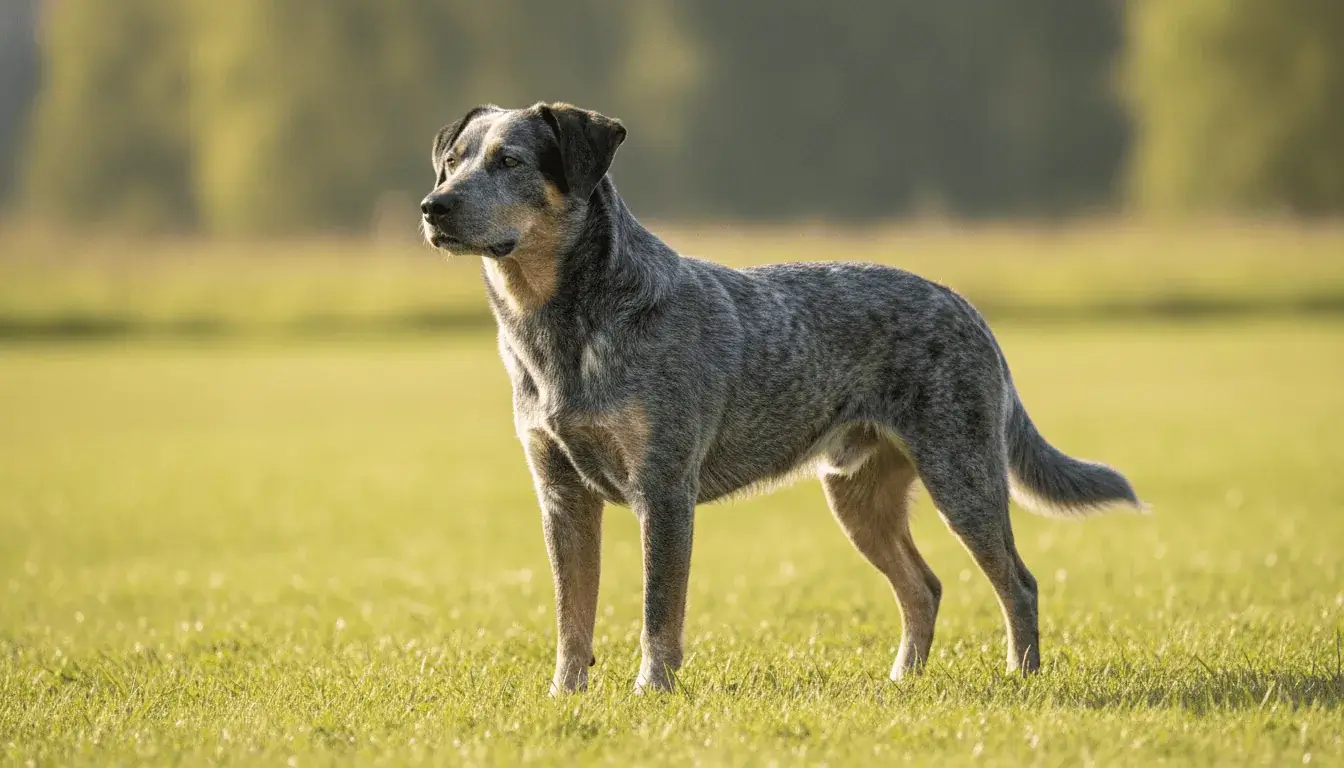
A blue heeler lab mix is a Labrador Retriever crossed with an Australian Cattle Dog — the breed most people call a Blue Heeler. Searchers also type Labraheeler, Heeler Lab mix, or Australian Cattle Dog Lab mix. Same cross: Lab people-focus plus Cattle Dog work drive.
That drive is the part Lab fans underestimate. These dogs are usually medium, athletic, and job-oriented — not weekend-stroll pets. Typical adults land around 40–70 lb, live roughly 11–15 years, and need serious daily exercise and training. This guide covers size, temperament, care, health screening, and who this mix actually fits.
Blue Heeler Lab Mix at a Glance
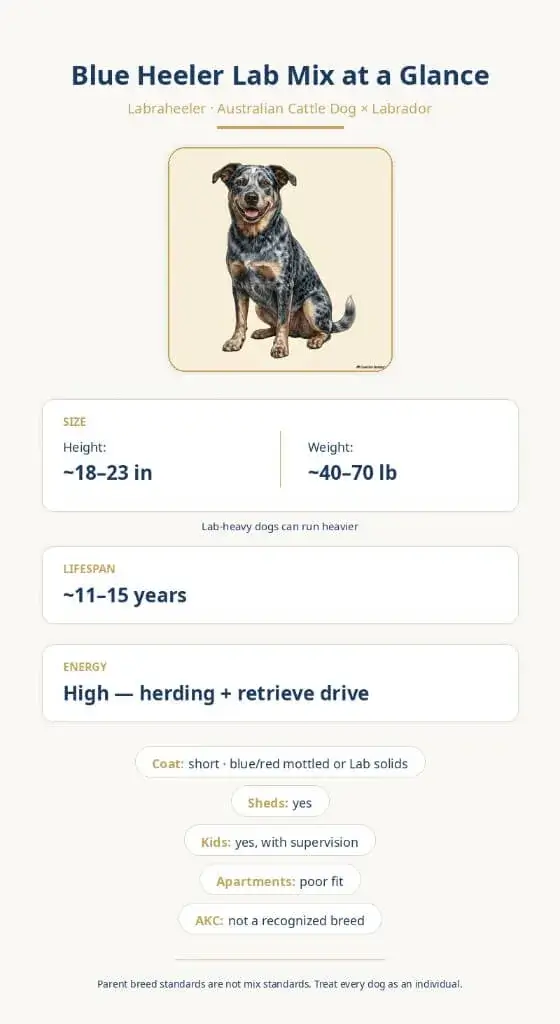
Parent clubs set numbers for each pure breed, not for the mix. Treat every dog as an individual. First-generation litters already split toward Lab, Heeler, or a true blend.
What Is a Blue Heeler Lab Mix?
A blue heeler lab mix combines the Labrador Retriever with the Australian Cattle Dog. “Blue Heeler” is the common nickname for that Cattle Dog. A red heeler is the same breed in a red mottled or speckled coat — not a different species and not a reason for a second URL on our site. AKC notes there is no temperament difference between blue and red Australian Cattle Dogs.
The mix is not registerable as a purebred with the American Kennel Club. You will see it in shelters and designer-breed ads under Labraheeler and similar names. Breeders wanted Lab softness plus Heeler brains. They also got Heeler stamina, noise sensitivity, and a habit of controlling motion — kids, bikes, livestock, vacuum cleaners.
Looks swing hard. Lab parents push otter tails, broader heads, and solid black, yellow, or chocolate coats. Cattle Dog parents push prick or semi-prick ears, compact muscle, and blue or red mottling. A black Labrador × blue Heeler litter can throw mottled dark coats that read “black Lab Heeler” online — still this same hub.
Compared with a Borador (Border Collie Lab), the Heeler cross is often stockier and just as busy. For the wider map of crosses, see our Labrador mixes hub.
An Australian Shepherd Lab mix often gets lumped in with this cross, but it is a different dog. The Aussie has a longer coat and a different working style than the cattle dog.
Blue Heeler Lab Mix Size and Full-Grown Weight
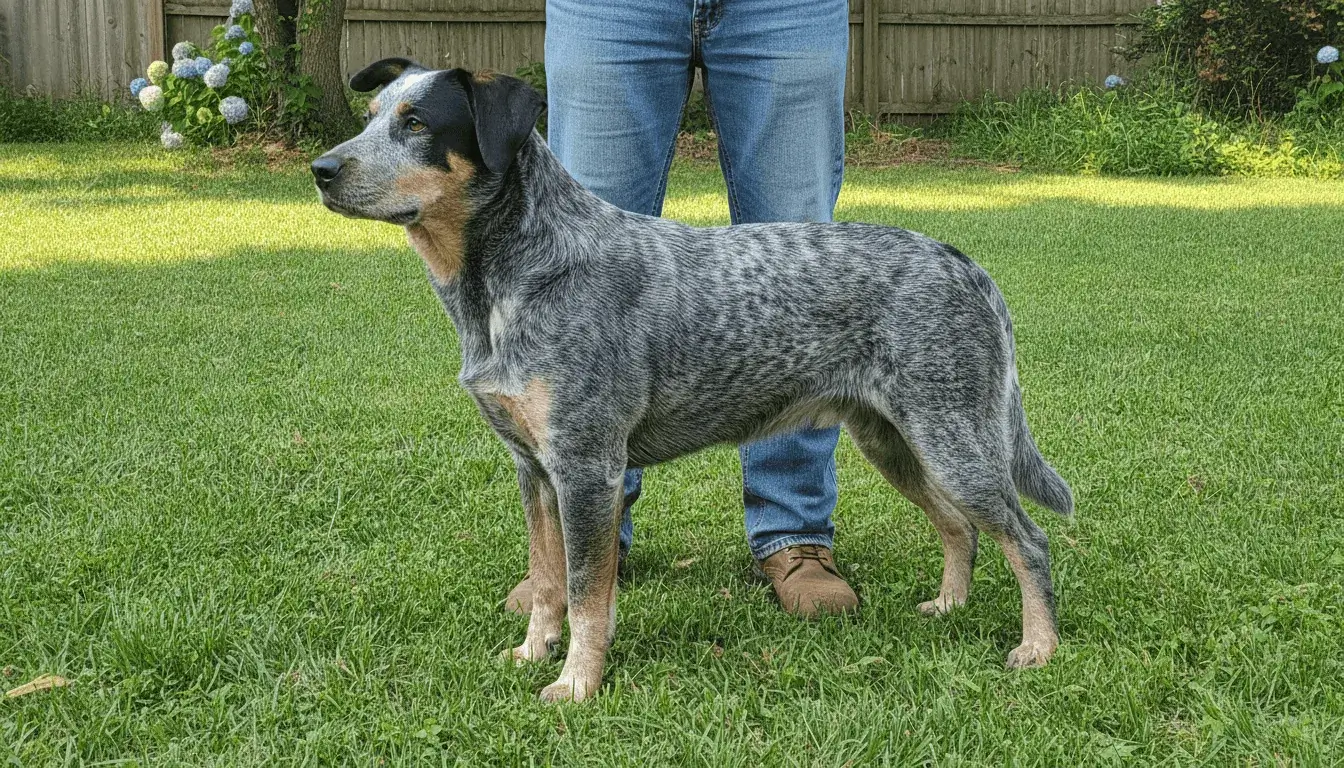
How big does a blue heeler lab mix get? Most adults sit in a ~40–70 lb band and ~18–23 inches at the shoulder. That is an estimate between the parents, not an AKC standard for the mix.
For scale: AKC Australian Cattle Dogs typically stand 17–20 inches and weigh 35–50 lb. AKC Labs typically stand 21.5–24.5 inches and weigh 55–80 lb (males usually 65–80 lb; females 55–70 lb). The cross usually lands between those silhouettes: more substance than a farm Heeler, less bulk than a blocky show Lab — unless the Lab parent dominates.
Height is often close to adult by 12 months. Chest and muscle fill through 18–24 months. Color does not set size. A red-heeler-looking pup is not a different growth chart.
Use body condition, not free-feeding. The Labrador side will eat past “ideal” if you let it.
Blue Heeler Lab Mix Temperament and Energy
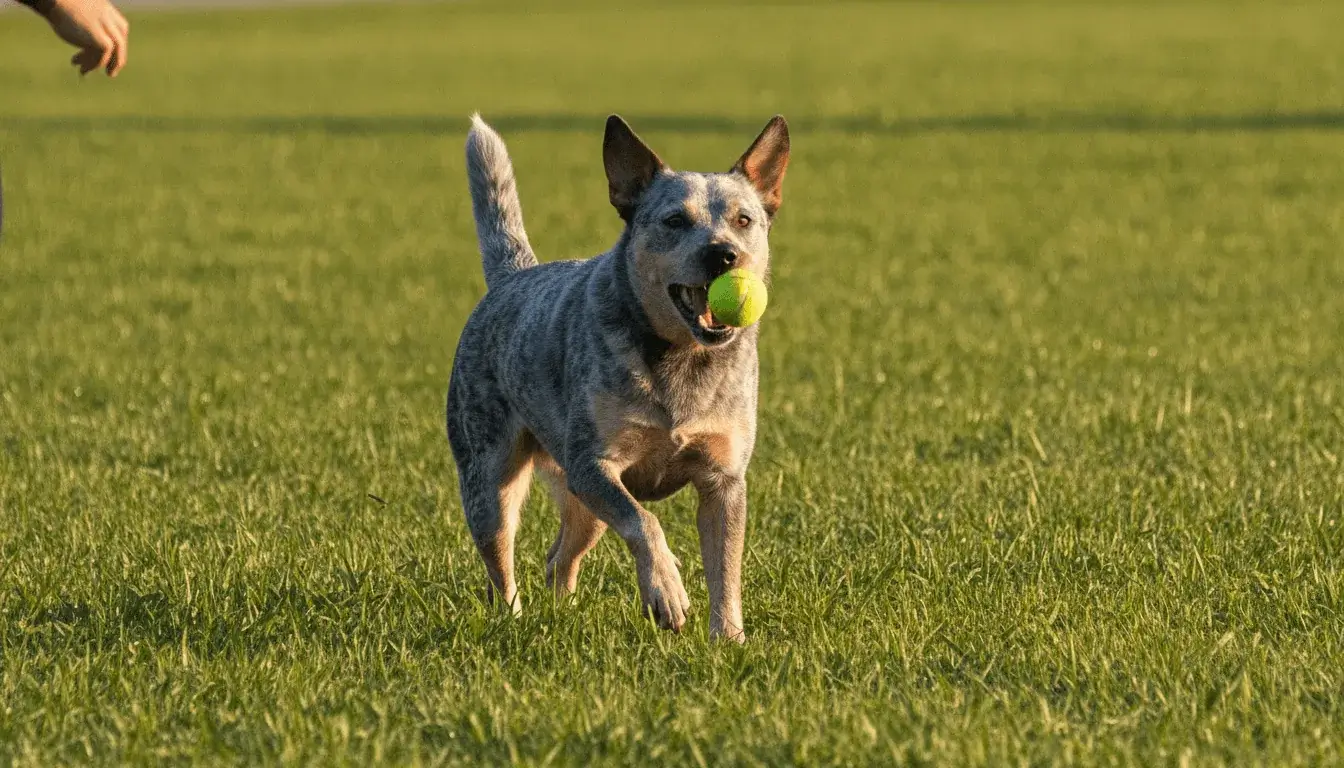
Temperament here is “bright, loyal, and employed” more often than “chill couch Lab.” Many dogs bond hard to their people. Stranger-wariness from the Cattle Dog side is common; some dogs are friendlier if the Lab genes win.
Expect some mix of:
- Retrieve and water work from the Lab side.
- Herding from the Heeler side — staring, heel-nips, circling runners or other pets.
- Alert barking when the environment moves.
- Velcro attachment — they follow room to room. Skip alone-time training and you buy separation anxiety risk.
They can be excellent with active families when exercise and rules are real. Toddlers can get herded or bowled. Supervised kids plus a job for the dog is the combo that works. Lab-specific kid rules: are Labradors good with kids.
This is a poor pick for a first-time owner who wants a low-maintenance pet. Reddit and forum threads about destructive Labraheelers are usually unmet drive, not a mysterious “bad mix.”
Training and Exercise for a Blue Heeler Lab Mix
Train early, pay well, and keep sessions short. A Labraheeler will outthink a sloppy handler. Positive reinforcement plus clear boundaries beats harsh corrections — Cattle Dogs remember unfair pressure.
Priority skills: recall on a long line, settle on a mat, leave-it, and polite leash walking. Channel herding into structured games (flirt pole with rules, scent work, advanced obedience) instead of letting the dog invent a job on the neighbor’s cat.
Exercise budget is high. Plan on well over an hour of combined physical and mental work most days — walks alone rarely empty the tank. Swimming, hiking, fetch with rests, and puzzle feeders help. Full protocols: complete Labrador training guide.
Apartment living is possible only with elite exercise discipline. Most of these homes do better with a securely fenced yard and owners who like to move.
The First Year: Mouths, Nips, and Noise
The first year is where most of these homes succeed or fail. A blue heeler lab mix puppy mouths everything and tests which moving things it can control. That is normal. It still needs a plan from the first week.
Redirect heel-nips onto a tug toy the moment they start, and stop the game when teeth touch skin. Children should stop and stand still instead of running, because running is exactly what the herding side wants to chase.
Socialize on purpose before about 16 weeks: new floors, traffic noise, visitors who sit quietly, and calm dogs. Cattle Dog lines can turn wary of strangers and sudden sounds. Short, pleasant exposures now cost less than fixing reactivity at a year.
Keep exercise age-appropriate. Short sniff walks, training games, and free play on soft ground beat long runs while the growth plates are open. A tired puppy is good. A puppy jogged on pavement is a joint risk.
Crate and alone-time training belong in the same months. A blue heeler lab mix that learned to settle at 12 weeks is far easier to live with than one that learned the door opens when it screams.
Grooming and Shedding
Coat is usually short and weather-resistant. Expect year-round shed with heavier blows in spring and fall if Lab double-coat genetics come through. Weekly brushing — more in coat-blow season — keeps hair manageable. This is not a hypoallergenic cross.
Bath when dirty; over-bathing strips oils. Ears need regular checks, especially if the dog swims.
Blue Heeler Lab Mix Health and Lifespan
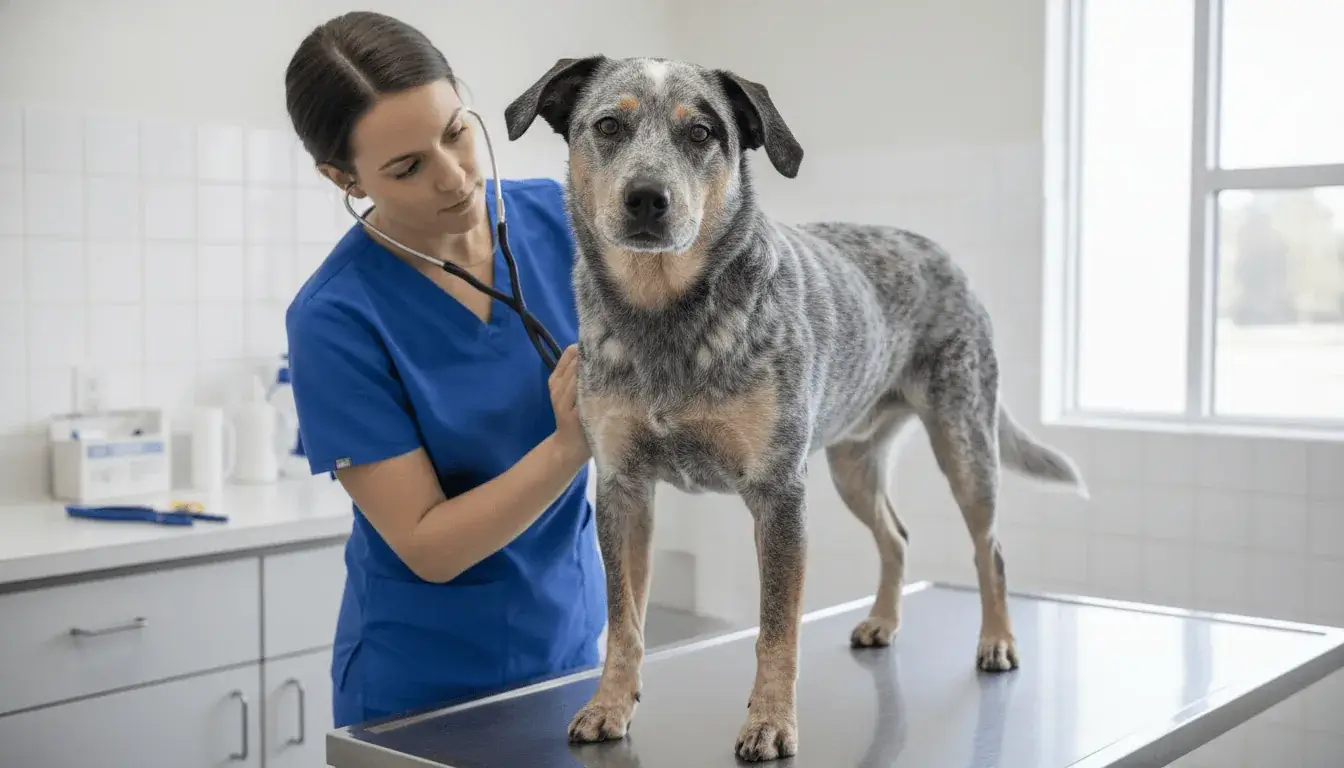
Lifespan for this mix often lands around 11–15 years — a practical band between AKC Lab (11–13) and AKC Cattle Dog (12–16) figures, not a guarantee.
Ask breeders (or run shelter DNA + vet screening) for:
- Hips and elbows — both parent breeds carry orthopedic risk.
- Eyes — Cattle Dogs are noted for PRA (and related eye testing); Labs need eye clearances too. Heeler lines may also screen for primary lens luxation (PLL).
- Hearing — AKC flags deafness as a Cattle Dog concern; BAER testing matters in Heeler lines.
- Lab extras — EIC, centronuclear myopathy (CNM), and other Lab DNA panels when the Lab parent’s lines warrant them.
Keep the dog lean. Extra weight on a high-drive frame loads joints you already need to protect.
Is a Blue Heeler Lab Mix Right for You?
This cross fits owners who want a partner for hiking, training sports, or ranch-style chores — and who will exercise the dog before work and after dinner. It fits poorly with sedentary homes, tiny unsupervised toddlers, or anyone shocked by heel-nips and alert barking.
If you like Lab softness but need less herding intensity, compare a Goldador or a more Lab-dominant shelter mix. If you want even sharper herding brains, you are already in Borador/Heeler territory — be honest about your calendar.
Rescue first when you can. Many “Lab mixes” in shelters are Heeler crosses wearing a generic tag. Meet the individual dog’s drive, not the marketing name.
Frequently Asked Questions
What is a blue heeler lab mix called?
Labraheeler, Heeler Lab mix, or Australian Cattle Dog Lab mix. “Blue Heeler” means Australian Cattle Dog.
How big does a blue heeler lab mix get?
Most land around 40–70 lb and 18–23 inches, between Cattle Dog and Lab parent sizes. Lab-heavy dogs can weigh more.
Are blue heeler lab mixes good family dogs?
Yes for active families with training time and supervised kids. Herding nips and high energy are real. Not an ideal first “easy Lab.”
Do blue heeler lab mixes shed?
Yes. Short coat, regular shed, heavier seasonal blows if Lab undercoat shows up.
Is a red heeler lab mix different?
Same parent breeds if the Heeler is a red Australian Cattle Dog. Coat color changes; the job description does not. Stay on this blue heeler lab mix page for care expectations.
How much exercise does a blue heeler lab mix need?
High. Plan substantial daily physical work plus mental jobs. Under-exercised dogs destroy crates, yards, and patience.
A blue heeler lab mix rewards owners who treat drive as a feature. Match the exercise budget, screen hips and hearing, and you get a loyal, athletic partner. Match only the Instagram mottled coat, and you get a second full-time job with teeth.
For the Labrador half of the equation, start with the Labrador Retriever breed guide. For other crosses, return to Labrador mixes.