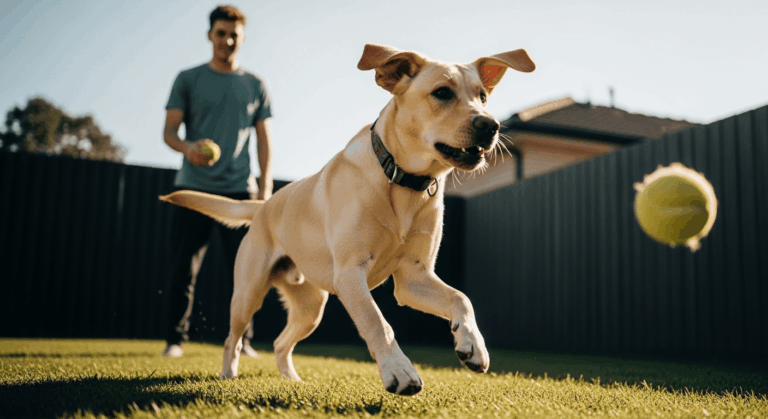
A 10 month old Labrador is entering the final stretch of puppyhood — and the teething, selective hearing, and counter-surfing of the past months were temporary, as promised. Between now and the first birthday, the practical transitions come due: adult food, real running, the neutering decision. Here’s what changes across months 10 to 12, and what genuinely improves. The whole journey is mapped in our Labrador puppy first-year guide — and if you’re arriving from the 9-month-old Labrador stage, this is what’s next.
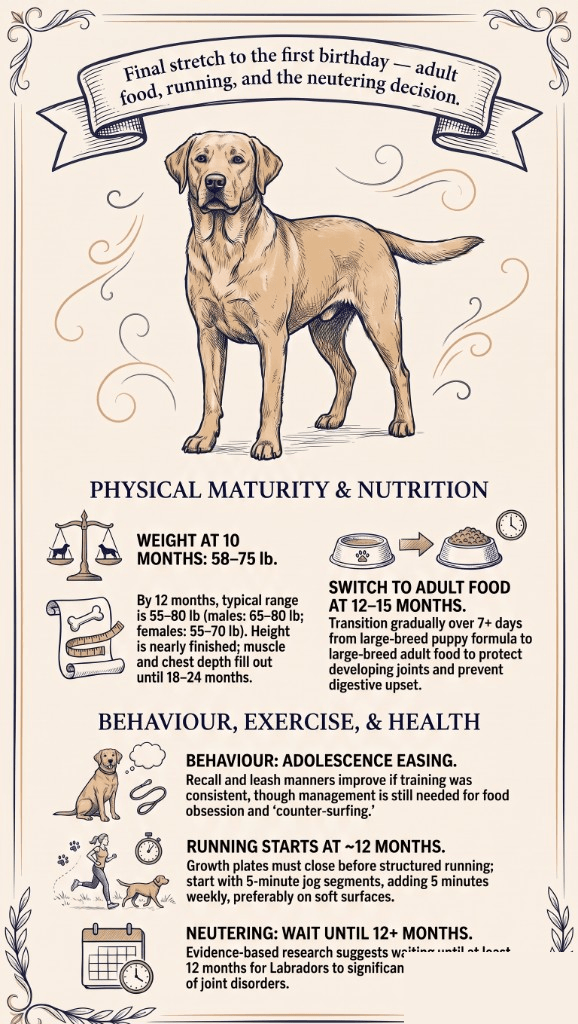
At 12 months, a Labrador typically weighs 55 to 80 lbs — males usually 65 to 80 lbs, females 55 to 70 lbs — and has reached close to full adult height. Chest depth and muscle keep filling in until 18 to 24 months, when Labs hit true physical maturity.
10 to 12-Month Labrador Size: What to Expect
The month-by-month numbers: most Labs weigh 58 to 75 lbs at 10 months, 60 to 78 lbs at 11 months, and 55 to 80 lbs at 12 months — the range widens because males (typically 65 to 80 lbs) and females (55 to 70 lbs) diverge, per the AKC’s growth chart guidance.
Is a Lab done growing at 12 months? In height, largely yes. In substance, no. Expect another 5 to 10% of body weight between 12 and 24 months as the chest deepens and the hindquarters muscle up. English-line males develop the classic broad “blockhead” look mostly between 18 and 24 months — show-line males that still look narrow-headed at the first birthday are right on schedule.
That filling-out window is also the obesity trap. The frame stops growing before the appetite does, and portions calibrated for a growing puppy quietly become excess. Keep scoring body condition — visible waist from above, ribs easy to feel, no fat pads over the hips or tail base — and adjust with our guide to how much to feed a Labrador.
Labrador Behavior at 10 to 12 Months: What Improves and What Stays
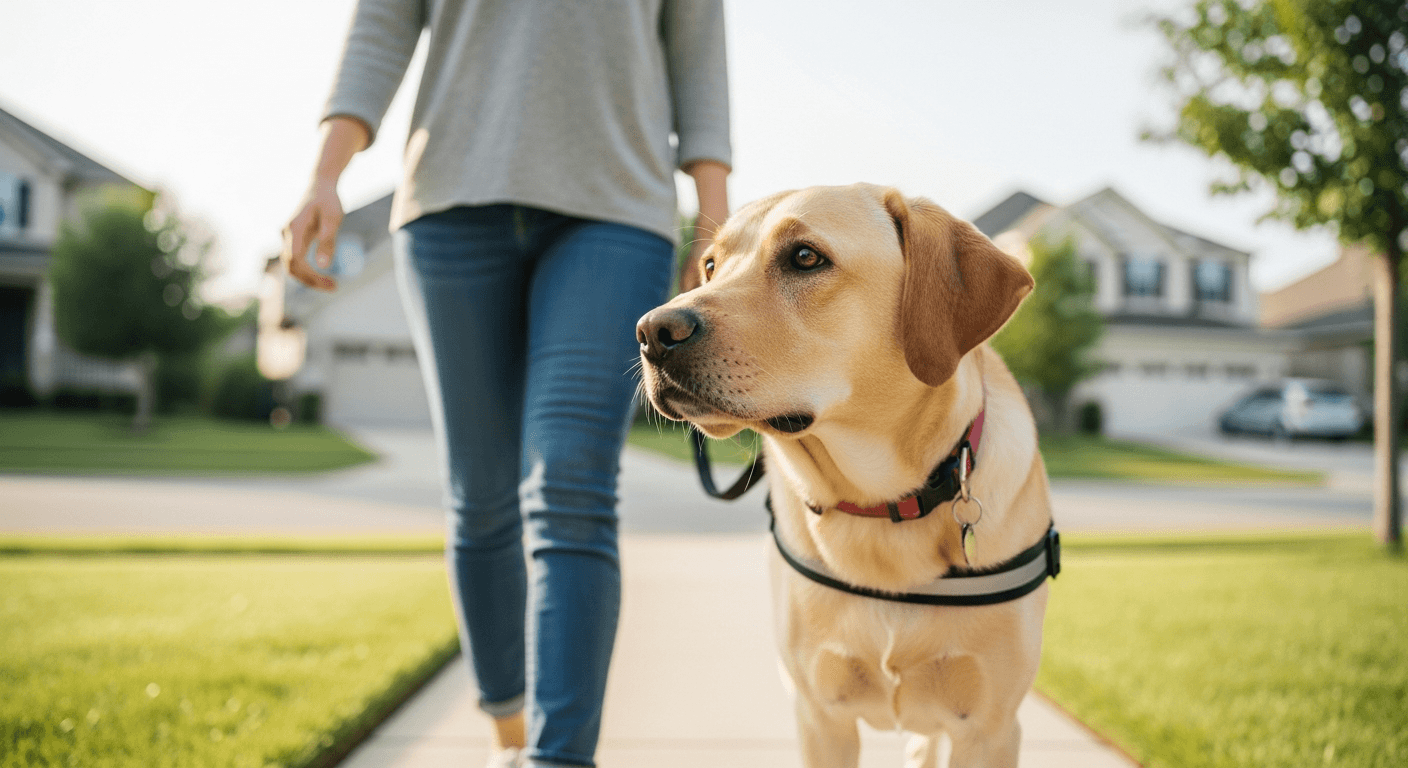
The improvements are real. For Labs whose recall was reinforced through adolescence, reliability climbs steadily between 9 and 12 months — off-leash dependability in low-distraction settings typically arrives around the first birthday. Leash manners firm up. The “ignoring everything” static of peak adolescence fades by around 10 months, and the dog starts offering you attention on walks instead of renting it out. The full arc is in our Labrador puppy training schedule.
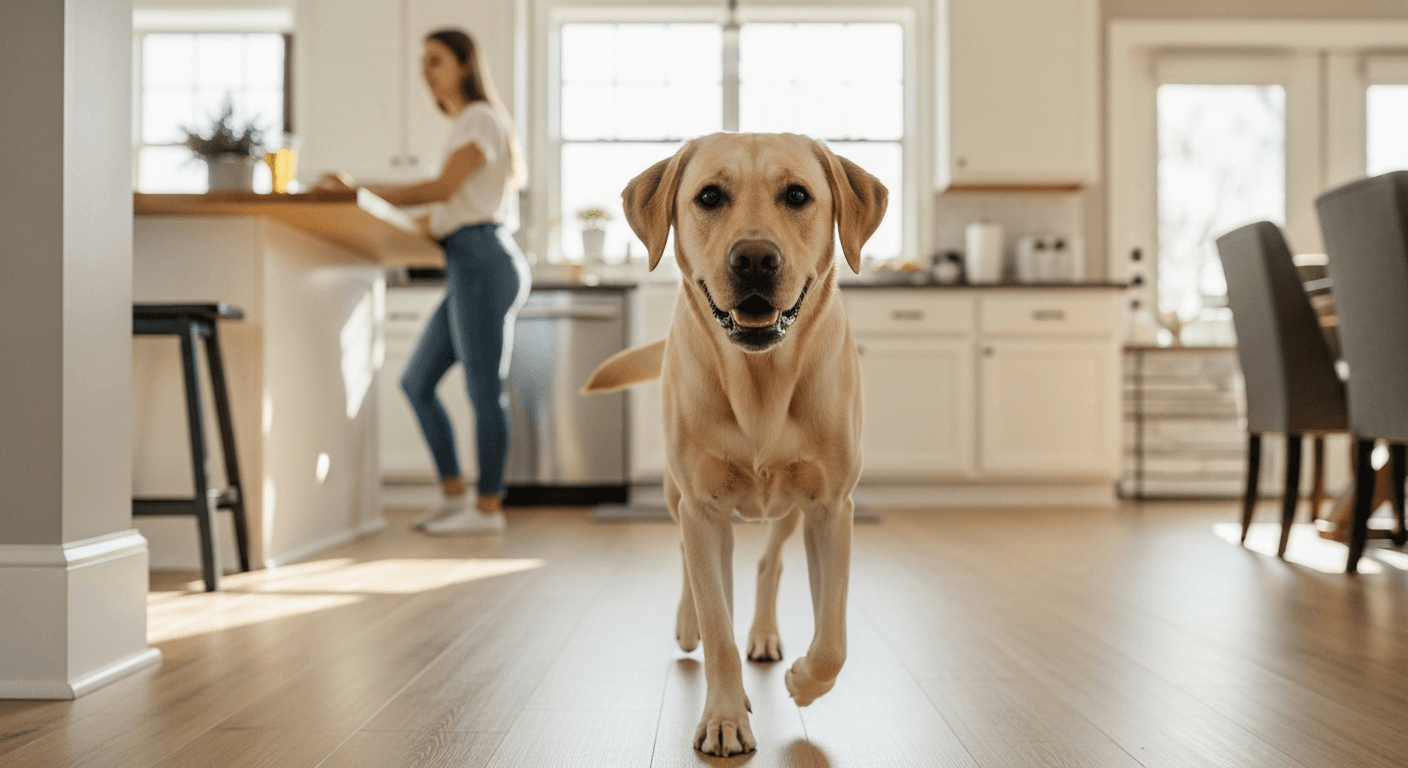
Two things do not fix themselves. Counter-surfing doesn’t retire with age — a Lab that has cashed in hundreds of successful surfs will keep surfing until training and cleared counters end the payout. The breed is practically built for the crime: adult height puts a Lab’s nose level with most countertops, and the POMC-driven appetite supplies the motive. And the POMC-driven food obsession is lifelong; it gets managed, never outgrown.
So is a 1-year-old Lab still a puppy? Physically, barely. Behaviorally, somewhat — most Labs carry real puppy energy and impulsivity until 18 to 24 months, when full behavioral maturity lands. Treat the first birthday as an inflection point, not a finish line, and you won’t be disappointed.
The encouraging part: a 10 month old Labrador that has had consistent exercise, training, and management all year is already a genuinely manageable dog, and the adult temperament is clearly visible through the remaining static.
When to Switch Your Lab to Adult Food
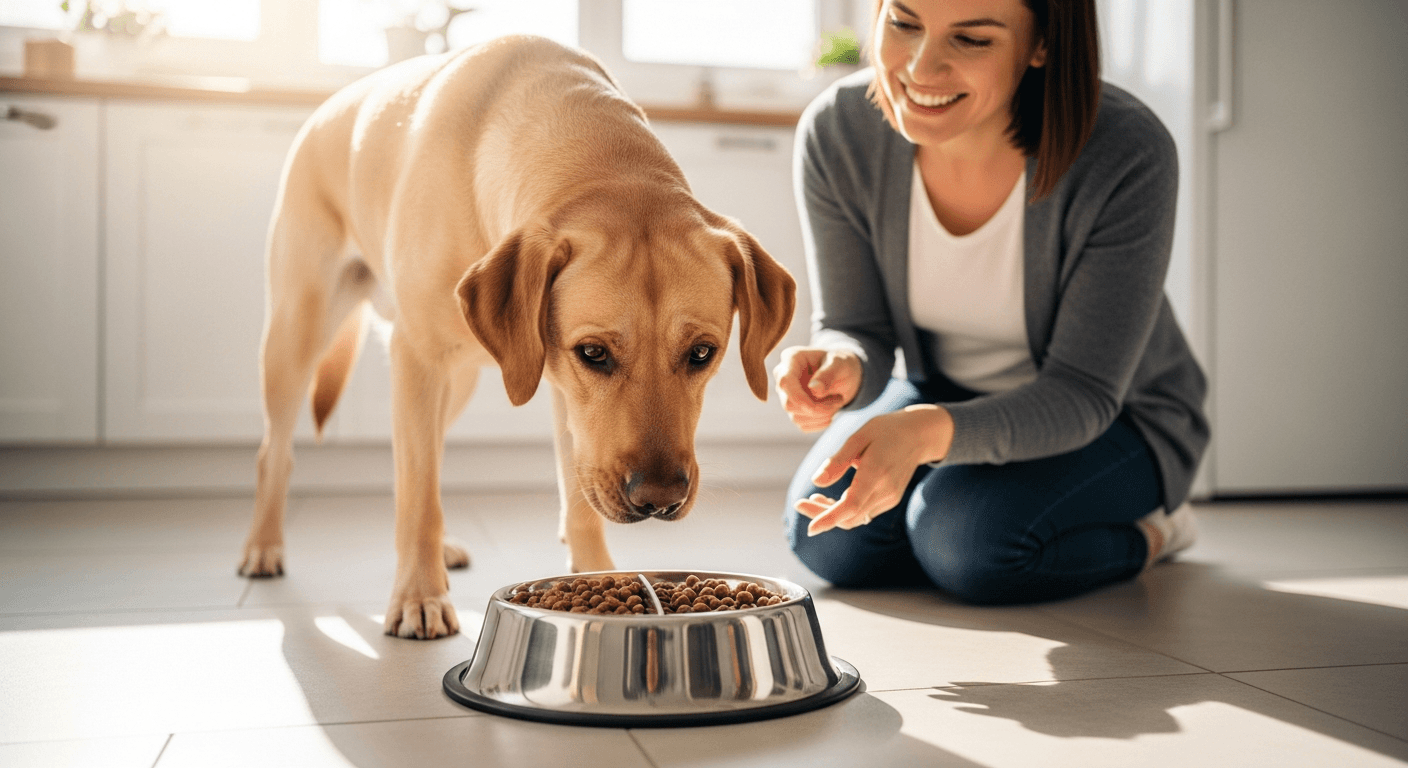
The move from large-breed puppy formula to adult food happens between 12 and 15 months. Before 12 months, the puppy formula’s growth nutrition is still doing its job; past 15 months, those growth-calibrated calories just become weight gain.
Make the switch gradual — 7 days minimum. Days 1 and 2: 75% puppy food, 25% adult. Days 3 and 4: half and half. Days 5 and 6: 25% puppy, 75% adult. Day 7 onward: fully adult. Rushing it buys you a week of digestive upset — and in a food-obsessed breed, an unsettled gut usually means harder scavenging, not less.
Choose a large-breed adult formula specifically, not a generic adult food — the caloric density is calibrated for a 70-lb frame. And skip grain-free unless your vet directs otherwise: grain-free diets have been associated with elevated dilated cardiomyopathy (DCM) risk in an FDA investigation open since 2018.
Adult food usually carries fewer calories per cup than puppy formula, so re-check weight about 4 weeks after the transition and adjust portions. The complete step-by-step lives in our guide on when to switch your Labrador to adult food.
Exercise, Neutering & Training for a 12-Month-Old Labrador
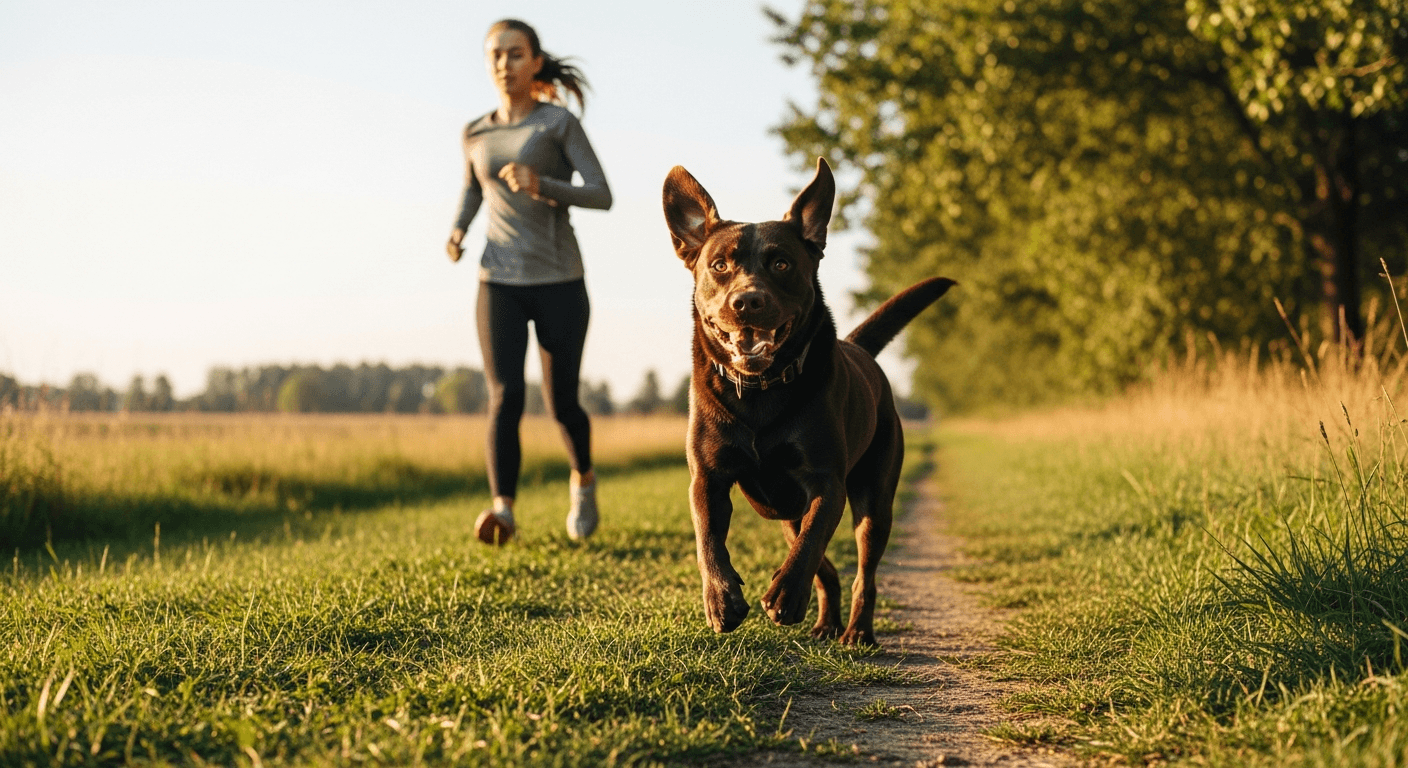
Running finally arrives. Growth plates close between 12 and 18 months, so from the first birthday you can build a graduated running routine: start with 5-minute jog segments inside a normal walk, add roughly 5 minutes per week, and favor dirt or grass over pavement early on. A Lab that’s been active all year adapts quickly; a sedentary one needs the slow ramp regardless of age.
The neutering conversation also matures at 12 months. The 2020 UC Davis study by Hart and colleagues found significantly higher joint disorder rates in Labs neutered before 12 months, which is why the evidence-based recommendation for this breed is 12+ months — and the AVMA’s spay/neuter guidance now frames timing as an individualized decision. For females, many vets suggest waiting until after the first heat. Have the conversation with a vet who knows the large-breed data.
Training splits into two normal paths. The consistently trained dog is ready for advanced work: off-leash reliability in new environments, long stays, polished heeling. The dog whose training lapsed during adolescence needs a foundation reset — entirely recoverable at this age. Either way, the roadmap is our complete Labrador training guide.
The 12-Month Vet Visit: What to Book
Round out the first year with a proper checkup rather than a booster-only stop. Book the first annual vaccinations, ask for a weight and body-condition assessment against the adult target, and if you plan to run or hike seriously with your Lab, have the vet confirm growth plates are closed before structured jogging starts. Bring the food label too — portion questions are easier to answer against the actual product, and the adult-food switch lands in this same window.
This is also the visit to settle neuter timing if your Lab is still intact, and to raise anything from the first year that never felt quite right — gait quirks, recurring ear trouble, appetite oddities. The full first-year health map is in our Labrador puppy health guide.
Frequently Asked Questions
Is a 1-year-old Labrador still a puppy?
Physically, no — height is essentially done and weight is within 5 to 10% of adult. Behaviorally, partly: most Labs keep genuine puppy energy and impulsivity until 18 to 24 months. Expect a young adult with adolescent moments, not a finished dog, and the second year will feel steadily easier.
How much should a 10 month old Labrador weigh?
Most 10-month-olds weigh 58 to 75 lbs, climbing to 55 to 80 lbs by 12 months as males (65 to 80 lbs) and females (55 to 70 lbs) spread apart. Body condition outranks the scale: a visible waist and easily felt ribs mean the weight is right for that individual frame.
When should I switch my Labrador to adult food?
Between 12 and 15 months, moving from large-breed puppy formula to a large-breed adult formula over at least 7 days of gradual blending. Switching earlier removes joint-protective growth nutrition; switching much later feeds growth calories to a dog that has stopped growing.
When can I start running with my Labrador?
From about 12 months, once growth plates have closed — confirm at the 12-month vet visit if you plan serious mileage. Build up gradually: 5-minute jog intervals inside walks, adding 5 minutes weekly, on forgiving surfaces first. Before 12 months, stick to walks, play, and swimming.
Do Labradors calm down after being neutered?
Not reliably — and not because of the surgery. Neutering reduces hormone-driven behaviors like roaming and some marking, but adolescent chaos is developmental, not hormonal, and it resolves through maturity and training. Expect the real calm between eighteen months and two years regardless of neuter status. Don’t book the procedure expecting a personality change.
What should a Labrador know by its first birthday?
Reliable sit and down, a recall that works around moderate distraction, loose-lead walking on familiar routes, a solid settle at home, and comfort being alone for a few hours. If any of those are missing, they become the training curriculum for the next six months — adolescence is ending, and everything taught now sticks faster. Group classes work well at this age; a Lab that trains around other dogs generalizes faster.
When is a Labrador fully grown?
Height finishes around 12 months, but full physical maturity — adult chest depth, muscle, and the broad English-line head — arrives at 18 to 24 months, alongside behavioral maturity. The dog at 2 years is noticeably calmer and more settled than the same dog at its first birthday.
Twelve months isn’t the end of the Lab puppy story — it’s the start of the adult Lab’s. This is where the year of measured meals, long-line recalls, and protected joints becomes visible in the dog walking beside you. Book the 12-month vet visit, run the food transition, and start those first short jogs: the dog you actually signed up for is arriving.