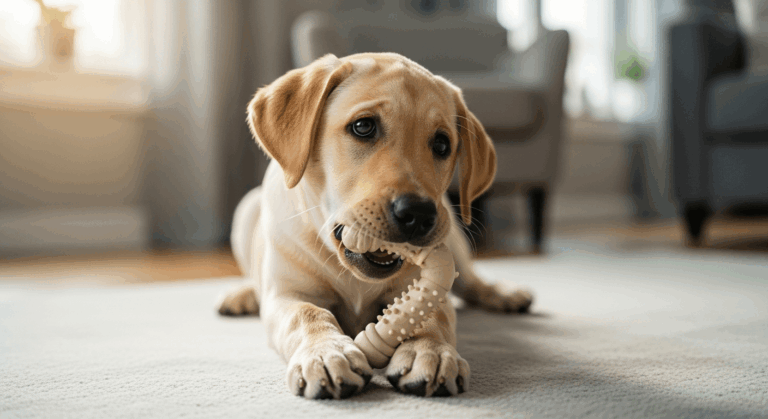
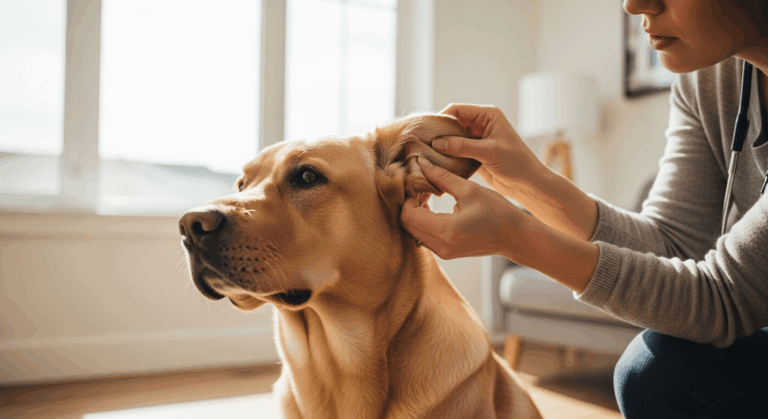
When do labs stop growing? Most Labrador Retrievers are near adult height by about 9–12 months, then mostly fill out chest and muscle into 12–18 months (sometimes longer). A Lab can look full size at one year and still not be mentally mature until around two. For male and female weight-by-age ranges, use our labrador growth chart — this post answers the age question, not the number tables.
Owners usually ask because a six-month Lab still looks leggy, or a year-old Lab keeps putting on muscle. Below we separate height from fill-out, walk the 6 → 18 month checkpoints, and show how to tell if growth is still happening. This sits inside our Labrador puppy’s first year map.
Most Labs are near adult height by about 9–12 months. After that they mainly fill out through 12–18 months, sometimes into year two. Mental maturity often lands near two years — later than the “full grown” look.
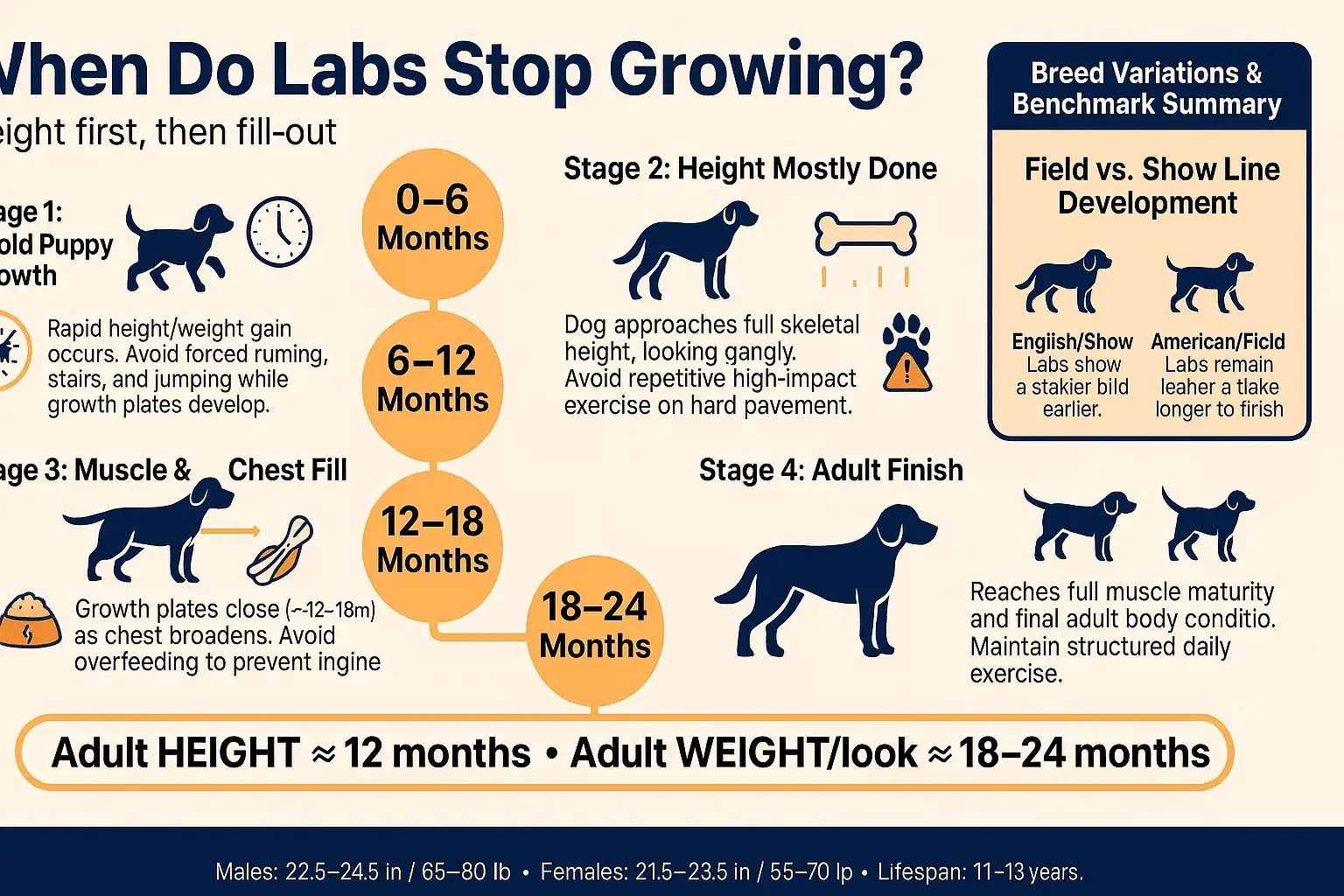
When Do Labs Stop Growing?
When do labs stop growing depends on what you mean by “stop.” Height, weight, and the thicker adult look do not finish on the same day.
Near adult height usually lands around 9–12 months. Many Labs are close by nine months; others need closer to a year before the withers settle. After that, most change is filling out — deeper chest, thicker neck and head, more muscle — into 12–18 months. Some bigger-boned or slower-maturing Labs keep adding substance into 18–24 months.
That is why “when is a lab full grown” gets muddy answers online. A one-year-old can look tall enough for adult clothes and still not look finished in the chest. Forums and owner reports line up with that split: height early, substance later. We treat those ages as ranges, not a guarantee for every puppy.
If you need pounds by age, do not hunt for a second chart here. Open the labrador growth chart for male and female estimate tables. AKC does not publish an official puppy weight-by-age table; adult targets come from the AKC Labrador Retriever standard.
Height, Weight, and Filling Out — Three Different Clocks
Think of Lab growth as three clocks that finish at different times.
Height is the withers measurement — the top of the shoulder. Most Labs are near their adult height in the 9–12 month window. After that, big jumps upward are uncommon.
Weight keeps moving after height slows. Some of that is healthy muscle and frame. Some of it is fat if portions creep up. A rising scale after the first birthday is not automatic proof of more skeleton — check ribs and waist first.
Filling out is the look owners mean when they say the dog “got bigger” without getting taller. The chest deepens, the loin fills, the head and muzzle look more solid, and the teenage leggy outline disappears. That phase often runs through 12–18 months, and some Labs keep refining into 18–24 months.
When do labradors stop growing in the sense searchers care about? Usually: height first, then substance. Confusing those clocks is how a lean 14-month Lab gets overfed because the scale still climbs.
Lab Growth Timeline: 6, 9, 12, and 18 Months
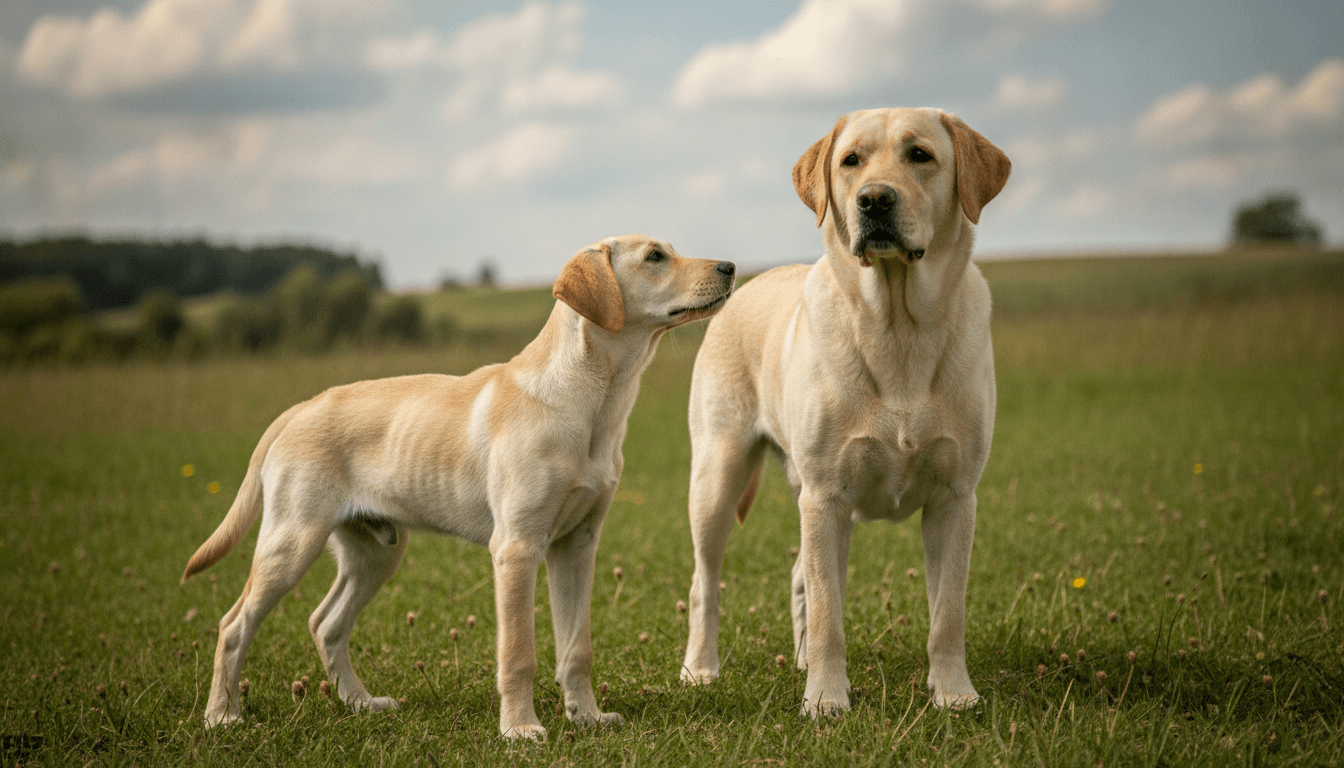
Use month checkpoints for expectations. Use the growth chart hub when you need the weight grid.
Around 6 months
At six months, most Labs still have clear upward and outward growth ahead. Weekly gains usually slow versus the early puppy surge, but the frame is not finished. Behavior often hits adolescence at the same time — selective hearing, more pull, more “ideas.” For size and stage detail, see our 6-month-old Labrador guide. How much do Labs grow after 6 months? Plenty of height and a lot of later fill-out for most dogs.
Around 9 months
By about nine months, many Labs are close to adult height. They can still look narrow in the chest and “teenage” in the loin. This is when owners often say the dog looks tall but not finished.
Around 12 months
Near the first birthday, a lot of Labs look “done” in photos. Height is usually near adult. Fill-out is often still underway. A 10-month-old Labrador guide covers the late-first-year stretch when training and alone-time expectations matter as much as the measuring stick.
Around 18 months
Chest depth, muscle, and overall substance are the main story now. Some Labs look settled by 18 months; others keep subtle changes toward two years. If the withers number has been flat for months but the dog looks thicker, that is fill-out — not a second height spurt.
Through all of this, parent size beats parlor tricks. Dam and sire adult weights explain more than any internet “double the four-month weight” tip.
Male vs Female Labs and English vs American Build
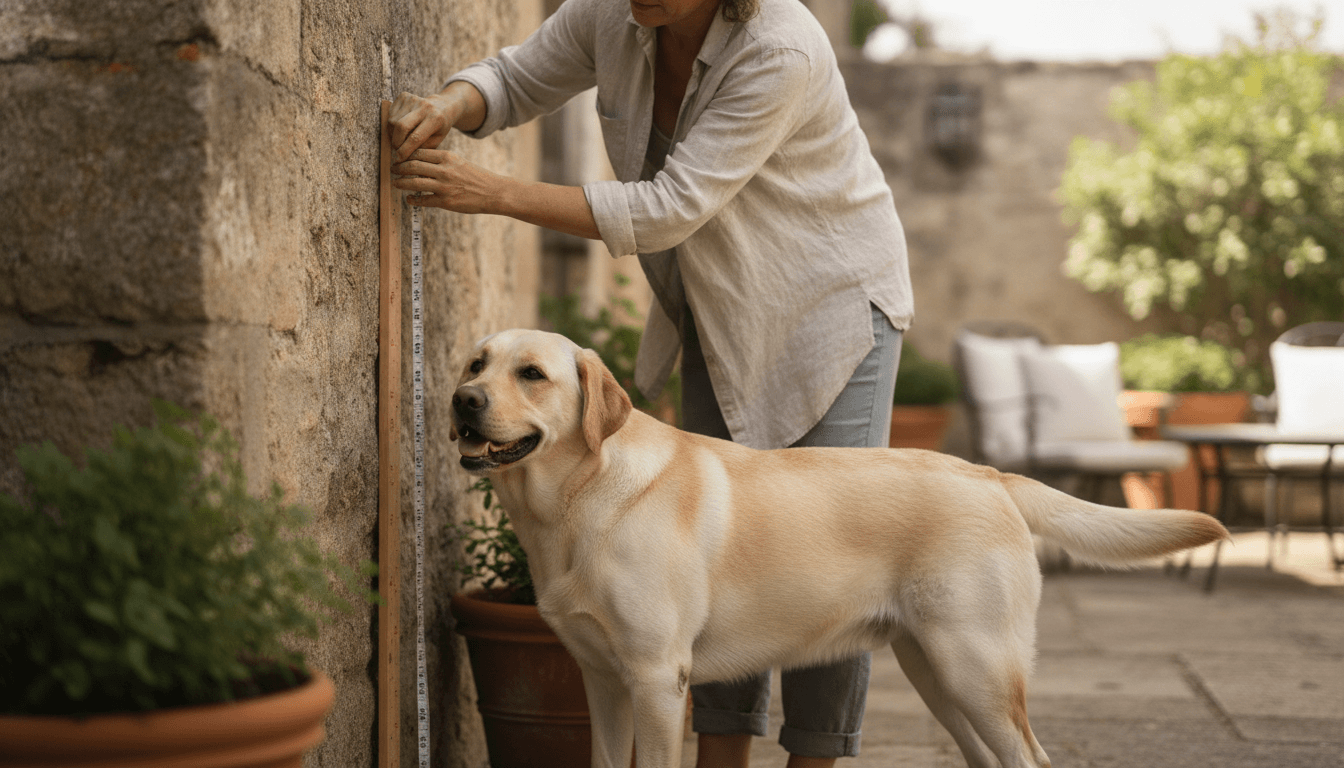
Sex and type change the adult target, not a separate stop-growing calendar.
Per the AKC Labrador Retriever breed standard:
- Males: 22.5–24.5 inches at the withers; desirable weight 65–80 lb
- Females: 21.5–23.5 inches at the withers; desirable weight 55–70 lb
Males often land a bit taller and heavier. Females are not a different growth species — they still follow height-then-fill-out. Do male Labs take longer than females? Sometimes males look unfinished a little longer because they have more frame to fill, but there is no formal rule that every male matures six months later.
English vs American Labrador type changes the outline more than the clock. Show-bred English Labs often look heavier and blockier. Field-bred American Labs often look taller and more racy at a similar weight. Both can finish height in the same 9–12 month window and keep filling out afterward. Ask for dam and sire adult weights when you can — that beats guessing from coat color. Color does not set stop-growing age.
How to Tell If Your Lab Is Still Growing
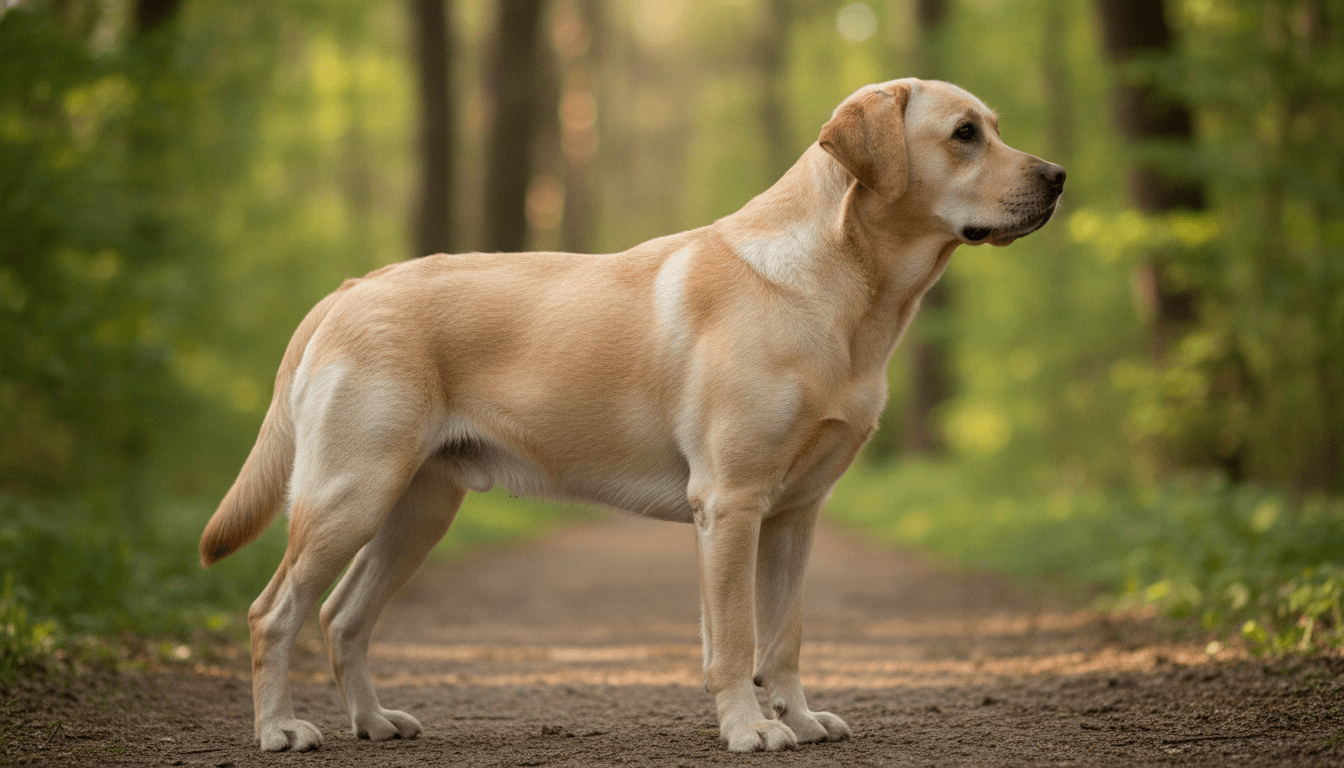
You do not need X-rays for everyday tracking. Use a few practical checks.
Withers height. Mark a wall or doorframe every month. If the mark has not moved for two to three months after nine to twelve months of age, height is likely done.
Proportions. Huge puppy feet relative to the legs can mean more upward growth left. Once feet and legs look balanced and the mark is stable, remaining change is usually fill-out.
Chest and head. A deeper brisket, thicker neck, and a more solid head are classic “still filling out” signs after height settles — common into 12–18 months and sometimes later.
Scale vs body condition. Weigh weekly on the same scale. Pair the number with a rib check. According to VCA Animal Hospitals’ body condition guidance, you want ribs you can feel under a thin fat layer, a visible waist from above, and a tummy tuck from the side. A climbing scale with disappearing waist is often fat, not frame.
Paw size alone is a clue, not a crystal ball. Owners and forums debate it constantly; treat it as one signal among several.
Growth Plates, Feeding, and Exercise While Growing
While growth plates are open, the job is lean, steady growth — not a stuffed puppy that looks “impressive” on Instagram.
Overfeeding does not make a healthier adult. Extra weight stresses developing joints. Labs are prone to hip dysplasia; keeping a visible waist during the growth year is joint insurance, not vanity. For portion ranges by life stage, use our how much should I feed my Labrador guide — we will not rewrite feeding math here.
Exercise should match age. Skip forced long-distance jogging on hard pavement and repetitive jumping off furniture while the dog is still growing. Short play, leash walks that match stamina, and supervised swimming are kinder than “tire them out” marathon sessions. Daily needs for adults live in our how much exercise a Labrador needs guide; puppy intensity stays shorter and more controlled.
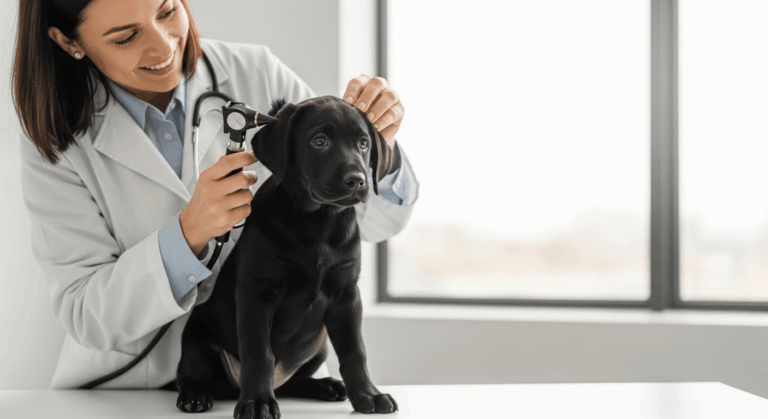
Neutering timing can have a small effect on growth patterns in some dogs; talk that through with your vet rather than using internet anecdotes as a schedule. For most owners, food amount and exercise quality matter more day to day than debating a calendar date alone.
Physical Size vs Mental Maturity
A Lab can look full grown and still think like a teenager.
Physical size — height plus most fill-out — often lands between one and two years. Mental maturity often settles closer to two years. That gap explains why a 14-month Lab that looks adult still fails recall at the park or chews like a puppy. The body finished earlier than the brain.
So when is a Labrador fully grown? If you mean height, often by about a year. If you mean the finished adult look, give fill-out into 12–18 months (sometimes longer). If you mean reliable adult behavior, plan closer to two. Train and manage for the brain you have, not the withers height on the wall.
Frequently Asked Questions
When do Labs stop growing?
Most Labs are near adult height by about 9–12 months, then fill out chest and muscle into 12–18 months, sometimes into 18–24 months. When do labs stop growing is really two answers: height first, substance second.
When is a Lab full grown / when is a Labrador fully grown?
“Full grown” usually means near-adult height by the first birthday, with fill-out still possible afterward. A one-year-old Lab can look tall and still thicken through 12–18 months. Mental maturity often lands near two years — later than the finished adult look.
Do Labs grow after 1 year?
Yes — mostly fill-out, not big height gains. Many Labs add chest depth and muscle after their first birthday. Sudden scale jumps with a lost waist are more often fat than new bone.
How much do Labs grow after 6 months?
After six months, Labs typically still gain a meaningful share of adult height and a large share of later substance. Gains slow versus early puppyhood, but 6 to 12 months is still a major growth window. See our 6-month-old Labrador post for that stage.
Do male Labs take longer than females?
Males are often taller and heavier as adults and can look unfinished a little longer while they fill a bigger frame. There is no fixed rule that every male stops six months later than every female. Parent size matters more than sex alone.
When do Labradors stop growing in height?
Height usually settles around 9–12 months for most Labs. After that, expect fill-out more than inches at the withers. Measure monthly; two to three flat marks after that window are a strong height-done signal.
Next Step: Track Age, Then Check the Numbers
When do labs stop growing is not one birthday — it is height around 9–12 months, fill-out into 12–18 months, and a brain that may need closer to two years. Keep your Lab lean while plates are open, measure the withers, and use ribs before the scale.
For pounds by age, open the labrador growth chart. For week-to-week puppy care across the first year, stay inside the Labrador puppy’s first year guide. If growth or limp concerns you, bring your numbers to your vet — ranges online are guides, not a diagnosis.