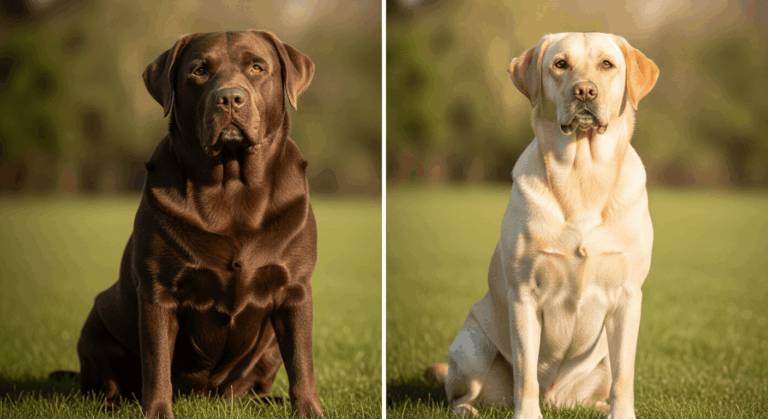
A Dudley Labrador is a yellow Lab with a pink nose, pale eye rims, and light-colored lips — the result of missing dark pigment, not a separate breed. It is not an albino, and it is not a white Lab. The coat is usually a normal yellow shade; the difference is only in the skin pigment on the nose, rims, and paw pads. This guide explains the genetics in plain English, how a Dudley differs from a snow nose, a white Lab, and a silver Lab, and how to care for that exposed pink skin.
A Dudley Labrador is a yellow Labrador that lacks dark pigment on its nose, eye rims, and lips, leaving them flesh-colored or pink. It is caused by recessive genetics, not illness. It is still a purebred Lab in temperament and health. The pink nose is a show-ring fault, not a “dud” — and it is different from a temporary snow nose.
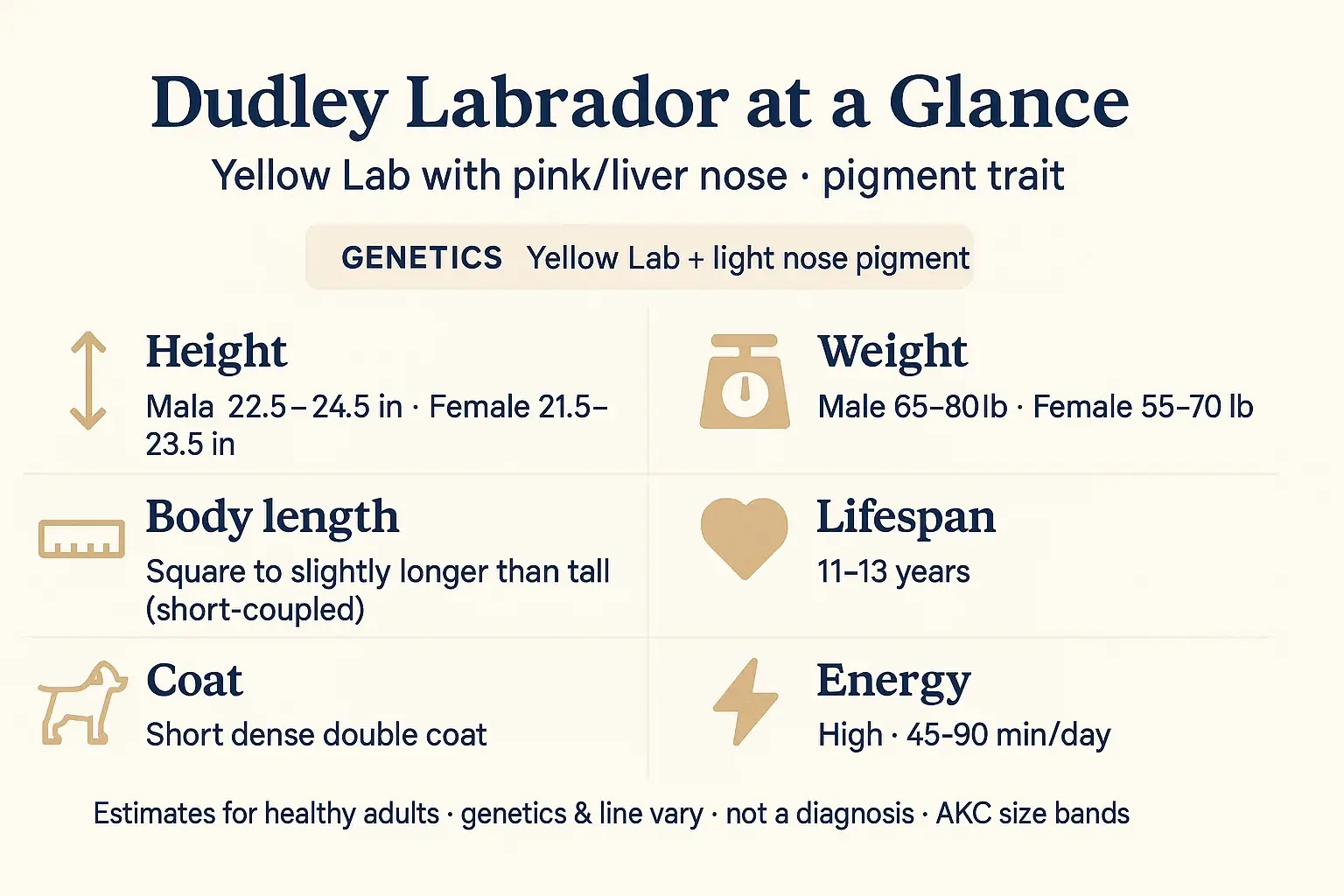
What Is a Dudley Labrador?
A Dudley Labrador is a yellow Labrador born without the dark pigment that normally colors the nose, the rims around the eyes, and the lips. Instead of black or brown, those areas are pink, flesh-toned, or pale liver. The eyes are often lighter too — amber, pale hazel, or a washed teal rather than warm brown.
The coat itself is standard yellow. It can be pale cream, mid-gold, or anything in the normal yellow range. That is the part people miss: “Dudley” describes pigment on the skin, not the color of the fur. A Dudley is not a “colored” Lab in the way silver or fox red are — it is a yellow Lab whose exposed skin never darkened.
The name is old show-ring slang, likely tied to a Staffordshire kennel line, and it stuck. Today, breeders and Lab owners use “Dudley” as shorthand for a pink-nosed yellow Lab. A Dudley Lab is a normal, healthy dog. The pigment simply did not develop where the breed standard expects it.
Dudley Labrador Genetics in Plain English
Coat and pigment in Labs run on two main gene locations, usually written as the B locus and the E locus. The B locus decides whether dark pigment is black (B) or chocolate/brown (b). The E locus decides whether that dark pigment shows up in the coat at all.
A yellow Lab is ee at the E locus. That double-recessive ee switches off dark pigment in the coat, which is why the fur is yellow. But most yellow Labs still carry a B gene, so their nose and rims stay black. The dog looks yellow with a black nose — the classic yellow Lab.
A Dudley Labrador happens when a yellow (ee) Lab is also bb at the B locus. With no black pigment available anywhere, the skin on the nose, rims, and lips has nothing dark to express, so it comes in pink or pale liver. In short: eebb is the plain-English recipe for a Dudley Lab. Two yellow parents can produce one if both carry the chocolate b gene.
This is normal recessive inheritance, not a defect or a health warning. A Dudley Lab is genetically a yellow Lab that also carries chocolate pigment genetics — that combination just leaves the nose unpigmented. For the full picture of how Lab colors work, see our guide to Labrador colors.
Dudley vs Snow Nose vs White Lab vs Silver Lab

The single biggest source of confusion is that four different things all get called “Dudley.” They are not the same, and the difference matters.
A snow nose is temporary. Many Labs — yellow, black, or chocolate — get a pink or faded stripe down the nose in winter, then darken again in summer. A true Dudley Labrador has a nose that was never dark and stays pink year-round. Snow nose is seasonal fading; Dudley is a lifelong lack of pigment.
A white Lab is about coat color, not nose color. A white or pale “English Cream” Lab is a very light yellow dog, and most still have a black or dark nose. A Dudley Labrador can have a normal mid-yellow coat but a pink nose. For pale coats, see our white Labrador guide and the cream-to-gold range in yellow Labrador.
A silver Lab is a diluted chocolate coat caused by the separate d dilution gene. Silvers usually have a matching diluted (gray-ish) nose. A Dudley is a yellow-coated dog with a pink nose — a different mechanism entirely. Full dilute detail lives in our silver Labrador guide.
| Type | Coat | Nose | Cause | Permanent? |
|---|---|---|---|---|
| Dudley Labrador | Yellow | Pink / flesh | eebb — no dark pigment | Yes |
| Snow nose | Any | Pink stripe, seasonal | Temperature-linked fading | No |
| White Lab | Very pale yellow | Usually black | Pale yellow shade | Nose stays dark |
| Silver Lab | Diluted chocolate (gray) | Gray / diluted | dd dilution gene | Yes |
The takeaway: a pink nose alone does not make a Dudley Labrador. A temporary winter fade is a snow nose, a pale coat is a white Lab, and a gray coat is a silver Lab.
Dudley Labrador Appearance: Nose, Eyes & Coat
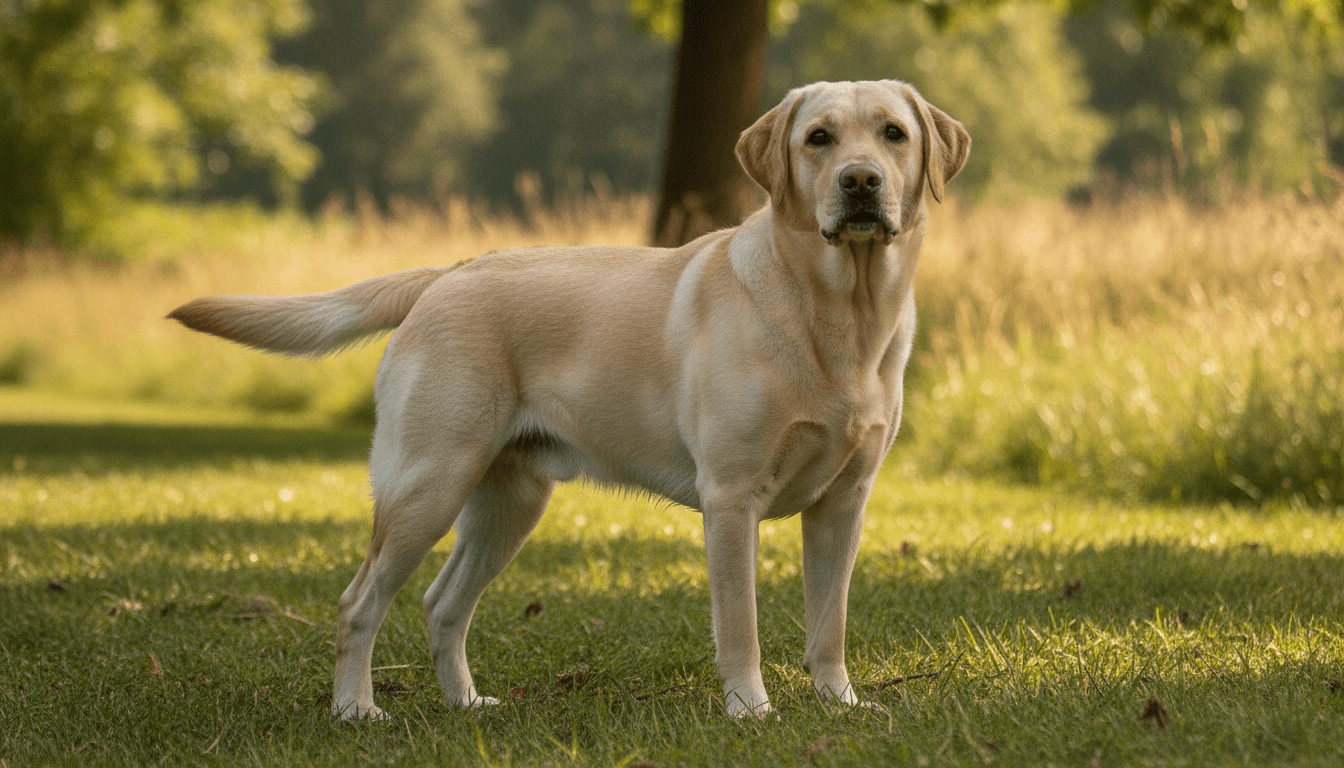
The nose is the headline feature. On a Dudley it is pink, flesh-colored, or pale liver, and the leather can look almost translucent in strong light. The rims around the eyes and the lip edges are usually pink to match.
The eyes are frequently lighter than a standard Lab’s warm brown. Pale amber, light hazel, and a washed green-teal are all common in a Dudley Labrador. This is not the pink or red eye of true albinism — Dudleys are not albino. They have functional pigment in the iris, just less of it. A Dudley can see normally.
The coat sits in the ordinary yellow range. Body, build, ears, tail, and size are exactly what you would expect from any Lab. Nothing about the skeleton or coat texture changes. If you covered the nose, most people could not tell a Dudley from any other yellow Lab. The pigment is the only visible difference, which is why photos of a Dudley full body always come back to that pink nose.
AKC Show Standard: What “Dudley” Means for Conformation
Here is the honest part. Under the breed standard used by the AKC, a fully pink or flesh-colored nose is a conformation fault. The standard asks for a black nose on black and yellow Labs and a brown nose on chocolates. A Dudley does not meet that expectation, so it would be penalized or disqualified in the show ring.
That is a show-ring rule about appearance. It is not a judgment on health, intelligence, or worth as a companion. A Dudley Labrador is not a “dud.” The similar sound is a coincidence — the name is far older than the insult.
For a pet home, the show fault is irrelevant. A Dudley Labrador cannot compete in conformation, but it can do everything else a Lab does: family life, obedience, fieldwork, therapy work, and being a great dog. Ethical breeders will be upfront that a Dudley is pet-quality by show standards and should never carry a rare-color premium. It is a recessive outcome, not a designer color.
Caring for a Dudley Labrador: Sun, Skin & Health
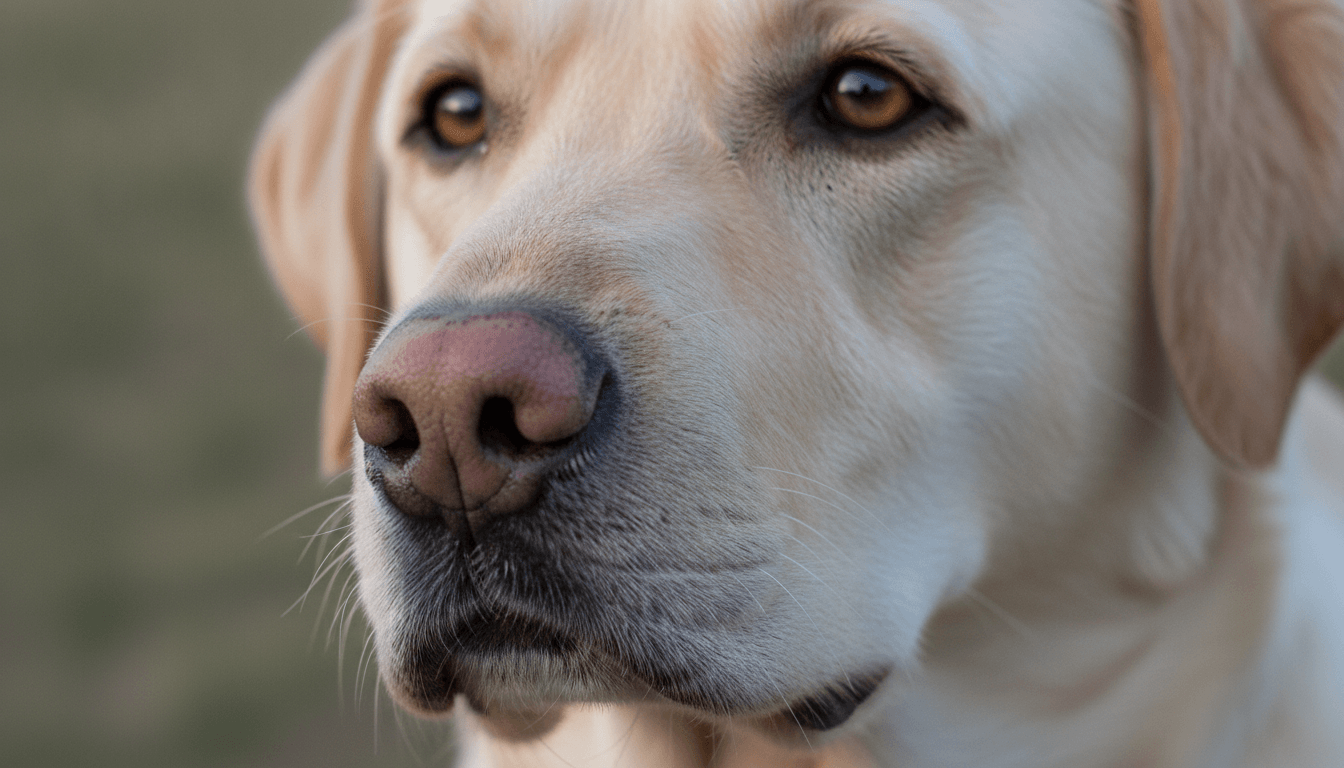
The one real care difference comes from that unpigmented nose. Dark pigment protects skin from the sun, and a Dudley does not have it on the nose, rims, or lips. That exposed pink skin burns more easily and, over years, carries a higher sunburn and skin-damage risk on those spots.
Practical protection is simple. Keep a Dudley out of peak midday sun in summer, and ask your vet about a dog-safe sunblock for the nose on bright days and at the beach. Watch the nose leather for cracking, crusting, raw patches, or color changes, and have any persistent sore checked. According to most veterinarians, unpigmented noses deserve a closer look during routine exams.
Beyond the nose, a Dudley Lab has the same health profile as any Lab. The shared breed risks apply equally: hip and elbow dysplasia, progressive retinal atrophy (PRA), exercise-induced collapse (EIC), and obesity. OFA or PennHIP hip clearance, elbow certification, eye clearance, and EIC DNA testing on both parents are the documentation to ask for before buying any Lab puppy — Dudley or not. Lifespan matches the breed baseline; there is no color-linked shortening. For the wider breed picture, see our Labrador Retriever breed guide.
Temperament & Living With a Dudley Labrador
Color and pigment tell you nothing about personality. A Dudley has the same temperament potential as any other Lab: friendly, food-motivated, energetic as a young dog, and highly trainable. There is no “Dudley personality.”
What actually shapes temperament is line, not pigment. A Lab from calm show lines behaves differently from a high-drive field Lab, and a Dudley can come from either. If you want a settled family dog, ask about the parents’ lines and meet the dam — the same advice we give in our English vs American Labrador comparison. The pink nose is a footnote next to lineage, health testing, and socialization.
Day to day, living with a Dudley Labrador is just living with a Lab. Expect heavy seasonal shedding, a big appetite that needs portion control, and a dog that wants exercise and company. Treat the nose sensibly in the sun and, otherwise, raise it exactly as you would any yellow Lab.
Frequently Asked Questions About Dudley Labradors
What is a Dudley Labrador?
A Dudley Labrador is a yellow Lab with a pink or flesh-colored nose, pale eye rims, and light lips caused by missing dark pigment. Genetically it is a yellow dog (ee) that also carries chocolate genetics (bb). It is a healthy purebred Lab, not a separate breed, and its pink nose is a show-ring fault only.
Is a Dudley Labrador the same as an albino or white Lab?
No. An albino dog lacks nearly all pigment and has pink or red eyes and pale skin all over. A Dudley has a normal yellow coat and functional, colored eyes — only the nose and rims are unpigmented. A white Labrador is about a very pale coat and usually keeps a dark nose, which is a different thing entirely.
Is a Dudley Labrador’s pink nose a health problem?
The pink nose itself is cosmetic, but the exposed skin sunburns more easily than a black nose. Keep a Dudley out of harsh midday sun and ask your vet about a dog-safe nose sunblock. Watch for cracking or sores. Otherwise a Dudley Labrador shares the same health risks as any Lab.
Are Dudley Labradors rare?
They are uncommon but not “rare” in a way that justifies a higher price. A Dudley appears when both parents pass on the recessive chocolate gene alongside yellow. Because it is a show fault, responsible breeders sell them as standard pet-quality Labs — never as a premium rare color.
Can a Dudley Labrador be registered or shown?
A Dudley Labrador can be registered as a purebred Labrador, since registration follows pedigree, not nose color. It generally cannot succeed in conformation shows, where a fully pink nose is a fault or disqualification. It can still compete in obedience, agility, and field events, and it makes a completely normal pet.
If you are looking at a pink-nosed yellow puppy, judge it the way you would any Lab: check the parents’ health clearances, meet the dam, and plan a little sun protection for that nose. A Dudley Labrador is a purebred Lab through and through — the pigment is the only footnote. To see where it fits among the rest of the coat and pigment variations, browse our full Labrador colors guide.