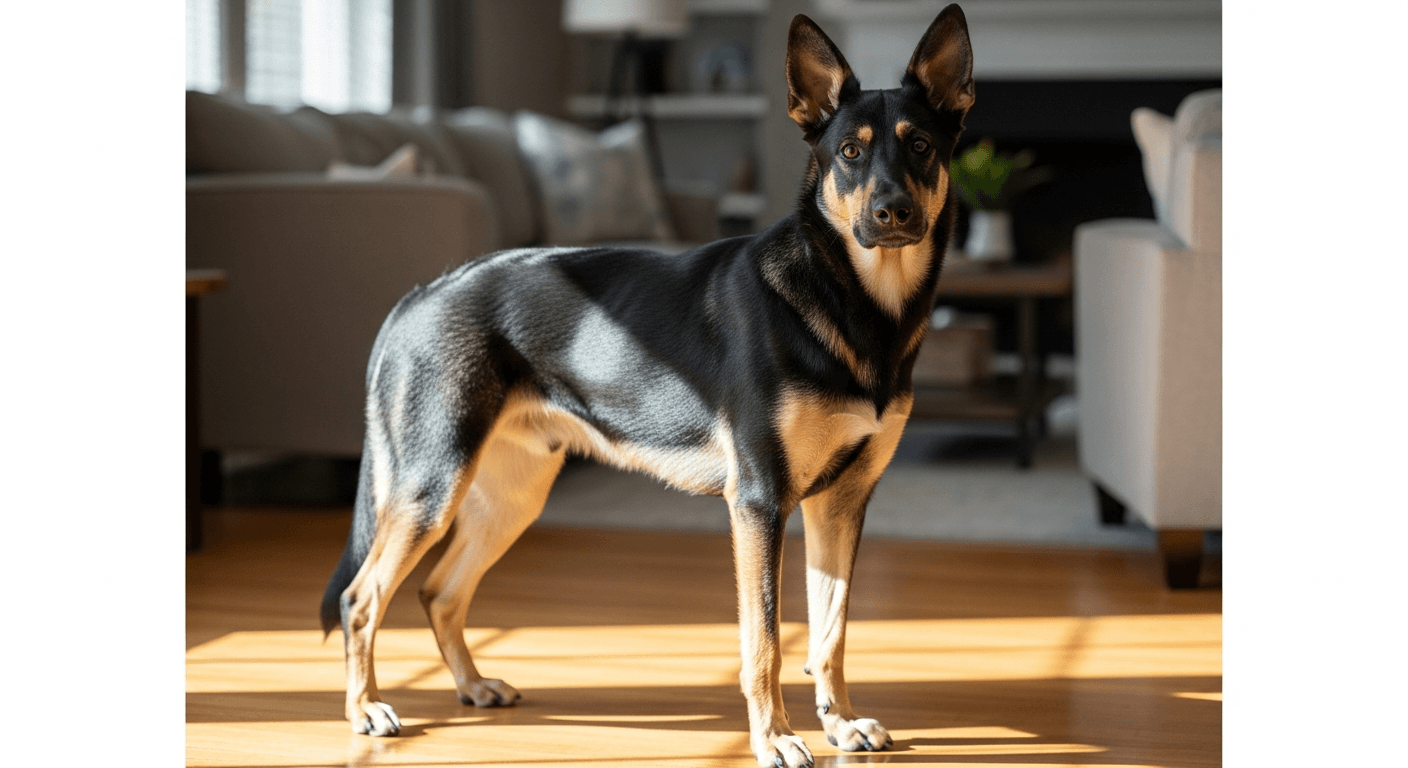
The German Shepherd Lab mix — also known as the Alsatian Labrador mix — is intelligent, energetic, and loyal — but its two parent breeds have meaningfully different temperaments, and that is the whole story with this cross. The Lab is open, friendly, and food-motivated. The German Shepherd is protective, independent, and tightly bonded to its handler. A Sheprador can land anywhere between those two profiles, so understanding both parents is the only way to prepare for the range. Families comparing high-energy athletic crosses often look at the boxer lab mix or the rottweiler lab mix next. Here is the honest picture.
German Shepherd Lab mixes (Shepradors) are intelligent, energetic, loyal dogs that combine the Lab’s social openness with the German Shepherd’s protective instinct and working drive. Temperament varies significantly in first-generation crosses — some Shepradors are Lab-dominant and outgoing; others lean toward the German Shepherd’s more reserved, protective side.
German Shepherd Lab Mix Appearance: Size, Coat and What They Look Like
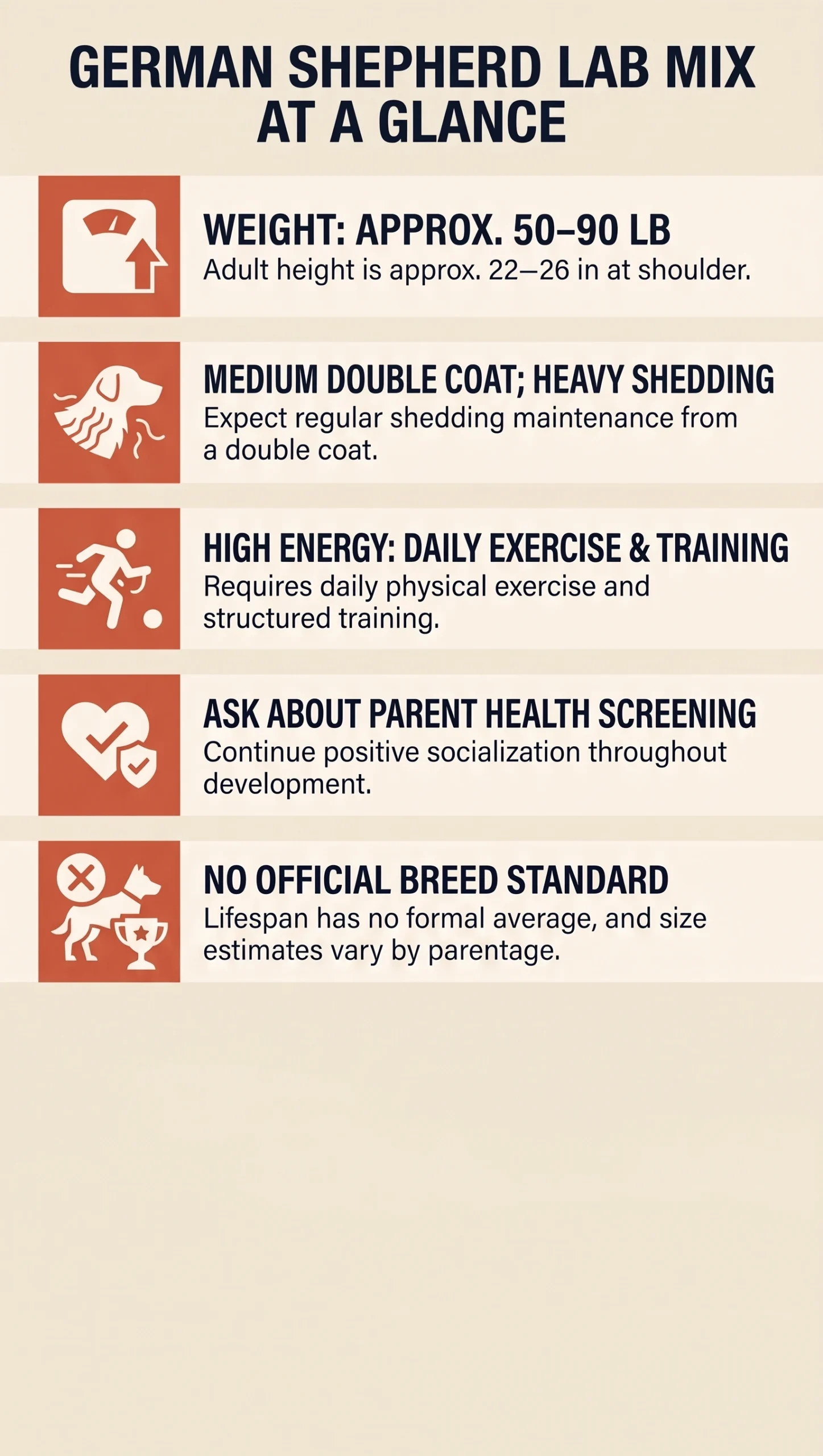
A Sheprador is a large dog in every case — there is no miniature version. Expect 50–90 lbs and 22–26 inches at the shoulder, since both parent breeds sit in that size range.
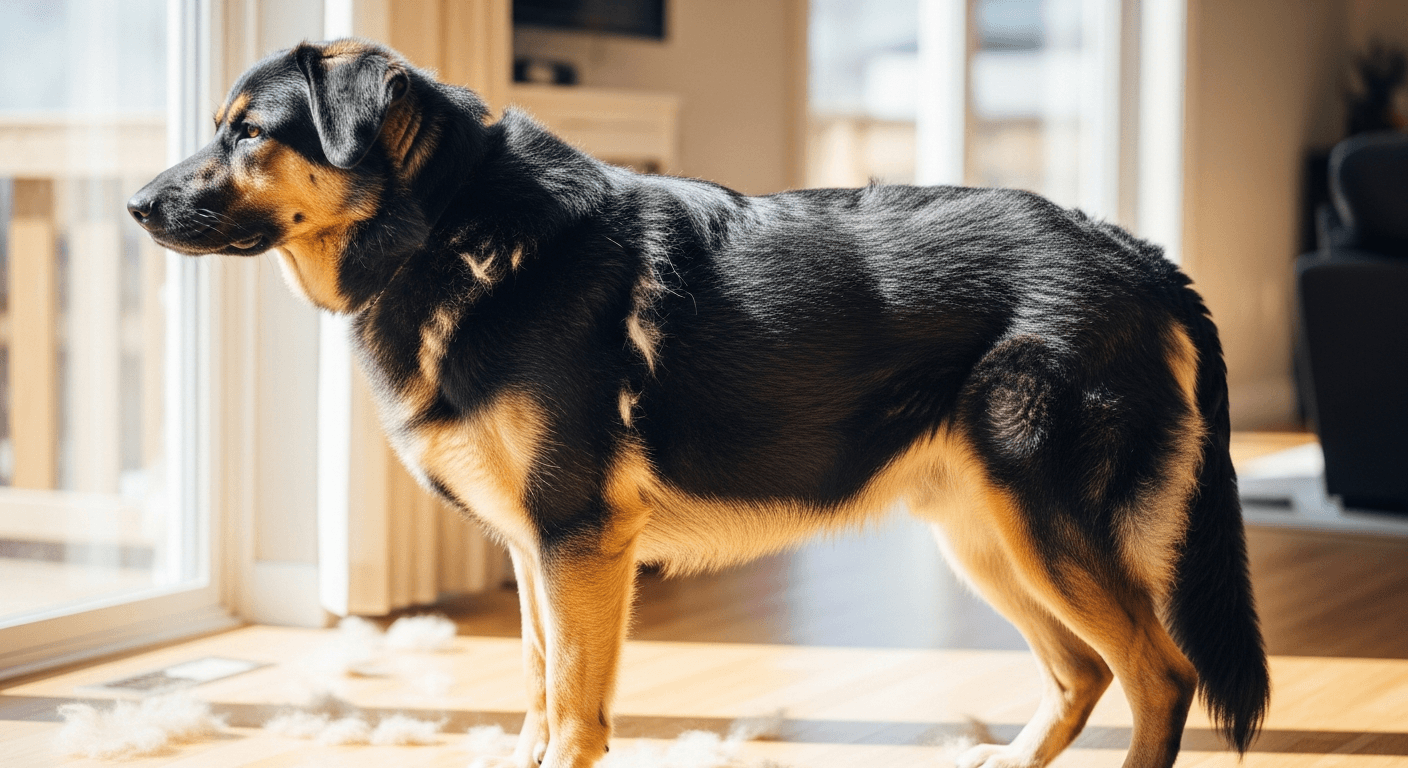
The coat is usually a medium-length double coat — longer and denser than a Lab’s, but shorter than a long-coated German Shepherd. Shedding is significant; both parents shed heavily. The most common colors are black, tan, and yellow, often producing the classic German Shepherd saddle marking over a golden or tan base. Plenty of Shepradors come out solid black or solid yellow instead.
In build, the Sheprador often pairs the Lab’s broad chest and head with the German Shepherd’s longer back and angled hindquarters. That hind-leg angulation matters: if the German Shepherd parent line has poor hip scores, the angulation can add joint stress. As with any first-generation cross, litter variation is high — two Sheprador puppies from the same litter can look quite different. For the Lab parent’s baseline, see our Labrador Retriever breed guide.
Sheprador Temperament: The Variable in This Cross
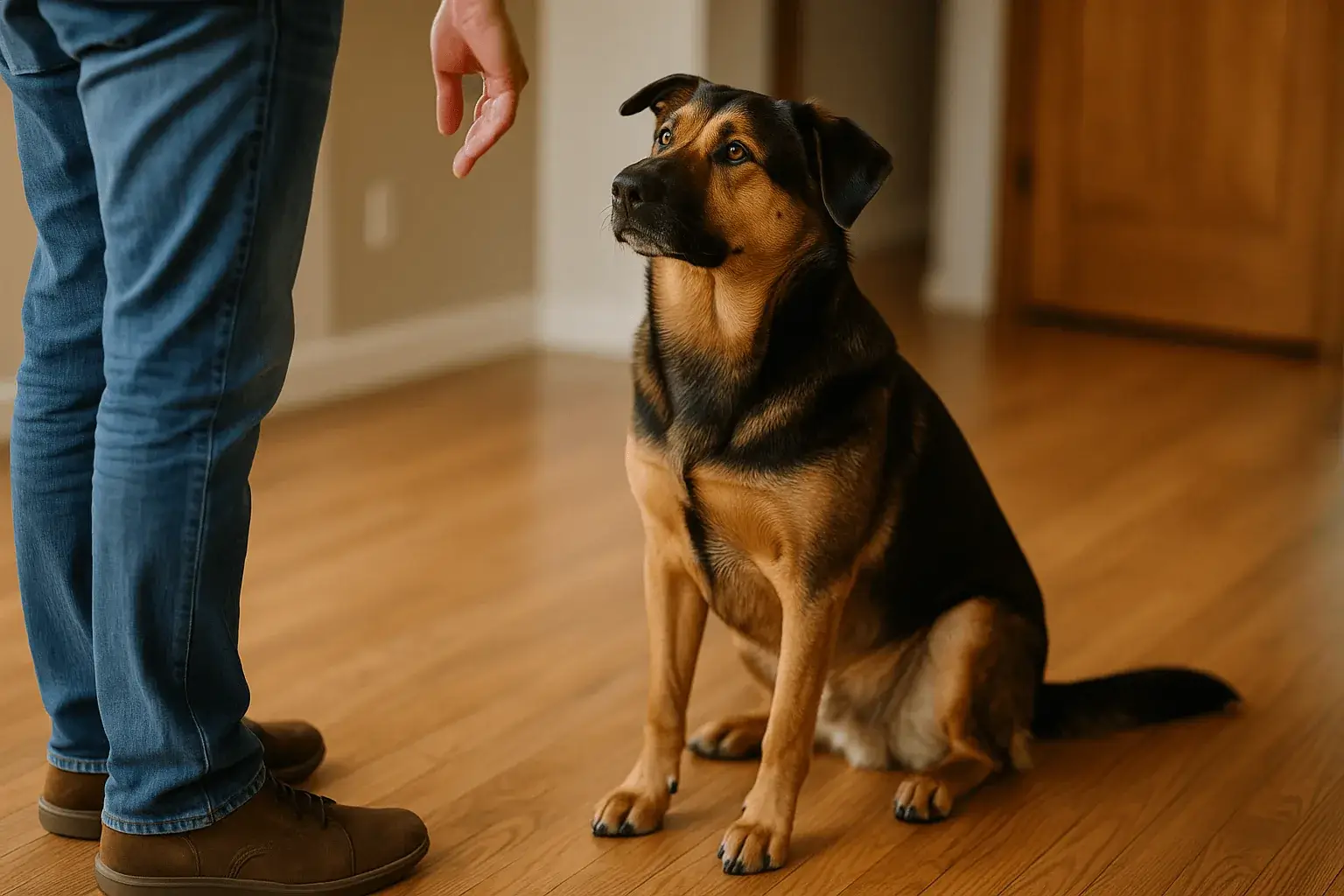
This is the section most other Sheprador content gets wrong by treating the mix as uniformly friendly. In reality, the german shepherd labrador mix temperament covers a wide range, and which end you get matters enormously.
A Lab-dominant Sheprador is sociable, open to strangers, food-motivated, and easy to train — essentially a Lab with slightly more focus and drive. This is the best-case version for most families. A German Shepherd-dominant Sheprador is more reserved with strangers, potentially protective or territorial, strongly bonded to one handler, and more prone to reactivity if undersocialized as a puppy. That dog is excellent in experienced hands and a real challenge for a first-time owner.
Most Shepradors fall somewhere between. A puppy from a social, well-tempered German Shepherd dam and a stable Lab sire is far more predictable than one from a reactive dam — which is why meeting the parents is essential. With children, Labs are reliably good, while German Shepherds are usually good with their own family but can be wary of unfamiliar kids; the Sheprador can go either way, so early socialization with children matters regardless.
One trait to plan for is prey drive. German Shepherds carry more prey drive than Labs, so a Sheprador may show chasing, herding, or strong interest in small animals. That needs active management around cats, small pets, and young children who run.
Training a Sheprador: Intelligence, Drive and What This Mix Needs
The Sheprador is one of the most intelligent Lab crosses — its cousins the Goldador, the Labrabull, and Huskador take the same Lab base in gentler and more independent directions. German Shepherds rank near the top of working intelligence and Labs are not far behind, so this dog learns fast — which cuts both ways, because it picks up bad habits just as quickly. Sheprador training has to stay ahead of that.
A belgian malinois lab mix is a close relative with even more drive. It needs daily work, not just a long walk.
Motivation is usually high from the Lab side, but German Shepherd-leaning dogs also respond strongly to play reward and clear handler approval. Using food and play together is more effective than food alone. What really separates this mix from a purebred Lab is the mental stimulation requirement — it is much higher. A bored Sheprador becomes destructive, anxious, or reactive, so puzzle feeders, nose work, structured obedience, and dog sports all belong in the routine. You cannot exercise this dog physically and leave it mentally idle.
Socialization is non-negotiable. The critical window from 8 to 16 weeks must be used intensively — puppy classes, calm exposure to strangers and children, and varied environments. A German Shepherd-side protective instinct that is not channeled by broad early socialization can harden into reactivity or fear by 12–18 months. For the foundation, see our Labrador training guide, and for the early window specifically, our puppy first-year guide. A Sheprador is workable for a motivated first-time owner, but it is a higher-effort dog than a purebred Lab.
Sheprador Health Problems and Life Expectancy
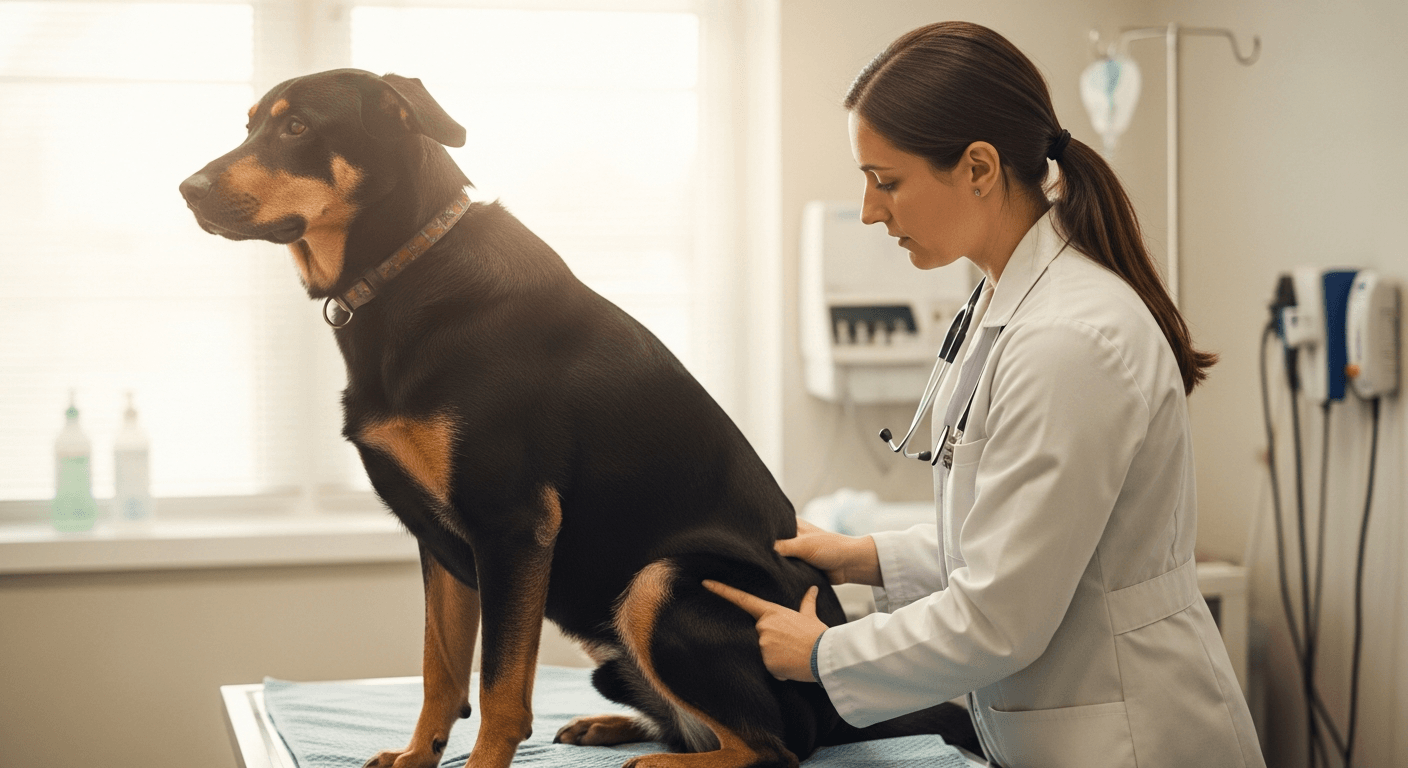
We do not have a reliable population estimate for Sheprador lifespan. Published ages for German Shepherds and Labradors describe the parent breeds, not a measured average for their cross. Ask about the individual dog’s health, family history, and screening records rather than a promised age range.
Hip dysplasia is the biggest shared concern. Both Labs and German Shepherds have elevated rates, so the Sheprador is at compounded risk, and German Shepherd lines with extreme hind angulation are higher still. Both parents must have OFA or PennHIP hip clearances — treat that as non-negotiable. Elbow dysplasia affects both breeds too, so ask for OFA elbow clearances as well. For how this condition is managed, see our guide to Labrador hip dysplasia.
Degenerative myelopathy (DM) is not unique to this cross or to German Shepherds. The UC Davis Veterinary Genetics Laboratory reports clinically affected dogs across several breeds, including both German Shepherds and Labrador Retrievers, as well as crossbred dogs. An SOD1 test identifies a genetic risk variant; it does not by itself diagnose clinical disease, and not every dog with two copies develops DM. Ask your veterinarian how to interpret the parents’ results and family history.
Discuss bloat (GDV) risk and any feeding or exercise concerns with your veterinarian. For the broader picture, see our Labrador health guide. Screening records help you ask informed questions; they do not guarantee that a puppy will remain free of disease.
Sheprador Care: Exercise, Grooming and Is This the Right Dog for You?
Plan on 2+ hours of activity daily, and make sure some of it is mental. The Sheprador’s combined herding and retrieving drive means physical exercise alone is not enough — dog sports like agility, nose work, and obedience suit this mix perfectly. Grooming is moderate-to-high: the medium double coat needs brushing 3–4 times a week, with heavy seasonal sheds twice a year. It is more work than a Lab coat, though less than a long-coated German Shepherd.
A Sheprador is right for you if you have dog-ownership experience, you can commit to 2+ hours of daily structured exercise and engagement, you want a capable and intelligent working partner, and you are prepared for a dog that may need management around strangers.
It is not right for you if you are a first-time owner who wants a low-maintenance social companion, you work long hours without a midday plan, your daily availability is unpredictable, or you live in a small space without outdoor access. The AKC ranks the Labrador parent as a top family dog, but the German Shepherd side raises the bar — this is a more demanding animal than a purebred Lab.
Frequently Asked Questions: German Shepherd Lab Mix
What is a German Shepherd Lab mix called?
A German Shepherd Lab mix is commonly called a Sheprador. It is a first-generation cross between a German Shepherd and a Labrador Retriever, combining the Lab’s sociable, trainable nature with the German Shepherd’s intelligence, drive, and protective instinct.
Are German Shepherd Lab mixes good family dogs?
They can be excellent family dogs in the right home. A well-socialized, Lab-leaning Sheprador is loyal, smart, and good with children. But this mix needs experienced handling, heavy daily exercise, and intensive early socialization. It is a higher-effort dog than a purebred Lab and not ideal for first-time owners.
How big does a German Shepherd Lab mix get?
A Sheprador reaches 50–90 lbs and stands 22–26 inches at the shoulder. Both parent breeds are large, so every Sheprador grows into a large dog. Males tend toward the heavier end of the range.
Do German Shepherd Lab mixes shed a lot?
Yes. Both parent breeds shed heavily, so the Sheprador’s medium double coat sheds year-round with two heavy seasonal sheds. Plan on brushing 3–4 times a week. This is not a low-shedding or low-maintenance coat.
What health problems do German Shepherd Lab mixes have?
Ask about hip and elbow screening, family health history, DM-related genetic results, and bloat concerns. DM has been reported in both parent breeds and crossbred dogs; a genetic risk result is not a diagnosis. Have your veterinarian interpret the relevant records for the individual dog.
The Sheprador is not simply a Lab with extra intelligence — it is a more complex dog that asks more of its owner. In the right hands it is exceptional: loyal, capable, and highly trainable. In unprepared hands it becomes a reactive, destructive management problem. Decide honestly which category you are in before you commit, and if you are still comparing options, our Labrador Retriever breed guide is the place to start.