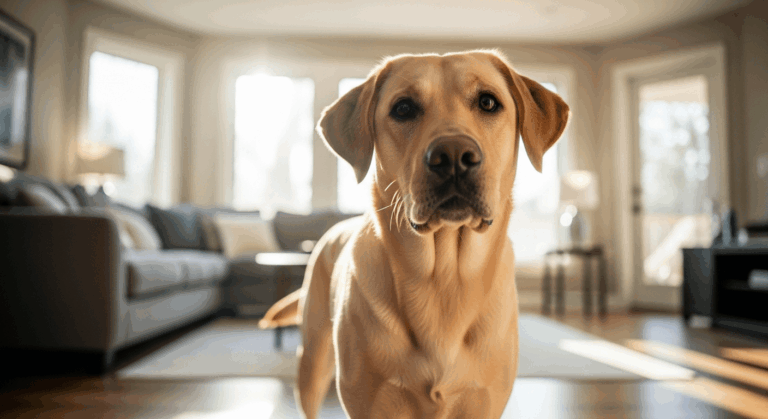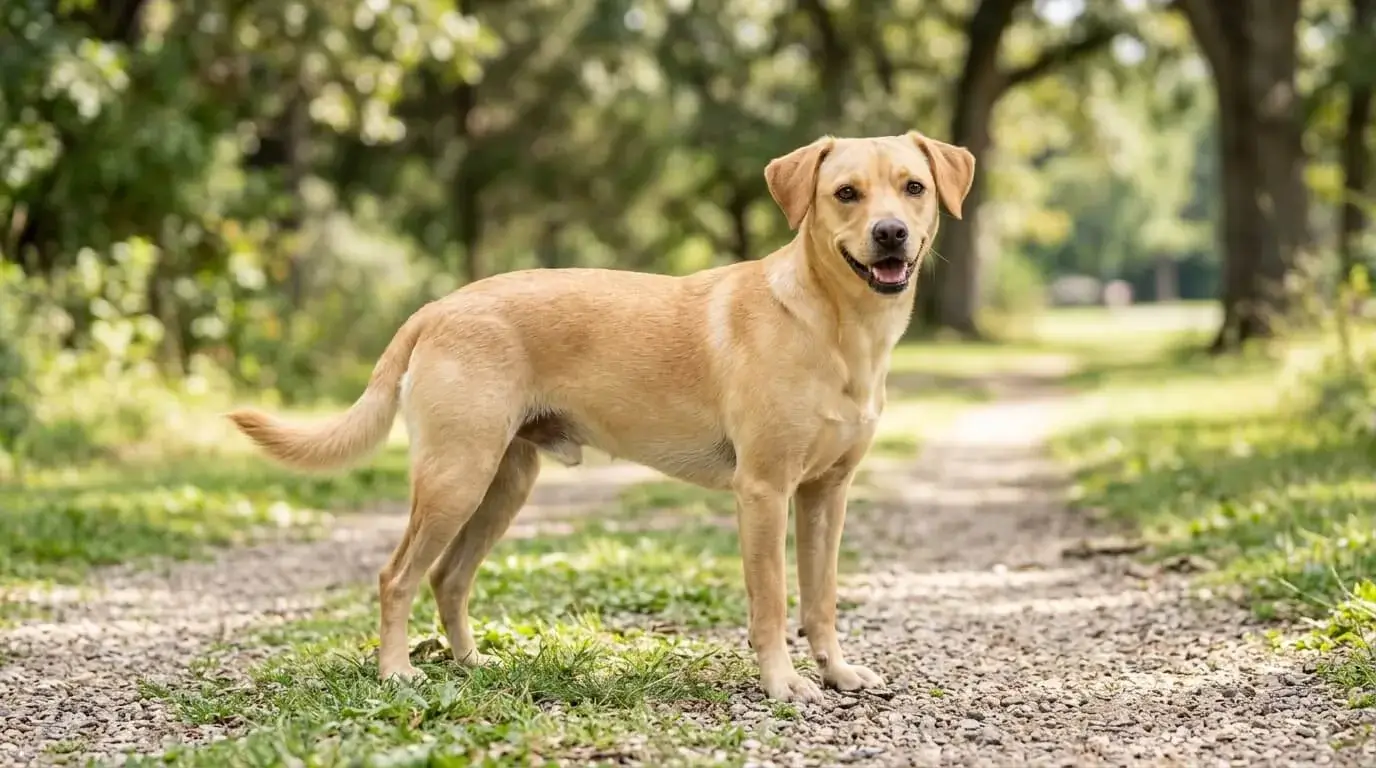
A chihuahua lab mix has no set weight. A Chihuahua is capped near 6 pounds. A Labrador runs 55–80 pounds. Online charts that print one number, 15 pounds or 10–25 pounds, are guessing.
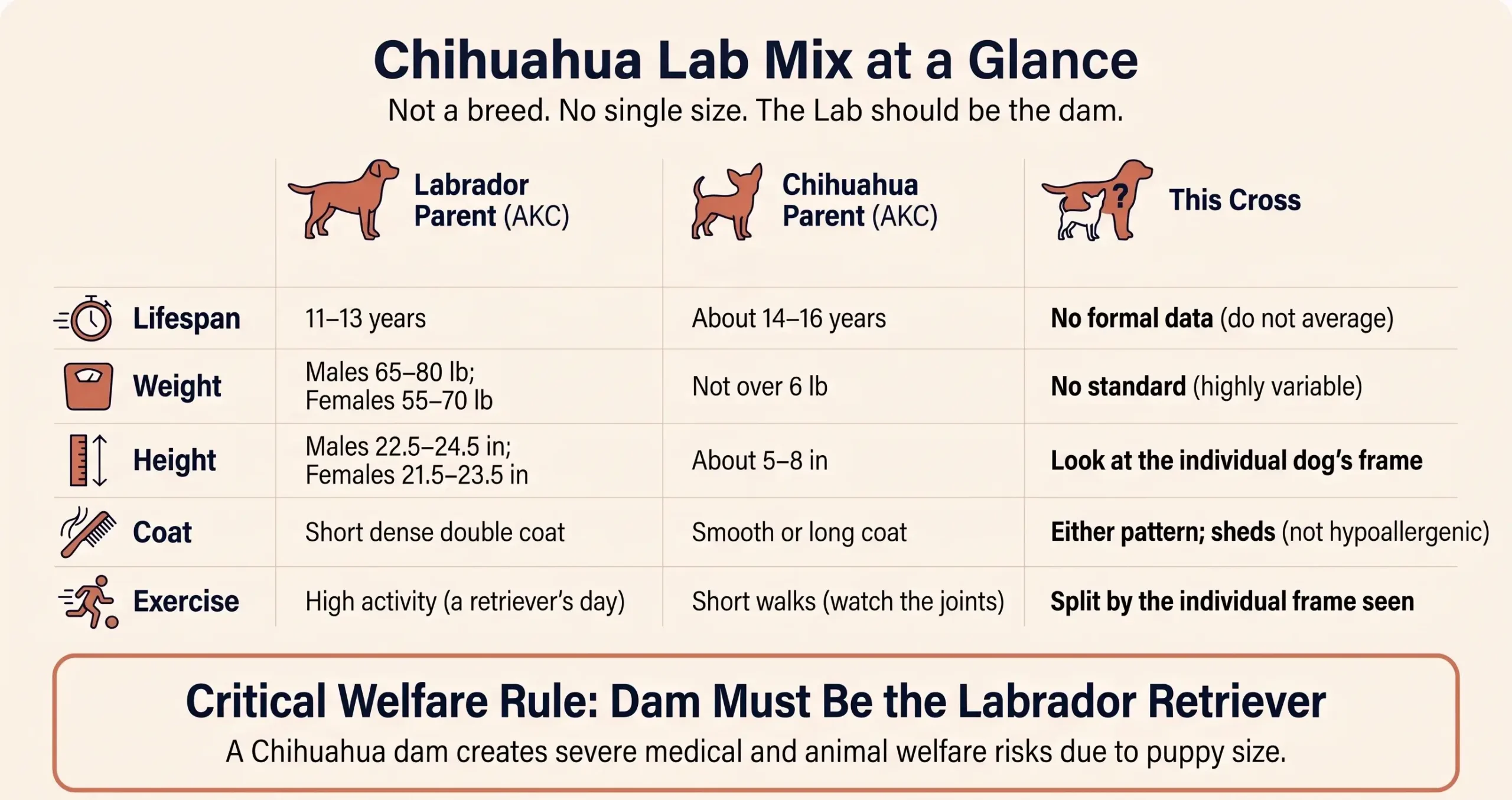
The American Kennel Club describes the Chihuahua as a tiny dog that should not exceed 6 pounds, commonly about 5–8 inches tall, with a life span around 14–16 years. On the other side, a male Labrador is 65–80 pounds and a female 55–70, at 21.5–24.5 inches tall. Those are the parents. The cross has no club standard.
How the Cross Is Produced
A labrahuahua is a Labrador crossed with a Chihuahua. The nickname is not an AKC breed. The welfare question comes before the cute photo.
The dam should be the Labrador. A Chihuahua cannot safely carry or whelp puppies sired by a Lab. Breeders who make this cross usually use artificial insemination and a Lab dam. If a seller will not say which dog carried the litter, walk away. A Chihuahua dam is a welfare problem, not a selling point.
Puppies from one litter still do not share one body. Some stay small. Some land closer to a modest Lab. Coat can be smooth or longer. Ears can drop or stand. None of that is a size promise.
Among the small and large Lab crosses we profile, this one has the widest size gap. A corgi labrador mix is the closer sibling on size ethics: another small parent, the same rule that the Lab carries the litter.
A Labrador doxie mix raises the same dam question, plus a long back to protect.
Why Online Weight Charts Disagree
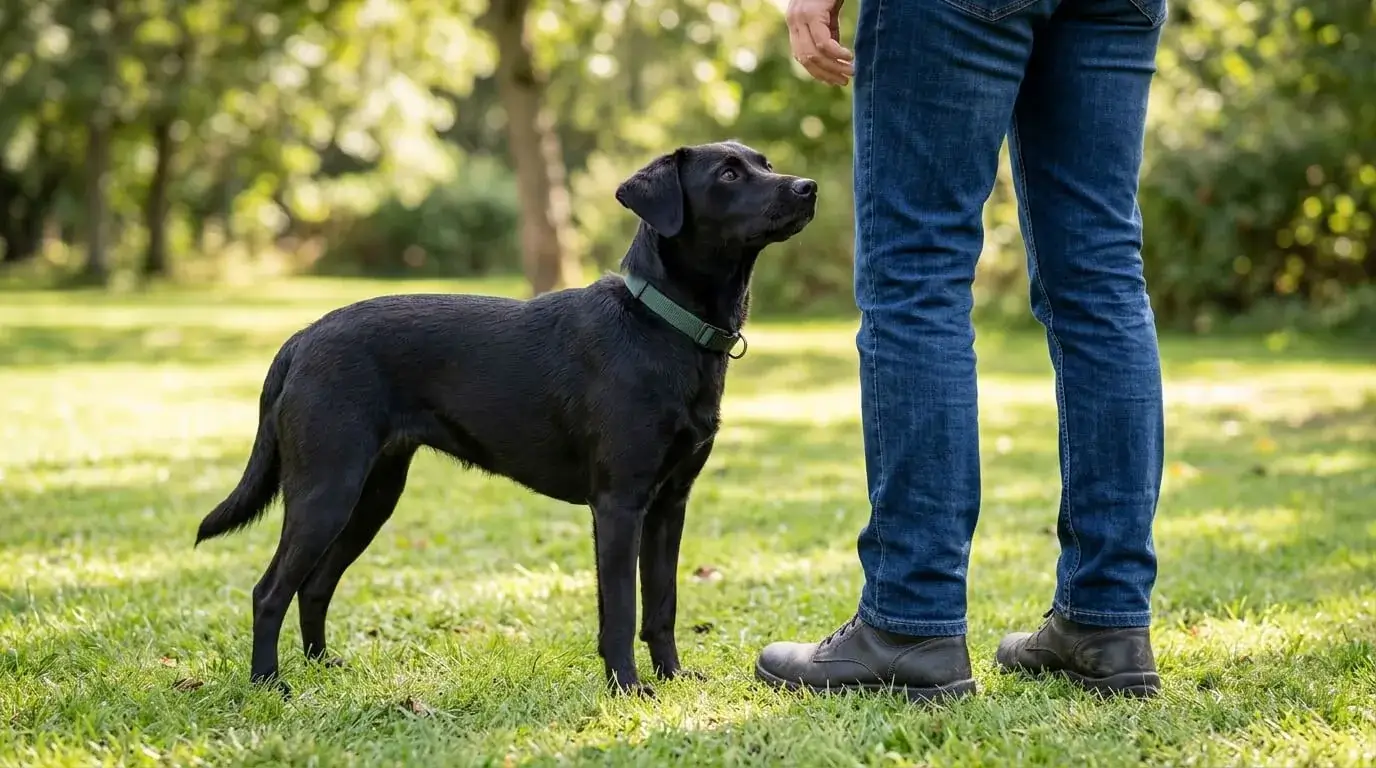
Care sites do not share one adult weight because no club has weighed this cross. One page stops near 15 pounds. Another prints 10–25. A third implies a wider middle. Those are their guesses. We will not pick a winner and call it the breed.
Use the parents as a fence. A dog that took the Chihuahua frame can stay well under a Lab. A dog that took the Lab frame can pass 25 pounds without being “wrong.” Shelter cards that say “chi mix” are a guess about the parents.
Look at the legs and the chest at six months, then again at a year. Do not pay extra for a predicted adult weight. A chihuahua lab mix sold as “teacup” is marketing. Teacup is not an AKC size.
Keep whichever dog you get lean. Extra pounds stress knees and a back that may be longer than a typical Chihuahua’s. The Lab side will eat past a healthy rib feel if the bowl stays out.
A Big-Dog Brain in a Small Body
Expect a split personality more often than a tiny calm Lab. The Chihuahua half is often velcro: one person, one lap, a sharp opinion about strangers. The Lab half wants people, food, and a job. You can get both in one house.
That mix is affectionate with the family it knows. It is not automatically a social butterfly at the dog park. Early, calm introductions matter. Forcing a small dog into a crowd of large dogs is how fear starts.
A chihuahua lab mix that lives with a larger dog needs a safe exit. The small dog should be able to leave the room without being body-blocked. Baby gates do that job.
Do not leave the pair alone until you have watched a full week of calm. Size difference is the risk, not a personality label.
Kids need the same honesty. A tiny dog gets stepped on and squeezed. A heavier puppy can still bowl a toddler. School-age kids who can sit on the floor do better than preschoolers who want to carry the dog. We do not like a chihuahua lab mix as a purse dog for a child.
Train with food. The Lab side usually works for a treat. Keep sessions at two or three minutes. A small dog tires and startles faster than a retriever.
Barking and Stranger Caution
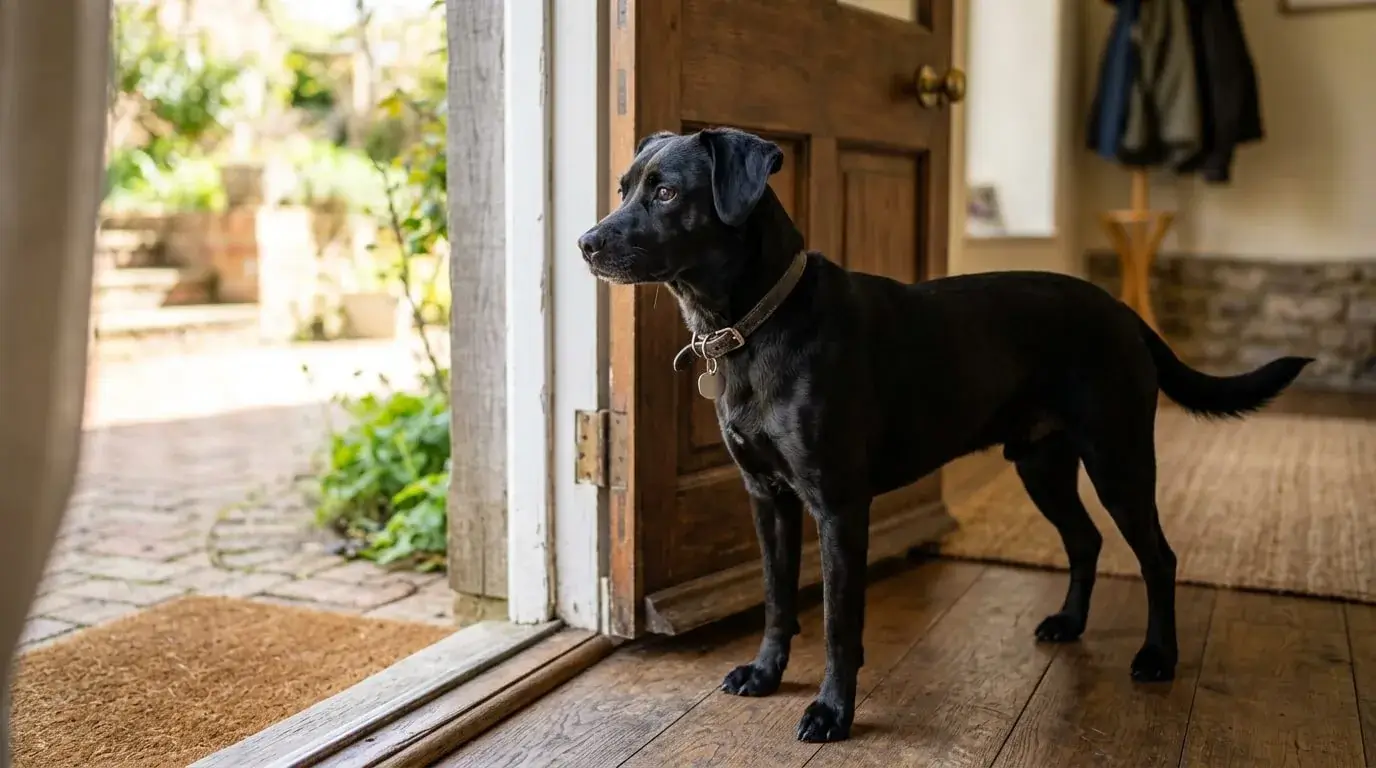
Chihuahuas bark to announce, to warn, and to fill a quiet room. A Lab parent does not delete that. Plan on a dog that comments at the door, the hallway, and people it does not know.
A Labrabeagle is the hound version of the same habit, with a Beagle parent that bays.
Stranger caution is common. Some dogs warm up. Some stay one-person dogs. Do not promise a greeter. If you need a quiet apartment dog, meet the adult at rest before you trust a puppy photo. Our guide to whether Labradors live well in apartments covers the Lab half. A chihuahua lab mix adds a smaller body and, often, a louder opinion.
A bored dog invents a job: window barking, ankle chasing, shredding a shoe. That is unmet work, not a broken mix. A short training game beats another lap around the coffee table.
Night barking is the version neighbors hate. A chihuahua lab mix that alerts at every hallway sound will not “grow out of it” because it sits for a treat in the afternoon.
Cover the crate, keep arrivals calm, and do not reward the first bark with a conversation. If the dog is already afraid of men, hats, or umbrellas, add distance before you add guests. Flooding a scared small dog makes the bark worse.
Exercise on a Tiny Frame
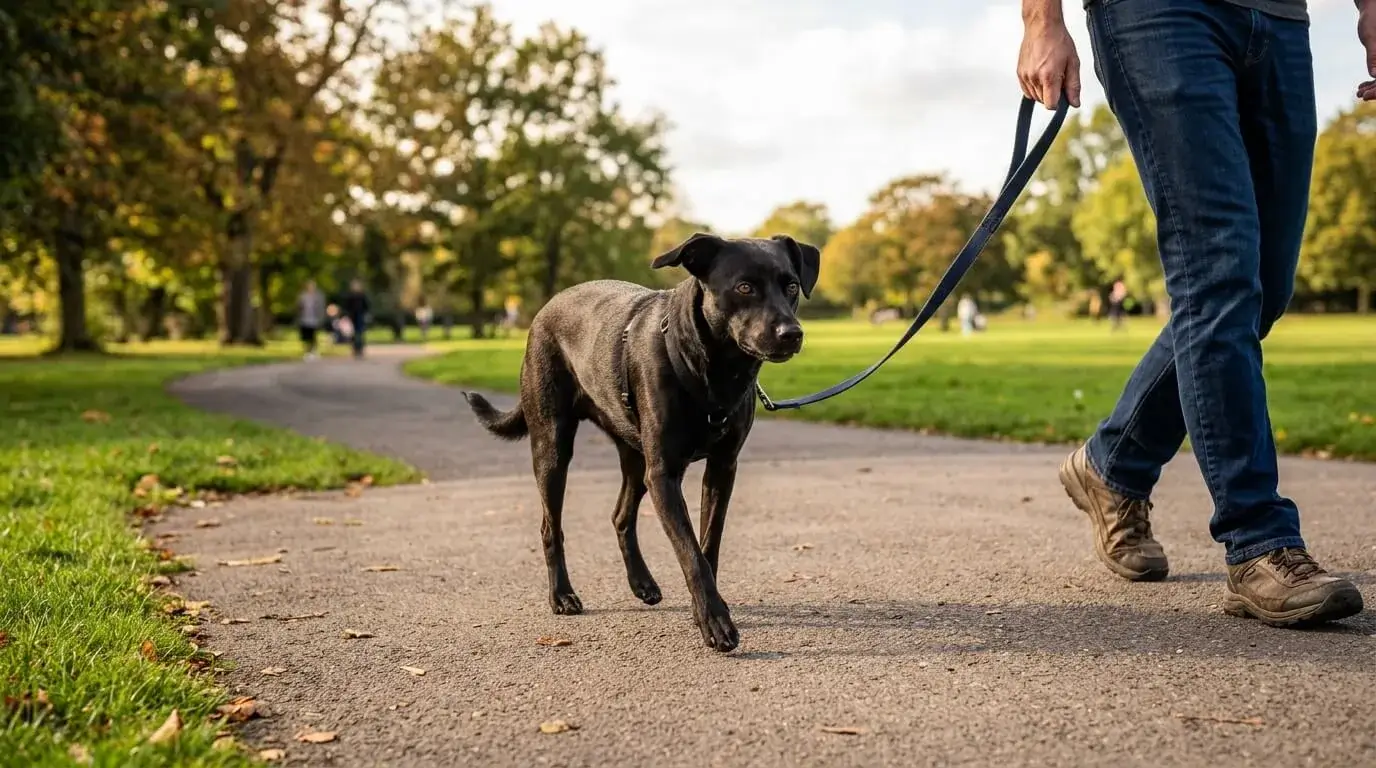
Do not assign every chihuahua lab mix a Lab hour of fetch. Match the walk to the frame you can see.
A small, fine-boned adult often does well on two short flat walks plus a few minutes of indoor play. Skip jump sports, long stair climbs, and ball launches that end in a hard stop. Tiny joints do not forgive repetitive impact.
A leggier dog that took after the Lab can handle a longer daily walk. It still should not spend that hour jumping off couches. Heat hits a small double-coated dog faster than people expect. Stop while the dog still looks loose.
Cold is the other small-dog fact. A short walk in a hard freeze needs a coat if the body stayed Chihuahua-sized. A leggier dog with a Lab coat handles the same street better. Match the gear to the dog in front of you, not to the listing photo.
Puppies need less than adults. Short sessions. No forced miles. Growth plates are a reason to go easy before a year, even when the dog looks finished at six months.
Stairs are the quiet injury. A chihuahua lab mix that lives on a second floor should be carried while the bones are still soft, then taught a ramp if the adult body stays small.
Jumping off a bed is the same problem in a living room. A low couch is safer than a high one. If the dog already limps after play, stop the game and call the vet. Do not wait for a weekend.
Health Questions With No Mix Rate
No formal data exists for how long a chihuahua lab mix lives. Do not average 14–16 Chihuahua years with 11–13 Labrador years and print one number. A lean dog with sound knees has a better shot than an overweight dog that jumps off furniture.
Ask the Lab parent’s breeder about hip screening in Labradors, and what the score does not prove about a mixed puppy. On the Chihuahua side, ask about knees (luxating patella is a common small-dog question), teeth, and whether the skull was extremely domed. Nobody has measured those rates in the cross itself, so ask for the parents’ paperwork.
Both coats shed. A smooth Chihuahua coat sheds less volume than a Lab blow, but a chihuahua lab mix is not hypoallergenic. A Lab-type double coat in a small body still leaves hair on the floor. Brush a few times a week.
Skip any promise that the Lab “fixes” the Chihuahua. You can get the small-dog bark and the Lab appetite in one dog. Feed meals. Pick up the bowl.
Teeth are the chore people skip. A chihuahua lab mix that kept a tiny mouth still crowds its teeth. Lift the lip once a week. Bad breath that stays after a chew is a dental visit, not a new treat. Do not put a small dog under anesthesia casually, and do not ignore a mouth that hurts when it eats.
FAQ
How big is a chihuahua lab mix?
Nobody can promise one weight. Chihuahuas should stay at or under 6 pounds. Labs run 55–80 pounds. The puppy can land anywhere between those parents. Ignore a listing that sells one adult number.
Are they good apartment dogs?
Some adults are, if the barking is mild and the neighbors can live with it. A chihuahua lab mix that alarm-barks is a poor fit for a thin-walled building. Meet the dog at rest before you sign a lease around it.
Do they shed?
Yes. Neither parent is a shed-free breed. Plan on hair, lighter if the coat stayed smooth, heavier if it took the Lab’s double coat. This cross is not hypoallergenic.
Are they easy to train?
Food usually works, because of the Lab side. Sessions must stay short. Stranger fear and barking do not vanish because the dog sits for a treat. Consistency beats a weekend crash course.
What is a labrahuahua?
A labrahuahua is a chihuahua lab mix. Same parents, same dam rule, different sales name. A higher price for the nickname is a markup, not a breed.
A chihuahua lab mix is a size lottery that starts with a breeding question. The Lab should be the dam. Keep the dog lean, off high furniture, and out of crowds it fears.
Our full Labrador breed profile covers the retriever half, and it will not make a chihuahua lab mix an easy first dog. The small body changes the stairs, the bark, and the company the dog can handle. Meet the adult, or both parents, before you trust a chart that gives a chihuahua lab mix one size.