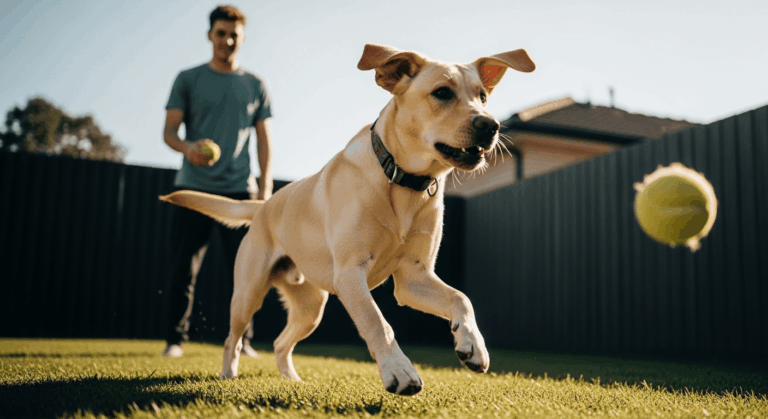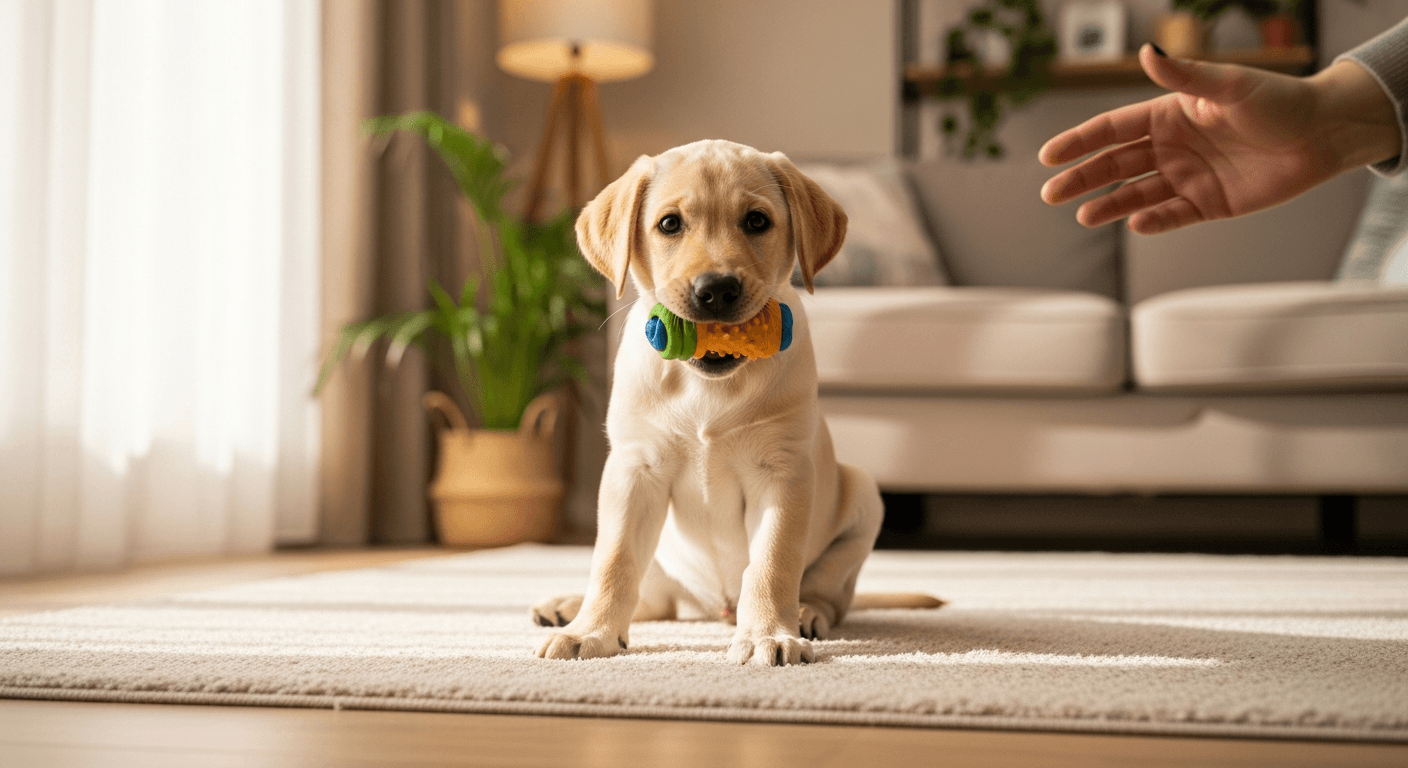
A 3 month old Labrador is in the closing phase of the most important developmental window of its life. The socialization period — when new experiences become the puppy’s definition of “normal” — ends around 16 weeks. What you do in the next four weeks shapes your adult dog more than any training that comes after. Here is where your puppy should be developmentally, what’s normal right now, and what to prioritize. For the full first-year roadmap, see our Labrador puppy first-year guide.
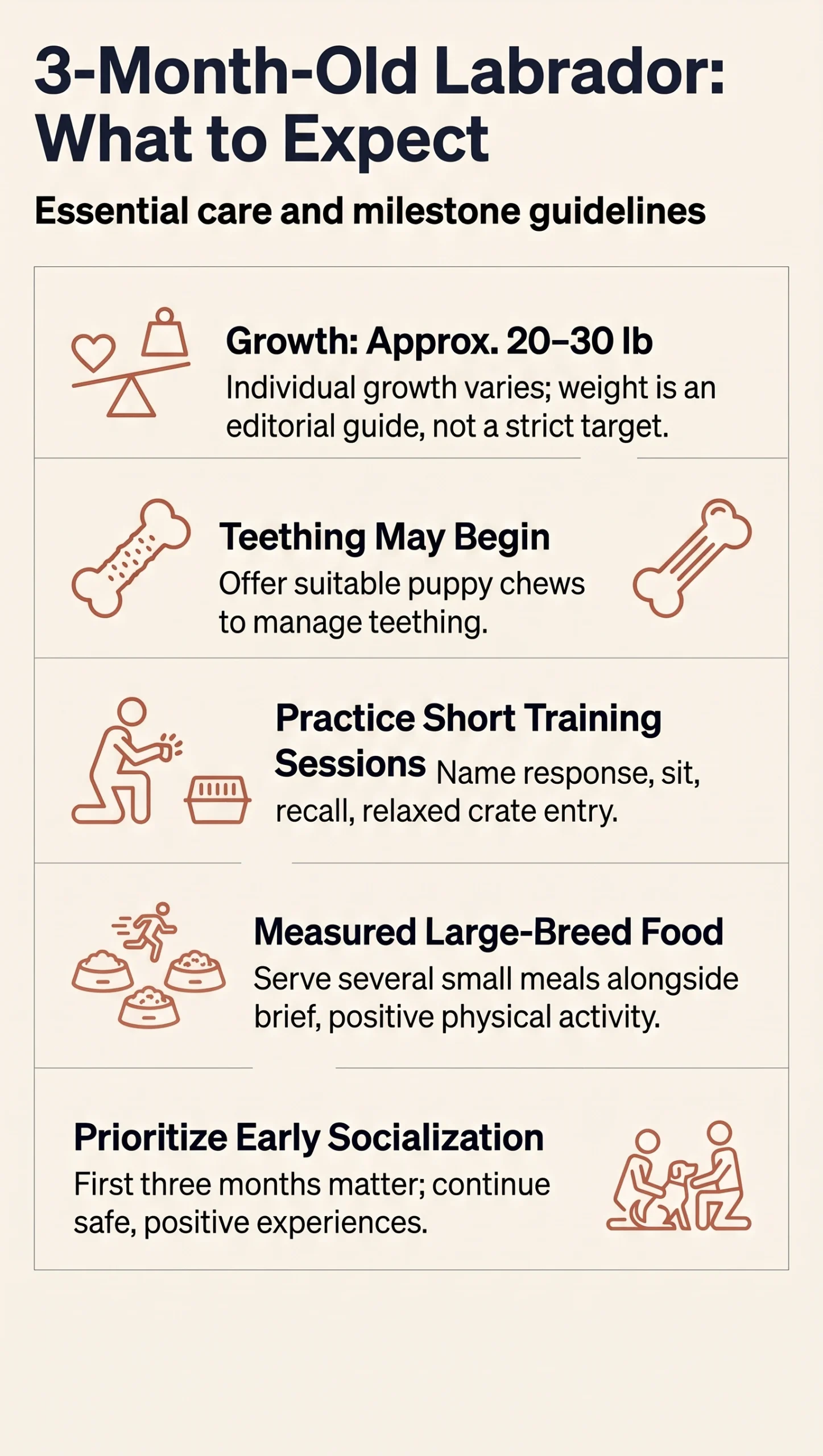
At 3 months (12 weeks), a Labrador puppy typically weighs 20 to 30 lbs. Males usually sit at the higher end, females at the lower end. Labs grow fast in the first 6 months, so this range carries wide natural variation — a puppy inside it that eats well is developing normally.
3-Month-Old Labrador Size & Weight: Is Your Puppy on Track?
The numbers first. At 12 weeks, male Lab puppies typically weigh 23 to 30 lbs and females 20 to 26 lbs, with shoulder height around 12 to 14 inches. Growth is steep right now: expect your puppy to gain roughly 1.5 to 2 lbs per week through the first 6 months, per the AKC’s puppy growth chart guidance.
Consistent weekly gain matters more than position in the range. A puppy at the bottom of the chart that gains steadily every week is on track — see the full Labrador growth chart for the year. Line type plays a role too — blockier English-line Labs often sit at the heavy end, leaner American-line Labs at the light end. Both are normal for their type.
The rib check beats any chart. Run your fingers along the ribcage: you should feel ribs easily without pressing, but not see them sharply. Can’t feel ribs at all? The puppy is overweight — see our guide to how much to feed a Labrador and trim portions. Ribs visible from across the room, weight loss, or a missing appetite are the signals that justify a vet call.
3-Month-Old Lab Puppy Behavior: What’s Normal Right Now
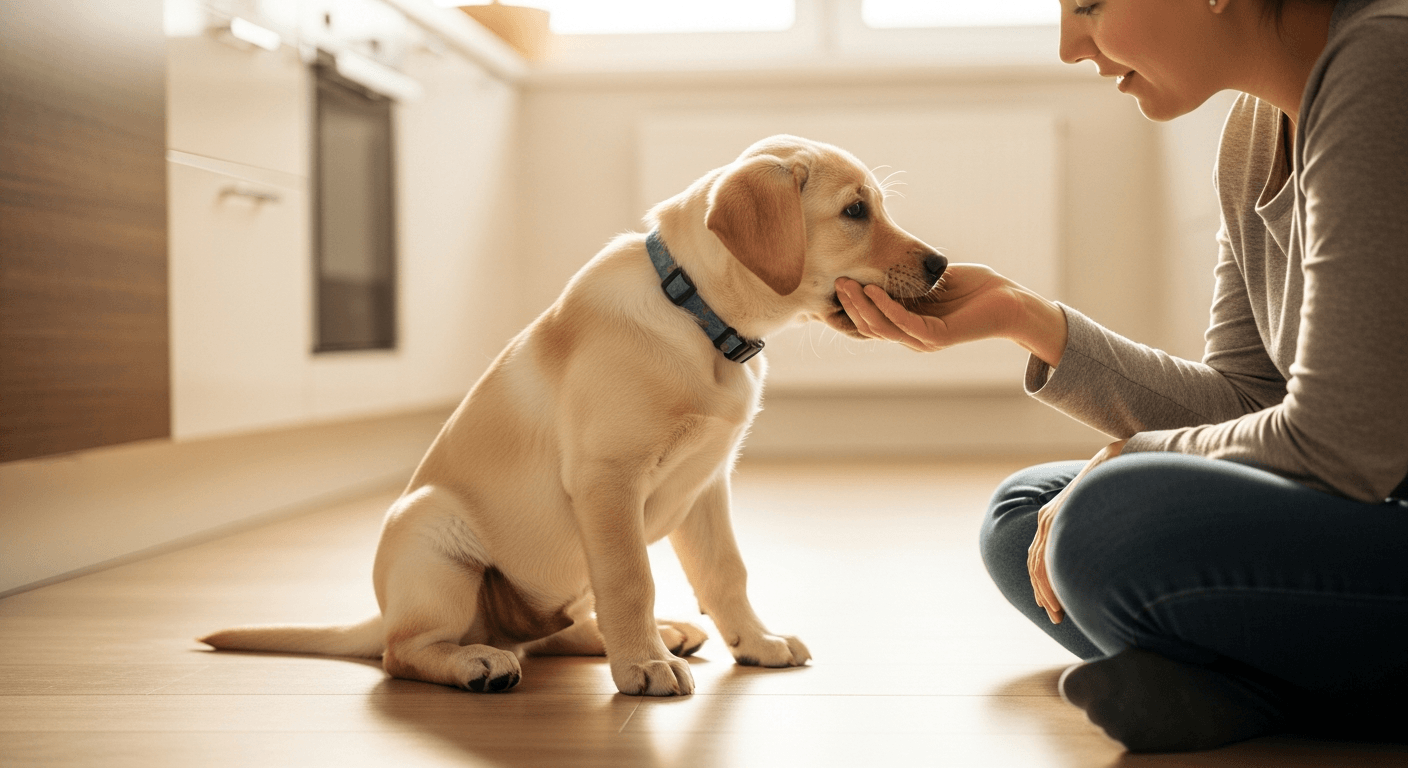
Mouthing and biting peak right around 3 months. Your puppy is exploring the world with its mouth and learning bite inhibition — jaw-pressure control — through play. For a retriever bred to carry game with a soft mouth, jaw control is not just manners; it is the breed’s core skill. It is not aggression. When teeth land too hard, yelp sharply and end the game for 30 to 60 seconds. Never tap the nose, flick, or clamp the muzzle shut — those teach fear, not control.
Teething adds fuel to the mouthing fire. Baby teeth start loosening at 12 to 16 weeks, bringing extra drool, chewing drive, and gum discomfort. A frozen Kong Puppy or similar puppy-rated chew gives that urge a legal outlet — the full timeline is in our Labrador teething guide.
Zoomies are the other signature move: sudden frantic sprints, usually in the evening. They’re a normal energy release in a healthy puppy, not misbehavior. Step back and let them burn out.
And expect a lot of sleep. A 3-month-old Lab needs 15 to 18 hours a day, in a rhythm of short intense play bursts followed by deep naps. Napping is development, not lethargy — the flag worth acting on is a puppy that cannot be roused for meals or shows no interest in play across a full day, which warrants a vet call. Startle responses to new sounds and objects are normal too — pair each surprise with treats and calm, because the window for that lesson is still open.
Training a 3-Month-Old Lab: What to Focus On This Month
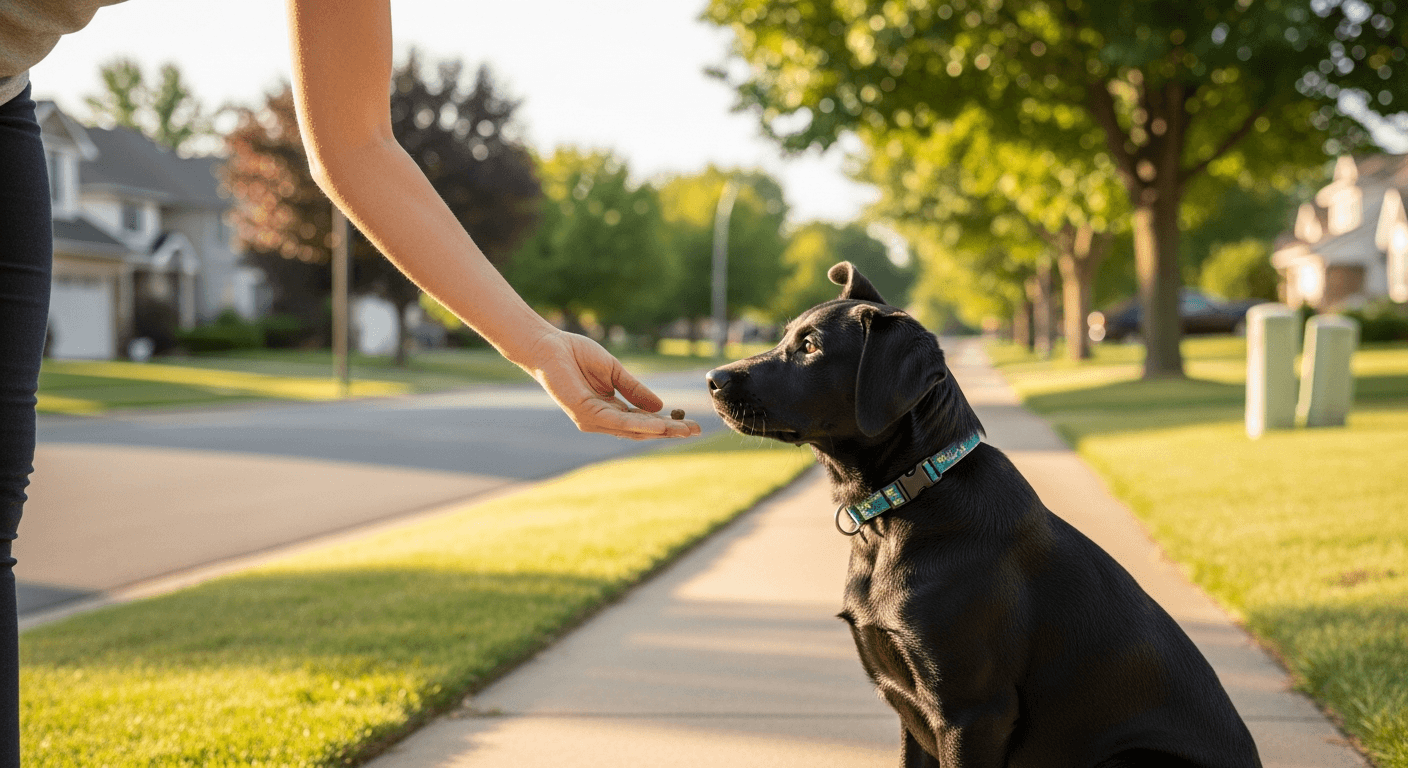
One priority stands above everything: socialization. The window closes around 16 weeks and cannot be reopened. Every day this month, your puppy should meet a new person, hear a new sound, feel a new surface, or visit a new place — kept short, positive, and treat-paired. The stakes are higher for this breed than most: a Lab is supposed to grow up friendly with everyone, and socialization gaps are exactly what breaks that promise.
Formal skills come second, and they’re modest. By 12 weeks most Lab puppies can learn sit, their name, the foundations of recall, calm crate entry, and basic leash awareness. Work in 3-to-5-minute sessions, three to five times a day, always food-rewarded. Labs rank among the most food-motivated breeds, so treat quality is a bigger training lever for them than for most dogs — something smelly and pea-sized buys far more focus than kibble.
If crate training isn’t established yet, start now. A puppy comfortable in its crate at 3 months sleeps through the night more reliably and handles alone-time better for years.
Skip what the 12-week brain can’t hold: long stays, complex commands, and off-leash work anywhere uncontrolled. Puppy classes are worth joining from 10 to 12 weeks if the class requires proof of vaccination. For what to teach in each month ahead, see our Labrador puppy training schedule.
Feeding & Exercise for a 3-Month-Old Labrador
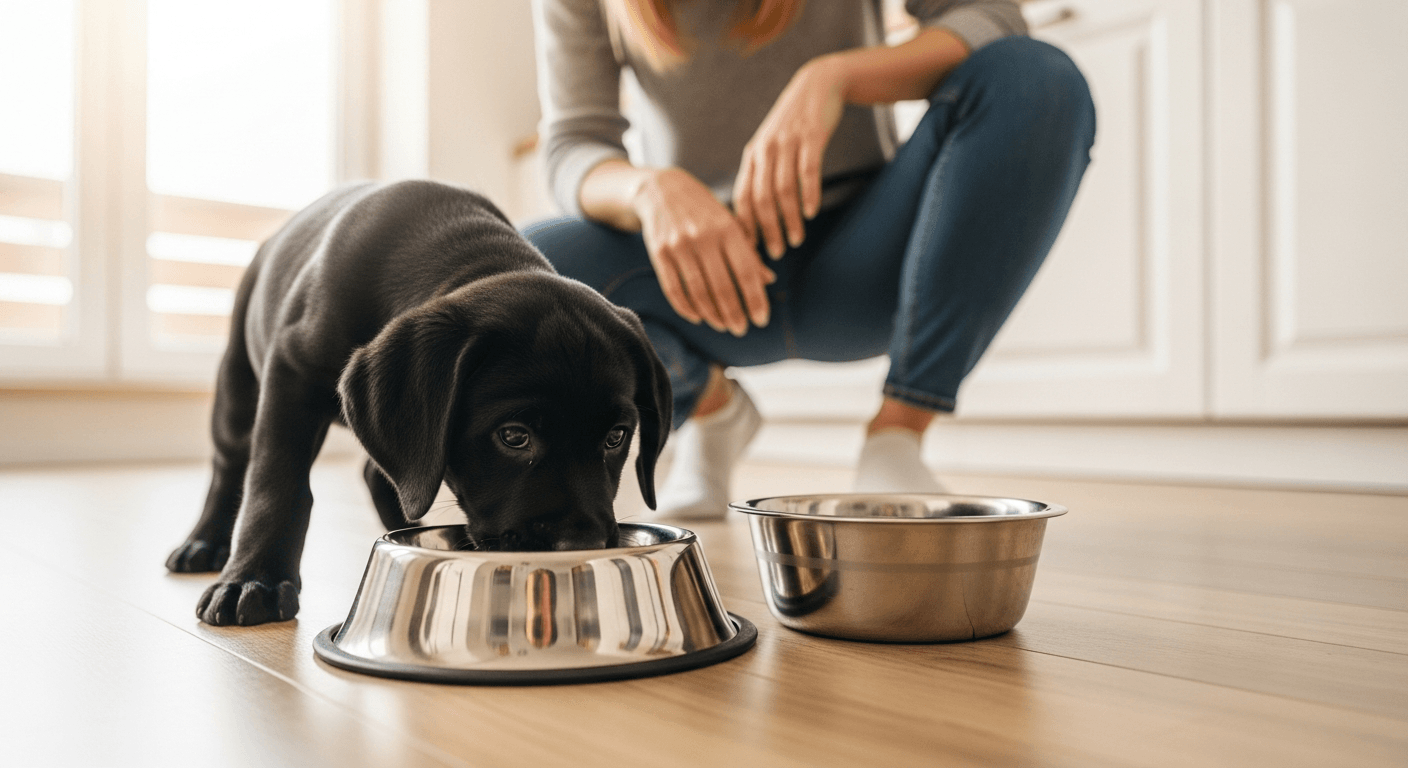
Feed a large-breed puppy formula, not generic puppy food. Large-breed formulas control the calcium-to-phosphorus ratio that protects fast-growing Lab joints. At 3 months, that means roughly 1.5 to 2 cups per day split across 3 meals — check your bag’s chart against your puppy’s weight, since calorie density varies by brand.
Never free-feed a Lab. University of Cambridge researchers found most Labs carry a gene variant that blunts the feeling of fullness, so the bowl will always empty no matter how much you pour. Measured meals from day one prevent the weight problems that plague the breed. Keep fresh water down at all times — frequent drinking at this age is normal.
Exercise runs on the 5-minutes-per-month-of-age rule: at 3 months, a maximum of 15 minutes of structured leash walking per session, up to twice a day. Free play in the yard at the puppy’s own pace doesn’t count against the limit. The rule exists to protect open growth plates — a 3 month old Labrador’s skeleton is nowhere near done, and repetitive forced exercise now can cost joint health later.
3-Month-Old Labrador Health: Vaccinations & Vet Schedule
At 12 weeks, your puppy is due its second DA2PP dose — the booster in the three-shot series that started at 8 weeks and finishes at 16 — the complete first-year schedule is in our Labrador puppy health guide. If puppy classes or daycare are on the calendar, ask about the Bordetella (kennel cough) vaccine, usually given as a quick nasal spray.
Monthly heartworm prevention should already be running, alongside region-appropriate flea and tick control. Most vets recheck a stool sample at this visit for intestinal parasites. If the breeder didn’t microchip, the 12-week visit is the natural time.
One point owners get wrong: you do not need to wait for the final 16-week shot to socialize. The AVMA’s socialization policy supports careful exposure before the series is complete, because under-socialization carries the bigger lifetime risk. Carry the puppy in busy places, visit vaccinated dogs, and keep off dog-park ground until the vet clears full protection.
Frequently Asked Questions
How much should a 3 month old Labrador weigh?
Between 20 and 30 lbs for most puppies — males typically 23 to 30 lbs, females 20 to 26 lbs. The range is wide because line type and litter genetics vary. Steady weekly gain of about 1.5 to 2 lbs and an easy-to-feel ribcage matter more than any single number.
How far can I walk a 3-month-old Labrador?
Cap structured leash walks at about 15 minutes per session, twice a day — the 5-minutes-per-month-of-age rule. Growth plates are still open, and repetitive forced exercise stresses them. Free play at the puppy’s own pace in the yard carries no such limit; the puppy self-regulates.
What commands should a 3-month-old Labrador know?
Sit, name recognition, and the beginnings of recall are realistic by 12 weeks, along with calm crate entry and early leash manners. Keep sessions to 3 to 5 minutes with food rewards. Anything requiring sustained focus — long stays, heel work, complex chains — waits for an older brain.
Why is my 3-month-old Labrador biting so much?
Because mouthing peaks at exactly this age. Your puppy explores with its mouth and is learning jaw-pressure control through play, while loosening baby teeth add a physical urge to chew. Yelp, end play briefly, and redirect to a chew toy. It fades sharply by 5 to 6 months.
How much sleep does a 3-month-old Labrador need?
15 to 18 hours per day, taken as deep naps between short, intense activity bursts. Sleep is when growth and brain development actually happen, so protect the nap schedule — an over-tired puppy bites more, settles worse, and learns less.
Three months is the most productive month you will ever get with this dog. The socialization window is still open, the brain is recording everything, and every adult behavior is being drafted right now. Keep sessions short, keep exposure broad, and don’t wait for a perfect moment to socialize — there isn’t one. Next month builds directly on this one — see what to expect at 4 months, or jump ahead to what changes in a 6-month-old Labrador.