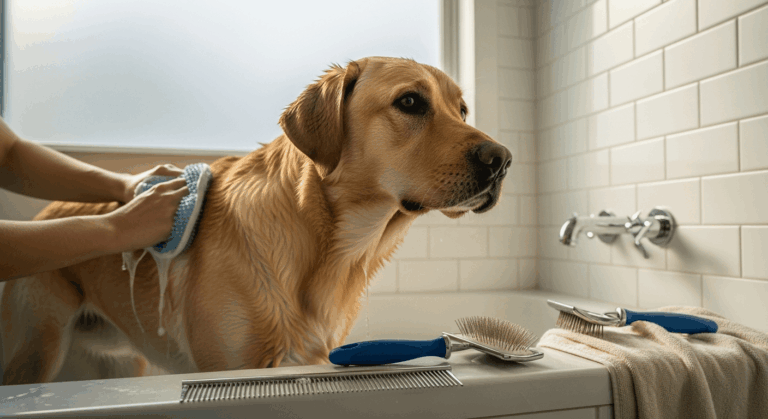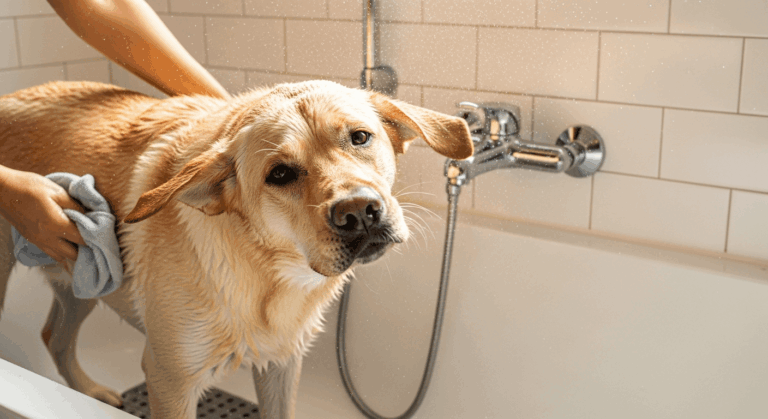
Are Labrador Retrievers hypoallergenic? No — and not marginally so. Labs shed year-round, blow their entire undercoat twice a year, and shed dander daily. If you react to dogs, a Labrador will almost certainly set your symptoms off.
People search this hoping for a loophole, so we will be blunt: there isn’t one. What there is, for mild allergy sufferers, is a management plan that sometimes works — and an honest picture of when it doesn’t. This guide covers why Labs affect allergies, whether coat color changes anything, and what actually reduces allergens in a home.
Are Labrador Retrievers Hypoallergenic? The Short Answer
No. Labrador Retrievers are among the least hypoallergenic breeds. They carry a dense double coat, shed heavily year-round with two seasonal peaks, and produce the Can f 1 allergen in saliva and skin cells. Allergy sufferers react to the dander their shedding spreads, not to the hair itself.
What “Hypoallergenic” Actually Means
No dog is truly hypoallergenic. The word means “below average likelihood of causing an allergic reaction” — not “allergen-free.” Every dog with skin produces allergenic proteins, and there is no breed that produces none.
The main culprit is Can f 1, a protein found in dog saliva, urine, and skin cells. It rides on dander — microscopic flakes of dead skin — which becomes airborne, settles into fabric, and lingers in a home for months. Dog hair itself is not the allergen. Hair is the delivery vehicle that carries dander and dried saliva around your house.
That distinction is why so-called hypoallergenic breeds are usually low-shedding breeds. They still produce Can f 1; they just distribute less of it. As VCA Animal Hospitals puts it, the category describes a difference of degree, not of kind.
Why Labrador Retrievers Are Not Hypoallergenic
Labradors sit at the wrong end of that spectrum on three counts.
The double coat. The AKC breed standard describes a short, dense, weather-resistant double coat: a coarse outer layer over a soft insulating undercoat. That undercoat renews constantly, and every renewal releases hair and the dander attached to it.
The shedding volume. Labs shed steadily all year, then blow the undercoat heavily in spring and fall. During those two windows you will find hair on clothing, furniture, and floors daily no matter how often you clean.
Skin cell turnover. A dense working coat sits over skin that replaces itself continuously. More dander produced, more hair to carry it, more of it airborne in your home.

None of this makes Labs unusually allergenic for their size. A Lab produces roughly the Can f 1 a similar-sized dog produces. The problem is distribution: heavy shedding spreads that allergen thoroughly, quickly, and everywhere.
Are Black, Chocolate or Yellow Labs Any Different?
No. Coat color has no effect on allergens. Black Labs, chocolate Labs, and yellow Labs all produce the same Can f 1 protein, carry the same double coat, and shed at the same rate. Anyone selling a “hypoallergenic” Lab of any color is selling a myth.

The one honest difference is visibility, not allergy. Pale hair from a yellow Labrador shows on dark clothing and furniture, while a black Lab’s hair disappears into dark fabric and stands out on light carpet. The same volume of hair is there either way — you just notice it in different places.
Silver Labs get asked about most often, and the answer doesn’t change. A dilute coat is still a Lab double coat, shedding at Lab rates.
How Much Do Labradors Shed?
Enough that owners describe it as a second job during coat blow. Expect steady daily hair year-round, and two annual stretches of two to four weeks where the volume multiplies. Spring is usually heavier than fall.
For allergy sufferers the timing matters: symptoms typically spike during those coat-blow windows and settle between them. Our full guide to Labrador shedding covers the seasonal cycle and the tools that keep it manageable.
Living With a Labrador When You Have Allergies
Some people with mild dog allergies live comfortably with a Lab. Others cannot, no matter how disciplined they are. Severity is the deciding factor, and it is worth knowing which side you fall on before you bring a dog home rather than after.
If you are attempting it, these are the measures that make a measurable difference:
Make the bedroom a dog-free zone
This is the single highest-impact change. You spend a third of your life in that room, and keeping dander out of the mattress and bedding gives your immune system a nightly break. A closed door beats every gadget on this list.
Run a HEPA filter where the dog spends time
True HEPA units capture airborne dander. Place one in the main living area and one in the bedroom, and run them continuously rather than in bursts. Change filters on schedule — a clogged filter is a decoration.
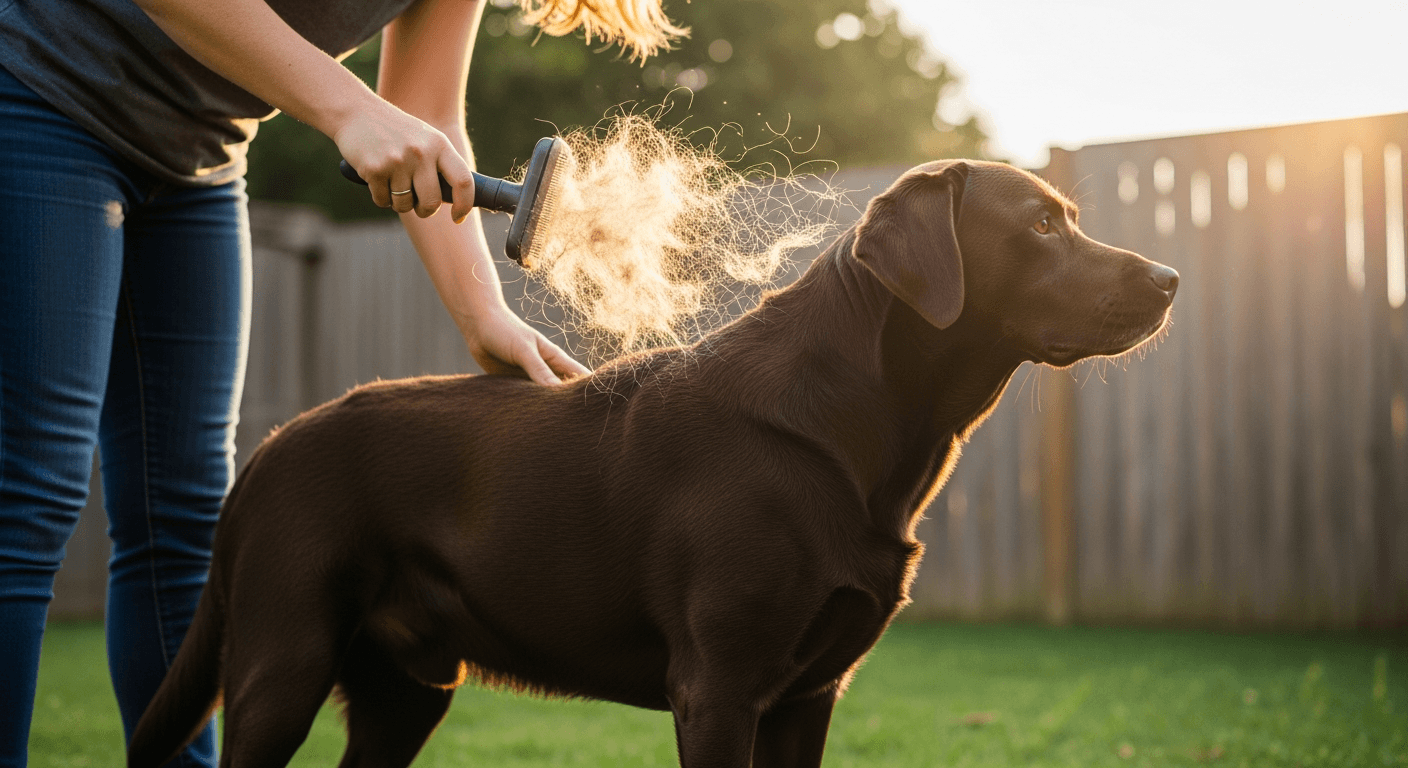
Brush the dog outdoors, several times a week
Brushing removes loose undercoat before it lands indoors. Doing it outside moves the whole cloud of hair and dander out of your air. If you are the allergic one, wear a mask for this or hand the job to someone else in the household.
Bathe every few weeks — not more
Bathing rinses accumulated dander off the coat, and the benefit is real but temporary. Overbathing strips the coat oils that keep skin healthy, and dry irritated skin flakes more, which is the opposite of what you want. Our guide to how often to bathe a Labrador covers the schedule that protects the coat.
Change the surfaces, not just the routine
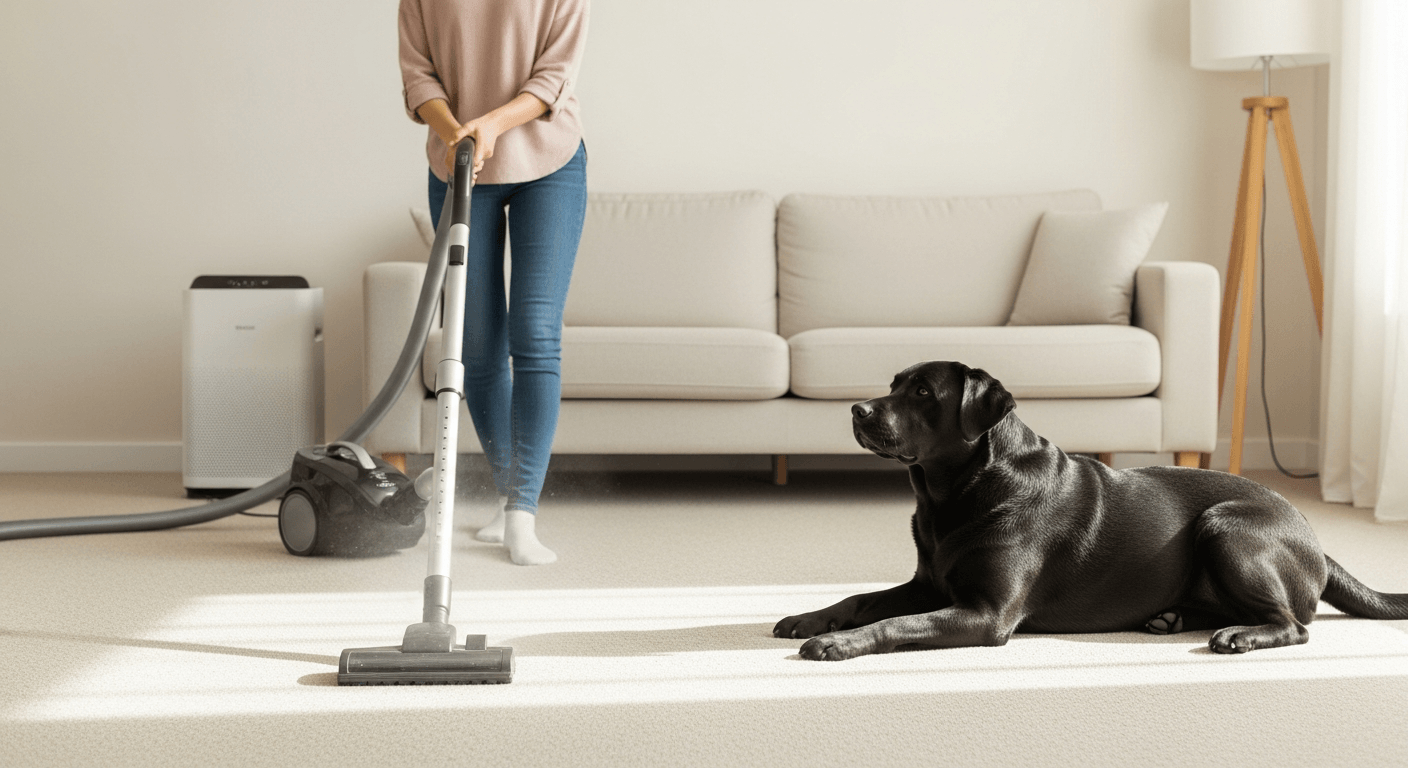
Carpet, upholstered furniture, and heavy curtains hold dander for months. Hard floors, washable throws on the sofa, and washable covers strip the reservoir out of your home. Vacuum with a HEPA-filtered machine at least twice a week, and wash your hands after handling the dog — especially before touching your face.
One caution: if your Lab’s skin is flaking heavily, that is not normal shedding and it will make your symptoms worse. Recurring flakes, itching, or hot spots need a vet, not a better vacuum — see our guide to Labrador skin problems. Coat condition tracks directly with dander load, which is why the grooming routine in our Labrador grooming guide matters more in an allergy household than a typical one.
A realistic weekly routine
Written out, the whole plan is about 90 minutes a week:
| Task | Frequency | Why it matters |
|---|---|---|
| Brush outdoors | 3–4× weekly (daily during coat blow) | Removes undercoat before it lands indoors |
| Vacuum with HEPA | 2–3× weekly | Clears the dander reservoir in floors and rugs |
| Wash dog bedding | Weekly, hot wash | Bedding concentrates dander more than any other item |
| Wipe hard surfaces | Weekly | Settled dander re-aerosolizes when disturbed |
| Bathe the dog | Every 3–4 weeks | Rinses accumulated dander without drying the coat |
| Replace HEPA filters | Per manufacturer schedule | A saturated filter stops working entirely |
Consistency beats intensity here. A deep clean once a month leaves allergen levels high for three weeks out of four; the routine above keeps them steadily low.
If the allergy is your child’s
Be more cautious than you would be for yourself. Childhood allergies can worsen with sustained exposure, and rehoming a dog a child has bonded with is its own kind of damage. Involve a pediatric allergist in the decision before the puppy arrives, not after symptoms appear.
The evidence on early pet exposure and allergy development is genuinely mixed, and it is not a reason to gamble on a specific child who already reacts to dogs. Test first.
Low-Allergen Breeds Compared to Labradors
If a Lab turns out to be unworkable, these are the breeds most often recommended for allergy sufferers. None is allergen-free, but all shed far less and keep more dander trapped in the coat.
| Breed | Shedding | Grooming needs | Lab-like temperament? |
|---|---|---|---|
| Labrador Retriever | Very heavy, year-round | Low — brushing only | — |
| Poodle (Standard) | Minimal | High — clipping every 6–8 weeks | Close: smart, active, people-focused |
| Portuguese Water Dog | Minimal | High — regular clipping | Close: athletic, water-loving |
| Bichon Frise | Minimal | High — professional grooming | No — much smaller, less athletic |
| Schnauzer | Low | Moderate — hand-stripping or clipping | Partly: sturdy, but more reserved |
The trade is real: low-shedding coats do not self-maintain. You swap vacuuming for grooming appointments every six to eight weeks.
What about Labradoodles?
A Labradoodle is a gamble, not a guarantee. First-generation crosses inherit coats unpredictably — some get the Poodle’s low-shedding curls, some get a Lab-like shedding coat, and littermates can differ from one another. Breeders advertising “hypoallergenic Labradoodles” are promising an outcome genetics does not reliably deliver.
If low-shedding is a medical requirement rather than a preference, a purebred Poodle removes the coin flip.
Test Before You Commit
Anyone weighing this decision should get tested rather than guessing. An allergist can identify whether dogs are actually your trigger — plenty of people blame the dog for what turns out to be dust mites or pollen — and how strongly you react.
Testing is usually a skin-prick panel, where diluted allergens are applied to the forearm and read within about 20 minutes, or a blood test measuring allergen-specific antibodies. Both distinguish dog allergy from the dust mite, mold, and pollen triggers that often get blamed on a pet.
Two things worth raising at that appointment. First, immunotherapy: allergy shots build tolerance over time and work for some pet-allergic patients, though the course typically runs three to five years. Second, exposure testing: spending a full day — ideally a weekend — in the home of someone who owns a Lab tells you far more than a twenty-minute visit, because airborne dander accumulates with time in the room and symptoms often lag behind exposure by hours.
We are an editorial team, not physicians. Treat everything here as background for a conversation with an allergist, not a substitute for one. Weight, coat, and skin condition all interact with allergen load, and our Labrador health guide covers the underlying conditions that make a coat shed worse than it should.
Frequently Asked Questions
Are Labrador Retrievers hypoallergenic?
No. Labradors are heavy year-round shedders with a double coat that releases dander continuously, and they produce the Can f 1 protein in saliva, urine, and skin cells. They are one of the poorer breed choices for allergy sufferers.
Are black Labs hypoallergenic?
No. Coat color has no bearing on allergens — black, chocolate, yellow, and silver Labs all produce the same allergenic proteins and shed at the same rate. Color affects only how visible the hair is on your furniture.
Are chocolate Labs hypoallergenic?
No. Chocolate Labs shed and produce dander exactly as other Labradors do. No Lab color is bred for reduced allergens, and no breeder can supply one.
Are Lab mixes hypoallergenic?
Only sometimes, and never predictably. A Lab crossed with a low-shedding breed may inherit either coat type, and puppies in the same litter often differ. Treat any “hypoallergenic” claim about a Lab mix as marketing.
Can someone with dog allergies live with a Labrador?
With mild allergies and strict controls — bedroom off-limits, HEPA filtration, frequent outdoor brushing, hard floors — many people manage. With moderate to severe allergies, it usually is not sustainable. Get tested before committing to a dog that lives 12 years.
Does bathing a Labrador reduce allergens?
Temporarily, yes. Bathing rinses dander off the coat, but levels rebuild within days, and bathing more often than every few weeks dries the skin and increases flaking. Every three to four weeks is the practical ceiling.
So: are Labrador Retrievers hypoallergenic? No, and no breeder, color, or grooming routine changes that. If your heart is set on one anyway, book the allergy test first and spend a weekend in a Lab household second. That order has saved a lot of people from an impossible choice a year later. And if you go ahead, our guide to living with a Labrador covers the daily routine that keeps the hair — and the dander — under control.