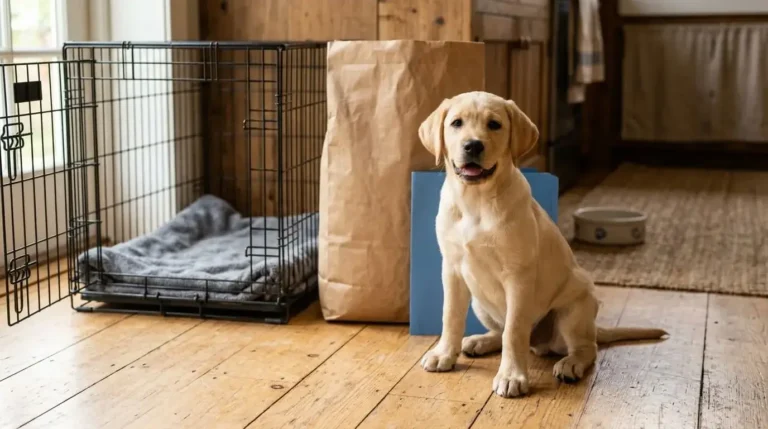
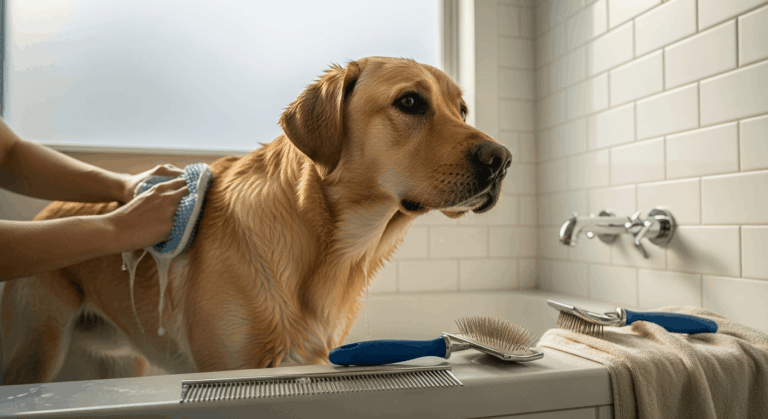
Are labs good with cats? Yes, most Labs can live well with a cat. The AKC names the Labrador among breeds that get along with other species, but a young Lab’s size, energy, and urge to chase can scare or hurt a cat. A slow, leashed introduction and a cat-only escape space decide how it goes.
A Lab doesn’t come with a guarantee, and neither does a cat. Sharing a home with both is part of everything else that comes with owning a Lab, and it works best when you plan the first weeks instead of hoping for the best. This guide covers the risks, the step-by-step introduction, and the house rules that keep the cat safe.
We get asked, “Are Labs good with cats?” Compatibility depends on both animals, their history, and how you manage introductions.
What the AKC Says About Labs and Other Pets
The AKC’s list of dog breeds that get along with cats includes the Labrador Retriever, which is the main reason the answer to are labs good with cats starts with yes. In its words, “Labrador Retrievers are kind and outgoing and are known to get along with everyone they meet, regardless of species.”
That fits the breed’s history. Labs come from the AKC Sporting Group, which the AKC describes as friendly and outgoing. A Lab was bred to work alongside people and other dogs, not to guard territory or hunt alone.
The same page adds two cautions that decide whether are labs good with cats holds true in your home. Labs are far larger than a cat, so size and energy matter. And most breeds can live calmly with a cat only if they are socialized as puppies and trained to leave the cat alone.
So, by temperament, are labs good with cats? The breed standard and the AKC both point to yes. Staring alone does not establish that a meeting is safe. Watch whether the dog can disengage and whether both animals remain relaxed. Labs are friendly rather than protective, and that easy, social nature is the reason most Lab and cat pairs settle down.
Temperament is only the starting point, though. Breed tendencies describe the average dog, and the Lab in your living room may be calmer or far more excitable than average.
Where It Goes Wrong: Size, Bounce, and the Urge to Chase
For owners asking “Are Labs good with cats?” the usual problem is not aggression. It is a 55- to 80-pound dog that wants to play with a 10-pound animal that wants nothing to do with it.
Dogs chase cats because of prey drive, an old instinct to chase moving things, not because they dislike them. That is how the AKC explains it. A cat that runs can trigger the instinct automatically, and chasing can put the cat at risk regardless of the dog’s intent.
The AKC is also direct about the part of are labs good with cats that worries owners most. Large breeds with strong prey drive may injure cats. A Lab that pins a cat with its paws during play, or catches one at the end of a chase, can hurt it without meaning to.
Will a Lab kill a cat? We found no Lab-specific data on this, and we won’t guess. Chasing and rough contact can injure a cat. Supervision, physical separation, a leash during introductions, and a dog-free escape space help reduce the risk.
That is the honest version of are labs good with cats: usually, when you manage the early months. Two signs that a particular Lab needs extra care:
- It fixates on squirrels, birds, or small animals on walks and is hard to call off
- It has chased or caught small animals before
Either history deserves an individual assessment before you bring a cat home. Keep the animals separated and seek qualified help if you cannot prevent chasing.
Energy level matters too, and it’s the part of are labs good with cats that owners control most. A bored young Lab with no outlet will find one, and a cat is a moving target. Plenty of walks, retrieving games, and training sessions leave your Lab calmer indoors, which makes every cat meeting easier.
Lab Puppy, Adult Lab, or Rescue: Which Fits a Cat Home
Not every pairing starts from the same place. In practice, are labs good with cats depends on the cat you already have and the age of the dog you bring in.
A Lab puppy with an adult cat. This is the most common setup, and a puppy raised around a cat often accepts it as normal. The catch is energy. The AKC notes that an older cat that likes to be left alone might not mix well with an overly bouncy puppy.
Give that cat plenty of puppy-free space, because for an older cat, are labs good with cats comes down to whether the puppy can stay calm. Teach the puppy early that the cat is not a toy, and reward it for ignoring the cat.
An adult Lab with a new kitten. This needs more care. A kitten is small and quick, which can set off chasing. Choose a calm adult Lab that already ignores cats, and keep the kitten in a separate room until the introduction steps are done.
A rescue Lab. Ask the shelter or rescue whether the dog has been cat-tested. Many rescues test dogs with a calm resident cat before placing them. A Lab with a known history of living calmly with cats answers are labs good with cats for you before it even comes home.
Your cat matters as much as your Lab. A confident cat that stands its ground often trains a puppy fast. A nervous cat that bolts will need more time, more escape routes, and a calmer dog.
When owners ask are labs good with cats, they often forget that the cat is half of the answer. Think about your cat’s age, health, and personality before you choose the dog.
Introducing a Lab to a Cat, Step by Step
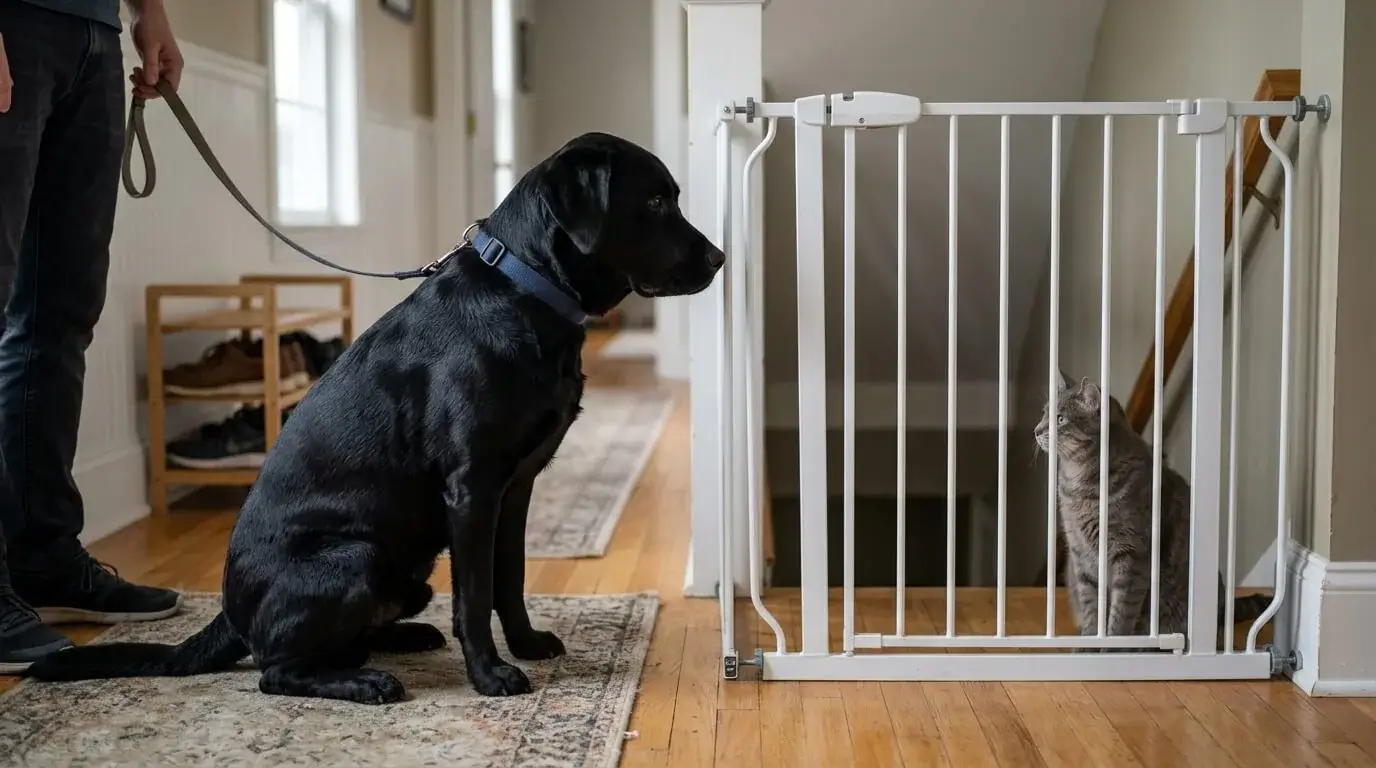
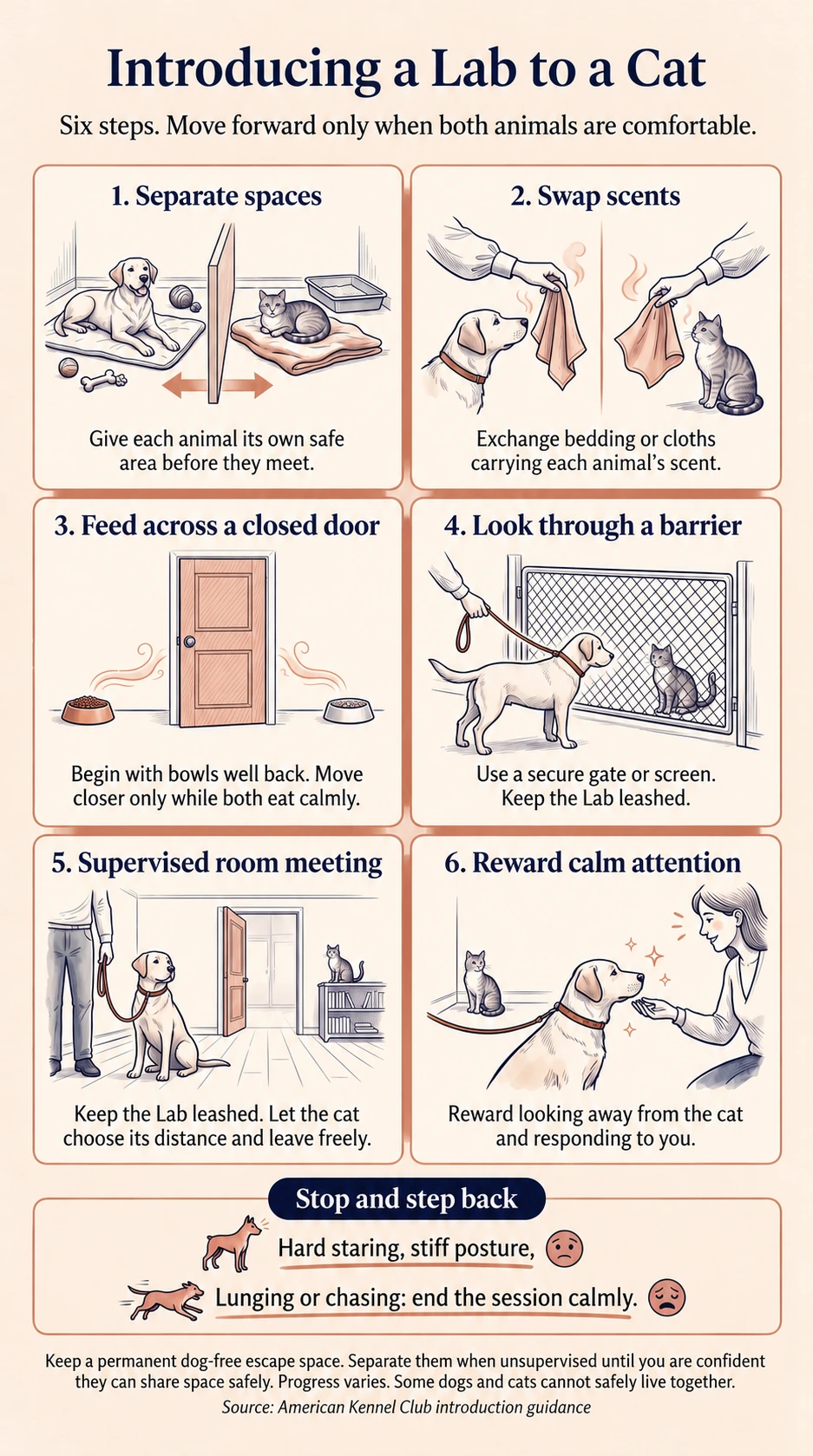
The AKC’s guide to teaching dogs and cats to live together lays out a slow sequence. Here is how we apply it to a Lab, in three steps before they ever meet face to face:
- Step 1, begin with separate safe spaces, so each animal can hear and smell the other from its own space
- Step 2, swap scents by rubbing a cloth on the cat and leaving it near the Lab’s bed, and the other way around
- Step 3, feed on opposite sides of a closed door, starting well back and moving the bowls closer only while both animals continue eating calmly
Once both eat calmly at the door, move on to the first meetings:
- Step 4, first look through a gate or screen door, with your Lab on a leash so it can’t rush the barrier
- Step 5, meet in one room with the Lab still leashed, while the cat moves freely and leaves whenever it wants
- Step 6, reward calm behavior with praise and treats when your Lab sits, lies down, or looks at you with the cat nearby
Keep sessions short, a few minutes at first, because are labs good with cats is decided by calm repetition, not one big meeting. End before your Lab gets overexcited.
The AKC suggests dropping the leash only once your dog automatically looks to you when the cat is around. After that, let them share a room while you watch. Until you’re sure of the outcome, which can take weeks or months, don’t leave them alone together.
Labs learn quickly when food is involved, so use that. Rewarding calm attention can help the dog practice disengaging; it does not guarantee that the pair will be safe together. For anyone asking “Are Labs good with cats?” those small, rewarded moments are practice, not proof of a safe pairing.
Setting Up the House So the Cat Stays in Charge
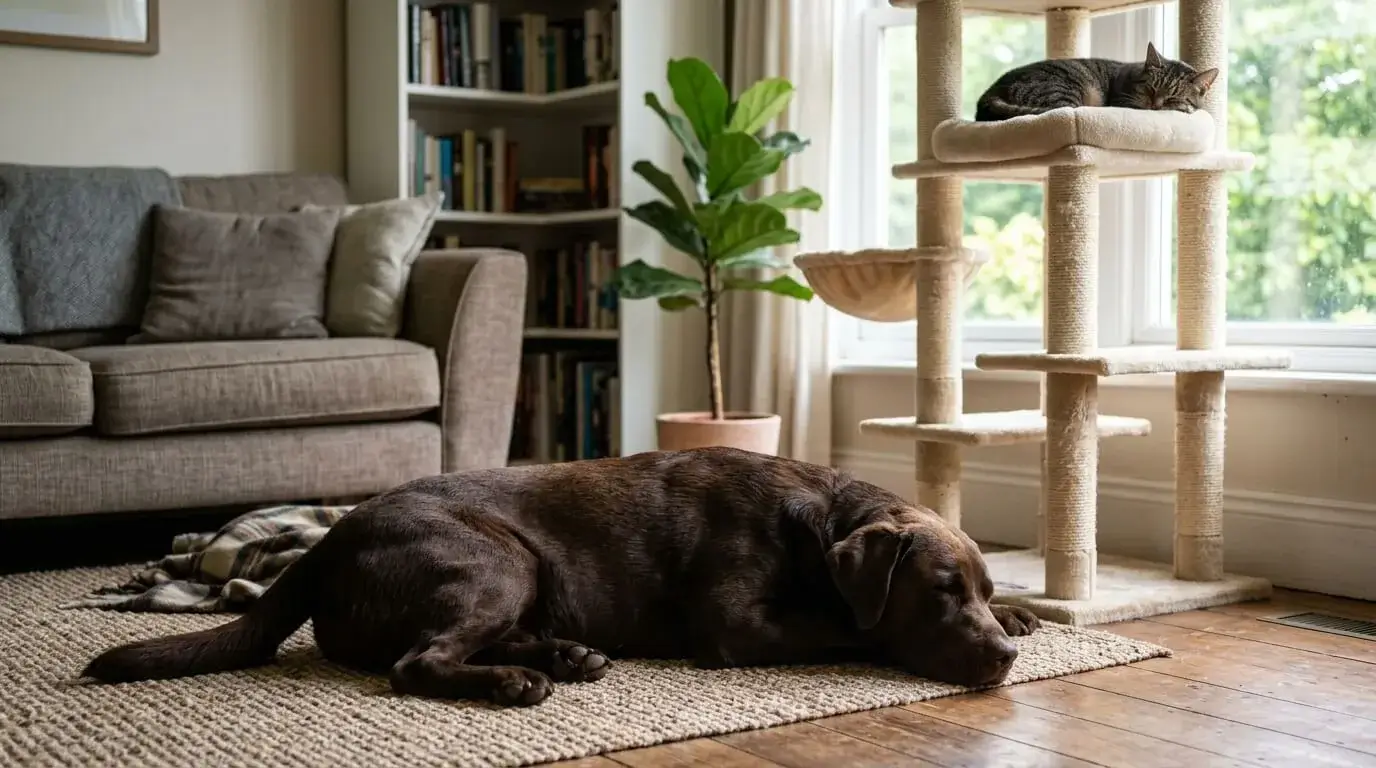
The cat should always have a way out and a place the dog can’t follow. The AKC recommends a permanent dog-free space, using baby gates or a cat door. That one room changes everything for a nervous cat.
Go vertical. Cat trees, shelves, and window perches give the cat height. From up there, it can watch the Lab without being reached. A cat that can escape upward feels safer and runs less, and a cat that doesn’t run is less likely to trigger a chase.
Feed separately. Food is where are labs good with cats gets tested every day. Labs are famously food-driven, and cat food is rich and tempting. Feed the cat on a counter, shelf, or in a room behind a gate, never on the floor where the Lab can reach it.
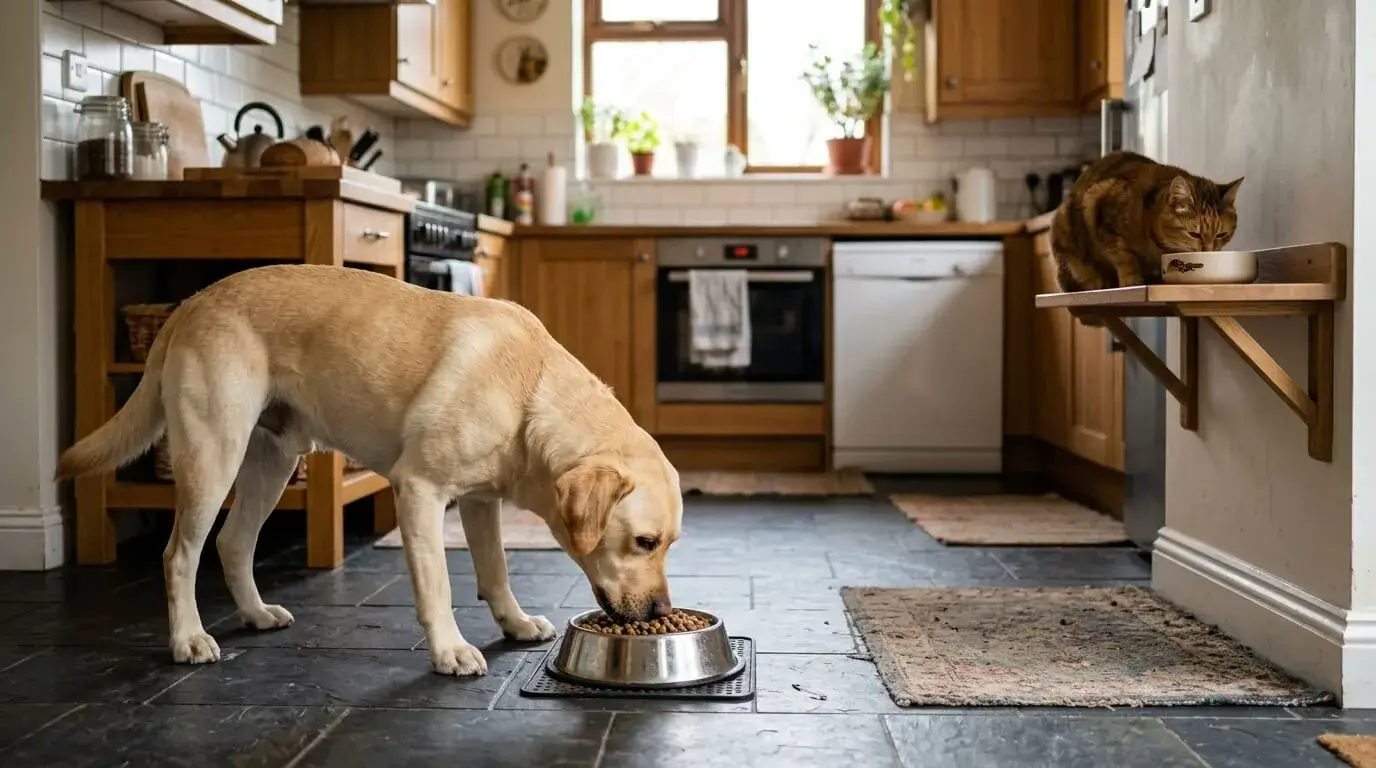
Guard the litter box. A Lab will raid a litter box if it can. The AKC warns that clumping cat litter is toxic to dogs when eaten and can get trapped in the digestive system. Put the box behind a cat door or in a room the dog can’t enter.
Small homes need the same setup, just tighter. Owners of Labs in apartments can still give a cat high perches and one gated, dog-free room. In a small space, vertical territory matters even more.
If you’re still deciding are labs good with cats in your specific home, walk through it from the cat’s height first. Count the escape routes and the high spots before the dog arrives.
Reading Both Animals, and When to Stop
Watch both animals during every early meeting. Their body language tells you whether to keep going or slow down.
Signs your Lab is too fixated:
- Staring hard at the cat and ignoring your voice or treats
- Stiff body, pulling toward the cat, or whining
- Lunging, barking, or trying to chase
Signs your cat is overwhelmed:
- Hissing, growling, or swatting
- Ears flat, tail puffed, or body low and tense
- Hiding for hours and refusing to come out to eat
If you see these, end the session calmly and go back a step. Return to the gate, or to feeding on opposite sides of the door, for a few more days. These signals are your real-time answer to are labs good with cats in your house.
Supervision is not optional in the early months, whatever the answer to are labs good with cats looks like on day one. We use the same rule with cats that we use with toddlers: no unsupervised time until the dog has proven itself many times over. Our supervision rules we use with children apply almost word for word.
Call a certified trainer or a veterinary behaviorist if your Lab keeps lunging after several weeks of steady work, or if the cat stops eating or using its litter box. Some pairs need professional help, and getting it early is far better than an injured cat.
There is no fixed deadline for a safe pairing. Some introductions take much longer, and some dogs and cats cannot safely share a home. Signs of success are quiet ones: the cat walks past the dog without running, and the Lab glances up and goes back to sleep.
FAQ
Can a Labrador live with a cat?
Yes, most can. The AKC lists the Labrador among breeds that get along with cats. Success depends on a slow introduction, supervision in the early months, and a home where the cat has high perches and a dog-free room.
Do Labradors like cats?
It depends on the dog and its history, which is true of are labs good with cats as a whole. A Lab raised with cats or socialized around them as a puppy is far more likely to treat a cat as family. A Lab that has never met one may be curious or overexcited at first, and early, calm exposure makes the biggest difference.
What is the best dog to get with cats?
The AKC says breeds in the Toy and Sporting Groups tend to be affectionate and friendly, and it names the Labrador Retriever on its list of dogs that get along with cats. Individual personality still matters more than breed. Meet the actual dog, and ask whether it has lived with cats before.
Is it too late to introduce an older Lab to a cat?
No, age doesn’t settle are labs good with cats on its own. The AKC notes that while early exposure helps, older animals can still adapt. An adult Lab may need a slower introduction and more supervision, but many adult Labs learn to live calmly with a cat.
So, are labs good with cats? Most are, if you give the cat an escape route and give the introduction time. Start with scent and a closed door, keep your Lab on a leash for the first meetings, and don’t leave them alone together until the cat is clearly comfortable.