A Labrador heat cycle usually starts somewhere between 6 and 24 months of age, lasts two to three weeks, and comes back about twice a year. It opens with proestrus, when the vulva swells and bloody discharge appears, then moves into estrus, the fertile window when she will accept a male.
If you’ve never lived with an intact female, the first heat can catch you off guard. This guide walks through the timing, the four stages, the signs, and how to care for her at home. It ends with the one part that matters most for her health: when a heat is not normal.
We stick to numbers from Cornell’s Riney Canine Health Center, VCA, and the Merck Veterinary Manual. Lab blogs disagree on almost every figure in the labrador heat cycle, so where the sources give a range, we give you the range.
When Labs Have Their First Heat
Cornell’s guide to dog estrous cycles says a dog’s first heat can start between 6 and 24 months, with smaller breeds averaging earlier than larger breeds. That is a wide window, and Labs sit on the larger side of it.
VCA adds the detail most Lab blogs leave out. Puberty arrives at about six months on average, but large and giant breeds may not come into heat until 18 months to two years. A Lab is a large breed, so a first labrador heat cycle after her first birthday is well within the normal range.
What does that mean for you? Start watching for signs from about six months, and don’t worry if nothing happens for a while. If she reaches two years without a heat, mention it at her next vet visit.
The first labrador heat cycle often lands in the same busy year as vaccines, training, and the spay decision. Our first-year puppy health schedule lays out that year, so you can plan the heat alongside everything else.
The Four Stages and How Long Each Lasts
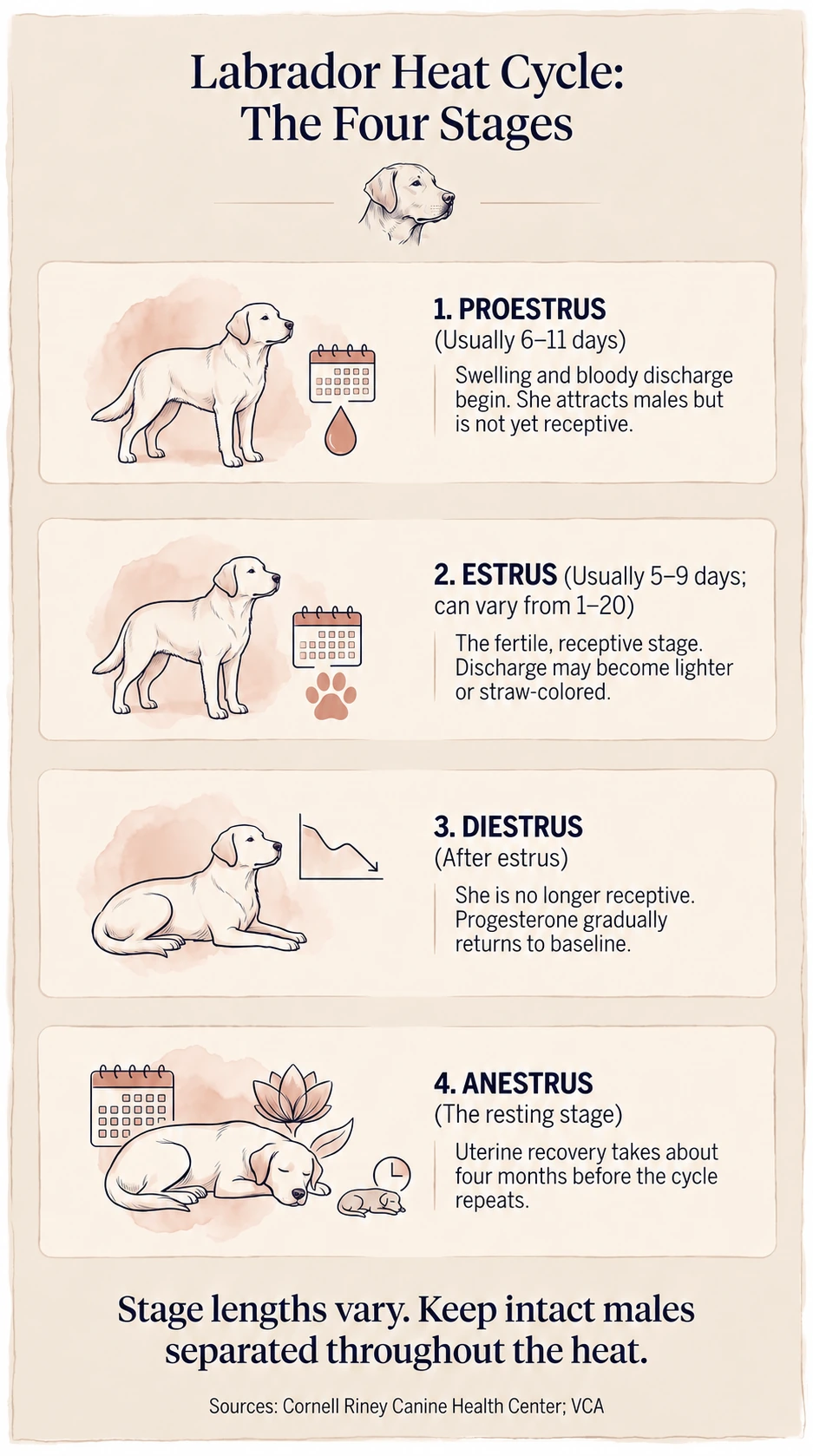
Vets split the labrador heat cycle into four stages. Most owners only notice the first two, because those are the stages people mean when they say “in heat.”
Proestrus. Estrogen rises, the vulva swells, and bloody discharge starts. Cornell puts this stage at six to eleven days on average. She attracts males now but won’t accept them yet.
Estrus. This is the fertile, receptive stage of the labrador heat cycle. Cornell says estrus usually lasts five to nine days but can run from one to twenty. The discharge often turns lighter, straw-colored or pink, which fools owners into thinking the heat is over.
Diestrus. She no longer accepts a male. Progesterone peaks two to three weeks after ovulation, holds for one to two weeks, and then falls over 10 to 30 days, so this stage runs about two months.
Anestrus. The resting stage between heats. Cornell says the uterus needs about four months to repair itself here before the next labrador heat cycle can begin.
Stage lengths vary a lot from dog to dog. That’s why one Lab blog says estrus lasts five days and another says two weeks. Both can be true for a particular dog, and the real labrador heat cycle in your home may not match any chart exactly.
How Long Labs Stay in Heat and How Long They Bleed
The visible part of a labrador heat cycle, proestrus plus estrus, lasts about two to three weeks. Cornell says bloody discharge usually lasts between 14 and 21 days.
The discharge changes as the heat goes on. VCA describes it as very bloody at first, then thinner, watery, and pink. Some dogs show discharge only several days after the heat has started, and some keep themselves so clean that you barely see it.
Lighter discharge does not mean the labrador heat cycle is over. The pink, watery phase usually lines up with estrus, which is exactly when she can get pregnant. Keep her away from intact males until the swelling has gone down and she has stopped attracting attention.
How Often Labs Come Into Heat
Most dogs have two heats a year. Cornell puts the average interval at every 5 to 11 months, and VCA notes that larger dogs tend to cycle less often than small breeds.
Young dogs are often irregular. VCA says it can take up to two years for a female to settle into regular cycles. A labrador heat cycle that arrives at eight months and then not again for ten months is not unusual early on.
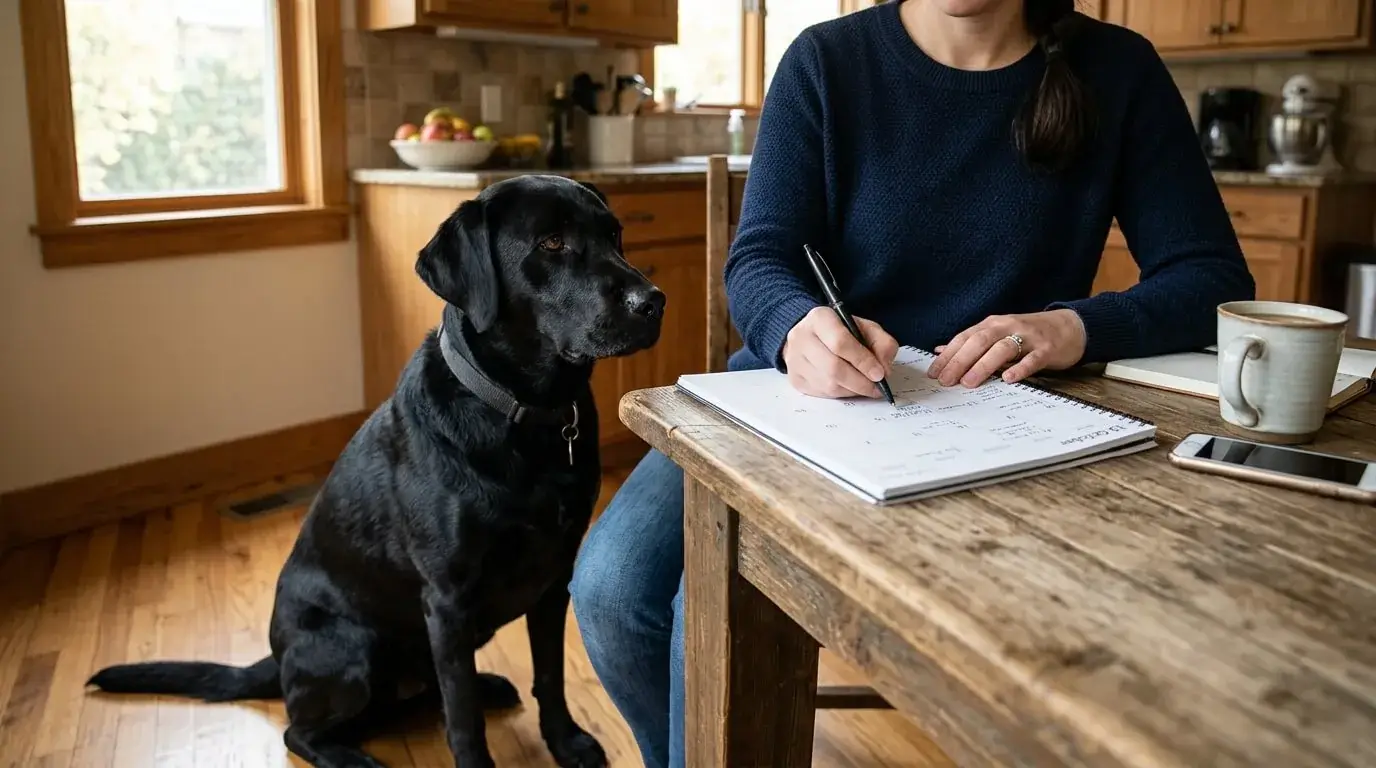
A simple calendar works better than any online heat calculator. Write down the day you first see swelling or discharge, the day it stops, and anything unusual. After two or three cycles, you’ll know her pattern, and your vet will thank you for the dates if anything ever goes wrong.
Signs Your Lab Is in Heat
VCA lists the signs of a labrador heat cycle that owners notice most:
- Swollen vulva, often the earliest sign, though it is not always obvious
- Bloody discharge, usually the first sign owners actually notice
- Licking the area more than usual
- Urinating more often, or marking small amounts on objects at home or on walks
- Interest from male dogs, sometimes from a long way off, because her urine carries pheromones
Some Labs also seem clingier or more restless during a heat. Others act completely normal. Behavior varies too much from dog to dog to use as a reliable sign, so go by the physical changes.
If you see discharge in a dog that is not due for a labrador heat cycle, or in a spayed dog, call your vet. Discharge outside a normal heat can mean infection.
Caring for Your Lab During Her Heat
The two goals are simple: no accidental pregnancy, and a clean, comfortable dog. VCA is clear that she can get pregnant at any point during estrus, because sperm can survive for about a week, and that dogs can get pregnant during their very first heat.
Walk on a leash only. Skip off-leash parks, dog parks, and daycare for the whole heat. Walk at quiet times and steer clear of other dogs.
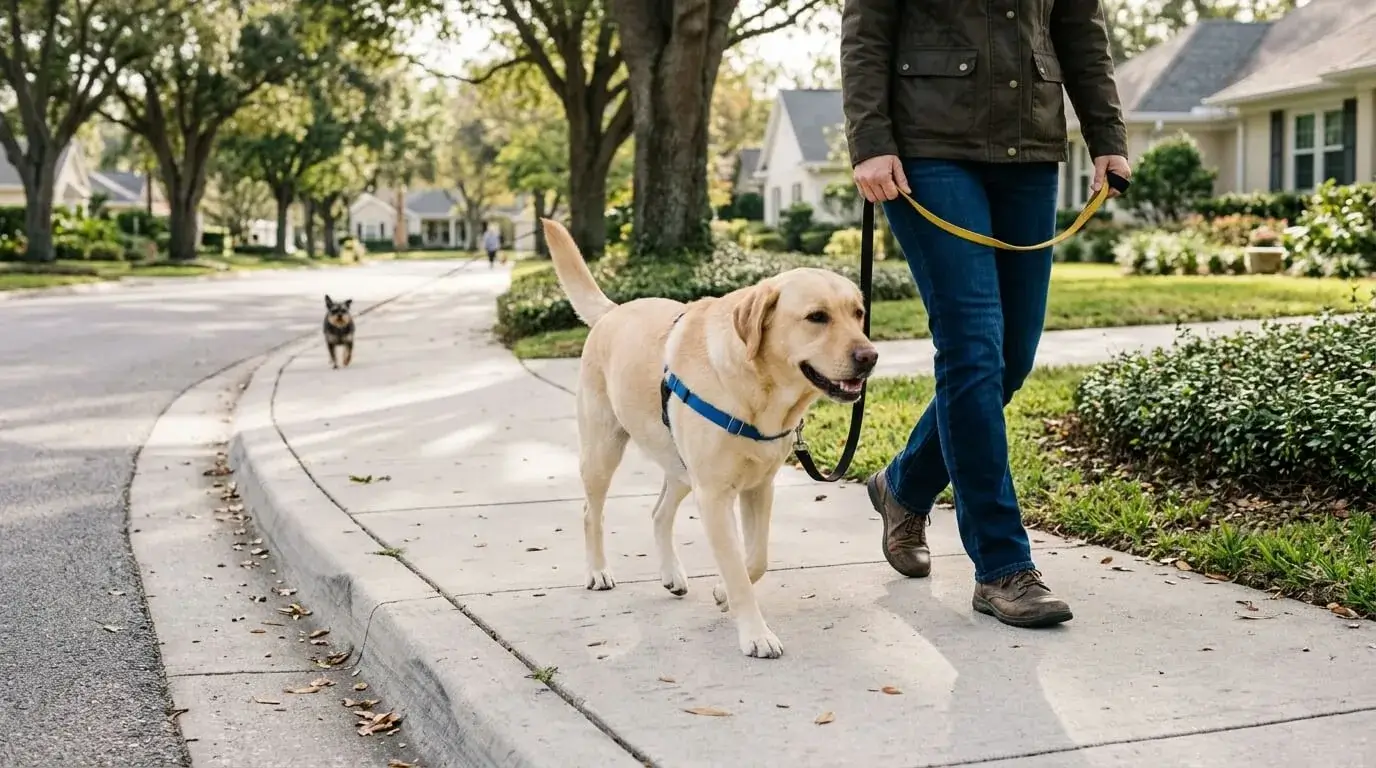
Watch the yard. An intact male can find her from a long way off during a labrador heat cycle and may try to get in. Never leave her outside alone, even in a fenced yard.
Keep intact males apart. If you have one at home, separate them completely, ideally with a closed door or a second home, not just a baby gate.
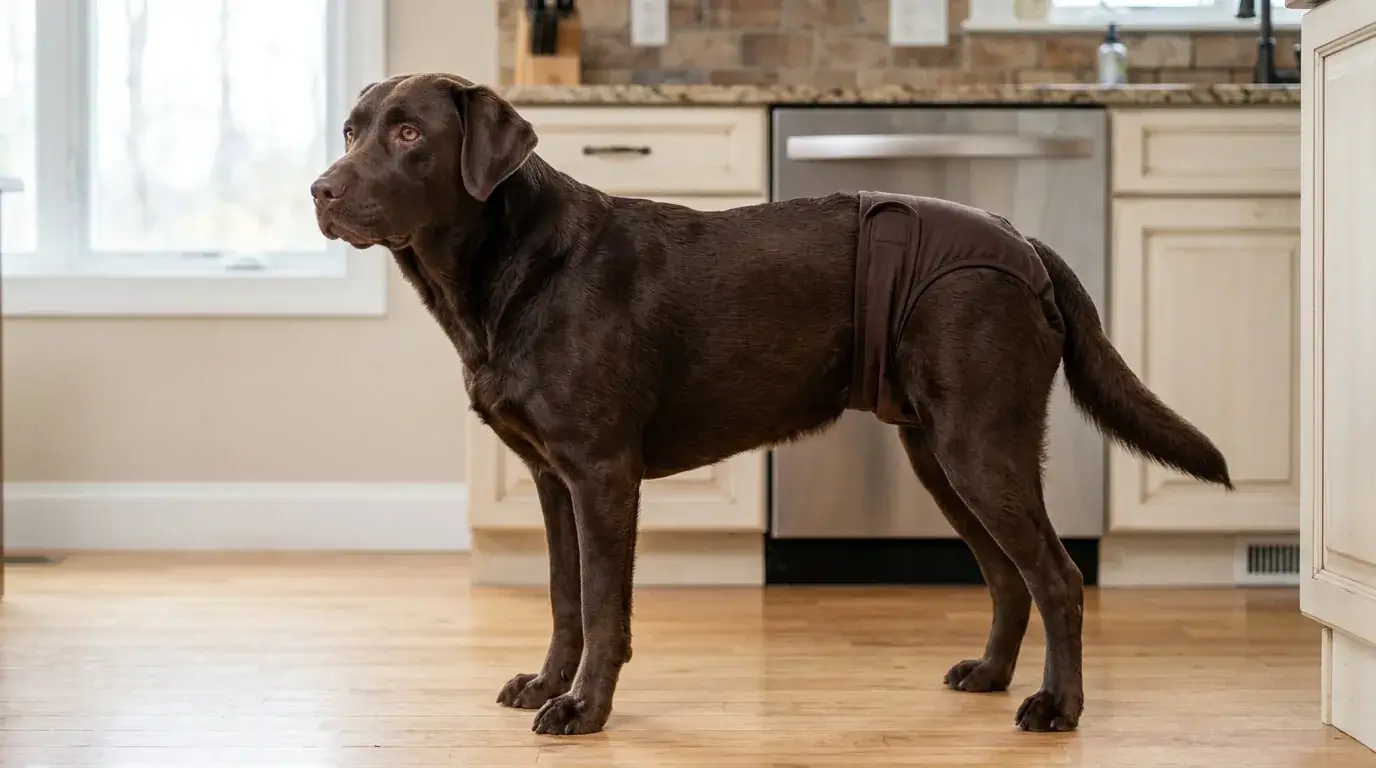
Use a washable diaper indoors. For most owners this is the messiest part of the labrador heat cycle. A fitted dog diaper or heat pants protect floors and furniture. Change it often, and take it off for potty breaks.
Cover the furniture. Washable blankets on her bed and couch make cleanup easy. A quick wipe of the area once or twice a day keeps her comfortable.
Living with an intact female through a labrador heat cycle twice a year is one of the main practical differences between owning a male and a female Lab. Plan for it before you choose.
Spay Timing and When to Call the Vet
Spaying ends heats for good. If you’re deciding when to spay your Lab, the large Hart 2020 study of Labs suggests waiting until after a year for females, and AAHA gives large-breed females a window of 5 to 15 months. VCA notes that Labs are one of the breeds that may benefit from a spay after the first heat. Your vet will help you choose.
If a labrador heat cycle starts right before the spay date, Cornell suggests waiting about two months after the heat so hormones return to baseline. After a spay, many dogs need fewer calories, so keep an eye on her healthy adult weight and adjust meals if she starts to gain.
For an intact female, the most important risk is pyometra, a serious uterine infection. It is one of the health conditions every Lab owner should know. The Merck Veterinary Manual says it appears mostly in dogs over 5 years old, usually 4 to 6 weeks after a heat. VCA adds that it can show up anywhere from 2 to 16 weeks after the last heat.
Call your vet the same day if, in the weeks after a labrador heat cycle, she:
- Drinks much more water than usual
- Seems lethargic, stops eating, or vomits
- Has a pus-like or foul-smelling vaginal discharge
- Has a swollen, painful belly
Two other problems are worth knowing. Merck says heat signs lasting more than about 40 days can point to follicular cysts on the ovary, which need a vet. And at the end of a heat, some dogs have a false pregnancy, with nesting, swollen mammary glands, or even milk. It usually ends on its own in one to three weeks, but check with your vet if she seems unwell.
FAQ
How long is a labrador heat cycle?
The part you see, with swelling and discharge, usually lasts two to three weeks. Cornell says bloody discharge lasts 14 to 21 days. The full cycle, including the resting stage, repeats about every 5 to 11 months.
Can a Lab get pregnant during her first heat?
Yes. VCA says dogs can get pregnant on their very first cycle, so the first labrador heat cycle is not a safe one. She can conceive at any point during estrus, so keep her away from intact males for the whole heat.
Can I walk my Lab while she’s in heat?
Yes, on a leash. Walk at quiet times, avoid dog parks and other dogs, and keep her close. Never let her off leash or leave her alone in the yard during a heat.
Should I spay my Lab before or after her first heat?
It’s a decision to make with your vet, and the timing of each labrador heat cycle is part of it. Lab research favors waiting past a year for females, which usually means at least one heat. Our guide on when to neuter a Labrador covers the tradeoffs.
What if her heat lasts longer than usual?
Call your vet. Merck says heat signs that last more than about 40 days can point to follicular cysts. Very short gaps between heats, or no heat at all by two years, are also worth a check.
Every labrador heat cycle follows the same basic pattern, even if the days shift from dog to dog. Keep a calendar, keep her on a leash, and keep her away from intact males. Watch her closely in the two months after each heat, when pyometra is most likely to show up.