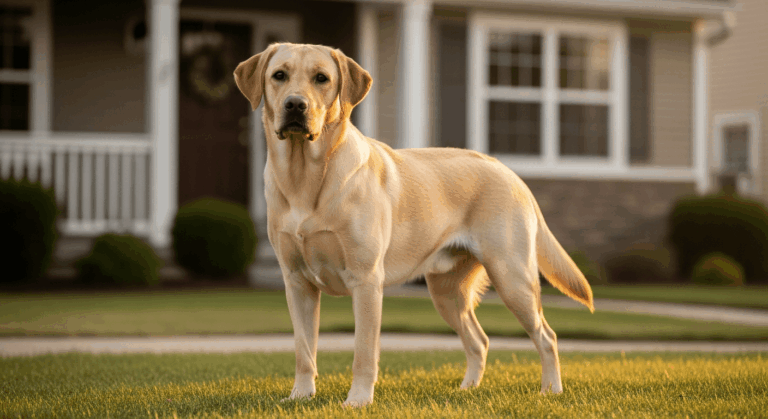
Can you shave a Labrador to help it through summer? No. A Lab’s two-layer coat insulates against heat and shields the skin from sunburn. A shave down to the skin can also grow back patchy or change texture, so brush out the loose undercoat instead. Local medical clipping, necessary mat removal, and small hygiene trims are exceptions, covered below.
Most people who ask “can you shave a Labrador” are looking at a panting dog on a hot afternoon and want to help. That instinct is right; the clippers are the wrong tool. Coat care is one small part of the real pros and cons of living with a Lab. This page covers the summer piece: why the coat stays, when clipping is fine, and what actually keeps a Lab cool.
What a Lab’s Double Coat Does in Summer
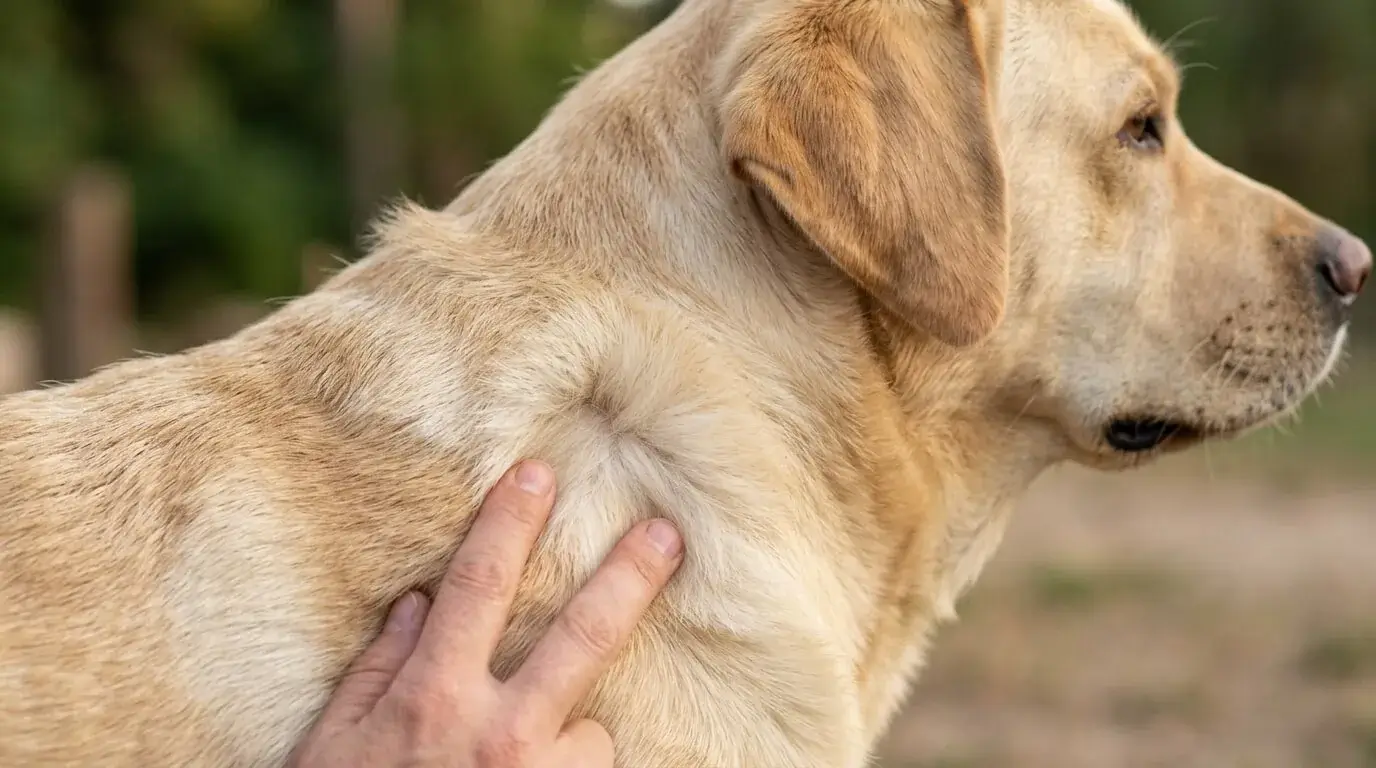
Before going further, it helps to know what the coat is for. A Lab has two coats in one. Close to the skin sits a soft, dense undercoat, and on top sits a layer of straighter, coarser guard hairs that carry the color.
The AKC’s guidance on shaving dogs names the Labrador Retriever as a double-coated breed. Golden Retrievers, Border Collies, German Shepherds, Siberian Huskies, and English Springer Spaniels are on the same list. For all of them, the answer to can you shave a Labrador or a dog like it is the same.
The undercoat works as insulation, and insulation works in both directions. In winter it holds body heat in. In summer, after much of that undercoat has shed, what remains traps air between the two layers and keeps outside heat off the skin.
“Your dog’s coat actually acts as an insulator,” says Dr. Jerry Klein, the AKC’s Chief Veterinary Officer. He adds that shaving it to keep a dog cool removes that layer and can make the dog more susceptible to heat stroke.
The guard hairs do a second job people forget: they block the sun. Klein notes that a dog’s coat protects it from sunburn and lowers its risk of skin cancer. A shaved Lab has pale, bare skin facing the full summer sun.
So, can you shave a Labrador to cool it down? Only by removing its sunshade and its insulation on the hottest days of the year.
What Happens to the Coat After a Full Shave
The second problem shows up weeks later, when the coat starts to grow back.
The two layers do not grow at the same speed. AKC guidance explains that a double coat shaved to the skin tends to regrow undercoat first. That fast undercoat can crowd out the slower guard hairs, and Klein also warns of improper hair growth and possible follicle damage.
In practice, a shaved Lab can end up with:
- A fuzzy, woolly texture instead of the smooth Lab coat
- A lighter or uneven color, because the guard hairs carry most of it
- Thin patches where the coat grows back unevenly
That is what a shaved Labrador often looks like a few months on. It is also why many groomers who work with retrievers say no when an owner asks can you shave a Labrador.
No source we trust gives a timeline for how long a Lab’s coat takes to recover after a shave. Some coats come back looking normal. Others stay patchy for a long time.
So if the real question is can you shave a Labrador and get the old coat back afterward, plan for the chance that you won’t.
Shaving Won’t Stop the Shedding
A lot of shave requests have nothing to do with heat. They come from owners who are tired of hair on the couch.
Shaving does not fix that. Every hair you clip is still attached to a follicle that keeps working. The coat grows back, undercoat first, and the shedding cycle starts again with shorter, spikier hair on the floor.
Labs shed all year and heavily twice a year, when they “blow” their undercoat in spring and fall. During those few weeks the volume of loose hair is striking. It is the time most owners search “can you shave a Labrador to stop shedding.”
The fix is removal, not cutting. Loose undercoat that you brush out never lands on your furniture. A good undercoat rake pulls dead hair from under the guard hairs without harming the living coat, and the routine section below covers the tools.
When Clipping Is the Right Call
The honest answer to can you shave a Labrador has a few exceptions. “Never shave a Lab” is a good default, not an absolute rule.
Vet clipping for medical care. Vets routinely clip a patch of coat before surgery, to clean and treat a wound, or to let air reach a hot spot. That is a medical decision, it covers only the area that needs it, and the hair grows back during recovery.
Cutting out mats. Labs rarely mat, but it can happen behind the ears, in the “pants” on the back legs, or on a neglected senior dog. A groomer may need to clip the matted patch away rather than pull at sore skin. That is a fair yes to can you shave a Labrador, but only for that patch.
Paw and sanitary trims. Tidying the hair between the toes and around the rear end is grooming, not shaving. Because a dog’s sweat glands sit in its paw pads, the AKC says trimming excess paw fur can help that sweat evaporate.
The AVMA puts the summer haircut question in the vet’s hands. Its warm-weather advice says to ask your veterinarian whether your pet would benefit from a warm-weather haircut or other protection. For a healthy Lab, that conversation almost always ends with “no shave, more brushing.”
So, can you shave a Labrador for a medical reason? Yes, when a vet recommends it. Can you shave a Labrador because it looks hot? That is the case vets advise against.
Keeping a Lab Cool Without Clippers
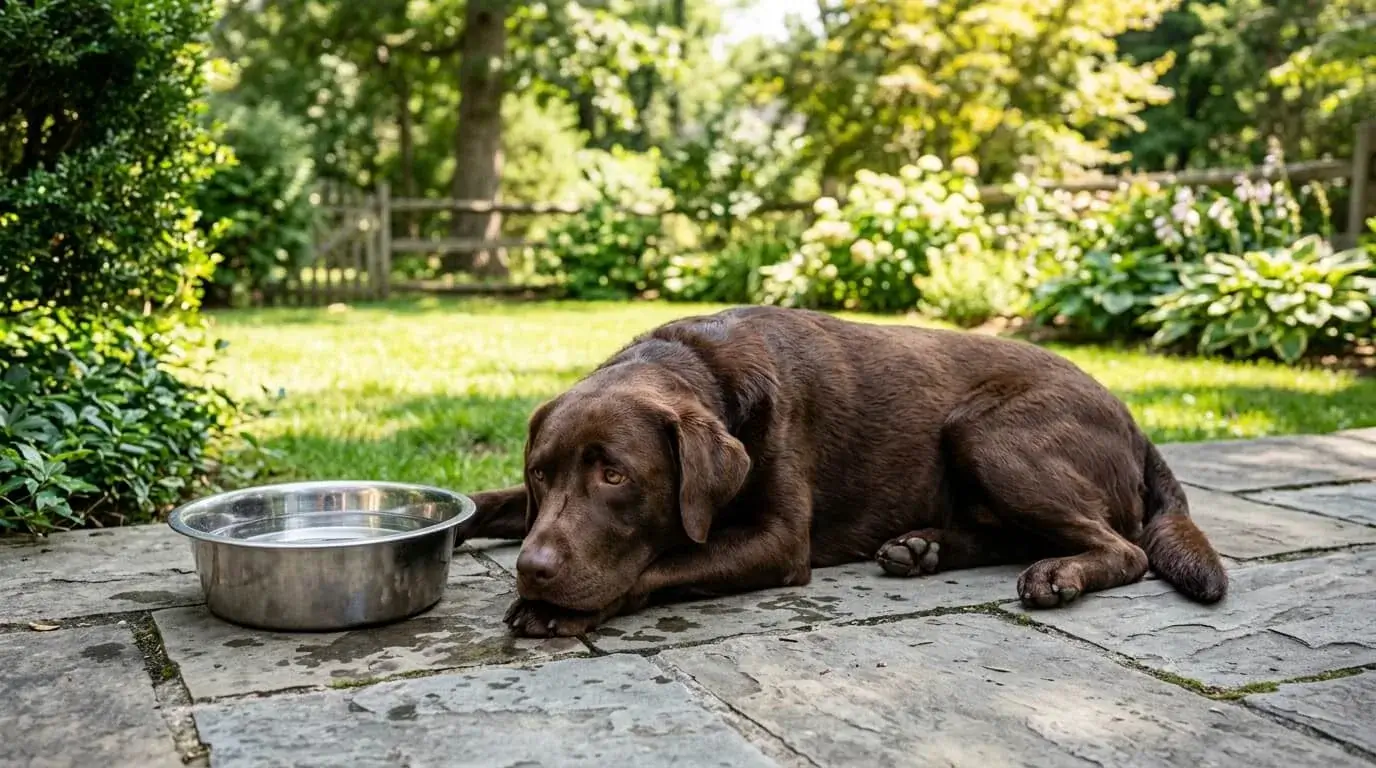
Dogs do not cool down the way people do. They rely mostly on panting, plus widening blood vessels near the skin of the ears and face. Their only true sweat glands are in the paw pads.
That is why “can you shave a Labrador to cool it?” is the wrong question. A shave does nothing useful for any of those systems. What helps is managing the heat around the dog, and the AVMA’s warm-weather pet safety tips give practical ways to manage summer heat:
- Unlimited fresh water and real shade whenever the dog is outside
- Walks, runs, and fetch in the cooler hours, early morning or evening
- No hot asphalt, which can burn paw pads
- Never leaving a Lab in a parked car, even in shade with the windows cracked
- Extra care with an overweight Lab, since overweight pets face higher risk with warm-weather exercise
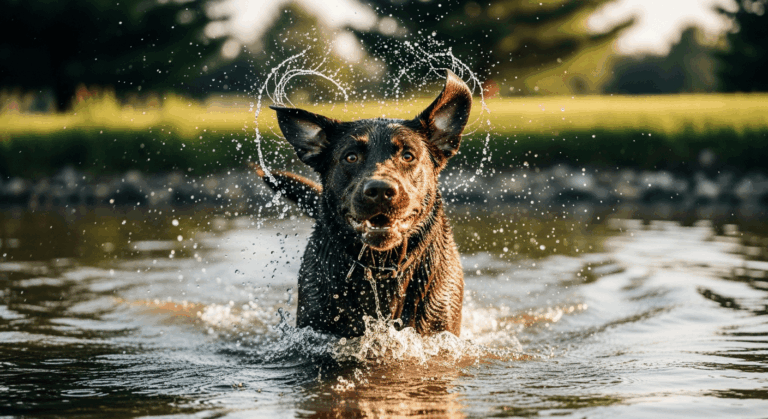
Water helps too. Most Labs love it, and a wade in a shallow creek cools them far better than a shave could. If your dog is new to it, start with a swim in safe water and keep sessions short on very hot days.
Know the warning signs. The AVMA says to seek emergency veterinary care for anxiousness, excessive panting, restlessness, excessive drooling, unsteadiness, abnormal gum and tongue color, or collapse.
If you see those signs, start cooling the dog and head to a vet. VCA’s heat stroke guide recommends cool water, not cold, poured over the head, stomach, armpits, and feet, plus a fan or air conditioning. It warns against covering the dog with wet cloths, which can trap heat, and says ice packs are no longer recommended.
Right after “can you shave a Labrador?”, people often ask what temperature is too hot for a Lab. We could not find a Lab-specific air temperature in any vet source, so we will not invent one. VCA does give body temperature: above 103°F is abnormal, and above 106°F without prior illness usually points to heat stroke.
A Summer Coat Routine That Actually Helps
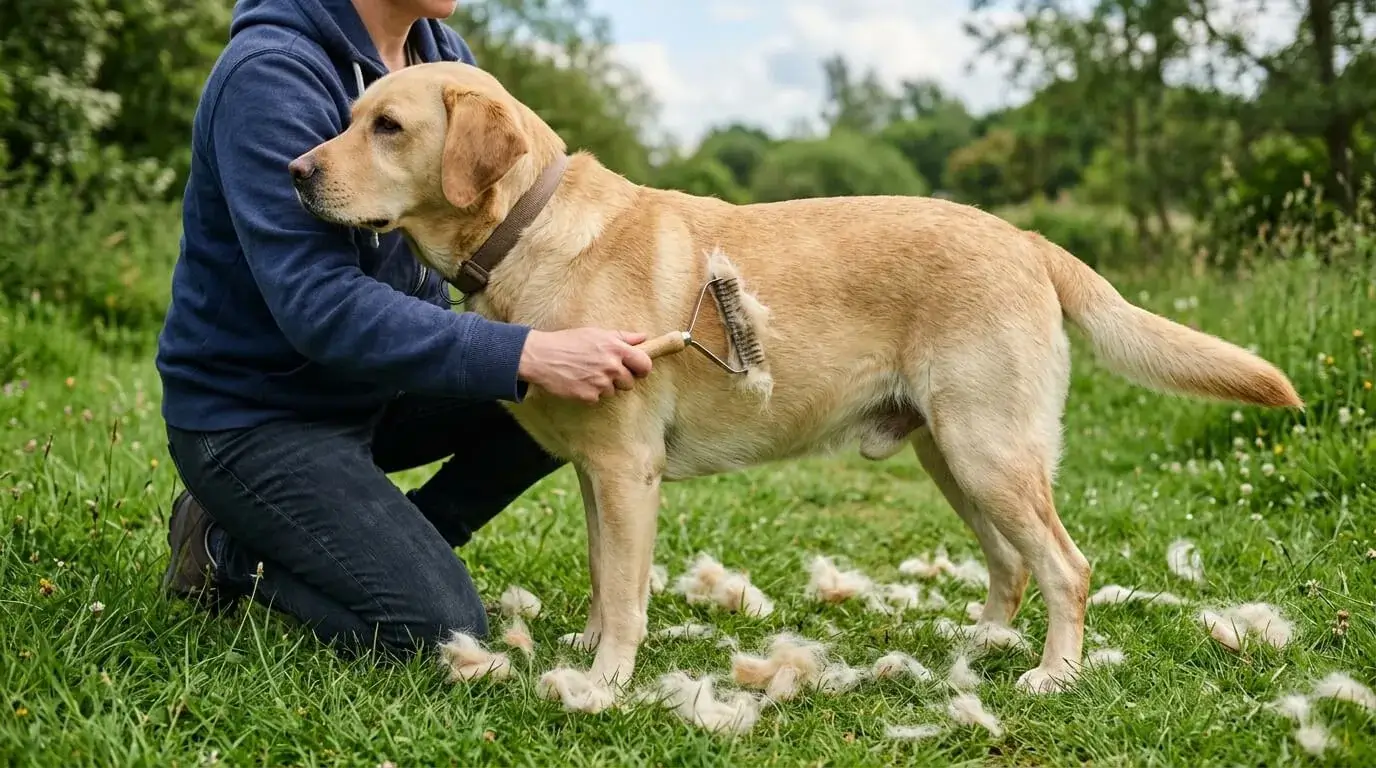
The best answer to “can you shave a Labrador” is a brush. Here is the summer routine we use.
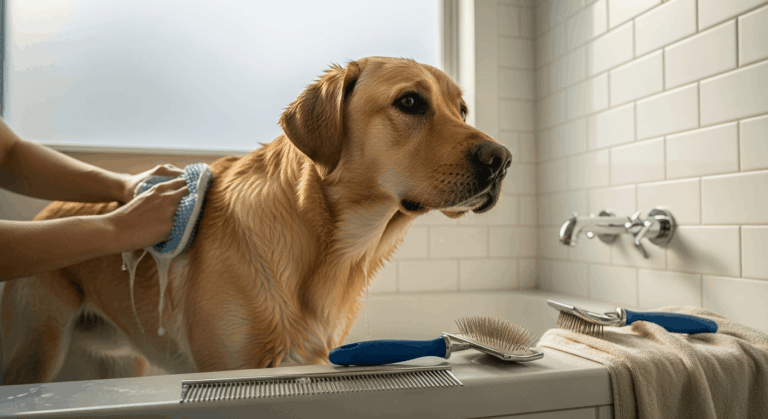
Brush out the undercoat during the blow. When the spring blow starts, brush several times a week with an undercoat rake, then follow with a deshedding tool. Work with the direction of the hair, one section at a time.
You will pull out what looks like a second dog, and the coat underneath will lie flatter and let air move. Our full Labrador grooming routine covers which tool to use when and how often to brush between blows.
Keep brushing through summer. Owners who once asked “can you shave a Labrador?” usually find a weekly session is enough once the blow is over. It also lets you check for ticks, hot spots, and sunburn on thin-coated areas like the belly.
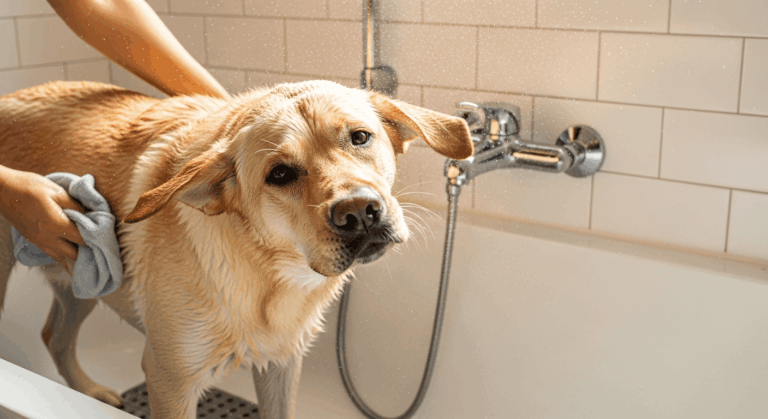
Use a cool bath, then dry fully. A bath during the blow loosens a lot of undercoat in one go. Rinse well and dry the dog down to the skin, because a damp undercoat can irritate it.
Don’t bathe too often, though. Frequent baths strip the oils that keep the coat water-resistant, and our guide on how often to bathe a Lab explains the baseline.
Tidy the paws. Trim the hair between the toes so the pads can sweat and the dog grips smooth floors better. That is the one trim that helps with heat.
Skip the clippers. Next time the “can you shave a Labrador?” question comes up on a hot day, reach for the rake. Regular brushing removes loose undercoat; shade, water, and avoiding hot exercise help manage the heat around the dog.
FAQ
What breeds should not be shaved?
Double-coated breeds should generally not be shaved. The AKC lists Golden Retrievers, Border Collies, German Shepherds, Labrador Retrievers, Siberian Huskies, and English Springer Spaniels as examples. Their undercoat insulates against heat and cold, and their guard hairs protect the skin from the sun. That is why the answer to can you shave a Labrador matches the answer for a Golden or a Husky.
My Lab was already shaved. Will the coat grow back normally?
It may, or it may not. A shaved double coat can grow back patchy, with a different texture or color.
While it grows, keep your Lab out of strong midday sun and watch thin areas for sunburn. Keep brushing gently as the coat returns, and ask your vet to check the skin if patches stay bare.
Can you shave a Labrador puppy?
The same double-coat logic applies to a puppy. A puppy’s coat insulates it and protects its skin just as an adult’s does, and there is no grooming reason to shave a healthy pup. Use the puppy months to get your Lab comfortable with brushing and paw handling instead.
Is it OK to trim a Lab’s paws and feathering?
Yes, and this is the part of can you shave a Labrador that gets a yes. Trimming the hair between the toes and tidying longer hair on the backs of the legs is normal grooming. Keeping paw fur short can help the sweat glands in the pads cool the dog. Leave the main body coat at full length.
So, can you shave a Labrador? Whole-body shaving for summer comfort is not recommended. Local medical clipping or necessary mat removal can be appropriate, and small paw or sanitary trims are different from shaving the body. For everyday summer comfort, brush out the undercoat, give your Lab shade, water, and cool hours to exercise, and learn the signs of heat stress.