Labrador hip dysplasia is the most common orthopedic condition in the breed, affecting an estimated 20–30% of Labs — but a diagnosis does not end a dog’s active life. The hip joint develops abnormally during growth, creating wear that leads to arthritis over time. With the right management, most Labs with hip dysplasia continue to live comfortable, mobile lives. Here is what the condition means, how vets diagnose it, and what the treatment options look like.
What Is Labrador Hip Dysplasia? Causes & Genetics
Labrador hip dysplasia is a developmental condition where the femoral head (ball) and acetabulum (socket) do not fit together correctly. The poor fit creates abnormal wear on the joint surface, which leads to inflammation and, over time, arthritis. The condition spans a spectrum — from mild laxity (OFA-rated Mild) with minimal symptoms to severe joint deterioration (OFA-rated Severe) that significantly affects mobility. OFA grading is covered in the diagnosis section below.
Labradors are one of the highest-risk breeds. Studies estimate that 20–30% of Labs will develop some degree of hip dysplasia during their lifetime. The primary cause is genetic — the condition follows a polygenic inheritance pattern, meaning multiple genes contribute. OFA data shows that offspring of two OFA Good or Excellent parents have meaningfully lower HD rates — but the polygenic nature of the condition means no pairing eliminates the risk entirely.
Secondary contributors include rapid growth in puppyhood and overfeeding during the first year. Keeping a Lab puppy at a body condition score of 4–5 out of 9 — rather than free-feeding — reduces the rate of skeletal loading during the period when joint structures are still forming.
High-impact exercise before the growth plates close is equally important to manage. Repetitive jumping or running on hard surfaces before 12–18 months places mechanical stress on developing cartilage. The condition can affect one hip (unilateral) or both (bilateral) — bilateral is more common in Labs. Unlike genetics, these secondary risk factors are controllable with the right management approach.
Symptoms of Labrador Hip Dysplasia: What to Watch For
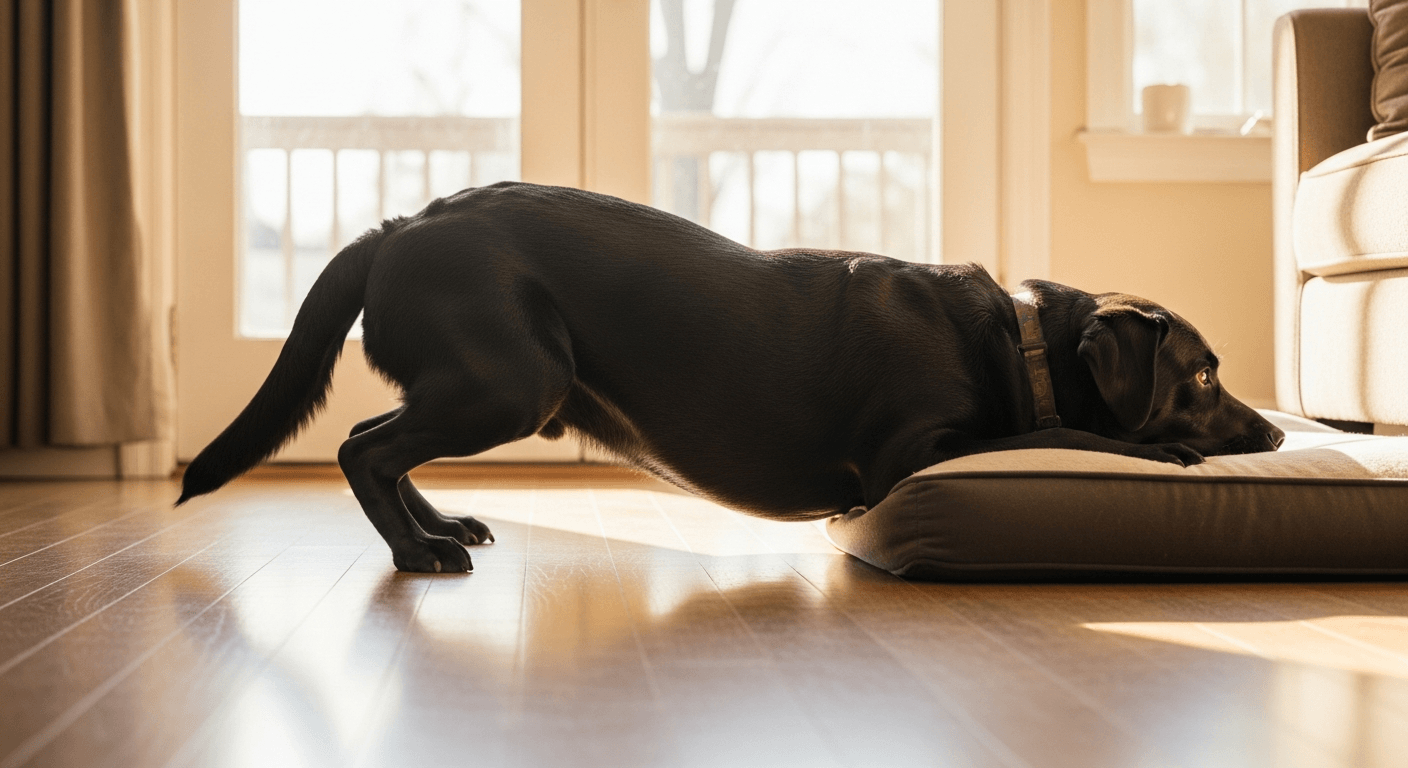
Early signs of labrador hip dysplasia can appear as young as 5 months and include:
- Stiffness after rest, particularly in the morning
- Reluctance to rise from lying or sitting positions
- Reduced enthusiasm for walks or fetch — activities Labs rarely refuse when healthy
- Difficulty navigating stairs or outright refusal to use them
- Bunny-hopping gait — both rear legs moving together when running rather than alternating
- Swaying or rolling movement of the hindquarters
- Shortened rear stride
In later-stage cases, hindquarter muscle atrophy becomes visible as the dog shifts weight away from the painful joint. An audible grinding sound from the hip may develop, and dogs often react with resistance when a vet manipulates the joint during a physical exam — findings such as crepitus and reduced range of motion that raise clinical suspicion without confirming a grade.
One important nuance: Labs combine high food and play motivation with a stoic temperament — a combination that drives them to keep working through pain levels that would cause many other breeds to stop and rest. Many continue running and playing through significant discomfort. Absence of obvious limping does not mean absence of pain. Behavioral indicators — reduced interest in play, reluctance to rise, unusual quietness after activity — are often more reliable early warning signs in Labs than gait changes. If any combination of these behaviors appears, a veterinary assessment with X-rays is the appropriate next step.
Diagnosing Hip Dysplasia: OFA, PennHIP & What to Expect at the Vet
Diagnosis requires X-ray imaging. A physical examination alone cannot confirm labrador hip dysplasia or grade its severity. Physical findings such as reduced range of motion, crepitus, or pain response during hip manipulation can raise clinical suspicion, but they cannot distinguish OFA grades or confirm joint remodeling. X-ray under sedation is always required to confirm the diagnosis.
The OFA (Orthopedic Foundation for Animals) is the most widely used certification system in the US. To receive an official rating, a dog must be at least 2 years old. Ratings run from Excellent and Good (normal development) through Fair and Borderline to Mild, Moderate, and Severe (varying degrees of dysplasia with increasing laxity and joint remodeling). Any dog rated Mild or worse is considered dysplastic. Preliminary OFA X-rays can be submitted before age 2 but are not included in the public registry.
PennHIP can be performed from 16 weeks of age. It produces a distraction index — a numerical score measuring joint laxity. A lower score indicates a tighter, healthier joint. Because it can be performed much earlier, PennHIP is especially useful for breeders screening young dogs.
Both methods require sedation to position the dog correctly. When purchasing a puppy, always ask the breeder for OFA or PennHIP certificates for both the sire and dam — not just the dam. A verbal assurance that a dog “has never been sick” is not equivalent to a certified result.
Treatment Options: Surgery vs Conservative Management
Treatment depends on the dog’s age, body weight, pain level, and dysplasia severity. Not every dog with labrador hip dysplasia requires surgery. Many Labs with mild to moderate HD are managed successfully without it throughout their lives.
Conservative management includes:
– Weight management — the single most impactful intervention
– Controlled low-impact exercise: swimming and leash walking
– Joint supplements: glucosamine/chondroitin and fish oil
– NSAIDs prescribed by a vet for pain and inflammation
– Physiotherapy or hydrotherapy
– An orthopedic memory foam bed to reduce joint pressure during rest
Products such as Cosequin DS and Nutramax Dasuquin are among the most widely recommended veterinary joint supplements and are available through Chewy.
For dogs where conservative management is insufficient, three surgical options are available:
| Surgery | Best For | Approximate Cost |
|---|---|---|
| FHO (Femoral Head & Neck Ostectomy) | Dogs under ~30 kg | $1,500–$3,000 |
| TPO (Triple Pelvic Osteotomy) | Dogs under 12 months, before arthritis | $2,000–$4,500 |
| Total Hip Replacement | Severe HD in younger, larger dogs | $3,500–$7,000+ per hip |
FHO removes the femoral head entirely, eliminating bone-on-bone contact — it has good outcomes in smaller dogs but is less predictable in larger Labs. TPO repositions the acetabulum to improve joint coverage and is only appropriate before significant arthritis develops. Total hip replacement is the closest to a complete resolution and provides the best long-term function in appropriate candidates.
Pet insurance taken out before any symptoms appear is the most effective way to manage surgical costs. Once labrador hip dysplasia is diagnosed or symptoms are documented, it becomes a pre-existing condition excluded from most policies.
Preventing Labrador Hip Dysplasia: Breeding, Nutrition & Exercise
The most effective prevention is sourcing from health-tested parents. Asking for OFA or PennHIP certification for both the sire and dam before purchasing a puppy is the strongest single action a buyer can take. It does not guarantee a clear puppy due to the polygenic nature of the condition, but it meaningfully reduces the probability of severe HD. Risk also varies by breeding line – our English vs American Labrador guide explains how show and field lines differ on joint health.
Nutrition during puppyhood matters more than most owners realize. Overfeeding in the first year accelerates bone growth faster than the joint capsule and surrounding soft tissue can develop. Feed a large-breed puppy formula with controlled calcium levels and follow feeding guidelines adjusted for target adult weight, not current size.
Avoid high-impact activities before 18 months: repetitive jumping, abrupt stopping and turning on hard surfaces, and agility training before the growth plates close. Swimming is the best exercise at any age but especially during growth — it provides full-body conditioning with minimal joint loading. For the first three months, keep stairs to a minimum and provide soft, supportive sleeping surfaces.
Living with Labrador Hip Dysplasia: Day-to-Day Management
Weight management is the non-negotiable foundation. A well-managed Lab’s ribs should be palpable under light finger pressure, and a visible waist should be apparent from above. Each additional kilogram of body weight increases the mechanical load through the hip joint. Keeping a Lab lean is a clinical priority, not a cosmetic one.
For exercise, shorter and more frequent sessions work better than a single long walk. Two 20-minute leash walks on grass cause less joint stress than one 60-minute outing. Swimming remains ideal throughout the dog’s life. Avoid repetitive stair climbing, jumping in and out of vehicles, and sudden direction changes on hard ground.
Small home modifications make a meaningful difference in daily comfort. An orthopedic memory foam dog bed reduces pressure on the hips and helps with stiffness after rest. A car ramp eliminates the impact of jumping in and out of vehicles — one of the most common pain triggers for dysplastic dogs. Non-slip flooring, bath mats on hard floors, reduces the effort required to stand and turn. These products are available through Chewy in sizes appropriate for Labs.
Joint supplements — specifically glucosamine/chondroitin and omega-3 fish oil — are widely used adjuncts to veterinary care. Allow 6–8 weeks of consistent use before assessing their effect. They support joint health and reduce inflammation but are not replacements for veterinary-managed pain control in moderate to severe cases. Work with a vet to establish an NSAID protocol appropriate for the dog’s pain level and reassess annually or whenever signs worsen.
For a broader look at health conditions across all life stages, see our Common Health Problems in Labradors. For clinical reference on screening and surgical options, the Merck Veterinary Manual and OFA’s breed health statistics are authoritative sources.
Most Labradors with hip dysplasia live full, active lives with the right management in place. If labrador hip dysplasia has been diagnosed or suspected, a joint supplement and weight management plan discussed with a vet is the most effective starting point.
Frequently Asked Questions
What causes labrador hip dysplasia?
The primary cause is genetic — a polygenic inheritance pattern where multiple genes contribute to abnormal joint development. Secondary risk factors include overfeeding in puppyhood, high-impact exercise before 18 months, and rapid early growth. Buying from OFA- or PennHIP-certified parents significantly reduces but does not eliminate the risk.
Is hip dysplasia painful for Labradors?
Yes, particularly in later stages as arthritis develops. Labs are stoic and mask pain well — watch for behavioral signs like reduced activity and reluctance to rise rather than waiting for obvious limping.
Can a Labrador live a normal life with hip dysplasia?
Yes. With weight management, exercise modification, and appropriate pain control, most Labs with mild-to-moderate labrador hip dysplasia maintain good quality of life into their senior years. Surgery may be needed in severe cases but is not required for every dog.
At what age does labrador hip dysplasia develop?
Symptoms can appear as early as 5–6 months in severe cases. Many Labs develop signs between 1–2 years of age. In milder cases, arthritis-related signs may not appear until 5–8 years.
How much does hip dysplasia treatment cost?
Conservative management — supplements, weight control, and periodic vet visits — is low-cost on an ongoing basis. Surgery ranges from approximately $1,500 for FHO to $7,000+ per hip for total hip replacement. Pet insurance taken out before symptoms appear is the most effective cost mitigation.