How much should I feed my Labrador? For most adult Labs, the answer is 2 to 3 cups of dry food per day, split into two meals. The right amount shifts with age, weight, and activity — and for this breed, getting it right matters more than usual.
About one in four Labradors carries a variant in the POMC gene that blunts the feeling of fullness after eating. Your Lab’s appetite is not a portion guide. This Labrador feeding guide gives you exact amounts for every life stage, from 8-week-old puppy to senior.
Labrador Feeding Chart by Age and Weight
Here is the full breakdown in one place. Amounts assume a standard dry kibble at roughly 350–400 calories per cup — always cross-check the chart on your food’s bag, because caloric density varies between brands.
| Age | Meals per day | Daily amount (dry kibble) |
|---|---|---|
| 2–4 months | 3–4 | 1.5–2.5 cups |
| 4–6 months | 3 | 2–3 cups |
| 6–12 months | 2–3 | 2.5–3.5 cups |
| 1–7 years | 2 | 2–3 cups |
| 7+ years | 2 | 1.75–2.5 cups |
The sections below explain how to adjust these numbers for your individual dog. When in doubt, your vet can set an exact calorie target from your Lab’s weight and body condition.
How Much to Feed a Labrador Puppy (8 Weeks to 6 Months)
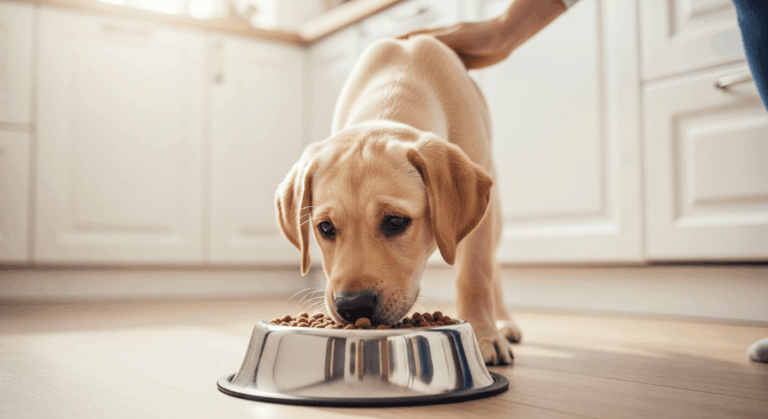
Labrador puppies grow rapidly — most gain about 2 pounds per week through the first 6 months. At 8 to 12 weeks, feed 1.5 to 2 cups of dry large-breed puppy food daily, split into 4 small meals. By 3 to 4 months, move to 3 meals and 2 to 2.5 cups per day.
From 4 to 6 months, most Lab puppies need 2 to 3 cups daily across 3 meals. Watch the puppy, not just the chart: ribs should be easy to feel under light pressure, with a visible waist from above. A roly-poly Lab puppy is already overweight.
The formula matters as much as the amount. Large-breed puppy food controls calcium and phosphorus to keep fast-growing bones on schedule — regular adult food is not a safe substitute during growth. For brand guidance and the full puppy schedule, see our Labrador puppy food guide.
Never free-feed a Labrador. Leaving food out all day works for some breeds; Labs will simply keep eating.
Feeding a Labrador from 6 to 12 Months
Growth slows after 6 months, but it has not stopped. Feed 2.5 to 3.5 cups of large-breed puppy food daily. Most Labs can move from 3 meals to 2 between 6 and 8 months.
Keep your Lab on puppy formula until 12 to 15 months — growth plates are still open, and the switch is about skeletal development, not size. If you’re unsure about timing, see our guide to transitioning to adult food.
Adolescent Labs can gain fat quickly when portions stay high while exercise dips. Re-check body condition every 2 weeks during this stretch and adjust by quarter-cup steps.
How Much Should I Feed My Adult Labrador? (1 to 7 Years)
“How much should I feed my Labrador?” is really a calories question. A typical adult Lab in the AKC standard weight range of 55 to 80 pounds needs roughly 1,100 to 1,600 calories per day. In practice that means:
- 55–70 lbs, typical activity: 2–2.5 cups per day
- 70–90 lbs or very active: 2.5–3.5 cups per day
Working and field Labs can need up to 4 cups — confirm with your vet before going higher. Activity is the biggest variable: a Lab that gets regular swimming or field work burns far more than one taking a single 30-minute walk.
Two adjustments catch most owners out. After spay or neuter, caloric needs drop by 15 to 25 percent — keep feeding the old portion and the weight arrives fast. And extra weight is not cosmetic for this breed: it accelerates joint issues Labs are already prone to, and Purina’s 14-year Labrador study found lean-fed Labs lived nearly 2 years longer than their overweight littermates — a real difference in lifespan.
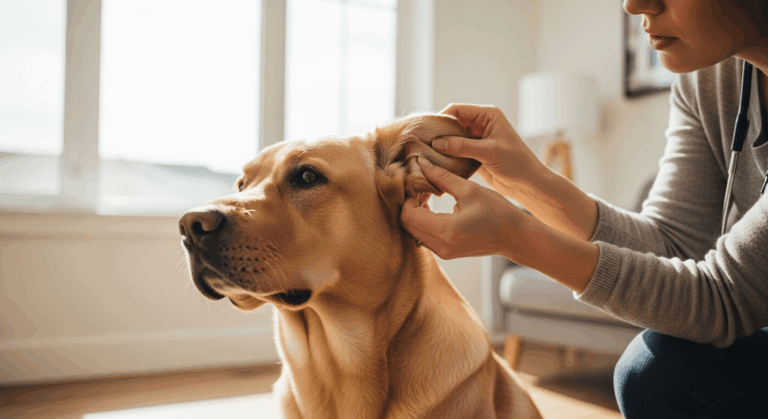
The reliable check is the body condition test, not the bowl. Ribs should feel like the back of your hand under light pressure. From above, there’s a visible waist; from the side, a slight belly tuck. Check by touch monthly — thick coats hide weight gain.
Senior Labrador Feeding Amounts (7 Years and Older)
As Labradors age, metabolism and activity both slow. Most seniors do well on 1.75 to 2.5 cups daily. For a less active senior, reduce portions by about 10 percent and re-weigh monthly.
Keep the protein. The old advice to cut protein for senior dogs is outdated — most veterinarians now recommend maintaining it to preserve muscle mass, and trimming calories from fat instead.
Watch both directions on the scale. Gradual gain usually means portions haven’t followed activity down. Unintentional weight loss in a senior Lab is a vet visit, not a feeding adjustment.
Why Your Labrador Always Acts Hungry
If your Lab acts starving at every meal, there is a real reason. University of Cambridge researchers found in 2016 that about one in four Labradors carries a variation in the POMC gene — the gene that signals fullness after eating.
Affected Labs feel hungrier between meals and are significantly more likely to become obese. These dogs are not being greedy — the fullness signal genuinely doesn’t arrive.
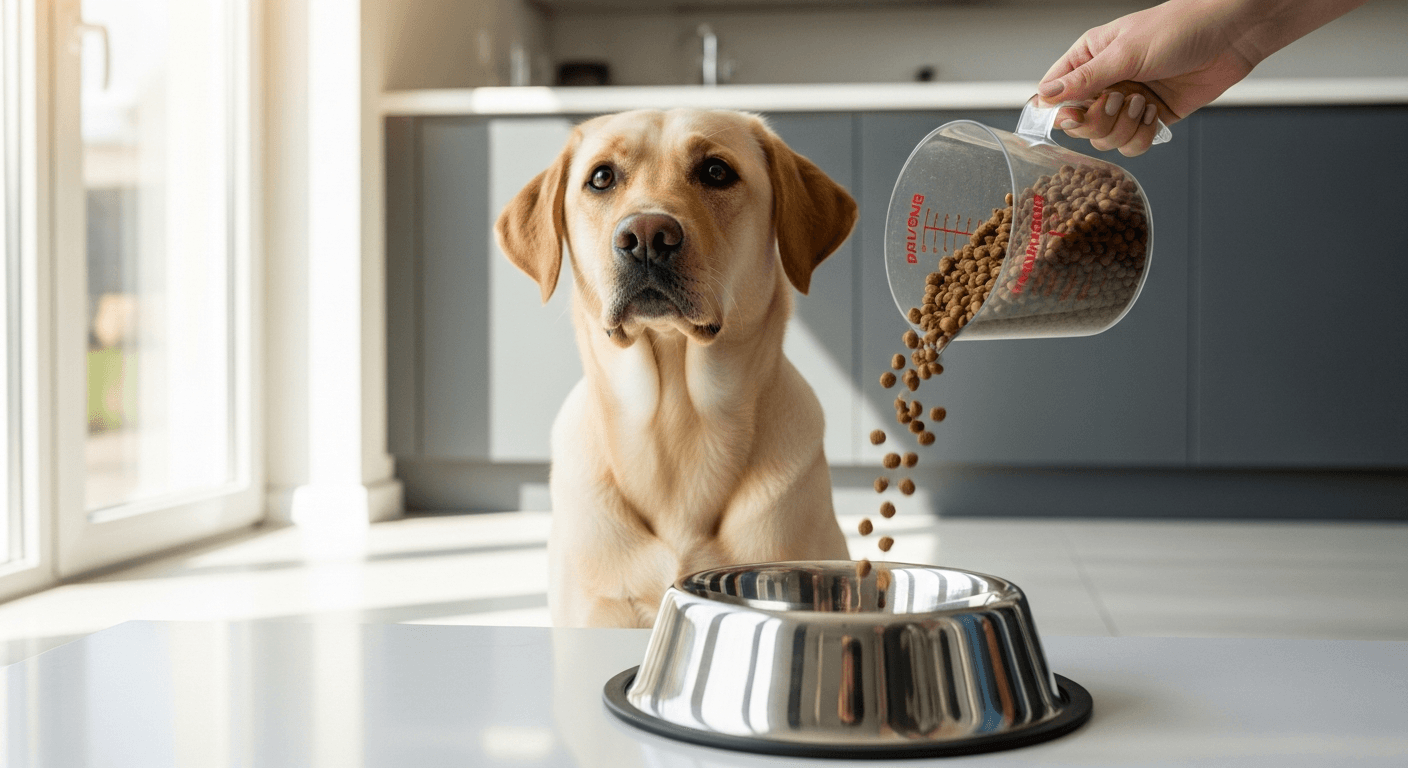
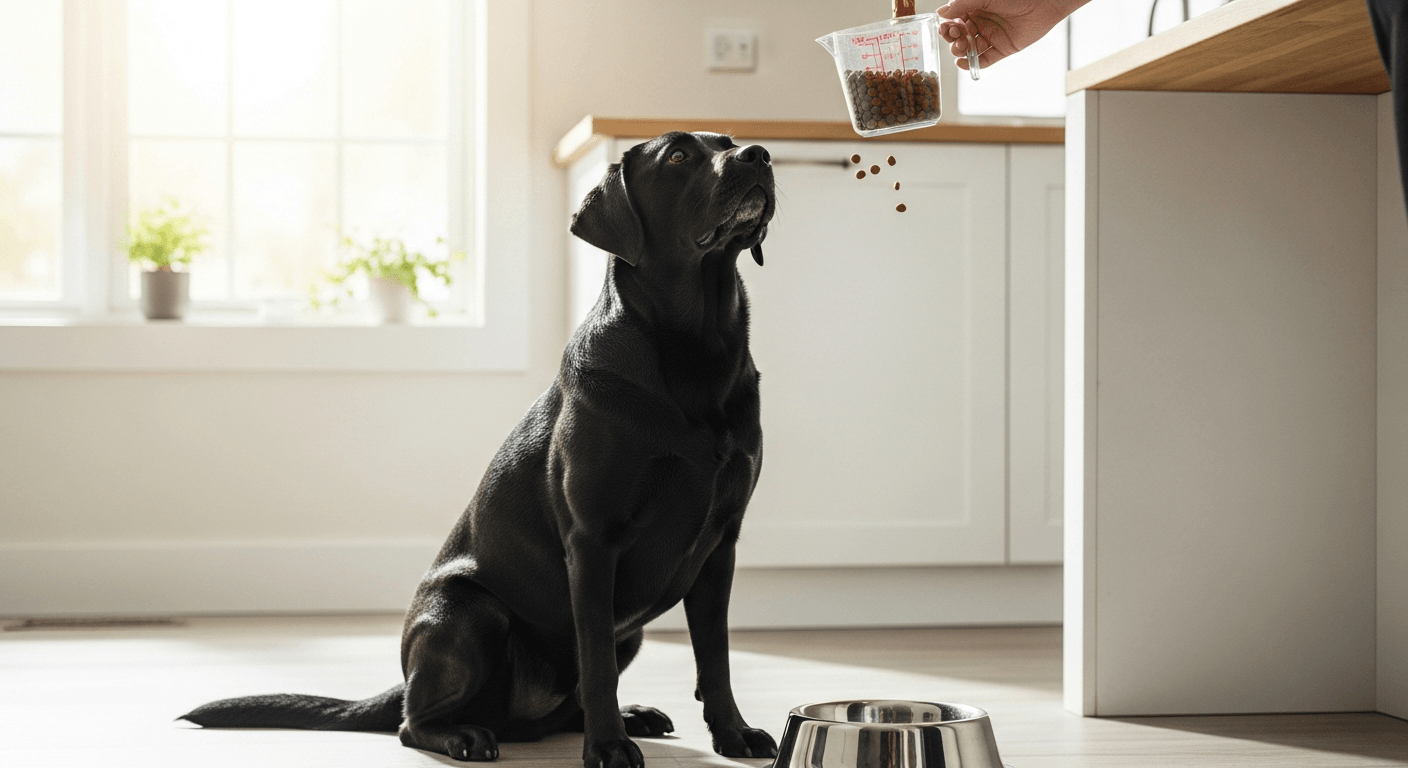
The fix is procedural, not willpower. Measure every meal with a measuring cup or kitchen scale — never a scoop or a guess. Keep treats under 10 percent of daily calories, and count them: ten 20-calorie training treats is 200 calories, nearly half a meal for an adult Lab.
How Often to Feed a Labrador: Meals Per Day
| Life stage | Meals per day |
|---|---|
| 8–12 weeks | 4 |
| 3–5 months | 3 |
| 6–12 months | 2–3 |
| Adults (1–7 years) | 2 |
| Seniors (7+ years) | 2 |
Feed adult Labs twice a day, morning and evening — never once. Large single meals raise the risk of bloat (gastric dilatation-volvulus) in deep-chested breeds, according to most veterinarians, and a POMC-affected Lab handles the long gap between meals poorly.
Consistent times matter too. A Lab fed at 7 am and 6 pm every day begs less, digests better, and keeps a predictable potty schedule.
Labrador Nutritional Needs: What the Calories Should Contain
The right amount of the wrong food still shortchanges a Lab. For adults, look for a named meat as the first ingredient, protein at 22 to 26 percent, and fat around 12 to 16 percent. Active and working Labs sit at the top of both ranges.
Two additions earn their place for this breed. Omega-3 fatty acids (EPA and DHA, usually from fish oil) support the coat and calm the joint inflammation Labs are prone to. Glucosamine and chondroitin appear in most large-breed formulas for the same reason — vets typically recommend both for joint-vulnerable breeds.
Skip the grain-free trend unless your vet directs it. And keep fresh water down at all times — a 70-pound Lab drinks roughly 2 quarts a day, more after swimming or field work.
Common Labrador Feeding Mistakes
Most feeding problems don’t come from getting “how much should I feed my Labrador” wrong on day one — they come from drift. These are the mistakes we see most often:
The heaping cup. A rounded scoop adds 15 to 20 percent to every meal without anyone deciding to feed more. Level the cup, or better, weigh the portion once and mark the fill line.
Not re-counting after life changes. Neutering, an injury layoff, or a move from yard to apartment all cut calorie needs. The portion has to follow within weeks, not months.
Switching food abruptly. Change kibble over 7 to 10 days, mixing an increasing share of the new food into the old. Labrador stomachs handle a lot, but abrupt switches still cause days of digestive upset.
Everyone feeds the dog. In multi-person households, Labs famously collect a breakfast from each family member. One person owns feeding, or a checklist on the fridge does.
How to Stop Your Labrador from Begging for Food
Begging is learned, and Labs learn it fast — one table scrap buys weeks of staring. The fix is total consistency: nobody in the household feeds from the table, ever. Partial success rates keep the behavior alive.
Redirect the food drive instead of fighting it. That same appetite is why Labs train so well — using food motivation in Lab training turns the begging energy into obedience work. During your own meals, a stuffed Kong or puzzle feeder in another room breaks the staring ritual.
And remember the POMC gene: the sad eyes are genuine hunger signaling, not genuine need. If the body condition is right, the portions are right.
Frequently Asked Questions: How Much to Feed a Labrador
How much should I feed my Labrador each day?
Most adult Labradors need 2 to 3 cups of dry food per day — about 1,100 to 1,600 calories — split into two meals. Puppies need smaller, more frequent meals; seniors need about 10 to 15 percent less. Adjust by body condition, not appetite.
How many cups of food should a 70-pound Labrador eat?
A 70-pound Lab with typical activity needs about 2.5 cups of standard dry kibble daily, split into two meals. Very active or working dogs may need 3 to 3.5 cups. Check the calorie count on your specific bag — kibbles range from 330 to 450 calories per cup.
How do I know if I’m overfeeding my Labrador?
Use the rib test. If you can’t feel ribs under light pressure, or there’s no visible waist when viewed from above, your Lab is overweight and portions should drop by about 10 percent. Re-check in 2 weeks. Appetite tells you nothing — most Labs act hungry regardless.
Can I feed my Labrador once a day?
We don’t recommend it. One large meal raises bloat risk in deep-chested breeds and leaves a food-motivated Lab hungry for most of the day. Two meals, roughly 12 hours apart, is the standard for adults and seniors alike.
Can I feed my Labrador homemade food?
Yes, but only with a properly balanced recipe — protein, calcium, and micronutrients are easy to get wrong. Our guide to homemade dog food for Labradors covers safe recipes and the supplements home cooking requires.
“How much should I feed my Labrador?” never has a permanent answer — it changes as your dog ages. Feeding charts give you the starting point — your Lab’s body condition is the ongoing guide. If the ribs are easy to feel and the waist is visible, the portions are right. If not, adjust by 10 percent and reassess in 2 weeks. Weight is the single biggest health lever you control, and our complete Labrador health guide covers what it protects your Lab from.