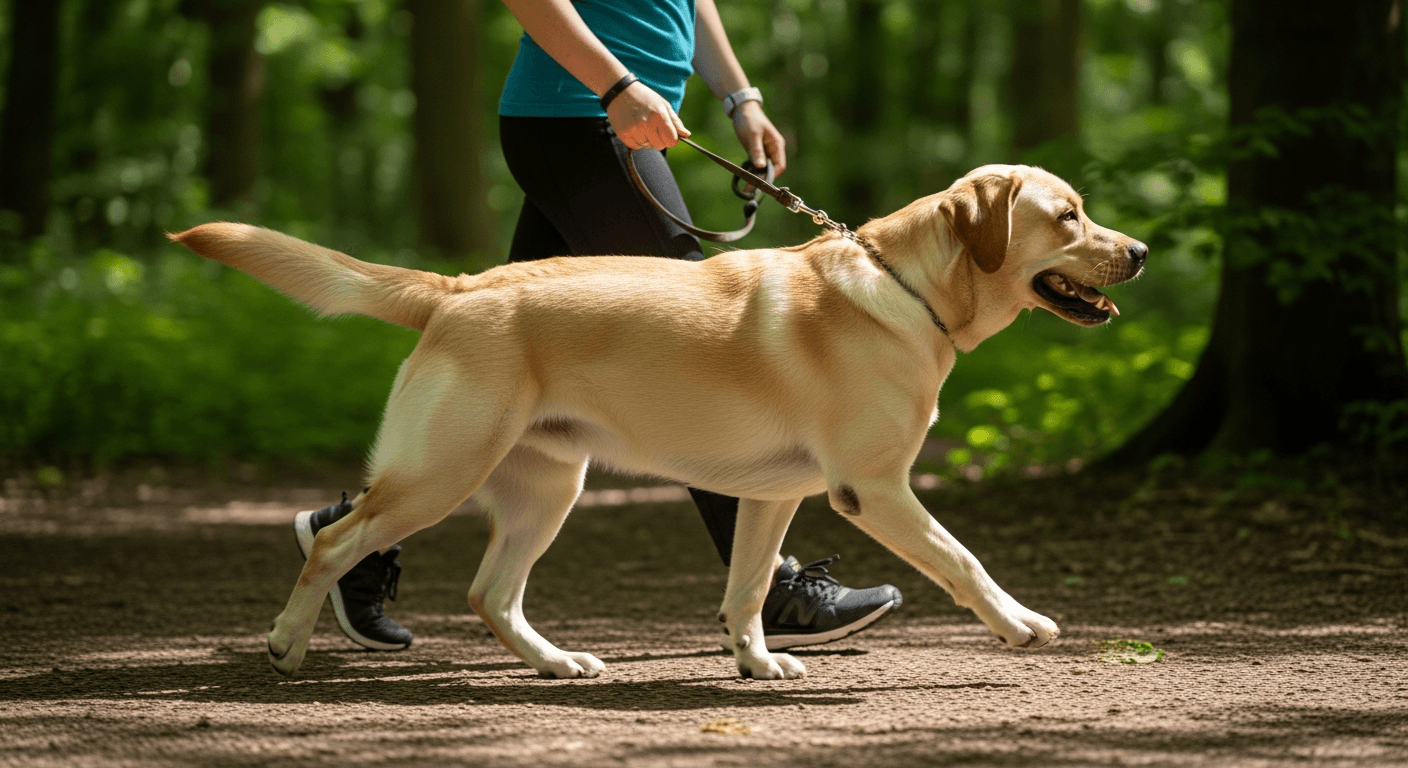
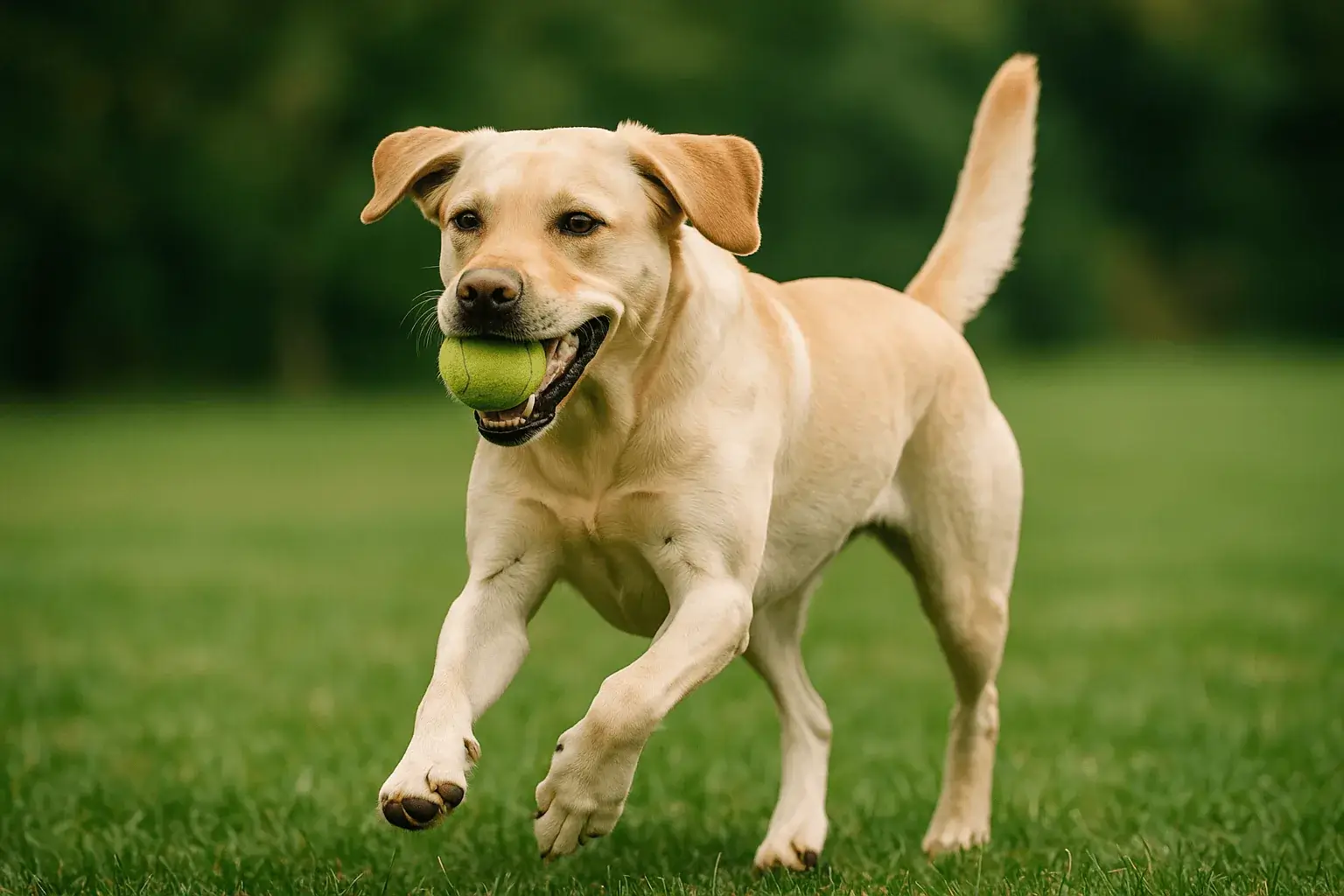
How much exercise does a Labrador need? For a healthy adult, around an hour of varied daily activity can be a starting point, adjusted for fitness, health, and recovery. Puppies need shorter sessions and rest; seniors may need gentler activity. Combine suitable walks and play with training and sniffing, and watch how your dog responds rather than treating one target as right for every Lab.
Why Labradors Need So Much Exercise
Regular activity supports fitness and gives a Labrador opportunities to explore, retrieve, and spend time with people. The aim is a repeatable routine the dog handles comfortably, rather than exhaustion at the end of every outing.
Exercise contributes to weight management alongside appropriate feeding. Do not judge the routine by weight alone: a lean dog can still be unfit, and a heavier dog needs a gradual plan rather than an abrupt increase in running.
Activity and enrichment can help with boredom, but persistent destruction, agitation, or difficulty settling can have other causes. Adding more exercise automatically may miss pain, stress, or a training need.
The AKC’s history of the Labrador describes the breed’s retrieving background. Suitable retrieving games can give that interest an outlet, but the dog’s working ancestry does not set a fixed daily mileage or duration.
To answer “how much exercise does a Labrador need?”, separate life stage, the type of activity, and the dog’s response. Use the guidance below to choose suitable activities, then adjust the amount using comfort during the session and recovery afterward.
Factors That Change How Much Exercise Your Lab Needs
Understanding the exercise requirements of your Labrador involves considering various factors that influence their activity levels at different stages of life and health conditions.
Let’s explore these factors in detail:
- Age: A Labrador’s exercise needs evolve throughout their life stages.
During puppyhood, they are bursting with energy and require frequent, short bursts of activity to support their growth and development.
As they transition into adulthood, their energy levels stabilize, but they still benefit from regular exercise to maintain muscle tone and mental stimulation.
In their senior years, their activity levels may decrease due to age-related changes, but gentle exercise remains essential for joint health and cognitive function. - Health Status: Their health condition plays a significant role in determining their exercise capacity and requirements.
Dogs with underlying health issues such as arthritis or heart conditions may have limitations on the type and intensity of exercise they can engage in.
Work with your veterinarian to develop a tailored exercise plan that accommodates any health concerns while promoting overall well-being. - Individual Differences: Just like humans, each Labrador has unique exercise preferences and abilities.
Some may enjoy vigorous activities like running or hiking, while others may prefer gentler forms of exercise such as swimming or leisurely walks.
Additionally, factors such as temperament, personality, and past experiences can influence how much exercise a Lab requires to feel satisfied and content.
Use those factors to choose a routine for your Lab, rather than applying an adult target to every age. Shorten or simplify a session when the dog struggles; do not push through to complete a planned duration.
How Much Exercise Does a Labrador Need Each Day?
Daily activity can include walks, suitable play, and training. Count what the dog actually does, including intensity and breaks, rather than treating every minute outdoors as the same workout.
Quantifying Exercise
For a healthy adult Lab, around an hour of activity can be a starting point for planning, with some dogs needing more and others a gentler routine. It is not a universal minimum or a target to reach immediately with an unfit dog.
Owners in the Dogslife Labrador cohort reported an average of over two hours of exercise daily. That describes the study dogs; it does not prescribe two hours for every Labrador or establish an ideal amount.
Puppies and young adults may require more frequent but shorter bursts of exercise to support their growing bodies, while senior Labradors may benefit from gentler activities to maintain mobility.
- Types of Exercise: Labs are versatile athletes who enjoy a variety of activities. Here are some exercise options to consider:
- Walking: Daily walks provide essential cardiovascular exercise and mental stimulation. Aim for brisk walks to keep them engaged and maintain their fitness levels.
- Running: Consider jogging only for a physically mature, fit dog that is ready for it. Build conditioning gradually with veterinary guidance. A puppy’s enthusiasm is not evidence that its developing body is ready for a sustained run.
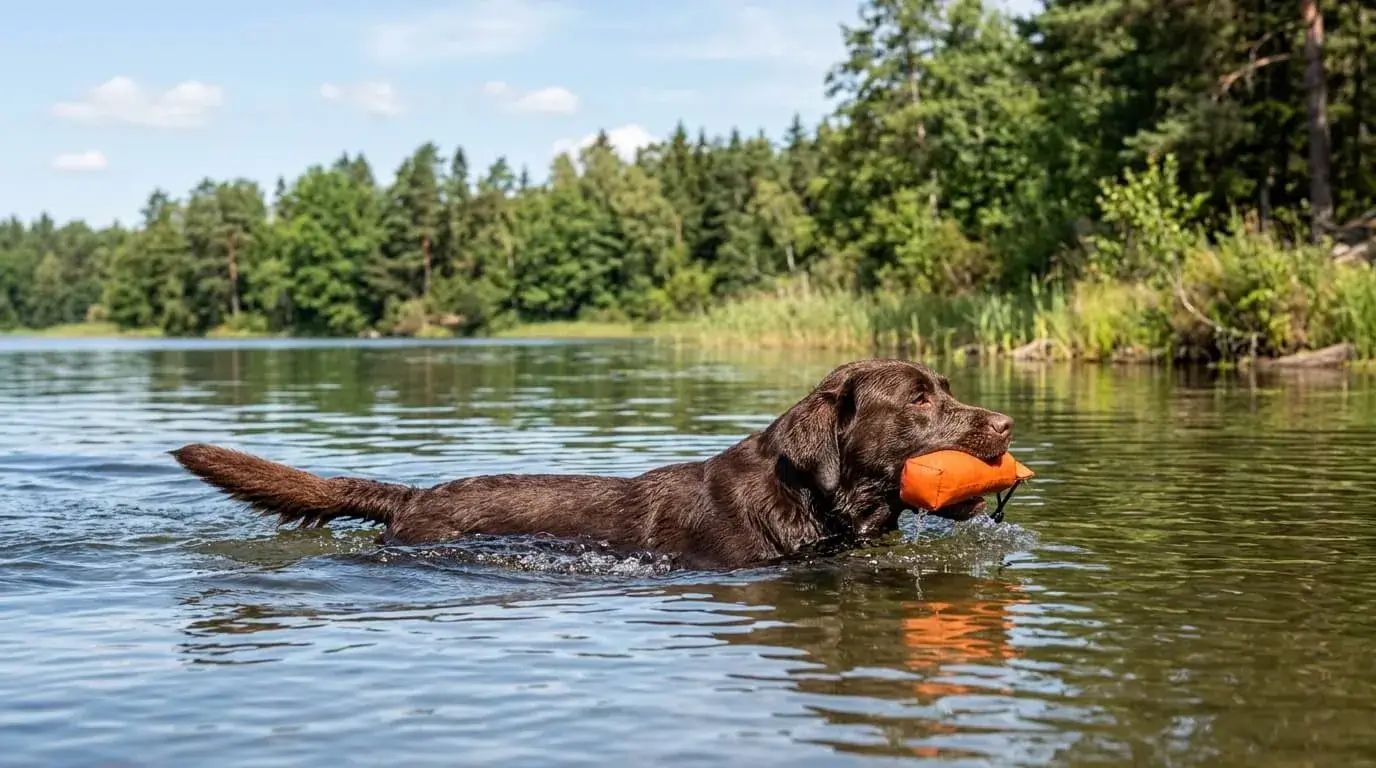
- Swimming: Many Labs have a natural affinity for water, but confidence and ability vary. Choose safe access, supervise, and allow breaks. Treat swimming as activity to condition for, not automatic rest for the whole body.
- Interactive Play: Engage them in games like fetch, tug-of-war, or agility exercises to stimulate their mind and body simultaneously. These activities tap into their natural instincts and provide mental enrichment.
- Walking: Daily walks provide essential cardiovascular exercise and mental stimulation. Aim for brisk walks to keep them engaged and maintain their fitness levels.
- Importance of Mental Stimulation: Labradors are intelligent dogs that thrive on mental challenges. In addition to physical exercise, build in activities that engage their minds:
- Puzzle Toys: Invest in puzzle toys or interactive feeders that require problem-solving skills to access treats. These toys provide mental stimulation and prevent boredom.
- Training Sessions: Regular training sessions strengthen your bond, provide mental stimulation, and boost their confidence. Teach them new tricks or practice obedience commands to keep their minds sharp.
- Puzzle Toys: Invest in puzzle toys or interactive feeders that require problem-solving skills to access treats. These toys provide mental stimulation and prevent boredom.
Mental enrichment complements physical activity; it has no reliable minute-for-minute conversion into walking. Include opportunities to sniff and learn without assuming a puzzle feeder replaces every outing.

Signs Your Lab Is Getting the Right Amount of Exercise
Look at the whole pattern: willingness to take part, comfortable movement, ability to rest afterward, and how the dog moves later that day and the next morning. One lively evening or one long nap cannot tell you whether the exercise amount is right.
- Behavioral Indicators: A well-exercised Lab will exhibit positive behaviors that reflect their contentment and mental well-being. Look for signs of:
- Contentment: After an outing, your dog should have opportunities to rest comfortably. Constantly adding activity because the dog asks to play can make the routine difficult to sustain.
- Rest: Include quiet time between activities. A dog that struggles to settle may need help with arousal or distress rather than a longer walk.
- Attention: Notice whether your dog can engage with familiar cues without becoming overwhelmed or exhausted. More exercise does not replace training or guarantee better obedience.
- Physical Indicators: Keeping an eye on your Labrador’s physical condition can also help gauge the effectiveness of their exercise regimen. Look for:
- Body Condition: Monitor the waist and how easily you can feel the ribs, alongside food intake and your veterinarian’s assessment. Body condition helps track weight management; it does not tell you how many exercise minutes the dog needs.
- Muscle Tone: Regular exercise promotes healthy muscle development and tone, particularly in the legs, shoulders, and back.
- Recovery: Check whether your dog returns to its usual breathing and behavior with rest, and whether it moves comfortably later. Coat shine or bright eyes alone cannot tell you that a workout was suitable.
Compare your dog with its own usual behavior. Note changes in pace, recovery, and enthusiasm rather than using another Lab’s routine as the standard.
If movement or stamina changes unexpectedly, ask your veterinarian before simply increasing or restricting activity. A short record of the outing and the dog’s response can make that discussion more useful.
Too Much or Too Little: Finding the Right Balance
A manageable routine can be repeated most days. Longer or harder sessions need preparation; a quiet week followed by a sudden strenuous outing is not the same as steady conditioning.
- Recognizing Overexertion: It’s essential to be mindful of the signs that your Labrador may be overexerting themselves during exercise. Watch out for:
- Fatigue: If they seem excessively tired or struggle to keep up during physical activity, it may be a sign of overexertion.
- Excessive Panting: Labradors naturally pant during exercise to regulate their body temperature, but excessive panting can indicate that they’re pushing themselves too hard.
- Reluctance to Continue Exercising: If your Lab shows reluctance or refuses to continue exercising, it’s essential to respect their limits and give them a break.
- Fatigue: If they seem excessively tired or struggle to keep up during physical activity, it may be a sign of overexertion.
- Preventing Under-Exercise: On the flip side, under-exercising can also have negative consequences for your Labrador’s health and well-being. Here are some tips to prevent under-exercising:
- Establish a Consistent Routine: Set a regular exercise schedule and stick to it. Consistency is key to ensuring they receive enough physical activity.
- Incorporate Varied Activities: Keep them mentally stimulated and physically engaged by incorporating a variety of activities into their routine. Mix it up with walks, runs, swims, and interactive play sessions.
- Establish a Consistent Routine: Set a regular exercise schedule and stick to it. Consistency is key to ensuring they receive enough physical activity.
Stop when the dog struggles or refuses to continue. Persistent lameness or an unusual change in tolerance deserves veterinary advice rather than a harder workout.
How to Build Your Lab’s Exercise Plan
Start with a routine your dog already handles comfortably. Decide which parts are walks, play, training, and rest, then review the response before changing the amount.
Customizing for Individual Needs
Keep a simple activity log for several ordinary days. Record the activity, approximate duration, weather, and how your dog behaved during and afterward. Include the next morning’s movement: a plan that looks comfortable at the park may need adjustment if the dog is stiff later.
For a puppy, build the day around short play, exploration, training, and plenty of rest. For a healthy adult, you might divide familiar activity between a morning walk and a later walk or suitable game. For a senior, use gentler sessions that suit mobility. These are ways to arrange the day, not fixed age-based exercise prescriptions.
When increasing activity, change one part at a time instead of lengthening every walk and adding harder games together. VCA’s exercise guidance favors gradual, consistent conditioning with veterinary input. If the response is poor, return to a comfortable level and ask for advice.
Plan alternatives before you need them. In unsuitable weather, replace a strenuous outing with safe toilet access and quieter indoor activity. After a tiring day, allow recovery rather than automatically repeating the same workload. Do not build the plan around wearing the dog out.
Consulting with Professionals
Seeking guidance from veterinarians or professional dog trainers can be invaluable when designing a personalized exercise routine for your Labrador. Because training and exercise work together, our complete Labrador training guide is the natural companion to a solid exercise plan.
Before starting running or another demanding activity, discuss readiness and any existing conditions with your veterinarian. Bring your activity log and explain the surface, pace, and type of game you have in mind. A specific example is more useful than asking only whether your dog needs more exercise.
Frequently Asked Questions
How much exercise does a Labrador need each day?
Around an hour of daily activity can be a starting point for a healthy adult Lab, with the amount adjusted for fitness, health, and recovery. Dogslife owners reported an average of over two hours, but that was an observation, not a recommended quota. Puppies and seniors need routines suited to their stage and abilities.
Can a Labrador puppy exercise as much as an adult?
No. Puppies are bursting with energy, but their bodies are still growing. Use frequent short bursts rather than long runs. Adult Labs settle into a steadier daily session once growth is further along. If a young Lab flags, shorten the session instead of pushing through.
Is swimming good exercise for Labradors?
Swimming can be suitable exercise for some Labs, with supervision, safe access, and appropriate breaks. It is still physical work, so introduce it gradually and ask your veterinarian about suitability if your dog has a medical condition. Do not assume every Labrador swims confidently or that water makes strenuous activity safe in hot weather.
How do I know my Lab is getting enough exercise?
Look for comfortable movement, willingness to take part, and normal recovery and rest. Body condition is useful to monitor, but weight and behavior do not measure exercise needs on their own. If your dog becomes stiff, lame, unusually tired, or persistently distressed, seek advice instead of automatically adding activity.
Conclusion
Choose a routine your Lab can enjoy and recover from, then keep checking how it works in ordinary daily life.
Use these practical checks when reviewing the plan:
- Regular exercise is vital for Labradors to stay healthy, both physically and mentally.
- Prioritize daily activity as an integral part of your Labrador’s care regimen to ensure their well-being.
- Engage in varied activities that cater to your Labrador’s age, health status, and individual preferences.
For more on how exercise fits into the bigger picture of daily life with a Lab, see our complete guide to living with a Labrador.