How fast can a labrador run? Elite Labs run about 28 to 29 mph. At the AKC’s 2025 Fast CAT Invitational, the faster of the two Labrador Best of Breed winners, Oscar, covered the timed 100-yard dash in 7.028 seconds, or 29.104 mph. Those are trained lure-coursing Labs; no formal data exists for an average pet Lab.
Most pages on this question say anything from 20 to 45 mph, and none of them cite a stopwatch. We use the AKC’s timed results instead, and we’re clear about what they do and don’t tell you about your own dog.
Knowing how fast can a labrador run is the fun part. The second half of this guide is the practical part: when a Lab is old enough to run with you, how to build up safely, and what to do instead when road running isn’t a good fit.
What the Fast CAT Clock Says
Fast CAT, short for Coursing Ability Test, is an AKC sport. Each dog runs alone in a timed 100-yard dash, chasing a lure, and the time is converted to miles per hour.
That makes it the best public answer to how fast can a labrador run. It’s a real stopwatch on real dogs, not a guess.
At the 2025 Fast CAT Invitational in Wilmington, Ohio, the top dogs of each breed were invited to compete. According to the AKC’s Best of Breed final results, two Labs won Best of Breed:
- Oscar: 7.028 seconds, 29.104 mph
- Sequel: 7.309 seconds, 27.985 mph
In the preliminary runs, the Labs entered clocked between about 27 and 29 mph, which is the clearest timed answer to how fast can a labrador run at full effort. In other words, the fastest Labs in the country, tested on a flat 100-yard straight, all landed in a narrow band just under 30 mph.
Labs Next to Other Breeds and People
Here’s how those Labs compare with other breeds at the same event, using the Best of Breed final runs:
| Breed (dog) | Final run speed |
|---|---|
| Greyhound (Fritz) | 36.454 mph |
| Belgian Malinois (Soba) | 30.745 mph |
| Saluki (Antar) | 30.657 mph |
| Labrador Retriever (Oscar) | 29.104 mph |
| Australian Cattle Dog (Rose) | 28.850 mph |
| German Shepherd Dog (Roman) | 28.147 mph |
| Labrador Retriever (Sequel) | 27.985 mph |
| Chesapeake Bay Retriever (Dixie) | 27.578 mph |
| Flat-Coated Retriever (Apollo) | 27.085 mph |
| Golden Retriever (Romeo) | 27.020 mph |
| Newfoundland (Reggie) | 21.689 mph |
Labs hold their own. The top Lab beat the top German Shepherd, Golden, and Chesapeake at this event, and sat just behind sighthounds like the Saluki. Greyhounds are in a different class entirely.
It’s also worth knowing what the table can’t show. Each breed sent only its fastest few dogs, so these numbers say how fast can a labrador run at the very top of the breed, not how the breeds compare on average.
And people? The AKC notes that Usain Bolt’s fastest time has been clocked at almost 28 mph. So when you wonder how fast can a labrador run compared with you, the honest answer is: a fast Lab can match the fastest human ever timed, over a short sprint.
Why Your Lab Probably Won’t Hit 29 mph
Fast CAT Labs are the fastest of the breed, trained and conditioned for sprinting, so they answer “how fast can a labrador run” only for the elite. Your family Lab is a different athlete. No formal data exists on how fast an average pet Lab runs, so treat 29 mph as a ceiling, not a target.
A few things decide where your dog lands:
- Body condition. Extra weight slows any dog down and puts more strain on joints.
- Age. Young adults are usually at their peak; puppies and seniors are slower.
- Build. Labs from field lines are often leaner and lighter than show-line Labs, which can make a difference over a sprint.
- Fitness. A dog that runs regularly will be faster than one that mostly walks.
- Footing. Grass, sand, and slick floors all change how much power a Lab can put down.
So how fast can a labrador run in your backyard? Probably fast enough to beat you to the ball every time, and that’s plenty. Speed is only one piece of daily life with an active Lab; stamina, recovery, and safety matter more for a running partner.
When a Lab Is Old Enough to Run With You
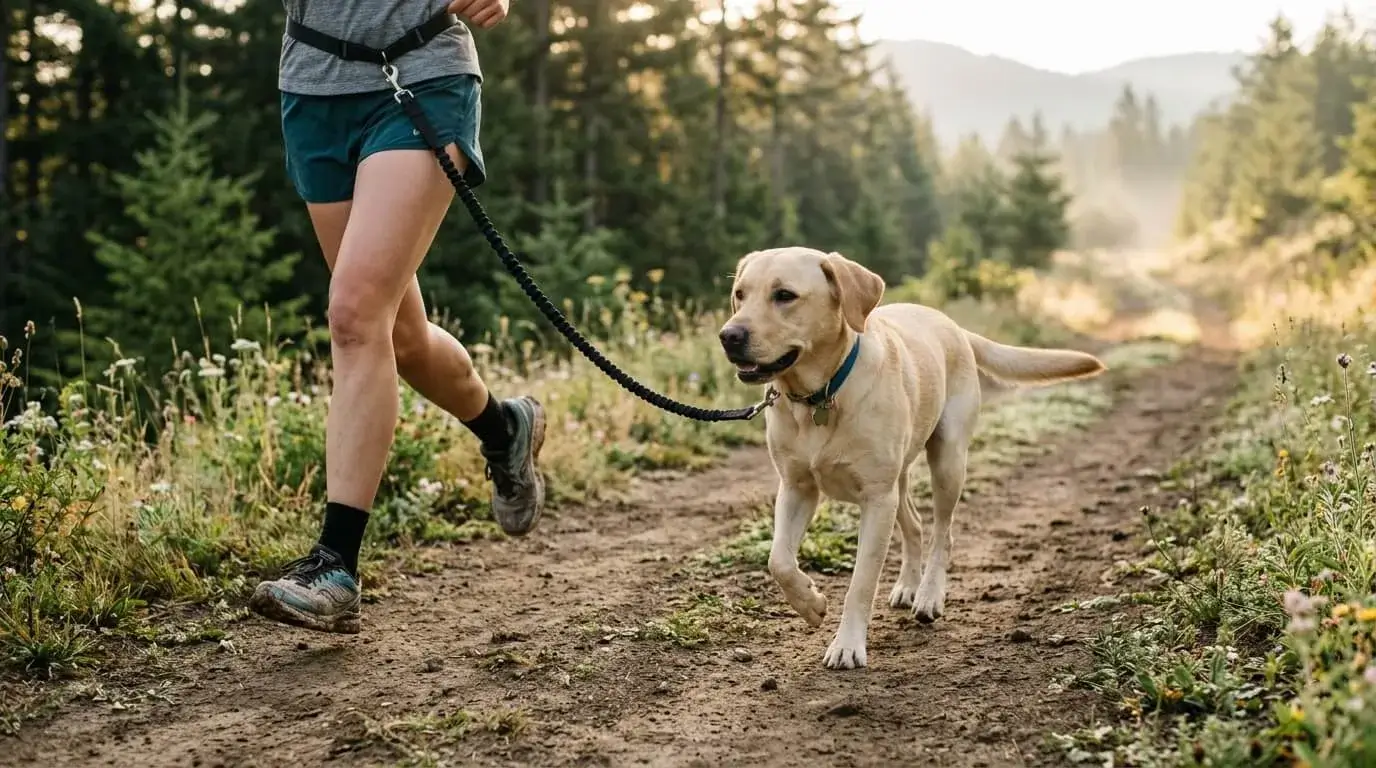
Puppies grow fast, and their joints need time to finish developing before repetitive running. The AKC’s guide to puppy exercise says to hold off on jogging or running with a puppy on a leash until it’s mature: about 12 to 18 months for large breeds like the Lab.
Whatever the answer to “how fast can a labrador run,” the AKC’s guidance on the best running dogs adds a second rule for puppies. Medium-to-large breeds shouldn’t run on hard surfaces like concrete or blacktop until they’re at least 18 months old.
Until then, use the AKC’s walking guideline, often called the five-minute rule: about five minutes of walking for every month of age, once or twice a day. A four-month-old puppy gets about 20 minutes per walk. Free play on grass, where the puppy can stop whenever it wants, is fine on top of that.
If you’re asking “how fast can a labrador run” about a puppy, the better question is how much it should run at all. Short bursts in play are normal; long, steady runs on a leash are what the AKC says to wait on.
Not sure if your Lab is ready? Ask your vet at the next checkup. They can check growth and joints before you start a running plan.
Running With Your Lab Without Hurting Them
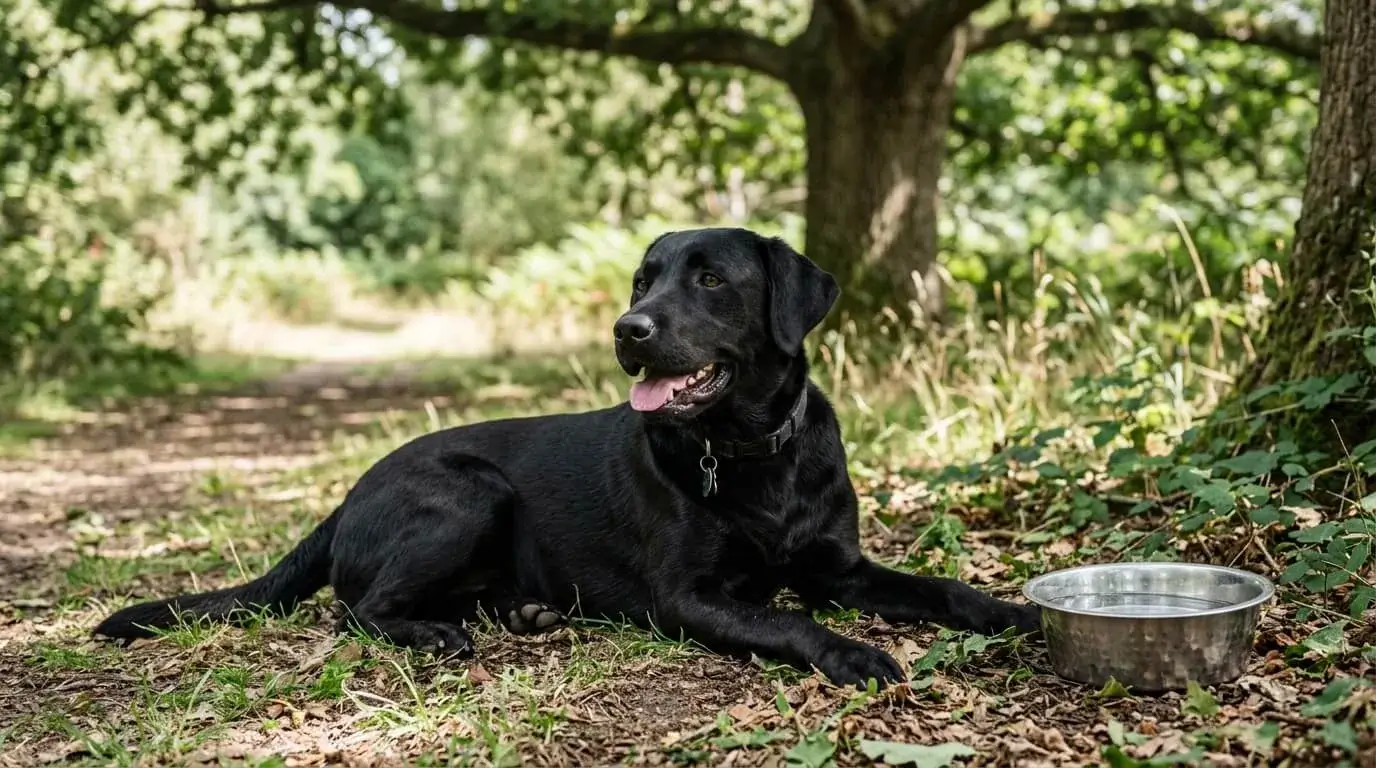
Once your Lab is fully grown and your vet agrees, start slowly. Many owners ask how fast can a labrador run, but the safer question for a running partner is how far and how often. There’s no formal data on that either, so let your dog set the pace.
Build distance gradually. Start with short, easy runs mixed with walking. Add a little distance each week, and watch how your dog recovers the next day.
Use the right gear. A well-fitted harness and a hands-free waist leash keep your arms free and protect your Lab’s neck if it pulls. Add a reflective vest or light for early-morning or evening runs.
Choose soft ground. Whatever your answer to “how fast can a labrador run,” dirt trails and grass are easier on its joints than pavement. Check paws after runs on rough or hot surfaces.
Watch the heat. Labs overheat more easily than people do. Run early or late on warm days, carry water, and stop in the shade often. Heavy panting, lagging behind, or a bright red tongue means it’s time to stop.
Stop when your dog lags. A Lab will often keep going to please you, long after it has answered “how fast can a labrador run” for you. If your dog drops behind or stops wanting to run, end the session.
Count the whole day. Running is only part of how much exercise a Lab needs. A long run plus a long fetch session plus a swim can add up to too much.
Some Labs carry a genetic condition called exercise-induced collapse. During intense, exciting exercise, an affected dog can lose control of its hind legs. If your Lab ever wobbles or collapses during hard exercise, stop right away and call your vet.
A different problem shows up after hard work in water, and it has nothing to do with “how fast can a labrador run.” A limp tail after a hard swim or a long run is usually limber tail, a muscle strain, not speed fatigue.
Speed Work That Isn’t Road Running
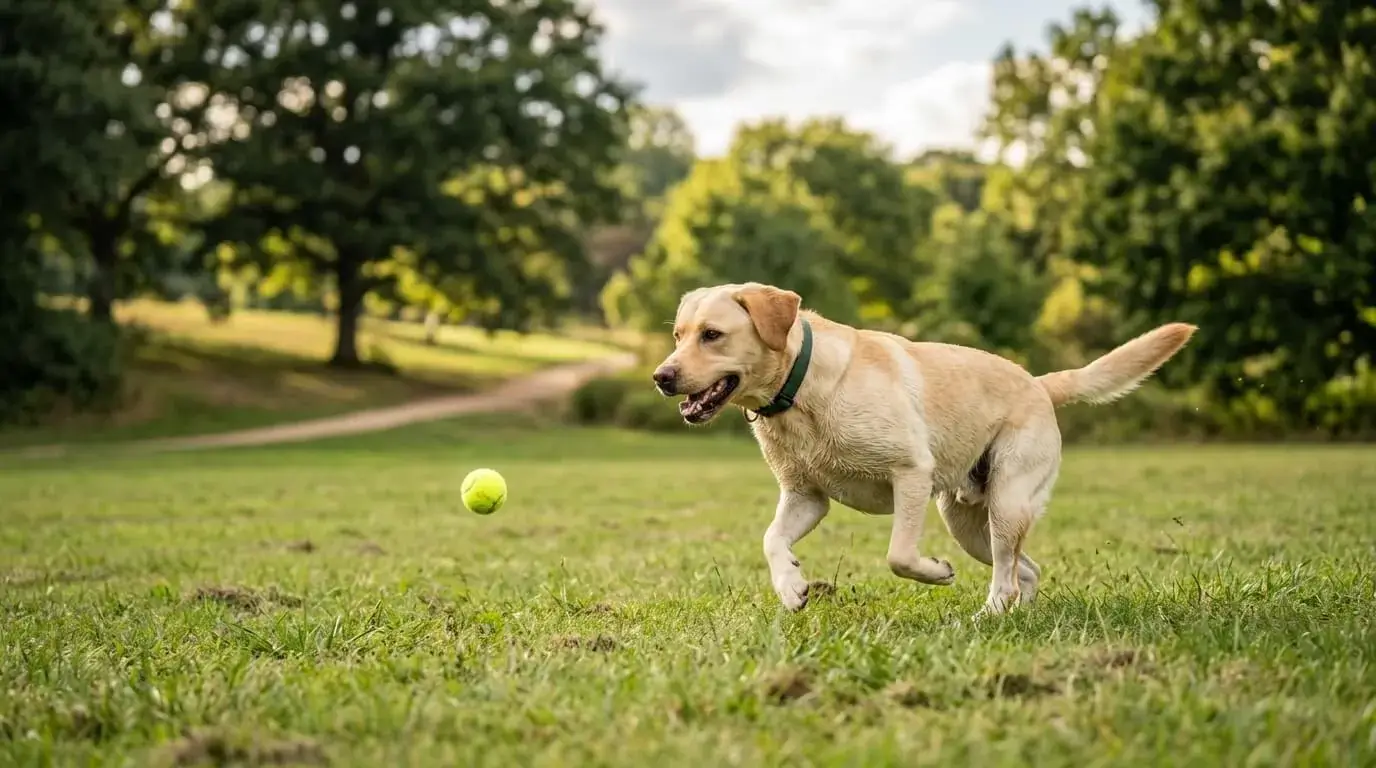
You don’t have to jog to let your Lab use its speed.
Fetch on grass. Short sets of throws let your Lab sprint and rest, and you’ll get your own answer to “how fast can a labrador run” when the ball is the lure. It’s the closest thing to a Fast CAT run most Labs will get, and the ground is softer than any road.
Swimming. Labs were built for water, and swimming for exercise burns energy without pounding the joints. It’s a good option for heavy or older Labs too.
Fast CAT itself. If your Lab loves to chase, look for a local AKC club that runs Fast CAT. It’s open to many breeds and gives you a real number to answer how fast can a labrador run, at least for your dog.
Small-space options. No yard or trail nearby? Apartment Labs can still burn energy with long-line fetch in a park, scent games, and structured training.
Mix these through the week. A Lab that sprints after a ball one day, swims the next, and trains on the weekend gets more varied exercise than one that only runs, whatever the answer to “how fast can a labrador run” turns out to be for your dog.
FAQ
How fast can a Labrador run in km/h?
The fastest Lab at the AKC’s 2025 Fast CAT Invitational ran 29.104 mph, about 46.8 km/h. The second Best of Breed winner ran 27.985 mph, about 45.0 km/h.
How far can a Labrador run in a day?
There’s no formal data, just as there’s none on “how fast can a labrador run” for pets. It depends on age, fitness, weight, and weather. Start short, build up gradually, check with your vet, and stop when your dog lags or seems sore.
What is the five-minute rule for a Lab puppy?
It’s an AKC walking guideline for puppies: about five minutes of walking for every month of age, once or twice a day. It helps protect growing joints until the puppy is mature.
Are Labs good running partners?
Yes, for healthy adults with a gradual build-up. Wait until your Lab is fully grown, avoid hot weather and hard surfaces, and watch for signs of fatigue.
So, how fast can a labrador run? The fastest timed Labs reach about 29 mph, roughly as fast as Usain Bolt at his best. Your Lab may not be quite that quick, but with a slow build-up, soft ground, and plenty of water, it can still be a great running partner.