A Labrador tail is the breed’s otter tail: very thick at the base, tapering to the tip, covered in short dense coat with no feathering, and no longer than the hock. A tail that hangs limp after swimming or cold weather is most often limber tail, a muscle strain that usually clears within two weeks.
The tail is one of the first things people notice about a Lab, and one of the first things owners worry about when it looks wrong. This guide covers both halves: what a normal tail looks like, including the curls and swirls that are perfectly fine, and what to do about limber tail, happy tail, and other injuries.
We use the breed standard for appearance, a large UK study of pet Labs for limber tail, and veterinary sources for injuries and vet visits.
What a Lab’s Tail Should Look Like
The Labrador Retriever Club’s breed standard calls the tail “a distinguishing feature of the breed.” In plain words, a correct labrador tail is:
- Very thick at the base, gradually tapering toward the tip
- Medium length, reaching no further than the hock (the dog’s ankle joint on the back leg)
- Free from feathering, covered all around in the Lab’s short, dense coat
- Rounded, which gives it the “otter” look
- Carried along the topline, following the line of the back at rest and in motion
The standard says the tail completes the Lab’s balance, giving a flowing line from the head to the tip of the tail. It also lists extremely short tails or long, thin tails as serious faults.
Those faults matter in the show ring, not on your couch. A pet Lab with a thinner or longer tail is still a Lab, and its tail health has nothing to do with how closely it matches the standard.
One rule is strict: docking or otherwise altering the length or natural carriage of the tail is a disqualification under the standard. A labrador tail should be left as nature made it.
Curly, Thin, or Twizzled: Normal Variations
Not every labrador tail looks like a textbook otter tail, and most variations are harmless.
A curl or upward carriage. Many Labs carry the tail higher when excited, and some have a slight curve at the end. The standard asks for a tail that follows the topline, so a tail held high is a show fault, but it isn’t a health problem.
A thinner tail. Labs from working or field lines often have a lighter build overall, and the labrador tail can look thinner to match. That’s a difference in type, not a sign of illness.
A twizzle. Some Labs have a small swirl of hair at the very tip of the tail, which breeders call a twizzle. It’s simply the way the coat grows at the end of the tail.
Puppy tails. A young puppy’s tail often looks thin and long compared with its body. The thick otter shape fills in as the coat and muscles develop.
When should a labrador tail variation worry you? Only when it changes. A tail that suddenly hangs, kinks, swells, or bothers your dog is a different story, and we cover that below.
What the Tail Does, and Why It Hurts When It Hits You
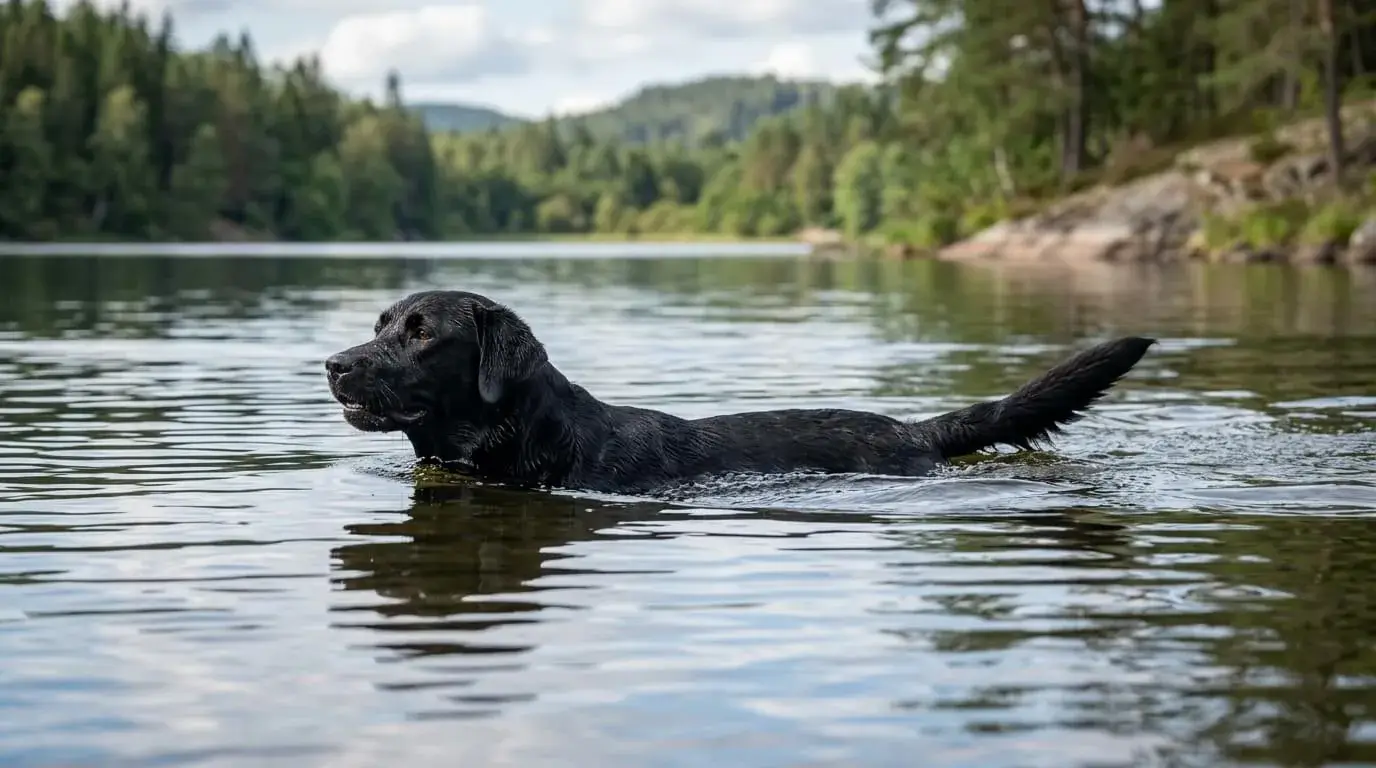
The tail isn’t just for show. When a Lab swims, it works like a rudder, helping the dog steer and change direction in the water. On land, it helps with balance during quick turns.
It’s also a big part of how a Lab communicates. A loose, sweeping wag usually means a relaxed, happy dog. A tail held stiff, high, or tucked low can signal excitement, worry, or fear, so read it along with the rest of the body.
Then there’s the wag itself. A thick, muscular labrador tail swinging at full speed can sting when it hits your legs, knock drinks off a coffee table, and sweep small items onto the floor.
Kids are at the most risk, because a wagging tail swings right at a toddler’s face height. Keep low tables clear and teach young children not to crouch behind a happy Lab. It’s one of the everyday rules for Labs around small children.
Limber Tail: Cold Water, Swimming, and a Sudden Limp Tail
The most common labrador tail problem goes by many names: limber tail, swimmer’s tail, cold water tail, dead tail, broken wag, or sprained tail. Vets call it acute caudal myopathy. They all describe the same thing: a suddenly limp, flaccid tail caused by strained tail muscles.
The tail may hang straight down from the base, or stick out a few inches and then drop. Many dogs seem sore. VIN’s Veterinary Partner notes that affected dogs may pace, yelp when lying down or pooping, shift position often, and eat less.
How common is it? The Dogslife study of UK Labs found a cumulative incidence of 9.7% in a random group of 93 dogs, far higher than earlier estimates. Routine owner reports alone suggested a much lower 0.7%, which shows how often a limp labrador tail goes unreported.
The same study found:
- Swimming raised the risk (odds ratio 4.7), but it wasn’t required: some affected dogs had not been swimming
- Working dogs were more susceptible than pets (odds ratio 5.1)
- Colder, more northern areas had higher risk
- No link with height, weight, or coat color
Owners in the study linked each limp labrador tail episode to swimming, cold weather, vigorous exercise, wet weather, and confinement in a crate or car. That’s why the first cold swim of the season is a classic trigger. If your Lab loves the water, keeping swims short and safe is the best prevention.
A limp tail after a swim is not the same as a Lab whose hind legs give out during hard exercise. Hind-leg weakness or collapse needs a vet the same day.
Helping Your Lab Recover From Limber Tail
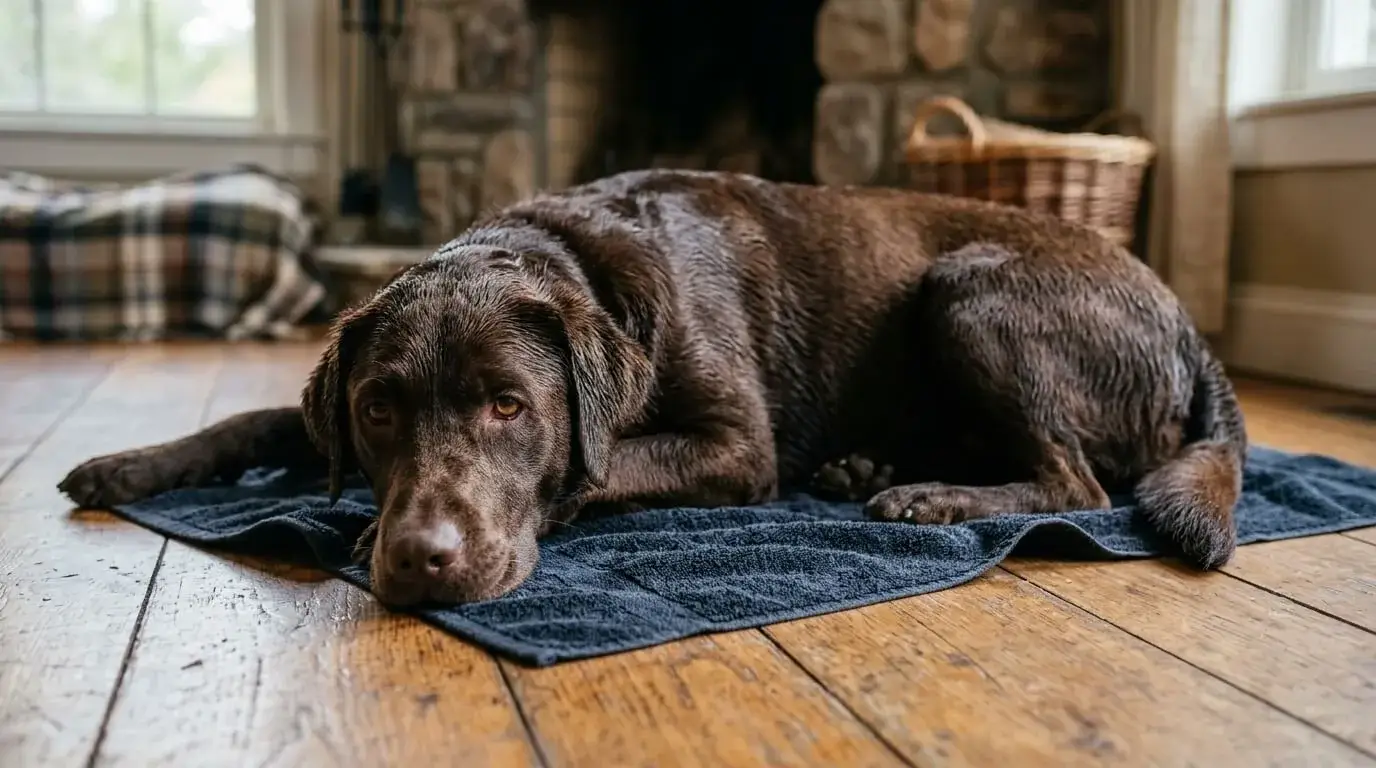
Most cases of limp labrador tail get better on their own. VIN’s Veterinary Partner says dogs generally recover within 2 to 14 days. In the Dogslife study, the shortest episode lasted a few hours and the longest about 10 days, with an average of 3.5 days.
What helps:
- Rest. Cut back on exercise and skip swimming until the labrador tail is back to normal, just as you’d rest a sprained muscle.
- Warm compresses. VIN notes warmth on the tail can ease pain and speed recovery.
- A comfortable bed. Sitting and lying down can hurt, so give your Lab a soft, dry spot.
- A vet visit if it’s painful. Your vet may take X-rays to rule out a fracture and may prescribe pain relief. Don’t give human pain medicine.
Limber tail can come back, so one sore labrador tail doesn’t mean the problem is over. Some Dogslife dogs had several episodes, and one owner reported about 30. To lower the odds, build up swimming gradually at the start of the season, avoid long sessions in cold water, and don’t push an unconditioned dog too hard.
On long car trips, VIN suggests letting your dog out about every 4 hours. Long stretches in a crate were one of the triggers owners reported.
Happy Tail and Other Tail Injuries
Happy tail. Some Labs wag so hard against walls, furniture, and crate sides that they split the skin at the tip. VCA’s guide to tail injuries explains that these wounds often turn into bleeding ulcers that won’t heal, because the wagging never stops. It’s usually not an emergency, but it needs a vet.
Treatment for a split labrador tail tip can include bandaging, antibiotics, and pain medicine.
Scrapes. A labrador tail can get scraped on concrete steps or wire fencing. VCA suggests antibiotic ointment and a light self-adhering wrap, changed daily, and a vet visit if bleeding, swelling, or color changes appear.
Fractures. Tail bones can break when a dog is hit by a car, falls, or has its tail slammed in a door. A break at the tip usually heals on its own, sometimes with a small bump or kink. Crushed bones may need part of the tail removed.
Injuries near the base. These are the most serious labrador tail injuries. VCA notes that a hard pull on the tail can damage nerves that control urination and defecation, and nerve damage can also leave the tail hanging limp.
Chewing the tail. Constant chewing or licking at the tail can come from flea allergies and other skin problems, or from impacted anal glands. Check for fleas first, then talk to your vet.
When a Tail Problem Needs the Vet
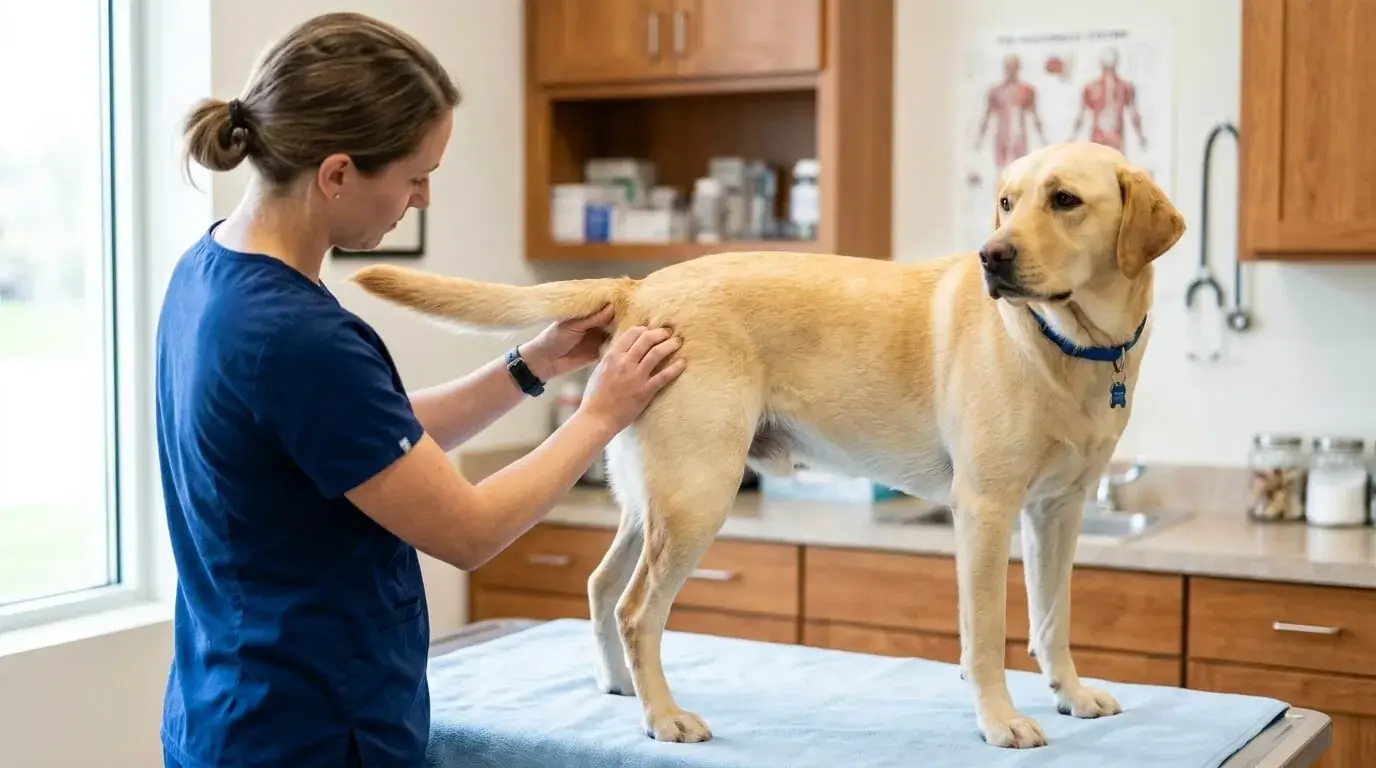
Call your vet if you notice any of these:
- A limp labrador tail that isn’t improving after a few days, or that came on without swimming, cold, or hard exercise
- Obvious pain: yelping, refusing to sit, or guarding the tail
- Trouble urinating or pooping, or accidents in the house
- Weakness or wobbliness in the back legs
- An open wound, a bleeding tip that keeps reopening, or swelling
- A new lump or bump on the tail
Trouble toileting together with a limp tail needs a vet the same day. VCA warns that injuries near the base of the tail can involve nerve damage, which needs prompt care.
A labrador tail problem can also be part of a bigger health picture. For the conditions every owner should know, see our full Labrador health guide.
FAQ
Do Labradors have long tails?
Medium length. The breed standard says the tail should reach no further than the hock. A tail that looks long and thin is a show fault, not a health problem.
Is limber tail painful?
Often, yes, especially in the first day or two after the labrador tail goes limp. Dogs may yelp when lying down, avoid sitting, or eat less. A vet can prescribe pain relief and rule out a fracture.
Can a Labrador’s tail be docked?
Not under the breed standard: docking or altering the tail’s length or carriage is a disqualification. A vet may need to remove part of a tail after a severe injury, but that’s medical treatment, not docking.
Why is my labrador tail limp after swimming?
Most likely limber tail, a strain of the labrador tail muscles after swimming, especially in cold water. Rest your dog and use warm compresses. Call your vet if your Lab seems in pain, has trouble toileting, or doesn’t improve within a few days.
Will limber tail come back?
It can. Having it once doesn’t protect your dog, and some Labs get it several times. Build swimming fitness gradually and avoid long sessions in cold water.
A healthy labrador tail is thick, tapering, and always moving. Learn what normal looks like for your dog, so you’ll notice when it hangs limp, kinks, or bleeds. Most tail problems heal with rest and a little care, and the rest are worth a quick call to your vet.