Labrador paws are compact and well arched, with thick pads and webbing between the toes that helps them swim. Keeping them healthy means trimming nails every few weeks, checking pads after walks on hot pavement or salted ice, and seeing a vet for limping, swelling, or red bumps between the toes.
A Lab’s feet take a beating. They carry a heavy, active dog over gravel, through cold water, and across summer sidewalks, often at full speed. Most owners only look at them when something is already wrong.
This guide to labrador paws covers what healthy feet look like by the breed standard, the webbed-feet question, nail and pad care through the year, and the problems that need a vet. It draws on the Labrador Retriever Club standard, VCA Animal Hospitals, and the AVMA.
What a Lab’s Feet Should Look Like
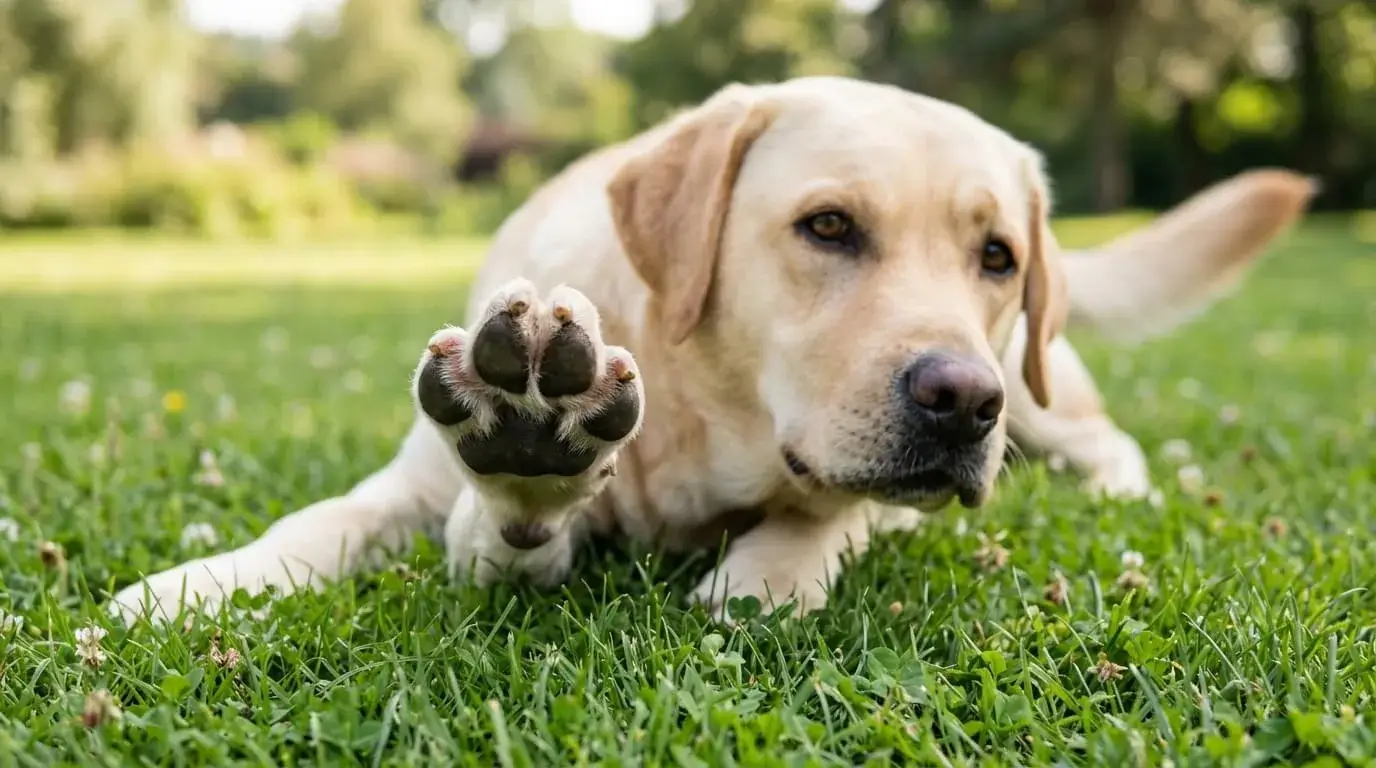
The breed standard is short and specific. The Labrador Retriever Club standard says feet are strong and compact, with well-arched toes and well-developed pads. It also says dewclaws may be removed.
In plain words, healthy labrador paws look tight and rounded, not long and flat. The toes sit close together and arch up, and the pads are thick enough to cushion a heavy dog.
The standard also lists serious faults: splayed feet, hare feet, knuckling over, and feet that turn in or out. These are show-ring faults, not illnesses. A pet Lab with slightly spread toes can be perfectly healthy, so there’s no need to worry if your dog wouldn’t win a ribbon.
When you check labrador paws at home, the pads should feel firm and slightly rough, with no deep cracks, cuts, or swelling. Pad color varies from dog to dog, so judge the texture and the skin between the toes rather than the shade.
Dewclaws. Most Labs also have a dewclaw on the inside of each front leg, a small toe set higher up that doesn’t touch the ground when the dog walks. Whole Dog Journal quotes a veterinarian who says dogs making tight turns at high speed use their front dewclaws to stabilize the wrist. Rear dewclaws are less common and catch more easily.
Because the standard allows removal and the front dewclaw still has a job, there’s no single right answer for every Lab. If you’re weighing it up, talk it through with your vet. For most labrador paws, the bigger day-to-day job is simply keeping that dewclaw nail short.
Do Labs Have Webbed Feet?
Yes. Labs have webbing between their toes, and the AKC notes that their webbed feet help them swim fast. Webbing isn’t unique to Labs, though.
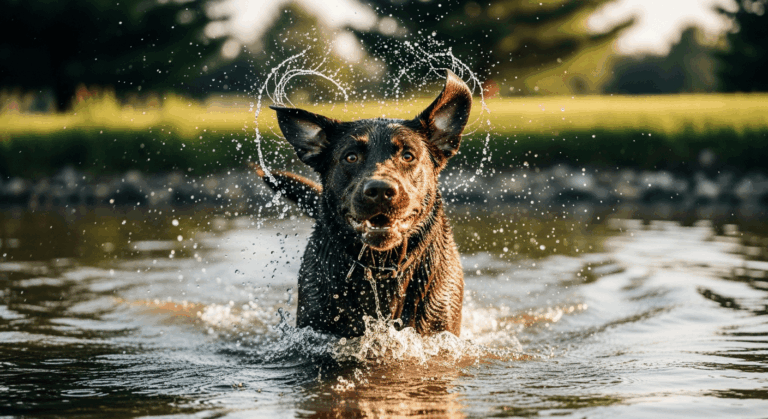
A veterinarian quoted by Whole Dog Journal explains that nearly all dogs have some webbing, since you can’t fully separate one toe from the next. In breeds bred for water work it’s more pronounced, and labrador paws are a clear example. For how the webbing, coat, and tail work together in the water, see why Labs are such strong swimmers.
Webbing has a downside that most guides skip. VCA lists Labrador retrievers among the large, short-coated breeds more likely to get interdigital cysts from friction, and it adds dogs with large, webbed paws or deep pockets between the toes to the same risk group. That’s why the skin between the toes deserves a regular look, which we cover below.
Nail and Dewclaw Care
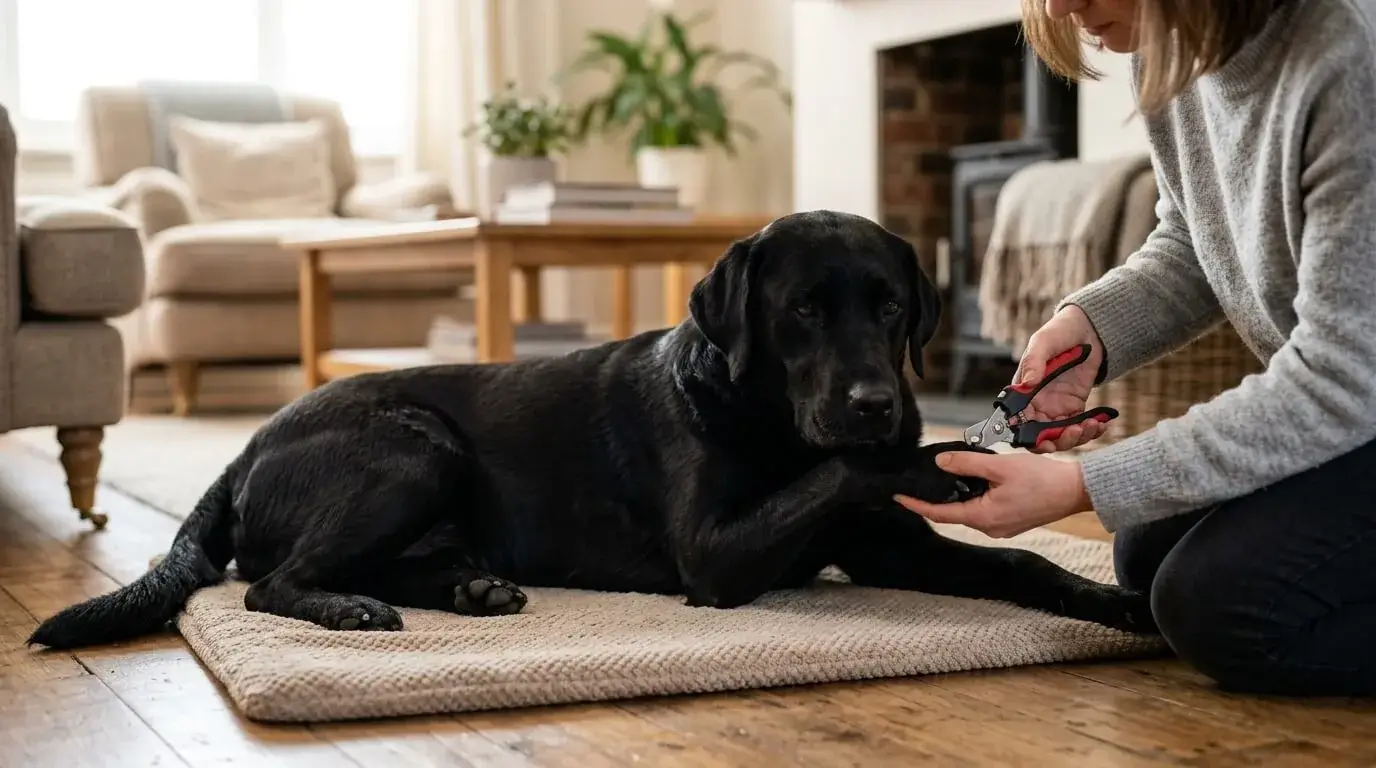
Nails are the part of labrador paws that owners most often let slide. Most Labs need a trim every 4 to 6 weeks, although dogs that walk a lot on pavement may wear them down a little faster.
A simple test tells you when it’s time: if you can hear the nails clicking on a hard floor, they’re already too long. Check them every couple of weeks so it never gets that far.
Inside each nail is the quick, a blood vessel and nerve that bleeds if you cut into it. On light nails you can often see the pink quick through the nail. Black labrador paws usually have dark nails that hide it, so take tiny slivers off the tip and stop well short of where you think the quick sits.
A nail grinder is a good option for dogs that dislike clippers, because it removes a little at a time and leaves a smooth edge. Whichever tool you use, short, calm sessions with treats work better than one big wrestling match.
Don’t forget the dewclaws. They never touch the ground, so they don’t wear down, and an overlooked dewclaw nail on labrador paws can grow long and curl back toward the leg.
Nail trims are only one piece of the rest of a Lab’s care routine, alongside brushing, ear checks, and the occasional bath. For the step-by-step on clippers, grinders, and getting a puppy used to having its feet handled, see how to groom a Lab at home.
Each time you trim, take a few seconds to check the rest of the foot. Spread the toes, look at the skin between them, and run a thumb over each pad. Catching small changes in labrador paws early is far easier than treating a sore that has been licked for a week.
Pad Care Through the Seasons
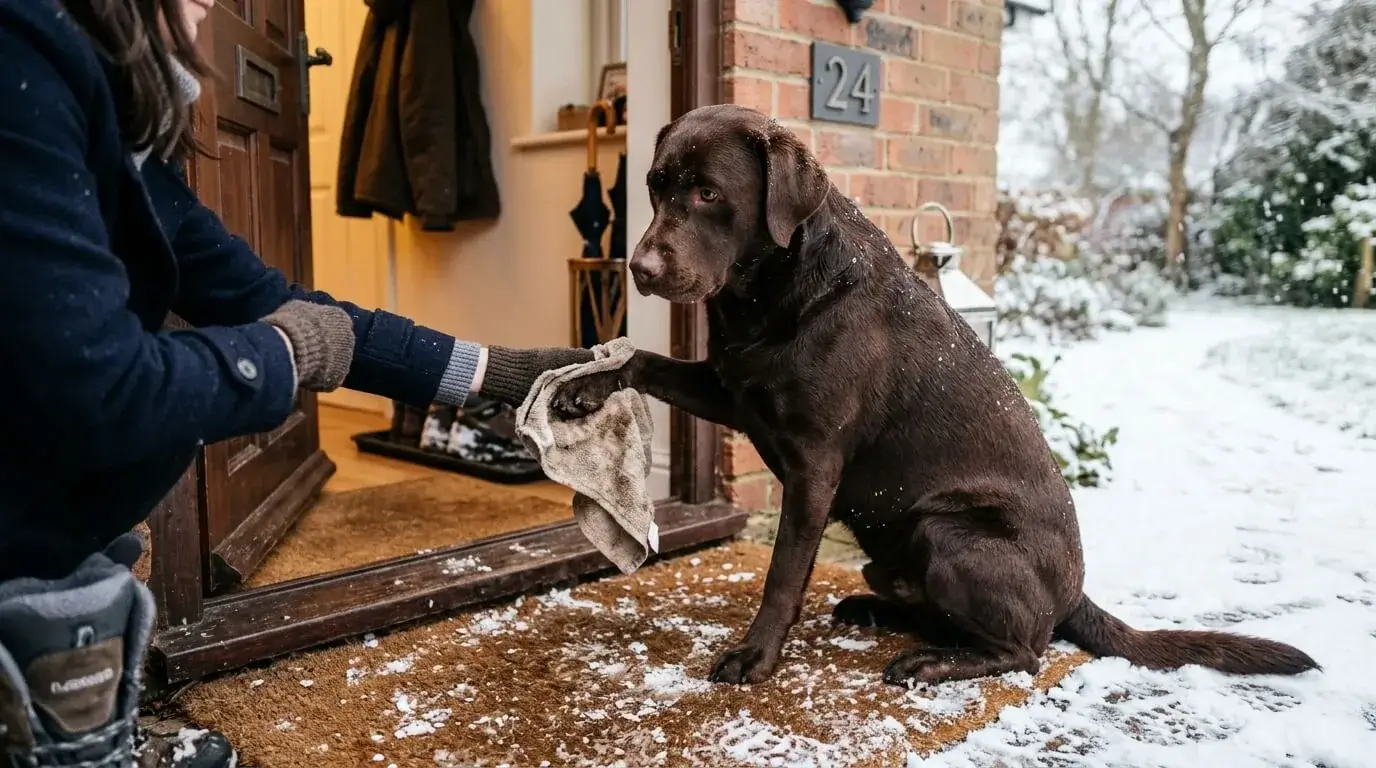
Pads are tough, but they aren’t heatproof or saltproof. The AVMA’s seasonal pet safety advice is the most practical guide here.
Summer. The AVMA warns owners to avoid hot surfaces such as asphalt, which can burn a pet’s paws. On hot days, walk your Lab early in the morning or in the evening, and stick to grass or shade. A quick test helps: press the back of your hand on the pavement, and if you can’t hold it there comfortably, it’s too hot for labrador paws.
Winter. Cold weather brings different problems. The AVMA’s cold weather safety advice says to check your dog’s paws often for cracked or bleeding pads. It also notes that sudden lameness on a walk can come from ice building up between the toes.
Clipping the hair between the toes can cut down on those ice balls, according to the AVMA. That’s trimming paw fur, not shaving the coat, and it’s one of the few trims that winter labrador paws actually benefit from.
De-icers and antifreeze are the hidden risk. The AVMA advises wiping or washing your dog’s feet, legs, and belly when you get home, so the dog doesn’t lick the chemicals off later. A rinse and towel-dry at the door is enough, and it doesn’t count as a full bath; for that, see how often a Lab really needs a bath.
Some owners use booties in snow or on salted streets. If you do, the AVMA says to make sure they fit properly. Introduce them indoors first, because most labrador paws need a few short sessions before a dog walks normally in booties.
Year-round. Gravel, stubble fields, and rough trails can scuff pads, especially on a dog that runs hard. After a long hike or a day in the field, look over the pads and between the toes before your Lab settles down for the evening.
A quick seasonal checklist for labrador paws:
- Summer: walk in the cool hours and keep off hot asphalt.
- Winter: check for cracked pads and ice between the toes, and wipe the feet after salted walks.
- All year: trim nails every 4 to 6 weeks and look between the toes after rough ground.
Interdigital Cysts and Other Paw Problems
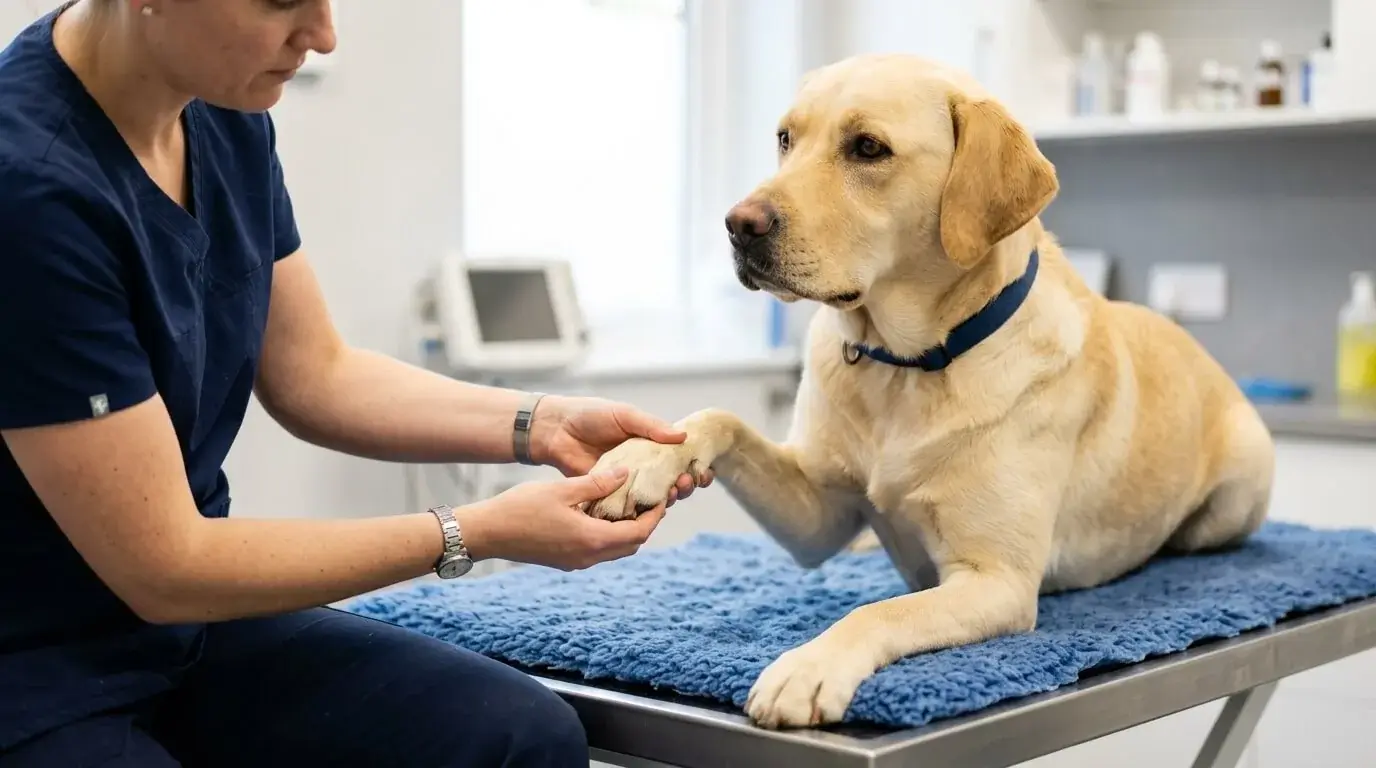
Interdigital cysts are the paw problem most Lab guides skip, even though VCA Animal Hospitals names Labrador retrievers as a higher-risk breed. Despite the name, they start as inflamed hair follicles between the toes that rupture and swell into painful bumps.
Allergy is the most common cause, according to VCA. Allergic dogs often itch elsewhere too, such as their ears, and triggers include pollen, mites, molds, fleas, and food proteins. If your Lab already deals with allergies that make Lab skin itch, keep a closer eye on labrador paws during flare-ups.
Friction is the second big factor. VCA says it’s more likely in large, short-coated breeds such as Labs, in overweight dogs that put extra pressure on their feet, in dogs with arthritis that shift their weight, and in dogs with large, webbed paws. Rough ground and cage floors add to it.
Signs to watch for on labrador paws, per VCA:
- Raised red bumps between the toes
- More licking or chewing at the feet than usual
- Discolored fur on the paws, especially with a secondary infection
- Small blood spots on the floor from a burst cyst
- Limping or reluctance to walk
Your vet will look for the underlying cause, which can mean skin tests for mites, bacteria, and yeast, a diet trial for allergy, or blood tests. Treatment targets that cause, and secondary infections can need long courses of medication. Don’t squeeze or lance a cyst at home.
Other problems in labrador paws are more straightforward but still worth knowing:
- Cut or torn pad. Sharp gravel, ice, and glass are the usual culprits. A deep cut or one that keeps bleeding needs a vet.
- Torn or broken nail. Painful and often messy. A nail torn near the base needs a vet.
- Grass awns and splinters. VCA lists these foreign bodies as a less common cause of cysts. A sudden limp after a field walk is worth a close look between the toes.
- Yeast or bacterial infection. VCA lists both among the infectious causes of inflamed paws, often with redness, swelling, and constant licking.
Paw Licking, Limping, and When to See a Vet
Some licking is normal grooming. Constant licking isn’t. VCA’s guide to inflamed paws, called pododermatitis, lists causes that range from bacteria, yeast, and parasites to allergies, immune disease, and tumors.
Allergic feet have a tell. VCA notes reddish-brown staining of the fur from saliva or yeast, which is easy to spot on yellow labrador paws and harder to see on black ones.
Pain is the other reason a Lab licks a foot. A dog will often lick a cut, a torn nail, or a cyst, and limp at the same time. If the licking is focused on one foot, look between the toes first.
Call your vet if you see any of these in labrador paws:
- Limping that doesn’t settle within a day
- Swelling, heat, or red bumps between the toes
- Bleeding that won’t stop with gentle pressure
- Discharge or a bad smell
- A nail torn down to the base
- Licking that goes on day after day
For a minor scrape, gently rinse the foot with clean water and keep an eye on it. Skip home remedies beyond that, because the cause of a sore paw isn’t always obvious from the outside.
Healthy labrador paws come down to a few habits: short nails, a quick look between the toes, and a little extra care in summer heat and winter salt. Most problems are easier to sort out when you catch them early, so make the paw check part of every trim and every muddy walk.
Frequently Asked Questions
Are a Lab’s feet really webbed?
Yes. Labs have noticeable webbing between their toes, which helps them paddle. Nearly all dogs have a little webbing, but it’s more pronounced in water breeds like the Lab.
How often should you trim a Lab’s nails?
Most labrador paws need a nail trim every 4 to 6 weeks. If you hear the nails clicking on a hard floor, they’re overdue.
Should a Lab’s dewclaws be removed?
The breed standard says they may be removed, but front dewclaws help stabilize the wrist during fast turns. It’s a decision to make with your vet, not a routine requirement.
Why does my Lab keep licking its paws?
Allergy is the most common reason Labs lick, and allergic labrador paws often show red skin or reddish-brown staining on the fur. Pain from a cut, a torn nail, a cyst, or a foreign body can also cause it. See your vet if the licking is constant.
Are hot sidewalks bad for a Lab’s feet?
Yes. The AVMA warns that hot surfaces such as asphalt can burn a dog’s paws. Walk in the cooler hours and use grass where you can.