

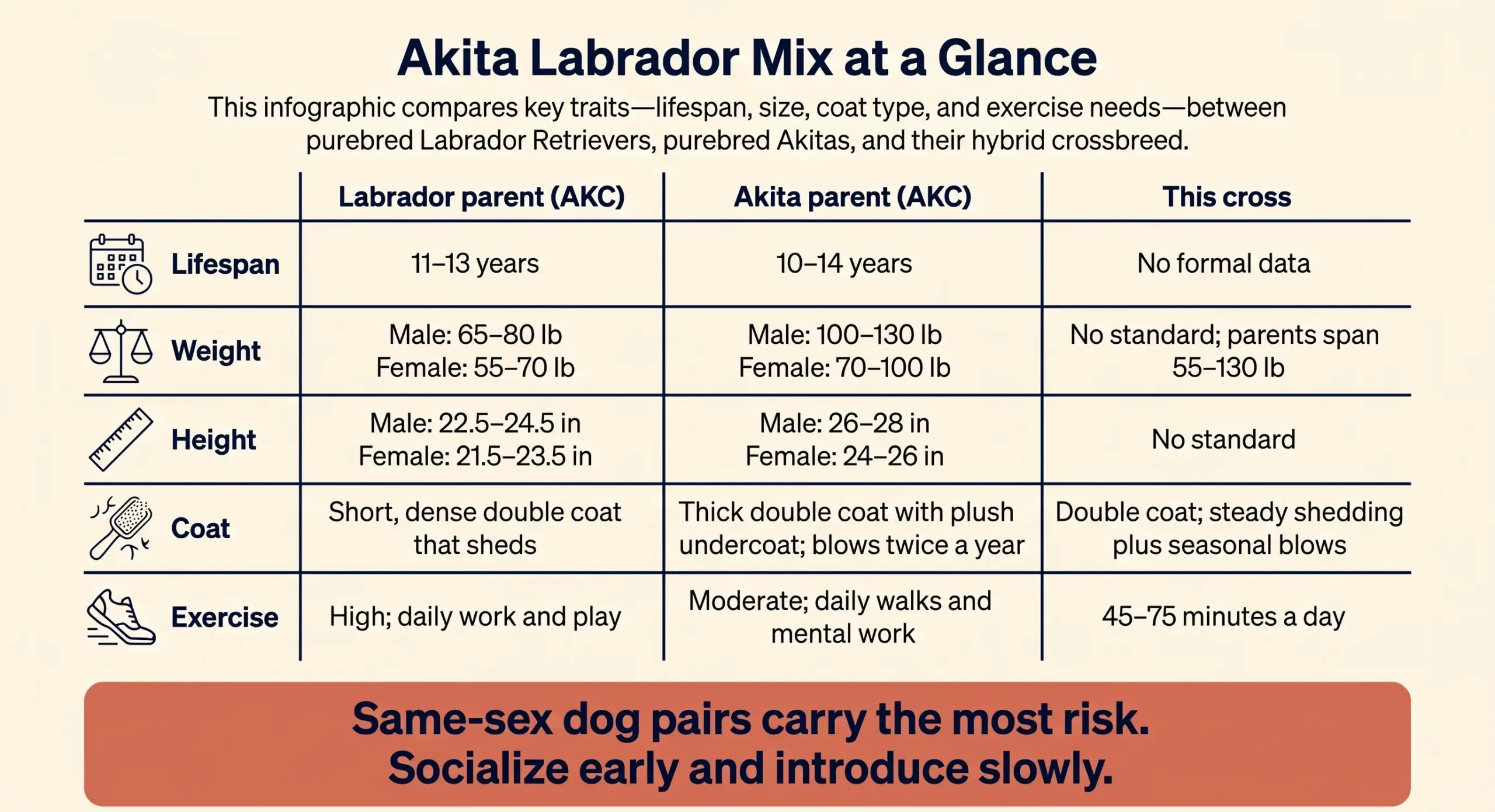
An akita labrador mix is a large, powerful cross whose parents weigh anywhere from 55 to 130 pounds. The American Kennel Club lists Akita males at 100–130 pounds and females at 70–100. On the retriever side, Labrador weights run 65–80 pounds for males and 55–70 for females.
No club writes a standard for this cross, so those numbers describe the parents only. The part buyers underestimate is temperament. An akita labrador mix can keep the Akita’s guarded, dog-selective side, and a friendly Lab parent does not cancel it.
Labrakita Temperament Is Not a Lab Temperament
Labrakita is the name most sellers use for an akita labrador mix. Akitador and Lab-Akita show up too. They all mean the same thing: an Akita crossed with a Labrador Retriever. None of these names is an AKC breed.
The two parents were built for different lives. The Lab was bred to retrieve for hunters and work beside strangers in a boat or a field. The Akita comes from the mountains of northern Japan, where it served as a hunter and a household guardian.
The breed club page describes the Akita as dignified, courageous, and “hardwired for protecting those they love.” It also calls the breed wary of strangers. A Lab greets almost everyone. That gap is why no akita labrador mix comes with a promised personality.
Put those two together and you get a wide spread. Some puppies take after the Lab and stay social for life. Others mature into a quiet, watchful dog that loves its family and tolerates everyone else. Many land between those poles.
Do not buy an akita labrador mix expecting a friendly Akita. That dog is not guaranteed. The honest way to think about it: you are buying a possible Akita temperament in a slightly softer package.
Temperament often shifts with age. A social eight-week-old can become a reserved two-year-old. Guarding traits usually show up in adolescence, between about 6 months and 2 years, and they sharpen as the dog matures.
That timeline matters for training. The work you do in the first year decides how manageable an adult akita labrador mix is.
Other Dogs in the House
This is the section most listings skip, and it is the one to read twice.
The kennel club is direct about the Akita parent. In its words, “Akitas tend to be aggressive toward other dogs, particularly of the same sex.” Its trait scale rates the breed “Not Recommended” with other dogs. That is the breed club’s own assessment, not an outside warning.
Whether an akita labrador mix inherits it is unknown for any single puppy. Nobody tracks how often it happens in the cross. What we can say is where the risk comes from, and it is real.
Same-sex pairs carry the most risk. Two males or two females in one house is the setup most likely to go wrong as the dog matures. If you already have a dog, an opposite-sex pairing is the safer bet, and even then introductions should be slow.
Dog parks are a poor fit. A crowded, off-leash space full of strange dogs is the hardest place for a dog-selective adult. Structured play with a known friend is better.
Small pets need care too. Akitas have a strong prey drive, and the breed page says they should never be off leash in an unsecured area. Cats raised with the puppy may be fine. A neighbor’s cat in the yard may not be.
Signs to watch for as the dog matures:
- Stiffening or staring at another dog.
- Guarding food, toys, or a resting spot.
- Growling at a housemate dog that used to be tolerated.
If you see these, bring in a certified trainer or a veterinary behaviorist early. Waiting for it to pass is the common mistake.
Strangers and Children
Guests are the other half of the temperament question. An Akita-leaning dog may stand back, watch, and decide. A Lab-leaning dog may bring the visitor a shoe.
Neither is a problem in itself. The risk is an akita labrador mix that has never learned strangers are normal. Akitas need “early and extensive socialization” so they do not perceive strangers as a threat, in the AKC’s words.
Start socialization early and keep it going. Between about 7 weeks and 4 months, let the puppy meet many calm adults, kids, sounds, and places. Pair each new thing with food. Continue through the second year, because that is when guarding traits sharpen.
Our look at how protective Labs really are explains the retriever side. Most Labs alert and then look for a friend. The Akita side may alert and then hold its ground.
Children are a careful yes. On the same trait scale, the Akita is “Not Recommended” with young children. The Lab is rated far higher, and our guide to Labs with kids covers that side.
Raised with children, this cross can be devoted to them. The concern is visiting kids. Running, shrieking, and wrestling can look like a threat to a guardian-type dog. Supervise every visit, give the dog a quiet place to retreat, and teach kids not to approach it while it eats or rests.
A large dog does not need to mean harm to knock over a toddler. Weight alone is a reason for supervision.
Coat and Shedding
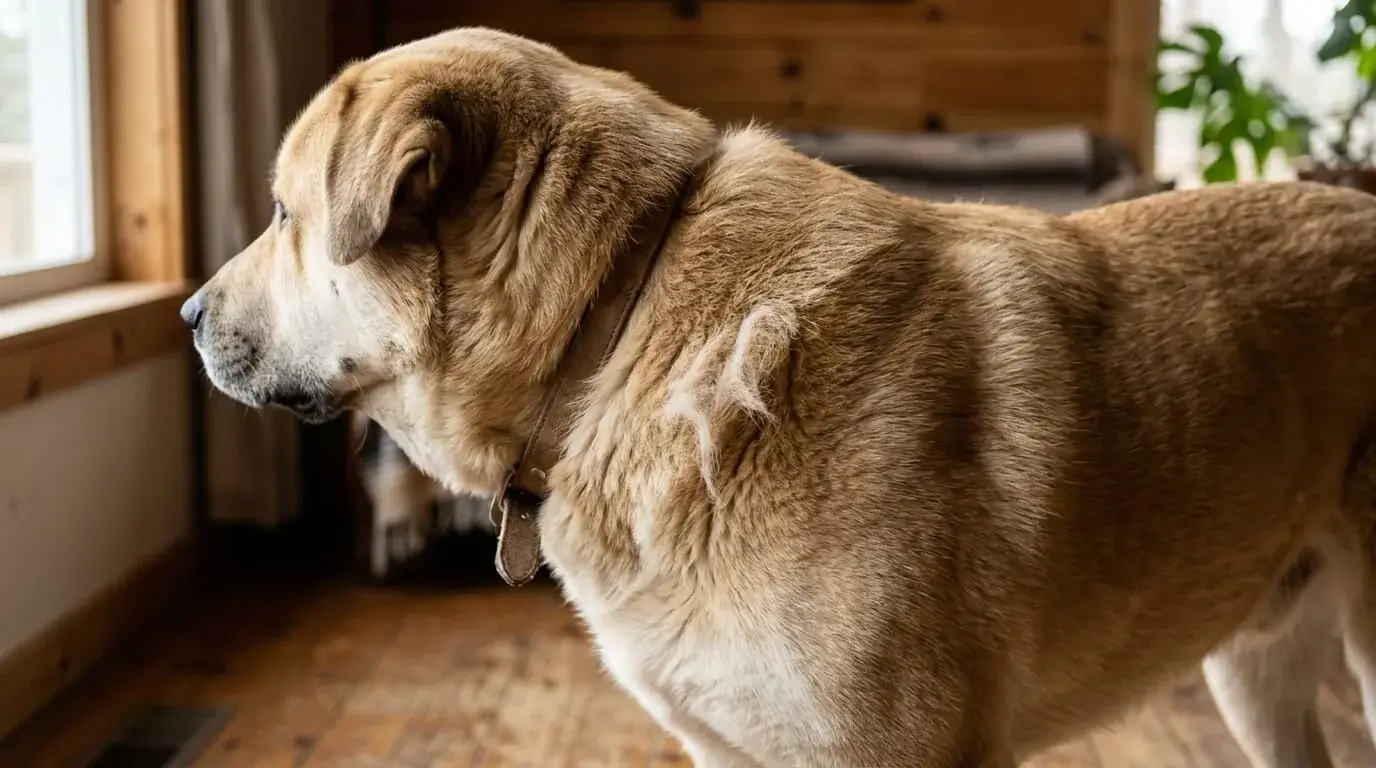
Both parents have double coats, so an akita labrador mix almost always sheds. The Lab coat is short and dense. The Akita coat is thicker and longer, with a plush undercoat.
Most dogs of this cross land on a medium-length, heavy double coat. Colors vary widely.
Akita colors include white, brindle, and pinto, among many others. Lab colors are black, yellow, and chocolate. Anything in that range can show up in an akita labrador mix, often with a darker mask or a lighter chest.
Akitas shed only lightly most of the year, then “blow” the undercoat twice a year. During a blow, hair comes out in clumps. A Lab sheds more steadily year-round. The mix can inherit both patterns.
A practical weekly routine:
- Brush at least once a week with a slicker brush and an undercoat rake.
- Brush daily during the spring and fall blow.
- Bathe only when dirty, and dry the undercoat fully to avoid hot spots.
- Trim nails every few weeks.
This cross is not hypoallergenic. No akita labrador mix is.
Ear shape varies. Akita-type ears stand up. Lab-type ears fold over and trap moisture after swims, so check and dry them.
Size and Exercise
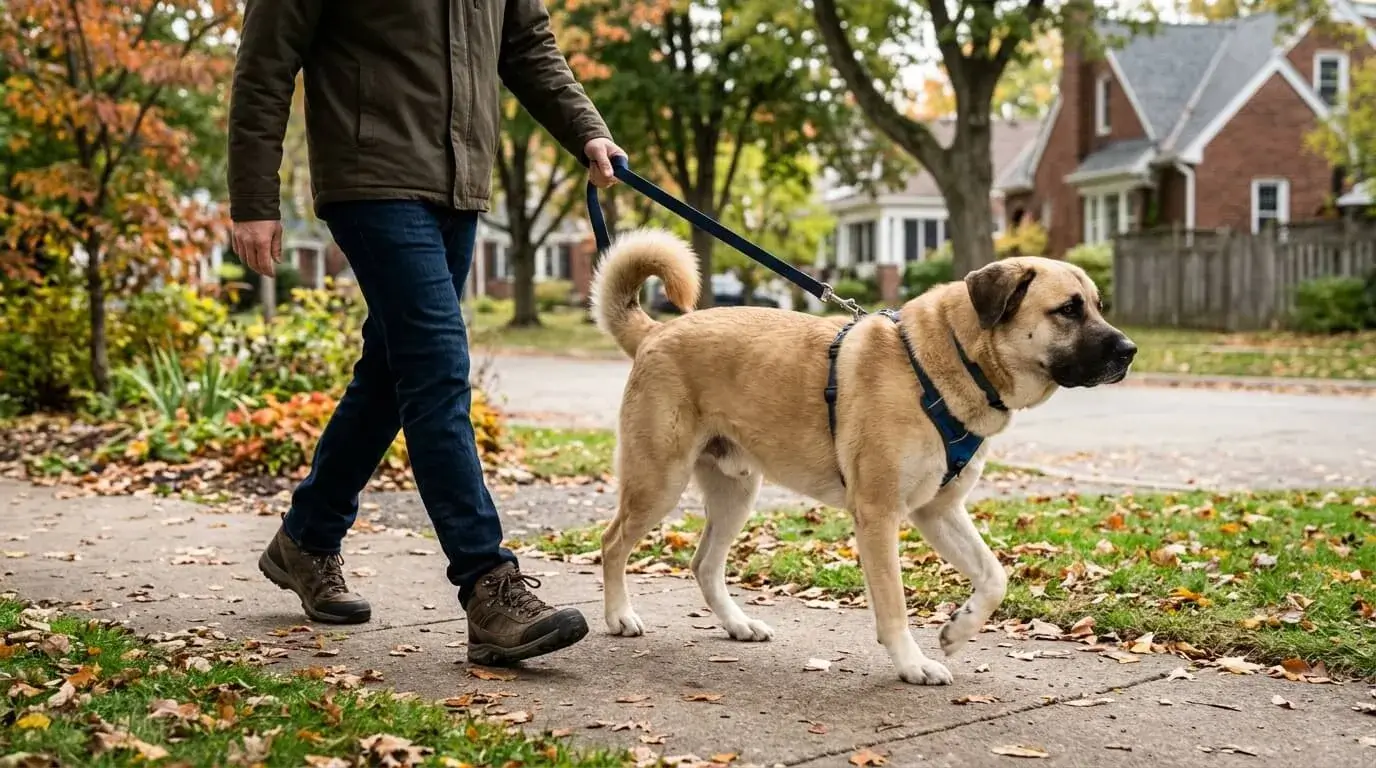
Size is a range, not a number. Akita males stand 26–28 inches tall and females 24–26. Lab males stand 22.5–24.5 inches and females 21.5–23.5.
Expect a large dog. Some akita labrador mix adults end up near Lab size. Others grow past 100 pounds. Most breeders cannot tell you which with any confidence, and a puppy’s paws are a weak predictor.
Lifespan follows the same logic. By the AKC’s count, Akitas live 10–14 years and Labs 11–13. No formal data exists for the akita labrador mix itself.
Exercise needs sit between the parents. The Akita is “generally not a highly active breed” that needs moderate exercise, such as a brisk daily walk. The Lab is far more energetic.
A fair plan for an adult akita labrador mix is 45 to 75 minutes a day. Split it into two walks plus some play or training. A Lab-leaning dog may want more. An Akita-leaning dog may be content with less but still needs the mental work.
Good outlets for this cross:
- Brisk leashed walks and hikes.
- Fetch in a fenced yard, if the dog enjoys it.
- Scent games and puzzle feeders.
- Obedience work in short, daily sessions.
Keep the leash on outside a fenced area. The Akita’s prey drive and independence make an unreliable recall more dangerous in a big, strong dog.
A growing akita labrador mix puppy needs less. Large dogs grow for 18 months or more. Skip long runs and repeated jumping until your vet says the growth plates have closed.
Heat is worth planning for. A thick coat and a large body make summer afternoons hard. Walk early and late on hot days, and bring water.
Who Should Not Buy This Puppy
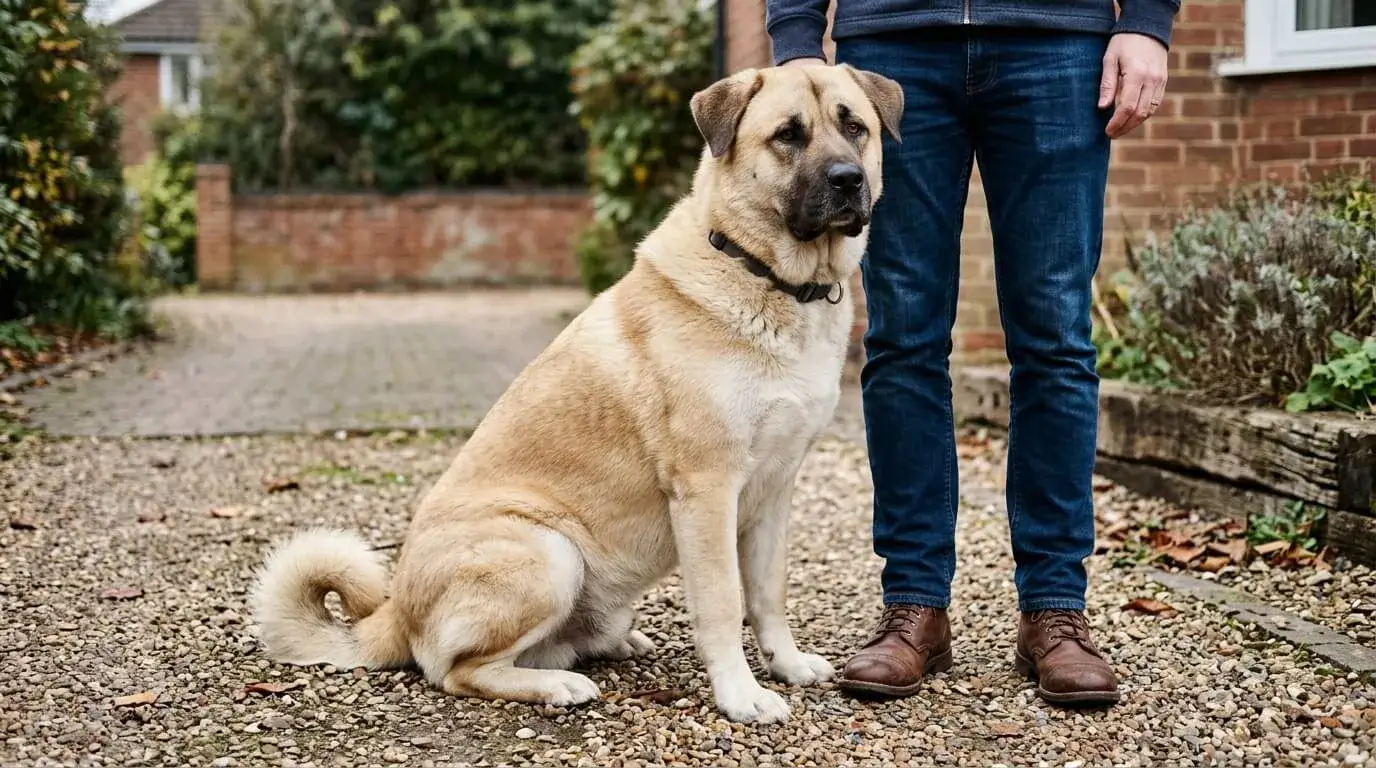
In the right hands, an akita labrador mix can be a loyal, calm family dog. In the wrong home, it is a large dog with problems that get harder to fix every month.
Skip this cross if:
- It is your first dog.
- You already have a dog of the same sex.
- You want a dog-park regular or a greeter for every guest.
- You have young kids and a constant stream of visiting children.
- You cannot commit to a trainer and a year of socialization.
- Your lease or insurance restricts large guardian breeds.
That last point is practical. Some landlords and insurers list the Akita by name. A mix with visible Akita traits can run into the same rules. Check before you bring a puppy home.
Health questions come from the parents, since there is no mix-specific study. The Akita Club of America recommends hip, eye, and thyroid evaluations for breeding dogs. Ask to see results for the Akita parent. Ask the Lab breeder for hip, elbow, and eye results as well.
Bloat is the other health question. Akitas can suffer bloat, where the stomach fills with gas and can twist. VCA Animal Hospitals describes it as an emergency in large, deep-chested dogs. Unproductive retching, a swollen belly, and restlessness mean a vet visit right away.
Keep an akita labrador mix lean. Extra pounds on a big frame load the hips and elbows, and the Lab parent adds a strong appetite.
A good fit is an experienced adult household, one dog or an opposite-sex pair, a fenced yard, and time for training. That owner gets a quiet, devoted companion.
Still unsure? Many breed rescues place an adult akita labrador mix now and then. An adult already shows its temperament with dogs and strangers, which a puppy cannot.
Compare this cross with the cane corso labrador mix, another guardian cross. Both need an experienced owner. The Akita side adds more dog selectivity.
The Chow Lab cross is a similar story: a spitz-type guardian parent, a friendly retriever, and the same need for early socialization.
FAQ
Are they aggressive?
Not by default, but the risk toward other dogs is real. Akitas tend to be aggressive toward other dogs, especially of the same sex, and an akita labrador mix may inherit that.
Early socialization and careful introductions lower the risk. They do not remove it.
Are they good with kids?
With their own family’s kids, often yes, when raised together and supervised. Visiting children and rough play are the harder test. A large, watchful dog needs rules on both sides.
Do they shed?
Yes. Expect steady shedding plus heavy seasonal blows in spring and fall. Weekly brushing, and daily during a blow, keeps it manageable.
How big are they?
Most are large, somewhere between a Lab and an Akita. An adult akita labrador mix is rarely small. The parents span 55 to 130 pounds and 21.5 to 28 inches. There is no standard for the cross, so any single number is a guess.
An akita labrador mix rewards an experienced owner with loyalty and calm. It punishes a casual one with dog fights and a guarded adult. Decide which home you have before you meet the puppies.
If this is not the right match, our Labrador crosses include more social options. Read the Labrador Retriever breed guide to see what the Lab half actually brings to the mix.


