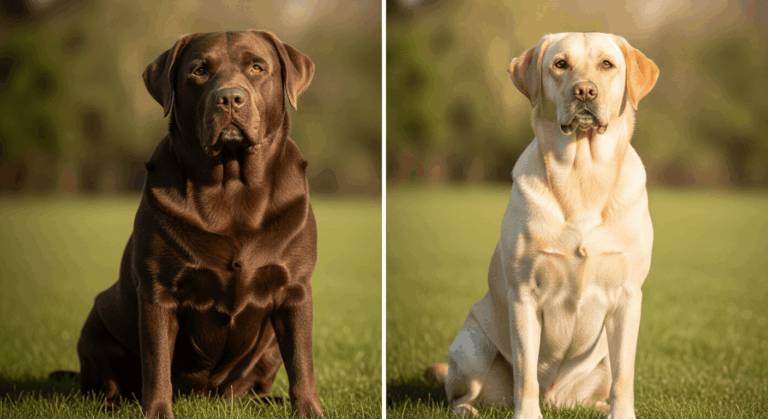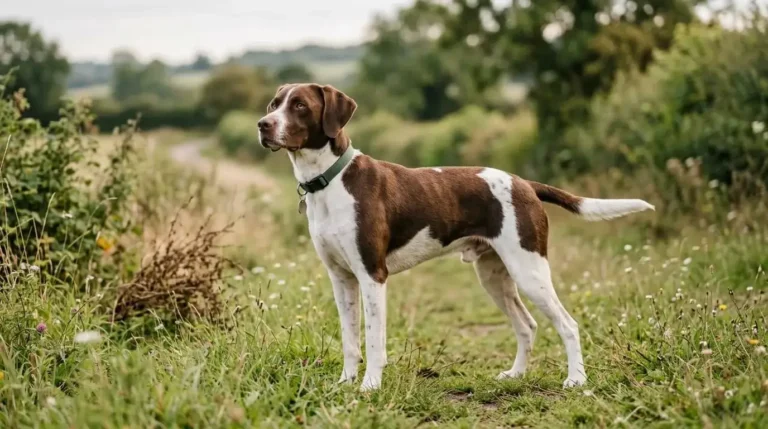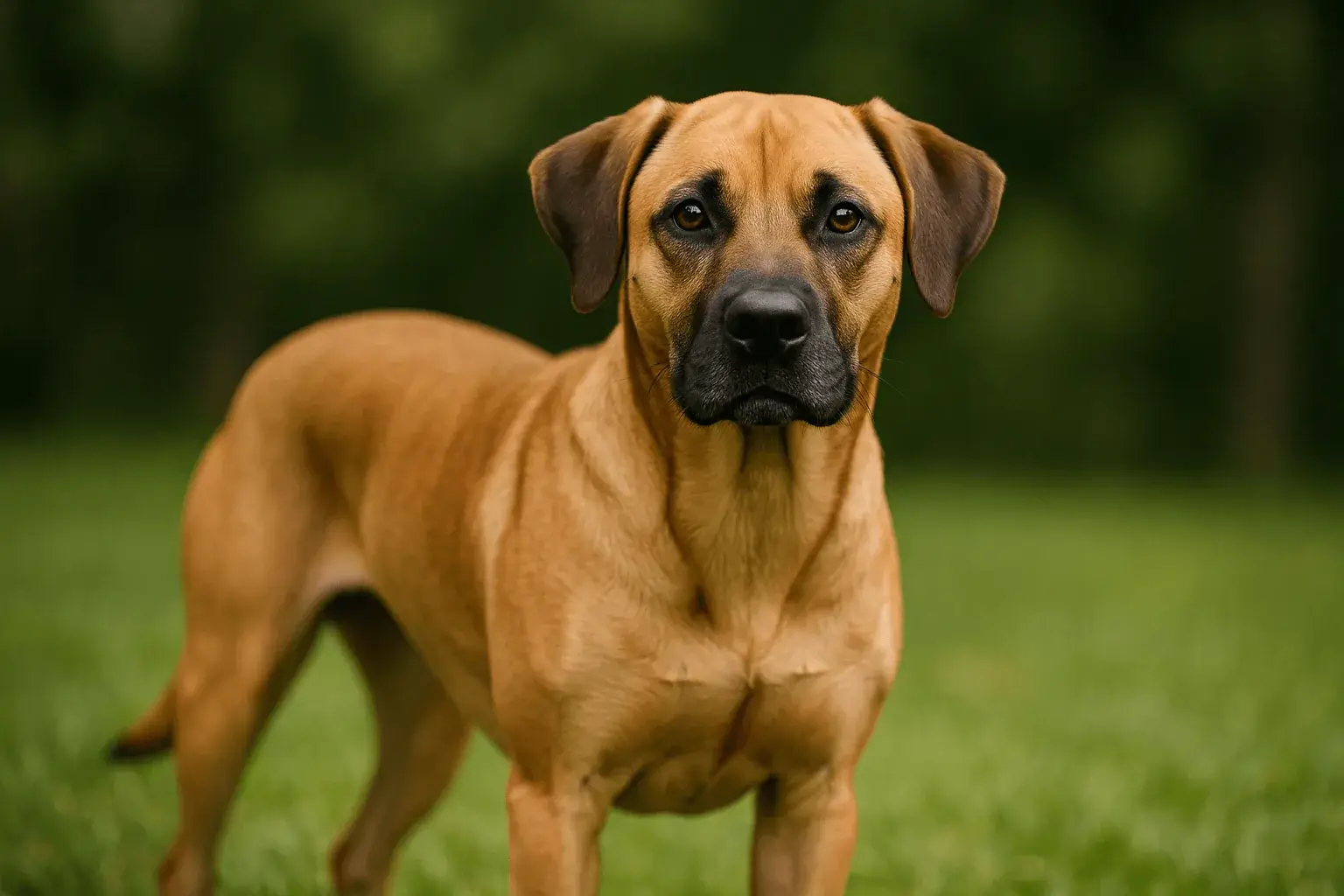
A black mouth cur lab mix typically grows to 40–95 lbs with the Cur’s signature dark muzzle on a yellow, fawn, or black coat. This Labrador × Southern working-breed cross is loyal and athletic — and needs a real job. Here is size, colors, temperament, training load, and health.
A black mouth cur lab mix is a cross between a Labrador Retriever and a Black Mouth Cur, a Southern farm and hunting breed named for its dark muzzle. The mix is medium to large — usually 40 to 95 lbs — athletic, intelligent, and best suited to active households that can meet its exercise needs.
What Is a Black Mouth Cur Lab Mix?

This cross blends two working dogs with very different job descriptions. The Labrador Retriever was bred to fetch waterfowl beside hunters all day — sociable, biddable, and famously good with people. The Black Mouth Cur — recognized by the United Kennel Club in 1998, though not by the AKC — earned its keep on Southern farms herding livestock, treeing game, and guarding the homestead — brave, hardworking, and more reserved with strangers.
The name comes from the Cur parent’s defining feature: a dark, often black muzzle and mask set against a lighter coat. Many mixes inherit it, which makes this one of the more recognizable Lab crosses.
Neither kennel-club registered nor rare, the mix shows up regularly in Southern and Midwestern shelters — often listed simply as “Lab mix.” Owners who adopted a “Lab mix” with a jet-black muzzle on a fawn coat and an unusually watchful streak may already be living with one. For how this cross fits into the wider family of crosses, see our guide to Labrador mix breeds.
Black Mouth Cur Lab Mix Size & Appearance
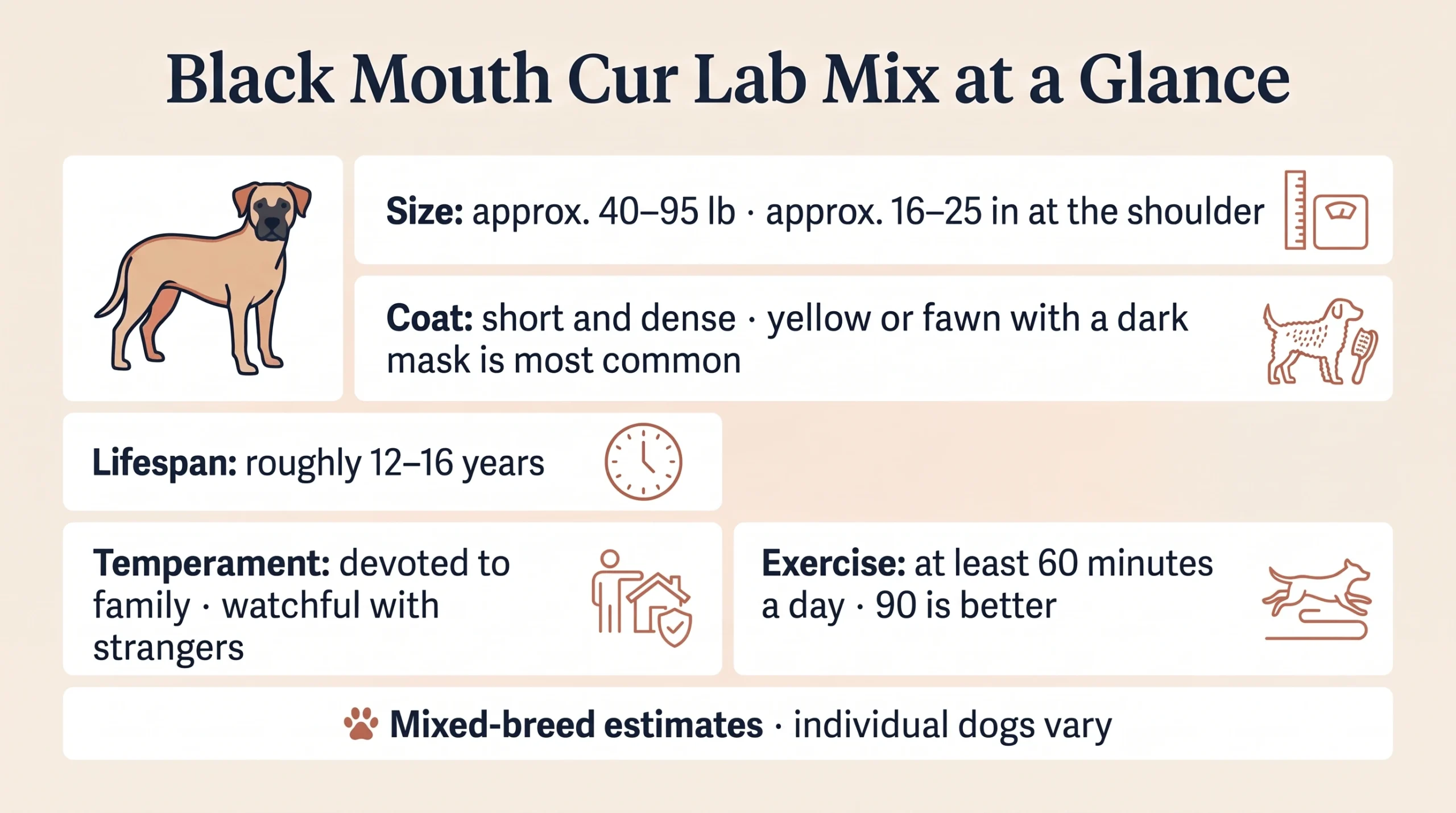
Expect a medium-to-large athlete. Most adults stand 16 to 25 inches at the shoulder and weigh 40 to 95 lbs, with males at the heavier end and females lighter. That wide range reflects the parents: field-line Labs run lean while Black Mouth Curs vary from 40-lb farm dogs to 95-lb catch dogs.
The coat is short, dense, and low-maintenance. Colors run from yellow and fawn — the most common, usually paired with the dark mask — through red, brown, brindle, and solid black, where the mask disappears into the coat. White chest patches and paws are frequent.
The build tells you which parent won the genetic coin toss. Lab-leaning mixes carry a broader head, thicker tail, and barrel chest; Cur-leaning dogs are leggier and leaner with a whip-like tail and tighter tuck. Both versions shed moderately year-round — the Lab’s double coat usually wins that argument.
Growth follows large-breed timing: near-adult height by 12 months, full muscle and chest depth by 18 to 24 months.
Black Mouth Cur and Labrador Mix Temperament
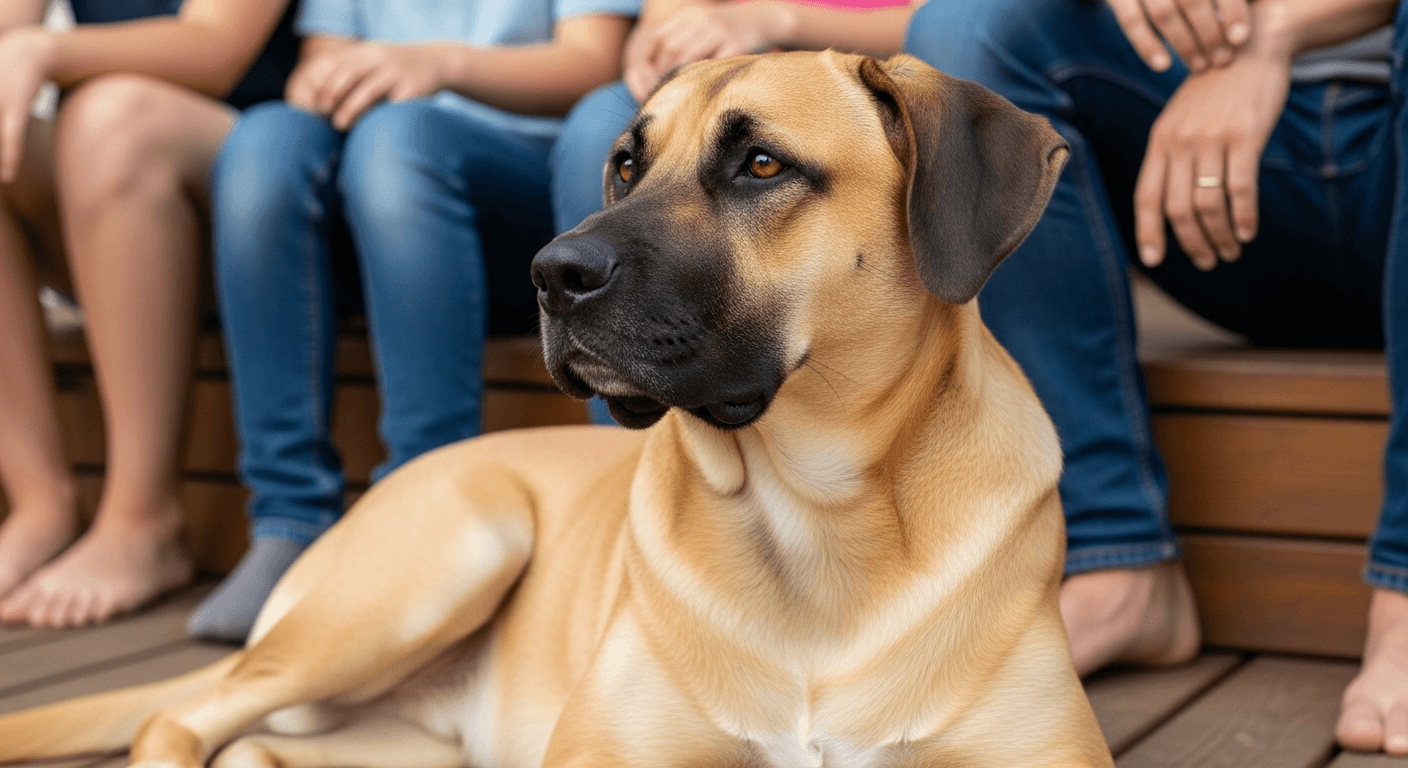
The black mouth cur and labrador mix temperament is a genuine blend, and honesty matters here: this is not just a Lab in a mask. From the Lab side comes affection, playfulness, and a strong desire to be wherever the family is. From the Cur side comes loyalty of a more serious kind — watchfulness toward strangers, territorial awareness, and an instinct to guard its people.
In practice, that means a dog that is devoted and gentle with its own household — including children it has grown up with — while treating unfamiliar visitors to a hard stare and a bark before warming up. The contrast with a purebred Lab is real: the AKC breed standard describes the Labrador as outgoing and non-aggressive, with nothing of the guard dog in it — so the watchfulness in this mix comes squarely from the Cur side. Early, broad socialization — worked hard inside the same 3-to-16-week window that shapes every Lab puppy — decides how big that stranger-wariness becomes; a well-socialized mix settles into polite reserve, while an under-socialized one can tip into suspicion.
With other dogs, the Lab’s sociability usually wins out after proper introductions. Small pets are the real question mark: the Cur side carries genuine herding and prey drive, so cats and smaller animals are safest when the dog was raised alongside them from puppyhood.
One Lab inheritance arrives intact: food obsession. Most Labs carry a gene variant that mutes the feeling of fullness, and their crosses often inherit the bottomless appetite — so counters, trash cans, and portion sizes all need managing from day one.
Training and Exercising a Black Mouth Cur Lab Mix
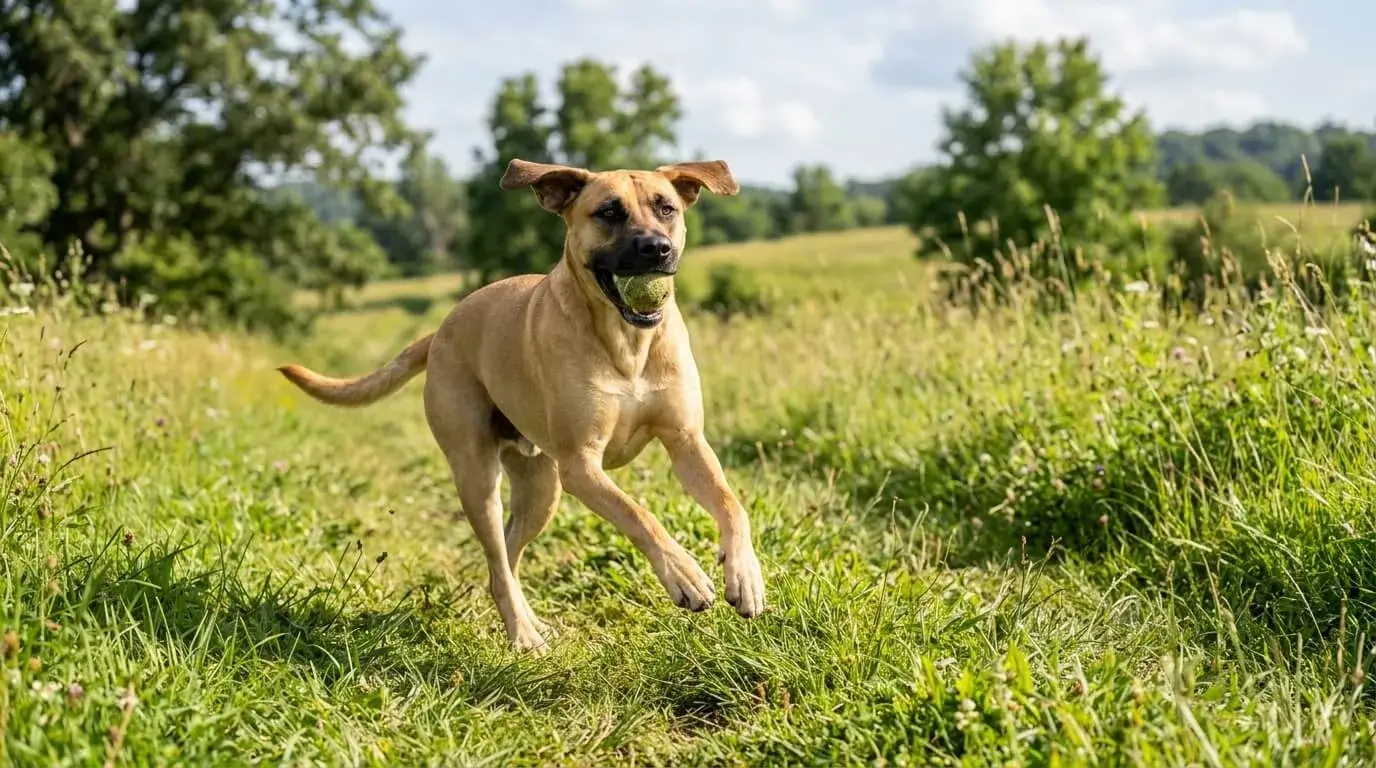
Both parents are working dogs, so the mix is intelligent, quick to learn, and unemployed at its own risk. Positive-reinforcement training works best — the Lab side lives for food rewards, and the Cur side shuts down under harsh handling. Start socialization and basic obedience the week the dog comes home, and prioritize recall: the Cur’s treeing instinct means a squirrel can otherwise end your off-leash privileges.
Budget at least 60 minutes of genuine exercise daily, and expect a better dog on 90. Long walks, fetch, swimming, and hikes all work; a bored black mouth cur lab mix will excavate the yard or dismantle a couch with professional efficiency. The baseline we use for the Lab parent applies here fully — see how much exercise a Labrador needs — and the Cur side only raises it.
Mental work counts double. Scent games, food puzzles, and short daily training sessions drain this cross faster than an extra mile, and a mix with a job — even “carry the newspaper” — is a calmer housemate.
Black Mouth Cur Lab Mix Health & Lifespan
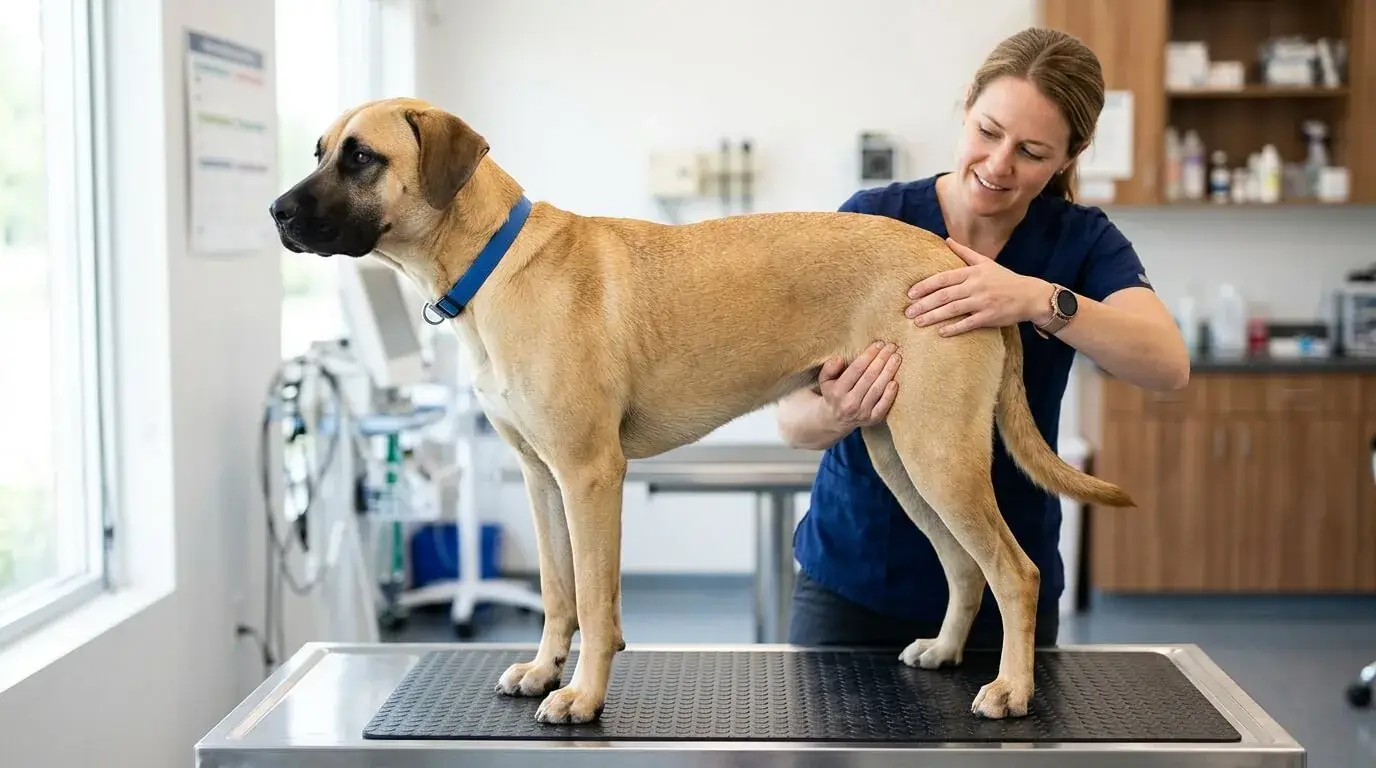
This is a robust cross with a lifespan of roughly 12 to 16 years — hybrid vigor and the Cur’s hardy farm genetics both help.
The watch-list comes mostly from the Lab side. Hip and elbow dysplasia lead it: ask any breeder for OFA clearances on both parents, keep the dog lean, and limit repetitive impact before 12 to 18 months while growth plates close. Our guide to Labrador hip dysplasia covers the symptoms and treatment costs in detail. Floppy ears need weekly checks, especially in mixes that swim, and the Lab’s ear-infection tendency carries over.
Weight is the health lever you control. The inherited Lab appetite plus a slowing adult metabolism makes obesity the most common — and most preventable — problem in this mix. Measured meals and the rib check beat trusting the dog’s opinion, which is always “more.”
Black Mouth Cur Lab Mix vs Mountain Cur Lab Mix
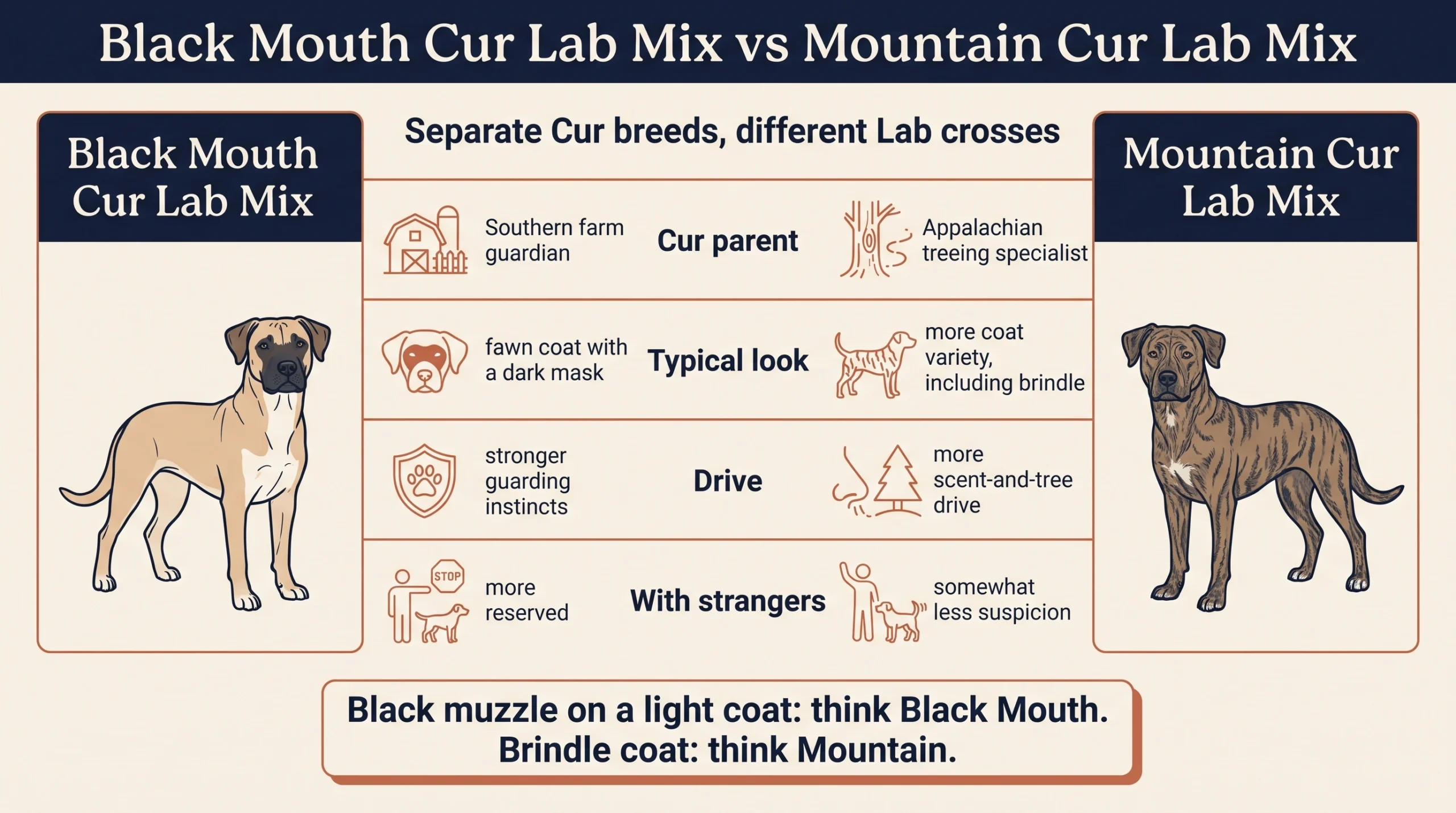
The names sound interchangeable; the dogs are not. The Black Mouth Cur and the Mountain Cur are separate breeds — the former a Southern farm guardian with the trademark dark muzzle, the latter an Appalachian treeing specialist that commonly throws brindle coats.
Their Lab crosses differ the same way. The Black Mouth Cur Lab mix tends toward the fawn-coat-dark-mask look and stronger guarding instincts. The Mountain Cur Lab mix offers more coat variety, including brindle, and more scent-and-tree drive with somewhat less stranger suspicion. If the muzzle is black on a light coat, think Black Mouth; if the coat is brindle, think Mountain.
Frequently Asked Questions
Is a black mouth cur lab mix a good family dog?
Yes, for active families — with one condition. This mix is affectionate and gentle with its own household, including kids it grows up with, but the Cur side brings real stranger-wariness. Commit to broad socialization in puppyhood and a solid hour of daily exercise, and you get an outstanding family dog.
How big will a black mouth cur lab mix get?
Between 40 and 95 lbs and 16 to 25 inches at the shoulder, depending on which parent dominates and the size of the Cur parent, which itself varies widely. Males typically land heavier. Height finishes around 12 months; muscle and chest fill in until 18 to 24 months.
Do black mouth cur lab mixes shed?
Moderately, year-round. The coat is short and easy to maintain, but the Lab’s double-coat genetics usually come through, with heavier shedding in spring and fall. A weekly brushing — a few times weekly during coat-blow season — keeps it manageable. This is not a low-shedding or hypoallergenic cross.
Are black mouth cur lab mixes aggressive?
No — but they are naturally watchful. Expect alert barking and initial reserve toward strangers rather than Lab-style universal friendliness. Genuine aggression is not typical of either parent breed; where it appears, under-socialization or mistreatment is usually the cause. Early, positive exposure to people and dogs is the preventive.
How long do black mouth cur lab mixes live?
Roughly 12 to 16 years — longer than many purebred Labs manage. Mixed-breed vigor and the Black Mouth Cur’s hardy working genetics both contribute. The biggest owner-controlled factor is weight: lean dogs of this cross routinely outlive overweight ones while keeping their joints serviceable into old age.
If the watchful-but-devoted profile fits your household and you can fund the exercise budget, the black mouth cur lab mix is one of the best-value crosses in the shelter system — start your search with “Lab mix” listings and look for the dark muzzle. To understand the Labrador half of what you’re taking home, our Labrador Retriever breed guide is the place to begin.