Labrador puppy socialization should begin early: the first three months are the primary period for building comfort with people, animals, and everyday experiences. Early experiences matter, but learning does not stop at 16 weeks. Keep offering calm, positive experiences throughout the first year and beyond, at a pace your puppy can handle. This guide covers exactly what to expose your puppy to, how to do it before vaccinations finish, and what to do when an exposure goes wrong. It is part of our Labrador puppy first-year guide.
Begin socializing your Labrador puppy as soon as it comes home — typically at 8 weeks. The first three months are especially important, so use safe, positive experiences rather than waiting for the entire vaccination series to finish. Ask your veterinarian which settings are appropriate locally, and continue socialization as your puppy grows.
Why Early Labrador Puppy Socialization Matters
The early socialization period is a developmental stage when puppies learn about people, animals, sights, sounds, and surfaces. Gentle, rewarding experiences can help build confidence. Puppies differ in how readily they accept novelty, and frightening or overwhelming exposure can be counterproductive at any age. Watch your puppy’s behavior rather than assuming every new encounter will feel safe.
The AVSAB position statement identifies the first three months as the primary socialization period. That makes early, safe exposure a priority, but it does not establish a hard deadline for learning. Continue positive experiences afterward, allowing more time and professional guidance when a puppy shows fear.
There is one hazard inside the window: a brief fear period at roughly 8 to 10 weeks, when puppies are unusually sensitive to frightening events. One genuinely scary experience during this phase can leave lasting wariness. Keep first exposures gentle and low-pressure, especially in the first two weeks home.
The stakes are real for this breed. Labs have a famously friendly baseline, and owners assume that temperament is guaranteed. It is not. An under-socialized Lab can grow into a dog that fears strangers, reacts to traffic, and panics at the vet. A well-socialized Lab accepts novelty calmly at the dog park, on a lakeside trip, or in a loud family kitchen — exactly the environments this breed was bred to live in. Research going back to Scott and Fuller’s foundational puppy-development studies points to the weeks before 16 as the single biggest behavioral influence on the adult dog.
The Puppy Socialization Checklist: People, Places & Experiences
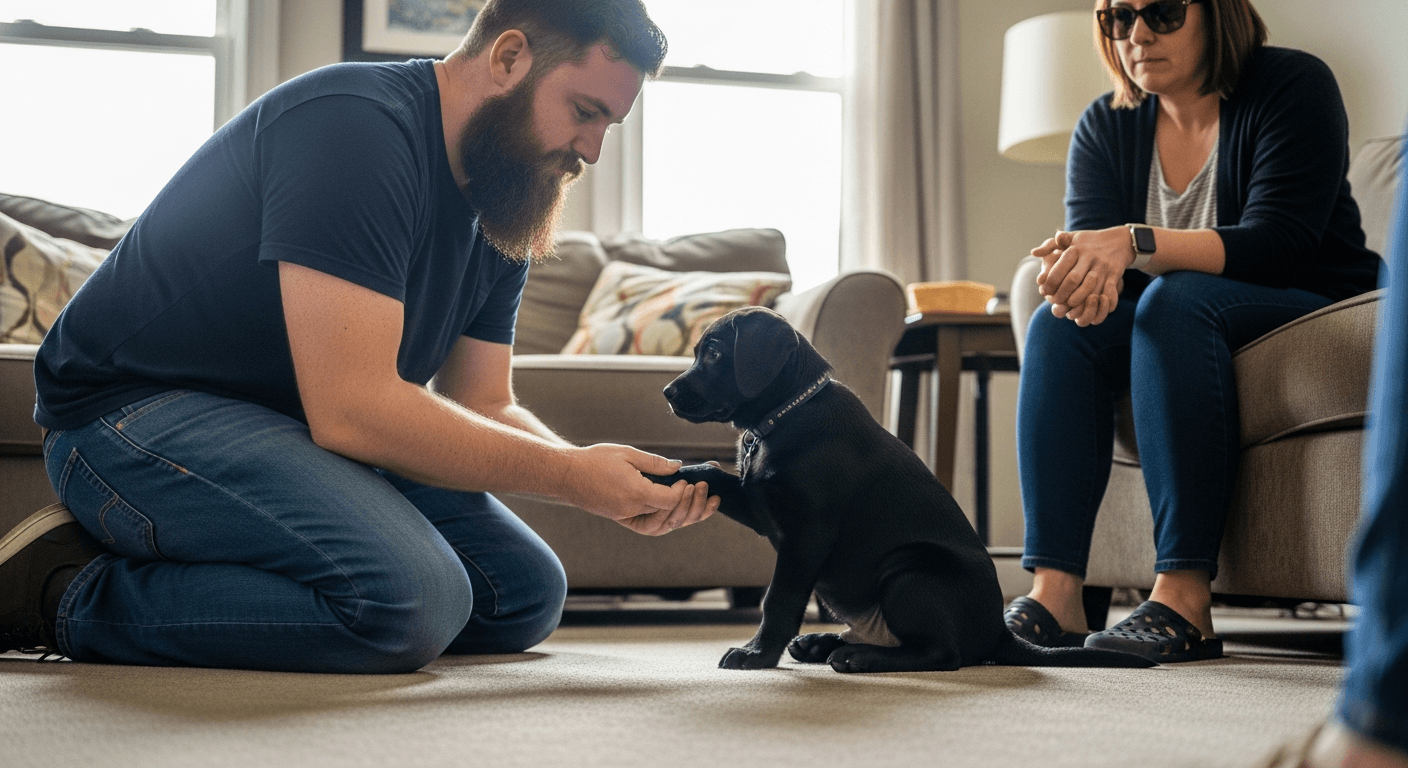
Work through this puppy socialization checklist during the early weeks at home and keep revisiting it as your puppy grows, a few items at a time. Aim for one or two short, positive sessions a day rather than a marathon weekend.
People. A friendly Lab will meet more strangers in its life than almost any breed — make sure every kind reads as normal. Men with beards. People in hats, sunglasses, and hoods. Uniforms — mail carriers, cyclists, delivery drivers. Children of different ages. Older adults, including people using canes or walkers. Someone carrying an umbrella or a large bag.
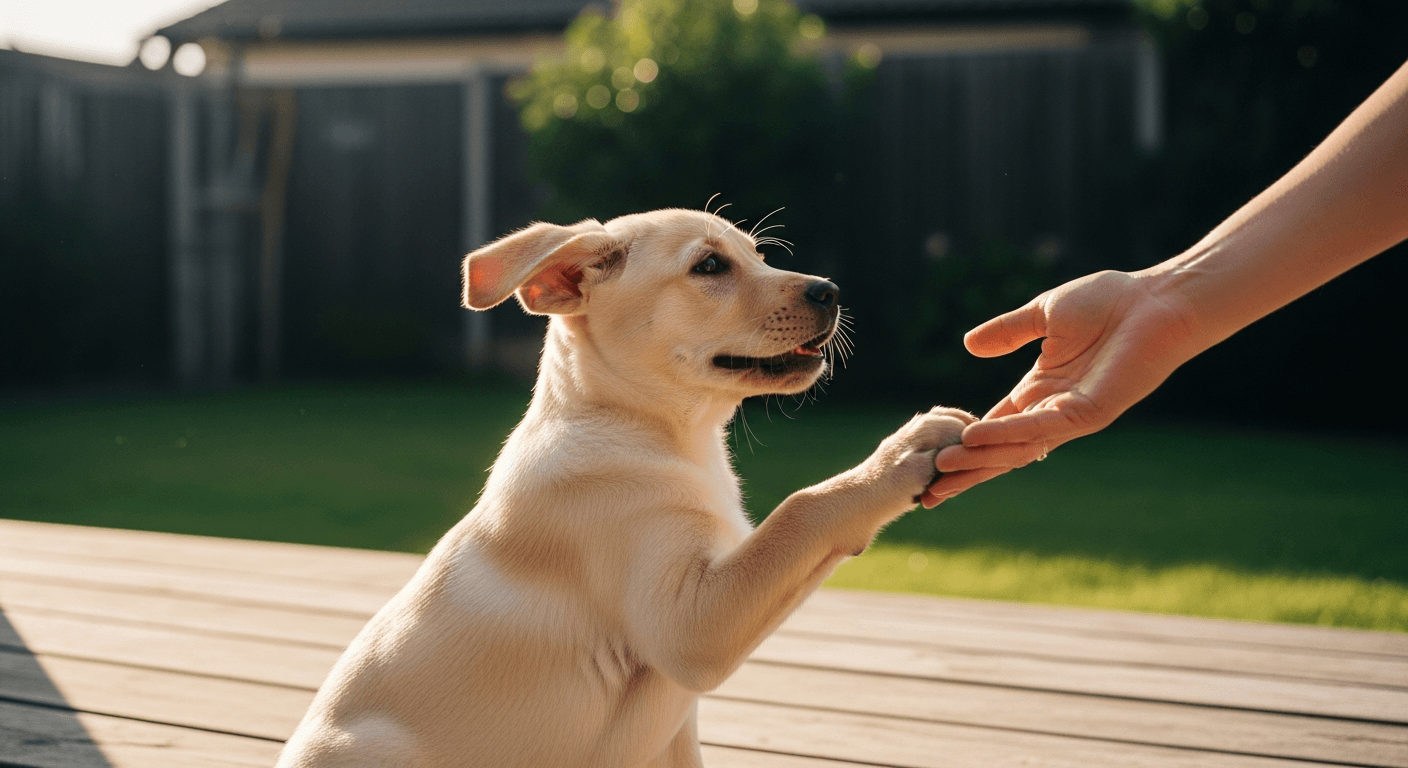
Handling. A retrieving breed lives through its mouth and paws, so handling tolerance matters more for Labs than for most dogs. Touch the ears, paws, tail, and mouth daily. Practice nail-trim positions and vet-style handling: roll the puppy gently onto its back, press lightly on the abdomen, open the mouth. Labs handled consistently before 12 weeks are far more likely to stay calm through grooming and vet exams for the rest of their lives.
Environments. Labs go everywhere their families go, so surface and vehicle confidence pays off daily. Floor surfaces — carpet, tile, grass, gravel, wet pavement, metal grates. Stairs in both directions. Car rides in a crate or harness. Parking lots, dog-friendly stores, a quiet street corner where traffic passes.
Sounds. The breed that was developed to work beside gunfire should not grow up fearing noise — build sound tolerance deliberately. Traffic and motorcycles. The vacuum. Recordings of thunder and fireworks, started at low volume and raised gradually over days.
Other animals. Calm, vaccinated adult dogs are the most valuable exposure of all: they model calm behavior and correct puppy rudeness in a language your Lab already understands. First meetings should happen on neutral ground. Add cats and, if your life includes them, livestock.
One principle governs all of it: quality beats quantity. A single deeply positive experience is worth ten rushed, overwhelming ones. If your puppy retreats, shakes, or refuses treats, the exposure is too intense — add distance and try again lower.
How to Socialize a Labrador Puppy Before Full Vaccination
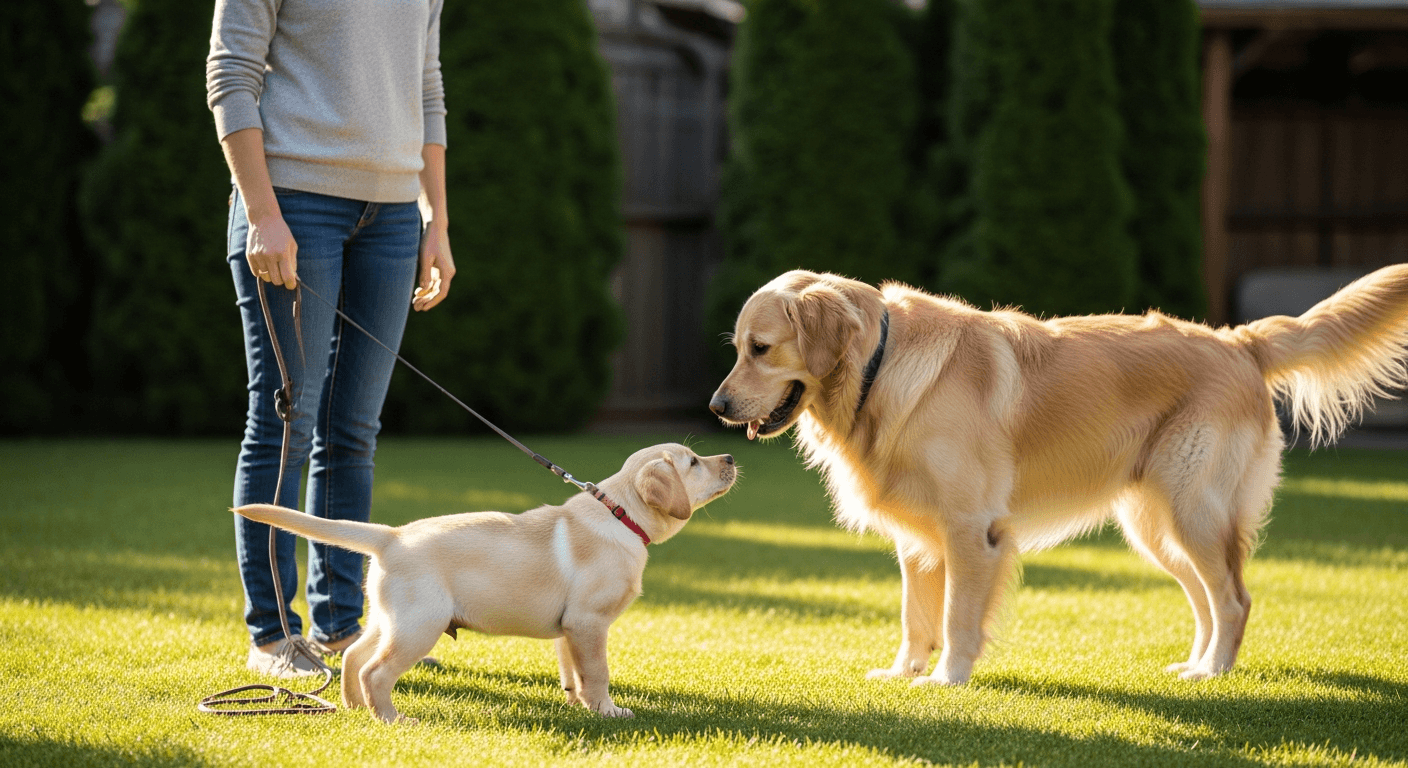
The vaccination series may still be underway during the primary socialization period. Waiting for every dose before offering any new experiences can miss valuable early opportunities. Plan safe exposures with your veterinarian while avoiding high-risk settings until your puppy has appropriate protection.
The major veterinary bodies have taken a clear position on this. The AVMA’s socialization guidance and the American Veterinary Society of Animal Behavior both hold that the risk of under-socialization outweighs the disease risk of carefully managed early exposure. Behavior problems, not infections, are the leading reason young dogs lose their homes.
“Carefully managed” is the operative phrase. Low-risk options before full vaccination: carry your puppy in your arms through busy public places, so it sees and hears everything without touching the ground. Host vaccinated adult dogs at your home. Take car rides. Sit together in the yard while the neighborhood makes its noise.
Puppy classes are also on the low-risk list. Reputable classes require every attendee to have at least one vaccination, and the AKC recommends starting about a week after that first dose. Skip the high-risk settings until the series is done: dog parks, pet-store floors, and anywhere dogs of unknown vaccination status gather. Our Labrador puppy health guide covers the full vaccination timeline itself.
What If Your Lab Puppy Is Scared? Managing Fear Responses
A single bad experience does not doom your puppy — but it does need a response, not a shrug.
The recovery protocol is simple. Skip the trigger for a day. Then reintroduce it at a fraction of the original intensity — more distance, less volume, slower movement — while feeding high-value treats. This is counter-conditioning: the scary thing starts predicting chicken. Over several sessions, raise the intensity so gradually that the puppy never tips back into fear.
What you must not do is flood. Forcing a frightened puppy to “face it” through repeated full-strength exposure usually deepens the fear. Desensitization works below the fear threshold; flooding works above it, and it backfires.
If fear persists — cowering, hiding, refusing food whenever the trigger appears — bring in a certified trainer or behaviorist experienced with puppies before the pattern hardens. Fearful patterns that carry into adulthood are much harder to fix, as our guide to Labrador behavior problems makes clear.
Socialization After 16 Weeks: 4 Months to 1 Year
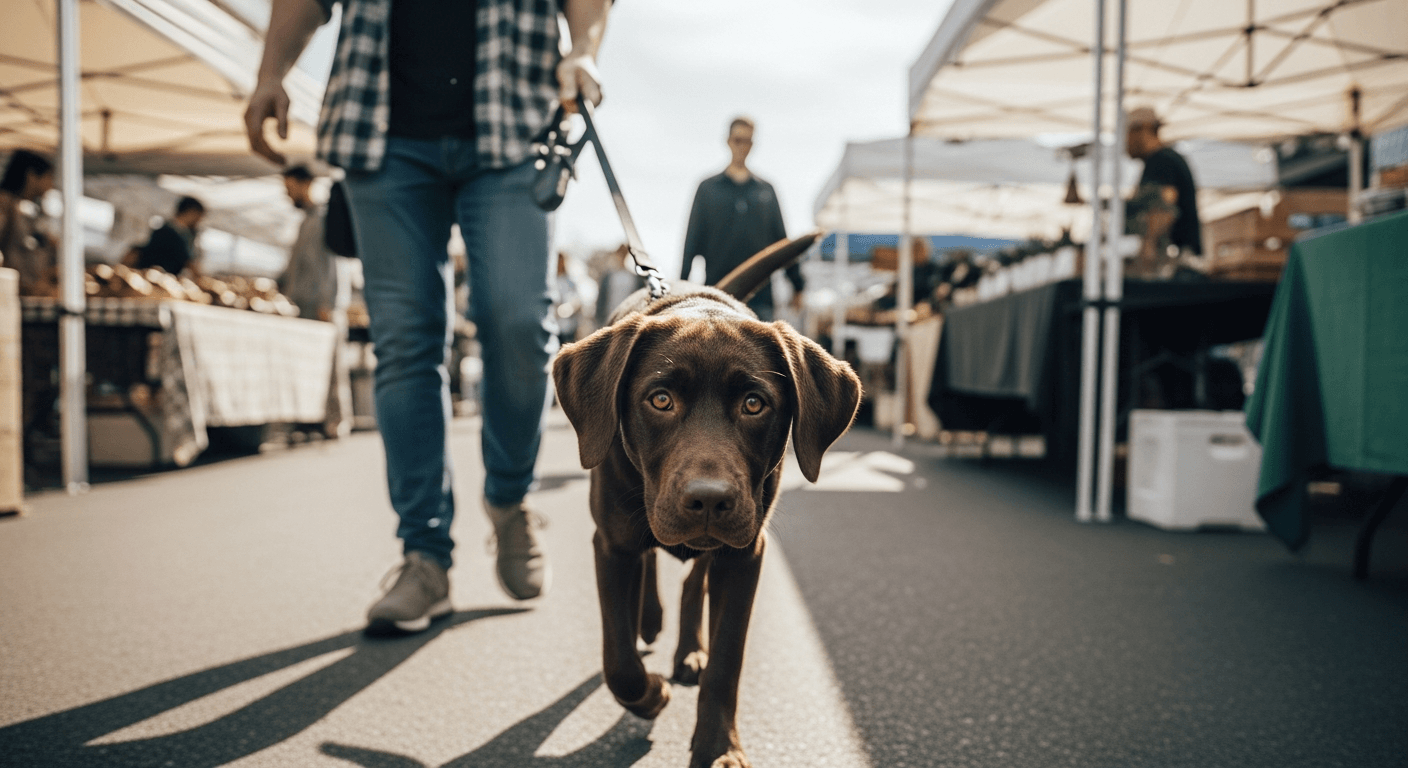
Socialization continues after the early sensitive period. Keep introducing friendly people, suitable dogs, and everyday environments throughout the first year. Older puppies can still learn; use patient, positive practice and adjust distance or intensity if your dog is uncomfortable.
Keep the adolescent Lab (6 to 12 months) moving through varied environments: new walking routes, pet-friendly patios, group obedience classes, fresh faces every week. Watch for a secondary fear period between 8 and 14 months, when some Labs suddenly act nervous about things they previously ignored. It passes — keep exposures positive and don’t punish the wobble.
Think of socialization as a muscle that needs regular use for life. A Lab socialized well during the window and maintained through adolescence reaches adulthood as the confident, adaptable dog this breed is supposed to be. For what to teach during those same months, see our Labrador puppy training schedule.
Frequently Asked Questions
When should I start socializing my Labrador puppy?
Begin when your puppy comes home, usually at 8 weeks. The first three months are the primary socialization period. Discuss safe exposures with your veterinarian while vaccinations are underway, then continue positive experiences throughout the first year and beyond.
What happens if a Labrador puppy is not socialized?
Under-socialized Labs commonly grow into adults that fear strangers, react to traffic and loud noises, and struggle at the vet or groomer — despite the breed’s friendly genetics. Fear-based behavior that sets in during puppyhood takes months of structured work to undo in adulthood, and some wariness never fully resolves.
Is Labrador puppy socialization safe before vaccinations are complete?
Yes, when managed carefully. The AVMA and AVSAB state that under-socialization poses a greater long-term risk than disease from controlled early exposure. Carry your puppy in public, visit vaccinated dogs in private homes, and join a puppy class after the first vaccine dose. Avoid dog parks until the series is complete.
How many new experiences does a Lab puppy need per week?
Aim for one or two short, positive exposure sessions daily — new people, surfaces, sounds, or places. Over 8 weeks, that adds up to well over 50 distinct experiences. Depth matters more than count: end every session while the puppy is still relaxed and taking treats.
Can you socialize a Labrador after 16 weeks?
Yes. Sixteen weeks is not a hard deadline for learning. Adolescent and adult Labs still benefit from calm, positive experiences. Work at your dog’s pace, and seek guidance from a qualified trainer or veterinary behaviorist if fear makes exposure difficult.
Eight weeks to sixteen weeks — that is the whole window, and it moves fast. Every quiet day at home is socialization time you cannot get back. Put positive, varied, low-pressure Labrador puppy socialization above nearly everything else in the first month, and plan tomorrow’s session tonight: one new surface, one new person, one new sound.